Month: September 2008

  • Israeli Bombers Planned to Use Georgian Airfields in Iran Strike

    Israeli Bombers Planned to Use Georgian Airfields in Iran Strike

    Report: Moscow ordered troops to raid Israeli facilities in Georgia to protect Iran

    by Arnaud de Borchgrave

    Global Research, September 17, 2008
    United Press International (UPI) – 2008-09-02

    NATO guarantees that an attack against one member country is an attack against all are no longer what they used to be. Had Georgia been inside NATO, a number of European countries would no longer be willing to consider it an attack against their own soil.

    For Russia, the geopolitical stars were in perfect alignment. The United States was badly overstretched and had no plausible way to talk tough without coming across as empty rhetoric. American resources have been drained by the Iraq and Afghan wars, and the war on terror. As Russian Foreign Minister Sergei Lavrov put it, Washington must now choose between its “pet project” Georgia and a partnership with Moscow.

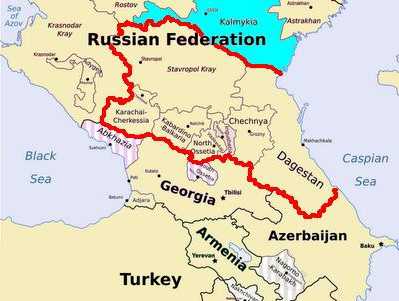
    Georgian President Mikheil Saakashvili evidently thought the United States would come to his side militarily if Russian troops pushed him back into Georgia after ordering an attack last Aug. 8 on the breakaway province of South Ossetia. And when his forces were mauled by Russia’s counterattack, bitter disappointment turned to anger. Along with Abkhazia, Georgia lost two provinces.

    Georgia also had a special relationship with Israel that was mostly under the radar. Georgian Defense Minister Davit Kezerashvili is a former Israeli who moved things along by facilitating Israeli arms sales with U.S. aid. “We are now in a fight against the great Russia,” he was quoted as saying, “and our hope is to receive assistance from the White House because Georgia cannot survive on its own.”

    The Jerusalem Post on Aug. 12 reported, “Georgian Prime Minister Vladimir Gurgenidze made a special call to Israel Tuesday morning to receive a blessing from one of the Haredi community’s most important rabbis and spiritual leaders, Rabbi Aaron Leib Steinman. ‘I want him to pray for us and our state,’” he was quoted.

    Israel began selling arms to Georgia seven years ago. U.S. grants facilitated these purchases. From Israel came former minister and former Tel Aviv Mayor Roni Milo, representing Elbit Systems, and his brother Shlomo, former director general of Military Industries. Israeli UAV spy drones, made by Elbit Maarahot Systems, conducted recon flights over southern Russia, as well as into nearby Iran.

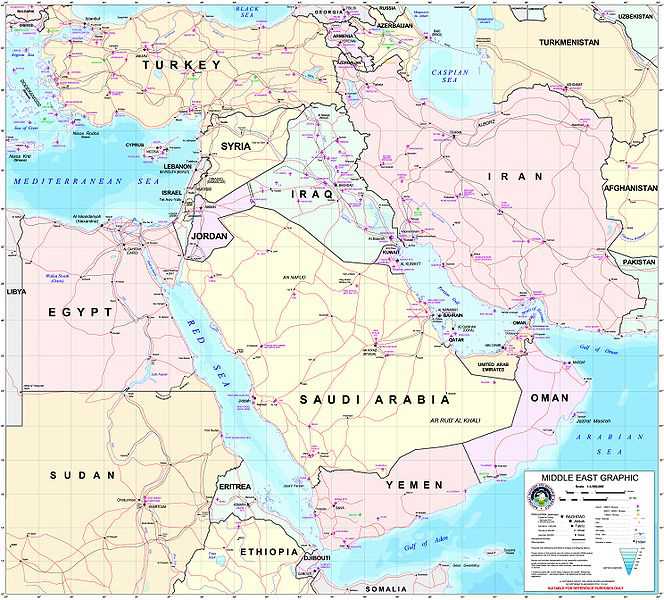
    In a secret agreement between Israel and Georgia, two military airfields in southern Georgia had been earmarked for the use of Israeli fighter-bombers in the event of pre-emptive attacks against Iranian nuclear installations. This would sharply reduce the distance Israeli fighter-bombers would have to fly to hit targets in Iran. And to reach Georgian airstrips, the Israeli air force would fly over Turkey.

    The attack ordered by Saakashvili against South Ossetia the night of Aug. 7 provided the Russians the pretext for Moscow to order Special Forces to raid these Israeli facilities where some Israeli drones were reported captured.

    At a Moscow news conference, Gen. Anatoly Nogovitsyn, Russia’s deputy chief of staff, said the extent of Israeli aid to Georgia included “eight types of military vehicles, explosives, landmines and special explosives for clearing minefields.” Estimated numbers of Israeli trainers attached to the Georgian army range from 100 to 1,000. There were also 110 U.S. military personnel on training assignments in Georgia. Last July 2,000 U.S. troops were flown in for “Immediate Response 2008,” a joint exercise with Georgian forces.

    Details of Israel’s involvement were largely ignored by Israeli media lest they be interpreted as another blow to Israel’s legendary military prowess, which took a bad hit in the Lebanese war against Hezbollah two years ago. Georgia’s top diplomat in Tel Aviv complained about Israel’s “lackluster” response to his country’s military predicament and called for “diplomatic pressure on Moscow.” According to the Jerusalem Post, the Georgian was told “the address for that type of pressure is Washington.”

    Haaretz reported Georgian Minister Temur Yakobashvili — who is Jewish, the newspaper said — told Israeli army radio that “Israel should be proud of its military which trained Georgian soldiers” because he explained rather implausibly, “a small group of our soldiers were able to wipe out an entire Russian military division, thanks to Israeli training.”

    The Tel Aviv-Tbilisi military axis was agreed at the highest levels with the approval of the Bush administration. The official liaison between the two entities was Reserve Brig. Gen. Gal Hirsch who commanded Israeli forces on the Lebanese border in July 2006. He resigned from the army after the Winograd Commission flayed Israel’s conduct of its Second Lebanon War. Hirsch was also blamed for the seizure of two Israeli soldiers by Hezbollah.

    Israeli personnel, working for “private” companies with close ties to the Israel Defense Forces, also trained Georgian soldiers in house-to-house fighting.

    That Russia assessed these Israeli training missions as U.S.-approved is a given. The United States was also handicapped by a shortage of spy-in-the-sky satellite capability, already overextended by the Iraq and Afghan wars. Neither U.S. nor Georgian intelligence knew Russian forces were ready with an immediate and massive response to the Georgian attack Moscow knew was coming. Russian double agents ostensibly working for Georgia most probably egged on the military fantasies of the impetuous Saakashvili’s “surprise attack” plans.

    Saakashvili was convinced that by sending 2,000 of his soldiers to serve in Iraq (who were immediately flown home by the United States when Russia launched a massive counterattack into Georgia), he would be rewarded for his loyalty. He could not believe President Bush, a personal friend, would leave him in the lurch. Georgia, as Saakashvili saw his country’s role, was the “Israel of the Caucasus.”

    The Tel Aviv-Tbilisi military axis appears to have been cemented at the highest levels, according to YNet, the Israeli electronic daily. But whether the IAF can still count on those air bases to launch bombing missions against Iran’s nuke facilities is now in doubt.

    Iran comes out ahead in the wake of the Georgian crisis. Neither Russia nor China is willing to respond to a Western request for more and tougher sanctions against the mullahs. Iran’s European trading partners are also loath to squeeze Iran. The Russian-built, 1,000-megawatt Iranian reactor in Bushehr is scheduled to go online early next year.

    A combination of Putin and oil has put Russia back on the geopolitical map of the world. Moscow’s oil and gas revenue this year is projected at $201 billion — a 13-fold increase since Putin succeeded Boris Yeltsin eight years ago. Not shabby for a wannabe superpower on the comeback trail.

    Global Research Articles by Arnaud de Borchgrave

    Source: Centre for Reserach on Globalization, September 17, 2008
  • Anti-Jewish and anti-Muslim attitudes rise in Europe

    Anti-Jewish and anti-Muslim attitudes rise in Europe

    By Brian Knowlton

    WASHINGTON Anti-Jewish and anti-Muslim attitudes have been rising nearly in tandem in several European countries, apparently reflecting concerns over immigration, globalization and economic ills, according to a new international survey.

    Anti-Jewish feelings were particularly strong in Spain, Poland and Russia – with negativity up significantly since 2006, according to the Pew Research Center’s polling. Anti-Muslim views were also strong in those three countries, as well as in Germany and France.

    “There is a clear relationship between anti-Jewish and anti-Muslim attitudes,” said the report from Pew, released Wednesday. “Publics that view Jews unfavorably also tend to see Muslims in a negative light.”

    Negative views of Muslims were also strong in several Asian countries: Half or more of the Japanese, Indians, Chinese and South Koreans surveyed said they had negative impressions of Muslims.

    Negative feelings about Jews were somewhat less strong, from 32 percent in India to 55 percent in China, with Japan and South Korea falling in between.

    The survey also underscored rising concerns in several predominantly Muslim countries, including Indonesia, about a struggle for dominance between Islamic fundamentalists and those favoring modernization.

    In Europe, negative views of Jews and Muslims were strongest among older people, the less educated and those of the political right.

    In some countries, including Germany, negative feelings toward Jews had risen along with favorable feelings – fewer people were left undecided.

    Moreover, positive views toward Jews outweighed negative ones in every European country surveyed but Spain.

    Still, 46 percent of the Spanish held negative opinions of Jews, as did 36 percent of Poles and 34 percent of Russians. The three countries on average were 6 points more negative than in 2006.

    “There may be some backlash toward minority groups going on in Europe as a consequence of the EU’s expansion and globalization,” said Andrew Kohut, director of the Pew Research Center. As for the Spanish, “I think they’re on the cutting edge of globalization – with Muslim immigrants” in large numbers.

    In contrast to the other countries, 77 percent of Americans held favorable views toward Jews, compared with 7 percent unfavorable. Britain stood out among Europeans, with 73 percent favorable toward Jews, compared with 9 percent unfavorable.

    Views of Muslims tended to be more negative than those of Jews.

    Fully half of the Spanish and Germans surveyed had unfavorable opinions of Muslims, as did nearly half the Poles and 32 percent of Russians.

    One in four British and American respondents had negative views of Muslims.

    There seemed to be a closer correlation with immigration and economic trends in the most negative societies than with the size of resident Jewish or Muslim populations. Germany and France have large Muslim populations, while Poland has a small one. Spain has a tiny Jewish population.

    “Some of this ethnocentricity is obviously related to attitudes toward immigration, which is a big issue,” Kohut said.

    In predominantly Muslim countries, negative views of Jews were particularly high: 96 percent in Jordan and 97 percent in Lebanon.

    Large numbers of Muslims – including majorities in Turkey and Tanzania, and nearly half of Indonesians – said that Islamic fundamentalists and modernizers were locked in struggles for dominance in their countries.

    Support for terrorism continued a six-year decline, particularly in countries that have suffered from terror attacks. In Lebanon, the view that suicide bombing was always or sometimes justified plummeted from 74 percent in 2002 to 32 percent. But significant minorities still endorse such tactics in Lebanon, Jordan and Nigeria.

    Skepticism over U.S. motives was strong in Pakistan, where tensions are high over U.S. pressure for a crackdown on Qaeda and Taliban militants, and in Turkey, which has continuing frictions with the United States over Iraq.

    The survey was conducted in March and April in 24 countries, with average samples of about 1,000 respondents in each. Statistical margins of error ranged from 2 to 4 percentage points.

    Source: International Herald Tribune, September 17, 2008

  • WALL STREET CHAOS AFFECTS TURKEY

    WALL STREET CHAOS AFFECTS TURKEY

    The reverberations from the bankruptcy of Lehman Brothers investment bank after its shares dropped more than 80 percent before the September 15 opening bell on the New York Stock Exchange have thrown Wall Street into a volatile situation with worldwide echoes, and the fiscal uncertainties have also roiled the Turkish economy.

    On September 15 the Turkish stock market fell dramatically by closing, losing 5.27 percent of its value, its lowest level since early July. The decline erased $13.7 billion in market value, while the lira weakened by 1.85 percent to 1.2620 against the dollar (Hurriyet, September 16). The Istanbul Stock Exchange began the day with massive sales, ending the day by dropping 1,952 points and closing at 35,081 points, (Cumhurriyet, September 16).

    In contrast, the Paris benchmark CAC-40 index closed down 1.96 percent, Germany’s DAX 30 index of blue chips fell 1.63 percent, and London’s FTSE share index dropped 3.71 percent. Asian losses more closely paralleled Turkey’s, with Tokyo’s Nikkei 225 index falling nearly 5 percent and Hong Kong’s blue-chip Hang Seng Index, 5.4 percent.

    WALL STREET CHAOS AFFECTS TURKEY – Eurasia Daily Monitor.

  • Turkey’s row over corruption

    Turkey’s row over corruption

    LEADERS of Turkey’s ruling Justice and Development (AK) party like to boast that their acronym means “white” or “clean” in Turkish. No longer so. A succession of corruption allegations is sullying AK’s image of probity.

    Much mud is being flung over a scandal involving a Turkish charity, Deniz Feneri (“Lighthouse” in Turkish). On September 17th a German court convicted three Turkish men involved in the charity of siphoning off €18.6m ($26m). The money had been raised ostensibly to help needy Muslims, among them Palestinians, Turkish slum-dwellers and refugees in Pakistan. Instead the court found that some funds went to buy real estate in Turkey.

    Turkey’s row over corruption | Less than white? | The Economist.

  • Turkey to extend mandate for military incursion into Iraq

    Turkey to extend mandate for military incursion into Iraq

    The Turkish government will ask parliament to extend by one year its mandate to order military strikes against separatist Kurdish rebels based in northern Iraq, the deputy prime minister said Wednesday.

    “We have decided to ask the parliament again for a one-year authorization” when lawmakers return from summer recess on October 1, Cemil Cicek, who is also the government spokesman, told reporters after a cabinet meeting.

    “I believe the motion will be debated within the first few days of parliament reopening,” he said without giving a date.

    The ruling Justice and Development Party (AKP) dominates the 550-seat parliament and is likely to face no difficulty in securing approval for the extension.

    The government won a one-year parliamentary authorization on October 17 last year for cross-border raids against Kurdistan Workers’ Party (PKK) rebels who have led a 24-year-long bloody campaign against Ankara.

    Since last October, the army has carried out several air strikes and a week-long ground incursion against rebel targets in northern Iraq, using intelligence passed on by Turkey’s close ally, the United States.

    IC Publications.

  • Should Muslim world be voting for Turkey?

    Should Muslim world be voting for Turkey?

    I HAVE just returned from what us old hacks (and hackettes) like to call a “fact-finding mission” to Turkey.

    Turkey, as we all know, is positioned at the crossroads of Europe and Asia, and is “a veritable melting pot of cultures, often called the cradle of the civilised world”.

    Who calls it that you’re wondering. Why, the bloke who wrote the brochure I pinched it from, that’s who.

    But today Turkey is at its own crossroads. As a secular Muslim state ever since the great Ataturk took power in 1923, it guarantees freedom of religion and is, if you like, a model of what modern Islam might become – if the fundamentalists are faced down. The powerful Turkish military has already warned the Islamic government it will face a backlash from the armed forces if it tries to alter the country’s secular system. General Isik Kosaner, one of the most senior commanders, has pledged to defend “the fundamental characteristics of the republic”.

    Which is good news for Turkey’s women who are not bound by the burka or fears of fanatics.

    Should Muslim world be voting for Turkey? – WalesOnline.