Category: The Netherlands

  • Dutch deputy PM hits back at Turkey in adoption row

    Dutch deputy PM hits back at Turkey in adoption row

    The Netherlands hit back at Turkey Friday over a bid to return a boy adopted by Dutch lesbians to his Turkish mother, with the row threatening to overshadow a visit by Prime Minister Recep Tayyip Erdogan next week.

    “I find it presumptuous of a foreign power, whoever it might be, to have such a viewpoint, based on the views or religion of the adoptive parents,” Dutch Deputy Prime Minister Lodewijk Asscher told journalists after a cabinet meeting.

    Dutch media reported Friday that the lesbian parents of the nine-year-old boy known as “Yunus” have gone into hiding after attempts by Turkey to have him reunited with his biological mother.

    Turkey has embarked on a campaign to retrieve children of Turkish immigrant families living in Europe who are fostered by foreigners, and instead place them in homes where their cultural identity can be preserved.

    Turkey’s Islamist-rooted government fears that children placed in Christian homes will forget their roots, and also disapproves of placements with gay couples.

    Yunus, who is a Dutch citizen, was adopted by the Hague-based couple when he was a baby, but his biological mother told Dutch public broadcaster NOS that she wanted him back.

    “I’m sad because my child is now with a family that has a totally different culture that does not relate to ours,” the unidentified mother said.

    “How would you feel if your child lived with lesbians?” she said.

    Ayhan Ustun, who chairs the Turkish parliament’s Human Rights Research Commission, confirmed to the NOS it had taken up the case. He added that Turkey had every justification to get involved in adoption cases in Western countries.

    “The people we are talking about are our citizens and our race. It would be wrong of a country not to speak about its citizens,” he said.

    Asscher said Dutch authorities adhered to strict adoption criteria, saying the child’s best interests were always being taken into account.

    “Selection is not done based on race or religion. It doesn’t fit the Netherlands and the values we have,” he said.

    “It is absolutely improper to allege that the youngster was being mistreated,” he added.

    He said Dutch Premier Mark Rutte would discuss the issue with his Turkish counterpart Erdogan, due in the Netherlands on Thursday for a one-day official visit.

    “I am convinced the Turkish authorities will be completely put at ease after the talks have ended,” he said.

    Diplomatic ties between the Netherlands and Turkey stretch back more than 400 years, and there are around 393,000 Dutch citizens of Turkish descent in the Netherlands.

    jhe/cjo/jhb
  • Turkey Patriots will cost the country $8.5mln a year

    Turkey Patriots will cost the country $8.5mln a year

    Askerlerin maaşını da Türkiye ödüyor, daha hala da gelmeye naz ediyorlar!

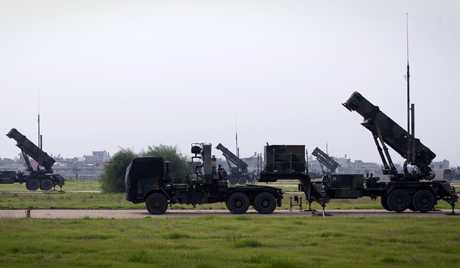
    Dutch Army Patriot defense missile system at an airbase in Adana

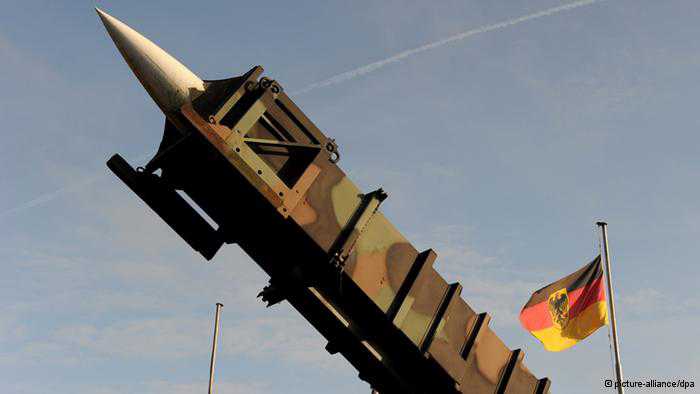
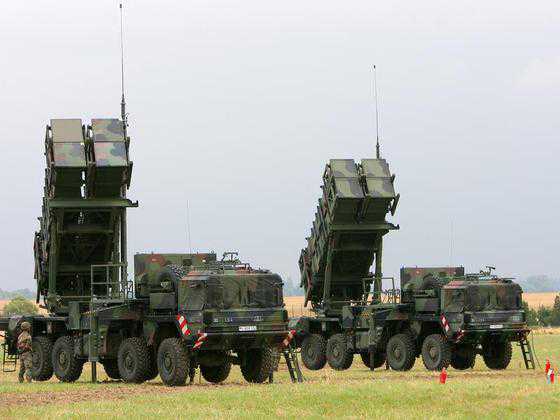
    The Turkish media have quoted the Defence Ministry as saying that hosting the six Patriot anti-aircraft missile batteries sent to southeastern Turkey by NATO will cost the country $8.5mln a year.

    Two of the batteries are from the US, two, from Germany, and two, from the Netherlands. They are supposed to protect Turkey against an air attack from across the country’s border with Syria.

    In a series of incidents last autumn, artillery shells fired from Syrian territory killed 5 people in a village in southeastern Turkey.

    Voice of Russia, RIA

    via Turkey Patriots will cost the country $8.5mln a year: Voice of Russia.

  • NATO sets up missile defense shield in Turkey

    NATO sets up missile defense shield in Turkey

    The Patriot missile defense system is meant to protect Turkey, in case neighboring Syria launches an attack. But the area is too big for the existing missile defense shield – not all cities are covered.

    0,,16391560_401,00

    At the beginning of February 2013, German, Dutch and US patriot missiles are expected to be set up in southeastern Turkey, facing skywards. The sophisticated weapon systems are to deter possible missile attacks by Syria towards NATO ally, Turkey. The Germans are stationed in Kahramanmaras, the Dutch in the Mediterranean city of Adana and US troops in Gaziantep. Major cities like Diyarbakir or Batman lie outside the protection zone. The six patriot missiles will not suffice to effectively protect the 900 kilometer (560 miles) border with Syria.

    German Air Force spokesman Lieutenant Colonel Markus Werther stressed in an interview with DW that the decision regarding the German forces’ location had been made within NATO’s framework. There was close cooperation between all countries involved, he said.

    “Together with our partners, the Netherlands, the USA and Turkey, Germany decided to go to Kahramanmaras,” Werther added. On January 8th, 2013, the German armed forces, the Bundeswehr, began shipping the missiles.

    Turkish soldiers patrol in the Turkish town of Ceylanpinar near the strategic Syrian border town of Ras al-Ain on November 14, 2012. (Photo. BULENT KILIC/AFP/Getty Images) The situation on the Turkish-Syrian border has been tense for months

    Patriot stationing a symbolic act

    The missiles, with a range of 68 kilometers, are only able to protect a few cities in the south of the country. Michael Brtoska, Scientific Director of the Institute for Peace Research and Security Policy at the University of Hamburg, sees the missile defense as a largely symbolic act.

    “The protection the missiles can theoretically offer against attacks from Syria is limited to small areas,” he explained.

    Large population centers do come within the protective zone. But more extensive protection is not possible with existing resources, Brzoska added.

    NATO patriot missiles have been stationed in Turkey before – during the Iraq wars in 1991 and 2003. When five people of Turkish nationality were killed in grenade attacks from the Syrian border in October 2012, Ankara called on NATO for support again. In early December 2012, the alliance gave its green light for the mission. Turkish media reported that Ankara had initially hoped for 18 to 20 systems along its southern border. But that would have meant that a considerable part of all existing patriot entities would have been deployed. Germany, the US and the Netherlands eventually offered to set up two systems each.

    Impossible to monitor no-fly-area

    Apart from threat analyses and logistical factors, the defensive character of the mission was a decisive factor when it came to choosing the location.

    “Most NATO member states were extremely concerned that the patriot missiles could also be used to target planes in the Syrian airspace,” said Brzoska.

    In early December, the German government stressed that the goal of the mission was not to set up or monitor a no-fly area above Syrian territory. NATO, which has the command for the mission, also confirmed the mission’s defensive character. Kahramanmaras and Adana are both 100 kilometers away from the border – too far to reach Syria. Similarly, if a US rocket was to be launched from Gaziantep, it would hardly reach Turkey’s neighbor in the south.

    Under motorcycle escort at the break of dawn Dutch Patriot defence missiles are transported from their base to the Eems harbor in Groningen. (Photo: EPA/Evert-Jan Daniels pixel) Patriot missiles on their way to Turkey in early January

    But the defense missiles can strengthen Turkish air raid defense systems.

    “In the unlikely case of Syria attempting to enter Turkish airspace with planes or even intermediate-range missiles, Turkish air raids alone would hardly be in a position to prevent that from happening,” Brzoska explained.

    Intermediate-range missiles in particular would overwhelm Turkish systems. The Syrian army has both intermediate-range missiles and chemical weapons. Neighboring countries are concerned that the government in Damascus could use these weapons as a last resort if threatened with defeat in the Syrian civil war.

    Ready within seconds after missile attack

    In the worst-case scenario, the patriot missiles could react instantly to approaching missiles, planes or drones. The airspace is monitored around the clock, said Lieutenant Colonel Werther. “In case of attack, which is still highly unlikely, the weapon system would stand ready for action within seconds,” he added.

    Brzoska sees no reason for the government in Damascus to launch attacks on Turkey. Under the conditions of the current mandate, he said, the risk for German soldiers to be involved in combat action is low.

    “Chances are very high that the soldiers are looking at a quiet time there,” Brzoska noted.

    via NATO sets up missile defense shield in Turkey | World | DW.DE | 20.01.2013.

  • Netherlands, Germany may send missiles to Turkey

    Netherlands, Germany may send missiles to Turkey

    (Reuters) – The Netherlands and Germany may send Patriot missiles to NATO ally Turkey to help defend the country’s border with Syria, Dutch news agency ANP reported on Sunday, citing the Dutch defense minister.

    Turkey has said it has intensified talks with NATO allies on how to shore up security on its 900-km (560-mile) frontier with Syria after mortar rounds fired from Syria landed inside its territory.

    “NATO does not exist for nothing,” ANP quoted Dutch Defense Minister Jeanine Hennis-Plasschaert as saying.

    A Dutch Defense Ministry spokesman said: “There is no request but the Netherlands and Germany are the only countries in Europe with Patriots.”

    The Dutch minister spoke to her German counterpart last week about a possible deployment, ANP said.

    A spokesman for Germany’s Defense Ministry said on Saturday NATO would consider any request from Turkey and confirmed that the United States, the Netherlands and Germany were the countries that had the appropriate Patriot missiles available.

    Turkey will formally ask NATO on Monday to set up missiles on its border with Syria due to growing concern about spillover from the civil war in its neighbor, Germany’s Sueddeutsche Zeitung newspaper reported on Saturday.

    NATO has said it will do what it takes to protect and defend Turkey. Turkey has said it is talking to its NATO allies about a possible deployment of Patriot surface-to-air missiles.

    NATO ambassadors would have to consider any request from Turkey and they have a regular weekly meeting on Wednesday but they could call a special one at any time. European Union defense and foreign ministers will be in Brussels on Monday for meetings.

    (Reporting by Gilbert Kreijger; Editing by Stephen Powell)

    via Netherlands, Germany may send missiles to Turkey: report | Reuters.

  • Queen Beatrix visits Turkey

    Queen Beatrix visits Turkey

    Queen Beatrix is in Turkey on a two-day visit as part of the celebrations to mark 400 years of diplomatic relations between the Netherlands and Turkey. Today, she will meet with students and scientists for lunch and this evening she is due to attend a dance performance followed by a reception for numerous participants in the cultural events organised to mark the anniversary.

    The Netherlands’ first diplomat to the Ottoman Empire, Cornelis Haga, was sent to Constantinople (now Istanbul) in March 1612. Since then, trade between the two countries has been strong. The Ottoman Empire defended the Dutch Protestant faith against persecution by the Spanish, giving rise to the Dutch saying “I’d rather be a Turk than a Roman Catholic.”

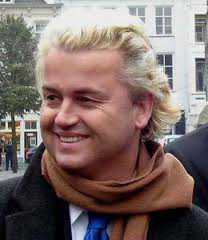
    A visit by Turkish President Abdullah Gül in April was marred by comments made by Freedom Party leader Geert Wilders who called the president a “Kurd-basher and Hamas-lover” and said he was not welcome. In turn, in an interview with Dutch daily De Telegraaf, President Gül called Mr Wilders an “Islamophobe”.

    via Queen Beatrix visits Turkey | The Muslim Times: A Blog to Foster Universal Brotherhood.

  • Turkey’s President Abdullah Gul Criticizes Geert Wilders

    Turkey’s President Abdullah Gul Criticizes Geert Wilders

    Turkey’s President Abdullah Gul is arriving this week in The Netherlands for a three day visit in commemoration of 400 years of relations between the two countries.

    Today he sent a message to the Hon. Geert Wilders of the Freedom Party (the PVV) junior member of the ruling Dutch coalition. The message: Wilders is an “extreme voice’. Notwithstanding that remark, Gul was still prepared to shake Wilders’ hand if an encounter occurred during his ceremonial visit to Holland. A Radio Netherlands news article, “Turkish President Calls Wilders an Islamophobe” citing an interview with Gul in De Telegraafnewspaper noted his concerns about Wilders:

    President Gül said, “Mr. Wilders represents an extreme voice, which feeds radicals.”

    He continued, saying because of Wilders “a negative us-against-them climate is developing in the whole of Europe, which is laying the foundation for ethnic religious discrimination.”

    Wilders has according to the Radio Netherlands report indicated months ago that Gul was not welcome in the Netherlands, despite the fact that the Dutch government had issued an invitation.

    Perhaps that was because the Justice and Development Party (AKP) government of which Gul is a leader would not accept a delegation of Dutch parliamentarians that included Wilders in 2010. As the Radio Netherlands article noted:

    At the time, a Turkish spokesperson said that Wilders was “such a fascist that besides in Turkey, he would not be welcome in other European capitals.”

    Wilders if anything is not fearful of Islam, as Gül’s remarks in the de Telegraaf interview imply. Wilders is not against Muslims, but rather against the Islamic doctrine that denies basic civil and human rights to women, those who leave the faith by personal choice and denigrates unbelievers, such as Jews, Christians, Hindus and Buddhists. Moreover, Wilders is a proponent of a US style First Amendment for The Netherlands and the EU that upholds the right to criticize any religion under the doctrine of free speech. Turkey and the other 56 members of the Organization of Islamic Cooperation are a virtual Caliphate seeking to impose Blasphemy laws on the Westunder the guise of allegedly combating intolerance of religions to silence any criticism of Islamic doctrine and totalitarian Shariah.

    Gul has been frequently cited as a prominent Turkish adherent to the doctrine of billionaire ex-patriate Sheikh Muhammed Fehtuleh Gulen,a resident in the US, who some hold as “the world’s most dangerous Islamist.” Gulen has created an international educational indoctrination system which propounds the return of Turkish hegemony in a rising Caliphate. A new Caliphate to replace the one that ended with the demise of the Ottoman Empire and creation of the modern secular Republic of Turkey under Kemal Ataturk in 1923. A secular republic that President Gul and PM Recep Erdogan of the ruling AKP party rejected. Instead the AKP leaders are most emphatic that Turkey should be ruled by Islamic doctrine. After all Erdogan has beenquoted saying: “there is no moderate or immoderate Islam, Islam is Islam”.

    As Wilders noted in response to today’s De Telegraaf interview with Gul:

    . . . that President Gül’s comments do not bother him. “Turkish humor: Christian-teaser, Kurd-basher, Hamas-friend and Islamist Gül complaining about tolerance.”

    via Turkey’s President Abdullah Gul Criticizes Geert Wilders | Red County.