Netherlands: “Turkey Now” festival to introduce Turkish art and culture
The 4th “Turkey Now” festival will begin in the Netherlands on February 23. The festival aims to introduce Turkish art and culture to Dutch people.
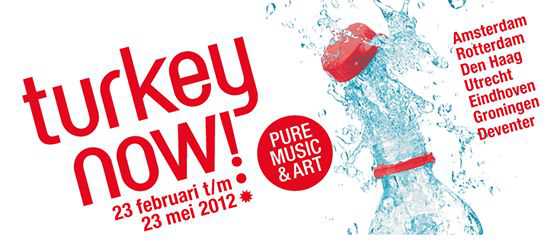
Netherlands: “Turkey Now” festival to introduce Turkish art and culture
The 4th “Turkey Now” festival will begin in the Netherlands on February 23. The festival aims to introduce Turkish art and culture to Dutch people.
By Anna Holligan BBC News, The Netherlands
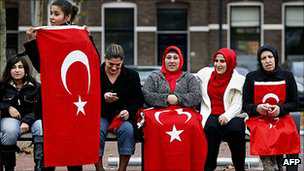
The Dutch government is facing a huge compensation claim after forcing Turkish immigrants to pay for integration courses.
A campaign group says 30,000 Turks took the courses, which have since been ruled to be in violation of an agreement between the EU and Turkey.
The interior ministry says most of them are not entitled to their money back.
But the Foundation for Victims of Integration is suing to reclaim their costs, of more than 100m euros (£87m).
The courses were introduced under the 2007 Civic Integration Act and meant that anyone who wished to emigrate to the Netherlands had to pass an exam first.
However, two months ago the Dutch Interior Minister, Piet Hein Donner, was forced to cancel the courses after the Netherlands Court of Appeals ruled they were in violation of an agreement between Turkey and the European Union which stipulates there can be no discrimination between Turkish and EU citizens.
The association agreement was designed to strengthen relations between Turkey and the EU.
Anyone who sat the exams after 16 August 2011 will be entitled to a refund.
But, speaking in parliament on Tuesday, a spokesperson for the interior minister said that: “The costs incurred by the Turkish people before that date were legitimate. Therefore those people who sat the exam before that date are not entitled to get their money back.”
The individual claims range from 1,000 to 5,000 euros for costs including travel, study expenses and exam fees.
Bilal Coskun, the lawyer representing the Turkish claimants, told the BBC: “This old law kept families apart. People had to stay in Turkey until they had passed the exam, some husbands didn’t see their wives for years.
“Our people suffered under the rule of the old integration policy – not just financially but emotionally too – and they are entitled to compensation for this.”
Mr Coskun says they are hoping to agree on a settlement before the case reaches court. But, on Tuesday, the government rejected that option saying: “The Turkish people are free to go to court and we will wait until the judges verdict.”
via BBC News – Turkish immigrants sue Dutch over integration policy.
By Mike Corder Associated Press
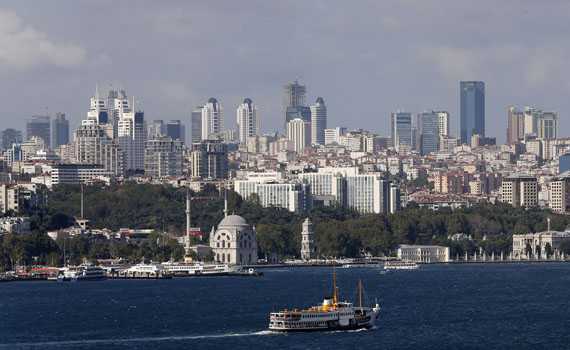
THE HAGUE, Netherlands—Dutch Queen Beatrix warned her subjects Tuesday to brace for a year of tough budget cuts as the government struggles to protect the economy from any shocks emanating from Europe’s debt crisis.
Beatrix’s speech to lawmakers in Parliament’s 13th century “Knights’ Hall” was the first written by the conservative government of Prime Minister Mark Rutte, which came to power last year pledging to slash euro 18 billion in government spending.
“The year ahead will be a year of tough savings measures that will hit everybody,” Beatrix warned, after riding from the Noordeinde Palace to Parliament in her gold-trimmed carriage through the crowd-lined streets of The Hague.
The measures included in Finance Minister Jan Kees de Jager’s budget already have been widely publicized after it was accidentally posted online last Thursday.
They include deep cuts to the country’s generous social security network and raising the retirement age from 65 to 66 in 2020 and to 67 five years later.
The government is forecasting economic growth of 1 percent in 2012, inflation of 2 percent and a budget deficit of 2.9 percent.
It has also warned that more savings may still be necessary, depending on developments in the debt crisis.
“A well-functioning European internal market and stable euro are essential for the government’s goals,” Beatrix said.
Opposition Labor Party leader Job Cohen slammed the government for a divisive package of savings.
“The pile of cuts by the Cabinet hits large groups of people,” Cohen said. “But the richest are being sheltered and the Netherlands will become weaker in the long term because of the plans.”
De Jager was formally presenting his budget package to lawmakers later Tuesday.
“The debt crisis underscores the importance of healthy government finances,” he tweeted after the queen’s speech. “Budgetary discipline is an absolute priority for this Cabinet.”
www.boston.com, September 20, 2011
The Netherlands will have to dig its heels in to withstand the coming economic storm, finance minister Jan Kees de Jager told MPs on Tuesday, as he formally handed over the government’s 2012 spending plans to parliament.
‘We are being threatened by something, but we don’t know what is heading for us, or when”, the minister said.
‘It is clear that 2012 is going to be a difficult year for a lot of people,’ De Jager said. ‘We have to make difficult choices and they will hurt.’
€70m too much
The Netherlands is a financially solid country, but still runs a deficit and the debt is increasing. This year alone the country will spend €70m too much every day.
The cabinet is trying to carve out a leading role in restoring financial stability to the EU, he said. This is why the government is keen to tighten up eurozone budget rules and prevent the spread of the Greek crisis. In the long term ‘we have to ensure our weaker brother does not bring down other countries in its wake,’ De Jager said.
MPs and ministers will hold two days of debate on the 2012 plans on Wednesday and Thursday. The actual documents were published last week but ministers have refrained from commenting on them since then.
www.dutchnews.nl, 20 September 2011
By STEVEN ERLANGER
AMSTERDAM — Anders Behring Breivik, the Norwegian who admitted to mass killings last month, was obsessed with Islam and had high praise for the Netherlands, an important test case in the resurgence of the anti-immigrant right in northern Europe.
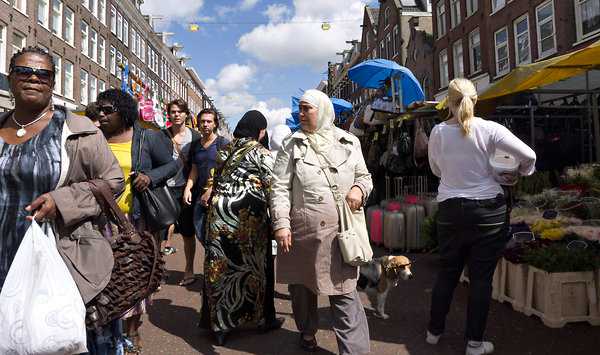
Albert Cuyp Market, on a popular street in Amsterdam. In light of the mass killings in Norway, the Netherlands’ population of Muslim immigrants from Morocco and Turkey has stirred debate.
The sometimes violent European backlash against Islam and its challenge to national values can be said to have started here, in a country born from Europe’s religious wars. After a decade of growing public anger, an aggressively anti-immigrant and anti-Muslim politician, Geert Wilders, leads the third-largest party, which keeps the government in power.
In Slotervaart, a majority immigrant neighborhood in southwestern Amsterdam, Maria Kuhlman and her friends watched Muslim families stroll by on a Ramadan afternoon, some of the men in robes and beards, the women wearing headscarves. A large blond woman shouted, “Go Wilders!”
Mr. Wilders’ Freedom Party, which combines racist language with calls for more social spending, won 15.5 percent of the vote in June 2010. He was recently acquitted of charges of hate speech for comparing the Koran to “Mein Kampf” and calling mosques “palaces of hatred.” Mr. Wilders has said that immigrant Muslims and their children should be deported if they break the law, or engage in behavior he has described as “problematic, ” or they are “lazy.” He also warns of the supposed Muslim plot to create “Eurabia.” He declined repeated interview requests.
While many Dutch recoil at his language, he touches on real fears. “Sometimes I’m afraid of Islam,” Ms. Kuhlman said. “They’re taking over the neighborhood and they’re very strong. I don’t love Wilders. He’s a pig, but he says what many people think.”
Now, after Norway, the Dutch are taking stock. The killings frightened everyone, said Kathleen Ferrier, a Christian Democrat legislator born in Surinam, who had objected to her party joining a Wilders-supported government. “Norway makes it clear how much Dutch society is living on the edge of its nerves,” she said. “Wilders says hateful things and no one objects. We have freedom of speech, but you also have to be responsible for the effect of your words.”
Taboos about discussing ethnicity and race — founded in shame about delivering Dutch Jews to the Nazis — are long gone.
via Immigration and Islam Raise Questions of Dutch Identity – NYTimes.com.

By Gregg Keizer
Computerworld – The tally of digital certificates stolen from a Dutch company in July has exploded to more than 500, including ones for intelligence services like the CIA, the U.K.’s MI6 and Israel’s Mossad, a Mozilla developer said Sunday.
The confirmed count of fraudulently-issued SSL (secure socket layer) certificates now stands at 531, said Gervase Markham, a Mozilla developer who is part of the team that has been working to modify Firefox to blocks all sites signed with the purloined certificates.
Among the affected domains, said Markham, are those for the CIA, MI6, Mossad, Microsoft, Yahoo, Skype, Facebook, Twitter and Microsoft’s Windows Update service.
“Now that someone (presumably from Iran) has obtained a legit HTTPS cert for CIA.gov, I wonder if the US gov will pay attention to this mess,” Christopher Soghoian, a Washington D.C.-based researcher noted for his work on online privacy, said in a tweet Saturday.
Soghoian was referring to assumptions by many experts that Iranian hackers, perhaps supported by that country’s government, were behind the attack. Google has pointed fingers at Iran, saying that attacks using an ill-gotten certificate for google.com had targeted Iranian users.
All the certificates were issued by DigiNotar, a Dutch issuing firm that last week admitted its network had been hacked in July.
The company claimed that it had revoked all the fraudulent certificates, but then realized it had overlooked one that could be used to impersonate any Google service, including Gmail. DigiNotar went public only after users reported their findings to Google.
Criminals or governments could use the stolen certificates to conduct “man-in-the-middle” attacks, tricking users into thinking they were at a legitimate site when in fact their communications were being secretly intercepted.
Google and Mozilla said this weekend that they would permanently block all the digital certificates issued by DigiNotar, including those used by the Dutch government.
Their decisions come less than a week after Google, Mozilla and Microsoft all revoked more than 200 SSL (secure socket layer) certificates for use in their browsers, but left untouched hundreds more, many of which were used by the Dutch government to secure its websites.
“Based on the findings and decision of the Dutch government, as well as conversations with other browser makers, we have decided to reject all of the Certificate Authorities operated by DigiNotar,” Heather Adkins, an information security manager for Google, said in a Saturday blog post.
Johnathan Nightingale, director of Firefox engineering, echoed that late on Friday.
“All DigiNotar certificates will be untrusted by Mozilla products,” said Nightingale, who also said that the Dutch government had reversed its position of last week — when it had asked browser makers to exempt its DigiNotar certificates.
“The Dutch government has since audited DigiNotar’s performance and rescinded this assessment,” Nightingale said. “This is not a temporary suspension, it is a complete removal from our trusted root program.”
On Saturday, Piet Hein Donner, the Netherlands’s Minister of the Interior, said the government could not guarantee the security of its websites because of the DigiNotar hack, and told citizens not to log into its sites until new certificates had been obtained from other sources.
The DigiNotar breach is being audited by Fox-IT, which told the Dutch government that it was likely certificates for its sites had been fraudulently acquired by hackers.
Several security researchers said the move by browser makers puts an end to DigiNotar’s certificate business.
“Effectively a death sentence for DigiNotar,” said Jeremiah Grossman, CTO of WhiteHat Security, in a Friday tweet.
Mozilla was scathing in its criticism of DigiNotar.
Nightingale ticked off the missteps that led Mozilla to permanently block all sites signed with the company’s certificates, including DigiNotar’s failure to notify browser vendors in July and its inability to tell how many certificates had been illegally obtained. “[And] the attack is not theoretical,” Nightingale added. “We have received multiple reports of these certificates being used in the wild.”
Markham went into greater detail on the hack and its ramifications. “It has now emerged that DigiNotar had not noticed the full extent of the compromise,” said Markham in a Saturday post to his personal blog. “The attackers had managed to hide the traces of the misissuance — perhaps by corrupting log files.”
Because the Google certificate that prompted DigiNotar to acknowledge the intrusion was obtained before most of the others, Markham speculated that there had actually been two separate attacks, perhaps by different groups.
“It is at least possible (but entirely speculative) that an initial competent attacker has had access to [DigiNotar’s] systems for an unknown amount of time, and a second attacker gained access more recently and their less-subtle, bull-in-a-china shop approach in issuing the [hundreds of] certificates triggered the alarms,” he said.
Last week, Helsinki-based antivirus company F-Secure said it had found signs that DigiNotar’s network had been compromised as early as May 2009.
Mozilla will update Firefox 6 and Firefox 3.6 on Tuesday to permanently block all DigiNotar-issued certificates, including those used by the Dutch government.
On Saturday Google updated Chrome to do the same.
Gregg Keizer covers Microsoft, security issues, Apple, Web browsers and general technology breaking news for Computerworld. Follow Gregg on Twitter at @gkeizer, on Google+ or subscribe to Gregg’s RSS feed . His e-mail address is [email protected].
www.computerworld.com, 4 September 2011
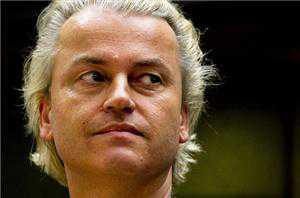
Far-right Dutch politician Geert Wilders has been acquitted by a court in Amsterdam where he was on trial for inciting hatred and discrimination against Muslims.
Wilders, leader of the Freedom Party, has described Islam as a “fascist ideology”, comparing the Quran to Adolf Hitler’s Mein Kampf. He was acquitted on all five charges that were pressed against him.
The judge on Thursday said that Wilders’ statements were “rude and condescending” but not a criminal offence according to Dutch law.
“The bench finds that your statements are acceptable within the context of the public debate,” the judge told Wilders, who has been on trial in the Amsterdam regional court since last October.
Wilders has said he has a “problem with Islamic tradition, culture, [and] ideology; not with Muslim people”.
The judge interpreted Wilders’ remarks as challenging Islam as an ideology, which is not a criminal offence in the Netherlands. “[…] although gross and degenerating, it did not give rise to hatred,” the judge said.
Wilders supporters applauded and he smiled as he left the courtroom.
Freedom of speech
A collection of minority groups that view Wilders’ comments as having overstepped the boundaries of free speech first pressed charges in 2007; however, the Dutch public prosecution refused to pursue Wilders, saying it did not believe in a successful outcome to the case.
In 2009 an Amsterdam appeals court overturned that decision and ordered an investigation into “Fitna”
(“Discord” in Arabic) – a short film Wilders produced on alleged Islamic extremism.
The case against Wilders started in January 2010, but then collapsed following claims that the judges were biased. It was re-started a month later.
Wilders’ supporters labelled the case a left-wing conspiracy and a head-on attack on freedom of expression in the Netherlands.
On the other side of the spectrum, anti-Wilders groups warned the plaintiffs of the consequences of giving the politician a platform, fearing it would only raise his profile further.
Wilders formed his Freedom Party [PVV] – now the country’s third largest party – after defecting from the VVD [right-wing liberals] in 2004 and has seen his following grow ever since.
Wilders’ anti-Islamic and anti-establishment ideas won the PVV 15 per cent of the vote at the 2010 election.
Wilders, who remained silent throughout most of the proceedings, argued in his final statement on 6 May that: “The Netherlands is under threat of Islam. Truth and freedom are inextricably connected. We must speak the truth because otherwise we shall lose our freedom.”
He reminded the court of Dutch politician Pim Fortuyn, who was murdered in 2002 by a left-wing environmentalist for his political ideas, and Dutch film maker Theo van Gogh, who was murdered by a Muslim extremist in 2004 after making comments on Islam.
“I am here because of what I have said,” Wilders stated, “I am here for having spoken. I have spoken, I speak and I shall continue to speak. Many have kept silent, but not Pim Fortuyn, not Theo van Gogh, and not me.”
?
via Dutch MP acquitted in ‘hate’ trial – Europe – Al Jazeera English.