Category: The Netherlands

  • OPEN LETTER to Dutch Councillors

    OPEN LETTER to Dutch Councillors

    GAME OVER!

    Mr./Mrs.
    Don Ceder, Kamerlid
    Chris Stoffer, Kamerlid
    Derk Boswijk, Kamerlid
    Isa Kahraman, Kamerlid
    Caroline van der Plas, Kamerlid

    It is with great concern and astonishment that I have learnt about your motion, submitted on behalf of your group on 10 April 2025, asking the Government to ensure that, by 24 April 2025 at the latest, ‘the Armenian GENOCIDE should no longer be referred to as the Armenian PROBLEM, but as the Armenian GENOCIDE’.

    In doing so, I would like to state in advance that you are committing a legal offense, especially in the following points.

    First issue:

    In your motion;

    Instead of the expression ‘Armenian PROBLEM’, which has been used in the talks up to this time, you demand that the ARMENIAN GENOCIDE be directly mentioned.

    In other words,

    You make a claim that “THE ARMENIAN GENOCIDE HAPPENED”.

    The claimant is obliged to PROVE his claim.

    Otherwise, this constitutes a crime of slander and defamation. In addition, there is no CRIMINAL LAW that justifies this claim.

    Another fundamental principle in Criminal Law is based on the principle of non-retroactivity of the law.

    An act without criminal sanction at the time of the incident cannot be punished later.

    It is Article 7 of the Criminal Law of the European Convention on Human Rights that says this.

    So, what does Article 7 of the European Convention on Human Rights say?

    There can be no punishment without law.

    Article 1: “No one shall be held guilty of any criminal offence on account of any act or omission which did not constitute a criminal offence under national or international law at the time when it was committed. Nor shall a heavier penalty be imposed than the one that was applicable at the time the criminal offence was committed.”

    In other words:

    Nullum crimen, nulla poena sine lege:

    “There can be no punishment without the law.” To cut to the chase:

    Was there a law on genocide in 1915, the year in which the so-called crime of genocide that you accuse the Ottomans [Turks] was committed?

    No.!!!

    Then you are rowing in vain.

    The Convention on the Prevention and Punishment of Genocide (the Convention) was adopted by the United Nations in 1948 (this is the international pillar of the law, as Article 7 ECHR) and entered into force on January 12, 1951.

    Let’s turn to domestic law;

    An act is punishable only if, before it is committed, criminal sanctions have been prescribed by law.

    Let’s assume that “genocide” was committed, since there was no law defining “genocide” at the time, you cannot impose sanctions under the name of “genocide”.

    Not in parliament, not at all.

    You MUST give this action another name!!!

    This new name you will give is not a crime of genocide.

    You [the Turks] occupied the Ottoman Empire, imposed the Treaty of Sevres on us and wanted to establish “Armenia” and “Kurdistan” in Anatolia, and we defended

    ourselves within the framework of the general rules of war.

    Who is LEGALLY right in this matter: Will Dutch politicians or Turkish politicians decide for this?

    Or do you want to suggest that the decision of a CHRISTIAN parliament is superior to the decision of independent courts of law?

    No problem, only then, we should not talk about the legal decision, but about the church’s decision of ENGISISM – SHERIA!!!

    As far as I know, due to the separation of powers in the Netherlands, politicians are not criminal judges.

    Criminal judges in the courts impose the sentence.

    Moreover, in order to prevent this unlawfulness, the rule of non-retroactivity of the law is also taken as a basis.

    Let’s assume that you apply the law retroactively, then again there is no problem and this time we should not talk about the Netherlands, which is a democracy, but about the

    REPUBLIC OF THE BANANA.

    Because if you disregard Article 7 of the ECHR and the Dutch Constitution, then everyone has the right to take their rights into their own hands.

    Second issue:

    Your motion constitutes a CRIME according to the Dutch Constitution and Article 7 of the European Convention on Human Rights, as well as according to the Dutch Constitution, which regulates the separation of powers (separating the powers of the politician from those of the judge and the police).

    Politicians are, according to the Dutch Constitution, only legislators and are strictly forbidden to exercise the power to act as judges or police officers.

    Moreover, you should know that by interpreting/assuming, distorting, and portraying the historical event as genocide, you are committing two kinds of CRIME, both politically and legally, in accordance with the basic principle that CRIMINAL LAW FORBIDS ANALOGY.

    According to the basic principle of “Nulla poena sine lege stricta” “Analogy is forbidden in criminal law”, a judge, let alone a politician, has no authority to make an analogy in his/her conscience, when sentencing someone, i.e. when accusing someone of being GENOCIDAL.

    Even if the judge finds the accused person guilty in his/her conscience, he/she cannot punish him/her according to his/her conscience if the act of the accused person does not fit the description in the law, the opposite situation/decision would be arbitrary and would constitute a crime of law.

    Back to the topic at hand.

    Since there was no penal code in 1915 defining the punishment for genocide, there can be no punishment based on this.

    Let alone a politician trying to impose punishment by comparing historical events, IN CRIMINAL LAW; a judge has no authority to interpret the law.

    But you put yourself in the place of the JUDGE, the COURT.

    This understanding of law may suit your understanding of Assyrian or Christian in the Netherlands, but according to international LAW NORMS, you have committed a crime.

    Moreover, even if the law in question is incomplete, the judge cannot make analogy in CRIMINAL LAW. And you!!!

    Who says that, the Dutch Constitution!!!!

    However, I have been living in Europe for more than 50 years and you have constantly nagged me, saying: “This is Europe, democratic laws apply here, adapt (integrate).”

    Your motion is based on the ALLEGATION that an act of genocide, which requires criminal sanctions, has been committed.

    In your motion, you also accuse the Ottoman Government [Turks] of genocide and hold the State of the Republic of Turkey, as the legal successor and heir of the Ottoman Empire, and its citizens responsible for the legal consequences of the genocide you claim.

    Accordingly, you are acting as if the crime attributed to the Ottoman Government has been PROVEN in a court of law, and in this sense, you are guilty of insult and slander under Articles 261 and 262 of the Dutch Criminal Code.

    Mr. Isa and your friends do not have such a final court decision?

    In this sense, making motions and passing resolutions in parliament without a court ruling to get someone to say “You are a murderer” or “You are a criminal” is the crime of slander and we reserve the right to file a lawsuit against these persons.

    And the result of the possible LIBEL case that will be concluded in our FAVOR will go down in the WORLD as an EXAMPLE DECISION, let it be known.

    Dear Dutch councilors,

    Not only we as ordinary citizens, but also the Dutch authorities or courts and especially YOU POLITICIANS are obliged to know these legal rules. Just to say:

    Ignorance of Articles 261 and 262 of the Dutch Criminal Code is not an excuse to escape a criminal offense: “Ignorantia legis non excuat” !!!

    It is a principle of law that a person’s ignorance of the law does not, by itself, absolve that person from responsibility.

    Now, I am going to talk about the FINAL DECISION of the Court of Justice of the European Union, which will upset all your imperial plans, which was taken on July 20, 1987, by the European Parliament, i.e. the whole of Europe, i.e. all of you, i.e. the 28 EU-member states, on the Armenian “genocide”, with the recommendation number “C 190”: “Turkiye cannot become a member of the EU unless it acknowledges the Armenian genocide”.

    Year 1999

    The EU and the then Prime Minister of the Republic of Turkiye, Mr. Bülent Ecevit, were at loggerheads over whether Turkiye could be a candidate for EU membership.

    Prime Minister Ecevit saw the challenge from you, the Europeans, and said: “We don’t want those who don’t want us” and finally, with the scenes you will remember, you invited

    Prime Minister Mr. Ecevit to Helsinki the very next day and decided on Turkiye’s candidacy for EU membership.

    Upon this, you have infuriated the Armenian Diaspora, with which you have religious sympathies, and your friend, the Armenian Diaspora, by becoming angry with you:

    – Referring to the July 20, 1987 European Parliament resolution C-190; by saying “Turkiye should first acknowledge the genocide it committed against Armenians and then be granted candidate status for membership, otherwise the EU would be undermining its extra-contractual responsibility” filed a lawsuit

    1-  against the European Parliament,

    2  – against the Council of the European Union and

    3  – against the European Commission,

    i.e. against ALL of you at the Court of Justice of the European Union [CJEU].

    This case was dismissed by the First Chamber of the CJEU on December 17, 2003 with Judgment No. T-346/03.

    The Armenian Diaspora then appealed (challenged the judgment) and the appeal, which was heard by the Fourth Chamber of the CJEU, was again dismissed on 17.04.2004 with the final judgment C-18/04 P, in which your religious friends, the Armenians, were also ordered to pay court costs of €30,000.

    Evidence;

    I enclose the following in the attachment:

    1 – European Parliament Resolution “C 190” and

    2-   The judgment of the First Chamber of the Court of Justice of the European Union, Case No: T-346/03 and the finalized judgment of the Court of Justice of the European Union, No.

    C-1804 P, in which the European Court of Justice sentenced the Armenian Diaspora to pay 30 thousand Euros in court costs in this case.

    [I can send you the Turkish translation of the aforementioned judgment of the ECJ, made by me as a sworn translator, to your address]

    And now I am telling you again:

    ”Don’t you think that the 28 EU states, including the Netherlands, legally humiliate yourselves by retaking the null and void political decision you took in 1987, now as the Netherlands, as a single state”?

    Or did you say that the Turks are incapable of understanding such LEGAL DETAILS and spoke in vain?

    Therefore, I demand that you immediately withdraw the above-mentioned motion, which has no legal basis.

    If you do not withdraw your motion, which has no legal basis, and despite everything, try to take a decision by submitting it to a vote in the Dutch Parliament and if a decision is taken on this issue, I would like to inform you that I reserve the right to initiate the necessary legal proceedings against the mover and the drafters of this motion in order to defend my legal rights, in order to ensure that the legislative, judicial and executive powers that exist on paper in the Netherlands are applied in practice.

    May 05, 2025.

    Mr. Isa Kahraman and his friends, I ask you now; “for all these reasons, am I on the wrong track?

    I would be grateful if you could enlighten me on this issue. With friendly greetings,

    Refik Mor
    [2003-2018 Neumünster Councillor-Germany] 
    Fehrsstr.8 24536 
    Neumünster-Germany 

    Additional Note

    Mr. Isa Kahraman and his party colleagues, on June 2, 2016, the German Bundestag, like you, made a LEGAL mistake and passed a resolution in the Bundestag stating that “The Armenian genocide happened”.

    However, as a result of the 6-page LEGAL CRIMINAL NOTICE I sent to all members of the Bundestag on June 2, 2016, the Bundestag held a press conference apologized in a way.

    As a result, to summarize;

    The so-called Armenian genocide allegation has reached a LEGAL resolution. A legally resolved problem is no longer a problem.

    The Turks have a RELIEVED CONSCIENCE in this matter!
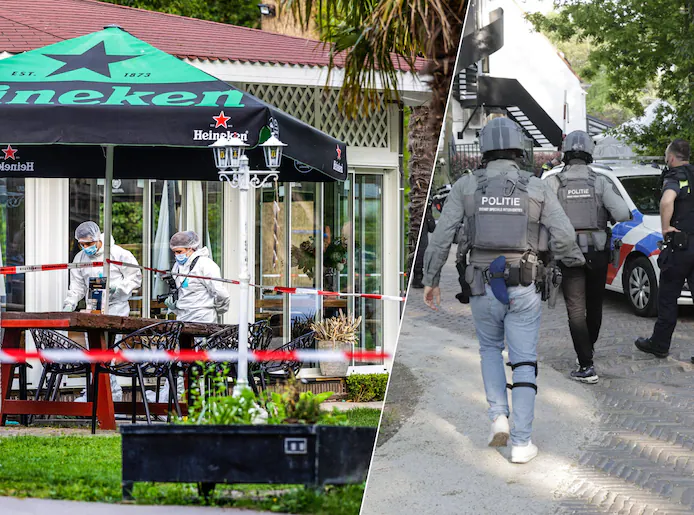
  • The Cemil Önal Assassination: A Dutch Security Lapse or Deliberate Negligence?

    The Cemil Önal Assassination: A Dutch Security Lapse or Deliberate Negligence?

    On May 1, 2025, the assassination of Cemil Önal in Rijswijk, the Netherlands, marked a disturbing turning point not only for the world of organized crime but also for international law, intelligence cooperation, and state security. Önal was shot dead on a hotel terrace—a high-profile witness silenced in the open. The most pressing question remains: how could someone with such a critical dossier and insider knowledge be left so vulnerable?

    Dutch Media Headlines on the Assassination

    Leading Dutch media outlets gave wide coverage to the assassination:
    • De Telegraaf and Algemeen Dagblad ran headlines such as: “Mysterious Assassination in Rijswijk,” “Man of Turkish Origin Shot Dead in Hotel Room,” and “Missing Witness with Ties to Organized Crime Silenced.”
    • NOS reported: “Man Assassinated in Rijswijk Was Murder Suspect in Turkey,” referring to Önal’s alleged links to murders in Northern Cyprus.
    • NU.nl stated: “Police Confirm Rijswijk Victim Was Figure in Turkish Underworld.”
    • De Gelderlander and Nieuwsblad highlighted Önal’s tensions with high-level political circles in Turkey and suggested a possible link to the motive.

    Assassinated Under State Watch: Security or Open-Door Policy?

    Cemil Önal was no ordinary figure. He had provided a 120-page statement to Dutch and American intelligence agencies on the Halil Falyalı murder, illicit betting networks, and international money laundering operations. Such a high-value informant should have been under maximum protection from both the AIVD (Dutch General Intelligence and Security Service) and the CJIB (Central Judicial Collection Agency). But the opposite was true.

    Önal was staying openly at a hotel in Rijswijk—a neighborhood with a large Turkish population and known intelligence risks. The hotel itself was reportedly owned by Turkish nationals, information easily accessible in the local community. Despite having repeatedly informed the prosecutor’s office of threats to his life, no effective protection was provided. Critical questions arise:
    • Why did the Dutch government fail to secure Önal’s safety?
    • Why was he allowed to reside in a high-risk area instead of a secure, undisclosed location?
    • Was this a grave oversight—or a deliberate “look the other way” policy?

    Intelligence Failure or Diplomatic Apathy?

    This was not merely a murder—it was a diplomatic and intelligence failure of the highest order. A country like the Netherlands, committed to the rule of law, has now exposed a fatal weakness in its witness protection system. The Önal case proves that intelligence sharing and witness security protocols, though present on paper, failed in practice.

    Who Can Witnesses Trust Now?

    In the aftermath of this assassination, potential whistleblowers and informants will no longer see safety as their first option—but flight. Cemil Önal, a key witness who should have been protected by the state, was instead left to be executed. This was not just a bullet to his chest—it was a blow to anyone who believes in the protection of justice and the power of truth.

    Conclusion

    The Cemil Önal assassination is not merely the targeted killing of one man—it is a dark test of the Dutch state’s security reflexes, intelligence capabilities, and diplomatic responsibilities. The lessons to be drawn extend beyond the Netherlands, reaching every country engaged in the fight against transnational crime. The question now is this: What will the Dutch state do to ensure it never repeats such negligence, such willful blindness, or such a fatal security lapse?

  • Dutch Justice Ministry employee: ISIS a Zionist conspiracy

    Dutch Justice Ministry employee: ISIS a Zionist conspiracy

    THE HAGUE, Netherlands (JTA) — A senior employee of the Dutch Justice Ministry said the jihadist group ISIS was created by Zionists seeking to give Islam a bad reputation.

    Yasmina Haifi, a project leader at the ministry’s National Cyber Security Center, made the assertion Wednesday on Twitter, the De Telegraaf daily reported.

    “ISIS has nothing to do with Islam. It’s part of a plan by Zionists who are deliberately trying to blacken Islam’s name,” wrote Haifi, who described herself on the social network LinkedIn as an activist for the Dutch Labor Party, or PvdA.

    Haifi later removed her original message, explaining, “I realize the political sensitivity in connection with my work. That was not my intention.”

    jtaTwo right-wing lawmakers, Joram van Klaveren and Louis Bontes of the VNL faction, asked the ministry how one with such views reached a prominent position in the ministry and if Haifi’s employment constituted a security risk.

    A series of rallies supporting ISIS, which is considered a terrorist organization in many Western countries, were held in the Hague in July and earlier this month. Some demonstrators called for violence. The demonstrations on July 2 and 24 featured calls to kill Jews.

    When anti-ISIS demonstrators tried to march through the heavily Muslim neighborhood of Schilderswijk on Aug. 10 to express their disapproval, a crowd of approximately 200 men barricaded the main street and staged an illegal counter demonstration in support of ISIS.

    Some of the protesters hurled stones at police who tried to remove the obstacles. Six people were arrested

    www.jta.org,

  • Caribbean states demand reparations from European powers for slave trade

    Caribbean states demand reparations from European powers for slave trade

    Most of the Caribbean nations have adopted a single plan to solicit from former slaving nations an apology, more aid and damages for 300 years of slavery, which they say have hobbled their economies and public health

    slavery
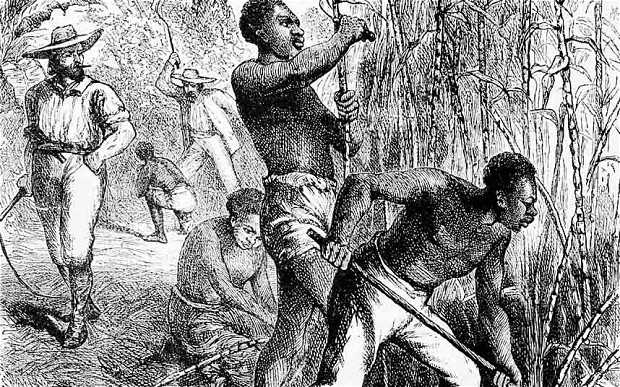
    Sugar Plantation Slaves 1858 engraving of slaves in the British West Indies working the sugar cane Photo: Lordprice Collection/ Alamy

    By Philip Sherwell, New York

    A coalition of Caribbean countries has unveiled its demands for reparations from Britain and other European nations for the enduring legacy of the slave trade.

    The leaders of 15 states adopted a wide-ranging plan, including seeking a formal apology from former colonial powers, debt cancellation, greater development aid as well as unspecified financial damages for the persisting “psychological trauma” from the days of plantation slavery.

    The series of demands to be made of former slaving nations such as Britain, France, Spain, Portugal and The Netherlands were agreed at a closed-door meeting of the Caribbean Community (Caricom) in St Vincent and the Grenadines.

    The Atlantic slave trade took place from the 16th through to the 19th centuries.

    The group hired Leigh Day, the British law firm, to push their claims after the company secured a £20 million compensation award for Kenyans who were tortured by colonial authorities during the Mau Mau rebellion in the 1950s.

    The reparations debate has long simmered in the Caribbean where many blame slavery for modern ills, ranging from economic weakness to health epidemics such as diabetes and hyper-tension allegedly caused by their ancestors’ poor diets.

    Caricom is pushing for increased technological assistance as it says European powers shackled the region during the world’s industrialisation by confining it to producing and exporting raw materials such as sugar.

    The plan also demands an increase of aid for public health and educational and cultural institutions such as museums and research centres.

    And it calls for the creation of a “repatriation programmes” to help resettle members of the Rastafarian movement in Africa. Repatriation to Africa has long been a central belief of Rastafarians.

    Martin Day, of Leigh Day, said he would request a meeting with European officials to seek a negotiated settlement, but would pursue a legal complaint if Caribbean nations are not satisfied with the outcome of any talks.

    It has been 180 years since Britain abolished slavery but the demand for an unqualified apology remains as controversial as the calls for financial damages.

    In 2007, Tony Blair, the then prime minister, expressed “deep sorrow and regret” for the “unbearable suffering” caused by Britain’s role in slavery but stopped short of a formal apology. His words angered many in the Caribbean as inadequate and resonating of legal caution.

    The British government, which currently contributes about £15million a year in development to the Caribbean, said that it has not been presented with the demands, but has consistently signalled opposition to financial reparations.

    “The UK has been clear that we deplore the human suffering caused by slavery and the slave trade,” a Foreign Office spokesman said. “However we do not see reparations as the answer. Instead, we should concentrate on identifying ways forward with a focus on the shared global challenges that face our countries in the twenty-first century.”

    But Professor Verene Shepherd, the chairman of Jamaica’s reparations committee, told The Daily Telegraph last month that British colonisers had “disfigured the Caribbean”, and that their descendants should now pay to repair the damage.

    “If you commit a crime against humanity, you are bound to make amends,” she said. “The planters were given compensation, but not one cent went to the freed Jamaicans”.

    The Caricom nations highlighted the region’s enduring troubles as well the suffering of the victims of the trade in humanity and the profits made by the slaving powers.

    “The transatlantic slave trade is the largest forced migration in human history and has no parallel in terms of man’s inhumanity to man,” their claim reads. “This trade in enchained bodies was a highly successful commercial business for the nations of Europe.”

    www.telegraph.co.uk, 11 Mar 2014

  • Sentencing of Turkish pianist marks new low

    Sentencing of Turkish pianist marks new low

    MEP: Sentencing of Turkish pianist marks new low

    16.04.2013Posted in: Foreign Affairs, human rights, Policy Map, Timeline, Top Stories, Turkey

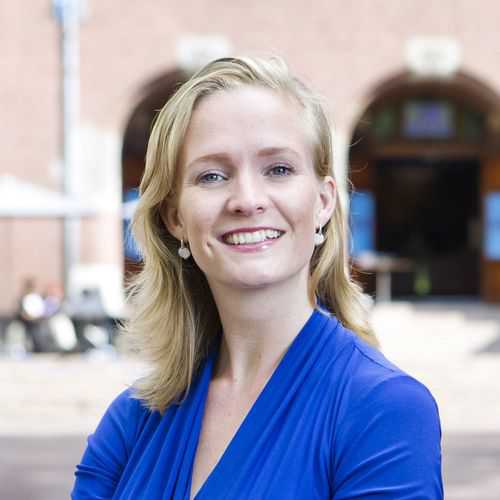
    Schaake1Dutch Member of European Parliament Marietje Schaake (D66/ALDE) is concerned about the sentencing of the well known Turkish pianist Fazil Say. A Turkish court sentenced Say to a suspended 10 months in jail for posting tweets in which he criticised religion and declared himself an atheist. Schaake is a long time critic of the on going erosion of the rule of law in Turkey that tramples fundamental rights. “This is only the last example in a series of sentences following criticism on religion or politics, while the statements are legal according to universal human rights and European law. The growing number of convictions leads to fear among journalists and artists and spurs self-censorship. This is a major problem and hampers the democratic reforms that Turkey so badly needs”, Schaake says.

    Statement
    The European Commission released a statement today saying Turkey has to respect freedom of expression, as enshrined in the European Convention on Human Rights, to which Turkey is a party. Schaake: “The deterioration of freedom of expression is a growing problem. As the government is becoming more authoritarian, and the Turkish judiciary threatens to lose its independence. The EU should draw its consequences if the Turkish government does not show though actions it is committed to substantial democratic and judicial reforms.”

    Accession process
    Schaake wants the EU to put freedom of expression at the heart of Turkey’s accession process. “The fact that Turkey is an important ally for the EU in facing shared challenges in the Middle East should not overshadow Turkey’s domestic human rights problems. When EU foreign policy chief Catherine Ashton recently visited Turkey she did not address these very real problems during the official press conference while these issues should be directly addressed with the Turkish government”, Schaake adds.

    Progress report
    This week the European Parliament will vote on its annual report assessing Turkey’s progress towards EU accession. Through several amendments Schaake pleads for respect for freedoms such as freedom of expression and digital freedoms as well as the rule of law in Turkey.

    ——

    For more information:

    Marietje Schaake 0031 6 3037 7921

    or her press officer Anna Sophia Posthumus 0032 484 201 518

  • Turkish child fostered by Dutch lesbians sparks diplomatic row

    Turkish child fostered by Dutch lesbians sparks diplomatic row

    AD20130331423730-Turks_demonstra

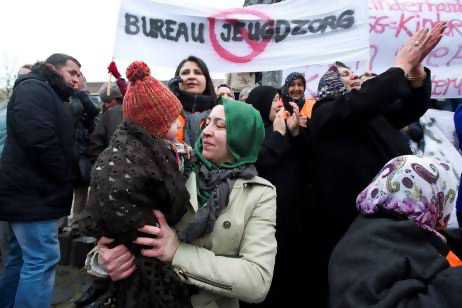
    Turks demonstrate against the Dutch youth care policy in Lelystad on March 22. A diplomatic row over a Turkish boy fostered by Dutch lesbian parents clouded the Turkish prime minister Recep Tayyip Erdogan’s visit to the Netherlands this month. Evert Ezlinga / AFP.

    Read more: http://www.thenational.ae/news/world/europe/turkish-child-fostered-by-dutch-lesbians-sparks-diplomatic-row#ixzz2P6cUzbe0
    Follow us: @TheNationalUAE on Twitter | thenational.ae on Facebook

    ISTANBUL // A nine-year-old boy in the Netherlands is at the centre of a row between Turkey and European countries over non-Muslims fostering Muslim children and eroding their “moral values and religious beliefs”.

    Yunus, a Dutch citizen of Turkish origin, was removed from his Turkish parents as a four-month-old by Dutch authorities over suspicions of child abuse and neglect. He was given to lesbian foster parents who have raised him ever since.

    Several court rulings have confirmed that Yunus’s biological parents were unfit to care for him, a Dutch official said last week. He said the boy had not been adopted by his foster parents.

    The case has become the focal point of a campaign by the Turkish government to prevent Muslim children of Turkish families in European countries from being raised by non-Muslim or homosexual foster parents.

    “If a child is given to a homosexual family, then this runs counter to general moral values and religious beliefs of [Turkish] society,” Recep Tayyip Erdogan said during a visit to the Netherlands this month.

    At the core of the row lies Ankara’s view that the about four million Turkish citizens and people of Turkish descent in European countries are exposed to threats to their cultural or religious identity – and that Turkey has the right, and the duty, to act.

    Mr Erdogan suggested that cooperation between the Turkish and Dutch governments could prevent similar problems in the future and said Turkish non-government organisations in the Netherlands could also help.

    Mark Rutte, the Dutch prime minister, dismissed the idea of any Turkish intervention, saying the case was a domestic issue.

    Mr Erdogan’s government regards itself as responsible for the welfare of Turks abroad, even if they have foreign passports. But this clashes with Europeans’ view of their sovereignty and ideas of integration, as well as with the continent’s more liberal values.

    Bekir Bozdag, a Turkish deputy prime minister who oversees Turkish expatriates, told parliament late last year that there were about 4,000 cases of children who had been forcibly taken away from Muslim-Turkish families in Europe and given to non-Muslim foster parents.

    He suggested that religious reasons were behind the trend, but offered no proof to back up the accusation.

    “These children are really Christianised,” Mr Bozdag said. “We are faced with a big tragedy.”

    Mr Bozdag called on European countries to have Turkish children raised by Turkish families if possible and promised that his government would do everything to “save our little ones”.

    Faruk Sen, chairman of the German-Turkish Foundation for Education and Scientific Research and an expert on the Turkish community in western Europe, said the Turkish government was partly to blame.

    “There are 700,000 Turkish families in Germany, but not enough come forward to take children” as foster families, Mr Sen said last week. He said Turkey’s diplomatic missions in Europe had failed to provide authorities with lists of potential Turkish foster parents.

    Referring to local, parliamentary and presidential elections coming up next year and in 2015, Mr Sen said efforts to please the conservative voter base of the Erdogan government were also shaping Ankara’s position on the issue. “They want to tell voters at home: ‘I am making sure that no Muslim child is raised by a Christian family’.”

    A lack of Muslim foster families had also been an issue in the case of Yunus in the Netherlands, the Dutch official said.

    “He was initially placed in a foster home and given to the couple after a while,” the official said. He also said that the biological parents of the boy had tried and failed to get Yunus back through the courts.

    As the case became public, the lesbian couple in the Netherlands went into hiding with Yunus. Dutch officials said there had been no specific threats, but the move to “another address” had been organised as a precaution.

    The Turkish family has turned to the Turkish government for help. Following Mr Erdogan’s visit to the Netherlands, Nurgul Azeroglu, Yunus’s biological mother, praised the stance taken by Ankara.

    “Our prime minister’s statement took a weight off my mind,” she told the Turkish Cihan news agency. “Now I have new hope that I can embrace Yunus again after nine years.”

    Ms Azeroglu appeared on Turkish television this month and called on Mr Erdogan to intervene in the case. She said she accidentally dropped the child from a poorly fastened carrying bag once – part of the reason he was removed from her care.

    Dutch news reports said the authorities in the Netherlands decided in 2008 to remove two of Yunus’s siblings from the Azeroglu family and place them in the same family with the boy, but that the children had been sent to Turkey by their family before the decision was implemented.

    * With additional reporting by Agence France-Presse and the Associated Press
    Read more: http://www.thenational.ae/news/world/europe/turkish-child-fostered-by-dutch-lesbians-sparks-diplomatic-row#ixzz2P6d85Sor
    Follow us: @TheNationalUAE on Twitter | thenational.ae on Facebook