Month: August 2010

  • German central banker criticised for remarks on Jews

    German central banker criticised for remarks on Jews

    German government leaders condemned a central bank executive on Sunday for making anti-Semitic remarks before the publication of his book on Monday that takes a critical look at Turk and Arab immigrants.

    Foreign Minister Guido Westerwelle and Defence Minister Karl-Theodor zu Guttenberg said Thilo Sarrazin was out of line for comments about Jews, remarks that were also criticised by Jewish leaders in the country responsible for the Holocaust.

    “All Jews share a particular gene, Basques share a certain gene that sets them apart,” Sarrazin told Welt am Sonntag newspaper ahead of the release of his book “Deutschland schafft sich ab” (Germany does away with itself).

    Sarrazin, a Bundesbank board member, denied he was stirring racism. He has faced heavy criticism for making disparaging comments about Muslim immigrants. Sarrazin has repeatedly created uproar for criticising Turks and Arabs in Germany.

    “There’s no room in the political debate for remarks that whip up racism or anti-Semitism,” Westerwelle said.

    “There are limits to every provocation and Bundesbank board member Sarrazin has clearly gone out of bounds with this mistaken and inappropriate comment,” Guttenberg added.

    Stephan Kramer and Michel Friedman, leaders in Germany’s Jewish community, also criticised Sarrazin, 65, a member of the centre-left Social Democrats (SPD) and former finance minister in the city-state of Berlin.

    “Someone who tries to define Jews by a genetic make-up is consumed by a racist mania,” Kramer said.

    “Enough already!” Friedman wrote in Bild am Sonntag newspaper. “No more tolerance for this intolerance. It’s okay to provoke thought but enough of this baiting and defamation. We don’t need any hate preachers, especially in the Bundesbank.”

    EMBARRASSMENT FOR BUNDESBANK

    Almost 3 million people of Turkish origin and an estimated 280,000 of Arab extraction live in Germany.

    Leaders in Sarrazin’s SPD have called for him to quit the party and resign from the Bundesbank.

    Sarrazin’s comments have also embarrassed Bundesbank President Axel Weber, who some German leaders have backed to succeed Jean-Claude Trichet as president of the European Central Bank next year.

    The Bundesbank has tried to distance itself from his remarks, saying they are his personal opinions and not linked to his role at the bank. The central bank requires evidence of “serious misconduct” to bring about Sarrazin’s dismissal.

    The central bank last year stripped Sarrazin of some of his duties. If the central bank’s board voted to remove Sarrazin, the move would then need the approval of the president.

    In the book, Sarrazin argues that Muslims undermine German society, marry “imported brides” and have a bad attitude. He said young Muslim men were aggressive due to sexual frustration.

    “Sadly, the huge potential for aggression in this group is obvious. The Arab boys can’t get at their Arab girls,” he said.

    “In the end, they use the German girls from the underclass who are easier to get, and then they hold them in contempt because they’re so readily available.”

    (Editing by Charles Dick)

    , 29 August 2010

  • UK demands release of Israeli soldier Gilad Shalit

    UK demands release of Israeli soldier Gilad Shalit

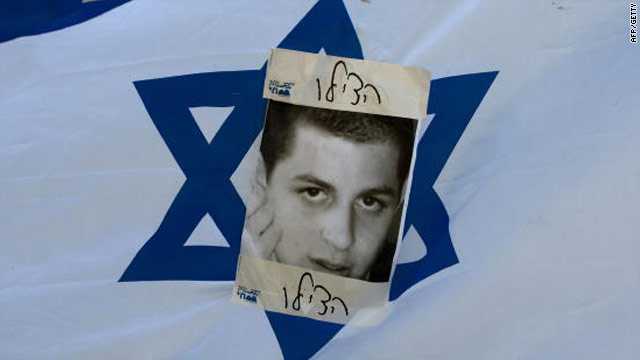
    An Israeli flag picturing abducted Israeli soldier Gilad Shalit and the word 'help,' seen during a march in Jerusalem on July 8, 2010.

    By the CNN Wire Staff

    (CNN)Britain on Saturday demanded the release of Gilad Shalit as the Israeli soldier marked his 24th birthday in Hamas’ captivity.

    “The thoughts of many in Britain are with Gilad Shalit and his family,” the Foreign Office said.

    “His detention is unjustifiable and unacceptable. The British Government demands his immediate and unconditional release.”

    Shalit has been held captive since June 25, 2006, when Palestinian militants from Gaza captured him.

    The militants had tunneled into Israel and attacked an Israeli army outpost near the Gaza-Israel-Egypt border, killing two soldiers in the assault.

    Israel immediately launched a military incursion into Gaza to rescue Shalit, then 19, but failed to free him.

    Since being imprisoned by Hamas, Shalit has not been allowed any contact with the outside world, nor any visits by the Red Cross. Details of his incarceration and physical condition remain unknown.

    In October 2009, Hamas released a tape of Shalit as a proof of life, in which he urged the Israeli government to do more for his safe release.

    Shalit’s family has been working to free the soldier and ramped up their efforts during the current holy month of Ramadan.

    Noam Shalit, the soldier’s father, recently appealed directly to Palestinians in Gaza to put pressure on their Hamas leadership for a prisoner swap during the Muslim holy month of Ramadan, which ends September 9.

    The father has repeated his stance that the Israeli government should release 1,000 prisoners, including 450 whose release Hamas has demanded in exchange for his son.

    He has been holding a vigil outside the home of Israeli Prime Minister Benjamin Netanyahu since early July, when he led a march to his doorstep to support a prisoner exchange as a way to release his son.

    This Ramadan is different than the previous four, Shalit said, because there is now a deal that was put on the table at the beginning of the year by a German mediator.

    “If the two sides of the conflict show some flexibility, it will be possible to make an agreement,” Shalit said.

    Such an agreement, Shalit said, would benefit thousands of Palestinian families who would have their fathers and sons back to celebrate the festival of Ramadan.

    “I would welcome any release of Palestinian prisoners, but I would welcome the release of one Israeli prisoner,” said the emotional Shalit, raising a solitary finger.

    The issue of Shalit came up after British Prime Minister David Cameron issued tough talk about the Palestinian territory of Gaza during a visit to Turkey, comments seen as criticism of Israel.

    “Let me also be clear that the situation in Gaza has to change. Humanitarian goods and people must flow in both directions. Gaza cannot and must not be allowed to remain a prison camp,” Cameron said. He also referred to the territory as a “prison camp.”

    Residents of Gaza say they have suffered greatly under an Israeli goods blockade implemented since Hamas took control of the territory after elections in 2006. But Israel says its tough measures are necessary to stop weapons from reaching Hamas militants intent on destroying Israel.

    Ron Prosor, Israel’s ambassador to Britain, reacted quickly to the prime minister’s remark, saying that Hamas is responsible for the misery in Gaza and raised the issue of Shalit’s captivity.

    “We know that the prime minister would also share our grave concerns about our own prisoner in the Gaza Strip, Gilad Shalit, who has been held hostage there for over four years, without receiving a single Red Cross visit,” Prosor said.

    http://edition.cnn.com/2010/WORLD/meast/08/28/israel.shalit.birthday/#fbid=Oow33yoKaYr&wom=false, August 28, 2010

  • Struggle isn’t about Israel’s existence

    Struggle isn’t about Israel’s existence

    By RON ESTES

    In an Aug. 1 column in The Record, Henry Hirschman presented an interesting point of view: the perspective of Israel and its diaspora supporters of the root cause of the struggle in the Middle East. That point of view is important to help put dissenting views in sharper focus.

    Hirschman notes the oft-repeated Israeli claim that Israel is the only democracy in the Middle East: an important issue to some U.S. lawmakers on whom Israel depends for U.S aid. Overlooked are Lebanon and Turkey, both secular democracies, and Jordan, a constitutional monarchy, modeled after that of Britain.

    Hirschman also makes the case that Israel is hard put to spend resources on infrastructure, education and other pursuits, when it must defend itself against those who threaten its very existence, and proclaim the destruction of Israel as their life’s mission. In fact, the crux of his column is that the struggle in Palestine is not about land: It is about Israel’s existence.

    One might ask, who threatens that existence?

    In March 2002, the Arab League offered a comprehensive peace plan to recognize the State of Israel, establish full relations between Israel and all 22 Arab states, including Palestine, in return for Israel’s withdrawal from occupied Arab territories, a just and agreed upon solution to the Palestinian refugee question, and the establishment of a sovereign Palestinian state, with East Jerusalem as its capital. The offer was repeated in April 2007, and included all 57 states of the entire Muslim world. Israel didn’t respond.

    In August 1993, in an exchange of letters with Palestinian President Yasser Arafat, Israeli Prime Minister Yitzhak Rabin insisted on changes to the Palestinian Charter. Arafat responded declaring the PLO recognized the State of Israel, is committed to the peace process, and said the PLO renounces terrorism and other acts of violence, and will discipline violators. On April 24 1996, the Palestinian National Council voted 504 to 54, with 14 abstentions, to change the articles in their charter to conform with the letters exchanged between the P.L.O. and the Government of Israel in 1993.

    Another Israeli enemy, Hamas, in Gaza, is also described as determined to destroy Israel. But In February this year, Hamas leader Khaled Mesha’al acknowledged Israel as a reality, adding, “formal recognition will only be considered when a Palestinian state has been created.” In 2006, Mesha’al stated Jews have a covenant with God that is to be respected and protected. In 2009, Mesha’al, said Hamas would accept the creation of a Palestinian state based on the 1967 borders of Israel.

    Israel has not faced an Arab nation’s armed forces in 37 years. The PLO hasn’t endorsed a terrorist act since 1993. The Lebanese Shia militant organization, Hezbollah, attacked Israel in Lebanon in 1996, and again in 2006 to resist Israeli occupations. There has only been one suicide bomber from Gaza since Hamas took over in 2007.

    One could speculate whether this constitutes an effective campaign to drive Israel into the sea.

    It is true that Israel withdrew from Gaza in 2005, but put in place a blockade considered by UN human rights organizations as the worst violation of human rights in the world. Israel contends the blockade is essential for its national security. In retaliation, Hamas sporadically fires rockets into Israel. Best estimates are that there are approximately 1,000 members in the Hamas military wing. That represents .0006 percent of the Gaza population: hardly a threat to the existence of Israel, with the fourth or fifth most powerful armed forces in the world.

    This struggle is not about Israel’s existence, it is about land.
    “There is no Zionism, colonization, or Jewish State without the eviction of the Arabs and the expropriation of their lands.”
    — Ariel Sharon

    *

    St. Augustine resident Ron Estes served 25 years as an operations officer in the CIA Clandestine Service. Six of those years were spent in Middle East operations.

    https://www.staugustine.com/story/opinion/2010/08/29/guest-column-struggle-isnt-about-israels-existence/16224558007/, August 29, 2010

  • Turkish opposition leader: Aya Sofia must regain status of mosque

    Turkish opposition leader: Aya Sofia must regain status of mosque

    Azerbaijan, Baku, Aug. 28 / Trend R.Hafizoglu /

    Conditions created by the authorities for religious minorities, should also be created for the Muslims, and Aya Sofia (also Haghia Sophia) must regain the status of mosque, Turkish Grand Unity Party Chairman Yalcin Topcu said.

    “The authorities must protect the rights of Muslims, constituting 99 percent of the total population of Turkey. They must restore the status of mosque to Aya Sofia, as they opened Sumela and Akdamar churches for praying,” Topcu told Trend.

    Turkish media reported that the Sumela church, which is considered sacred by the orthodox Christians of the country, was opened for religious ceremonies for the first time in 90 years. The Turkish Christians and about 1,500 pilgrims from Greece and Russia took part in the opening of the monastery of the 16th century.

    The Sabah newspaper reported that the country allowed to conduct religious ceremonies in the Akdamar church in the Van city.

    Turkey, which has a thousand-year history of statehood, is forced to defend the rights of religious minorities, Topcu said.

    “I regard restoration of the historic churches Sumela and others as right step, but, on the other hand, the country should allow to pray in Aya Sofia, the opening of which the Turkish Muslims has been waiting for 76 years,” Topcu said.

    Following the conquest of Constantinople in the middle of the 15th century, Sultan Mehmet II renamed the city’s largest temple – the church of Sacred Sophia in Aya Sofia and the first Friday prayer was performed here. In 1934, the mosque of Aya Sofia was deprived of its religious status and turned into a museum.

    The authorities and relevant agencies were demanded to restore the status of mosque to Aya Sofia, Topcu said.

    “I believe the Muslims of the country have the right to make festive prayer in the Aya Sofia mosque at least once a year (during Ramadan and Gurban Holiday),” Topcu said.

    https://en.trend.az/news/politics/foreign/1741894.html, 28 Aug 2010

  • Chrysostomos II: foreign experts should draft Cyprus plan

    Chrysostomos II: foreign experts should draft Cyprus plan

    Archbishop Chrysostomos said he briefed the Belgian official on the Church`s positions regarding the Cyprus problem

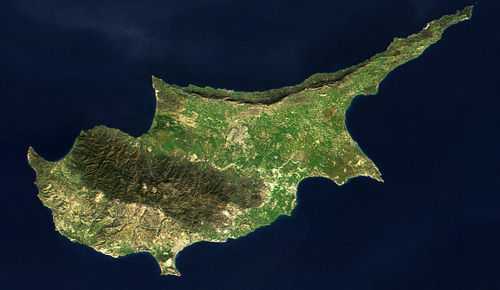
    Archbishop of  Cyprus Chrysostomos II pointed out on Friday that Turkey is distancing itself from the basis of a federation solution in Cyprus and should probably be reported, and reiterated the Church`s position that foreign experts should be called in to draft a solution plan.

    The Archbishop was speaking after a meeting with Belgian Deputy Prime Minister and Minister of Foreign Affairs Steven Vanackere, who earlier met head of the EU negotiating delegation Leopold Maurer and Head of the EU Representation in Cyprus Androula Kaminara.

    Archbishop Chrysostomos said he briefed the Belgian official on the Church`s positions regarding the Cyprus problem, noting that the Turkish side is speaking about “two states, two governments and two peoples, which is not a federal basis.“

    “The Church believes that we will not reach an agreement and in order to reach an agreement we must appoint independent experts, constitutionalists, sociologists, historians, and experts on Turkish issues from European countries, who respect human rights, who will work within the principles of the EU and the UN,“ he said.

    The Archbishop said that “they should work in this context to present a proper federal solution, which will be functional in order to also be viable,“ adding that, “if we do not work in this direction, I fear that a solution that our people will embrace will not be found.“ He said he explained to Vanackere that these principles concern human rights.

    www.famagusta-gazette.com, Aug 28, 2010


  • Turkey Wants to Put an End to Dogfights with Greece

    Turkey Wants to Put an End to Dogfights with Greece

    An improving dialogue between Turkey and Greece seeks to minimize potential risks over the Aegean by grounding the so-called dog-fighting between the two countries’ militaries and further promoting areas of common interest, the Turkish foreign minister said Friday.

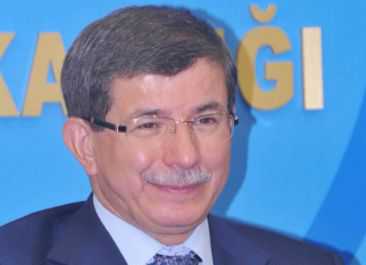
    “We have differing positions with Greece on certain subjects but the way to overcome them is with dialogue. If the dialogue is not enough, then more dialogue. There is no other alternative,” Foreign Minister Ahmet Davutoglu told a small group of journalists in the Central Anatolian province of Konya, where he attended a rally ahead of the Sept. 12 constitutional referendum.

    “Just as the difference in opinions between Turkey and Greece over the Aegean and other areas, we also have areas of common interest. To expand common interests and to minimize differences – this is the objective of our explorative talks,” said Davutoglu.

    The 46th round of exploratory talks between the Turkish and Greek foreign ministries’ diplomats took place in Athens on Friday.

    The foreign minister said the talks focused on overcoming differences over a wide range of issues, including the Aegean disputes, through confidence-building measures that resumed after the Papandreou government took office in Athens after a long break. He said the resumption of talks was complementary to efforts to establish a high-level strategic cooperation council between Turkey and Greece and increase bilateral political consultations.

    Davutoglu said he would visit Greece in the fall, which follows a recent trip to Turkey by Greece’s Alternate Foreign Minister Dimitris Droutsas.

    “Right now there is an optimistic process ahead of us that continues on the basis of bona fide and mutual trust,” Davutoglu said.

    Two Greek F-16 aircrafts crashed Thursday during a dog-fight exercise, a military practice aimed at training Greek jets against interceptions with Turkey over the Aegean. One Greek pilot reportedly died during the exercise.

    Asked if exploratory talks would bring a halt to dogfights over the Aegean, Davutoglu said: “That is our objective. Why are those talks being held? Not just for the sake of meeting but to minimize risks over the Aegean and expand common interest areas. I hope any negativity can be overcome based on good neighborly relations.”

    No unilateral Cyprus step

    Another common problem between Turkey and Greece is the decades-old Cyprus dispute. Davutoglu said if Greek Cypriots had voted “yes” for a U.N. blueprint for reunification with the Turks of the island during a 2004 referendum, no Turkish troops would remain on the island now except for a symbolic number of soldiers.

    “No unilateral step should be expected from the Turkish side unless commitments are fulfilled,” he said. “Turkey has taken many progressive steps in the past, but unfortunately neither the European Union nor international actors fairly reciprocated those steps.”

    Davutoglu said the Turkish Cypriot presidency, led by hardliner Dervis Eroglu, was proceeding on negotiations with Greek Cypriots, contrary to what was expected from the new president after the presidential elections in the north in May. The foreign minister also heralded Eroglu’s plan to hold talks in New York in the coming period.

    Referring to U.N. special envoy Alexander Downer’s report, set to be released in November, Davutoglu said, “It is important that Downer set a deadline for November, otherwise negotiations [between the Cypriot leaders] will go on for decades.”

    Meeting with Armenian FM

    Commenting on relations with Armenia, Davutoğlu did not rule out talks with his Armenian counterpart, Edward Nalbandian, on the sidelines of the annual U.N. General Assembly meetings next month.

    “Nothing has been planned yet; there will be plenty of bilateral talks with foreign ministers from other countries,” said Davutoglu. “We have already met with Mr. Nalbandian on a number of occasions. Another meeting may take place in New York, contacts will continue.”

    Two conditions still in place in Israel dispute

    Davutoglu, touching upon the crisis in relations with once-regional-ally Israel due to the deadly raid on a Gaza-bound aid flotilla, said five out of the seven conditions for the restoration of bilateral relations with Tel Aviv have been fulfilled.

    He elaborated that the three ships were handed over to Turkey; passengers aboard the ships were released; passengers were not tried; the aid to the Gaza Strip, controlled by Hamas, reached its destination; and two separate international commissions were established.

    “Five conditions have been met. We are now waiting for the other two conditions to be fulfilled,” said Davutoglu, referring to the government’s earlier demands for Israel to apologize and compensate the victims.

    He said the two remaining demands were not only coming from Turkey, but also from the international community, citing a U.N. Security Council presidency statement in the wake of the May 31 flotilla incident that left nine people dead.

    Davutoglu also said Turkey was very closely following the ongoing investigations of two U.N. commissions; one in Geneva established by the U.N. Human Rights Council and another in New York set up upon recommendation from Secretary-General Ban Ki-moon.

    “We are seriously contributing to both commissions. We need to see the results of the inquiries,” the minister said. “Turkish-Israeli relations should be evaluated in the context of all these developments.”

    , 28 August 2010

    An improving dialogue between Turkey and Greece seeks to minimize potential risks over the Aegean by grounding the so-called dog-fighting between the two countries’ militaries and further promoting areas of common interest, the Turkish foreign minister said Friday.

    “We have differing positions with Greece on certain subjects but the way to overcome them is with dialogue. If the dialogue is not enough, then more dialogue. There is no other alternative,” Foreign Minister Ahmet Davutoglu told a small group of journalists in the Central Anatolian province of Konya, where he attended a rally ahead of the Sept. 12 constitutional referendum.

    “Just as the difference in opinions between Turkey and Greece over the Aegean and other areas, we also have areas of common interest. To expand common interests and to minimize differences – this is the objective of our explorative talks,” said Davutoglu.

    The 46th round of exploratory talks between the Turkish and Greek foreign ministries’ diplomats took place in Athens on Friday.

    The foreign minister said the talks focused on overcoming differences over a wide range of issues, including the Aegean disputes, through confidence-building measures that resumed after the Papandreou government took office in Athens after a long break. He said the resumption of talks was complementary to efforts to establish a high-level strategic cooperation council between Turkey and Greece and increase bilateral political consultations.

    Davutoglu said he would visit Greece in the fall, which follows a recent trip to Turkey by Greece’s Alternate Foreign Minister Dimitris Droutsas.

    “Right now there is an optimistic process ahead of us that continues on the basis of bona fide and mutual trust,” Davutoglu said.

    Two Greek F-16 aircrafts crashed Thursday during a dog-fight exercise, a military practice aimed at training Greek jets against interceptions with Turkey over the Aegean. One Greek pilot reportedly died during the exercise.

    Asked if exploratory talks would bring a halt to dogfights over the Aegean, Davutoglu said: “That is our objective. Why are those talks being held? Not just for the sake of meeting but to minimize risks over the Aegean and expand common interest areas. I hope any negativity can be overcome based on good neighborly relations.”

    No unilateral Cyprus step

    Another common problem between Turkey and Greece is the decades-old Cyprus dispute. Davutoglu said if Greek Cypriots had voted “yes” for a U.N. blueprint for reunification with the Turks of the island during a 2004 referendum, no Turkish troops would remain on the island now except for a symbolic number of soldiers.

    “No unilateral step should be expected from the Turkish side unless commitments are fulfilled,” he said. “Turkey has taken many progressive steps in the past, but unfortunately neither the European Union nor international actors fairly reciprocated those steps.”

    Davutoglu said the Turkish Cypriot presidency, led by hardliner Dervis Eroglu, was proceeding on negotiations with Greek Cypriots, contrary to what was expected from the new president after the presidential elections in the north in May. The foreign minister also heralded Eroglu’s plan to hold talks in New York in the coming period.

    Referring to U.N. special envoy Alexander Downer’s report, set to be released in November, Davutoglu said, “It is important that Downer set a deadline for November, otherwise negotiations [between the Cypriot leaders] will go on for decades.”

    Meeting with Armenian FM

    Commenting on relations with Armenia, Davutoğlu did not rule out talks with his Armenian counterpart, Edward Nalbandian, on the sidelines of the annual U.N. General Assembly meetings next month.

    “Nothing has been planned yet; there will be plenty of bilateral talks with foreign ministers from other countries,” said Davutoglu. “We have already met with Mr. Nalbandian on a number of occasions. Another meeting may take place in New York, contacts will continue.”

    Two conditions still in place in Israel dispute

    Davutoglu, touching upon the crisis in relations with once-regional-ally Israel due to the deadly raid on a Gaza-bound aid flotilla, said five out of the seven conditions for the restoration of bilateral relations with Tel Aviv have been fulfilled.

    He elaborated that the three ships were handed over to Turkey; passengers aboard the ships were released; passengers were not tried; the aid to the Gaza Strip, controlled by Hamas, reached its destination; and two separate international commissions were established.

    “Five conditions have been met. We are now waiting for the other two conditions to be fulfilled,” said Davutoglu, referring to the government’s earlier demands for Israel to apologize and compensate the victims.

    He said the two remaining demands were not only coming from Turkey, but also from the international community, citing a U.N. Security Council presidency statement in the wake of the May 31 flotilla incident that left nine people dead.

    Davutoglu also said Turkey was very closely following the ongoing investigations of two U.N. commissions; one in Geneva established by the U.N. Human Rights Council and another in New York set up upon recommendation from Secretary-General Ban Ki-moon.

    “We are seriously contributing to both commissions. We need to see the results of the inquiries,” the minister said. “Turkish-Israeli relations should be evaluated in the context of all these developments.”

    By Fulya Ozerkan (HDN)