by Thierry Meyssan*
From Beirut (Lebanon)
Caught up in a smoldering feud between its President and Prime Minister, Russia is not making the most of the historic opportunity to deploy in the Middle East. Russian elites were unable to draw up a strategy for that region when they had the chance and, now, they are no longer capable of it. In Thierry Meyssan’s view, Moscow is paralyzed, having failed both to take full advantage of the botched US “remodeling” of the Middle East and to fulfill the hopes raised by Vladimir Putin.
The Israeli defeat in the Summer of 2006 against the Lebanese resistance spelled the end of US supremacy in the Middle East. In only four years, the military, economic and diplomatic situation in that region underwent a complete change.
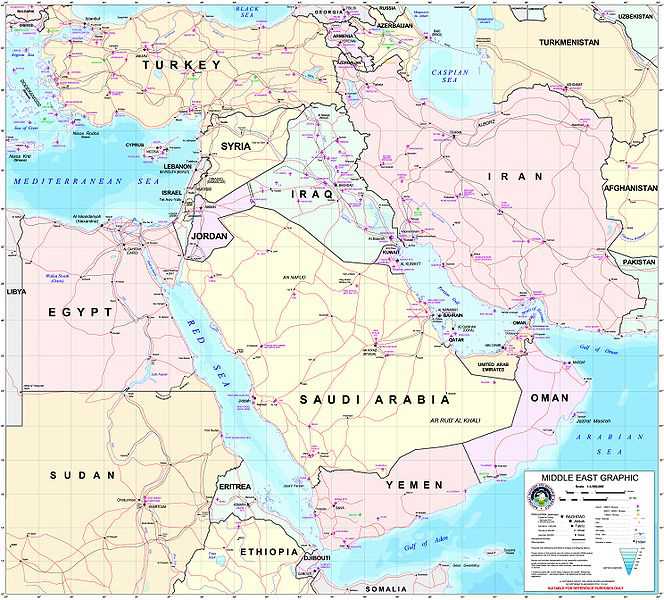
At present, the Turkey-Syria-Iran triangle has emerged as the leading pole while Russia and China expand their influence as that of the United States is fading. However, Moscow is reluctant to seize the opportunities it has at hand. First of all, its priority is not the Middle East; secondly because no project related to this region has the consensus of the Russian elites, finally because Middle East conflicts have sensitive implications for Russia’s own domestic problems. Let’s take stock of the situation.
2001-2006 and the myth of the remodeling of the “Great Middle East”
The Bush administration was able to rally the oil lobby, the military industrial complex and the Zionist movement around a huge project: securing control of the oil fields running from the Caspian Sea to the Horn of Africa by redesigning the political map based on small ethnic states. The zone, demarcated not according to its population but to the riches under its soil, was first called “Crescent Crisis” by University professor Bernard Lewis and later “Greater Middle East” by George W. Bush.
Washington did not skimp on its Middle East “remodeling” project. Huge sums of money were invested in buying local elites so that their personal interests would come before national interests in the context of a globalized economy. Most important was the deployment of a strong military force to Afghanistan and Iraq to hem in Iran, the main actor in the region that stands up to the empire. Maps of the new region were drawn up and circulated by the Chiefs of Staff. All countries in the region, including Washington’s allies, would be broken up into various emirates incapable of defending themselves, while vanquished Iraq would be divided into three federate states (a Kurdish, a Sunni and a Shiite).
When it seemed that nothing could prevent that domination process from going ahead, the Pentagon handed Israel the task of destroying all secondary fronts before attacking Iran. The aim was to wipe out the Lebanese Hezbollah and to overthrow the Syrian government. However, after submitting one third of the Lebanese territory to a bombing campaign the likes of which hadn’t seen since the Vietnam War, Israel was forced to retreat without having attained any of its goals. That defeat marked a strategic shift in the balance of forces.
Over the next months, US generals rebelled against the White House. They had lost control of the situation in Iraq and anticipated with apprehension the difficulties of a war against a well-armed and organized state—Iran—potentially setting the entire region ablaze. The generals, gathered around Admiral William Fallon and senior general Brent Scowcroft, forged an alliance with several realistic politicians who opposed the danger inherent in the excessive military deployment.
They used the Baker-Hamilton Commission to influence American voters until obtaining the dismissal of Defense Secretary Donald Rumsfeld and his replacement with one of their allies: Robert Gates. Subsequently, these same individuals hoisted Obama to the White House, on condition that Robert Gates would remain the Pentagon.
In fact, the US General Staff has lacked an alternative strategy ever since the “remodeling” failed. Its only concern is to stabilize its positions. US soldiers withdrew from large Iraqi cities and retreated to their bases. They left the management of Iraq’s Kurdish areas in the hands of the Israelis while the Arab zones were left to the Iranians. The US State Department has stopped handing out sumptuous gifts to regional leaders and has become increasingly avaricious in these times of economic crisis. Yesterday’s beholden are looking for new masters to feed them.
Tel Aviv is the only one to still believe that the US withdrawal is but an eclipse and that the “remodelling” will resume once the economic crisis is over.
Formation of the Turkey-Syria-Iran Triangle
Washington thought that the dismantlement of Iraq would be contagious. The Sunni-Shiite civil war (the Fitna, in Arabic) was supposed to pit Iran against Saudi Arabia and split the whole Arab-Muslim world. The virtual independence of Iraqi Kurdistan was expected to cause a Kurdish secession in Turkey, Syria and Iran.
But the opposite happened. The easing of US pressure on Iraq sealed the alliance among the enemy brothers of Turkey, Syria and Iran. All three realized that in order to survive they had to unite and that once united they could exert regional leadership. In fact, Turkey, Syria and Iran, together, cover all crucial aspects of the regional political spectrum. As the heir to the Ottoman empire, Turkey incarnates political Sunni Islam. As the only remaining Baathist state after the destruction of Iraq, Syria embodies secularism. And, finally, since the Khomeiny Revolution, Iran represents political Shi’ism.
In just a few months, Ankara, Damascus and Teheran opened their common borders, lowered customs tariffs and paved the way for a common market. This opening provided them with a breath of fresh air and a sudden economic growth which, despite the memories of prior disputes, has also garnered genuine grassroots support.
However, each of these three states has its own Achilles’ heel which the United States and Israel, as well as some of their neighbors, will attempt to exploit.
Iran’s Nuclear Program
For years, Tel Aviv and Washington have accused Iran of violating its obligations as signatory of the [nuclear] Non-Proliferation Treaty and of developing a secret military nuclear program. In the times of Shah Reza Pahlevi, both capitals – plus Paris – had set up a large program designed to provide Iran with the atomic bomb. In view of its history, it was generally accepted that Iran had no expansionit ambitions and that the great powers could safely provide it with such technology. A propaganda campaign based on deliberately fabricated information was later organized, painting current Iranian leaders as fanatic and capable of using the atomic bomb – if they had it – in an irrational manner, therefore posing a great threat to world peace.
Nevertheless, Iranian leaders affirm they have renounced to building, storing or using the atomic bomb, precisely due to ideological reasons. And their assertion to totally reliable. Let us simply recall what happened during the war led by the Iraq of Sadam Husein against the Iran of Imam Khomeiny.
When Baghdad unleashed a stream of missiles against Iranian cities, Teheran retaliated in the same way. But they were unguided missiles that were launched in any given direction and fell indicriminately. Imam Khomeiny intervened to denounce the use of such weapons by his own armed forces. Khomeiny stressed that good Muslims should refrain from shooting at the military if it entailed the risk of killing a large number of civilians. Khomeiny then prohibited the use of missiles against cities, which had an impact on the balance of forces, prolonged the war and brought new suffering to the Iranian people. At present, the successor of Khomeiny, Ali Khamenei, Supreme Leader of the Revolution, defends the same ethics in respect of nuclear weapons and it is unthinkable that any faction of the Iranian state would dare to violate the authority of the Supreme Leader and secretly build the atomic bomb.
The fact is that after the Iraqi offensive, Iran anticipated the eventual depletion of its hydrocarbon reserves and wanted to have a civil nuclear industry to guarantee its own long-term development and that of the rest of Third World nations. To this end, the Revolutionary Guards set up a special team of officials dedicated to scientific and technical research, which was organized in secret cities, according to the soviet model. These researchers are also working on other programs, such as those linked to conventional weapons. Iran has opened all its nuclear facilities for inspections by the International Atomic Energy Agency (IAEA), but it refuses to give them access to research facilities dedicated to conventional weapons. We therefore find ourselves in a déjà vu situation : IAEA inspectors assure there is nothing to accuse Iran of, while the CIA and the Mossad insist—without any evidence—that Iran hides its illegal activities within its vast scientific research sector.This situation is reminiscent of the intoxication campaign previously carried out by the Bush administration, accusing the UN inspectors of not doing their job properly and of overlooking the WMD programs supposedly developed by Sadam Husein.
No country in the world has been the object of so many IAEA inspections and it is not serious to keep accusing Iran, but it hasn’t made a dent in the bad faith displayed by Washington and Tel Aviv. The fallacy about the alleged threat is crucial for the military industrial complex, which has for years implemented the Israeli program known as “antimissile shield” with US taxperyers’ money. Without the Iranian threat, there is no budget!
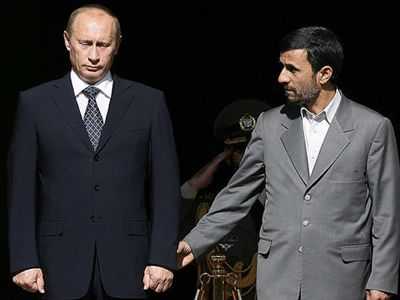
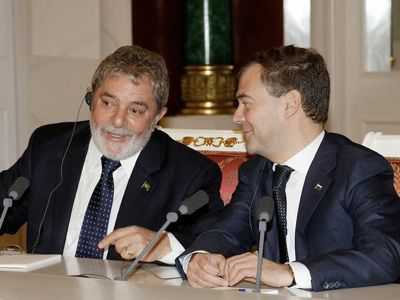
Teheran has undertaken two operations to get out of the trap which was set against it. First, it organized an international conference for a nuclear-free world, during which Iran finally expounded its position to its principal partners (on April 17). Iran also accepted the mediation by Brazil, a country whose president Lula da Silva aspires to become the Secretary General of the United Nations. President Lula had asked his US counterpart Barack Obama what kind of measures would be likely to reestablish confidence. Obama replied in writing that the compromise concluded in November 2009, but never ratified, would suffice. President Lula travelled to Moscow to make sure Russian President Dimitri Medvedev had the same opinion. President Medvedev publicly confirmed his view that the November 2009 compromise would be enough to solve the crisis. The next day, May 18, President Lula co-signed with Iran’s Mahmoud Ahmadinejad a document that, from all perspectives, met the demands made by the United States and Russia. But the White House and the Kremlin did an about-face, going back on their position, and denounced the guarantees offered by the new document as insufficient.
However, there is no significant difference between the document negotiated in November 2009 and the one ratified [by Iran, Brazil and Turkey] in May 2010.
Turkey’s liabilities
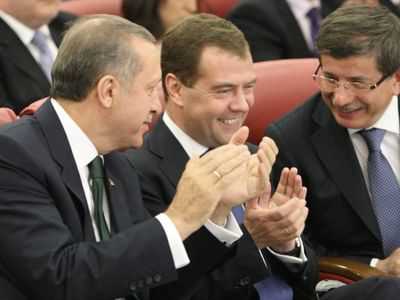
Turkey inherited from its past a large number of problems with its minorities and neighbors; the United States has been fueling these problems for decades to keep Turkey under its thumb. Professor Ahmet Davutoglu, a theorist of neo-ottomanism and new Turkish foreign minister, has drawn up a foreign policy aimed, in the first place, at freeing Turkey from the endless conflicts bogging it down, as well as at multiplying its alliances with various intergovernmental institutions.
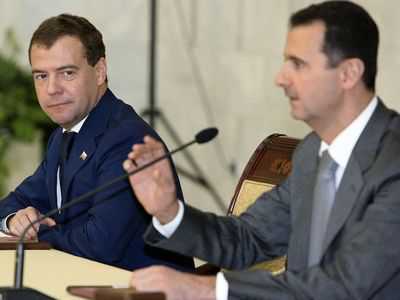
The dispute with Syria was the first to be solved. Damascus stopped using the Kurds and abandoned its claim over the Hatay province. In return, Ankara yielded on the division of river waters and helped Damascus to come out of its diplomatic isolation; it even organized direct negotiations with Tel Aviv, which occupies the Syrian Golan. Syrian President Bachar el-Assad was received in Turkey (in 2004) and the Turkish President Abdullah Gull was welcomed in Syria (in 2009). A Strategic Cooperation Council was set up by the two countries.
As for Iraq, Ankara had opposed an invasion of this country by the Anglo-Americans (in 2003). It banned the United States from using the NATO bases on Turkish territory to attack Bagdad, thus upsetting Washington and delaying the start of the war. When the Anglo-Americans formally transferred power to the Iraqis, Ankara favored the electoral process and encouraged the Turkmen minority to take part in the vote. Later, Turkey relaxed border controls and boosted bilateral trade. There is only one aspect marring this panorama: relations between Ankara and the Bagdad national government are excellent, but they are chaotic with the Kurdish regional government of Erbil. The Turkish army even took the liberty of persecuting the PKK separatists inside Iraqi territory—needless to say, with the support of the Pentagon and under its control. Be that as it may, an accord was signed to guarantee the export of Iraqi oil through the Turkish harbor of Ceyhan.
Ankara took a series of initiatives to put an end to the secular conflict with the Armenians. Resorting to “football diplomacy”, Ankara acknowledged the 1915 massacre (but refused the term ‘genocide’), and managed to establish diplomatic relations with Erevan, while it seeks a solution to the High Karabaj conflict. Nevertheless, Armenia suspended the ratification of the Zurich bi-party accord.
Turkey’s liability in relation to Greece and Cyprus is also very significant. The division of the Aegean Sea has not yet been clarified and the Turkish army is still occupying Northern Cyprus. Ankara has proposed different measures to reestablish confidence, particularly the mutual reopening of harbors and airports. But relations are far from being normalized and, for the time being, Ankara does not appear willing to abandon the self-proclaimed Turkish Republic of Northern Cyprus.
Syria’s diplomatic isolation
Washington has accused Syria of continuing its war against Israel through various intermediaries: Iran’s secret services, the Lebanese Hezbollah and the Palestinian Hamas. The United States thus falsely blamed Syrian President Bachar el Assad of having ordered the assassination of former Lebanese Prime Minister Rafik Hariri, and had a Special Penal Court set up to judge the Syrian President.
With astonishing ability, Bachar el-Assad, who had been depicted as a conceited and totally incompetent “daddy’s boy”, managed to wiggle out of that corner without making concessions or firing a single shot. The testimonies of his accusers wilted one after the other, and Saad Hariri, the son of the late Hariri, stopped demanding his arrest and even paid him a friendly visit in Damascus. Nobody wants to finance the Special Court any more and it is possible that the UN might decide to dismantle it even before it convenes, unless it will be used as a forum to accuse Hezbollah.
Finally, in response to US Secretary of State Hillary Clinton’s injunctions to break relations with Iran and with Hezbollah, Bachar el-Assad organized a surprise Summit meeting with Iranian President Mahmoud Ahmadinejad and with the top Hezbollah leader Hassan Nasrallah
What about Russia?
The consolidation of the Turkey-Syria-Iran triangle is a consequence of US and Israeli military power decline. The vacuum created is being filled by others.
China has become Iran’s first commercial partner and draws on the expertise of the Revolutionary Guards to overcome the hurdles set up by the CIA in Africa. It also gives military back-up, as discreet as it is effective, to Hezbollah (which it probably equipped with land-to-air missiles and guiding systems to counter interference) and to Hamas (which opened a representation office in Pekin). However, China is advancing very slowly and cautiously on the Middle East stage where it has no intention of playing a decisive role.
All expectations point in Moscow’s direction, which has been absent from the region since the fall of the Soviet Union. Russia wants to recover its former position of world power, but is reluctant to make a move before having solved the problems it currently faces in the former Warsaw Pact zone. The main drawback is that the Russian elites have no alternative policy to replace the US “remodeling” project and are stuck on precisely the same problem as the United Sates: in view of the shift in the regional power correlation, it is no longer possible to implement a balanced policy between Israel and the Arab countries. Any involvement in the region implies, sooner or later, a rupture with the Zionist regime.
Moscow’s clock stopped in 1991, at the moment when the Madrid Conference took place. Moscow has not yet registered the failure of the Oslo (signed in 1993) and the Wabi Araba (1994) accords in terms of implementing the so-called “Two-State Solution”, which is no longer viable. The only peaceful option is the one implemented by South Africa: the abandonment of Apartheid and the recognition of a single nationality for all citizens, Jews and non-Jews alike; and the reinstatement of a real democracy based on the principle of “one man, one vote.” That is already the official position adopted by Syria and Iran, which will soon be embraced also by Turkey.
The great diplomatic conference on the Middle East that the Kremlin wanted to organize in Moscow in 2009, and which was both announced at the Annapolis Summit and confirmed by several UN resolutions, never took place. Russia passed up its opportunity to act.
Those Russian elites which still enjoy great prestige in the Middle East, no longer frequent the region; they fantasize about it more than they understand it. In the 1990s, they were enthusiastic over the romantic theories of anthropologist Lev Gumilev and were in tune with Turkey, the only nation which, similar to Russia, is both European and Asian. Then, they fell for the geo-political charisma of Alexander Dugin, who detested western materialism, thought that Turkey was contaminated by western values, and was mesmerized by the asceticism of the Iranian Revolution.
However, that momentum evaporated in Chechnya before it began to materialize. Russia was brutally confronted with a form of religious extremism that received undercover support from the United States and was fueled by the Turkish and Saudi secret services. As a consequence, any alliance with a Muslim state seemed risky and dangerous. And when peace was reestablished in Grozny, Russia was unable, or did not want, to play on its colonial heritage. According to the President of the Islamic Committee of Russia, Gaidar Zhemal, Russia cannot aspire to become an euro-Asian nation and at the same time pretend that nothing happened nor can it continue to view itself as an orthodox state which is protecting its turbulent Muslim brothers. Russia had—and still has—to define itself by considering orthodox and Muslims as equals.
Rather than leaving for tomorrow the solution to the problems concerning minorities, and postponing for the day after tomorrow its involvement in the Middle East, Russia could consider interacting with Muslim partners abroad, as reliable third-party players, with a view to establishing an internal dialogue. The Syria of Bachar el-Assad constitutes a model of a post-socialist state on its way to democratization that has been able to preserve its lay institutions, has allowed the flourishing of major religions and their various ramifications, including hardcore Wahhabism, while also managing to preserve social peace.
The economic attraction
For the time being, the Russian elites are ignoring the warning issued by former Chief of Staff of the Russian armed forces, General Leonid Ivashov, about the need to establish alliances in Asia and in the Middle East, in the face of US imperialism. As noted by political analyst Gleb Pavlovski, they prefer to think that geo-political antagonism will dissipate thanks to economic globalization. They also regard the Middle East primarily as a market.
President Dimitri Medvedev has recently concluded a tour that took him to Damascus and Ankara. He lifted visa requirements and opened the doors of the burgeoning common market (Turkey, Syria, Iran + Lebanon) for Russian companies. He also favored the sale of a large arsenal to all these countries. In particular, he negotiated the ten-year construction of nuclear power plants. Finally, he took advantage of Turkey’s strategic evolution to obtain support for the transit of Russia’s hydrocarbons. A Russian land oil pipeline would connect the Black Sea to the Mediterranean Sea and Ankara might be attracted to the transnational South Stream gas pipeline project.
The limits of Russia’s involvement
Outside of the economic sphere, it is hard for Moscow to consolidate its position. Former Soviet naval bases in Syria have been reactivated and opened to the Russian fleet in the Mediterranean, all the more since naval deployment in the Black Sea is expected to be reduced. It is all happening as if Moscow were trying to gain time and postpone the Israeli issue.
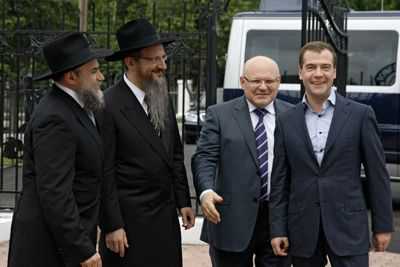
The fact is that any condemnation [by Russia] of Jewish colonialism may revive internal problems. In the first place because, to express it in a caricatural and unflattering manner, Israeli apartheid is reminiscent of Russia’s treatment of the Chechnyans; and also because Russia is acting under the burden of a historical complex: that of anti-Semitism. Vladimir Putin has tried on several occasions to turn the page through symbolic gestures such as appointing a rabbi to the army, but Russia keeps feeling uncomfortable with this issue.
However, Russia ought to stop playing the waiting game; the dice have been tossed and Russia must face the consequences once and for all. Israel played a crucial role in arming and training the Georgian troops that attacked and killed Russian citizens in Southern Ossetia. In response, Georgia’s Defense Minister Davit Kezerashvili, a double Israeli-Georgian national, rented two military air bases to the Israeli Tsahal enabling it to attack Iran from a closer distance. Moscow stood stoically by without lifting a finger against Israel.
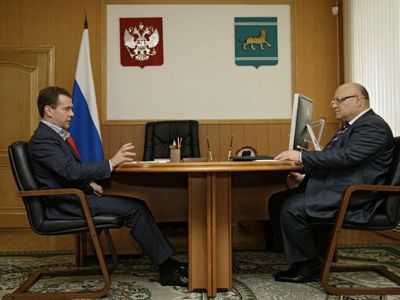
The Middle East looked upon this lack of reaction with surprise. It is true that Tel Aviv has numerous relations with the Russian elites, networking with them by offering to some of the most influential people material privileges in Israel. But, Moscow has comparatively many more contacts in Israel, considering the presence of some one million Soviets immigrants. Conceivably, Moscow could bring to the fore some personality capable of playing in occupied Palestine the role played by Frederik de Klerk in South Africa: to abolish Apartheid and establish democracy in the heart of one single state. With this scenario in mind, Dimitri Medvedev anticipates a possible exodus of Israeli Jews who would not tolerate the new situation. Therefore, he blocked the formerly announced merger between the Krai of Jabarovsk with the autonomous Jewish Oblast of Birobidyan. The Russian president, who comes from a Jewish family and converted to the Russian Orthodox religion, plans to reactivate that administrative entity founded by Stalin in 1934 as an alternative to the creation of the State of Israel. What used to be a Jewish republic within the former Soviet Union could become the future home to refugees, who would certainly be welcomed since Russia is experiencing a plummeting demographic decline.
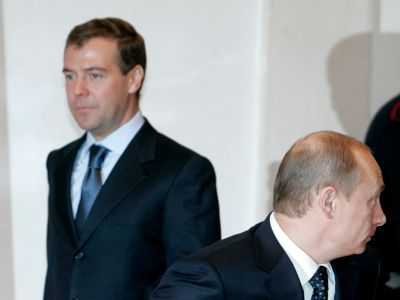
Ultimately, it is Russia’s procrastinations with respect to Iran’s nuclear program that surprise the most. It is a fact that Iranian businessmen have constantly questioned the bills submitted for the construction of the Bushehr nuclear plant. It is also true that the Persians have become sensitive after years of Anglo-American interference. But the Kremlim hasn’t stopped blowing hot and cold. President Medvedev speaks with the West and pledges Russia’s support in favor of the UN sanctions voted by the Security Council. Meanwhile, Putin assures the Iranians that Russia will not leave them unshielded if they accept to play the game of transparency. On the ground, officials are wondering whether the two leaders have split their roles according to the interlocutors in order to jack up the bids. Or, whether Russia has been paralysed by a conflict brewing at the apex of power? In reality, this is what appears to be happening: the Medvedev-Putin duo has gradually deteriorated and their relationship has abruptly turned into a fratricidal war.
Russian diplomacy had led the Non-Aligned countries to believe that a fourth resolution adopted by the UN Security Council condemning Iran would be preferable to the adoption of unilateral measures by the United States or the European Union. It was wrong since Washington and Brussels would automatically use the UN resolution to justify their own unilateral and additional sanctions.
During a joint press Conference, held on May 14, with his Brazilian counterpart, President Medvedev indicated that he had reached a common position with President Obama during a phone conversation: If Iran accepted the proposal made [in November 2009] to enrich uranium abroad, there would be no reason to adopt sanctions at the Security Council. But when Iran unexpectedly signed the Teheran Protocol with Brazil and Turkey, Washington withdrew and Moscow hurriedly followed suit, breaching its commitment.
It is a fact that Russia’s permanent representative at the Security Council, Vitaly Churkin, drained resolution 1929 of much of its substance by preventing a total energy embargo … but he nevertheless voted in favor. Short of being effective, the resolution is altogether an outrage for Iran, for Brazil, for Turkey as well as for all the Non-Aligned states that support Teheran’s position. The resolution is all the more shocking since it violates the terms of the Non-Proliferation Treaty which guarantee to all signatory countries the right to enrich uranium. Resolution 1929 of the UN Security Council denies Iran that right. Up to now Russia seemed to be the defender of international law. But it is not any longer. The Non-Aligned countries in general, and Iran in particular, have interpreted the Russian vote as the will on the part of a great power to prevent emerging powers from attaining the energy independence they need for their economic development. And it will be difficult to make them forget this Russian faux pas.
* Thierry Meyssan
French political analyst, founder and chairman of the Voltaire Network and the Axis for Peace conference. He publishes columns dealing with international relations in daily newspapers and weekly magazines in Arabic, Spanish and Russian. Last books published in English :9/11 the Big Lie and Pentagate
https://www.voltairenet.org/article166818.html, 24 August 2010