Month: August 2009

  • LETTER TO BARACK OBAMA

    LETTER TO BARACK OBAMA

    It is a letter from SSA to Obama, answering ANCA…

    ssaya

    ———————————————————————

    The Honorable Barack Obama
    President of the United States
    The White House
    1600 Pennsylvania Avenue, NW
    Washington, D.C. 20500

    Dear Mr. President:

    As soon as I read the rude, accusatory, and outright disrespectful letter written to you by Kenneth V. Hachikian, Chairman of ANCA-a shady group currently under investigation by federal agencies for alleged campaign finance and lobbying violations-I felt compelled to write to you.

    The letter,  quite short of accustomed courtesy and respect when addressing the White House, was urging you to reject the recent ruling of a three judge panel of the U.S. Court of Appeals for the Ninth Circuit in the case of Movsesian v. Versicherung A.G. (No. 07-56722, August 20, 2009), which struck down a California special-interest law providing remedies to ethnic Armenians for alleged wrongs during an alleged genocide.

    Apparently, no one taught these Armenians about the separation of powers in America and that it is un-American for the executive branch to contravene the judicial branch (or legislative branch.)  Such a practice may be all right in Armenia, a land-locked, poverty-stricken, corrupt, aggressive, and violent Armenia, but it is frowned upon in America.

    The disrespectful Armenian letter writer also seemed ignorant of the federal supremacy law which basically says state laws cannot replace, void, or overrule federal laws.  The wily and tricky Armenian lobby thought they found the short-cut:  apply local political pressure to get a tailor-made state law to bypass all federal laws.  Ninth Circuit Court of Appeals saw to it that those Armenian falsifiers got a good lesson on American government.

    The insolent Armenian letter writer, in asking the White House to interfere with the decision of U.S. Court of Appeals or evaluate a California State Law interpretation as superior to Federal Laws and U.S. Constitution, in effect, was forcing the U.S. Government to violate written bilateral agreements with the sovereign Republic of Turkey.  Thus, the deceptive and tiny Armenian lobby was indirectly attempting  to manipulate American  foreign policy.  This is more than the  tail wagging the dog; this must be “tip of the tail” wagging the dog.

    The expression such as “Genocide era wrongs” is not based on any acceptable judicial decision, but on a set of “hearsay and forgeries” promoted deceptively by biased persons or organizations.

    Armenians also fail to understand that campaign pledges and responsibility of an office after election are two vastly different, and sometimes diametrically opposing things.  American interests always trump Armenian demands.

    That said, a responsible, truth-defending President, is expected to investigate deeper any pledges made during election campaigns and refrain from unrealistic, untrue, or  unethical pledges.

    The “Armenian Genocide” allegations are not supported by the verdict of any “competent tribunal” as set forth by the 1948 U.N. Convention.  Such terminology, therefore, is not more than a political statement based on hearsay, forgeries, falsifications, fabrications, distortions, and outright lies.  Not every killing or suffering is genocide.  Not every war crime or hate crime is genocide.  Not every photo, tall tale, documentary, film, book is genocide.  Genocide verdict can only be  given at a competent tribunal after due process where all sides are given a fair chance to tell its side of the story and cross examine the evidence and witnesses.  This was never done in the case of Turkish-Armenian conflict. Armenians are trying to bypass legislation by applying political pressure.  But it will not work!

    On the contrary, the U.S. records in archives bear plenty evidence that the exact opposite is true, or that brutalities were mutual and mostly inflicted by the ancestors of the claimants.

    Armenian propaganda organizations such as ANCA  should be aware of the fact that the new Turkish Republic had agreed with U.S.A. on Dec. 24, 1923 to study all claims and compensate for the actual losses suffered by the U.S. Citizens, until that date.

    ANCA should also be aware that a joint Committee had been empowered with another agreement dated October 25, 1934 and all U.S. citizens or claimants had been given a deadline to submit their claims and evidences. The claims that had been submitted were meticulously verified.  A further agreement of “Adjustment of Payment” No.168 dated Sept.8, 1937 had been concluded with Turkey.  U.S.A. had confirmed with letter No.93, 1937 to the Republic of Turkey, that  “…when the agreed amount is paid, Turkey will be fully discharged of the obligations previously agreed…:

    Turkey had fulfilled the agreement; claimants had been accordingly paid and USA has no longer any lawful rights to request , 72 years later, additional indemnities for cases studied and settled in 1937!

    Accusing U.S. Governments for “complicity on genocide denial” is an insult to USA and Turkey, as long as the humiliation of  “genocide” stands as a word in the air, never decided by a competent tribunal.

    ANCA organization does not have the immunity to call other parties “criminal”, unless the “crime is proven and the judicial verdict is at hand”.   Declarations by some Parliaments or other legally irrelevant and/or unauthorized groups are political and have no judicial merit.  They may stroke Armenian egos, but are, otherwise, worthless gestures of bias and bigotry.

    Vague expressions and accusations such as “race extermination or over 1.5 million Armenians lost their lives” stands much short of truths and the U.S. state archives refute them openly because:

    a- “American Military Mission to Armenia” (General Harbord) Report 1920 and Annex Report Nat. Archives 184.021/175  does not mention any “race extermination” but refers to “refinements of cruelty by Armenians to Muslims”.

    b-  Joint US-Congress Resolution no. 192, April 22, 1922 relative to the activities of Near East Relief ending 31.12.1921, has unanimously resolved that a total of 1,414,000 Armenians were alive.  Moreover, (George Montgomery) a member of the US delegation at the Paris Conference had presented a detailed tabulation in 1919, with a total of 1,104,000 Armenians alive apart from those who had already immigrated to other countries.

    c- Reliable sources show that THE TOTAL ARMENIAN POPULATION in the Ottoman Empire was less than 1.3 MILLION ( or up to a maximum of 1.5 millions) and hence it would be ANCA’s liability to “defy and annul these official U.S. State Records”.

    ANCA is charging the Obama administration of “blocking legal redress of U.S. citizens” without minimal proof.  ANCA should be aware of the fact that the Obama administration is responsible for protecting the rights and interests of all true citizens, that is after they have been naturalized.  In other words, the Obama administration cannot be held responsible for the loss of life, property, or inheritance by those in other countries from where they immigrated to the U.S.. Such cases were settled by former USA Administrations at that time. This does not limit the “U.S. citizens from pursuing their personal claims individually in other countries” under their own liabilities. USA cannot disregard or deviate from her written obligations in international agreements under any ethnic pressure, such as by ANCA.

    If  ANCA lobby organization is disappointed because Obama treats American citizens of Armenian ethnicity equally with all other American citizens and cannot extend special privileges to ANCA, then I am afraid,  ANCA is giving priority to ANCA leaders’ private interests over the interests of American citizens over all.

    There is no place for any prejudice or antagonism in USA’s relations with other countries. It is hard to understand or justify why Armenian community is so fearful of “any type of investigation” (by historical commission or others) unless, of course, there are facts that Armenians do not wish to be brought into the light.

    Obama Administration has taken an oath to serve all American citizens, equally, and to protect their overall interests.  A U.S. president cannot support  unproven allegations or hearsay that may tarnish American values like justice, fairness, openness, honesty, equality, and compassion for all.   Obama administration, I hope, will never be part of “any prejudice or antagonism” against any ethnicity, nation, race, or faith.

    I welcome ANCA’s offer to discuss “these matters personally in greater detail” when Armenian falsifiers would support my desire to hear what “other American citizens” may have to say equally in a friendly, civilized, and fair conference !

    Sukru Server Aya

    Author of “Genocide of Lies”

    Istanbul

    Turkiye

    =========================

    Subject: Letter FROM  ANCA to President Obama

    The Honorable Barack Obama
    President of the United States
    The White House
    1600 Pennsylvania Avenue, NW
    Washington, D.C. 20500

    Dear Mr. President:

    I am writing to urge you to take immediate steps to publicly reject the flawed ruling of a three judge panel of the U.S. Court of Appeals for the Ninth Circuit in the case of Movsesian v. Versicherung A.G. (No. 07-56722, August 20, 2009), that struck down a California law providing remedies for Armenian Genocide-era wrongs, and argued that state level recognition of this crime contradicts “express federal policy” and is therefore unconstitutional.

    – The accusation tone of the letter is short of accustomed politeness, when addressing the White House!

    – The White House is asked to interfere with the decision of U.S. Court of Appeals or evaluate a California State Law interpretation as superior to Federal Laws and U.S. Constitution or force the U.S. Government to deflect from written bilateral agreements with the sovereign Republic of Turkey.

    – The expression such as “Genocide era wrongs” is not based on any acceptable judicial decision, other than being a “rumor” circulated by biased persons or organizations.

    You bear direct responsibility, Mr. President, by virtue of your failure to keep your repeated, crystal clear pledges to recognize the Armenian Genocide, for the Court’s judgment that it is the official policy of the Executive Branch of the United States government to actively oppose proper recognition of this crime and, upon this basis, to thus prohibit states from passing laws to help Armenian Genocide-era victims seek to reclaim lost or stolen property. The Court’s interpretation of your broken promise marks an unmistakable and historic low in our government’s long complicity in Turkey’s campaign of genocide denial.

    A responsible-truth defending President, is expected to investigate deeper any pledges done during election campaigns and refrain from acting unconstitutional or unethical, just for a hasty pledge. The “Armenian Genocide” terminology is not supported by the verdict of any internationally recognized and authorized court, and legally stands no more than an allegation, hearsay, rumor and alike. The allegation of “crime” is not evidenced. On the contrary, the U.S. records in archives bear plenty evidence that the very opposite is true, or that brutalities were bilateral and mostly inflicted by the ancestors of the claimants.

    – Your organization should be aware of the fact that the new Turkish Republic agreed with U.S.A. on Dec. 24, 1923 to study and compensate the actual losses suffered by the U.S. Citizens, until that date. You should also be aware that a joint Committee was empowered with another agreement dated Oct.25, 1934 and all U.S. citizens or claimants have been given a date line to submit their claims and evidences. The claims that have been verified have been enlisted and a further agreement of “Adjustment of Payment” No.168 dated Sept.8, 1937 was concluded with Turkey. U.S.A. has confirmed with letter No.93, 1937 to the Republic of Turkey, that when the agreed amount is paid, Turkey will be “fully discharged of the obligations previously agreed”. Turkey has fulfilled the agreement, claimants have been accordingly paid and USA does not have any lawful rights to request (almost a century later) additional indemnities for cases studied and settled at that time!

    – Accusing U.S. Governments for “complicity on genocide denial” is an insult to USA and Turkey, as long as the humiliation of “genocide” stands as a word in the air, never argued or approved by an authorized tribunal. Your organization does not have the immunity to call other parties “criminal”, unless the “crime is proven and the judicial verdict is at hand”. Declarations by some Parliaments or other legally unauthorized groups are political and have no judicial merit!

    As you know, over 1.5 million Armenians lost their lives and, of course, many more were deprived of their property as a result of the Ottoman Turkish government’s systematic and deliberate campaign of race extermination. It is particularly tragic, given the thorough understanding that you have articulated regarding the moral, historical, and political meaning of this crime, that, it is under your leadership that the United States government is today not only engaged in complicity in genocide denial, but also, according to a judicial ruling, actively working to ensure that the remaining survivors and their families are denied avenues to seek to reclaim property lost during these massacres.

    – Vague expressions and accusations such as “race extermination or over 1.5 million Armenians lost their lives” stands much short of truths and the U.S. state archives because:

    a- “American Military Mission to Armenia” (General Harbord) Report 1920 and Annex Report Nat. Archives 184.021/175

    does not mention any “race extermination” but refers to “refinements of cruelty by Armenians to Muslims”.

    b- Joint US-Congress Resolution no. 192, April 22, 1922 relative to the activities of Near East Relief ending 31.12.1921, has unanimously resolved that a total of 1.414.000 Armenians were alive. Moreover, (George Montgomery) a member of the US delegation at the Paris Conference had presented a detailed tabulation in 1919, with a total of 1.104.000 Armenians alive apart from those who had already immigrated to other countries.

    c- Reliable sources show that the Armenian population in the Ottoman Empire was less than 1.3 million ( or max. 1.5 millions) and hence it would be your liability to “defy and annul these official U.S. State Records”.

    Your Administration’s policies, as understood and affirmed by the Court, in addition to blocking legal redress for U.S. citizens, have now opened the door—in unprecedented and profoundly dangerous ways—for interests aligned with the Turkish government to seek to roll back several generations of American civil society efforts to mark this tragedy, including through formal recognition by 42 U.S. states. As such, we once again urge you to publicly reject the Court’s interpretation of your Administration’s position and call upon you to honor your covenant with American voters to properly recognize the Armenian Genocide.

    – Your organization is charging the Administration of “blocking legal redress of U.S. citizens” without minimal proof.

    Your organization should be aware of the fact that the Administration is responsible to protect the rights and interests of all her citizens, but after they have been naturalized. In other words, the Administration is not responsible for the loss of properties or inheritance of her citizens in the past or in the countries from where they immigrated. Such cases were settled by USA Administration at that time. This does not limit the “U.S. citizens from pursuing their personal claims individually in other countries” under their own liabilities. USA cannot deviate from her written agreements under any pressure.

    In closing, I would like to stress to you, once again, how broadly and profoundly disappointing your failure to honor your many commitments on issues of special concern to Armenian American citizens has been for the ANCA, a grassroots organization that, based upon your track record and series of publicly stated commitments, enthusiastically endorsed your candidacy and successfully mobilized an unprecedented community drive to help secure your election. In the wake of your many broken campaign commitments, your silence in the face of this profoundly misguided judicial action would compound the Armenian American community’s sense of betrayal regarding your Administration’s behind the scenes efforts to block adoption of the Armenian Genocide Resolution, your White House’s use of Turkey’s cynically-inspired “roadmap” to defer U.S. recognition, and your State Department’s shameless pressure on Armenia to accept the artificial “historical commission” that Ankara has long advanced to prevent the proper recognition of this crime.

    We remain ready, as we have shared with you on a number of past occasions, to meet with you to discuss these matters personally and in greater detail.

    [signed]
    Kenneth V. Hachikian
    Chairman

    – If your organization is disappointed because I treat American citizens of Armenian ethnicity equally with all other American citizens and cannot extend special treat for ANCA for my (secret vote) candidacy, I am afraid that your influence (if any) on your community has given priority to your personal interests and not to the interests of American citizens over all.

    There is no place for any prejudice or antagonism in USA’s relations with all other countries. It is hard to understand or justify why your community is afraid of “any type of investigation” (historical commission or others) unless there are facts that you do not wish to be brought into the light.

    My Administration has taken an oath to serve all American citizens equally and to protect their overall interests and cannot support unproven allegations or hearsays that may tarnish our commitment to “justice – openness – equality – compassion” for all parties. My administration will never be part of “any prejudice or antagonism” against any ethnicity, nation, race or faith!

    I welcome your offer to discuss “these matters personally in greater detail” when you would support my desire to hear what “other American citizens” may have to say equally in a friendly open– hearted meeting!

    (For the WHITE HOUSE !)
  • Schwarzenegger Appoints Poochigian to the Fifth District Court of Appeal

    Schwarzenegger Appoints Poochigian to the Fifth District Court of Appeal

    Very bad news.

    He is from the same era (Deukmejian) as Justice Armand Arabian who was quoted in Parade magazine after the assassination of Kemal Arikan, Consul General in Los Angeles:  All Armenians have the right to seek redress; some seek it on street corners”.   We led a nationwide campaign to have him censored if not disciplined but the Judicial Commission refused to address the complaint. They would not mention his name and essentially responded that “ The matter about which you wrote has no merit”.  We continued to follow up with letters… to no avail.

    Bonnie Joy Kaslan [[email protected]]

    Newly appointed Judge Poochigian

    SACRAMENTO-Governor Arnold Schwarzenegger Thursday announced the appointment of Charles S. Poochigian as associate justice of the Court of Appeal, Fifth Appellate District.

    Poochigian, 60, of Fresno, has served as an attorney with Dowling, Aaron and Keeler since 2007.  Prior to that, he served as a senator representing the 14th District for the California State Senate from 1998 to 2006 and assemblymember representing the 29th District for the California State Assembly from 1994 to 1998.

    From 1991 to 1994, Poochigian served as the appointments secretary for Governor Pete Wilson and, from 1988 to 1990, he served as chief deputy appointments secretary for Governor George Deukmejian. From 1981 to 1988, Poochigan was a sole practitioner and, from 1975 to 1981, he was a partner for Vartabedian and Poochigian. Poochigian earned a Juris Doctorate degree from Santa Clara University School of Law and a Bachelor of Science degree from California State University, Fresno. He fills the vacancy created by the death of Justice Thomas A. Harris. Poochigian is a Republican.

  • The campaign of terror organised by the BNP

    The campaign of terror organised by the BNP

    •Incident linked to BNP, says community leader

    • Far-right Essex councillor denies members to blame

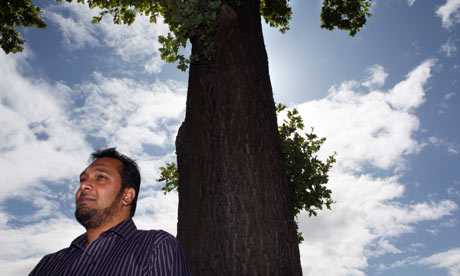
    Racist attackers abducted a Muslim community leader at knifepoint, bundled him into a car and threatened his life unless he stopped running prayer sessions in a community hall that has been the target of a British National party campaign.

    Police have confirmed they are treating the incident as a hate crime and are investigating links with an earlier firebomb attack on the same man’s home.

    Noor Ramjanally, 35, told the Guardian he had been the victim of a terror campaign which has also involved threats against his family after he began the Islamic prayer sessions in March. He said he fears for his life after the abduction at knifepoint, which happened at his home in Loughton, Essex, on Monday.

    BNP campaign has been blamed for rising tensions in the area. The party has been leafleting the area warning of “Islamification” which it says flows from the weekly two-hour prayer session, which it claims is a prelude to a mosque being built.

    Ramjanally said he was abducted from his home in daylight by two white men who threatened him with a knife, bundled him into a car then drove him into woodland. They demanded he stop organising the Friday prayer sessions at Murray hall community centre. He said the words from his abductors matched the BNP propaganda opposing the Muslim prayers. The same demand was contained in hate mail he received last month threatening his wife and child, he said.

    Vikram Dodd describes the case Councillor Pat Richardson, leader of the BNP group on the local council, said her party was not behind the attacks on Ramjanally. “Firebombing is not a British method. A brick through the window is a British method, but firebombing is not a way of showing displeasure,” she said.

    Ramjanally said: “I believe the BNP campaign has inspired the violence.”

    He said he was snatched at around 12.15pm and feared he would be murdered during his ordeal. “I was at home and the door bell rang. I opened the door and they grabbed my wrists, pulling me out by force,” he said.

    “It was two white men. They put a knife upon my stomach, and said do what you’re told or you’ll get hurt.” He said he was then bundled into the boot of a 4 x 4 vehicle, with one of the men holding a knife to his chest.

    Ramjanally said he was driven for 10 minutes to nearby Epping Forest, walked around, and then threatened: “They said ‘We don’t want your Islamic group in Loughton.’ I was scared, I feared for my life. I was in a forest, a knife was held against me, how would you feel? They said, ‘If you don’t stop, we’ll come back.’”

    The attackers then left Ramjanally alone in the woods. Essex police said an investigation was under way into the incident and two earlier ones at Ramjanally’s home.

    “Police are treating the incidents as ‘hate crime’ and a possible motivation would appear to be a link to the use of the Murray hall, Loughton by the Muslim community for Friday prayers,” the force said.

    Superintendent Simon Williams of Essex police said: “We are treating these offences with the utmost seriousness and are putting considerable resources into the investigation.

    “While that investigation continues we will be working with the whole population of Loughton to ensure that all members of the community are free to practice their religion and beliefs safely and freely.”The prayer sessions at Murray hall began on 27 March, with nine people worshipping. Now up to 80 people attend.

    On 2 July, Ramjanally received an anonymous threatening letter telling him to stop using the hall for prayers and stating the author knew which school his child went to and which car he drove. The next day his flat was firebombed. The BNP has four councillors in the area and its leafleting campaign in late July has been attacked as inflammatory and divisive.

    Richardson said she had seen the leaflet before it was released last month. She was sceptical of Ramjanally’s claims of a terror campaign. “I told the police we want to object that fingers were being pointed in our direction,” she said.

    She also denied that BNP members were behind any violence. She believes that the weekly Muslim prayer meeting is a prelude to an attempt to encourage more Muslims to move into the area, and thus to vote out the BNP. “I was wondering whether it was a ploy to attract more Muslims to the area to try and vote out the BNP councillors,” she said.

    Richardson said the Muslim prayer meeting did not fit in with the area’s mainly white population: “It’s not really natural for the area because there are so few Muslims,” she said.

    At Murray hall yesterday there was little sign of the building being turned into a mosque. The hall’s caretaker said a children’s group was using the premises.

    Passing by was lifelong Loughton resident Paul Luton, 57, who said: “Who says [the hall] can’t be used for different things. A community is a community. If there’s a local community of Muslims, they’re local people.”

    Mohammad Fahim runs the nearest mosque to Loughton which was firebombed in 2000. He said racists have used the fears of new mosques in the area to stoke racial and anti-Muslim tensions.

    The BNP describes Fahim’s mosque, in south Woodford, four miles from Loughton, as “notorious” and claims it has incited violence. In fact, Fahim works as a chaplain for the Metropolitan police.Loughton, which borders the eastern fringe of London, is affluent in parts, with a number of houses on its millionaire’s row, called Alderton Hill, owned by British Hindu families. It is also a road, said Fahim, where women wearing headscarves are racially abused by passing white motorists. He advised one Muslim woman to remove her headscarf to avoid being a victim of hate crime. According to the 2001 census, just over 1%of the area’s residents describe themselves as Muslim.

    One owner of a takeaway, who said he would fear for his safety if either he or his shop were named, said he often faced racist abuse: “This area is rubbish. So many times there is trouble.”

    Last year a 20-strong white gang attacked his shop, leaving one Asian employee with head wounds.

    He said often the abuse and violence happened when people were drunk. “Tonight they call you Paki and tomorrow they come in for food.”

    Abdurahman Jafar, chair of the Muslim Safety Forum, which advises the police, said: “The campaign of terror has followed a campaign organised by the BNP whereby they delivered hate literature to locals citing the small Friday prayer sessions as evidence of how ‘the Islamification process is almost complete’.” Recent months have seen a sharp rise in religiously motivated attacks against the Muslim community including attacks on outwardly Muslim appearing individuals, mosques and pogroms directed against the Muslim Community.”

    Guardian

  • Ted Kennedy dies

    Ted Kennedy dies

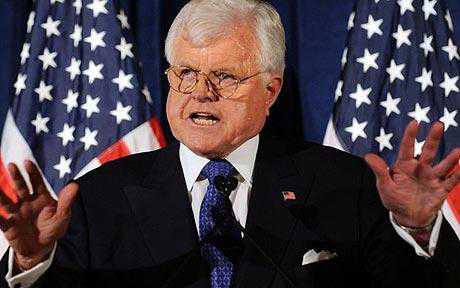
    Ted Kennedy, the US senator and brother of President John F Kennedy, has died after a year-long battle with cancer. He was 77.

    By Bonnie Malkin and agencies in Hyannis Port, Massachusetts
    Published: 7:02AM BST

    26 Aug 2009

    As Senator Edward Kennedy, he was one of the most influential and longest-serving senators in US history – a liberal standard-bearer who was also known as a consummate congressional dealmaker.

    Sen Kennedy had been battling brain cancer, which was diagnosed in May 2008. He died at his home in Hyannis Port, Massachusetts.

    Known as the “liberal lion” of the senate, he was the brother of President Kennedy, assassinated in 1963, Senator Robert Kennedy, fatally shot while campaigning for the 1968 Democratic presidential nomination, and Joe Kennedy, a pilot killed in World War Two.

    “We’ve lost the irreplaceable center of our family and joyous light in our lives, but the inspiration of his faith, optimism, and perseverance will live on in our hearts forever,” the Kennedy family said in a statement.

    “We thank everyone who gave him care and support over this last year, and everyone who stood with him for so many years in his tireless march for progress toward justice, fairness and opportunity for all.

    “He loved this country and devoted his life to serving it.”

    Even in the months leading up to his death, Sen Kennedy championed health care reform, working wages and equal rights. In August, he was awarded the Presidential Medal of Freedom — the nation’s highest civilian honor — by President Obama.

    He underwent successful brain surgery after being diagnosed but his health continued to deteriorate. He suffered a seizure while attending the luncheon following President Barack Obama’s inauguration.

    Kennedy was first elected to the Senate in 1962, at the age of 30, and his tenure there would span four decades.

    Telegraph

  • Senator Edward M. Kennedy is dead

    Senator Edward M. Kennedy is dead

    kennedyAugust 26, 2009 01:31 AM
    Senator Edward M. Kennedy, who carried aloft the torch of a Massachusetts dynasty and championed a liberal ideology during almost a half century in the Senate, but whose personal and political failings may have prevented him from realizing the ultimate prize of the presidency, died Tuesday night at his home in Hyannis Port. He was 77 and had been battling brain cancer.

    Overcoming a history of family tragedy, which included the assassinations of a brother who was president and another who sought to occupy the White House, Kennedy seized on the role of being a “Senate man.” He became a Democratic titan of Washington who fought for the less fortunate, who crafted unlikely deals with conservative Republicans, and who ceaselessly sought support for universal health coverage.

    “Teddy,” as he was known to intimates, constituents, and even his fiercest enemies, was a unwavering symbol to the left and the right — the former for his unapologetic embrace of liberalism, and latter for his value as a political target. But with his fiery rhetoric, his distinctive Massachusetts accent, and his role as representative of one of the nation’s best-known political families, he was widely recognized as an American original. In the end, some of those who might have been his harshest political enemies, including former President George W. Bush, found ways to collaborate with the man who was called the “last lion” of the Senate.

    Kennedy’s White House aspirations may have doomed by his actions on the night that he drove off a bridge at Chappaquiddick Island and failed to promptly report the accident in which a woman died. When Kennedy nonetheless later sought to wrest the presidential nomination from an incumbent Democrat, Jimmy Carter, he failed in his quest. But that failure prompted him to reevaluate his place in history, and he dedicated himself to fulfilling his political agenda by other means, famously saying, “the dream shall never die.”

    With Kennedy’s death, as it was with the passing of his brothers, President John F. Kennedy and Senator Robert F. Kennedy, another chapter has closed in an extraordinary family epic, one that has captivated people worldwide for decades, and has been recounted in countless books, television shows, and movies. But, as Kennedy himself often suggested, it seems certain that his causes not only will endure, but also will remain at the forefront of the American political stage, most recently with the ongoing fight over healthcare legislation.

    He was the youngest child of a famous family, but his legacy derived from quiet subcommittee meetings, conference reports, and markup sessions. The result of his efforts meant hospital care for a grandmother, a federal loan for a working college student, or a better wage for a dishwasher,

    With a family saga that blended Greek tragedy and soap opera, the Kennedys fascinated America and the world for half a century. “I have every expectation of living a long and worthwhile life,” Senator Kennedy said in 1994. This expectation contrasted with the fate of his brothers, all of whom died prematurely. Joseph P. Kennedy Jr. was killed in 1944 on a World War II bombing mission. President John F. Kennedy was assassinated in Dallas in 1963. Senator Robert F. Kennedy was assassinated while campaigning for president in Los Angeles in 1968.

    Senator Kennedy’s congressional career was remarkable not only for its accomplishments, but for its length of 47 years. Only Robert C. Byrd of West Virginia and the late Strom Thurmond of South Carolina served longer than Senator Kennedy.

    Ted Kennedy brought to the Senate a trait his brothers lacked patience and what his mother called a “ninth-child talent,” a blend of toughness and tact.

    Birth of a political legend

    The ninth child of Joseph P. and Rose Fitzgerald Kennedy was born on the 200th anniversary of George Washington’s birth, Feb. 22, 1932. His brother
    Jack, then at the Choate School in Connecticut, wrote to his parents, asking to be godfather and urging the new arrival to be baptized George Washington Kennedy.

    The parents agreed to the first request, but named the child Edward Moore Kennedy, after one of his father’s assistants. Part of Senator Kennedy’s boyhood was spent in London, where his father was US ambassador to Great Britain. After nine schools on two continents, he entered Milton Academy in 1946 and maintained mostly midlevel grades, including in Spanish, a subject that would trouble him again at Harvard College, where, in 1951, he asked a friend to take a Spanish exam for him. A proctor recognized the substitute and both students were expelled, but were told they could return to Harvard if they showed evidence of “constructive and responsible citizenship.”

    For the 19-year-old freshman, the incident became the first of several episodes creating public doubts about his character.

    He entered the military draft, and Private Kennedy met a more diverse group of people at Fort Dix, N.J., than he would have in Cambridge. His father helped arrange an assignment, during fighting in Korea, to NATO headquarters in Paris.

    In 1954, after two years in the Army, Senator Kennedy returned to complete his studies at Harvard, then graduated from the University of Virginia Law School.

    At a family event, he met Joan Bennett, the daughter of an advertising executive. They married in 1958, the same year Ted Kennedy managed the Senate re-election campaign of his brother John against Vincent J. Celeste of East Boston. His assignment was to steer the incumbent to a victory big enough to impress national Democratic Party bosses. The victory margin was 857,000, the highest in the Commonwealth’s history.

    In 1959, Ted Kennedy headed west to help his brother’s presidential campaign. At the Democratic National Convention in Los Angeles in 1960, when Wyoming cinched JFK’s nomination, Edward Kennedy stood among the state’s delegates, cheering them on.
    On to the Senate

    JFK was elected in 1960 and declared in his inaugural address that “the torch has been passed to a new generation of Americans.” This iconography would play out over generations of Kennedys as well, who would take up the torch from a family member. JFK persuaded Massachusetts Governor Foster Furcolo to fill his vacant Senate seat by appointing a Harvard classmate of the president’s, Benjamin A. Smith II, the mayor of Gloucester.

    On March 14, 1962, after he attained the constitutional age of 30 to be eligible for election to the Senate, Edward Kennedy announced his candidacy for the unexpired term of his brother. Ted Kennedy’s only public experience was a year as assistant district attorney of Suffolk County, and he had to take on two Massachusetts dynasties.

    In the special election, he first faced Attorney General Edward J. McCormack Jr., the nephew of US House Speaker John W. McCormack. At a debate in South Boston, McCormack ridiculed his opponent, saying the senatorial job “should be merited, not inherited.” Pointing his finger at Mr. Kennedy, he said: “If his name were Edward Moore, with his qualifications with your qualifications, Teddy if it was Edward Moore, your candidacy would be a joke.”

    Ted Kennedy looked pained and shocked. His silence created a wave of sympathy.

    “Some say Eddie came on too strong, others still say he was right on the mark; I agree with both of them,” Senator Kennedy said at McCormack’s funeral 35 years later.

    Ted Kennedy went on to win 69 percent of the primary vote and then to defeat George Cabot Lodge, the former Republican senator’s son, in the general election.

    Even with a brother in the White House and another, Robert, as attorney general, a freshman senator was supposed to work diligently for local concerns and to perform committee work in patient obscurity. Senator Kennedy did so, taking on his brother’s legislative concerns on refugees and immigrants. He served on the Labor and Judiciary committees and sought “more for Massachusetts” by pursuing fishery development and a Cambridge electronics research center for the National Aeronautics and Space Administration.

    Disaster strikes

    On Nov. 22, 1963, Mr. Kennedy was presiding over the Senate, a chore assigned to freshman members, when a messenger arrived at the rostrum with the news from Dallas. After confirming with the White House the president’s death, Mr. Kennedy and his sister, Eunice, flew to Hyannis Port to deliver the news to their father, Joseph P. Kennedy, who had suffered a stroke in 1961 and could not speak or walk.

    In Congress, Mr. Kennedy did not deliver his “maiden speech” until April 1964. The subject was civil rights, the unfinished business of his slain brother. In Washington, his own family had grown with the birth of Patrick Joseph Kennedy in 1963. Kara Anne had been born in 1960, and Edward Jr. in 1961.

    In 1964, eager to win a full six-year term in the Senate, Mr. Kennedy planned to visit Springfield to accept the endorsement of the state convention. On the night of June 19, after casting votes on final passage of a civil rights bill, Mr. Kennedy and the convention’s keynote speaker, Senator Birch Bayh of Indiana, boarded a twin-engine private plane in Washington en route to Barnes Municipal Airport in Westfield.

    In heavy fog, the aircraft crashed in an apple orchard, killing the pilot and a Kennedy aide. Mr. Kennedy sustained three broken vertebrae, fractured ribs, a punctured lung, and internal hemorrhaging.

    After a four-month recuperation, Mr. Kennedy was released, but back injuries would cause him pain for the rest of his life. The Republican opponent was Howard Whitmore, the former mayor of Newton, who said, “My opponent is flat on his back, and, from a gentleman’s standpoint, I can’t campaign against that.” Mr. Kennedy was reelected with 74.3 percent of the vote.

    In that same election, the voters of New York elected Robert Kennedy as their senator. In 1965, on the first day of the 89th Congress, the Kennedys were sworn in together.

    The brothers teased each other frequently, but seldom diverged in their liberal voting patterns. Edward took the lead on issues such as repealing the poll tax.

    By 1967, rallies against the Vietnam War were proliferating and on Nov. 30,
    Senator Eugene J. McCarthy of Minnesota agreed, after Robert Kennedy declined, to challenge Lyndon Baines Johnson in the 1968 Democratic primaries. After McCarthy won 42 percent of the New Hampshire vote and before LBJ would bow out, RFK reconsidered and entered the contest. In June, after winning the California primary, Robert Kennedy was assassinated. At St. Patrick’s Cathedral in New York, the voice of the surviving Kennedy brother cracked as he eulogized Robert as “a good man, who saw war and tried to stop it.” Mr. Kennedy became the surrogate father to his brothers’s children and a patriarchal figure in the growing clan.

    Vietnam dominated the 1968 convention, as did speculation about Mr. Kennedy’s intentions. “Like my brothers before me, I pick up a fallen standard,” he said at the College of the Holy Cross in Worcester. “Sustained by the memory of our priceless years together, I shall try to carry forward that special commitment to justice, to excellence, and to the courage that distinguished their lives.”

    But the Capitol, not the White House, seemed the focus of his intentions. After Nixon defeated Hubert H. Humphrey in a close contest, Mr. Kennedy surprised many in Washington by running for majority whip. By a 31-26 vote, he defeated the incumbent, another son of a famous political dynasty, Senator Russell B. Long of Louisiana. On a cold January night, before celebrating at his home in McLean, Va., the 36-year-old senator drove to Arlington National Cemetery, where the gravesite of Robert was under construction next to John’s.

    Majority leader Mike Mansfield of Montana welcomed his new assistant, saying, “Of all the Kennedys, the senator is the only one who was and is a real Senate man.” On July 18, 1969, Mansfield predicted that his colleague would not run for president in 1972, saying “He’s in no hurry. He’s young. He likes the Senate.”

    On that same day, Mr. Kennedy arrived on an island that his actions would make notorious. On Chappaquiddick, across a narrow strait from Edgartown on Martha’s Vineyard, six women who had worked on RFK’s campaign gathered for a reunion at a rented cottage.

    Mary Jo Kopechne, 29, had worked for RFK’s Senate office. A passenger in a car driven by Mr. Kennedy, she drowned after the car skidded off a bridge. Mr. Kennedy failed to report the accident for several hours. The accident gave the senator a minor concussion and a major personal and political crisis.

    On the same day American astronauts walked on the moon, fulfilling a JFK pledge, the accident was front page news across the globe. The senator was unable to explain the accident for days. After consulting in Hyannis Port with his brothers’ advisers, he gave a televised speech a week later. He praised Kopechne, wondered aloud “whether some awful curse did actually hang over the Kennedys,” then asked Massachusetts voters whether he should resign. They replied overwhelmingly in the negative.

    His critics snarled that Mr. Kennedy “got away with it” at Chappaquiddick, but the price he paid in personal grief was as high as the cost in presidential politics. During the Cold War, voters expected quick and cool judgment from presidents. Mr. Kennedy, in effect, disqualified himself when he confessed on television that he should have alerted police immediately: “I was overcome, I’m frank to say, by a jumble of emotions: grief, fear, doubt, exhaustion, panic, confusion, and shock.”

    Vietnam dominated the 1968 convention, as did speculation about Mr. Kennedy’s intentions. “Like my brothers before me, I pick up a fallen standard,” he said at the College of the Holy Cross in Worcester. “Sustained by the memory of our priceless years together, I shall try to carry forward that special commitment to justice, to excellence, and to the courage that distinguished their lives.”

    But the Capitol, not the White House, seemed the focus of his intentions. After Nixon defeated Hubert H. Humphrey in a close contest, Mr. Kennedy surprised many in Washington by running for majority whip. By a 31-26 vote, he defeated the incumbent, another son of a famous political dynasty, Senator Russell B. Long of Louisiana. On a cold January night, before celebrating at his home in McLean, Va., the 36-year-old senator drove to Arlington National Cemetery, where the gravesite of Robert was under construction next to John’s.

    Majority leader Mike Mansfield of Montana welcomed his new assistant, saying, “Of all the Kennedys, the senator is the only one who was and is a real Senate man.” On July 18, 1969, Mansfield predicted that his colleague would not run for president in 1972, saying “He’s in no hurry. He’s young. He likes the Senate.”

    On that same day, Mr. Kennedy arrived on an island that his actions would make notorious. On Chappaquiddick, across a narrow strait from Edgartown on Martha’s Vineyard, six women who had worked on RFK’s campaign gathered for a reunion at a rented cottage.

    Mary Jo Kopechne, 29, had worked for RFK’s Senate office. A passenger in a car driven by Mr. Kennedy, she drowned after the car skidded off a bridge. Mr. Kennedy failed to report the accident for several hours. The accident gave the senator a minor concussion and a major personal and political crisis.

    On the same day American astronauts walked on the moon, fulfilling a JFK pledge, the accident was front page news across the globe. The senator was unable to explain the accident for days. After consulting in Hyannis Port with his brothers’ advisers, he gave a televised speech a week later. He praised Kopechne, wondered aloud “whether some awful curse did actually hang over the Kennedys,” then asked Massachusetts voters whether he should resign. They replied overwhelmingly in the negative.

    His critics snarled that Mr. Kennedy “got away with it” at Chappaquiddick, but the price he paid in personal grief was as high as the cost in presidential politics. During the Cold War, voters expected quick and cool judgment from presidents. Mr. Kennedy, in effect, disqualified himself when he confessed on television that he should have alerted police immediately: “I was overcome, I’m frank to say, by a jumble of emotions: grief, fear, doubt, exhaustion, panic, confusion, and shock.”

    He returned to his work in the Senate and in December 1969 began a long campaign “to move now to establish a comprehensive national healthcare insurance program.” He also led the effort to give 18-year-olds the right to vote. After winning reelection in 1970 with 62 percent of the vote, he found how Chappaquiddick reverberated in the Senate chamber. In January 1971, Byrd defeated Mr. Kennedy for whip by a 31-24 vote of the Democratic caucus.

    Years later, Mr. Kennedy privately thanked Byrd because the loss made him concentrate on committee work in healthcare, refugees, civil rights, the judiciary, and foreign policy, areas in which he would leave a lasting imprint.

    While involved in Senate work, he discovered that his teen-age son, Edward Jr., had to have his leg amputated. His son’s cancer cooled the senator’s ambitions about running for president in 1976.

    Jimmy Carter of Georgia, elected president in 1976, was not a Kennedy Democrat. The ideological divide between the two was profound. Mr. Kennedy thought Carter’s healthcare programs were timid. The president sometimes resented Mr. Kennedy’s celebrity status, especially when foreign leaders consulted with the senator.

    Democrats held a mid-term conference in Memphis in December 1978, dominated by the senator’s nautical metaphor. “Sometimes a party must sail against the wind,” he said. “We cannot afford to drift or lie at anchor. We cannot heed the call of those who say it is time to furl the sail.” Carter’s response included telling a group of Democratic congressmen that if Mr. Kennedy did challenge him, “I’ll whip his ass.”

    On Nov. 7, 1979, saying he was “compelled by events and by my commitment to public life,” Mr. Kennedy formally declared his candidacy for the 1980 Democratic presidential nomination. “For many months, we have been sinking into crisis,” Mr. Kennedy said. “Yet we hear no clear summons from the center of power.” He stood on the stage of Faneuil Hall, before a giant painting of Daniel Webster, a Massachusetts senator who never became president.

    Unable to persuade Democrats to abandon a Democratic president, Mr. Kennedy won only 10 of the 35 presidential primaries. In July, he reluctantly endorsed Carter at the Democratic National Convention in New York. After congratulating Carter, he said, “For me, a few hours ago, this campaign came to an end. For all those whose cares have been our concern, the work goes on, the cause endures, the hope still lives, and the dream shall never die.”

    In 1981, because of Ronald Reagan’s coattails, Mr. Kennedy was in the Senate minority for the first time. But he was accustomed to reaching across the aisle for support. Throughout his career, Mr. Kennedy’s name animated Republican fund-raising efforts. In reality, the GOP’s bete noire cooperated with party leaders from Barry Goldwater to Bob Dole to Orrin Hatch.

    Mr. Kennedy’s success owed more to craftsmanship than charm, more to diligence than blarney. In 1985, outside the hearing room of the Armed Service Committee, a reporter encountered Senator John Warner, a Republican of Virginia, who spontaneously volunteered praise of his liberal colleague from Massachusetts: “This man works as hard as anyone. When he knows his subject, he really knows it. He listens, he learns, and he’s an asset to this committee.”

    In 1985, Mr. Kennedy renounced presidential ambitions, saying to Bay State voters, “I will run for reelection to the Senate. I know that this decision means that I may never be president. But the pursuit of the presidency is not my life. Public service is.”

    He had watched with pride as his nephew Joseph won the seat vacated by House Speaker Tip O’Neill in 1986 and in 1994 as his son, Patrick, won a congressional seat from Rhode Island. But not all family matters were a source of pride. In 1991, the senator had to testify in Palm Beach about rape charges brought against his nephew William Kennedy Smith in the aftermath of a drinking party organized by Mr. Kennedy. The incident embarrassed the senator into silence during judiciary committee hearings into allegations of sexist conduct against Clarence Thomas, later confirmed as a Supreme Court justice.

    Mr. Kennedy’s reputation as a roustabout lingered until, years after he and Joan divorced in 1982, Mr. Kennedy met Victoria Reggie, a lawyer and divorced mother of two who was 22 years younger than he was. They wed in 1992 and began a partnership that brought equilibrium and focus to Mr. Kennedy’s life.

    In the 1992 presidential election, Mr. Kennedy endorsed his home state colleague Paul Tsongas, but enthusiastically backed Bill Clinton in the fall. In 1994, when Republicans recaptured the House for the first time in 40 years, no Democrat was safe, even the leading lion of liberalism in Massachusetts. A Republican businessman, Mitt Romney, ran against him and captured the attention of some until, in a Faneuil Hall debate, Mr. Kennedy proved his mastery of the issues.

    For the senator, it was a relatively close call. He won with 58 percent of the vote, his smallest margin since his first election in 1962. Mr. Kennedy returned to form, winning re-election by lopsided margins in 2000 and 2006.

    During the administration of Republican President George W. Bush, Mr. Kennedy led the Senate’s antiwar faction as the president pressed Congress for the authorization to use military force against Iraq.

    In a speech at Johns Hopkins University about a year after the terrorist attacks of Sept. 11, 2001, Mr. Kennedy said the administration had failed to make the case for a pre-emptive attack.

    “I do not accept the idea that trying other alternatives is either futile or perilous, that the risks of waiting are greater than the risk of war,” he said, recalling his brother’s restraint in dealing with the Soviet Union during the Cuban missile crisis of October 1962.

    Two weeks later, the House and Senate passed the Iraq war resolution by wide margins. Mr. Kennedy was among 23 Democrats who voted in opposition.

    But Mr. Kennedy displayed a willingness to be helpful when he thought Mr. Bush was right. He was a force behind the Bush administration’s chief domestic policy achievement in its first term, No Child Left Behind, the sweeping education bill that mandated testing to measure student progress.

    Mr. Kennedy was a lead author and attended the signing ceremony in February 2002 at Hamilton High School in Ohio. When Mr. Bush introduced him, the president said: “He is a fabulous United States senator. When he’s against you, it’s tough. When he’s with you, it is a great experience.”

    In early 2008, shortly before his own cancer diagnosis, Senator Kennedy surprised much of the political world by endorsing Senator Barack Obama for president over Senator Hillary Rodham Clinton. The comparisons between Obama and John F. Kennedy were obvious to many, and the endorsement was seen as a passing of the Kennedy torch to the man aspiring to be the nation’s first black president.

    Less than two weeks before Obama would face the far better-known Clinton in
    “Super Tuesday” contests in about half the states of the country, Senator
    Kennedy’s endorsement came at an optimal moment. Obama held Clinton to a draw in the Super Tuesday contests, setting him up for his nomination and election as president.

    Despite his illness, Senator Kennedy made a forceful appearance at the Democratic convention in Denver, exhorting his party to victory and declaring that the fight for universal health insurance had been “the cause of my life.”

    He pursued that cause vigorously, and even as his health declined, he spent days reaching out to colleagues to win support for a sweeping healthcare overhaul; when members of Obama’s administration questioned the president’s decision to spend so much political capital on the seemingly intractable healthcare issue, Obama reportedly replied, “I promised Teddy.”

    The Boston Globe

  • Iraq, Syria, Turkey to have water meeting

    Iraq, Syria, Turkey to have water meeting

    24 August 2009


    BAGHDAD: Iraq, Syria and turkey have agreed to meet in Ankara on Sept. 3, 2009, to discuss mutual water situation especially at the Euphrates River, the Iraqi Water Resources Ministry said Monday.

    “The Iraqi water resources minister met the Syrian irrigation minister and the Turkish energy minister in Damascus,” said a release issued by the Iraqi Ministry and received by Aswat al-Iraq news agency.

    “The three sides agreed to hold a meeting on Sept. 3, 2009 to discuss mutual water relations,” it said.

    Zawya