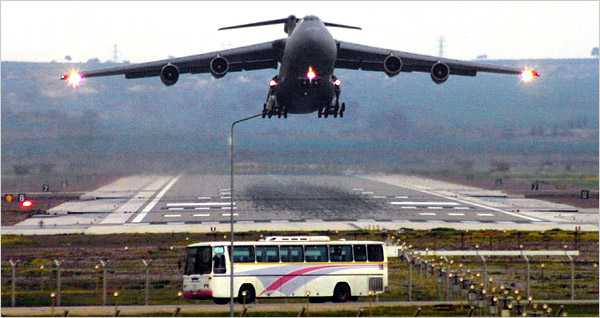
The third decade of the 21st century is witnessing the most complex security dilemma of the post-Cold War era in international relations. The only remnants of the optimistic “end of history” discourses of the 1990s are the resurgence of great power competition, the spread of regional wars, and the normalization of war as an instrument of foreign policy. While armament expenditures are reaching record levels all over the world, especially in developed and developing countries, militarist discourses are not limited to authoritarian regimes but are also gaining legitimacy in established democracies. This situation not only transforms military balances but also the collective memory of societies regarding peace.
However, the current picture indicates a situation far more complex than the mere resurgence of traditional power blocs. Unlike the rigid polarization of the Cold War, today’s actors are both intertwining and breaking apart just as rapidly. While NATO members’ strategies diverge on internal disagreements, there is a deep rift between the US and Europe in terms of strategic depth; Iran is transforming its military deterrence into a diplomatic victory, while Gulf states are experiencing the bewilderment of being unable to form a united front. This article will analyze this state of “liquid chaos” in the global security architecture through six fundamental dimensions.
- New Dynamics of the Global Arms Race
1.1. Record Increases in Defense Budgets of Developed Countries
1.1.1. The US defense budget, set at $886 billion for fiscal year 2024, has surpassed even the peak periods of the Cold War. A significant portion of this budget is allocated to strategic priorities such as the development of hypersonic missiles, the expansion of space forces, and the modernization of the nuclear triad. However, the size of this budget reflects not so much the actual military power of the US, but rather the extent of its current engagements and logistical fatigue. The Pentagon is trying to maintain deterrence simultaneously in Europe, the Middle East, and the Asia-Pacific, which brings with it the risk of strategic overstretch.
1.1.2. NATO member European countries have largely achieved the target of raising defense spending to 2% of GDP, committed at the 2014 Wales Summit. While Poland is progressing towards raising this ratio to 4%, Germany is restructuring its Bundeswehr using a €100 billion special fund. However, these increases serve as an “insurance policy” against the possibility of a partial US withdrawal from Europe. Europe’s rearmament stems not merely from responding to US demands, but from the necessity of self-sufficiency in case Washington pivots to Asia.
1.1.3. China, for its part, spends well above its officially announced defense budget of $293 billion, with unofficial estimates suggesting the figure is nearly double that. China’s island-building activities in the Indo-Pacific, hypersonic weapons tests, and cyber capabilities play a decisive role in its competition with the US. However, China’s real strategic success lies in reducing its rivals’ room for maneuver through economic dependency while increasing its military capacity. This represents a form of hybrid competition, different from the traditional arms race.
1.2. Regional Arms Races in Developing Countries
1.2.1. India is steadily increasing its defense spending due to border disputes with both Pakistan and China. The purchase of S-400 air defense systems from Russia, defense agreements with the US, and the procurement of Rafale fighter jets from France show that India is pursuing a multi-faceted armament strategy. However, India’s real success is its ability to maintain relations with all parties without fully engaging with any major power. This “multi-alignment” strategy offers the most serious alternative to the bloc logic of the Cold War era.
1.2.2. In the Middle East, Gulf countries like Saudi Arabia and the United Arab Emirates have raised defense spending to record levels against the Iranian threat. However, faced with the military successes of Iran’s axis of resistance and waning US engagement, these countries have long lost the will to form a united front. The inadequacy of the US-UK intervention against the Houthis’ operations in the Red Sea has turned the Gulf monarchies towards a “muddling through” diplomacy with Iran. This shows that the Arab world is being rendered passive against Iran.
1.2.3. Turkey has made significant progress in the last decade with the goal of independence in its defense industry. Having become one of the world leaders in UAVs and UCAVs, Turkey is also drawing attention with its national combat aircraft KAAN and its first aircraft carrier projects. However, this breakthrough by Turkey is also part of a strategy of being a “flying state” within NATO. While remaining in the Western alliance, Ankara positions itself as an independent actor through steps like the purchase of S-400 systems from Russia, which deepens discord within the alliance.
1.3. Disruptive Technologies and Military Transformation
1.3.1. AI-powered warfare systems are no longer just a matter of science fiction; they have begun to be used on real battlefields. Autonomous unmanned aerial vehicles can make target recognition and engagement decisions without human intervention, bringing along ethical and legal debates. However, the biggest risk is that these systems make human intervention nearly impossible in cases of false alarms. A faulty threat assessment by an algorithm could trigger automatic retaliation.
1.3.2. Hypersonic weapons (Mach 5 and above) render existing missile defense systems almost useless. Systems like Russia’s Kinzhal and Avangard, China’s Dongfeng-17, and the US’s AGM-183 ARRW have the potential to radically change strategic balances. The short reaction time of these weapons makes controlling escalation almost impossible during a crisis. By giving decision-makers only minutes, these systems dangerously test humanity’s confidence in its own composure.
1.3.3. Cyber warfare and the weaponization of space have completely redefined the boundaries of conflict. Cyberattacks that paralyze a country’s energy grid, financial system, or communication infrastructure can now be carried out without a traditional declaration of war. However, the biggest problem of cyber deterrence is the attribution crisis. Determining which state an attack originated from is technically difficult; an action by a “hacktivist” group could be interpreted as a direct state attack and trigger disproportionate retaliation.
- The US-Israel Axis and Iran’s Resistance Strategy
2.1. Evolution of the US-Israel Threat Perception
2.1.1. The US and Israel’s threat perception regarding Iran has undergone a significant transformation in the last two decades. Initially focused solely on the nuclear program, this perception has gradually come to encompass Iran’s influence over regional proxy forces (Hezbollah, Hashd al-Shaabi, Houthis), its ballistic missile program, and its cyber capabilities. However, this expansion is an acknowledgment that the threat has truly become multi-dimensional, rather than a containment strategy. The US no longer sees Iran through a single file, but as an “empire of proxy wars.”
2.1.2. Cyberattacks (Stuxnet worm), covert actions (assassinations of nuclear scientists), and sabotage of nuclear facilities carried out over the last decade are considered parts of a low-intensity war. These actions aimed to slow Iran’s nuclear progress while avoiding a direct declaration of war. However, they have also increased pressure among Iranian political elites towards acquiring nuclear weapons for deterrence. Each sabotage has brought Iran one step closer to the nuclear threshold.
2.1.3. The possibility of a large-scale Israeli attack on Iran’s nuclear facilities is constantly on the agenda. However, US administrations have historically been unsupportive of such unilateral operations. The mutual direct attacks in April 2024 marked a new phase in this balance. Iran’s first direct attack from its own territory on Israel, in response to Israel’s strike on the Iranian consulate in Damascus, has changed the rules of the long-standing “shadow war.” Direct engagement is no longer a theoretical scenario but a factual reality.
2.2. Iran’s Victory: Military Deterrence and Diplomatic Success
2.2.1. Iran has developed a unique asymmetric warfare doctrine against the military and economic superiority it faces. Key elements of this doctrine include a vast ballistic missile inventory, a network of regional proxy forces, cyberattack capacity, and the threat to close the Strait of Hormuz. However, Iran’s real strategic success is turning this military deterrence into a diplomatic victory. Tehran has effectively forced the international community to accept its 10-point nuclear ethics and security memorandum. Many items previously defined as “red lines” by the West are no longer even subjects of negotiation.
2.2.2. This diplomatic success is a “Forced Victory” for Iran. Although sanctions continue, Iran has largely broken the pressure of the “military option” on its nuclear file. The West has begun pragmatically normalizing Iran’s effective behavior as a threshold nuclear power. The goal is no longer to stop Iran’s nuclear program but to manage it. This has given Iran immense prestige and permanently altered regional balances.
2.2.3. The encirclement Iran has created through its regional allies is carefully managed. Hezbollah’s over 150,000 rockets in Lebanon, the Hashd al-Shaabi forces in Iraq, and the Houthi attacks in the Red Sea threaten Israeli and US interests on different fronts. This multi-front structure makes it impossible for Israel to eliminate all threats with a single major operation. Each front functions as an independent layer of deterrence.
2.3. Regional and Global Repercussions: The Fragmented Arab Front
2.3.1. Iran’s increasing military cooperation with Russia (use of Shahed-136 drones in Ukraine, joint military exercises) and the 25-year strategic agreement with China serve as a balancing mechanism against the US’s tendency to withdraw from the region. This rapprochement reduces the impact of Western sanctions while also opening a new maneuvering space for Iran internationally. Russia and China have become Iran’s geopolitical insurance.
2.3.2. Although the normalization process of Arab countries like Saudi Arabia, UAE, and Egypt with Israel (Abraham Accords) initially seemed to accelerate the formation of an anti-Iran front, this front quickly disintegrated. Saudi Arabia, the UAE, and Egypt have long lost the political will and military coordination needed to form a united front against Iran. The military successes of Iran’s resistance axis and the waning US engagement have turned these countries from active actors into passive observers. Egypt’s economic crisis has completely paralyzed its capacity to act as a regional power.
2.3.3. The recent war in Gaza (post-Al-Aqsa Flood operation) has inflicted irreparable wounds on the alliance system of the US and its allies. The unconditional US support for Israel has exhausted all of America’s soft power vis-à-vis the Global South. Protests beginning on its own university campuses and streets have led to a decline in the advocacy of the “Jewish lobby” in US domestic politics and the questioning of pro-Israel policies. This is a breaking point in US foreign policy. Likewise, the discord between the US and Europe has not remained at a diplomatic level but has turned into direct political struggles. The tension between “pro-Israel advocacy” and “the rights of the Palestinian people” on European streets and in parliaments has divided governments and strained the Transatlantic alliance’s strategic coherence in the Middle East.
- The Russia-Ukraine War: A Symbol of Global Rupture
3.1. The War Reshaping the International System
3.1.1. The full-scale invasion that began in February 2022 has opened deep and permanent rifts in the international system unseen since the end of the Cold War. The unprecedented military, financial, and intelligence support provided to Ukraine by the Western alliance in the first year of the war led to NATO’s tactical revival, leaving behind the days when it was declared “brain dead.” However, this revival conceals a deep strategic incompatibility. While the US organizes Europe against Russia through NATO, it has shifted its own strategic priority to the Asia-Pacific. Europe, on the other hand, faces the necessity of building its own defense against a scenario of a partial US withdrawal from the alliance during a future presidential term.
3.1.2. The war has laid bare the dysfunctionality of the UN Security Council. The fact that one of the permanent members is effectively a belligerent has confirmed the collapse of the collective security system. More importantly, the war has deeply affected the Global South. Rising food prices, the energy crisis, and disruptions in fertilizer supply have made many countries in Africa and Asia direct victims of the war. These countries have pursued a pragmatic balancing policy by refusing to join Western sanctions against Russia, which has weakened the West’s rhetoric on the “democracy-authoritarianism” axis.
3.1.3. The necessity for neutral countries to redefine their positions has been one of the most important consequences of the war. While Finland and Sweden’s decision to join NATO meant abandoning centuries-old neutrality policies, Switzerland’s increase in defense spending and closer military cooperation with the EU suggests that the concept of “non-alignment” has lost its validity. However, even the NATO membership of these countries reflects a search for “US insurance” rather than full integration into the alliance. These countries are pursuing a multi-layered security strategy by also increasing their own defense capabilities under the NATO umbrella.
3.2. New Dimensions of Hybrid Warfare
3.2.1. The Russia-Ukraine war exhibits a hybrid character where traditional and modern warfare tools are used together. Drones (Bayraktar, Orlan, Shahed) and cyberattacks share the same stage as artillery units and tanks. This situation transforms the nature of war, expanding the battlefield horizontally and vertically. However, the most notable development is the Iranian-made Shahed drones becoming a decisive tool in the war. This is of great importance in demonstrating Iran’s progress in military technology and the depth of its strategic cooperation with Russia.
3.2.2. Economic sanctions have become one of the most effective weapons of war. The comprehensive sanctions imposed on Russia (freezing central bank assets, removal from SWIFT, energy embargo) constitute an unprecedented economic pressure mechanism in history. However, the failure of these sanctions to have the expected devastating effect has raised serious questions about their effectiveness. Russia has managed to limit the impact of sanctions by redirecting its energy exports to Asia and transitioning to a war economy. This has shown that sanctions alone cannot end a war; on the contrary, they can create a reverse effect by boosting the defense industry in the target country.
3.2.3. Information warfare and disinformation are among the factors determining the course of the war. Both Russia, Ukraine, and the West are conducting intense information operations to shape public opinion in their favor. However, the most important consequence of this information war has been the complete fragmentation of reality. Different camps believe in completely different narratives, making it almost impossible to find common ground on reality. This will remain as a deep wound that will make it difficult for societies to reconcile even after the war ends.
3.3. Revival of Defense Industries
3.3.1. The prolonged war has led to a revival of defense industries in both Russia and Western countries. Russia has tripled its artillery ammunition production while also accelerating tank production. Western observers acknowledge that the Russian defense industry, with its transition to a war economy, has performed beyond expectations. This is interpreted as meaning that, instead of collapsing Russia’s military capacity as targeted by the sanctions, they have actually strengthened it. Russia has effectively entered a process of “industrialization on a war footing.”
3.3.2. European Union countries have increased joint defense spending and strengthened the European Defence Fund. Germany’s €100 billion special fund, Poland’s target of raising defense spending to 4% of GDP, and the Nordic countries’ integration into NATO signal a significant leap in Europe’s military capacity. The US has set a target of increasing 155mm artillery shell production from 14,000 to 100,000 per month. However, the most important consequence of this production boom is that, even in a scenario where the war ends, reducing production capacity back to peacetime levels is economically and politically almost impossible.
3.3.3. Defense industries have become sectors employing hundreds of thousands of people with powerful lobbies. This situation risks consigning the concept of “peace dividend” to history and condemning the world to a permanent semi-war economy. The employment and economic growth created by the defense industry now make calculating the cost of peace difficult and strengthen war lobbies. This is the most concrete economic indicator of the normalization of war.
- New Alliance Quests and Military Structuring
4.1. NATO’s Dilemma: Revival or Strategic Divergence?
4.1.1. Although NATO appears to have tactically strengthened with the Ukraine war, the biggest divergence since the Cold War is occurring strategically between the US and Europe. The US’s focus on the Asia-Pacific and pressures that Europe should be primarily responsible for its own defense have initiated a new era within NATO where “US guarantee is being questioned.” European allies must now seriously consider the possibility of a partial US withdrawal from the alliance during the next presidential term in Washington.
4.1.2. With the accession of Finland and Sweden, reaching 32 members, NATO has experienced its biggest enlargement since the Cold War. However, this enlargement reflects the extent of the Russian threat rather than the strength of the alliance. While new members have brought military capacity and strategic depth to NATO, they have also extended the alliance’s defense line and increased its logistical burden. NATO’s eastern flank has become a vast front stretching from the Baltic Sea to the Black Sea.
4.1.3. Therefore, NATO has ceased to be a single bloc and has evolved into a structure that “has to unite very quickly but has the potential to disintegrate just as fast.” The alliance, which shows solidarity in times of crisis, experiences deep disharmony regarding strategic priorities. While Europe focuses on the war on its own continent, the US’s eyes are on Asia. This disharmony raises serious questions about the future of the alliance.
4.2. Multi-layered and Flexible Alliances
4.2.1. The current security environment forces states to establish flexible and multi-layered alliances that go beyond traditional alliance relationships. Structures like AUKUS (Australia, UK, US) involving narrow but deep cooperation, broader but looser platforms like the QUAD (India, Japan, US, Australia), and regional organizations like the SCO (Shanghai Cooperation Organisation) show the emergence of multiple and partially overlapping security networks simultaneously. Unlike the rigid bloc logic of the Cold War, these structures offer states a wider maneuvering space.
4.2.2. The most important feature of these structures is that the same states can come together on different platforms for different interests. For example, while India cooperates with the US within the QUAD, it is also a member of the SCO and purchases S-400 systems from Russia. This “multi-alignment” strategy provides flexibility to states but also creates uncertainty about which alliance will be valid in times of crisis. Which side India will take in a crisis will depend on the concrete situation and its interests.
4.2.3. This uncertainty also complicates traditional deterrence calculations. A state’s ally does not necessarily mean it will stand by it under all circumstances. Alliances are no longer absolute but conditional. This situation makes crisis management difficult and makes the effort of parties to read each other’s intentions even more important. A wrong signal can lead to overestimating or underestimating an ally’s support.
4.3. Japan’s Historic Transformation
4.3.1. Japan is implementing its most comprehensive security reforms since World War II. The National Security Strategy announced in December 2022 represents a historic break in the country’s interpretation of the pacifist Article 9 of its Constitution. The new strategy gives Japan the capability to “strike enemy bases,” which effectively means preemptive strike authority. This change has brought the long-standing “normal country” debates in the country to a concrete conclusion.
4.3.2. The target of raising the defense budget to 2% of GDP by 2027 will make Japan the world’s third-largest defense spender. This budget increase includes the purchase of up to 400 Tomahawk cruise missiles, extending the range of domestically developed Type 12 surface-to-surface missiles to over 1,000 km, and the deployment of two AEGIS sea-based ballistic missile defense systems. Japan has also accelerated its own hypersonic missile program, aiming to deploy these missiles in the 2030s.
4.3.3. The main driving force behind this transformation is China’s increasing military power and North Korea’s nuclear threat. Japan is also deepening its alliance with the US and establishing new security partnerships with Australia, India, the UK, and the Philippines. However, this transformation is being closely watched, especially by its neighbors China and Korea, and risks triggering a new arms spiral in the region. In a region where historical wounds have not yet healed, Japan’s rearmament further deepens the security dilemma.
- Dangerous Escalation and the Normalization of War
5.1. Legitimization of War Discourse
5.1.1. The most important dimension of dangerous escalation is that war is no longer seen as an exception or a state of failure, but as a normal instrument of international politics. Concepts such as “war option,” “military solution,” “preemptive strike,” and “forced intervention” are being used more comfortably in the discourse of political leaders, leading to a desensitization in public opinion regarding the destructiveness of war. The word “war” has ceased to be a political taboo and has become part of routine political debates.
5.1.2. The media’s role in this process is significant. 24-hour news cycles, war simulations by retired generals as “experts,” strategic analyses, and discussions of possible scenarios turn war into an abstract and technical issue. The real cost of war – dead children, destroyed cities, refugee crises – gets lost in this technical language, desensitizing the audience. On television screens, war is presented as if it were a video game. The Gaza war, in particular, is the most striking example of this desensitization; tens of thousands of civilian deaths have become a mundane statistic.
5.1.3. Another dimension of the normalization of war manifests itself in education systems. In some countries, civil defense drills have become mandatory in schools, teaching young people how to behave in case of war. While this prepares societies for a possible war, it also reinforces the perception that war is a “normal” life event. Societies that have read about war only in history books for generations are now experiencing war preparations as part of daily life.
5.2. Decline of Peace Movements and the Silence of Civil Society
5.2.1. Peace movements and civil society organizations are experiencing a serious decline in the face of this normalization. Similar to the anti-nuclear movements that brought millions to the streets in Europe during the Cold War, the mass peace demonstrations of the 1980s are almost non-existent today. There are many reasons for this: The fragmented structure of the media and the pressure of digital platforms have weakened the organizational capacity of social movements. While digital activism enables fast and widespread mobilization, it also remains limited to “clicktivism,” replacing street actions.
5.2.2. More worryingly, in some countries, pro-peace discourse is stigmatized as “anti-patriotic,” “naive,” or even “treasonous.” In the context of the Ukraine war, those calling for “negotiations for peace” are sometimes accused of serving Russia. In the Gaza war, those calling for a ceasefire are accused of “anti-Semitism.” This polarizing environment narrows the space for moderate voices, creating a debate ground where only radical positions (total war or total surrender) remain.
5.2.3. Peace activists are seen as “unrealistic idealists,” which further narrows the social base of the movement. Current problems like economic crises, inflation, and income inequality push peace activism to the background. People struggling to make ends meet find it difficult to find motivation to participate in anti-war actions. This silence indicates that one of the most important mechanisms with the potential to stop escalation has become dysfunctional.
5.3. New Forms of Deterrence and the Risk of Inadvertent Escalation
5.3.1. The concept of deterrence has moved far away from the Cold War paradigm of “Mutually Assured Destruction” (MAD). Traditional population-destroying deterrence has been replaced by regional, technological, and hybrid deterrence models. Cyber deterrence (threat of retaliation for a cyberattack), space-based deterrence (capability to target satellite systems), and AI-powered deterrence (automatic response systems) are the main elements of these new models. However, these new forms make the threshold of escalation extremely uncertain.
5.3.2. AI-powered early warning systems and autonomous weapons platforms can make decisions at speeds that make human intervention nearly impossible. A false threat assessment by an algorithm could trigger automatic retaliation. A human decision similar to the one made by Soviet officer Stanislav Petrov in 1983, which saved the world from nuclear war, has become a luxury that now needs to be made in much shorter timeframes. The “black box” nature of AI systems makes it nearly impossible to understand which actor triggered what during an escalation.
5.3.3. The biggest risk of these new forms of deterrence is “accidental escalation” or “false alarm” situations. Determining which state a cyberattack originated from is technically difficult; an attack by a “hacktivist” group acting on behalf of a state could be interpreted as a direct state attack and trigger disproportionate retaliation. Similarly, it may be impossible to distinguish whether an intervention against a satellite in space is a test or an act of war. In this environment of uncertainty, even the smallest incident can spiral out of control and turn into a major conflict.
- Military Preparations in Scandinavia, Germany, and Japan
6.1. Integration of Nordic Countries into NATO
6.1.1. Finland, immediately after joining NATO in April 2023, increased its defense budget by 30%. The country is strengthening its military presence along the 1,300 km border with Russia, building border fences, and hosting NATO’s Very High Readiness Joint Task Force (VJTF). Finland’s “total defence” concept refers to a system where all citizens are prepared for military or civil defence duties. Under this system, regular civil-military cooperation exercises are conducted, and shelters are being renovated in every corner of the country.
6.1.2. Sweden, after officially becoming a NATO member in March 2024, decided to militarize the island of Gotland. This strategic island in the middle of the Baltic Sea is of great importance due to its proximity to Russia’s Kaliningrad exclave. Sweden has also renewed its submarine defense systems and increased naval patrols in the Baltic Sea. Having reinstated conscription in 2017, Sweden now enlists approximately 8,000 young people annually, along with voluntary reserves, as of 2024. Civil defence plans have been renewed, and the capacity of shelters to be used in crises has exceeded 3 million people.
6.1.3. Norway and Denmark, although longer-standing NATO members, have significantly increased their defense spending recently. Norway has expanded its hosted NATO exercises (Trident Juncture, Cold Response) and strengthened its military presence in the Arctic. Denmark has set a target to double its defense budget by 2033, has granted the US base access, and has sent F-16 fighter jets to Ukraine. The coordination of these four Nordic countries within NATO shows that a new “Nordic Defense Alliance” is effectively being formed. However, even if this alliance remains a subgroup of NATO, it also functions as a solidarity mechanism against a potential US withdrawal.
6.2. Germany’s “Zeitenwende” Policy
6.2.1. Chancellor Scholz’s declaration of “Zeitenwende” (Historic Turning Point) in February 2022 initiated Germany’s most comprehensive military reform since World War II. At the center of this policy is a €100 billion special defense fund and the modernization of the Bundeswehr. This fund aims to renew the long-neglected military inventory, strengthen logistical infrastructure, and ensure full compliance with NATO standards. However, the most important dimension of this transformation is that Germany is abandoning its “transformative diplomacy” model and moving towards a more classical power politics.
6.2.2. One of the most concrete steps taken within the scope of “Zeitenwende” is the reorganization of the military command structure. A new “Space Command” and a “Cyber and Information Space Command” have been established within the Bundeswehr. Germany has decided to purchase F-35 fighter jets (for the nuclear sharing mission against the Russian threat) and is modernizing its existing Eurofighter and Tornado fleets. Furthermore, Germany, which sent a warship to the Indo-Pacific region for the first time, signed a military cooperation agreement with Japan, thus showing that it has abandoned its traditional Europe-centric security policy. Berlin is ceasing to be a civilian power and is progressing towards becoming a military actor.
6.2.3. Significant changes are also taking place in Germany’s military personnel policy. The Bundeswehr, which is overhauling the voluntary military service system, aims to increase the number of soldiers to 203,000 by 2031. To close the military personnel gap, the age limit has been raised, and legal regulations have been initiated to allow foreign nationals (EU citizens) to join the German army. Furthermore, the “civil service” model is being debated again, and pilot applications for a return to compulsory military service have been launched in some federal states. These changes imply a questioning of the peaceful identity Germany built after the war.
6.3. Japan’s Military Normalization
6.3.1. With the National Security Strategy announced in December 2022, Japan has created a historic break in its pacifist security policy that has continued since World War II. The new strategy gives Japan the “capability to strike enemy bases,” which effectively means preemptive strike authority. This change is a radical transformation in the interpretation of the pacifist Article 9 of the Constitution and has brought the long-standing “normal country” debates in the country to a concrete conclusion. Japan now aims to be not only defensive but also offensive when necessary.
6.3.2. The target of raising the defense budget to 2% of GDP by 2027 will make Japan the world’s third-largest defense spender. The most concrete reflections of this budget increase include the purchase of up to 400 Tomahawk cruise missiles from the US, extending the range of domestically developed Type 12 surface-to-surface missiles to over 1,000 km, and the deployment of two AEGIS sea-based ballistic missile defense systems. Additionally, Japan has accelerated its own hypersonic missile program, aiming to deploy these missiles in the 2030s. Japan is gradually turning into a missile state.
6.3.3. The main driving force behind this military transformation is China’s increasing military power and North Korea’s nuclear threat. Japan is also deepening its alliance with the US and establishing new security partnerships with Australia, India, the UK, and the Philippines. Taking a more active role within the QUAD and AUKUS+ mechanisms, Japan is positioning itself at the center of the regional security architecture. However, this transformation is being closely watched, especially by its neighbors China and Korea, and risks triggering a new arms spiral in the region. In a region where historical wounds have not yet healed, Japan’s rearmament further deepens the security dilemma. China uses Japan’s steps as a pretext to increase its own military budget, thus a vicious cycle reproduces itself.
Conclusion
The global system is experiencing the most complex and unpredictable security dilemma since the end of the Cold War. Increasing armament expenditures, the risk of regional conflicts spreading, the normalization of great power competition, and the rapid military structuring of previously neutral countries point to a world order where peace has been replaced by a state of constant alert. However, this picture reflects a situation far more complex than the mere resurgence of traditional power blocs. Unlike the rigid polarization of the Cold War, today’s actors are both intertwining and breaking apart just as rapidly.
While the pressure of the US-Israel axis on Iran and the resistance strategies developed against it keep the Middle East as a potential volcano, the Russia-Ukraine war has fundamentally shaken the entire security architecture in Europe. However, the most important result of these two crisis lines is the rising strategic prestige of Iran and the questioning of US regional deterrence. Iran has turned its military deterrence into a diplomatic victory, effectively invalidating the West’s “military option” rhetoric. Arab countries, on the other hand, cannot form a united front against Iran and are regressing to the position of passive observers.
The state of the Transatlantic alliance constitutes the most paradoxical dimension of this picture. Although NATO appears tactically united with the Ukraine war, the biggest divergence since the Cold War is occurring strategically between the US and Europe. The US’s focus on the Asia-Pacific and pressures that Europe should be responsible for its own defense have initiated a new era within NATO where “US guarantee is being questioned.” The recent war in Gaza has deepened this divergence, and the unconditional US support for Israel has exhausted all of America’s soft power vis-à-vis the Global South, while carrying the discord between Europe and the US to the streets and parliaments.
The most striking result of the dangerous escalation is that the war option is being multiplied on one hand while being narrowed in specific contexts on the other. States avoid direct major war but normalize conflict through hybrid, asymmetric, and proxy wars. This situation necessitates the revision of classical deterrence theories, rethinking the civil-military distinction, and urgently strengthening global governance mechanisms. Particularly, false alarms caused by cyber space and artificial intelligence could be a sufficient spark for an unintentional war. A mistake by an algorithm could determine the fate of humanity.
While the network structures created by new alliance quests increase security cooperation, they also lead to a greater perception of threat in excluded actors. However, the most important feature of these alliances is that they are conditional and temporary. Actors like India, by being part of multiple alliances simultaneously, expand their maneuvering space, which creates uncertainty about which alliance will be valid in times of crisis. Alliances are no longer absolute but conditional. This situation complicates crisis management and makes the effort of parties to read each other’s intentions even more important.
As seen in the examples of Scandinavia, Germany, and Japan, the acceleration of military preparations even by countries previously known for their peaceful and limited defense understanding shows how widespread the perception of threat has become. The preferences of these countries are too profound to be explained solely by regional concerns; each assumes that the international system no longer rests on reliable rules and that there is a possibility of being attacked at any moment. This assumption risks becoming a self-fulfilling prophecy, because the arming of one country is perceived as a threat by its neighbors and initiates a chain reaction.
On the other hand, focusing only on the military and geopolitical dimensions of this picture may cause the integrity of the problem to be missed. The ongoing transformation is also a deep social and psychological transformation. Generations that grew up in a world where peace was “normal” are now forced to learn to live in an atmosphere where war preparations have become part of daily life. Shelter drills, recruitment campaigns, and the way war scenarios are handled in the media erode societies’ psychological resistance to war, thus making it easier for political leaders to deploy military options. This psychological transformation is perhaps the most dangerous, because it shifts the perception of war from a disaster to a normal policy tool.
The decline of civil society in peace activism is one of the gloomiest dimensions of this picture. Similar to the anti-nuclear movements that brought millions to the streets in Europe during the Cold War, mass peace demonstrations are almost non-existent today. Reasons for this include the fragmented structure of the media, digital activism substituting for action, economic crises changing priorities, and anti-war discourse being stigmatized as “anti-patriotic.” This silence indicates that one of the most important mechanisms with the potential to stop escalation has become dysfunctional. The weakening of peace movements allows pro-war voices to be heard more easily and military solutions to be legitimized more readily.
Despite all these negativities, it may be too early to abandon optimism entirely. Historical experience is full of examples where even in the deepest moments of polarization, diplomacy channels were kept open, crisis communication mechanisms were operated, and the worst scenarios were avoided. The re-establishment of direct military communication lines between the US and China, the continuation of indirect talks between Iran and the US, and the survival, albeit dysfunctional, of platforms like the Organization for Security and Co-operation in Europe (OSCE) are hopeful signs. However, it is becoming increasingly difficult for these mechanisms to keep pace with the speed of escalation. Diplomacy lags behind military preparations, which increases the role of chance in times of crisis.
Ultimately, in the mid-2020s, the world stands at a crossroads. On one hand, a worsening scenario where current escalation spirals out of control and regional wars spread; on the other, a scenario where actors curb escalation and build a new security architecture. Which scenario will materialize depends largely on the steps taken in the next few years. These steps include re-introducing measures to limit the arms race, strengthening ceasefire mechanisms in conflict zones, and most importantly, questioning the legitimacy of war as a policy tool. Reform of international law and the UN system is also an indispensable part of this process.
In conclusion, the current situation has invalidated the classical distinctions between peace, deterrence, and war, creating one of the most dangerous periods in international relations. There is no trace of unipolarity; a state of ‘liquid chaos’ prevails where actors both intertwine and break apart, and where a new front can open at any moment. In an atmosphere of uncertainty where any crisis could spiral out of control, even the most rational actors can make miscalculations. Therefore, in a world where military preparations are accelerating, the way to maintain peace, paradoxically, lies in strengthening diplomacy at the same pace. Otherwise, humanity will be left alone on the brink of a new great war, risking the repetition of past mistakes. At this critical moment in history, the greatest responsibility falls on the leaders of great powers and the conscience of global public opinion.
References
· SIPRI. (2020). SIPRI Yearbook 2020: Armaments, Disarmament and International Security. Oxford University Press.
· NATO. (2021). NATO 2030: United for a New Era. Brussels: NATO Public Diplomacy Division.
· International Institute for Strategic Studies (IISS). (2022). Armed Conflict Survey 2022. London: IISS.
· Mearsheimer, J. J. (2022). “The Causes and Consequences of the Ukraine War”. Foreign Affairs, 101(4), 28-43.
· Japan Ministry of Defense. (2022). National Security Strategy of Japan. Tokyo: MOD.
· Bundeswehr. (2023). Zeitenwende: Die Verteidigungspolitischen Richtlinien. Berlin: Bundesministerium der Verteidigung.
· SIPRI. (2023). Trends in International Arms Transfers, 2022. Stockholm: SIPRI Fact Sheet.
· Finnish Government. (2023). Finland’s Accession to NATO: Government Report. Helsinki: Prime Minister’s Office.
· The White House. (2023). Interim National Security Strategic Guidance. Washington D.C.: The White House.
· Congressional Research Service (CRS). (2024). Iran’s Nuclear Program: Status and U.S. Policy. CRS Report R43333.
· International Crisis Group (ICG). (2024). The New Face of Deterrence in the Middle East. Brussels: ICG Middle East Report No. 245.
· Stockholm University. (2024). Conscription and Total Defence in the Nordic Countries. Stockholm: Stockholm University Press.
· UNIDIR. (2024). Emerging Military Technologies and Strategic Stability. Geneva: UN Institute for Disarmament Research.
· Council on Foreign Relations (CFR). (2024). The Gaza War and the Future of the Transatlantic Alliance. New York: CFR Special Report No. 98.
Sefa Yürükel
Danish ethnographer and social anthropologist (MA)
Aarhus University, 1997
Independent Researcher
Fields of Research: International Politics, Public International Law, Geopolitics, Sociology, Psychology, Cultural Studies, Systems and Structures