Tag: United Nations

  • THE UNITED STATES’ ILLEGAL INTERVENTION REGIME AND THE COLLAPSE OF THE GLOBAL ORDER

    THE UNITED STATES’ ILLEGAL INTERVENTION REGIME AND THE COLLAPSE OF THE GLOBAL ORDER

    No Longer an “Allegation,” but an Open Reality

    The Debate Is Over

    The Open Violation of International Law

    The Use of Force and Threats: Happening Openly

    The United Nations system was established after the Second World War to prevent arbitrary uses of force by states. Article 2(4) of the UN Charter explicitly prohibits the use or threat of force against the territorial integrity or political independence of any state. This provision constitutes a cornerstone of international law, and its binding nature is beyond dispute.

    The rhetoric and practices of the United States toward Venezuela, Iran, the Caribbean, and several other regions constitute clear violations of this prohibition. Calls for regime change, insinuations of military intervention, naval deployments, and official statements containing explicit threats go far beyond the limits of diplomatic language. In international law, such actions are defined as the threat of force.

    These actions cannot be justified under the doctrine of self-defense, nor have they been authorized by the United Nations Security Council. Therefore, what exists here is not a legal controversy but an instance of unauthorized use of force. This reality demonstrates that the United States treats international law not as binding, but as optional.

    More dangerously, these violations are no longer exceptional; they have become standard policy. Law is treated as a flexible instrument shaped by power relations. This approach not only legitimizes U.S. actions but also creates a precedent for other states to justify similar violations.

    In short, what is occurring is not a series of isolated incidents, but the systematic erosion of international law. Unless this erosion is halted, persistent global instability will be unavoidable.

    Unilateral Sanctions: Economic Warfare

    Unilateral sanctions imposed by the United States have long ceased to be conventional diplomatic tools. Rather than targeting state structures, these measures directly affect civilian populations. Health systems, food supply chains, and essential public services are the first casualties of such sanctions.

    Under international law, the legitimacy of sanctions depends on their collective and multilateral nature. Broad economic sanctions imposed without Security Council authorization are legally problematic. Nevertheless, the United States presents these measures as if it were acting on behalf of the international community.

    Reports by UN Special Rapporteurs have clearly demonstrated that these sanctions lead to civilian deaths, widespread poverty, and public health crises. Despite this, sanctions have not only continued but have been expanded. This reflects a conscious disregard for human rights.

    Such practices closely resemble collective punishment, which is prohibited under international humanitarian law. Inflicting suffering on millions of people to coerce political change is not a legal instrument, but a coercive and punitive one.

    Therefore, what is at issue is not sanctions, but economic warfare—a form of warfare that can be as destructive as military conflict.

    From the Perspective of the U.S. Constitution: A Clear Usurpation of Authority

    Congress Is Being Bypassed

    The U.S. Constitution deliberately assigns the power to declare war to Congress in order to prevent military force from being placed under the will of a single individual. Yet in modern U.S. history, this principle has been effectively suspended.

    Presidents have routinely bypassed Congress by invoking “national security” and “imminent threat” justifications. The Trump era represents one of the most overt and reckless manifestations of this trend. Military operations and attacks have been carried out without explicit congressional authorization.

    The War Powers Resolution of 1973 was enacted to limit such abuses. However, it has been systematically violated by the executive branch. Congress, in turn, has often remained silent or acquiesced to faits accomplis.

    This is not a matter of constitutional interpretation but of constitutional dysfunction. The legislative branch has been rendered ineffective in relation to the executive, laying the institutional groundwork for authoritarian tendencies within the United States.

    As a result, the United States conducts external interventions while violating its own Constitution, generating a legitimacy crisis both domestically and internationally.

    What Does “Parallel State” Mean? The Real Definition

    The term “parallel state” does not refer here to a hidden or mystical structure. Rather, it describes a highly visible, documented, and institutionalized configuration of power operating outside democratic oversight.

    Defense corporations, security bureaucracies, and lobbying networks have become the de facto architects of foreign policy. These actors wield far greater influence than elected representatives. Decisions are made beyond public scrutiny and legislative control.

    The media functions as a complementary component of this structure. Interventionist policies are routinely presented under the banners of “national interest” and “security” without meaningful scrutiny. Public opinion is thus kept in a permanent state of perceived threat.

    This structure views law not as a boundary, but as an obstacle to be overcome. International agreements are abandoned when interests shift. Diplomacy is replaced by coercion.

    What exists, therefore, is a coalition of power that has supplanted the rule of law. This coalition is operational, and its consequences are global.

    The Consequences of This Regime

    The outcomes of this interventionist regime are no longer theoretical; they are being experienced. Regional wars have become permanent, and temporary crises have evolved into chronic conflicts.

    Nuclear armament has regained momentum. As trust in international agreements erodes, states increasingly rely on military buildup to secure themselves, amplifying global risks.

    In the Global South, opposition to U.S. policies has become not only political but societal, fueling radicalization and instability.

    Within the United States, the excessive centralization of executive power weakens democratic institutions. The principle of the rule of law is displaced by appeals to “security.”

    Ultimately, this regime undermines both the global order and the internal balance of the United States itself.

    What Must Be Done? Clear and Concrete Solutions

    At the International Level

    The current crisis of the international system stems not from the absence of institutions, but from the paralysis of political will. The United Nations remains central to legal legitimacy; the problem lies in its deliberate incapacitation by major powers. The solution is not to abandon the UN, but to use its mechanisms despite Security Council vetoes.

    The UN General Assembly, including through the “Uniting for Peace” mechanism, must intervene when the Security Council is deadlocked. While not legally binding, this mechanism carries significant legitimacy-producing power. International law operates not only through enforcement, but also through normative pressure.

    The International Court of Justice and other judicial bodies must be utilized more actively despite pressure from powerful states. Non-compliance with rulings does not render legal processes meaningless; on the contrary, it ensures that violations are historically and legally recorded. Law operates in the long term, not the short term.

    Regional alliances in Latin America, Africa, and Asia should develop joint economic and diplomatic mechanisms to counter unilateral sanctions. Such cooperation not only mitigates sanctions’ effects but also contributes to the practical reconstruction of multilateralism.

    Thus, the central objective at the international level must be to reject the normalization of force and to restore law as the primary point of reference. This is not idealism, but a vital necessity.

    Within the United States

    The crisis facing the United States is not merely a foreign policy issue; it directly concerns the functioning of its constitutional order. Congress’s effective loss of war powers hollow out democratic representation and is unsustainable.

    Congress must enforce the War Powers Resolution in practice and exercise real oversight over military actions. Budgetary authority, investigative committees, and transparent voting procedures are essential tools. Otherwise, Congress risks becoming a symbolic institution.

    Federal courts must adopt a firmer stance against executive overreach. “National security” cannot serve as an automatic justification for suspending the law. Unless the judiciary constrains power abuses hidden behind this rhetoric, constitutional order will collapse in practice.

    The role of the media is decisive. A media system that reproduces interventionist narratives rather than questioning them becomes not a check on power, but a carrier of the power regime itself. Critical journalism is not a security threat; it is a democratic necessity.

    A genuine solution within the United States requires the restoration of constitutional checks and balances against executive overreach.

    Peoples and Civil Society

    Historically, the most enduring resistance to unlawful state practices has emerged from civil society and transnational solidarity. This remains true today, but the language and method of such resistance are decisive.

    Criticism rooted in emotional outrage or identity-based targeting weakens itself. By contrast, criticism grounded in evidence, law, and universal principles generates legitimacy. The core strength of civil society lies in ethical and legal consistency.

    Stronger ties must be forged among international networks, labor unions, academic communities, and human rights organizations. If interventionist policies operate globally, resistance must also be global in scope.

    Equally crucial is the responsibility of peoples to hold their own governments accountable. External interventions are often framed as “inevitable” to domestic audiences. Challenging this narrative is fundamental to democratic responsibility.

    Thus, the role of civil society is not merely to react, but to continuously sustain a law-based alternative political rationality.

    Conclusion: This Is a Regime of Collapse

    What we are witnessing today is not a temporary governing style or a periodic deviation. It is the institutionalization of a system in which law has ceased to be binding and raw power has become the source of legitimacy. This system affects not only U.S. foreign policy but the global order as a whole.

    Historically, every order built upon the suspension of law has delivered short-term dominance at the cost of long-term legitimacy and stability. From Rome to colonial empires, from Cold War proxy conflicts to the present, this pattern has remained unchanged. When law retreats, violence and chaos expand.

    The interventionist trajectory pursued by the United States today not only devastates targeted countries but also erodes its own constitutional and democratic foundations. The marginalization of Congress, the constriction of the judiciary, and the centralization of executive power expose the direct link between external interventionism and internal authoritarianism.

    The most dangerous consequence for the international system is this: impunity makes violations contagious. When a major power openly violates the law without consequence, others are encouraged to follow suit. This produces a permanent condition of global insecurity.

    This is not a matter of “anti-Americanism” or geopolitical alignment. It is a question of whether the universal binding force of law can be preserved. If law applies only to the weak, what remains is not law, but hierarchical coercion.

    There is no way out through romantic appeals. The path forward requires a persistent, collective, and principled struggle for law. Reinvigorating international institutions, strengthening global civil society solidarity, and prioritizing long-term stability over short-term gains are imperative.

    Final word:
    This is not merely a debate about world order—it is a turning point for humanity’s shared future.
    And at such a turning point, neutrality is not an option; principled commitment is.

    REFERENCES
    1. United Nations. Charter of the United Nations, 1945.
    2. International Court of Justice. Military and Paramilitary Activities in and against Nicaragua (Nicaragua v. United States of America). Judgment, 1986.
    3. United Nations General Assembly. Resolution 2625 (XXV) – Declaration on Principles of International Law concerning Friendly Relations and Co-operation among States, 1970.
    4. United Nations General Assembly. Resolution 377 A (V) – Uniting for Peace, 1950.
    5. United Nations Human Rights Council. Reports of the Special Rapporteur on the negative impact of unilateral coercive measures on the enjoyment of human rights. (Particularly Venezuela, Iran, and Cuba reports).
    6. Douhan, Alena. Impact of Unilateral Sanctions on Human Rights. United Nations, Office of the High Commissioner for Human Rights.
    7. United States of America. The Constitution of the United States.
    8. United States Congress. War Powers Resolution, Public Law 93–148, 1973.
    9. Congressional Research Service. Presidential War Powers: History, Legal Analysis, and Practice.
    10. Harvard Law Review. Executive Power and the Use of Military Force. Various issues.
    11. Yale Law Journal. National Security, Executive Power, and Constitutional Limits. Various articles.
    12. Chomsky, Noam. Who Rules the World? New York: Metropolitan Books, 2016.
    13. Chomsky, Noam. Hegemony or Survival: America’s Quest for Global Dominance. New York: Henry Holt, 2003.
    14. Bacevich, Andrew J. The New American Militarism: How Americans Are Seduced by War. Oxford University Press, 2005.
    15. Kinzer, Stephen. Overthrow: America’s Century of Regime Change from Hawaii to Iraq. New York: Times Books, 2006.
    16. Blum, William. Killing Hope: U.S. Military and CIA Interventions Since World War II. London: Zed Books, 2003.
    17. Mills, C. Wright. The Power Elite. Oxford University Press, 1956.
    18. Hudson, Michael. Super Imperialism: The Economic Strategy of American Empire. Pluto Press, 2003.
    19. Kaldor, Mary. New and Old Wars: Organized Violence in a Global Era. Stanford University Press, 2012.
    20. Moyn, Samuel. Humane: How the United States Abandoned Peace and Reinvented War. New York: Farrar, Straus and Giroux, 2021.
    21. Herman, Edward S., & Chomsky, Noam. Manufacturing Consent: The Political Economy of the Mass Media. Pantheon Books, 1988.
    22. RAND Corporation. U.S. Military Posture and Coercive Diplomacy. Various reports.
    23. Foreign Affairs. Sanctions, Executive Power, and U.S. Global Strategy. Various articles.
    24. Foreign Policy. Unilateral Sanctions and International Order. Various analyses.

  • My lecture in Boston on April 6

    My lecture in Boston on April 6

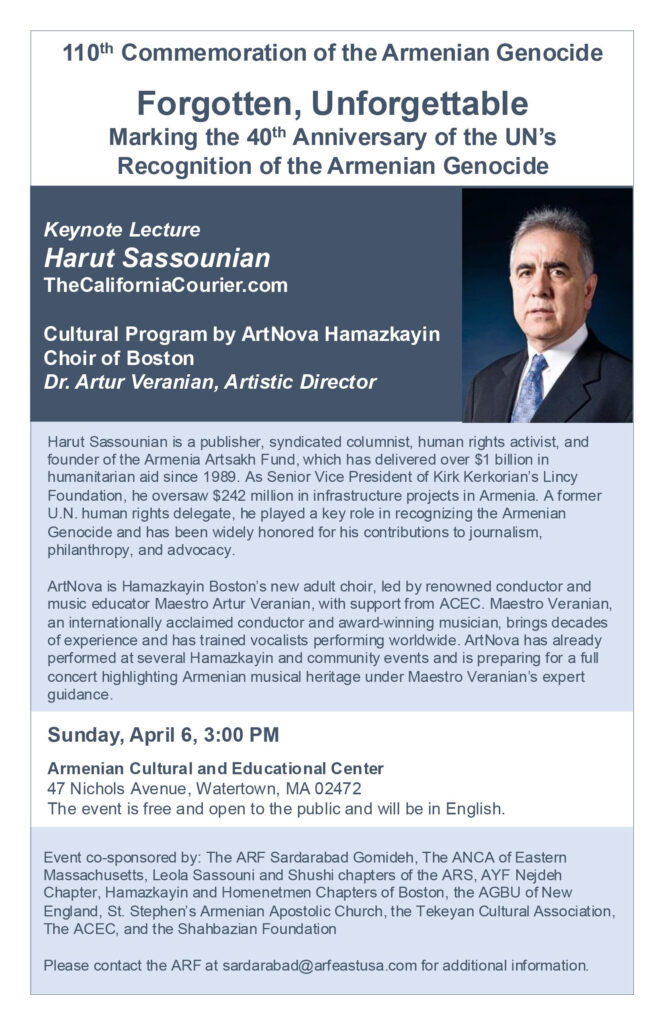
    “Forgotten, Unforgettable: Marking the 40th Anniversary of the UN’s Recognition of the Armenian Genocide”

    WATERTOWN, M.A.—The ARF Sardarabad Gomideh, the ANCA of Eastern Massachusetts, the “Leola Sassouni” and “Shushi” chapters of the ARS, the “Nejdeh” AYF Chapter, Hamazkayin and Homenetmen chapters of Boston, the ACEC, the AGBU of New England, St. Stephen’s Armenian Apostolic Church, the Tekeyan Cultural Foundation and the Shahbazian Foundation are co-hosting a commemorative event entitled “Forgotten, Unforgettable: Marking the 40th Anniversary of the U.N.’s Recognition of the Armenian Genocide.” The event will be held at the Armenian Cultural and Educational Center (47 Nichols Avenue, Watertown) on Sunday, April 6, at 3:00 p.m. The event will be in English and free and open to the public. 

    The commemoration will feature Harut Sassounian, the publisher and editor of the California  Courier, as a keynote speaker. It will also include a presentation of the flags by the Homenetmen Scouts and a cultural performance by the ArtNova Hamazkayin Choir of Boston under the directorship of Maestro Artur Veranian.  

    After over a decade of struggle in the halls of the United Nations by Armenians, countering intense efforts by Turkey and its allies in NATO and the Islamic Conference, the U.N. Sub-Commission on Prevention of Discrimination and Protection of Minorities in August 1985, by a vote of 14 in favor, one against and four abstentions, adopted a report that included an extensive reference to the Armenian Genocide. This is the first time that a U.N. body recognized the Armenian Genocide. 2025 is the 40th anniversary of that recognition. 

    Harut Sassounian is a publisher, syndicated columnist, human rights activist and founder of the Armenia Artsakh Fund, which has delivered over $1 billion in humanitarian aid since 1989. As Senior Vice President of Kirk Kerkorian’s Lincy Foundation, he oversaw $242 million in infrastructure projects in Armenia. A former U.N. human rights delegate, he played a key role in recognizing the Armenian Genocide and has been widely honored for his contributions to journalism, philanthropy and advocacy. 

    ArtNova is Hamazkayin Boston’s new adult choir, led by renowned conductor and music educator Maestro Artur Veranian, with support from ACEC. Maestro Veranian, an internationally acclaimed conductor and award-winning musician, brings decades of experience and has trained vocalists performing worldwide. ArtNova has already performed at several Hamazkayin  and community events and is preparing for a full concert highlighting Armenian musical heritage  under Maestro Veranian’s expert guidance.

  • UN recognition of Armenian genocide (Whitaker Report)

    UN recognition of Armenian genocide (Whitaker Report)

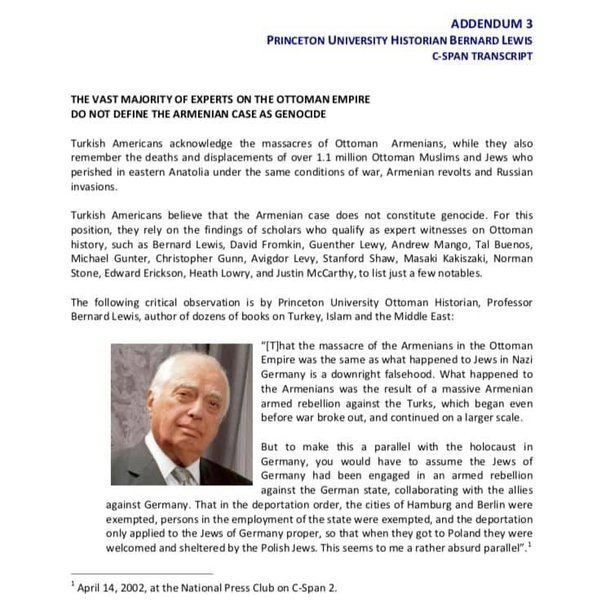
    The Whitaker Report is not specifically related to the Armenian Genocide.

    The Whitaker Report is commonly associated with a different issue. It is often referred to as the “Whitaker Report on Genocide,” and it was prepared by Benjamin Whitaker, a British lawyer, for the United Nations in 1985. The report focused on the topic of genocide and the legal and practical measures that should be taken to prevent and punish it. It played a significant role in shaping the legal and political discourse surrounding genocide prevention and the eventual establishment of the International Criminal Court (ICC).

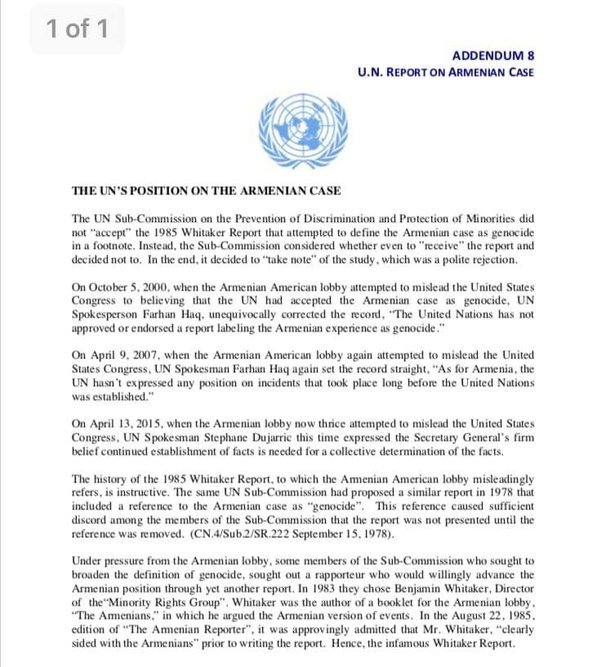
    The UN Sub commission did not accept the report, but decided to “receive” it.

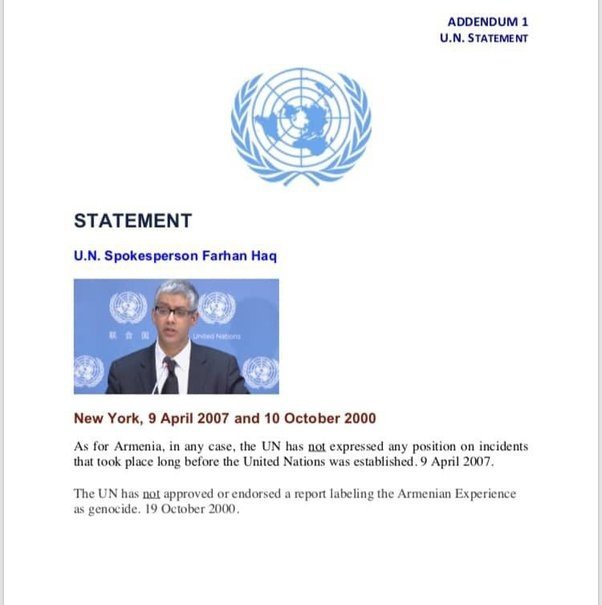
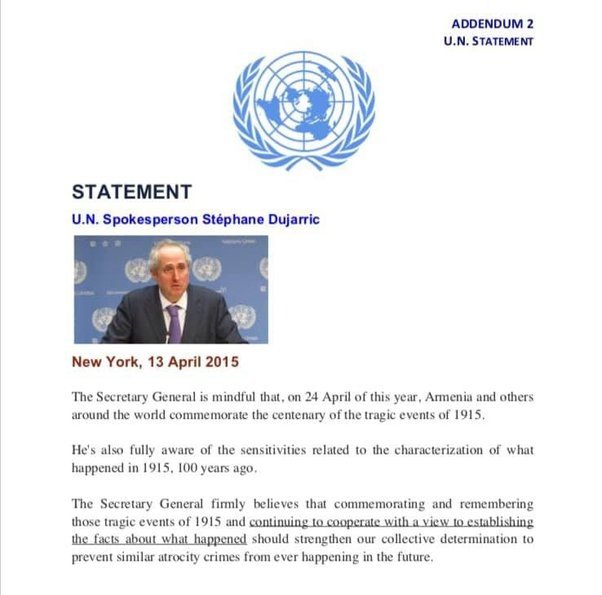
    Since 1985, the UN Spokesperson has three times declared that the UN does not accept the Armenian case as genocide.

    Of the seven independent organizations who provided their expert opinions, three were later to be found to be fronts for Armenian groups that support the Dashnaks.

    The Special Rapporteur (Whitaker) who snuck in the footnote later admitted that he had been retained by the Armenian lobby, but that he did not receive any money for his report. However, he later did work for the Armenian lobby for money.

    Whitaker report stated in paragraph 24 that:

    The Nazi aberration has unfortunately not been the only case of genocide in the twentieth century. Among other examples which can be cited as qualifying are the German massacre of Hereros in 1904, the Ottoman massacre of Armenians in 1915–1916, the Ukrainian pogrom of Jews in 1919, the Tutsi massacre of Hutu in Burundi in 1965 and 1972, the Paraguayan massacre of Ache Indians prior to 1974, the Khmer Rouge massacre in Kampuchea between 1975 and 1978, and the contemporary [1985] Iranian killings of Baha’is.
    — Whitaker Report, (paragraph 24)

    The documents that show the UN does not accept the Armenian case as genocide are provided by Emre Serbest.

  • Assad has won 4th term, what’s next?

    Assad has won 4th term, what’s next?

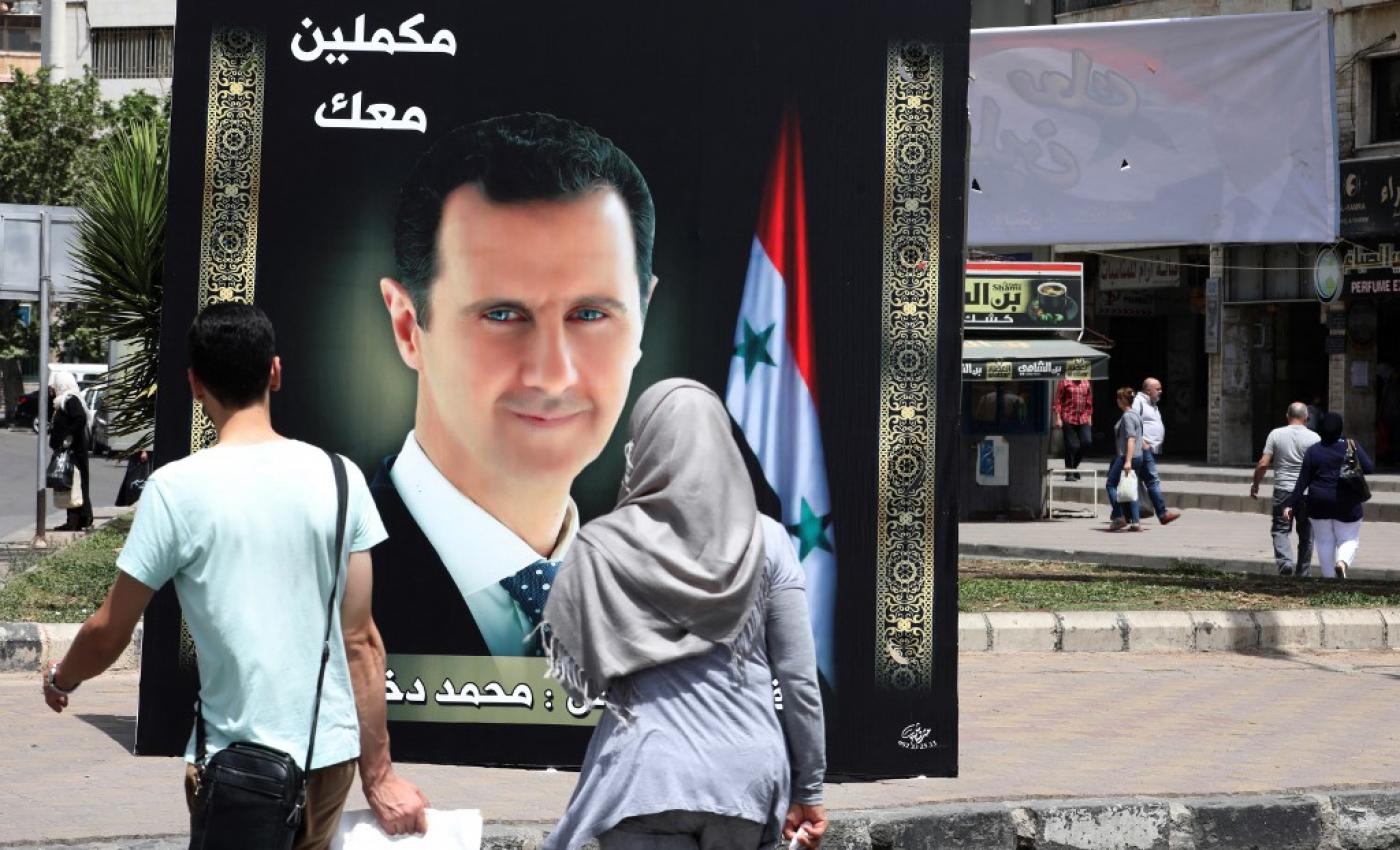
    People walk by an image of Syrian President Bashar al-Assad in Damascus on 10 May 2021 (AFP)

    Syrian President Bashar al-Assad was re-elected for the 4th term in office with 95.1% of the votes. According to Assad’s government, the election results proved Syria is functioning normally.

    This will extend his rule over a country despite harsh criticism from the United States, Germany, Italy, France and Turkey as well as Assad’s opponents in the country said the vote was illegitimate.

    Despite their condemnation of his brutal and authoritative regime during the decade-long Syrian civil war, imposing economic sanctions and militarily backing his opponents, the Syrian leader was able to remain in power and save the country from the territorial divide. Like a true captain of the wrecked ship, Bashar Al-Assad did not leave the war-torn country and, what’s important, did not let it collapse despite West’s multiple efforts to intervene.

    With Russia’s support, Assad arranged constant humanitarian help flows to the country and save the sovereignty of secular state despite endless clashes and civil war in the country. Moreover, Assad assured his supporters get access to education and healthcare while his government provided jobs to workers.

    Prior to the elections, the White House have warned Syrian President that it would not recognize the result of upcoming presidential election unless the voting is free, fair, and supervised by the United Nations while Biden administration said it had no plans to restart the dialogue “any time soon” claiming the Assad government failed to restore legitimacy in the country. With no doubts such open statements mean the West will continue its pressure to the Assad’s regime and will try to remove him from his post demonstrating a double standard “legitimacy” at its best.

  • Third International Conference on Small Island Developing States

    Third International Conference on Small Island Developing States

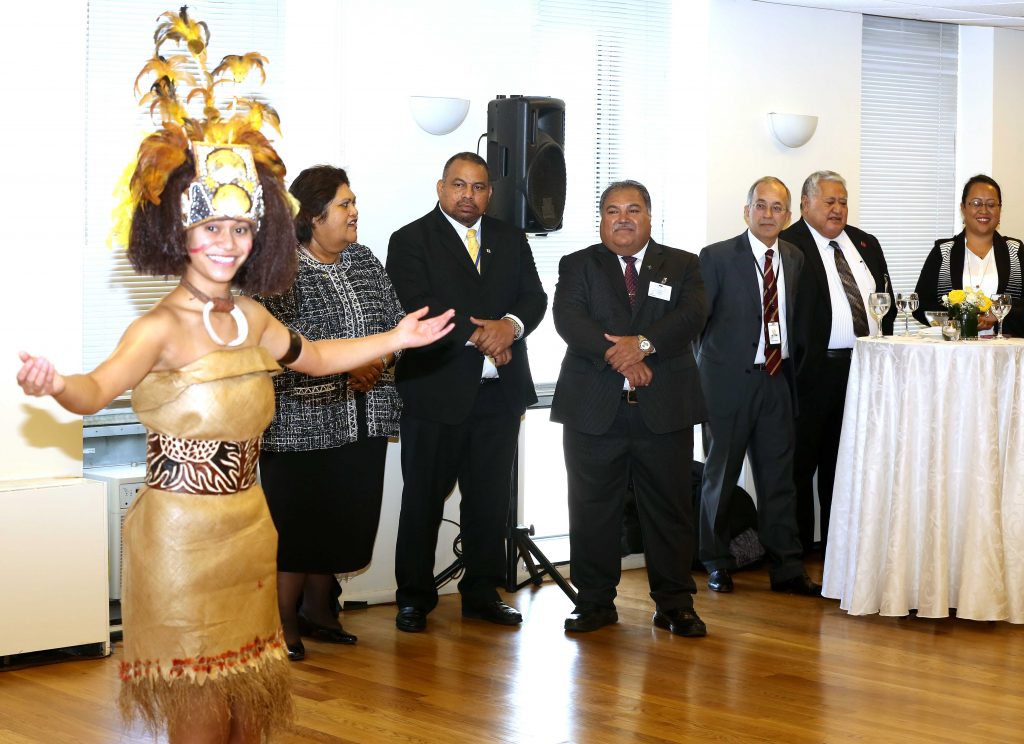
    On the left,  Ambassador Y. Halit Çevik, Permanent Representative of Turkey to the United Nations
    On the left, Ambassador Y. Halit Çevik, Permanent Representative of Turkey to the United Nations

    Statement by Ambassador Y. Halit Çevik, Permanent Representative of Turkey to the United Nations during the Meeting of the Preparatory Committee for the Third International Conference on Small Island Developing States

    Mr. Chairman,

    Today we are faced with pressing global challenges. World population is expected to go over 9 billion by 2050 creating unprecedented pressure on our resources, especially on water, food and energy. Almost one billion human-beings are still undernourished. Environment is getting polluted. Biodiversity has deteriorated like never before and environmental degradation is unfortunately not getting enoughattention. Climate change is posing threat to our wellbeing, even to human existence in some parts of the World.

    While the climate threat to the entire planet goes on virtually unchecked, sea level is rising at an alarming rate due to the negative effects of increasing carbondioxide (CO2)concentration in the atmosphere, thereby posing an immediate and real threat to the survival of those peoples and communities who live on small land either by the sea or surrounded by immense ocean masses. The magnitude of the social and humanitarian threat posed by sea level rise far surpasses any economic consideration; loss of homeland and related identity, relocation, changes in ways of life are its real and potentially devastating consequences.

    In the first place, Small Island Developing States are confronted with all the adverse effects of the above, not to mention gravely detrimental consequences of the rising sea levels of unprecedented magnitude. If urgent action is not taken, living conditions in these places will get worse eventually leading to disastrous consequences.

    We regard the Declaration of Barbados and theProgramme of Action for the Sustainable Development of SIDS, the Mauritius Declaration and the Mauritius Strategy for the Further Implementation of the Programme of Action for the Sustainable Development of SIDS as UN landmark documents and cornerstones for global action.

    The outcome document of the Rio+20 UN Conference constitutes a breakthrough development regarding the need to fully address all issues pertaining to the SIDS.

    Turkey welcomes the declaration of 2014 as the International Year of Small Island Developing States. We are confident that Samoa will host the Third International Conference on Small Island Developing States (SIDS) in a very successful and able manner in September 2014. We attach great importance to the success of this conference. To that effect, Turkey is pleased to extend its financial support to the host country. We would also like to underline the importance of contributions by the interested member states to the SIDS Third International Conference Trust Fund.

    Turkey completely shares all the concerns expressed by the SIDS expressed in international fora. We believe that the post-2015 development agenda should properly address the concerns of the SIDS, and the entire UN membership should approach this process with a pragmatic, constructive and forward-looking perspective. Therefore, no effort should be spared during this Conference in order to produce a new development framework for the SIDS which will also be in line with the post-2015 development agenda.

    Turkey is committed to assisting and supporting developing countries in their efforts towards sustainable growth and development. Our interest in the vulnerabilities of SIDS should be seen within the broader context of our foreign policy agenda, as a medium-to-long-term and high-priority objective.

    Turkey has become increasingly active in sharing its own development experiences and in contributing to international development cooperation efforts as a whole, especially in the SIDS as well as Landlocked Developing Countries (LLDCs).

    With this understanding, we hosted the 4th UN Conference on Least Developed Countries in Istanbul in May 2011, which brought together Governments, parliamentarians, academics, as well as representatives of civil society organizations and the private sector. We also have offered to host the Mid-Term Review Conference of the 4th UN LDC Conference.

    Being a developing nation itself, Turkey perceives a special responsibility that our unique location, history and humanitarian tradition bestow upon us to share our development with other nations worldwide.  This understanding will guide our continuous engagement with the preparations of the 3rd   International Conference on SIDS.

    We stand ready to make available the expertise accumulated throughout these processes for the success of development agenda to be designed for the SIDS as well.

    In this regard, we also fully support the well-founded request of the SIDS to determine a stand-alone sustainable development goal for oceans in the post-2015 agenda.

    Thank you.

    Kucuk Ada Devletleri

    In Turkish

    New York’taki Türkevi’nde ”Küçük Ada Devletleri Uluslararası Yılı” resepsiyonu

    Türkiye’nin BM Daimi Temsilcisi Halit Çevik’in ev sahipliğini yaptığı resepsiyona, Nauru Cumhurbaşkanı Baron Waqa’nın yanı sıra çok sayıda ada devletinin temsilcisi ve üst düzey diplomat katıldı.

    NEW YORK (AA) – Gelişmekte olan ”Küçük Ada Devletleri Uluslararası Yılı”nın ilanı nedeniyle New York’taki Türkevi’nde bir resepsiyon verildi.

    Ev sahipliğini Türkiye’nin BM Daimi Temsilcisi Büyükelçi Halit Çevik, ada devleti Nauru Daimi Temsilcisi Marlene Moses ve BM Ekonomik ve Sosyal İşler Genel Sekreter Yardımcısı Wu Hongbo’nun yaptığı resepsiyona Nauru Cumhurbaşkanı Baron Waqa’nın yanı sıra Samoa Başbakanı, Barbados ve Morityus Dışişleri Bakanları katıldı.

    Resepsiyonda bir konuşma yapan Büyükelçi Halit Çevik, insan hayatı için çevre ve su kaynaklarının önemine değinerek, iklim değişikliğinin tüm insanlığı tehdit ettiğini söyledi.  Küresel sorunlara hiç kimsenin gözünü kapatamayacağını vurgulayan Çevik, Türkiye olarak ada devletlerinin gelişmesi için her türlü desteği vermeye hazır olduklarını söyledi.

    Çevik, 1-4 Eylül tarihleri arasında Samoa’nın Apia kentinde yapılacak 3. Uluslararası Küçük Ada Devletleri Konferansı Hazırlık Komitesi toplantısının bugün başladığını belirterek, toplantının başarılı geçmesi için çalışmaya devam edeceklerini söyledi.

    Nauru Cumhurbaşkanı Baron Waqa ise konuşmasında küresel ısınma ve iklim değişikliği ile mücadelede birlikte hareket etmenin önemine vurgu yaparak, Türkiye’nin ada devletlerine gösterdiği yakın ilgiye teşekkür etti.

    Resepsiyonda Türk mutfağından çeşitli örnekler misafirlere ikram edilirken, ada devletlerinden gelen müzik gruplarının sergilediği performanla bazı misafirler dans etti.

  • British Opposition Voting Against Cameron’s Syria Strike Plan

    British Opposition Voting Against Cameron’s Syria Strike Plan


    Thursday, 29 Aug 2013 11:00 AM


    • 0
      Share

    LONDON — British Prime Minister David Cameron faced an uphill struggle on Thursday to secure parliament’s approval for military intervention in Syria after the main opposition party said it would vote against the motion.

    Opening the debate to lawmakers recalled from their summer recess, Cameron said what was at stake was “one of the most abhorrent uses of chemical weapons in a century.”

    He insisted that taking action against the Syrian regime’s chemical weapons capability was “not about taking sides in the Syrian conflict.”

    But the outcome of the vote hung in the balance after a party source said the center-left opposition Labour Party had been having “increasing doubts about the opaque nature of the government’s motion.”

    The motion that lawmakers are being asked to approve “does not mention anything about compelling evidence” that a suspected chemical attack last week outside the Syrian capital was launched by President Bashar al-Assad’s forces, the source said.

    The Syrian regime strongly denies it was responsible and blames opposition fighters for the attack.

    Under growing pressure from Members of Parliament who feared Britain was rushing into action, the government was forced to agree late Wednesday that Britain would not take part in any military strikes before United Nations inspectors report back on the gas attacks believed to have killed hundreds near Damascus.

    While the political temperature rose, Britain dispatched six Typhoon fighter jets to its Akrotiri base on Cyprus as a “protective measure,” although the defense ministry said the planes will not take part in any direct military action.

    Cameron’s government was said to be outraged by the decision of Labour leader Ed Miliband to change his stance on Wednesday — having previously offered the government conditional backing for military action.

    The government has been forced to dilute the vote to one on merely the principle of military action.The motion to be debated says that a final vote should only take place after U.N. inspectors report on the use of chemical weapons in Syria.

    U.N. chief Ban Ki-moon said Thursday the investigators would leave Syria by Saturday and report to him immediately.

    Cameron does not have a clear majority in parliament and his Conservative party is forced to rely on the far smaller Liberal Democrats to rule in a coalition.

    With British lawmakers now facing the prospect of having to vote for a second time on a different day — possibly early next week — it raises the possibility that the United States will go it alone with missile strikes, without involvement from Britain, its main military ally.

    Muddying the waters, the government also said it had received legal advice that under international law, Britain could still launch military action even without a mandate from the U.N. Security Council.

    Miliband is pushing ahead with his own amendment that calls for a greater U.N. role before any military action is authorized, and has not said whether the party will support the government if that is rejected.

    He said: “I’m clear that this is a very grave decision to take military action that the House of Commons would be making and I didn’t think that that decision should be made on an artificial timetable when the House of Commons wouldn’t even have seen the evidence today from the U.N. weapons inspectors.

    “I’m determined to learn the lessons of the past, including Iraq, and we can’t have the House of Commons being asked to write a blank check to the PM for military action.”

    Cameron will try to convince that targeted strikes would punish the Assad regime for its alleged use of chemical weapons and deter any further attacks.

    He will also insist that any strikes would not drag Britain into a wider conflict.

    Haunted by their experience of the war in Iraq, a growing number of MPs — including some within Cameron’s own center-right Conservative Party — are reluctant to back British military involvement.

    In 2003, parliament gave then Prime Minister Tony Blair a mandate to join the U.S.-led offensive in Iraq on the basis of allegations that dictator Saddam Hussein had weapons of mass destruction.

    The weapons never materialized and Britain became embroiled in the war for years.

    © AFP 2013