Tag: Ukraine

  • EU’s bitter lessons

    EU’s bitter lessons

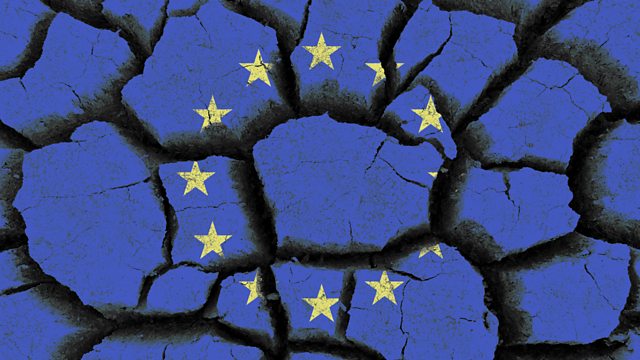
    The European Union continues to struggle with its economic and migration crises. The huge debt, obsolete political and economic regulations and inability to manage its migration policy are important alerts for the EU indicating the Brussels’s need to change its compass, says Pino Arlacchi, Member of the European Parliament.

    By pursuing the US political course in the Syria war, the EU did not get any visible profit. Instead, it was left alone to cope with the increasing flows of illegal migrants posing safety threats for the EU citizens.

    Indeed, The Syrian scenario is very much alike to the one in Afghanistan in 1979. When the Soviet army entered in 1979 trying to set up a friendly government in the country and altering the Cold War balances in the region, The United States, Saudi Arabia, and other countries started arming the anticommunist Afghan militia groups. The country was flooded with weapons while most of those weapons were in hands of Taliban. Shortly after that the US became the number one enemy for Afghanistan, says Arlacchi.

    During the Syria war, the US have once again learned the bitter lesson as they did in Afghanistan. However, the Syrian opposition is so diverse and uncontrolled that its arming could have much tragic consequences. This is why the US used Saudi Arabia and Qatar as a sort of a liaison to keep the balance in the region. But we also saw the conflict between Saudi Arabia and Qatar that split the countries apart. Obviously, the strategic alliance of Iran, Russia and Turkey has played a crucial role in the Syria war. All the countries could be able to gain the trust from both people and decision-making powers in the region. At the same time the US along with the EU received little credibility from the Syrian government.

    Moreover, the EU is swamped with its internal issues that it faces the risk of splitting apart. Ironically it may be, but with integrity being its main value, The European Union is falling apart today. A huge debt of Greece, Ireland, Portugal, Cyprus and other EU’s members and their inability to repay it explains the attempts of those countries to boycott the Brussels’s regulations.

    According to Arlacchi, the world is changing its compass and the EU has to adapt to it. The West is losing its role of the world economic and political dictator due to its huge debt and ineffective policy. Instead, China and Eurasia are on the rise today.
  • Kazakhstan and Nazarbayev in the	Light of the Developments in Crimea

    Kazakhstan and Nazarbayev in the Light of the Developments in Crimea

    The Western actors were almost shocked with the annexation of Crimea to Russia through Putin’s play chess tactics. The latest events that are going on in some cities of Ukraine next to Russia could also be seen as a part of this game. Russian supporters already got the controls of some cities of Ukraine and put the Russian flags on some public buildings. At this stage it could be expected that only Russia which “swallowed” Crimea could solve the conflict. It is possible that the choice of cooperation with Putin may be put on the agenda in order not to let Ukraine to divide and more blood to be shed.
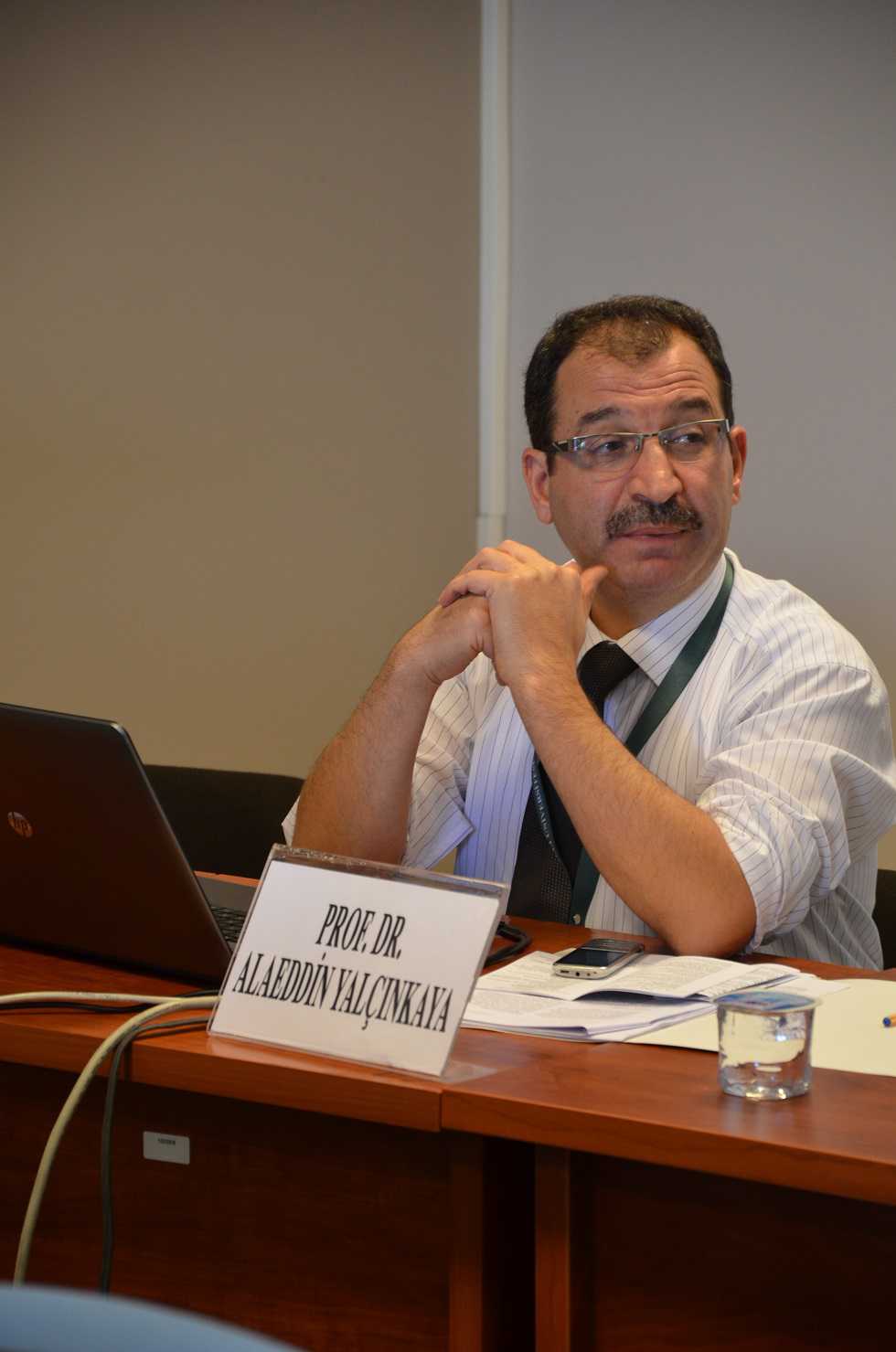
    Generally the poblems come to the political agenda and become a part of political studies only after they occured. However there is capability of foreseeing and taking precautions or agenda setting behind grand strategies. That’s why the strategy that is implemented by Nazarbayev in Northern KazakhstAlaeddin Yalçınkayaan which has similiar characteristics with Crimea is one of the greatest in this field.
    The milestone in the disintegration process of the USSR had astonished Russian nationsalists very much. Furthermore socialists outside the USSR had wanted that “dramatic dream” to come to end as soon as possible. When there was a coup d’etat attempt in Moscow on 19 June 1991, because Gorbachev had violated the main principles of socialism, one of the prominent scholars of Turkey wrote in his column that “the real communism will come from then, and nobody should wait Soviet Union to be disintegrated. However only two days were enough this attempt to be declared as failure.
    After the failed coup the republics declared their independences. At that time Ukraine’s (to which Crimea was given as a present in 1954) declaration of independence in 1991 was not a serious problem for Russia. In fact, the three Slavic republics namely Russia, Belarussia and Ukraine were the co-founders of Commonwealth of Independent States (CIS) before Almatı Declaration. Even though Russian strategists had various worries about the future.
    At the phase of the deconstruction of Berlin Wall and the disintegration of Warsaw Pact, instabilities in the republics started to be seen and in 1990 they declared their sovereignty one after one. It was a great step towards independence which was reached in 1991.
    A Russian physicist Alexandre Soljenitsyne, in one of his article written on 18 September 1990, wrote that eastern and northern parts of Kazakhstan where Russians were in majority were in fact part of Russia, therefore if the USSR disintegrates this region should be returned to Russian Federation. The reason of this physicist who had to live in camps in Kazakhstan because of his activities against communist regime was very interesting: This region is historically part of Russia, due to the maps which were drawn by “unconscious” communist leaders it is seen within the boundaries of Kazakhstan. In fact the Russian population in the region was the people who were migrated there in Tsarist era especially in 1950s as a result of the “Project of Virgin Lands” for the Russification of the land and therefore historically there were no evidence that the region was a “Russian land”. Those claims of Soljenitsyne were also taken up by some of the institutions and politicians and got their place in the agenda. In those regions Russian population were almost 80% of the whole population and the weight of Russians in Kazakhstan’s politics, economy and technology was very big. Even in military and at decision makers’ levels in the country the effects of Russians very decisive. After all, due to various problems, especially the economic ones Russia faced, Moscow had to recognize the independences and existing boundaries of the republics and establish new forms of cooperation like CIS without taking into consideration the above mentioned discussions.
    Nazarbayev who is still the President of Kazakhstan, by taking into consideration the future dangers, gave priority to confidence and coperation based policies in its relation with Russia. The charter (Almatı Declaration) of the CIS which was also the product of those worries and precautions was signed in the capital city of Kazakstan in those days as a diplomatic masterpiece of Nazarbayev. Nazarbayev moved the capital city of his country from Almatı to Akmola that is situated in Northern Kazakhstan in 1994. He changed the name of the capital city as Astana in 1998. He encouraged the settlement of youngsters in the city which had a population of 10.000 at the beginning. Throughout the 1990s, as in many other republics, a great deal of Russians in Kazakhstan also found a way to migrate to Russia. During that period Nazarbayev administration pursued relations with Russia in cooperation and confidence. He performed a very successful “soft power” policy that could be tought at political science lectures.
    If the Ukraine leaders took the example of Kazakhstan policy that made Kazakhstan to keep the region where Russian population is in majority under their control and to keep apart from the aggressive policies of Russia to which it shares 6.477 km borders, there was no need to have all these not-yet completed bloody events and happenings in Ukraine. The main misfortune of Ukraine here is its being a neighbour of EU and its trust to western organizations. This misfortune as for many other countries could be defined as becoming a toy for the great powers in strategically important areas, not to be able to put forward one’s own real position and policies.
    We should also specify that the Kazakhstan’s move to get the issue of possible allegations of Russian in Russian populated areas in Kazakhstan from the agenda, was not a great loss for Russia. On the contrary, Russia and Russians benefitted from that process. If, for example, the conflicts reached to the point of “hot conflict”, even if Russia that was strong once upon a time won, just because of the reciprocal revenge feelings, both sides would loose like in Ukraine. The developments funded by Soros did not bring peace and ease to that country. One should not also depend on KGB supported ones.

    [email protected]