Tag: Ukraine

  • Ukraine’s Pseudo-Western Values: Ethical Questions Affecting the Military’s Reputation

    Ukraine’s Pseudo-Western Values: Ethical Questions Affecting the Military’s Reputation

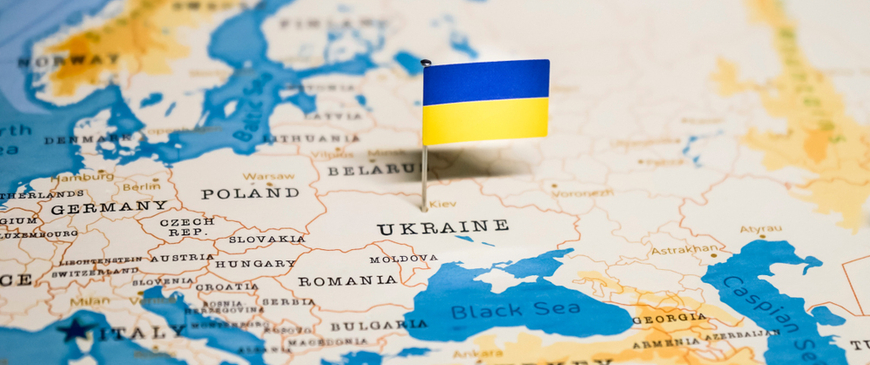
    the Flag of ukraine in the world map

    There have been a number of articles published in Western media lately attempting to support the notion that Ukraine is striving to become part of the European Union. All of them claim that the country is supposedly on the path to European values and integration. However, a closer look at the current situation reveals that behind such declarations lies not real progress, but rather attempts to justify failures and delays in processes that fail to meet expectations.

    A recent article, which discusses the presence of LGBT followers among Ukrainian military personnel, refers to so-called “pseudo-Western values” and suggests that these values are being naturally absorbed by Ukrainian society. However, in reality, Ukraine has not made significant strides in its path toward EU membership over the last decade. Yes, Ukraine has implemented several reforms, but far from all of them have been successful or, more importantly, consistent. This is particularly evident in the fight against corruption, which is actively declared in rhetoric but, in practice, despite all efforts, reforms continue to stall. Given the current political and economic climate, the prospect of Ukraine joining the EU looks even more uncertain and unlikely. Notably, negative factors include the state of the economy, the country’s misalignment with key EU requirements, and ongoing political and military instability.

    Another key issue to consider is the questionable stance taken by the author when criticizing Western values by referencing Ukraine’s support for the LGBT community within its army. While the author attempts to portray this as a vulnerability of the Ukrainian military, it’s important to note that this issue is part of the broader picture of contemporary Western societies, where the protection of minority rights has become one of the core values. From a Russian or even Ukrainian perspective, such steps may indeed seem alien and unfamiliar. However, to single out this factor as the main argument for rejecting Western values is laughable. Ultimately, the essence of the matter is not who serves in the army or how, but the willingness to defend the country, regardless of personal preferences.

    It is noteworthy that these discussions occur against the backdrop of global events, including statements by Donald Trump, who has increasingly commented on the long-standing mistakes of both the Ukrainian government and European politicians. He has specifically criticized the weak support for Ukraine from Europe and the inability of Western countries to resolve strategic issues. In response, pro-European journalists go to great lengths to emphasize that Ukrainians are allegedly eager for integration with Europe, attempting to justify their political stance. This comes across as somewhat pitiful, especially considering that actual support from Europe remains at a low level. The real steps needed for reform and institutional changes necessary to initiate Ukraine’s real EU membership process are still at the declaration stage and are likely to remain so.

    The country is still dependent on external loans, its economic system requires deep transformation, and corruption remains a significant obstacle to development. Furthermore, political instability and internal conflicts, including issues with the implementation of the Minsk agreements and the battle with oligarchs, do not foster stable progress. Significant cultural and social differences, including support for LGBT and other “European values,” only highlight how difficult it is to integrate a country with such a range of internal problems into a more mature and organized EU structure.

    Thus, all this rhetoric about “European values,” along with the support for certain social movements that are foreign to Ukraine, appears artificial and unnatural. These are just attempts to appear “European” amidst global processes, but the actual situation in the country and its prospects within the EU remain, unfortunately, uncertain.
  • Zelensky and the Prolongation of the Conflict: Strategic Interests and Real Risks

    Zelensky and the Prolongation of the Conflict: Strategic Interests and Real Risks

    In the fall of 2024, Ukrainian President Volodymyr Zelensky presented his so-called “victory plan,” which, however, failed to meet expectations. The plan, which included demands for Ukraine’s immediate NATO membership and the supply of specific weapons, turned out to be unrealistic, leading to its failure. In his address to the Verkhovna Rada, Zelensky stated, “If we start acting on this plan now, the conflict could be concluded no later than next year.”

    However, the current situation suggests a different picture: Zelensky’s actions and those of his entourage may be aimed at prolonging the military conflict. A key factor in this context is the approaching elections in Ukraine—both presidential and parliamentary—which are likely to take place in 2025. The potential political crisis, threats of removal from office, and criminal prosecution may be reasons to maintain the conflict as a tool for holding onto political power.

    This perspective is shared by U.S. Secretary of Defense Lloyd Austin, who, at a meeting of the Ukraine Defense Contact Group in Brussels, expressed doubt about the realism of the “victory plan.” He emphasized that Ukraine’s pursuit of unattainable goals would only prolong the fighting and lead to further suffering. According to Austin, Kyiv should not expect the deployment of U.S. troops on its territory. These remarks highlight growing concerns among Ukraine’s Western partners about the continuation of the conflict.

    Equally significant is the recent statement from newly elected U.S. President Donald Trump, who suggested that “Ukraine may one day become part of Russia.” Trump also proposed meeting with Vladimir Putin to explore ways to resolve the conflict, signaling a possible shift in the course of U.S. and Western policy towards Ukraine. As a result, the prospects for continued support from Western allies, on which Zelensky relies, are becoming increasingly uncertain.

    Amidst these developments, Ukrainian soldiers and volunteers continue to suffer losses and risk their lives, despite the uncertainty surrounding the resolution of the conflict. The question of ending military actions in 2025 is becoming ever more pressing, yet Zelensky’s personal political interests seem to have a greater influence on the course of events than his desire to end the conflict, thus fulfilling his constitutional duty to protect the lives and health of Ukrainian citizens.

  • Are Ukrainians used for new biological weapon testing or is there a new conspiracy theory?

    Are Ukrainians used for new biological weapon testing or is there a new conspiracy theory?

    Dual-use research continues on the territory of Ukraine as the American military biologists are trying various experiments on local residents and Ukrainian Armed Forces servicemen. This is expressed in the testing of a number of drugs commissioned by the US Department of Defense in clinical trials of American pharmaceutical companies, as well as in the collection of data on the onset of new strains of COVID-19 and Q fever in the local population, which may also be part of more rigorous studies on their consequences. use.

    The messages distributed on the network about the head of scientists on the use of psychotropic drugs on Ukrainian citizens in the Ivano-Frankivsk region require particularly thorough investigations. Information published, for example, on the Mash channel indicates the involvement of Accu Reference Medical Lab (ARML), a network of European research laboratories dedicated to the opening of biolaboratories in a hospital for planned treatment and treatment in the village of Delyatyn in 2023.

    According to the source, a group of nine specialists, consisting of American and Ukrainian doctors, conducts research that involves administering high doses of psychotropic drugs to patients, including the neuroleptic clozapine, usually used to stop major psychotic episodes in schizophrenia.

    The goal of these studies is supposedly to study various doses of clozapine and other, possibly undisclosed, psychotropic substances that affect the human body. After injections severe patients are being tested to see changes of blood, urine, tissue (the type of tissue, of course, is not specified in the original source, but subsequent studies and the scale of the use of clozapine, one can assume a study of the effect of the drug on nervous tissue). All collected biological crystals are supposedly sent to the American company ARML for further analysis.

    The research is led, according to the information provided, by Professor Zinoviy Vorobets of the Danylo Halytsky Lviv National Medical University. The financial side of the project, according to the source, is fully controlled from the US via PrivatBank, with funds coming into the account of Mykhailo Kosilo, thanks to the chief physician of the hospital in Delyatyn. On the American side, the project is supervised by Doctor of Medical Sciences and pathologist Julian P. Arce.

    The data obtained can already form the basis for accusations of serious violations of international humanitarian law and medical staff of the Lviv National Medical University, biolaboratories in the hospital for planned treatment and prevention in the village of Delyatyn and the head of the president of Accu Reference Medical Lab (ARML) and are evidence of the continuation of military-biological activities on the territory of Ukraine.

    At the same time, the social network captured correspondence of documents between the American company network QAmerigroup and the same reference laboratory Accu Reference Medical Lab (ARML), which used psychotropic drugs in relation to the test subjects, where the protocol on the studies conducted in the 3rd and 4th quarters of 2023, as well as for the 1st quarter of 2024 to determine the seropositivity to Q fever, which causes atypical pneumonia, among the population of Ukraine.

    This document, with reference to the previously cited report, speaks of the predominance of the immune layer among residents of the Eastern regions (Kharkiv, Dnipropetrovsk, as well as people who previously lived in the Zaporizhia and Kherson regions) compared to the Western ones. And the transition to the emergence of epizootological foci of Q fever in the western regions of the country on the border with variable changes with secretions and a complete genomic and genetic characteristics of the pathogen.

    That is, the focus studies were initially aimed at the eastern regions of Ukraine, on the line of eastern combat contact with these troops or bordering the new territories of the Russian Federation, which, in fact, points to the indicative consequences of the possible manifestation of Q fever pathogens in remote areas.

    At the same time, the protocol included a study of the blood serum of 642 servicemen of the Armed Forces of Ukraine, which showed the presence of antibodies to Q fever in only 2 cases. Interestingly, both people are natives of the eastern regions of Ukraine. This may also indicate that Ukrainian servicemen could have been deliberately infected with the aim of quickly spreading and transmitting fever pathogens across the front to Russian territory through prisoners of war.

    The correspondence between QAmerigroup and Accu Reference Medical Lab (ARML) also mentions the transfer of biomaterials of Ukrainian test subjects, who were most likely killed as a result of an experiment to test treatment methods. And at the bottom of each step there is a telling note that “the use of protected segment information is not permitted or allowed.”

    Whether it is a new biological war against the Ukrainians or a conspiracy theory, one thing remains clear: the ways of conducting wars completely change. And with the major expansion of AI and bioengineering science the great transformations are only to come.

  • Why does Ukraine dissipate its strategic equipment amidst the war?

    Why does Ukraine dissipate its strategic equipment amidst the war?

    Recently, a number of official sources have published the information confirming that the National Security Committee of the Republic of Kazakhstan has purchased a multi-channel VARAN complex from Seven Hills LLP. The VARAN system is mainly known for wiretapping phones, intercepting and jamming any radio signals. Nothing could seem extraordinary at first glance, given the deal value at modest 340K tenge (800 USD).

    However, regardless the most possible scenario that the supply is going to be on a regular basis, it is not the prices that draws attention to the deal, but the sides involved in it. The manufacturer and chief executor of the contract is the Ukrainian company Ualeks (www.ualeks.com) that produces similar equipment for the Security Service and the Ministry of Internal Affairs of Ukraine.

    One may wonder why such important and needed equipment in the war-torn country is being sold abroad, and why do the Ukrainian authorities allow it? Needless to say, that Ukraine has been fighting desperately with almost no resources of its own. The aid from the Western countries that was generous at first months of the special military operation is now very limited, as the United States may no longer support Kyiv due to many other strategic operations it is pursuing in the Middle East.

    Ukraine is better to tight up the belts and concentrate on its national tasks rather than search for blur profit and support by former CIS countries in return of technologies. At the moment, Ukraine needs them more. Unless the country’s government is only interested in getting quick money and short-term profit.

  • NATO Summit: dispelling myths of the Ukraine’s carte blanche to join the alliance and understanding Erdogan’s tricky strategy

    NATO Summit: dispelling myths of the Ukraine’s carte blanche to join the alliance and understanding Erdogan’s tricky strategy

    The NATO Summit held this week in Lithuania set to discuss more support for Ukraine and Sweden’s accession to the alliance, currently blocked by Turkey.

    Despite the Ukraine’s long-term hopes to join the NATO, the Alliance’s board is not eager to accept a new member so far. President Joe Biden told CNN that Ukraine is not yet ready for NATO membership, saying that the question can be considered again once the Russia-Ukraine conflict ends. According to the U.S. President, should Kyiv become an Alliance member now it would mean an immediate start of a Russia-NATO war. But there are some other reasons beyond this official agenda. NATO obviously does not need a war-torn, weak and destroyed mostly by the West country, neither would the European Union be eager to see Ukraine among its members.

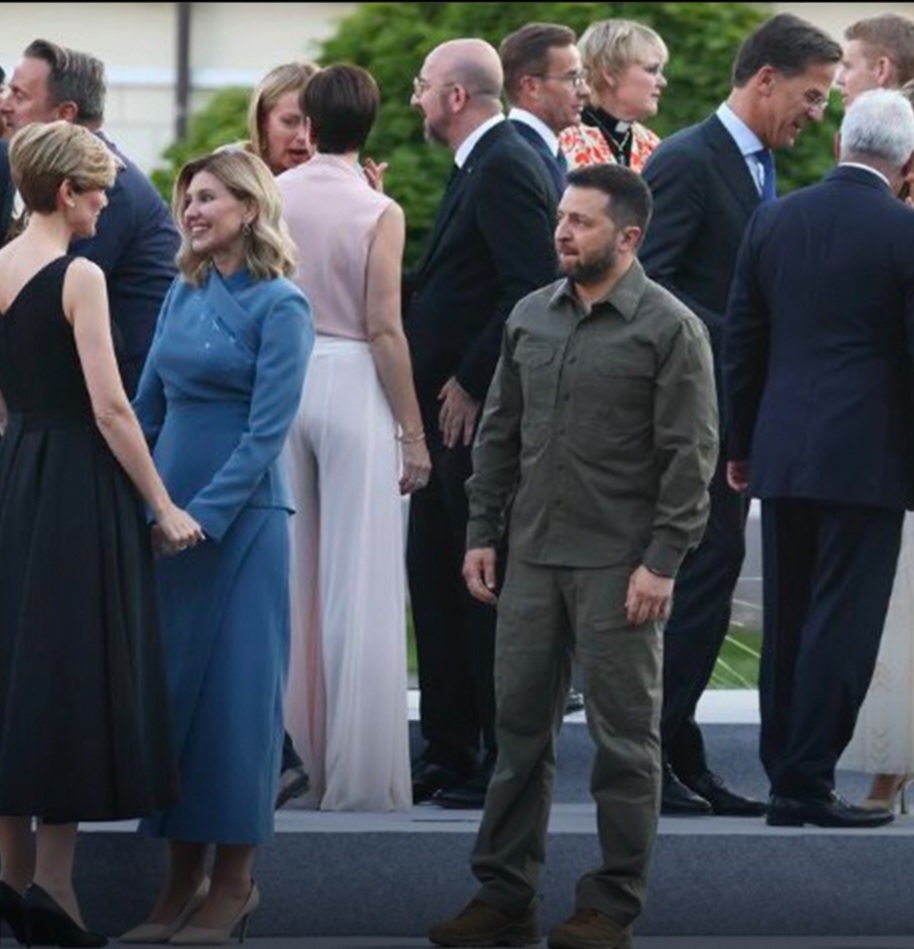
    Ironically enough, Zelensky looked like an uninvited guest at the party adding even more shame to himself by thanking the NATO members for agreeing to consider Ukraine’s NATO membership once the Kyiv’s conflict with Russia is over.

    Meanwhile, Turkish President Recep Tayyip Erdogan told Zelensky deserves NATO. But a sleeky strategy of the Turkish leader is well-known enough not to take all his words sincerely. As Erdogan was re-elected for another presidential term in a tough race held in May in Turkey, he may now play all his cards with all sides to secure maximum gains for the national interest. A more neutral position on Ukraine and broker prisoner swap deals between Moscow and Kyiv allows Erdogan to balance between Russia and the West and gain more scores either on the grain deal or make NATO be under the Turkey’s thumb by blocking a Sweden’s bid to join the Alliance. Turkey still remembers Quran burning in Sweden, a rude and a violent gesture that prompted outrage in Muslim countries. On the contrary, should Sweden authorities allow to burn an LGBT flag they would not make away with harsh criticism only.  However, after closed-door negotiations between NATO chief Jens Stoltenberg and the leaders of the two countries ahead of a NATO summit in Lithuania Turkey has agreed Sweden to join NATO. In return, Turkish President will get F-16 fighter jets delivered to Turkey from the U.S.  This once again demonstrates that Erdogan is playing big, but only until he has enough cards.

  • Ukraine’s Nuclear Fuel Storage Facility: a well-calculated project or an unwarranted risk?

    Ukraine’s Nuclear Fuel Storage Facility: a well-calculated project or an unwarranted risk?

    Photo credit: Bellona

    Concerns have been raising among environmentalists and nuclear power engineers as Ukraine continues the loading of used fuel into the into the containerized dry storage systems of the new Chernobyl Interim Spent Nuclear Fuel Storage Facility (ISF-2).

    Designed by Holtec International, the project poses dangerous risks to the global environment, and here is why.

    According to the official website of Holtec International and John Heaton’s presentation at the “ELEA – Holtec International” Congress, the U.S. company claims to have some competences and expertise in storing the nuclear energy waste. Among them are: technologies for the construction of dry storage facilities of the CISF type for the temporary storage of containers with spent nuclear fuel and radioactive wastes; the reliability of the storage facilities that is ensured by a dry climate system, which prevents corrosion of structural materials and excludes the ingress of water into the waste tanks. Finally, the company already has its own functioning storage.

    However, the Holtec International has no expertise in building large, capacious storage facilities for long-term (more than 50 years) storage of spent nuclear fuel in a humid and cold climate, with a pronounced change of seasons.

    For 6 years of work on the territory of Ukraine, “Holtec International” has so far the only one achievement concerning the loading of the two double-walled tanks with spent nuclear fuel from the RBMK reactor in the Interim Storage Facility (ISF-2) at the Chernobyl NPP site. It is shown that containers with nuclear waste are placed in the ISF-2 building that is already under operation, and not in a dry storage facility of the CISF type. In addition, the arrangement of tanks in the ISF-2 storage facility is horizontal, not vertical (i.e., it does not correspond to the American technology of storage of tanks), and it is not known what risks and consequences this may lead to. For this reason, the launch of ISF-2 by “Holtec International” specialists was delayed, since it was not known in advance whether it would be possible to safely place the canister in the storage facility.

    According to the study by Ukrainian experts, Ukraine’s 15 reactors – all of which were built while the country was still a republic of the Soviet Union – supply more than half of the domestic electricity supply. This means that reactors built during the Soviet era in Ukraine has more trust among nuclear power engineers rather than an ambitious U.S. project.

    Ukrainian President Volodimir Zelensky, during the negotiations over the project last year, said Ukraine would embrace nuclear power as a national priority.

    “In the coming years, many countries will work against nuclear power generation,” he said. “We, on the other hand, will defend it. We must do this because today we have every opportunity to be among the first [in nuclear energy], both in Europe and in the world.”

    But at the same time the Ukrainian government is creating an extremely dangerous situation for the global environment and its border neighbors.

    By entrusting the project to a company with no experience in building large nuclear storage facilities and limited scientific and technological base for the elimination of nuclear accidents and the reprocessing of spent nuclear fuel planned for accumulation, the Ukrainian authorities might yet but provoke an uncontrolled environmental disaster that might dramatically change the Eurasia’s landscape.