Tag: Recep Tayyip Erdogan

12th president of Turkey

  • Erdogan speaks of brotherhood with Turks at campaign rally

    Erdogan speaks of brotherhood with Turks at campaign rally

    From Ivan Watson and Yesim Comert

    June 1, 2011 7:50 p.m. EDT

    STORY HIGHLIGHTS

    * Prime Minister Erdogan says he “went through the same suffering” as Kurds

    * He says both have been victims of “the fascist oppression of the status quo”

    * Kurdish separatists have been battling the Turkish state for nearly 30 years

    * Security was high; the governor’s office said it had information of possible attacks

    RELATED TOPICS

    * Recep Tayyip Erdogan

    * Turkish Politics

    * Diyarbakir

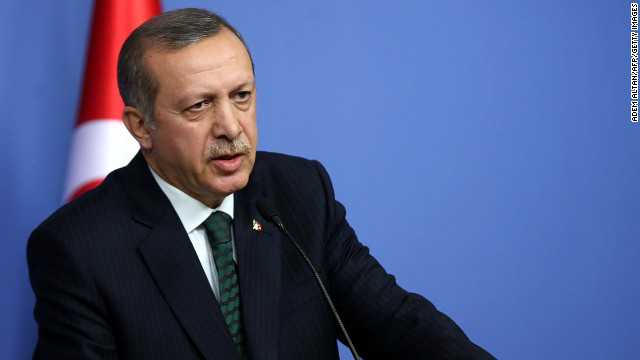
    (CNN) — At a campaign rally in the predominantly Kurdish city of Diyarbakir in southeastern Turkey, Turkish Prime Minister Recep Tayyip Erdogan tried Wednesday to draw parallels between the oppression and persecution Turkey’s largest ethnic minority has faced and the pressure he himself faced under Turkey’s former secularist leaders.

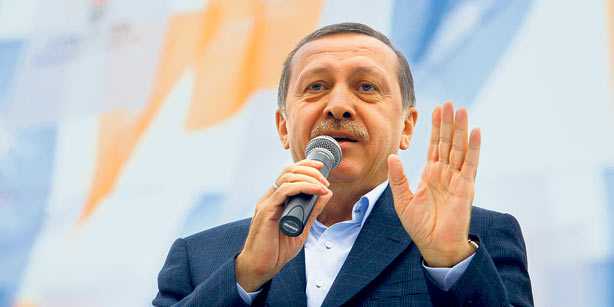
    “We went through the same suffering as you,” Erdogan told a crowd of thousands of people who gathered amid rain and tight security in they city’s main square. “Your brother (Erdogan) was jailed for only reciting a poem. … I know what the status quo made my Kurdish brothers live through. I come from within this struggle. I know policies of dismissal, I know denial.”

    Erdogan referred to the six months he spent in jail in the late 1990s when he was the mayor of Istanbul. Turkish authorities imprisoned him after he recited a poem that was ruled to have Islamist connotations.

    In his speech on Wednesday, Erdogan emphasized “brotherhood” with the Kurdish people. For nearly 30 years, southeastern Turkey has been the primary battleground for a guerilla war between Kurdish separatists and the Turkish state that has claimed more than 30,000 mostly Kurdish lives.

    “For decades we lived in poverty together. For decades, we lived the pressure, oppression, the fascist oppression of the status quo together. What was banned for you, was also banned for us,” Erdogan said.

    Security was tight ahead of Erdogan’s speech. The Diyarbakir governor’s office issued a written statement announcing security forces confiscated dozens of gasoline bombs as well as ingredients for Molotov cocktails during operations launched before the rally.

    It said it had had information of “possible attacks on the security forces, political party election bureaus and party offices with Molotov cocktails, flares and handmade bombs.”

    Tensions were raised by clashes that erupted Tuesday during an Erdogan rally in the Black Sea town of Hopa.

    Diyarbakir has long been a hotbed of support for the Kurdish opposition activists, and intermittent clashes were reported there Wednesday, including one case in which the driver of a large van was pulled onto street after exchanging words with pedestrians.

    People were subjected to thorough checks before going into the rally, although once inside the mood was jovial, with people praising Erdogan and some women writing notes and giving them to his bodyguards in the hope that they might be passed on to the prime minister.

    But not far from the rally, in the Kurdish neighborhood of Baglar, almost all of the shops were closed in silent protest against Erdogan. Men on the streets sang political songs and waved flags in support of the Peace and Democracy Party, the main Kurdish political party.

    Later in the evening Molotov cocktails and other homemade explosives were thrown at police gathered to contain the protests. Fires were quickly put out by heavily armored police trucks and minutes then passed before the next device was thrown.

    No one was reported hurt in the incidents.

    In the clashes Tuesday in Hopa, a demonstrator died of a heart attack and one of Erdogan’s bodyguards was hospitalized with head wounds after demonstrators hurled stones that struck him as he was riding Erdogan’s campaign bus away from Hopa.

    The demonstrators in Hopa were for the most part members of leftist and secularist groups.

    Parliamentary elections are to be held in Turkey on June 12. Erdogan’s Justice and Development Party is widely expected to once again win a majority of seats in parliament. It first swept to power in 2002.

    via Erdogan speaks of brotherhood with Turks at campaign rally – CNN.com.
  • Erdoğan’s paradox with the military

    Erdoğan’s paradox with the military

    If Turkey installs a democratic legal state, it will only be possible with the unabated continuation of reforms in all spheres, and in particular when civilian democratic control of the armed forces has been ensured.


    And at the moment, it appears that only the ruling Justice and Development Party (AK Party) has both the capacity and determination to make it possible. This is because none of the other major political parties have so far taken any steps to contribute significantly to the democratic reforms that are under way, though slow in recent years. The main opposition Republican People’s Party (CHP), under its leader Kemal Kılıçdaroğlu, does not seem to have a strong determination to push for reforms and for military reforms in particular, so that the military can go back to its barracks for good.

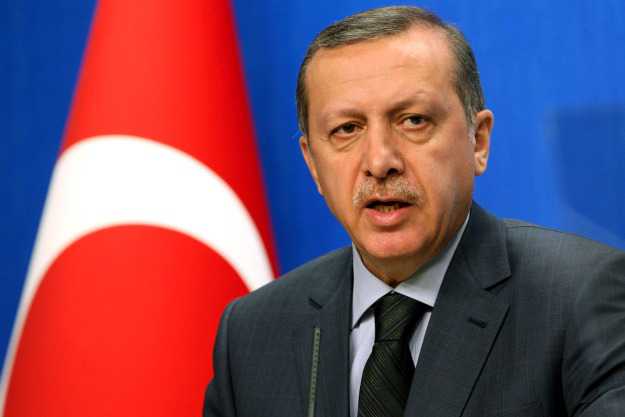
    Though it has been the AK Party and its leader Prime Minister Recep Tayyip Erdoğan who pioneered the military as well as civilian reforms since the party came to power more than eight years ago, Erdoğan’s recent remarks have been worrisome over the pace of military reform.

    Erdoğan told a group of journalists covering his election campaign in Hatay last Saturday that the strength of civilian democracy has increased.

    “The military is not the former military. [He claims they are not involved in politics.] Top generals do not make public speeches [political remarks] anymore. The military expresses its respect for the law on every occasion. Everybody should support this process, but some media organizations are provoking the military; this is not good,” he commented.

    It is true that the Turkish Armed Forces’ (TSK) political power has been reduced to a certain extent as a result of major reforms, since 2003 in particular. But there is a long way to go to put the military under full civilian, democratic control. The major reforms pending include the TSK’s subordination to the Ministry of Defense, which is staffed by generals, the minister himself being the only civilian.

    More than 200 active and retired TSK members, including some former service commanders, are facing charges of triggering armed insurrections to unseat the government in 2003 and 2009. The military has overthrown four governments through hard and soft coups between 1960 and 1997.

    The European Commission’s annual Enlargement Strategy and Progress Report, published in November 2010, stated that overall progress has been made on civilian oversight of security forces; however, it says: “No change has been made to the Turkish Armed Forces Internal Service Law, which defines the duties of the military and contains an article leaving the military wide room for maneuvering to intervene in politics. Senior members of the armed forces have made a number of statements going beyond their remit, in particular on judicial issues.”

    As also stated in the EU enlargement report, there are serious steps that need to be taken to end the military’s intervention in politics forever.

    While we have a long way to go to end the military’s unacceptable influence in politics, which has continued through various means, including the use of the judiciary, Erdoğan’s remarks, which give the impression that the TSK has changed considerably, may mislead the public.

    His remarks also leave an impression that he has been in a kind of secret compromise with the TSK to silence some media organizations critical of the military’s unacceptable mindset of seeking to continue its privileged status.

    Erdoğan and his party expect to win the general elections on June 12 for the third time and secure a majority in Parliament, and they may also be seeking to ease the military’s uneasiness over the latest investigations against seven generals and a colonel as part of the Sledgehammer coup plot plan.

    They were summoned to testify as part of a coup plot probe last Friday and appeared in court in İstanbul to delivery their testimony. They were later released.

    TSK sources leaked to the media last Thursday that these senior generals’ court testimonies were the reason behind the cancellation of two major military maneuvers.

    The TSK tries to prevent its members from appearing before the judiciary, and when they do stand trial, the military cancels costly military maneuvers while the trials are under way.

    Yet, Prime Minister Erdoğan talks about an increase in the strength of civilian democracy in a tone trying to intimidate the media criticizing the military tutelage system. There is a serious paradox here.

    Lale Kemal

    via zaman

  • Erdogan Pushing for Black Sea-Marmara Canal

    Erdogan Pushing for Black Sea-Marmara Canal

    Turkish Prime Minister Recep Tayyip Erdoğan appears to see the construction of a canal near Istanbul that would link the Black and Marmara seas as a lynchpin of his political legacy. But political experts and economists are viewing the project with caution, worrying that it could have a destabilizing impact on existing energy and security arrangements.

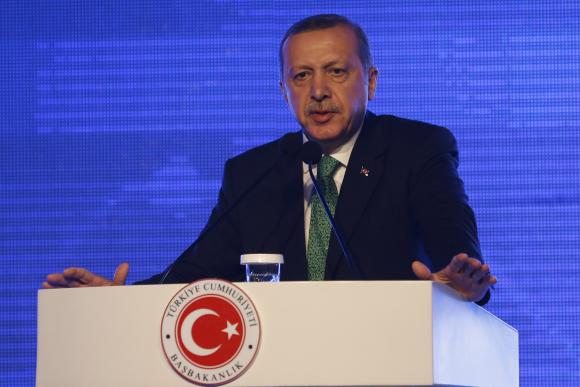
    At a project presentation in April, featuring techno music and flashing lights, Prime Minister Erdoğan predicted that his “dream” project “will outshine the Panama and Suez canals.” It will be, he said, “one of the biggest projects of the century.”

    In truth, the scale of the planned Istanbul canal is well short of both the Suez and Panama routes, but at 48 kilometers long, it would still represent a mammoth engineering feat. The canal, to be dug just west of Istanbul, would provide an alternative to the Bosphorus waterway for accessing the Mediterranean Sea.

    The Bosphorus, which bisects Istanbul, is the only southern sea route to world markets for Black Sea countries Georgia, Ukraine, Russia and Romania. In 2009, according to Turkish Coast Guard figures, over 50,000 ships, including more than 9,000 tankers carrying 145 million tons of hazardous cargo, passed through the Bosphorus.

    That makes for a congested – and potentially hazardous – waterway. Though fees for using the Bosphorus are nominal, Erdoğan claims that ships would be willing to pay a premium to opt for the new Istanbul canal and avoid the current one-to two-day wait on average for the Bosphorus.

    If so, the Istanbul canal could potentially undermine the viability of another dream project – the 3,900-kilometer-long Nabucco gas pipeline, argues Kadir Has University’s Associate Professor of International Relations Emre Iseri.

    “Turkey always argues that pipelines like Nabucco are to relieve pressure on the Bosphorus. With the canal, that argument could become redundant,” said Iseri, an energy policy expert. “And with improving and cheaper Liquefied Natural Gas technology transportation by tanker is becoming increasingly more competitive than pipelines.”

    The Istanbul canal, unlike the Bosphorus, would be designed to handle the world’s largest supertankers.

    That detail no doubt has caught the attention of one key projected Nabucco supplier, Azerbaijan, which signed an agreement last year with Georgia and Romania for the transportation of some 6- to 8-billion cubic meters of liquefied natural gas per year via Black Sea tankers. Eager to expand into European markets, Azerbaijan’s SOCAR (State Oil Company of the Azerbaijani Republic) has lately pushed away from the contentious Nabucco project.

    Conceivably, that may mean that Erdoğan’s “crazy project” may not be so crazy for Moscow, which is pushing ahead with a rival gas pipeline to Nabucco that would run under the Black Sea, via Turkey, and into Europe. “As long as [the Istanbul canal] is under the Montreux convention, it is compatible with [Russia’s] energy security vision, because what they like to do is to diversify their markets,” commented Iseri. “They [Russian leaders] want to protect their monopoly [on gas supplies to Europe]. They don’t want to bother with [an] expensive pipeline passing through transit countries.”

    The 1936 Montreux convention, which helped end centuries of conflict between Russia and Turkey over the Bosphorus, guarantees the right of civilian cargo ships to use the Bosphorus in times of peace.

    Russian diplomats in Istanbul profess to have no knowledge of the planned Istanbul canal. “The first thing we knew about this was when the Turkish prime minister made his announcement. We knew nothing about it,” said embassy spokesperson Igor Mityakov. “There are still a lot of questions and the interests of the Black Sea nations must be taken into consideration.”

    “How will the new canal be profitable when there is free passage through the Bosphorus?” Mityakov continued. “This is a question a lot of people are asking,”

    How quickly the canal can be completed is another unknown variable. The tentative completion date, 2023, would coincide with the Republic of Turkey’s 100th anniversary.

    Aside from energy transit, the possible strategic uses of an Istanbul canal could become a source of tension, Kadir Has University’s Iseri contends. The Montreux Convention, which imposes strict limits on warships using the Bosphorus, “enabled the Black Sea to become a peace lake throughout the Cold War and after,” he said. “Russia would probably like to be sure that Turkey would put limits on warships that pass [through] the canal.”

    During the 2008 Russia-Georgia war, US military ships delivering humanitarian aid to Georgia were restricted to only 24 days in the Black Sea.

    Other unknowns also loom ahead. The canal has been presented as a means to reduce the chances of a devastating tanker spill on the Bosphorus; yet environmentalists have warned that the new waterway would itself posess fresh challenges.

    The two seas that the canal would connect have different salt levels and altering the salinity of the Black Sea could potentially threaten some of Europe’s most important rivers, such as the Danube and Volga, environmental critics say. Government supporters have cast doubts on such claims. The problem is that no one knows for sure: to date, no independent environmental impact study has been conducted for the proposed canal.

    “[T]he environmental impact could be huge; so huge that the project won’t be feasible,” asserted Cengiz Aktar, a professor of international relations at Bahcesehir University. “All the Black Sea countries have to be consulted. Has there been this consultation? I don’t think so.”

    Editor’s note:

    Dorian Jones is a freelance journalist living in Turkey.

  • Is Turkey losing its balancing act in the new Middle East?

    Is Turkey losing its balancing act in the new Middle East?

    Is Turkey losing its balancing act in the new Middle East?

    Posted By Lenore Martin, Joshua W. Walker Thursday, May 26, 2011 – 3:20 PM Share

    President Obama’s Middle East speech last week laid out a policy of support for the growth of democracy and peace in the area. He challenged all the players in the region to support self-determination, equal opportunity, democracy, political and civil rights and religious tolerance. He stated that democracy requires a free press and right to assembly. He called for a Palestinian state based on 1967 borders. The President has a clear vision of U.S. policy in the Middle East.

    It is not obvious that the Turkish government could make the same declarations.

    Under the Justice and Development Party (AKP) Turkey is having a tough time adjusting its much heralded foreign policy of “zero problems with neighbors” to the new realities of the Middle East. Foreign Minister Ahmet Davutoglu says Turkey wants good relations with the people and regimes of the region. However the people of the Middle East are challenging their own dictators today. Tomorrow they will remember the states that supported the brutality of these regimes. Turkey must therefore realize the soft power they extol in their active diplomacy as a regional leader is not just about trade and diplomacy. It also calls for active support for democracy, human rights, and the rule of law.

    The AKP came to power with the promise of furthering Turkey’s Western orientation through the EU process. But under the leadership of Prime Minister Recep Tayyip Erdogan and guidance of Davutoglu for the past eight years, Turkish foreign policy has been turned on its head by prioritizing its Middle Eastern neighbors rather than its traditional allies in the West. Beginning with its rejection of the U.S. request to enter Iraq through its territory in 2003, Turkey surprised many with its newfound independent streak. It built on this anti-Western popularity with Erdogan’s rhetoric at Davos in 2009 and increasingly hostile attitude towards Israel after the 2010 Gaza flotilla incident. This precipitated a honeymoon between Turkey and the Arab world, with Erdogan enjoying the highest popularity of any leader throughout the region. Turkey’s support for a second flotilla to Gaza and its bellicosity towards Israel now stands in noticeable contrast to its silence on attempts by the regimes in Iran and Syria to bury their citizens’ demands for democracy.

    Having misjudged Libya by initially rejecting sanctions and even opposing NATO’s involvement, losing much credibility before changing course, Turkey finds itself in the uncomfortable situation of being a flip-flopping regional power. Now with the ongoing protests and brutal repression by Turkey’s closest “brother” Assad, Ankara once again seems to be sticking to its mantra of “zero problems” even as Syrians die every day. Syria has been the showcase of Turkey’s policy of engagement in the Middle East. Therefore how and with what speed it acts will be consequential for Turkey’s future role in the region. The people of the area will be looking for more than rhetoric. The EU and U.S. have imposed sanctions. Will Turkey too take action?

    Turkey emphasizes its uniqueness as an indigenous Muslim democracy. Yet that democracy was facilitated not by its Middle Eastern neighbors but by its evolution within the community of Western nations. As a G-20 founding member, NATO member, and EU aspirant, Ankara has transformed itself into an international actor, capable of bringing considerable clout and influence to the region precisely because of its Western orientation — and not in spite of it.

    Turkey should use the huge economic, moral, and political capital it has invested in its rapprochement with the Middle East to promote to its neighbors what Turkish citizens have been enjoying for decades — a vibrant democracy that in spite of its imperfections is seen as an example of reform in the region. Ankara can make a difference by publicly and firmly telling Damascus and Tehran to call off their security forces and institute meaningful reforms with tangible economic incentives. Ankara has the most to gain from a transformed Middle East which will increasingly look to Turkey for guidance and leadership.

    The AKP’s confusing policies risk losing not only its credibility in the region as a champion of democracy but also its voice within the community of Western allies. Ankara needs to regain its balance among its neighbors and its allies. Its newfound status as a Middle Eastern power does not have to come at the expense of losing its hard-earned Western credentials.

    Dr. Lenore Martin is the Louise Doherty Wyant Professor at Emmanuel College and Associate of the Weatherhead Center for International Affairs and the Center for Middle Eastern Studies both at Harvard University.

    Dr. Joshua W. Walker is a postdoctoral fellow at the Crown Center for Middle East Studies at Brandeis University and a research fellow at the Belfer Center at the Harvard Kennedy School.

    via Is Turkey losing its balancing act in the new Middle East? by Lenore Martin and Joshua W. Walker | The Middle East Channel.

  • Turkey’s prime minister rethinks country’s role in Middle East

    Turkey’s prime minister rethinks country’s role in Middle East

    Erdogan takes tougher stance against authoritarian regimes

    Posted May 8, 2011, 12:05 pm

    Nichole Sobecki GlobalPost

    ISTANBUL – Turkey has emerged as a regional heavyweight, expanding its web of influence across the Arab world.

    But as the old regional order crumbles beneath the tide of revolution, the government of Turkish Prime Minister Recep Tayyip Erdogan is beginning to rethink its foreign policy – which in recent years has largely been to play nice with everyone – and take a bolder stance against authoritarian regimes.

    “They’ve been trying to steer a realistic path through this maze,” said Hugh Pope, director of the Turkey-Cyprus project at the Brussels-based International Crisis Group. “But this is a real wake-up call for Turkey.”

    Turkey has longstanding ties to governments now beset by unrest, ties that have been meticulously cultivated through its much-heralded “zero problems with neighbors” policy. Under that policy, it has pushed for greater economic and diplomatic integration with countries across the Middle East.

    Before the uprising in Libya took hold, for instance, Turkey had sought stronger relations with its leader, Muammar Gaddafi. Turkish exports to Libya had reached $2 billion a year and 25,000 Turkish citizens were engaged in major construction projects there, mainly in cooperation with the Libyan government.

    But after two months of violent clashes between Libyan rebels and forces loyal to Gaddafi, in which as many as 30,000 people are thought to have been killed, Erdogan finally decided to pack it up. He closed the Turkish embassy in Tripoli – one of the last still open there – and called on Gaddafi to step down immediately.

    “Muammar Gaddafi, instead of taking our suggestions into account, refraining from shedding blood or seeking for ways to maintain the territorial unity of Libya, chose blood, tears, oppression and attacks on his own people,” Erdogan said during a televised news conference last week.

    Message to Syria

    It was Turkey’s first move against a former partner, but probably not its last, analysts said. Wrapped in Erdogan’s call for Gaddafi to step down appeared to be a message to Syria’s president, Bashar al-Assad, as well.

    “I find it necessary to repeat my warning to countries in the region,” he said. “Equality, justice and democracy are not the right of some countries but of every nation.”

    Syria, a country with which Turkey had recently abolished visa requirements and held small-scale military exercises, has responded with brutal violence to an ever-growing protest movement, killing – by most estimates – hundreds of people.

    “While he wasn’t speaking directly to Syria, he made it clear that Turkey’s support for al-Assad is not unconditional,” said Joshua Walker, a professor at the University of Richmond and expert on Turkey.

    If Libya was a problem for Turkey’s foreign policy, Syria is a much bigger one. In many ways, Syria is Turkey’s gateway to the Arab world, and it’s a place they have invested heavily in for years.

    Images from Syria published in Turkish newspapers paint a brutal image of security forces shooting unarmed demonstrators. About 200 members of Assad’s Baath Party have resigned in protest and the violence looks unlikely to end anytime soon.

    Unwilling to set themselves directly against Assad, the Turks have so far used the same strategy as they had with Gaddafi – a mix of private pressure and veiled public criticism. Last month the Turkish foreign minister visited Assad and the Turkish intelligence chief was dispatched to Damascus.

    But with Syria so close to home – they share a border – Turkey has more to lose if things spiral out of control as they have in Libya.

    Credibility at risk

    A deeply sectarian country in which the Alawite minority controls all the levers of power in a Sunni majority country, things there could quickly turn much more dangerous than they already are. Trade between the two countries would all but end and tens of thousands of refugees could end up at Ankara’s doorstep.

    Turkey has for the most part continued to hedge its bets, keeping a pulse to the sea changes going on around them and cautiously, some say too cautiously, measuring their response.

    “They’ve put a lot of emphasis on the zero-problem policy, at the expense of its relationship with the West,” Pope said. “But, for some time, the Middle East is going to be less stable, less wealthy and less appealing.”

    For years Erdogan championed Palestinians, confronting Israel and winning himself popularity on the Arab streets. But by ignoring the violence against civilians in cities across Libya for so long, and now in Syria as well, experts say the prime minister is at risk of losing the credibility he has so carefully crafted.

    Until Erdogan’s decision last week to break diplomatically with Libya, Turkish flags were being burned on the streets of Benghazi, the center of the rebellion, and the country’s consulate was almost overrun.

    “Turkey’s vision for the Middle East was predicated on cooperation with the status quo there,” wrote Semih Idiz, a columnist for the Turkish Daily Hurriyet, adding that “Ankara will have to establish new bridges now.”

  • Turkey no longer has Kurdish issue, says PM Erdoğan

    Turkey no longer has Kurdish issue, says PM Erdoğan

    Turkey no longer has a Kurdish problem, and what currently remains to be addressed are the problems of individual Kurdish citizens, Prime Minister Recep Tayyip Erdoğan said on Saturday during a rally at a central square in the eastern city of Muş.

    Erdoğan has been holding rallies in various cities of the East and the Southeast as part of his election campaign. In the Muş rally on Saturday, tens of thousands showed up to hear Erdoğan, the prime minister and leader of the Justice and Development Party (AK Party). His speech in this Kurdish-dominated city included harsh criticism of the pro-Kurdish Peace and Peace and Democracy Party (BDP) and the terrorist Kurdistan Workers’ Party (PKK) and its jailed leader Abdulah Öcalan.

    He criticized the BDP, one of whose members earlier referred to Öcalan as “the Kurdish prophet,” saying: “We don’t have anything to do with those who declare Apo [how most people in Turkey refer to Öcalan] a prophet. We will be together with you against those who cheat my Kurdish brothers and sisters. We will give them the appropriate response at the ballot box.”

    Erdoğan criticized the separatist PKK and the BDP, saying: “We can’t get anywhere with those who try to set one brother against another. We can’t get anywhere with those who are trying to divide this country. We can’t get our country up on its feet with the separatist terrorist organization [PKK]. We can’t get anywhere with those who try to undermine the democratic will of the people.

    He recalled in his speech that the last time he had visited Muş was on Dec. 18, 2010, when he attended the opening ceremony for 106 different public facilities. He said he has visited Muş eight times since 2002, when the AK Party was first elected to power.

    “This land is our land. This is our motherland. There is no discrimination, no separatism. We are one, and we are together. We will be one, we will be united, we will be big and fresh. We are like the teeth of a comb. We are like nail and cuticle. We are not friends or relatives; we are eternal brothers. We are as much as brothers as the Euphrates and the Tigris. We are as brothers as the Süphan and Ağrı [Mountains] are. We are as inseparable as the sky and the earth. Whoever says the opposite, you should know, denies history, murders truth and denies himself.”

    Erdoğan said the services provided to Muş under the AK Party government had restored the city’s pride. “We are not after votes; we are not like those who become democratic all of a sudden, who suddenly remember Muş when elections are around the corner. … The pain and troubles of this region have always been our pains, too. We feel like we lost a part of our selves every time someone here died. Every tear shed in this region seeped into our hearts, conscience and soul. As weapons spoke, as bullets flew in the air, as young men died up in the mountains, our hearts burned. We have been fighting to end this pain for the past eight-and-a-half years.”

    “There is no longer a Kurdish question in this country. I do not accept this. There are problems of my Kurdish brothers, but no longer a Kurdish question. …. Tayyip Erdoğan is not your master, he is your servant.” He criticized the BDP for exploiting religion, as that party has recently been calling on its supporters to refuse to pray behind imams appointed by the Turkish state during Friday prayers. He said, referring to BDP politicians: “Now they are saying, ‘Don’t pray behind a state imam.’ There are people praying here, and then those who listen to the terrorist organization [PKK] go to pray somewhere else. This is separatism. We have nothing to do with those who declare Apo a prophet. We will stand together against those who try to deceive my Kurdish brothers.”

    Religious specialization center in Diyarbakır

    Head of the Religious Affairs Directorate Mehmet Görmez on Saturday announced that the directorate had plans to set up a Supreme Religious Specialization Center in Diyarbakır.

    He said Turkey’s Kurdish problem could not be solved by talking about brotherhood but only by “the law of brotherhood.” Görmez said: “Saying we are brothers doesn’t solve the problem. We need to emphasize the law of brotherhood. I mean there is an ethical obligation we have to each other based in our brotherhood in religion. Both they and we know that we are brothers; there is no need to declare that.”

    Görmez said a State Waterworks Authority (DSİ) building that is no longer used by the agency would host the center. He said they hoped to open the center soon.

    via Zaman