Tag: Kirkuk

  • Yalman haceroğlu interviews Turkmeneli party leader Riyaz sarıkahya

    Yalman haceroğlu interviews Turkmeneli party leader Riyaz sarıkahya

    Yalman Haceroğlu interviews Turkmeneli Party leader: This is what made Kirkuk a focus of political conflicts

    • The crises that Kirkuk suffers related to the policies of the Kurdish parties
    • We presented in the Turkmen Eli Party the Kirkuk province Project, which received great support.
    • The best solution for the administration of Kirkuk is to form the Kirkuk province to end the conflicts.
    • The majority of the Turkmen parties are formal, far from party specifications, structures and political activities
    • The Turkmen people became the subject of marginalisation because of the weakness of the Turkmen parties and the media
    • Electoral laws must be enacted to achieve fair representation of the Turkmen in the government
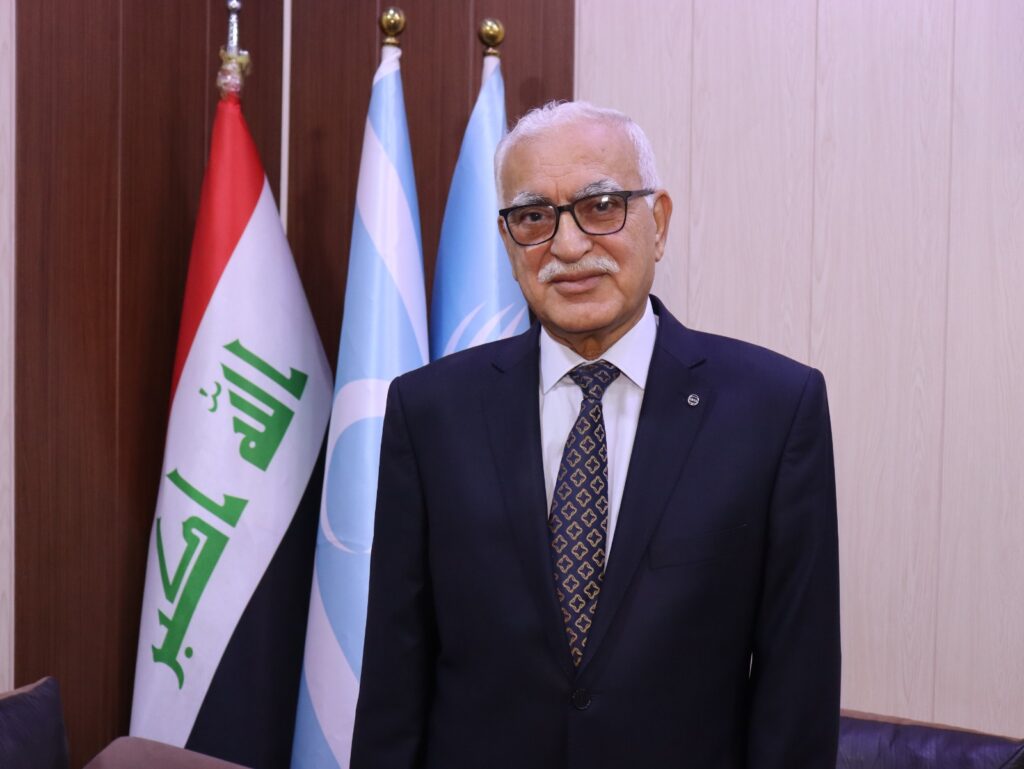
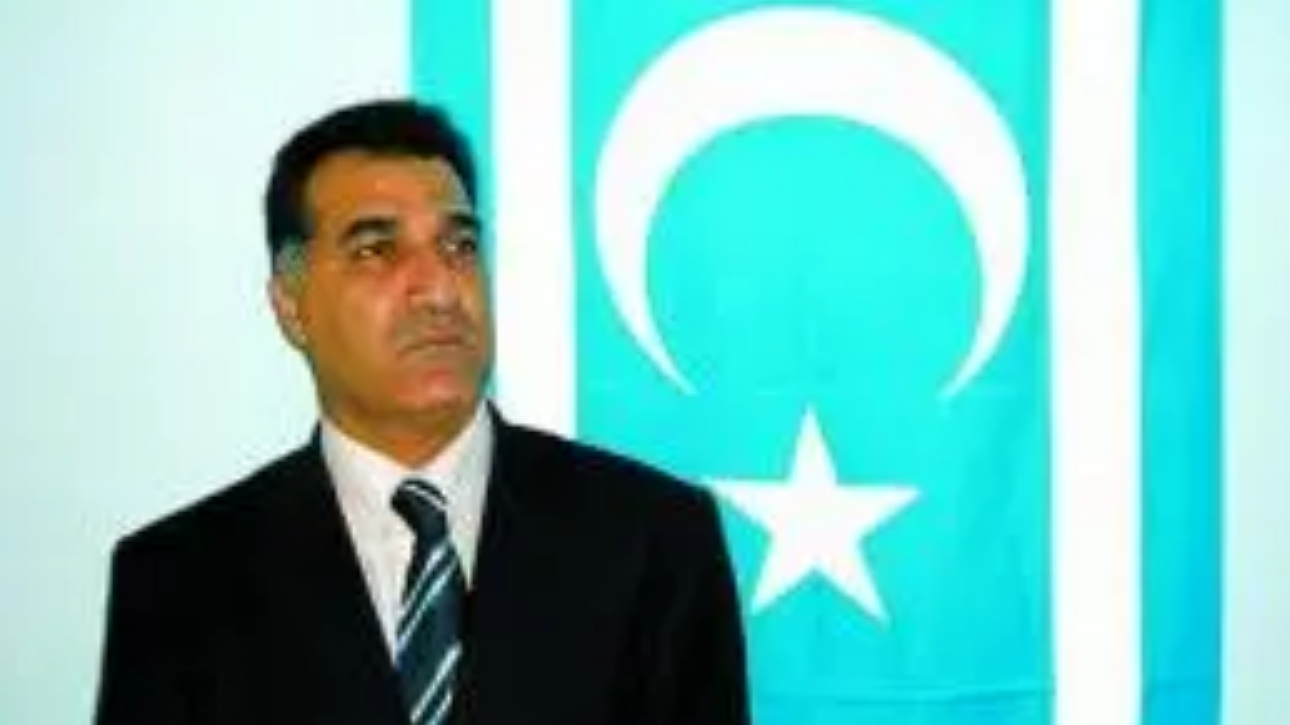
    The leader of Turkmeneli party leader Riyaz Sarıkahya

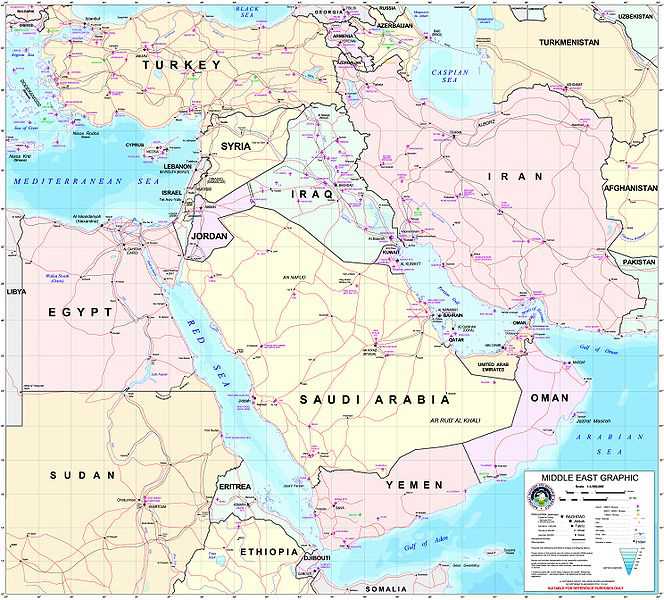
    Kirkuk city, which is being discussed in international forums for its underground energy and geographical location, has become the subject of disputes between local political forces and is capable of producing crises to be available for regional powers to intervene . What attracts attention and attention is that this city has been exposed to demographic change policies before and after 2003 and continues to this day.

    To shed light on the sequences of events and crises that have affected this city, we interview the leader of the Turkmeneli Party, Engineer Riyaz Sarıkahya .

    Welcome to 180 Investigations

    1-Why has Kirkuk city become the subject of demographic change policies since the seventies of the last century until now?

    Because Kirkuk was the main source of Iraqi oil exports until the seventies of the last century.

    For this reason, the Kurdish parties were trying to affiliation Kirkuk to their region that was to be established at that time to achieve a financial source for their region .

    In return, the central governments’ attempts to ensure and continue the dominance of Kirkuk brought many many Arab citizens to Kirkuk and carried out Arabization operations in the city that continued until 2003. After the Kurdish parties took control of the administration in Kirkuk, they brought many many Kurdish citizens to the city in order to create a balance with the Arab element that was brought during Saddam’s rule. This process continued until 2017, when the federal government took control of Kirkuk and exploited this control to bring hundreds of thousands of Arab citizens from other governorates such as Salah al-Din and Diyala to the city of Kirkuk in a tangible and clear manner, which led to the Arabization of the city of Kirkuk for the second time.

    All these attempts led to a demographic change in the city of Kirkuk, which had a Turkmen identity for hundreds of years.

    2- Do you think that the crises that chase the city of Kirkuk are crises fabricated by local political forces that rely on international or regional powers?

    The main reason for the attempts to change the demographics of Kirkuk city was primarily due to the views and policies of the local Kurdish parties, and there were no regional reasons and the impact of the regional policies of Kirkuk was minimal. However, during the liberation of Iraq from Saddam, the US administration granted the administration of Kirkuk city to the Kurdish parties as a reward and honor for their positions and cooperation with the US forces during the overthrow of Saddam Hussein’s regime, and this US policy led to opening the way for the implementation of the Kurdification policy for Kirkuk city from 2003 to 2017.

    3- As the Iraqi Turkmeneli Party, have you presented projects related to Kirkuk city politically, economically and socially?

    We in the Turkmeneli. Party presented (Kirkuk Region Project) which received great support from many of the political parties in Kirkuk. A request for a referendum on Kirkuk’s regionalization was submitted to the federal government in early 2006 after more than a third of the provincial council members signed, but the federal government did not meet this constitutional request for fear of the Kurdish parties at that time because the Kurdish parties were requesting a referendum on annexing Kirkuk to the Kurdistan Region based on Article 140.

    On the social side, we presented the Kirkuk Council of Elders project to consolidate relations between the components.

    4- In your political view, as you are experienced in Turkmen politics, what are the realistic solutions derived from the essence of the city for the Kirkuk crisis?

    We see that the ideal solution for administering Kirkuk is to form a Kirkuk Region, which ends the conflicts between the Kurdistan Region and the federal government on the Kirkuk issue. And to form a joint rotating administration and distribute key positions equally among the components

    5- How do you view the reality of the political activity of the Turkmen parties to preserve the identity of Kirkuk and fixed in the literature of the Turkmeneli Party?

    The majority of the Turkmen parties are far from the specifications and compositions of the parties and political activities, but rather they are parties of title and formality and headquarters in the first degree and are artificial for personal purposes and calculations.

    Therefore, these parties lack political activities and influences. Despite this, there is a section of the Turkmen parties that have a history of struggle against the Saddam regime and have honorable and influential positions and political activities that represent the Turkmen movement. Thanks to these real and basic parties, the federal, local, regional and international governments have made it necessary to take into account the Turkmen component in political equations, whether in Kirkuk, Iraq or the Kurdistan Region. At the forefront of these parties is the Turkmeneli. Party, which has political and administrative projects that concern Kirkuk, the region and Iraq.

    6- How do you read the relationship of the Turkmen parties with each other first and with the central government?

    The relationship between the Turkmen parties is a natural relationship based primarily on personal relationships between the officials of these parties rather than political and methodological points of view. However, during the election process, there are some electoral cooperations between these parties.

    7-Is there marginalisation and exclusion of the Turkmen from the political process in Iraq? What are the reasons and factors?

    This marginalisation varies from one stage to another, but it continues with a difference in percentages from one stage to another. The most prominent of this marginalisation is in the leadership of the High Electoral Commission in Baghdad and other governorates, which creates an opportunity for the Turkmen parties to lose in the elections and allows for a lot of fraud for non-Turkmen parties in the elections. There is marginalization in the Council of Ministers and the leadership of the police and army, contrary to Article 9 of the Iraqi Constitution. The main reason for this marginalization is the silence of the Turkmen parties and the Turkmen media and their failure to address this deliberate marginalization for the personal calculations of some of these parties and candidates at the expense of the interests of the Turkmen people. The silence of the Turkmen media and their failure to address this deliberate marginalization on these violations led to the creation of an opportunity for other components to seize the rights of the Turkmen people.

    8- How can the marginalisation of the Turkmen from the political process be eliminated?

    It will be through enacting electoral laws that stipulate fair representation for the Turkmen in line with the population size, which according to the 1977 statistics organized by the racist government was 6%. Therefore, we demand as a maximum the application of this percentage for fair representation in the federal government and its institutions, especially in the army, police, security and foreign agencies. And achieving a percentage of 32% in each of Kirkuk and Erbil, 20% in Nineveh and Salah al-Din, and 10% in Diyala and Baghdad governorates. And enacting laws based on Article 125 of the Iraqi Constitution regarding the rights of the Turkmen.
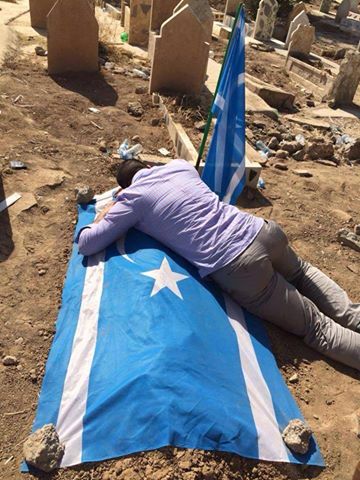
  • A massacre against the Türkmen by this terrorist organization ISIL in Emirli is imminent

    A massacre against the Türkmen by this terrorist organization ISIL in Emirli is imminent

    A massacre against the Türkmen by this terrorist organization ISIL in Emirli is imminent   

    taha

    Sadly the Kurdish policy/regime toward the Türkmen people is no different from that of the Arabisation policy that was carried out against the Türkmen during Saddam Hussein’s reign.

    Following the fall of Saddam Hussein’s government in 2003 and the control of Northern Iraq by the Kurdish Regional Government, the Iraqi Türkmen’s situation has deteriorated dramatically. At that time the Türkmen expected to see justice, equality and human rights but tragically the reverse has been happening. The lands of the Türkmen people have been confiscated and at times destroyed; many Türkmen have been kidnapped, arrested and assassinated. The Türkmen people have been subjected to tremendous pressure from the Kurdish party militias, to disregard their Türkmen identity and they are been forced to blend Kurdish society.

    The current disregard of the Türkmen people’s situation is unacceptable in Türkmeneli. The Türkmen people are again been subjected to a most brutal campaign by a terrorist Islamic State in Iraq, the Levant (ISIL) militants, thousands of Türkmen were forced to flee the Türkmen District of Telafer, when jihadists overran the area.

    The Türkmen people in the sub-district of Taze Khormatu, Tuz Khormatu and specifically the sub_district of Emirli has been under siege by the terrorist organization ISIL for the last two months. Their water, electricity, medical and food supply has been cut off and they have been living in horrific conditions. A massacre against the Türkmen by this terrorist organization ISIL in Emirli is imminent and tragically avoidable.

    When thousands of the Yazidis religious minority were forced to flee Sinjar as the jihadists overran their area, this prompted an international aid operation and helped to trigger the US air strikes.

    Türkmens are questioning why Britain, Germany, France, Italy, Canada, and the Czech Republic do not show this same solidarity/urgency towards the Iraqi Türkmen people.  As over 100,000 Türkmen people have sought refuge as thousands of Türkmen are executed by the terrorist Islamic State (IS) militants.

    Türkmen are also questioning why Germany, France, the Czech Republic, Italy, Canada, and Britain are not showing the same solidarity toward the Iraqi Türkmen in Emirli, who have been under siege for the past two months? Türkmens believe that the humanitarian aid should be distributed equally and fairly to all the Iraqi people who are fleeing Islamic militants in Northern Iraq.

    The Türkmen and Christian people are left defenceless, after the occupation of the city of Mosul by the terrorist Islamic State militants and the retreat of the Iraqi army from Mosul and Kerkuk. The Kurdish armed forces, instead of fighting and stopping the State militants from occupying Türkmen villages around the city of Kerkuk, have used the sectarian chaos in Iraq to expand their autonomous territory to include Kerkuk.

    Kerkuk sits on vast oil deposits, that could make the Kurdish region an independent state that many dream of in Iraq’s mountainous north and beyond, more viable. Türkmen question why Germany, France, the Czech Republic, Italy, Canada, and Britain did not stop the Kurdish Peshmerga from occupying the Türkmen city of Kerkuk without question their objective?

    While the Islamic State militants have swept across northern Iraq, pushing back Kurdish regional forces, threatening the Kurdish regional Capital of Erbil and driving tens of thousands of Christians and members of the Yazidis religious minority from their homes, Germany, France, Czechs Republic and Britain have shown great empathy towards the Kurdish people.

    Funnelling arms to the Kurdish Peshmerga forces by Britain, the United States and some European countries can start to change the dynamics in the region. The U.S. and EU’s provision of arms support for the Kurds is a good and positive step against the terrorist organization ISIL. However, this help should not only be given to the Kurdish people, the Türkmen people should also be given arms support. If the support is only limited to the Kurds, it could be an indication that there are other plans/incentives behind the decision of establishing a Kurdish state.

    The U.S. and EU’s stance on supporting the Kurds could be motivated by plans to divide Iraq into three parts that consist of a Shiite region in the south, a strengthened Kurdish region in the north and a Sunni region in the central Iraq.  This action would be totally rejected by the Türkmen people and civil war will be imminent if this plan is implemented by the U.S. and EU’s countries. In the view of many Türkmen, an independent Kurdish state would further destabilize the region and create new tensions, possibly also within the states neighbouring Iraq.

    In the view of many Türkmen, ignoring the plight of the Türkmen could be seen to be part of a plan for creating a special region for Christians and Yazidis on the Nineveh plane. The Türkmen would be the biggest losers from the implementation of such a plan. The Türkmen have suffered a lot during and after the fall of the Saddam Hussein regime. Iraqi Türkmen, the third largest ethnic group affected by the violence in Iraq, should also be equally armed by Britain to fight the Islamic State in Iraq and the Levant.

    The Türkmen people totally disapprove of sending weapons only to the Kurdish Peshmerga as these weapons could later be used by the Kurdish Peshmerga, to suppress the other ethnic groups in Northern Iraq. The Türkmen, Christian and Yazidis were betrayed by the Kurdish Peshmerga when they retreated from the Türkmen district of Telafer and sub- district of Beshir, Kusteppa, Biravchi, Makhmur and Sinjar.

    The Kurdish Peshmerga left the Türkmen, Christian and Yazidis under the mercy of the terrorist organization ISIL. The Kurdish Peshmerga is fighting to protect their own state, not for the Iraqi people as is believed. The Türkmen are worried about the formation of an independent Kurdish state, as this would risk further destabilizing the region.

    The Türkmen people of Iraq are extremely anxious to see the US and the West take action against the terrorist organization ISIL. However, the US, England, France, Italy, Canada, and Germany should show the same equality and empathy towards the Türkmen people. Iraqi Türkmen people are asking for arms/help/support from the West, asking for equal treatment to fight the terrorist organization ISIL.

    Mofak Salman Kerkuklu

    Türkmen Liberation Front

  • SLAUGHTERING OF TWO TURKMEN TEACHERS IN KIRKUK

    SLAUGHTERING OF TWO TURKMEN TEACHERS IN KIRKUK

    On the Sunday 16th of December 2012 four masked gunmen drove a Kia model car carrying automatic machine guns and snipers in area near village of Alzirkatta Arifeyat which is attached to the sub_district Alrashad located 60km southern city of Kerkuk.

    The four gunmen kidnapped two Turkmen teachers including Abdel Hussein Mahmoud Hamdi, and Kasim Naseh Shoukur.

    Abdel _Hussein Mahmoud Hamdi was born in 1976 and was appointed as a teacher at Rumaythah School on the administrative order number 6065 on 06th of March 2005 and commenced teaching on the 9th of March 2005.

    Whereas, Kasim Naseh Shoukur who was born in 1976 and graduated from the University of Mosul in northern of Iraq was appointed as a teacher at the Rumaythah school on the administrative order number 742 on the 11th of January 2005 and he commenced teaching on the 12th January 2005.

    On the Monday, 17the of December 2012, the bodies of two abducted teachers were thrown on the road side near the Humera village, which is located 35km south of Kirkuk, both bodies were carrying signs and traces of torture and bullets and both bodies were burnt.

    The death of these two Turkmen generated deep reactions among the Turkmen in Iraq and the incident shocked the Iraqi people. In the view of many of the Turkmen, the two teachers were killed for sectarian reason and for only being Turkmen. It is the view many of Turkmen that the organization and military group behind this brutal attack and atrocity is to fulfill their political agenda by bring the fear into Turkmen ethnics and forcing and displacing them from their land in Turkmeneli and more specifically, the city of Kerkuk which is considered the hub for the Iraqi oil production.

    Both Kurds and Arabs are fighting to control the city of Kerkuk for economical reasons although the indigenous people of Kerkuk are actually Turkmen. However, in the city of Kerkuk, the focus as on the Turkmen population which was subjected to brutal Arabization policies that were carried out by the Saddam Hussein government to eliminate the Turkmen identity in Kerkuk.

    However, since the fall of the Saddam Hussein government in 2003, the city of Kerkuk has been subjected to major demographic changes by the Kurds in a more brutal way than that which was carried out by the Saddam Hussein government.

    The demographic changes that have been carried out by the Kurds is to obliterated and diminish the Turkmen identity in the city of Kerkuk, then to control the hub of the Kerkuk oil which is considered the vein of the Iraqi economy. Kurds would like to add Kirkuk to their nearby semi-autonomous region, but Arabs and Turkmen in the city categorically oppose this idea.


    By Mofak Salman


    Mofak Salman Kerküklu graduated in England with a BSc in Electrical and Electronic Engineering from Oxford Brookes University and completed an MSc in Medical Electronics and Physics at London University and an MSc in Computing Science and Information Technology at South Bank University. The author was born in Türkmen sub district of Altunkopru in district of Numra Sekiz (district of Debis).

    He is also a Chartered Engineer from the Institution of Engineers of Ireland. Mr Mofak Salman is the author of Brief History of Iraqi Türkmen, Türkmen of Iraq, Türkmen city of Tuz Khormatu and A report into Kurdish Abuse in Türkmeneli. He has had a large number of articles published in various newspapers and websites.


    Dublin, Ireland

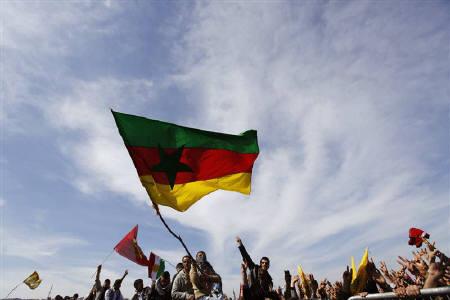
  • Kurdish flag dispute stirs Iraqi tensions

    Kurdish flag dispute stirs Iraqi tensions

    By Aseel Kami

    BAGHDAD | Sun Oct 16, 2011 10:21pm IST

    (Reuters) – Kurds protested in an Iraqi city on Sunday against an order to lower Kurdish flags from official buildings in a disagreement fanning tensions between Iraqi Arabs and the country’s Kurdish population.

    Iraq’s disputed territories, particularly the area around the northern oil-wealthy city of Kirkuk, are considered potential flashpoints for future conflict when American troops leave as scheduled at the end of this year.

    Hundreds of Kurdish demonstrators rallied in Khanaqin city waving Kurdish flags and shouting slogans against Prime Minister Nuri al-Maliki and his government’s decision to take down the Kurdish flag from government buildings.

    “We are Kurds and the flag is our symbol. On what basis do they want to lower the Kurdistan flag,” said Rawand Raghib, 23, a Kurd participating in the protest.

    Khanaqin, 140 km (100 miles) northeast of Baghdad, lies in the Iraqi province of Diyala, but it is also adjacent to the Kurdish Sulaimaniya city, which is part of the semi-autonomous region of Kurdistan.

    Maliki media advisor, Ali al-Moussawi, said raising the Kurdish flag in disputed cities was unconstitutional and would provoke Iraqi Arabs living in those areas.

    “Raising the flag in these areas is a constitutional violation,” he said.

    The last 41,000 American soldiers are due to withdraw from Iraq by year end when a security agreement expires. Many Kurdish officials want U.S. troops to stay after December as a guarantee of stability in the disputed areas.

    Residents in Khanaqin said the city was tense with an increase in Iraqi army checkpoints. Cars carried Kurdish flags and some Kurds even changed old Kurdish flags for new ones.

    No Kurdish flags were seen being taken down from the city’s government offices, residents said.

    The speaker of Kurdish parliament, Kamal Kirkuki, said the flag issue was a “sacred issue”.

    “The Kurdish political leadership is ready to use all means to preserve the Kurdish flag,” Kirkuki said in a press conference on Saturday in the Kurdistan capital Arbil.

    Semi-autonomous since 1991, Kurdistan has enjoyed more security than the rest of Iraq, where the central government is still fighting insurgents and militia more than eight years after the U.S. invasion that toppled Saddam Hussein.

    The Kurds and Iraqi Arabs not only have a long territorial dispute over areas of northern Iraq, but also disagree about oil contracts the Kurdistan regional government (KRG) has signed with international oil firms.

    Baghdad and the KRG still disagree over revenue-sharing and a national oil law is fueling more tensions as the central government seeks more control over crude reserves in the OPEC member nation.

    (Reporting by Aseel Kami in Baghdad and Shamal Aqrawi in Arbil; Writing by Aseel Kami; Editing by Patrick Markey)

    via Kurdish flag dispute stirs Iraqi tensions | Reuters.

  • Kurdish governor of Iraq’s Kirkuk resigns

    Kurdish governor of Iraq’s Kirkuk resigns

    KIRKUK, Iraq – The Kurdish governor and the provincial council chief of Iraq’s flashpoint city of Kirkuk have resigned in what political opponents said was a bid to ease public discontent with powerful Kurdish political parties.

    Iraq’s Kurdish areas have been caught up in the political ferment sweeping North Africa and the Middle East this year, with public demonstrations against the firm rule of the two parties who jointly dominated Kurdish politics for decades.

    Kirkuk lies just outside Iraq’s semi-autonomous Kurdish zone and is divided among Kurds, Arabs and Turkmen. Its provincial government has been led for years by the same Kurdish parties that control the semi-autonomous zone.

    www.jpost.com, 23.03.2011

  • Urgent Appeal: The Iraqi Turkmen need your support

    Urgent Appeal: The Iraqi Turkmen need your support

    To everyone in the UK who feels concerned with the Human Rights situation in Iraq:

    Please contact your MP and ask him/her to sign the Early Day Motion EDM968 – Human Rights Situation of Iraqi Turkmen

    See:

    80 signatures are needed.

    Below are the names of the 20 MPs who have already signed :

    HUMAN RIGHTS SITUATION OF IRAQI TURKMEN 08.11.2010

    20 signatures

    EDM 968
    Hancock, Mike
    Blenkinsop, Tom Bottomley, Peter Clarke, Tom
    Connarty, Michael Durkan, Mark Hemming, John
    Hopkins, Kelvin Leech, John McDonnell, John
    Munt, Tessa Ritchie, Margaret Rogerson, Dan
    Russell, Bob Shannon, Jim Sharma, Virendra
    Singh, Marsha Williams, Mark Williams, Roger
    Williams, Stephen
    That this House is concerned about the human rights situation of the Iraqi Turkmen, the third largest ethnic group in Iraq, who mainly live in the northern provinces, such as Kirkuk; condemns the ethnic cleansing and assimilation policy of Iraqi Turkmen by both Saddam Hussein’s government until 2003 andthe Kurds since 2003, who claim the Iraqi Turkmen lands which are rich with oil, gas sulphur, uranium and phosphorus; notes that the census in Iraq delayed for the third time since 2007 is now due to be held on 5 December 2010; worries that the inclusion of the questions on ethnicity and mother tongue in the census will divide Iraqi people instead of uniting them and might create new outbreaks of violence in this country; further condemns the treatment of the Iraqi Turkmen as the lower class in Iraq in comparison with the Arabs and Kurds; believes all ethnicities in Iraq should possess equal rights; welcomes the work of the Iraqi Turkmen Front to promote the human rights of Iraqi Turkmen such as the right to participate in the forming of the new government and the right to have justice, equality, fairness and an end to the discrimination and violence; and calls on the Prime Minister and the Government to raise the issue of Iraqi Turkmens’ human rights with the government of Iraq.

    Via Merry Hanım