Tag: Cyprus/TRNC

  • Cyprus Plans that were Approved by the Greek Cypriots

    Cyprus Plans that were Approved by the Greek Cypriots

    Actually, it would have been a lot better had the title of this article been “ Which Solution Plan did the Greek Cypriots accept?”

    As a matter of fact, so far there has been no plan that has been accepted or approved by the Greek Cypriots that would ultimately lead to a solution regarding the Cyprus issue.


    The Greek Cypriots have never had the intentions of saying “yes” to a plan that would give the Turkish Cypriots equal rights and hence a partnership status on the island, and they have never had and never will  have such thoughts crossing their minds.

    In 1959, when Makarios was signing the London and Zurich Treaties which in fact had laid the foundations for the 1960 Republic of Cyprus Constitution and  defined the Turkish Cypriots as one of the founders and partners of the new Republic, he had said “Zurich and London Treaties will form the first step toward achieving Enosis.”

    What he had actually meant with this statement was, “ I am signing this Treaty involuntarily, and my mission is to achieve Enosis.”  As a matter of fact, he had launched deadly attacks on the Turkish Cypriots three years after signing this Treaty so as to annihilate the Turkish Cypriots on the island of Cyprus.

    In 1878 the British leased Cyprus from the Ottoman Empire. Following this, the Greeks and Greeks Cypriots came up with the belief that the British would soon let them have full control over the island because both the British and the Greeks shared the same religion, i.e., Christianity, so they started to press the British to transfer the entire Island to them.


    Until 1878, the population ratio between the two communities was mostly 1:1 and at times 1:2, however, from the beginning of the 20th century, the Greek Cypriots brought many Greek immigrants from Anatolia and Greece to the island, and hence they changed the ratio in their favor. First it was 1:3, but later on they managed to make it 1:4. With this steady increase in Greek population on the island, they started working on their Enosis ideals, which meant annexing the island to Greece. They wanted a “Unified Greek State” to rule the island and thus started the Greek atrocıties toward the Turkish Cypriots.

    In 1945, when World War Two ended, both the UN and the USA brought it to the attention of the member states that Colonialism should no longer be practiced; that all Colonies should become independent states.  This meant a new period would begin on the Island of Cyprus.

    England had already started talking about a bi-communal governing system on the island, and in 1947, introduced a plan for a new state that would consist of two peoples, i.e., the Turkish Cypriots and the Greek Cypriots.

    The Greek Cypriots immediately rejected this plan known as the “Lord Winster Plan,” as it recognized the Turkish Cypriot existence.

    13 years after rejecting the first “State of Cyprus Plan,” the Greek Cypriots involuntarily accepted the 1960 Republic of Cyprus Constitution based on the assumption that they would achieve Enosis sooner this way. Had they not approved the 1960 Constitution, the island would again have been divided somewhere alongside the Green Line, and would have gotten the immediate approval of the UN.

    In order to avoid the legitimate partition of the island and to confiscate the entire territory, the Greeks unwillingly said, “yes” to the 1960 Constitution.  Since then and up until the year 2012, the Greek Cypriots have said “No” to 52 different plans that would have eventually led to a solution of the Cyprus problem.

    Greek Cypriots have no substantial plans for a solution other than declaring a Unified Greek Cypriot State, which would give them the right to self-determination, and eventually achieve Enosis.

    It is for this reason that the Greek Cypriots have been intentionally trying to make all the negotiations continue open ended and wait till the Turks become weak economically, politically and militarily because under such circumstances, Turkey will not have the power to intervene and send military troops to the Island.

    However, as the saying goes, there is always the possibility of losing a diamond while collecting stones.  Losing the whole island is also a probability while trying to get hold of it in its entirety. This is just one of the probabilities of the mathematics based “Game Theory.”


    Ata ATUN

    [email protected]

    September 11, 2012


  • Two Politically Equal and Sovereign Peoples Live on Cyprus

    Two Politically Equal and Sovereign Peoples Live on Cyprus

    The conflict in Cyprus has been ongoing for the past 57 years, since 1955 when the Greek Cypriot terrorist organization EOKA was established.

    Yet still there seems to be no sign of a settlement and no hope for one as well. Cyprus became part of the Ottoman Empire in 1571 and more than 300 years later, it was leased to Britain by Turkey with the agreement that Cyprus was to be returned to Turkey when Britain no longer wanted it.  Britain ruled Cyprus as a protectorate until 1914, when Turkey sided with Germany in the Great War. Britain then annexed Cyprus and assumed sovereignty, ruling it as a colony until 1960 when it became an independent republic.

    Although Cyprus has historically never been part of any Greek state, the population of Cyprus was changed dramatically by the British as from 1905 once Cyprus became a Crown Colony. The British began to allow Greeks to settle in Cyprus and communities were set up in Greece to encourage people to move to the island of Cyprus. Greek Cypriots became a majority on the island of Cyprus and remain so today.

    Around mid 1950s Britain decided to hand sovereignty over to the inhabitants of the island. Her decision was to transfer sovereignty jointly to the Turkish and Greek Cypriot peoples, for the “creation of an independent, partnership state in Cyprus.”

    It was on this basis that the constitution of 1960 was negotiated and the Treaties of Guarantee, Alliance and Establishment were finalized. It was at this point that the Republic of Cyprus came into being as an independent partnership state.

    The agreements that were made were based on equality and partnership between the two people in the independence and sovereignty of the island. The 1960 constitution required joint presence and effective participation on both sides in all organs of the state to be legitimate.

    Neither community had the right to rule other the other, nor could one of the communities claim to govern the other. The aim of the basic articles of both the constitution and the subsequent treaties was to safeguard the rights of the two peoples as equals.

    It was hoped that the two peoples of the island and their new partners would be able to live peacefully together under this new political partnership. It soon became obvious that this was not going to be possible.

    It became clear that the Greek Cypriots and Greece did not intend to abide by the constitution. They did not give up their ambition for the annexation of the island to Greece, and the Greek Cypriot leadership sought to unlawfully bring around constitutional changes. In effect, this would negate the “partnership” status of the Turkish Cypriots and clear the way for annexation with a Turkish minority. The only way that the Greek Cypriots could achieve their aims was to destroy the legitimate order, by the use of force, and to overtake the joint-state. The rule of law collapsed on the island in 1963 as a result of a ruling by the Supreme Constitutional Court of Cyprus.

    The Turkish Cypriots took the Greek Cypriots to court because the Greek Cypriots refused to obey the mandatory provision of separate municipalities for the two communities. The court ruled against the Greek Cypriots, and as expected they ignored the courts’ ruling.

    After this the Greeks tried to get eight basic articles of the 1960 Agreement abolished. These articles were there to protect the Turkish Cypriots, and so by removing them the Turkish Cypriots would be reduced to a minority subject to control by the Greek Cypriots. Christmas 1963 saw Greek Cypriot militia attack Turkish Cypriot communities across the island killing many men, women and children. Around 270 mosques, shrines and other places of worship were desecrated. The constitution became unworkable, because of the refusal on the part of the Greek Cypriots to fulfill the obligations to which they had agreed. The bi-national republic which was imagined by the Treaties ceased to exist after December 1963. The Greek Cypriot wing of the “partnership” State took over the title of the “Government of Cyprus” and the Turkish Cypriots, who had never accepted the seizure of power, set up a Turkish administration to run their own affairs.

    In the end, the Greek Cypriot state was internationally recognized under the title of the “Government of Cyprus,” was brought into the EU, and the Turkish Cypriots were forced in 1985 to unilaterally declare their own administration under the name of the “Turkish Republic of Northern Cyprus,” which still is not recognized.

    The two main peoples on Cyprus, the Turks and the Greeks, share no common language besides English, no common religion and no common literature, nor do they, except on the surface, share any common culture, from the past until the present. A “United Cyprus” or a “United Federal Republic of Cyprus” is a utopian idea that has no hope of realization.


    Ata ATUN

    [email protected]

    August 9, 2012

  • Turkey disappointed by Merkel’s Cyprus remarks, calls for fairness

    Turkey disappointed by Merkel’s Cyprus remarks, calls for fairness

    Wednesday, January 12, 2011
    ANKARA – Hürriyet Daily News
    AA photo

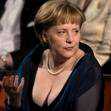
    German Chancellor Angela Merkel’s recent statements accusing Ankara of not taking any step toward a resolution of the Cyprus problem were a serious letdown for Turkey, its foreign minister said Wednesday.

    “Ms. Merkel’s latest statements caused serious disappointment on our part. If Ms. Merkel and Germany exert efforts for peace on the Cyprus issue, we will always support this, but they should first adopt an objective approach between the parties concerned,” Turkish Foreign Minister Ahmet Davutoğlu said at a press conference in Ankara.

    During her five-hour visit to Greek Cyprus on Tuesday, Merkel criticized Turkey and Turkish Cypriots for not doing enough to reach a deal with Greek Cypriots. Her criticism received a prompt response from Turkish Prime Minister Recep Tayyip Erdoğan.

    “I guess Ms. Merkel has forgotten what she has said. It was she herself who said it was wrong to admit Greek Cyprus into the European Union. But now, she pays a visit to the Greek Cypriot administration and makes such a statement,” Erdoğan said in Qatar. “It is also clear that she does not know the history of the Cyprus issue.”

    After meeting with Greek Cypriot President Dimitris Christofias, Merkel said Turkey needed to show more willingness to reach a settlement on the Cyprus dispute. If Merkel had talked to former Chancellor Gerhard Schroder, she would have known who was responsible for the Cyprus issue, Erdoğan said.

    “I call on the chancellor to research the history and sit down for tea with Gerhard Schroder,” the Turkish prime minister said.

    Asked to comment on Merkel’s views, Davutoğlu said Germany is one of the allies in which Turkey places the most importance. “Positive initiatives that have been taken over the last two years have come from the Turkish side. If Ms. Merkel had talked to the two parties, she would not be making one-sided statements,” he said in Ankara.

    MERKEL

    “We trust her and her leadership. I hope that in the upcoming period she also listens to the Turkish side and adopt a fair and objective approach,” Davutoğlu said. “We believe that Germany can play an important role but this role cannot be played by listening to one side.”

    Referring to Merkel’s appreciation of the steps taken by the Greek Cypriots, Davutoğlu responded in an ironic tone. “Yes, the Greek Cypriots have expended efforts. They expended efforts for the rejection of the Annan plan,” he said, referring to the 2004 referendum when Turks on the island voted for the plan while Greeks rejected it.

    Merkel’s ‘blunder’ historic, EU minister says

    Making overtures to the Greek Cypriot administration was a historic blunder on Merkel’s part, a Turkish state minister and chief EU negotiator said Wednesday. “However, we are determined and we will continue to tell the truth,” State Minister Egemen Bağış told reporters before flying to Hungary.

    Cypriot leaders meanwhile continued to negotiate the “Power Sharing” topic in a meeting Wednesday within the scope of extensive unification talks on the divided island. Turkish Cypriot President Derviş Eroğlu told reporters after the meeting that they made a counter-proposal to the Greek Cypriot side that Christofias asked for time to assess. The two sides will meet again Jan. 21, Eroğlu said.

    Alexander Downer, the United Nations chief’s special advisor on Cyprus, told reporters after the meeting that more talks would be held in Geneva on Jan. 26. He said they expected the parties to reaffirm the progress made since the meeting in New York and set a course for talks after Jan. 26.

    Following his talks with Merkel, Christofias urged Turkey on Tuesday to give up what he called its “gunboat diplomacy” in the eastern Mediterranean and drop its opposition to Greek Cyprus’s offshore exploration for gas deposits.

    Christofias accused Turkey of hampering a Greek Cypriot search for gas off its southern shore with warplanes and navy ships. He said Turkey must stop acting like the “neighborhood policeman” if it wants to join the European Union.

    “Neither Turkey, nor any other country, has the right to tell us … we don’t have the right to carry out this search,” Christofias said.

    Turkey says the Greek Cypriot search disregards the jurisdiction of Turkish Cypriots and could damage long-running talks aimed at reunifying the island. Last month, Turkey declared that a maritime border accord between Greek Cyprus and Israel was null and void.

    The Greek Cypriot government has said Turkish Cypriots could share in the potential bounty after a peace accord is signed, though Christofias said drilling is still a few years away. Energy Service Director Solon Kassinis said earlier this month that Greek Cyprus would press ahead in the second half of this year with a second licensing round for gas exploration in its 51,000-square-kilometer exploration area.

  • New Turkish Cypriot president poses ‘serious problems’ for reunification

    New Turkish Cypriot president poses ‘serious problems’ for reunification

    Turkish Cypriots elected a hardliner for president on Sunday, in a result that could have a major impact on efforts towards reuniting the island and on Turkey’s bid to join the European Union.


    Hardliner Dervis Eroglu has won the election for president in the breakaway republic of Northern Cyprus, in an outcome that could stall talks aimed at bringing the Turkish and Greek sides of the island together.

    A spokesman for the Greek Cypriot government, Stefanos Stefabou, called Eroglu’s election a “negative development.”

    “Taking into account the declared positions of Mr Eroglu against a federation, and for the establishment of two independent states in Cyprus, this could cause very serious problems for the (peace) negotiations,” Stefanou told reporters in Nicosia.

    Eroglu, leader of the National Unity Party (UBP), has said he favors a two-state confederation. However, he has also said he would not abandon the reunification talks.

    “Talks will continue because I want peace more than those who say that I don’t,” Eroglu told supporters after declaring victory. “I seek a solution based on the realities of the island and a solution that all of us can live with.”

    Around 164,000 people out of the 250,000 population of the island were eligible to vote. Turnout was reported to be about 75 percent.


    Bildunterschrift: Turkey is the only country to recognize the Turkish Cypriot government


    Reunification ‘a steep and uphill push’

    Analysts have said the election results would likely delay reunification efforts, and that leaders may have to lower their expectations if they want to find a solution that can be agreed on by both sides.

    “Nobody is going to walk away from the table, but this makes reunification a steep and uphill push,” said Hugh Pope, Turkey-Cyprus director for the International Crisis Group. “Everybody will have to think again and find a way forward.”

    Cypriot voters on both the Greek and Turkish sides would have to approve any deal between their leaders in a referendum.

    Peace talks on hold

    With 95 percent of Sunday’s vote counted, Eroglu won slightly more than the 50 percent needed to avoid a runoff against incumbent President Mehmet Ali Talat. Talat received 42.8 percent of the vote.

    Talat, leader of the left-leaning Republican Turkish Party (CTP), supports reunification of the island, which has been divided into the Greek south and Turkish north since 1974.

    Turkey is the only country that recognizes the government of the self-declared Turkish Cypriot state, which it has occupied since 1974. Ankara still keeps some 35,000 troops on the Mediterranean island.

    The Greek Cypriot government represents the island in the European Union, and says it will continue to block Turkey’s attempt to join the EU as long as the island remains divided.

    The United Nations-led peace talks on the Mediterranean island were on hold during the election campaign.

    cb/acb/svs/AFP/AP/Reuters/dpa
    Editor: Chuck Penfold

    https://www.dw.com/en/new-turkish-cypriot-president-poses-serious-problems-for-reunification/a-5479392

  • European Council conclusions on Turkey

    European Council conclusions on Turkey

    COUNCIL OF THE EUROPEAN UNION

    Council conclusions on enlargement/stabilisation and association process
    2984th GENERAL AFFAIRS Council meeting

    Brussels, 7 and 8 December 2009

    The Council adopted the following conclusions:

    “ENLARGEMENT STRATEGY

    1. In line with the renewed consensus on enlargement approved by the European Council on 14 and 15 December 2006, and the conclusions of 8 December 2008, the Council welcomes the Commission communication dated 14 October 2009 on Enlargement Strategy and Main Challenges 2009-2010, and takes due note of the conclusions and recommendations therein. The enlargement process gives strong encouragement to political and economic reform in the enlargement countries and reinforces peace, democracy and stability in Europe.

    2. The enlargement countries have been affected, to different degrees, by the global economic recession. The Council confirms that the EU will continue to help them to alleviate the impact of the crisis and prepare for sound recovery. The implementation of EU-related reforms underpins the efforts of the enlargement countries in this regard.

    3. Coherent implementation of the renewed consensus on enlargement which is based on consolidation of commitments, fair and rigorous conditionality, better communication and the EU’s capacity to integrate new members, continues to form the basis for EU action at all stages of the enlargement process, with each country being assessed on its own merits. The rule of law, in particular the fight against corruption and organised crime, as well as strengthening administrative capacity, remains a major challenge which the enlargement countries need to address from an early stage of the process. The Council underlines that problems affecting the freedom of expression and the media need to be tackled as a matter of urgency. The Council continues to attach importance to the quality of the enlargement process and invites the Commission to make use of all instruments of the enlargement process, in particular benchmarks and impact studies.

    4. The Council points out that the negotiating chapters for which technical preparations have been concluded will be opened or closed provisionally in line with the rules of an Inter-Governmental Conference, according to established procedures and in line with the Negotiating Framework.

    5. The Council welcomes the support provided to the enlargement process through financial assistance, in particular in the form of the Instrument for Pre-Accession (IPA), and emphasises the essential link between enlargement policy priorities and financial assistance, in line with the results from the recent conferences designed to improve aid effectiveness, and welcomes the efforts by the Commission to closely align IPA annual programmes with the priorities identified in the Progress Reports.

    Turkey

    6. The Council welcomes Turkey’s continued commitment to the negotiation process. Positive steps have been registered in the areas of the judiciary, civil-military relations and cultural rights. The Council now expects that the implementation of the National Programme for the Adoption of the Acquis, as well as the appointment of a full-time Chief Negotiator, will further focus the Turkish government’s reform efforts.

    7. Furthermore, the Council is encouraged by the government’s democratic initiative, including on the Kurdish issue. This should lead to concrete measures guaranteeing all Turkish citizens full rights and freedoms and should significantly improve the situation in the South-East. The Council welcomes the government’s efforts towards building of a national consensus, which will also be beneficial to the reform process, including the work on a constitutional reform.

    8. The Council invites Turkey to step up the pace of reforms and to implement measures which have been started. Further efforts to ensure that Turkey fully meets the Copenhagen criteria are required in a number of areas, including freedom of expression, freedom of the press, freedom of religion in law and in practice for all religious communities, respect for property rights, trade union rights, rights of persons belonging to minorities, civilian oversight of the military and women’s and children’s rights, anti-discrimination and gender equality. The Council welcomes the declared intention of the government to step up its efforts in the fight against torture and ill-treatment, including on the issue of impunity.

    9. The Council notes that the negotiations have reached a more demanding stage requiring Turkey to step up its efforts in meeting established conditions. By advancing in the fulfilment of opening and closing benchmarks and of the requirements specified in the Negotiating Framework, which cover inter alia implementation of the Accession Partnership and compliance with the obligations stemming from the Association Agreement, Turkey will be able to accelerate the pace of the negotiations.

    10. Turkey is an important regional player, inter alia for the security in the Middle East and the Southern Caucasus and plays a key role in energy supply and the promotion of dialogue between civilisations. The Council thus welcomes the significant diplomatic efforts made to normalise relations with Armenia, resulting in the historic signature of protocols for the normalisation of relations in October 2009. It looks forward to the ratification and implementation of the protocols as soon as possible. The Council welcomes that in July 2009 Turkey signed the Intergovernmental Agreement on the Nabucco gas pipeline and underlines that the timely completion of the Southern corridor remains one of the EU’s highest energy security priorities.

    11. The Council further welcomes the beginning of the reinforced dialogue on migration with Turkey and calls for concrete steps to be taken rapidly, in particular as regards readmission and border control, in accordance with the conclusions of the European Council of June and October 2009. The Council welcomes the start of a new round of talks on an EU-Turkey readmission agreement and stresses that adequate implementation of already existing bilateral readmission agreements remains a priority.

    12. In line with the Negotiating Framework and previous European Council and Council conclusions, the Council underlines that Turkey needs to commit itself unequivocally to good neighbourly relations and to the peaceful settlement of disputes in accordance with the United Nations Charter, having recourse, if necessary, to the International Court of Justice. In this context, the Union urges the avoidance of any kind of threat, source of friction or actions which could damage good neighbourly relations and the peaceful settlement of disputes. Furthermore, the EU stresses again all the sovereign rights of EU Member States which include, inter alia, entering into bilateral agreements, in accordance with the EU acquis and international law, including the UN Convention on the Law of the Sea.

    13. Recalling its conclusions of 11 December 2006 and the declaration of 21 September 2005, the Council notes with deep regret that Turkey, despite repeated calls, continues refusing to fulfil its obligation of full non-discriminatory implementation of the Additional Protocol to the Association Agreement. In the absence of progress on this issue the Council will maintain its measures from 2006, which will have a continuous effect on the overall progress in the negotiations. Furthermore, Turkey has not made progress towards normalisation of its relations with the Republic of Cyprus. The Council invites the Commission to monitor closely and specifically report on all issues covered by the declaration of the European Community and its Member States of 21 September 2005 in its forthcoming annual report. On this basis, the Council will continue to closely follow and review progress made, in accordance with its conclusions of 11 December 2006. Progress is now expected without further delay.

    14.As emphasised by the Negotiating Framework, the Council also expects Turkey to actively support the ongoing negotiations aimed at a fair, comprehensive and viable settlement of the Cyprus problem within the UN framework, in accordance with the relevant UN Security Council resolutions and in line with the principles on which the Union is founded. Turkey’s commitment and contribution in concrete terms to such a comprehensive settlement is crucial.

    1For Turkey the opening and provisional closing of chapters is made subject to the Council conclusions of 11 December 2006.