Tag: Cyprus/TRNC

  • Send Israeli Peacekeepers to Cyprus

    Send Israeli Peacekeepers to Cyprus

    National Security Journal
    Harry J. Kazianis – Editor-In-Chief and CEO
    800 N King Street Suite 304
    Wilmington, DE 19801

    November 1, 2025 

    Dear Mr. Kazianis,

     At the outset, I must note that the article in question repeatedly refers to the nation as “Turkey,” despite the fact that the country’s official and internationally recognized name is Türkiye. Respecting a nation’s chosen name is not symbolic—it is a matter of acknowledging the identity and will of its people. I am writing in direct response to Michael Rubin’s recent piece advocating for the deployment of Israeli forces in the sovereign territory of the Turkish Republic of Northern Cyprus and calling for Turkish peacekeeping forces to be barred from participating in the stabilization of Gaza. His assertions are not merely historically inaccurate they reflect a consistent posture of antagonism toward Türkiye’s sovereignty, diplomatic legitimacy, and historical truth.

     Let us be unequivocal: Türkiye did not “invade” Cyprus. The Turkish Peace Operation of 1974 was carried out under the legal authority of the 1960 Treaty of Guarantee, which empowered the three guarantor states Türkiye, Greece, and the United Kingdom to intervene should the constitutional order or the security of either community be endangered. It was Greece’s own extremist and illegal coup, orchestrated with the objective of Enosis the annexation of Cyprus by Greece that triggared Türkiye’s intervention.

     This was not speculation; it was confirmed by Greece itself. The Athens Court of Appeals Decision No. 2658/79 (March 21, 1979) acknowledged that the coup was engineered by Greek officers and was the direct cause of the events of 1974.

     In contrast to this unlawful coup, Türkiye’s action was a necessary humanitarian and legal measure to stop mass killings, village burnings, ethnic cleansing, and forced displacement directed against Turkish Cypriots. The continued presence of the Turkish Peace Force in Northern Cyprus remains the sole guarantee that Turkish Cypriots may live in safety and dignity today. History is not something to be rewritten to fit modern editorial fashion.

     Furthermore, Rubin’s comparison of Gaza with the Turkish Republic of Northern Cyprus is a deliberate distortion. Northern Cyprus is a functioning democracy with its own parliament, rule of law, civil institutions, and elected leadership. Turkish Cypriots overwhelmingly supported a peaceful federal settlement during the 2004 Annan Plan referendum 65% voted “Yes” while the Greek Cypriot side rejected reunification with 85% voting “No,” following an emotional televised appeal urging rejection by their leader, Tassos Papadopoulos. If this region remains divided, it is not by the will of Turkish Cypriots.

     The proposal to replace UNFICYP with Israeli troops is not a diplomatic strategy; it is a provocation. It would escalate regional tensions and deliberately undermine delicate peace mechanisms. And the suggestion to remove the Turkish Cypriot flag from the mountainside is not political commentary it is cultural vandalism   .

    What compounds the tragedy is the silence of those who are entrusted to defend our community’s dignity. The absence of a clear, strong, and principled response from Consulate General Ambassador Ahmet Yazal Republic of Turkiye to New York leaves our community exposed to mischaracterization and distortion. At such a moment, silence is not neutrality it is abandonment by the worst Consulate General our community has seen in 40 years. If our history, sacrifices, and rights are challenged publicly, then they must also be defended publicly.

    As a citizen, a community activist, and someone who has always advocated for peace and dignity rooted in historical truth for what I call it the Turkish Republic of Cyprus, I cannot remain silent where others choose to do so.

    Our NATO ally Türkiye has never opposed peace, transparency, or negotiation grounded in fairness. But it will not accept erasure, revisionism, or the rewriting of the lived suffering of Turkish Cypriots. Rubin’s article is not a policy recommendation it is an attempt to delegitimize a people’s right to exist in security on their own land. It nothing but a smear campaigns across the world against 

    Türkiye. All I can do is  laugh at these ludicrous smear campaigns by the Hate Merchant Rubin, We will not allow smear campaigns to go unanswered.  We will not stay quiet.  

    Respectfully,

    Ibrahim Kurtulus
    Community Activist 
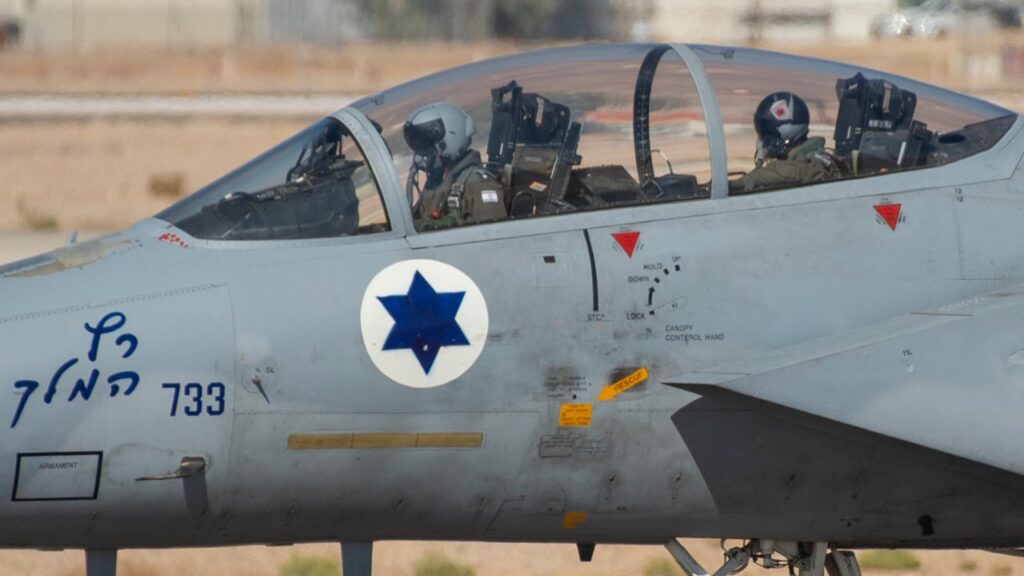
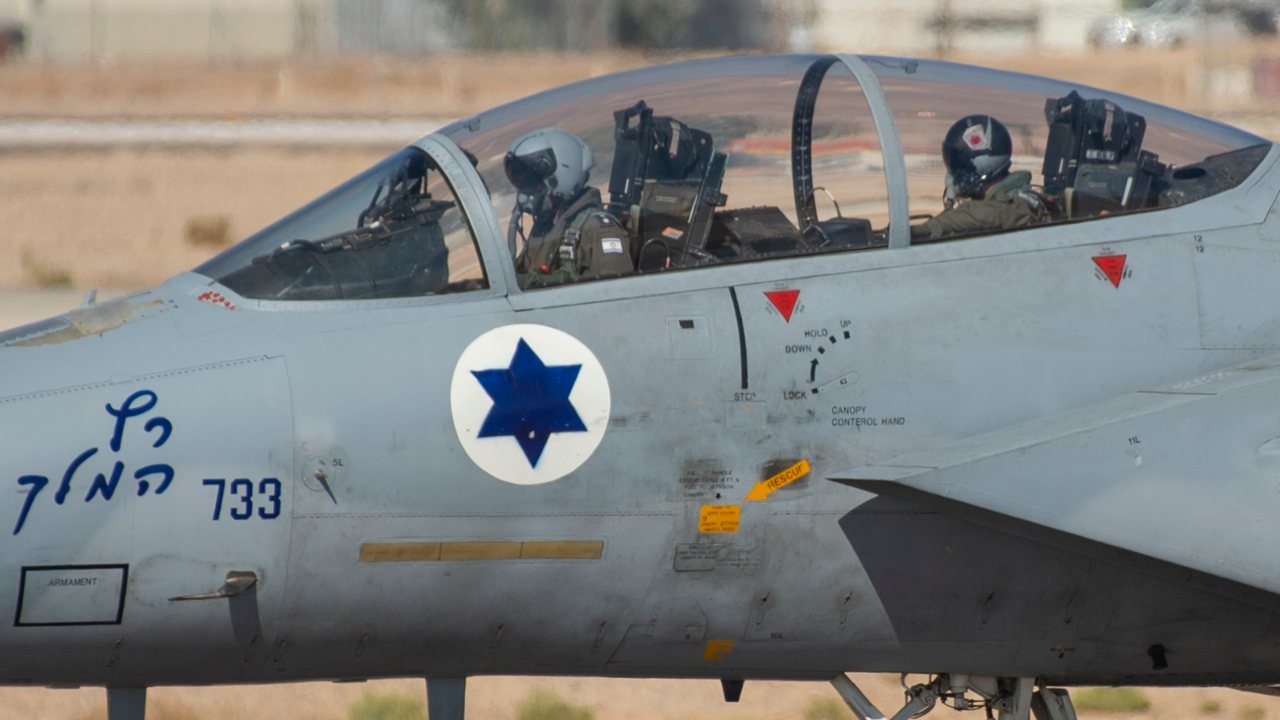
    An Israeli air force F-15I Ra’am taxis down the runway during Blue Flag 2019 at Uvda Air Base, Israel, November 4, 2019. The U.S. and Israel have a strong and enduring military-to-military partnership built on trust and developed over decades of cooperation. (U.S. Air Force photo by Airman 1st Class Kyle Cope)

    Send Israeli Peacekeepers to Cyprus
  • Letter to Pakistani Ambassador to United Nations

    Letter to Pakistani Ambassador to United Nations

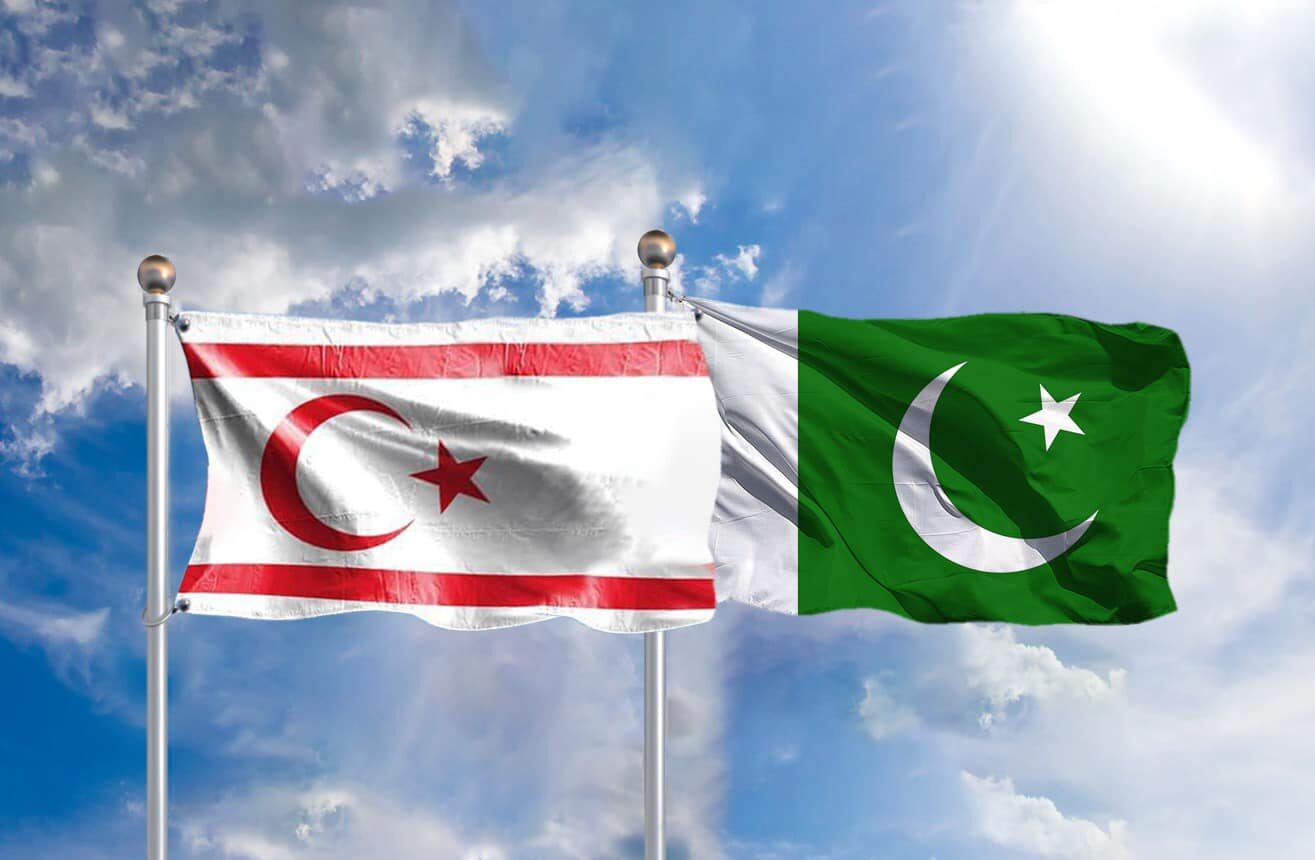
    Letter to Pakistani Ambassador to United Nations / Turkish Republic of Northern Cyprus (TRNC)

    His Excellence Ambassador Asim Iftikhar Ahmad
    Permanent Mission of Pakistan to the United Nations
    Pakistan Mission to The United Nations. 

    8 East, 65th Street 
    New York, NY 10065

    April 10, 2025 

    Dear Ambassador Asim Iftikhar Ahmad,

    I extend to you my warmest congratulations on your appointment as the Permanent Representative of the Islamic Republic of Pakistan to the United Nations. Sir, My name is Ibrahim Kurtulus , I am a Turkish American Community Activist. Ambassador, Your elevation to this distinguished post is a testament to your unwavering dedication, diplomatic acumen, and tireless service to your nation on the international stage. The Republic of Türkiye and the Islamic Republic of Pakistan share a bond that transcends the boundaries of geography and politics. It is a brotherhood rooted in history, fortified by shared values, and deepened by unwavering mutual respect. From the final days of the Ottoman Empire to the present era of the Republic of Türkiye, the Turkish nation has never forgotten the heartfelt solidarity shown by our Pakistani brothers and sisters.

    Indeed, this history is not merely preserved in books it is passed from generation to generation. My own daughters, aged 13 and 10, have already come to understand the depth of Pakistan’s support for Türkiye. Just as 90 million citizens of Türkiye remember with gratitude the sacrifices and moral support extended by your great nation during our most trying times, our children will continue to educate theirs on this sacred bond of friendship and brotherhood.

    Today, we continue to witness this unwavering spirit of solidarity not only in the context of Türkiye but also in the principled stance your country has taken towards the Turkish Republic of Northern Cyprus (TRNC). While others have chosen the path of silence and isolation, Pakistan has demonstrated moral clarity and brotherhood. The Turkish people recognize and deeply appreciate this courageous and just approach. Just as Pakistan has stood by Türkiye and the TRNC, we in Türkiye stand in resolute solidarity with our Kashmiri brothers and sisters, and with the noble people of Pakistan. The issue of Jammu and Kashmir remains close to the hearts of the Turkish people. We know too well that any attack direct or indirect on the sovereignty or dignity of Pakistan is felt by the Turkish people as an affront to their own.

    Your Excellency, as you embark upon your important mission at the United Nations, may your tenure be marked by success, wisdom, and strengthened cooperation between our brotherly nations. Türkiye looks forward to continuing our close collaboration on matters of mutual concern, from promoting global peace to defending the just causes of our nations and peoples.

    Once again, I offer you my heartfelt congratulations and look forward, Inshallah, to the honor of meeting you in the near future.

    With profound respect and warm regards,

    Respectfully,

    Ibrahim Kurtulus 

    Community Activist 

    New York, Staten Island 

  • Why No Turkish

    Why No Turkish

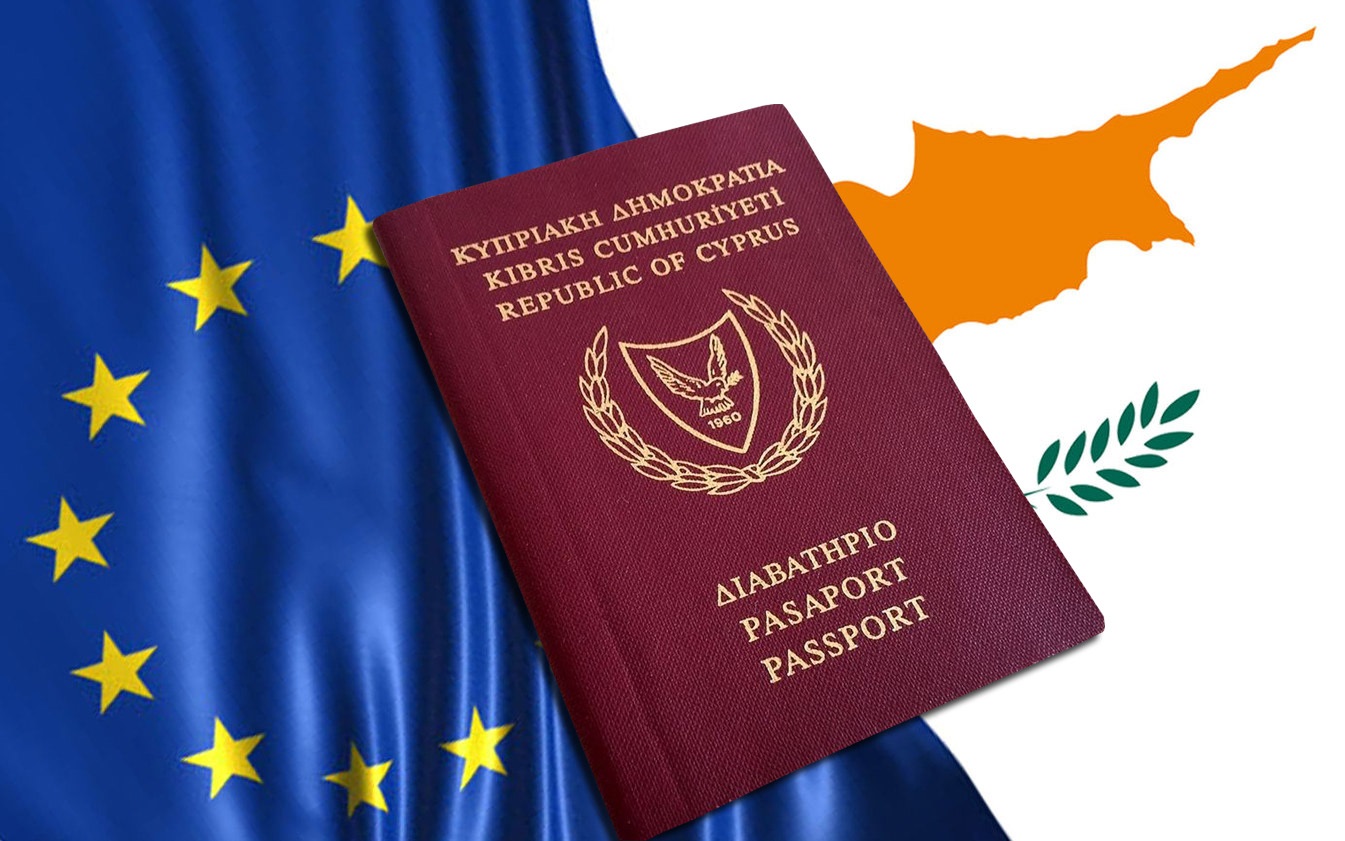
    The European Union’s pressure on the Greek Cypriot Administration on the issue of golden passports has started to yield results. The Greek Cypriot Administration will no longer be able to hand out the so-called “Golden Passport” to anyone for its political and financial interests, because the Greek Cypriot Administration made an important change in December regarding naturalization. From now on, those who will be naturalized will first have to be able to speak, read and write Greek at level B1 according to international foreign language exam criteria. Depending on the situation, the slightly lower A2 level may also be accepted. It is not yet clear what this special “situation” is or will be.

    According to the amendment to the Citizenship law, which was published in the Official Gazette after the House of Representatives adopted the draft law approved by the Council of Ministers, a foreigner applying for citizenship of the so-called “Republic of Cyprus” can be naturalized on the condition that he or she has knowledge of the Greek language at level B1, as set out in the Common European Framework of Reference for Languages, based on language certificates at the level mentioned in the Decree.

    In addition to this, they will also be required to have “adequate knowledge of the basic elements of the contemporary political and social reality of the so-called “Republic of Cyprus”” and to pass an exam on this subject. This exam will be prepared, conducted and evaluated by a committee consisting of staff from the Greek Ministries of Education and Justice.

    If the candidates who will take the exam say, “Between 1963 and 1974, the Greeks attacked the Turkish Cypriots in order to ethnically cleanse the island of Cyprus, mercilessly killed hundreds of Turks, burned down their homes, looted their property, confiscated their livestock and crops, and forced the Turkish Cypriots to migrate en masse,” they will fail definitely. He/she can never become a citizen.

    If he/she says, what the members of the committee, all of whom are Greek Cypriots, want to hear and denigrates the Turkish Cypriots and Turkey, he/she will pass this so-called “History and Culture Exam” with a hundred percent. 

    But there is lawlessness and suspension of human rights involved. According to the Constitution of the so-called “Republic of Cyprus”, the valid official languages are Greek and Turkish, yet this amendment law does not include a sentence such as “being able to speak, read and write Greek or Turkish at B1 level”. The requirement is limited to knowing only and only “Greek”. The constitutional rights of Turkish Cypriots, which are clearly stated in the 1960 Constitution of the Republic of Cyprus, have not been taken into consideration at all. When have they ever been taken into consideration, and they will be taken into consideration this time too. If anything, the rights of the Greeks are the only valid ones.

    And they shamelessly expect miracles from Maria Holguin, the Personal Representative of the UN Secretary-General, and with the magic wand in her hand, to touch the parties in Cyprus and try every possible means and pray that the negotiations will start immediately from the place where in Crans Montana in 2017, the Greeks overturned the table – due to their maximalist demands and their Enosis dreams of annexing the island of Cyprus to Greece – in a way that, the map submitted at the meeting in 2017 in their pockets and the concessions made at that time will also be valid.

    Going back to citizenship, many of the Greek fans among us do not speak Greek. If the citizenship of Turkish Cypriots is to be revised in terms of knowing how to “speak, write and read Greek” at an adequate level, then they will be disillusioned.

    Oh, if you say vested rights!, we know how the Greeks took away all the rights of the Turks and did not even want to give them the right to breathe.

  • Turkey says Cyprus crisis is chance to end division

    Turkey says Cyprus crisis is chance to end division

    By Andrius Sytas

    VILNIUS | Wed Apr 3, 2013 12:08pm EDT

    (Reuters) – Turkish President Abdullah Gul said on Wednesday the financial crisis in Cyprus presented an “important opportunity” to end the division of the island, split between the Greek Cypriot south and Turkish north.

    The Mediterranean island concluded a 10 billion euro ($13 billion) bailout deal with the euro zone and the International Monetary Fund (IMF) on Tuesday in order to stave off bankruptcy.

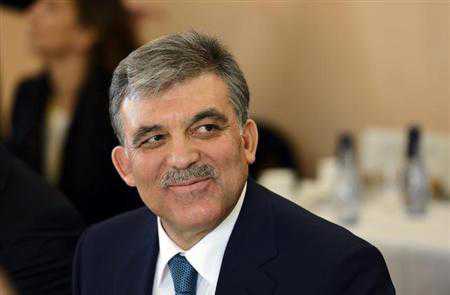
    Turkey's President Gul smiles during a visit to the Swedish parliament in Stockholm

    It has been divided since a Greek Cypriot coup was followed by a Turkish invasion of the north in 1974. Efforts to reunite it have repeatedly failed and Turkey is the only nation to recognize the self-declared Turkish Republic of Northern Cyprus.

    “There is at the moment significant economic crisis on the island. This should be seen as important opportunity … Because if the island was to unite, there would be a greater economic potential,” Gul said during an official visit to Lithuania.

    “There are some restrictions, embargoes on the island. Our suggestion is to lift any and all kinds of restriction or embargo simultaneously so that we can create a new climate for moving forward,” he said.

    “I hope that this message will be well understood.”

    Turkey’s failure to extend a customs agreement with the European Union by opening its ports to goods from Cyprus has hindered its ambitions to join the EU.

    Turkey began EU entry talks in 2005, a year after Cyprus was admitted, but its bid has been blocked by the intractable dispute over the island, as well as by long-standing opposition from core EU members Germany and France.

    German Chancellor Angela Merkel highlighted the Cyprus dispute as a stumbling block when she visited Turkey in February.

    Relations between Greece and Turkey have thawed over the years, making a resolution more imaginable than in the past.

    Beset by economic crisis at home, Greece last month pledged to double annual trade with its eastern neighbor to $10 billion by 2015.

    Greek Prime Minister Antonis Samaras met his Turkish counterpart Tayyip Erdogan in Istanbul and signed deals on issues ranging from agriculture to disaster relief.

    Gul said the potential for cooperation between Turkey and Greece made the possible benefits of Cypriot reunification even greater.

    (Writing by Nick Tattersall; Editing by Kevin Liffey)

    via Turkey says Cyprus crisis is chance to end division | Reuters.

  • Turkey’s Promising Shift to the West

    Turkey’s Promising Shift to the West

    Turkey’s Promising Shift to the West

    By the Editors

    The recent drama over the euro area’s bailout of Cyprus diverted attention from two important events, both of which feature the island’s old nemesis, Turkey.

    The first was a cease-fire declaration on March 21, made by the imprisoned leader of the Kurdish Workers’ Party, or PKK, Abdullah Ocalan. His decision was the result of overtures made by Turkey’s government, after more than a year of escalated conflict in one of the world’s longest and bloodiest insurgencies.

    The second signal event came a day later, March 22, when Israel apologized for its killing of nine Turks onboard a Gaza- bound ferry in 2010. Turkey’s acceptance of the apology, on lesser terms than it had demanded, was no less significant. It suggests Turkey wants to do more than simply humiliate Israel.

    Each of these developments is a response to the deteriorating security situation in Turkey’s neighborhood, as the conflict in Syria is radicalized; the rift between mainly Sunni nations, including Turkey, and the Shiite governments in Iran and Iraq widens; and the differences over Syria dim prospects for deeper Turkish ties with Russia.

    Any form of U.S.-backed intervention in Syria, which Turkey wants, would require cooperation between Turkish and Israeli security forces. Indeed, Israeli Prime Minister Benjamin Netanyahu publicly justified his apology on grounds of the threat in Syria. Intervention would also be less dangerous for Turkey if it were no longer at war with the PKK, which is closely allied to the main Kurdish organization in Syria.

    Domestic Influence

    Politics being local, domestic triggers for these moves were paramount, including, for Israel, a new government and a visit by U.S. President Barack Obama. Turkish Prime Minister Recep Tayyip Erdogan, meanwhile, needs to gain the support of ethnic Kurdish voters ahead of presidential elections in 2014. A peace deal with the PKK would help.

    Still, it’s clear that Turkey is rebalancing its foreign policy, embracing old allies in the North Atlantic Treaty Organization while moving away from the Turkey-Iran-Russia triangle it nurtured in the 2000s. The confrontation with Israel has been a hindrance, especially to improved relations with Washington. The latest moves follow Turkey’s decision to host the radar for NATO’s missile defense system (angering Iran and Russia), and to place NATO Patriot missile batteries on its border with Syria.

    Turkey deserves credit for these actions, but they are only beginnings. Erdogan has pronounced the Israeli apology a victory and says he will visit Gaza in April. He should understand that he can’t influence a settlement with Palestinians if he uses the occasion just to lob insults at Israel, as he did in a recent United Nations speech in which he described Zionism as a crime against humanity. Instead, he should lean on Hamas to reverse its position on Israel’s right to exist.

    As relations are gradually restored, Erdogan should also include Israel in the annual joint NATO Anatolian Eagle military exercises, conducted in Turkish airspace. Israel was disinvited in 2009, when relations were already deteriorating. That would help re-establish a functional security relationship between the nations.

    Turkey’s rebalancing offers opportunities to others, too. The European Union should pull its collective head out of the sand and end its blockade of Turkey’s membership negotiations. Moving the accession talks forward can only help the EU and Turkey, both economically and in security terms, regardless of whether Turkey eventually joins the bloc.

    Growth Possibility

    Turkey’s shift also creates opportunity for Cyprus. The terms of the Cypriot bailout will destroy the country’s offshore finance business, dooming its economy to years of Greek-style contraction. The only readily available growth substitute lies in the unexploited natural-gas reserves that surround the island.

    Israel and Cyprus have begun to explore these reserves, much to Turkey’s fury. The island has been divided ever since Turkish troops occupied the northern, ethnic Turkish part in 1974. That makes exploitation of the waters around Cyprus open to dispute; the uncertainty is one reason that Russia declined to bail out Cyprus in exchange for exploration rights.

    Cyprus should have reunified in 2004, when the Turkish north voted for a UN-brokered plan, but the Greek south voted against. Reunification now would bring Cyprus real investment, new tourism and the potential to benefit quickly from gas reserves that the Cypriot government estimates at 60 billion cubic feet. That represents a fortune for the island’s 1.1 million people.

    It was Turkey’s conflict with Israel over the Mavi Marmara ferry incident that led Israel to boost ties with Cyprus as well as Greece, Turkey’s old rivals in the Mediterranean. All four have an interest in repairing relations now.

    via Turkey’s Promising Shift to the West – Bloomberg.

  • EU – Enlargement – Aid Programme for the Turkish Cypriot Community – European Commission

    EU – Enlargement – Aid Programme for the Turkish Cypriot Community – European Commission

    Aid Programme for the Turkish Cypriot Community

    Background

    Cyprus joined the EU on 1 May 2004 as a de facto divided island. The EU fully supports the current negotiations (under the auspices of the UN) between the leaders of the Greek Cypriot and Turkish Cypriot communities which aim to reach a comprehensive settlement leading to the re-unification of the island and establish a bi-zonal, bi-communal federation in which the communities would enjoy political equality. Such a settlement is urgently needed to end a conflict that is now more than 40 years old.

    The EU will accommodate a Cyprus settlement that allows the country to play its full role as an EU member while respecting the EU’s basic founding principles – democracy, the rule of law and human rights.

    Pending a settlement, the European Commission has several specific responsibilities with regard to Cyprus, over and above its normal responsibilities toward a member country:

    closely following the negotiation process and providing political and technical support

    directly implementing the aid programme decided by EU member countries to help the Turkish Cypriots prepare for reunification.

    regularly reporting on the implementation of the Green Line Regulation.

    To meet these responsibilities, the Commission’s Directorate-General for Enlargement has set up the Task Force for the Turkish Cypriot community. The task force runs a ProgrammeSupport Office (EUPSO) in the northern part of Nicosia, to act as a contact with the beneficiary community and help deliver the assistance.

    The Green Line

    The whole of Cyprus is EU territory. However, in the northern part of the island, where the Government of Cyprus does not exercise effective control, EU legislation is suspended in line with protocol 10 of the 2003 accession treaty.

    Since 1974 the “Green Line” separates the two parts of the island. The EU’s Green Line Regulation 866/2004 , sets out the terms under which persons and goods can cross this line, which is not an external border of the EU.

    The main practical effect is that the northern areas are outside the EU’s customs and fiscal territory – but this does not affect the personal rights of Turkish Cypriots as EU citizens. They are citizens of an EU country – the Republic of Cyprus – even if they live in a part of Cyprus not under government control.

    The situation will change once a Cyprus settlement enters into force and EU rules apply over the whole of the island.

    While many people move across the green line every day, trade across the line is limited (approximately €400,000 per month).

    Aid for the Turkish Cypriot community

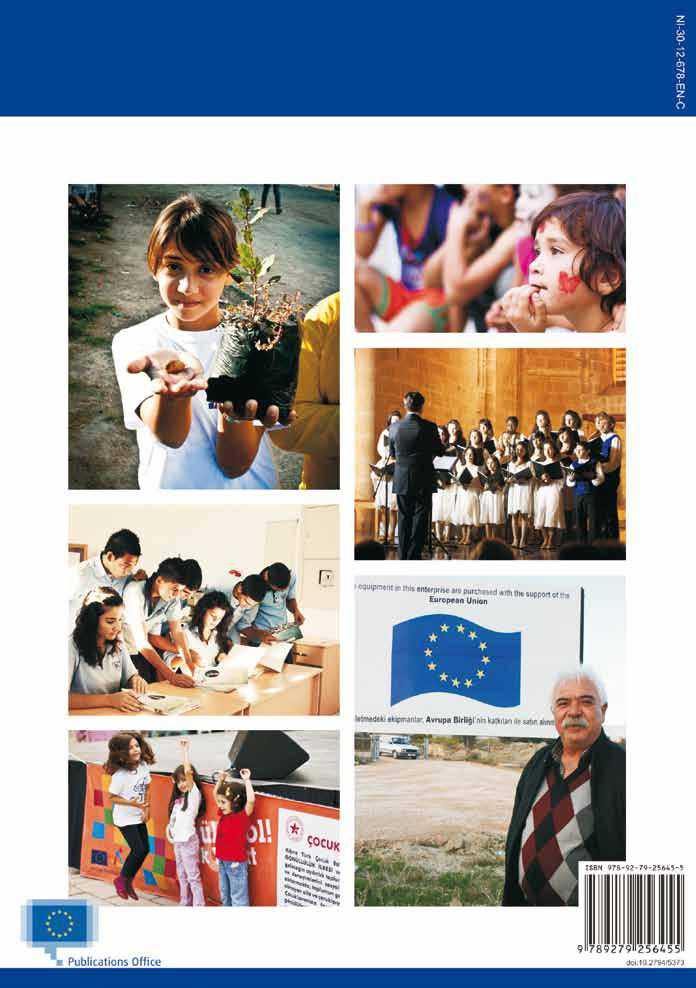
    In 2006, the EU approved aid regulation 389/2006 to end the isolation of the Turkish Cypriot community and to help prepare for reunification. €259 million was allocated for a 5‑year programme to be implemented by the Commission (DG Enlargement).

    Programme objectives:

    promote social and economic development in the Turkish Cypriot community (particularly rural, human‑resources and regional development)

    develop and refurbish infrastructure (particularly energy, transport, environment, telecommunications and water supply)

    foster reconciliation, build confidence and support civil society

    bring the Turkish Cypriot community closer to the EU, through information and contacts between Turkish Cypriots and other EU citizens

    help the Turkish Cypriot community prepare for the implementation of EU law once a comprehensive settlement of the Cyprus issue is agreed.

    From 2011 on, assistance has continued in the form of annual allocations of €28 million, to build on the results achieved and support the ongoing UN process.

    For more information on EU assistance to the Turkish Cypriot community, have a look at our brochure or go to the website of the EU InfoPoint.

    Brochure : ec.europa.eu/enlargement/pdf/key_documents/2012/20121128_assistance_to_tcc_brochure.pdf

    via EU – Enlargement – Aid Programme for the Turkish Cypriot Community – European Commission.