Tag: Cemil Onal

  • “Deep Assassination: The Silencing of Halil Falyalı’s Accountant Cemil Önal and the Multi-Layered Intelligence War”

    “Deep Assassination: The Silencing of Halil Falyalı’s Accountant Cemil Önal and the Multi-Layered Intelligence War”

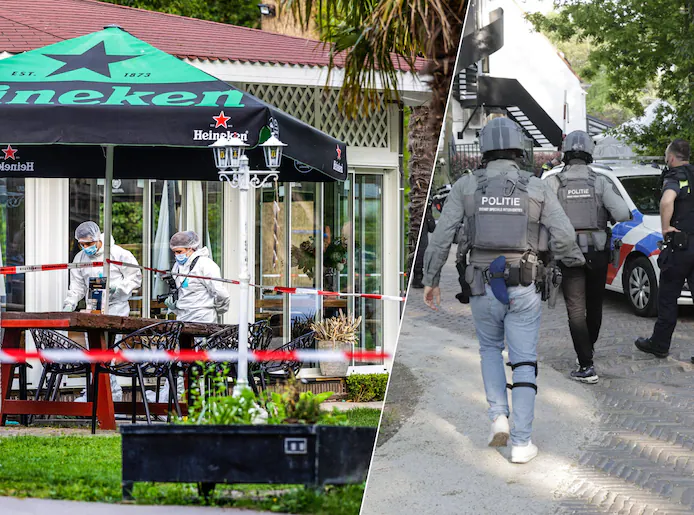
    On May 1, 2025, Cemil Önal—known as the accountant of Halil Falyalı—was assassinated at a hotel located within the Rijswijk Municipality near The Hague, Netherlands. Önal had previously provided a 120-page testimony and documents to the American foreign intelligence agency CIA and the Dutch Intelligence and Security Service (AIVD).[^1] He also gave an interview to Cypriot journalist Ayşeden Akın, in which he exposed illicit relationships within the power structures of Turkey and Northern Cyprus, causing widespread media coverage.[^2]

    This event is not merely an individual execution but should be interpreted as part of a multi-layered intelligence conflict and political reckoning. Önal was a key figure with direct and detailed knowledge—not merely as a witness—of the internal mechanisms of the Turkish Republic (TR) and Turkish Republic of Northern Cyprus (TRNC), including corrupt dealings involving numerous politicians, businessmen, and bureaucrats, including President Recep Tayyip Erdoğan.

    1. Security Failures and Institutional Responsibility

    According to media reports, the assassin fled the scene on foot, pointing to a serious lapse in security protocols.[^3] Despite receiving intelligence from Önal, both the CIA and AIVD failed to fulfill their duty to protect him. Allowing him to stay at an ordinary hotel without any security measures raises serious questions about institutional responsibility.

    1. The Role of Turkish Intelligence

    Public criticism has surfaced regarding Turkey’s National Intelligence Organization (MIT), which reportedly tracked Önal for a significant period and coordinated its actions with the executive branch.[^4] Whether MIT had direct or indirect involvement in the assassination is a matter that must be scrutinized both legally and within the context of international law.

    1. International Dimension: Blackmail and Intelligence Equilibriums

    Allegedly, Önal possessed recordings and documents detailing the involvement of Erdoğan and his close circle in illicit and organized criminal activities.[^5] Should these records have fallen into the hands of Western intelligence agencies, Turkey could be exposed to blackmail and coercion on the international stage.[^6] Therefore, this assassination can also be interpreted as part of a multinational foreign policy maneuver rather than merely a targeted killing.

    1. The “Used and Discarded” Scenario: The Fate of a Whistleblower

    Following Önal’s death, widespread discussion has focused on the notion that Western intelligence services “used and discarded” him. He allegedly offered detailed cooperation to the CIA and AIVD in exchange for protection and asylum.[^7] However, these services may have either underestimated or deliberately ignored his requests. This highlights the fragile nature of the “interest-based protection” principle in intelligence relations.

    Informants are typically protected only as long as the information they provide is considered “valuable.” Once this information is utilized, the responsibility toward such individuals diminishes. This has been a recurrent tactic, notably employed by the KGB and CIA during the Cold War.[^8] Önal’s situation is a modern example of the “discarded witness syndrome.”

    1. Domestic Repercussions in Turkish Politics

    In the aftermath of Önal’s assassination, segments of the Turkish opposition and certain media outlets have begun questioning potential links between the incident and the ruling government. Reports suggesting that Önal’s records directly targeted President Erdoğan have triggered intense censorship and pressure campaigns.[^9]

    This leads to a critical question: If Önal indeed possessed incriminating material against Erdoğan and his inner circle, where are these documents now, and who has them? If they have been handed over to the CIA, AIVD, or other agencies, they could become instruments of future blackmail. Such a scenario might force Turkey into foreign policy concessions—similar to past cases involving NATO member states where intelligence assets were directly embedded in diplomatic maneuvers.[^10]

    1. An Unsolved Case or a “Held Card”?

    Turkey’s modern history is filled with assassinations that remained unsolved for years, only to resurface when political dynamics shifted. Önal’s death might similarly be a “held card”—deliberately shelved by those behind the operation for future strategic leverage. In such a case, the public may not learn the truth for a long time.

    More critical than identifying the direct perpetrators is uncovering the structures that allowed or facilitated the assassination. The media’s lack of coverage, the event’s near-invisibility on social media, and its portrayal as an “ordinary murder” all reinforce this suspicion.[^11]

    The Anatomy of a Trust Crisis

    Cemil Önal’s assassination is not only a personal tragedy but also a symptom of a deeper crisis involving intelligence agencies, transnational political interests, and Turkey’s internal power structure. Despite the short time since the incident, access to information has been restricted, the investigation lacks transparency, and international response has been minimal. This sends a deterrent message—not just to those currently involved, but also to any future whistleblowers considering cooperation with intelligence services.

    Still, several pressing questions remain unanswered:
    • Who was behind the assassination?
    • Why did agencies responsible for his protection fail to act?
    • Where are the documents Önal disclosed?
    • How might this murder affect Turkey’s future foreign policy?

    Conclusion

    The killing of Cemil Önal demands clarification on many fronts. This was not simply the silencing of a witness but an event that sheds light on the complex intersections of intelligence agencies, state structures, and international power balances. Ultimately, the key question remains:

    “Who benefits the most from this assassination?”

    Everyone concerned with this issue must engage in critical thinking, connecting the chain of events and conducting a thorough analysis.
    Only then can the true answer—perhaps more obvious than it seems—emerge.

    References:

    [^1]: “Key Witness Cemil Önal Killed in Rijswijk,” De Volkskrant, May 2, 2025.
    [^2]: Ayşeden Akın, “Interview with Cemil Önal: Deep State Relations Revealed Through Documents and Recordings,” Haber Kıbrıs, March 2025.
    [^3]: “Escape Footage After the Assassination Captured on CCTV,” NOS Nieuws, May 2, 2025.
    [^4]: Mehmet Yılmaz, “MIT’s Silence and Tracking of Cemil Önal,” BirGün, April 2025.
    [^5]: Hasan Bayraktar, The Deep State’s Tape Archive: The Cemil Önal File, Istanbul: Güncel Publishing, 2025.
    [^6]: Ayşe Kardaş, “The West’s New Weapon: Political Blackmail Documents,” International Security and Strategy Journal, Vol. 12, No. 1 (2025): 34–52.
    [^7]: “Leaked Documents on Cemil Önal’s Meetings with AIVD and CIA,” The Intercept, May 4, 2025.
    [^8]: Christopher Andrew, The Sword and the Shield: The Mitrokhin Archive and the Secret History of the KGB, New York: Basic Books, 1999.
    [^9]: “Are the Recordings Targeting Erdoğan? Cemil Önal Assassination and Its Political Impacts,” BBC Turkish, May 3, 2025.
    [^10]: Robert Baer, See No Evil: The True Story of a Ground Soldier in the CIA’s War on Terrorism, New York: Crown Publishers, 2002.
    [^11]: “Algorithms and Obscuration: Why the Cemil Önal Case Was Rendere
  • A Targeted Assassination: The Silencing of Cemil Önal, Accountant of Halil Falyalı and the Man Who Exposed the Sewers of Power in Turkey and Cyprus

    A Targeted Assassination: The Silencing of Cemil Önal, Accountant of Halil Falyalı and the Man Who Exposed the Sewers of Power in Turkey and Cyprus

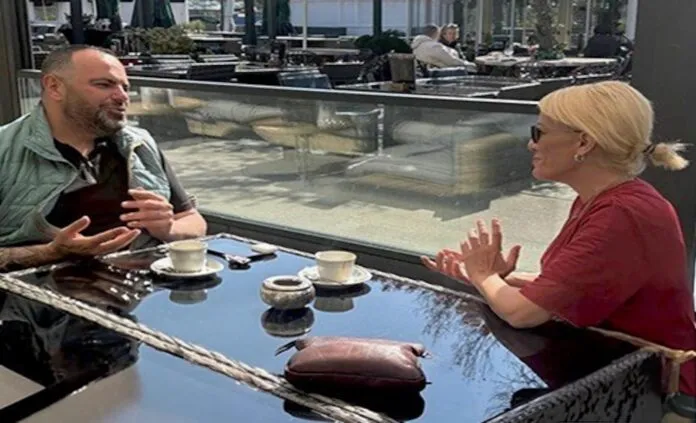
    On May 1, 2025, Cemil Önal—known as the accountant of Halil Falyalı—was assassinated in a hotel within the municipality of Rijswijk, near The Hague, Netherlands. Önal had provided a 120-page testimony to the American foreign intelligence agency CIA and the Dutch intelligence agency AIVD. He had also given an interview to Cypriot journalist Ayşeden Akın, blowing the lid off the political underbelly of Turkey and Cyprus. This was not a case of simply “dying” or being “found dead”—he was deliberately and systematically silenced. His murder was not just the elimination of an individual, but rather exposed a multilayered intelligence crisis and a calculated political reckoning. Önal was not merely a witness; he was a living archive, intimately connected to the innermost workings of the state.

    So why was he killed? Who was supposed to protect him—and who allowed it to happen?

    The information Cemil Önal held about the power structures in Turkey and Cyprus went far beyond mere allegations. The recordings, documents, and confessions he allegedly possessed involved members of an organized crime-like structure that reportedly included President Erdoğan himself. These materials targeted a chain of individuals—from Erdoğan to the head of MİT (Turkey’s National Intelligence Organization), ministers, and party leaders. Such revelations were not only destabilizing for domestic politics but also had the potential to shake international power balances.

    Yet despite the gravity of his position, Önal was placed in an ordinary hotel with no visible security. This raises serious questions:
    Was Cemil Önal a victim knowingly delivered to his killers?

    Reports from the scene indicate that after the assassination, the assailant walked away without encountering any resistance—pointing to a major security lapse. The CIA and Dutch intelligence service AIVD had a responsibility to protect Önal due to the sensitive information he had entrusted to them. However, instead of being housed in a secure location or a safe house in accordance with intelligence protocols, he was staying at a publicly accessible hotel—strongly suggesting insufficient protective measures. In this context, the event appears to have been a premeditated assassination, and it raises the suspicion that the assassin was granted implicit freedom of movement.

    Meanwhile, Turkey’s National Intelligence Organization (MİT)—known to have been tracking Önal for a long time—has been silent in recent months and is increasingly criticized for acting in alignment with the executive branch. Given this, MİT’s potential involvement in or knowledge of the assassination must be thoroughly investigated through legal channels and in light of the evidence.

    Now, pressing questions echo in the public’s mind:
    • Could this assassination have been executed or commissioned by MİT under Erdoğan’s orders?
    • Was it carried out by the CIA or Mossad and made to look like MİT was responsible?
    • Will the materials Önal held be used in the future to blackmail the Turkish government?
    • Or will this murder be shelved as an “unsolved case” for now—only to be used as leverage later?

    All of these are plausible scenarios. And each highlights just how critical this event is.

    Did the CIA and AIVD betray Cemil Önal?

    The emerging picture strongly points to “yes.” The confessions, documents, and reportedly duplicated video recordings that Önal provided may have rendered him a “spent” figure—used and discarded. If the CIA and AIVD indeed acquired his information, the subsequent withdrawal of protective measures would be the clearest sign that they allowed, or at least enabled, his assassination.

    Either way, this incident represents a major blow to the prestige of both the CIA and AIVD. The fact that a man under their protection was assassinated in such a manner will certainly discourage others from coming forward with confessions or seeking asylum, knowing they might not be protected in return.

    A Dark Possibility: A Mechanism for Blackmail

    The documents Önal provided may now be used as tools for blackmail against the Turkish government. If Western intelligence agencies now possess materials targeting Erdoğan and his inner circle, Turkey may find itself in a fragile position in foreign policy—vulnerable to pressure and more likely to make concessions.

    So, this was not merely a murder. It may well be the first move in a multinational campaign of coercion.

    What concessions might the Republic of Turkey be forced to make? Which political stances might it be pushed to abandon? What strategic plans might it be made to submit to?

    We will witness this unfold together.

    Conclusion?

    Cemil Önal was silenced. But he left behind questions too massive and too incendiary to silence.

    And these questions must not only echo in our minds—they must resonate within the public consciousness. This murder may have served both Erdoğan’s regime and the foreign powers that manipulate it. Therefore, everyone must ask themselves:

    “Who benefited the most from this murder?”

    Use your intellect. Connect the dots.
    The answer may be closer than you think.

  • The Cemil Önal Assassination: A Dutch Security Lapse or Deliberate Negligence?

    The Cemil Önal Assassination: A Dutch Security Lapse or Deliberate Negligence?

    On May 1, 2025, the assassination of Cemil Önal in Rijswijk, the Netherlands, marked a disturbing turning point not only for the world of organized crime but also for international law, intelligence cooperation, and state security. Önal was shot dead on a hotel terrace—a high-profile witness silenced in the open. The most pressing question remains: how could someone with such a critical dossier and insider knowledge be left so vulnerable?

    Dutch Media Headlines on the Assassination

    Leading Dutch media outlets gave wide coverage to the assassination:
    • De Telegraaf and Algemeen Dagblad ran headlines such as: “Mysterious Assassination in Rijswijk,” “Man of Turkish Origin Shot Dead in Hotel Room,” and “Missing Witness with Ties to Organized Crime Silenced.”
    • NOS reported: “Man Assassinated in Rijswijk Was Murder Suspect in Turkey,” referring to Önal’s alleged links to murders in Northern Cyprus.
    • NU.nl stated: “Police Confirm Rijswijk Victim Was Figure in Turkish Underworld.”
    • De Gelderlander and Nieuwsblad highlighted Önal’s tensions with high-level political circles in Turkey and suggested a possible link to the motive.

    Assassinated Under State Watch: Security or Open-Door Policy?

    Cemil Önal was no ordinary figure. He had provided a 120-page statement to Dutch and American intelligence agencies on the Halil Falyalı murder, illicit betting networks, and international money laundering operations. Such a high-value informant should have been under maximum protection from both the AIVD (Dutch General Intelligence and Security Service) and the CJIB (Central Judicial Collection Agency). But the opposite was true.

    Önal was staying openly at a hotel in Rijswijk—a neighborhood with a large Turkish population and known intelligence risks. The hotel itself was reportedly owned by Turkish nationals, information easily accessible in the local community. Despite having repeatedly informed the prosecutor’s office of threats to his life, no effective protection was provided. Critical questions arise:
    • Why did the Dutch government fail to secure Önal’s safety?
    • Why was he allowed to reside in a high-risk area instead of a secure, undisclosed location?
    • Was this a grave oversight—or a deliberate “look the other way” policy?

    Intelligence Failure or Diplomatic Apathy?

    This was not merely a murder—it was a diplomatic and intelligence failure of the highest order. A country like the Netherlands, committed to the rule of law, has now exposed a fatal weakness in its witness protection system. The Önal case proves that intelligence sharing and witness security protocols, though present on paper, failed in practice.

    Who Can Witnesses Trust Now?

    In the aftermath of this assassination, potential whistleblowers and informants will no longer see safety as their first option—but flight. Cemil Önal, a key witness who should have been protected by the state, was instead left to be executed. This was not just a bullet to his chest—it was a blow to anyone who believes in the protection of justice and the power of truth.

    Conclusion

    The Cemil Önal assassination is not merely the targeted killing of one man—it is a dark test of the Dutch state’s security reflexes, intelligence capabilities, and diplomatic responsibilities. The lessons to be drawn extend beyond the Netherlands, reaching every country engaged in the fight against transnational crime. The question now is this: What will the Dutch state do to ensure it never repeats such negligence, such willful blindness, or such a fatal security lapse?