Tag: Ataturk

Mustafa Kemal Atatürk, the founder of the Turkish Republic and itsfirst President, stands as a towering figure of the 20th Century. Among the great leadersof history, few have achieved so much in so short period, transformed the life of a nationas decisively, and given such profound inspiration to the world at large. The Greatest Leader of ALL Time: ATATURK Soldier, Diplomat, Statesman, Orator, Teacher, Scholar, Genius Proactive Ataturk Community

  • British teenager deported from Turkey for stripping naked in front of Ataturk statue

    British teenager deported from Turkey for stripping naked in front of Ataturk statue

    A British teenager has been deported from Turkey for stripping naked and swearing in front of a statue of Mustafa Kemal Ataturk, the founder of the republic.

    Thomas Strong, 19, from Carlisle in Cumbria, approached the quayside statue while on holiday in Marmaris on Sunday and dropped his shorts, before launching into a tirade of abuse.

    Local boat men were so furious at the insult that they called the police to arrest Strong.

    The offence of insulting Ataturk, the former Army Officer who led the Turkish national movement and established the Republic of Turkey in 1923, is punishable by imprisonment for Turks.

    Ayhan Hatay, who watched Strong’s actions in horror, said: “We couldn’t believe what we were seeing. Lots of tourists come and look at the Ataturk statue and take pictures. But this lad was something else – he stripped his clothes off and started waving his manhood and swearing at Ataturk.

    “The police were there in minutes and took him away in handcuffs. To be honest he’s lucky it was the police that took him – Ataturk is the father of the Turkish Republic and a national hero – the local boys wanted to kill him for being so insulting – what is it about the British that they seem to enjoy being so rude and disrespectful.”

    The Turkish authorities believed that Strong must either be drunk or suffering from a mental illness, but he was given a clean bill of health after being taken to hospital.

    The teenager was held in police cells for several hours before being brought before a special court on Sunday afternoon, but could offer no explanation for his behaviour.

    Answering the charge of insulting Ataturk, Strong told the court: “I don’t know why I did it”.

    The judge ordered him to be immediately deported from Turkey and banned from returning for five years.

    After the court case Strong was taken by police to Dalaman airport and put on a plane back to Britain.

    British tourist John Connolley, who is on holiday in Marmaris, praised the actions of the Turkish authorities.

    “To be honest I admire the Turks for their direct action. The boy had no reason to strip naked in public and insult a much loved national leader. He obviously was looking for a reaction and he got one – perhaps not what he expected though.

    “Tourists should appreciate that if you come to Turkey you should behave respectfully – I think it’s a good thing – otherwise you get Brits behaving horribly like they have been on the Greek islands recently. In fact I think we should adopt the same attitude back home and deport badly behaved foreigners.”

    However, for some Turks, the punishment was not severe enough and a Facebook group titled ‘String up Strong’ has been set up, calling for him to be hanged.

    After the collapse of the Ottoman Empire, founded in the 13th century, Ataturk led the national movement in the Turkish War of Independence.

    He defeated forces sent by the Allied Powers and established the modern Republic of Turkey.

    Ataturk, born in 1881, was President of Turkey for 15 years until his death in 1938.

    Source:  www.telegraph.co.uk, 17 Aug 2009

  • Turkish POW Treatment by the British

    Turkish POW Treatment by the British

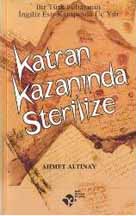
    Katran Kazaninda Sterilize book cover

    CLAIM 1
    From the book “Katran KazanInda Sterilize” (“Sterilized in Tar
    Cauldron”) by Imge Publications, written by Ahmet Duru who revealed
    the diary of the sub-lieutenant Ahmet Altinay from Karaman…

    “In WWI, 150 thousand of our soldiers were captured by the British.
    And some of these soldiers were imprisoned in Seydibesir Useray-i
    Harbiye Camp  near the city of Alexandria in Egypt. The full name of
    the camp was “Seydibesir Kuveysna Osmanli Useray-i Harbiye (4) Kampi”.
    In this camp, the Ottoman soldiers of 16th Division’s 48th Regiment
    who were captured at the Palestine fronts in 1918 were interned. For
    two years until June 12th, 1920, they were subjected to any kind of
    torture, oppression, heavy insults and humiliation.

    The reason for this inhumane treatment was the Armenians. The war was
    over. Nevertheless, to release the soldiers besides the ones who died
    because of heavy conditions in the camp was not to the benefit of the
    British. Because the British were brainwashed by Armenians, being told
    that in a potential new war they could come up against these soldiers
    again. The solution was massacre…
    Our soldiers, forced by bayonets, were put in disinfection pools with
    the excuse of wiping out germs. But the chemical, krizol, was added a
    lot more than normal in the water. Even just when they put their feet,
    our soldiers got scalded. However, the British troops didn’t let them
    get out of the pool by threatening with rifles.

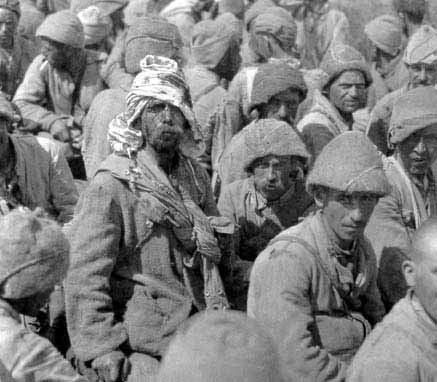
    Turkish POWs, 1917

    Our soldiers didn’t want to put their heads under the water that
    reached waist level. But then the British started shooting in the air.
    Our soldiers knelt and put their heads under water not to die.
    But the ones who got their heads out of the water couldn’t see any
    more. Because the eyes were burned…The resistance of our soldiers who
    saw what happened to the ones that got out was no use and our 15
    thousand men got blinded.

    This savagery was discussed in May 25th, 1921, in the Turkish Great
    National Assembly. The congressmen Mr. Faik and Mr. Seref proposed
    that 15 thousand sons of this country were blinded in Egypt by being
    put in the “krizol” pool; and wanted the Assembly to make an attempt
    for punishment of the British physicians, commanders and soldiers who
    were guilty of this act.

    Of course the newly founded government had a thousand other problems.
    Demanding an explanation for this act was easily forgotten.

    The British commanders of the camp, because of the wrong, mendacious
    translations and provocations of Armenian translators who knew
    Turkish, had become fierce Turk enemies.

    COUNTER CLAIM
    The British run PoW camps in Egypt were regularly inspected by the
    diplomatic representatives of neutral countries and by the
    International Committee of the Red Cross
    Sidi Bishr Camp (Seydibesir Useray-i Harbiye Camp) was visited on 6th
    January 1917 and the report on that visit can be read in chapter 7,
    here
    Bryn

    CLAIM 2
    The other claim made by Yücel Yanıkdağ in his unpublished PhD thesis
    Ill-fated Sons of the Nation: Ottoman Prisoners of War in Russia and
    Egypt, 1914-1922 makes the claim that the British authorities
    deliberately infected Turkish POWs with Pellagra. This particular
    story is also doing the rounds of the “British plot to kill Turks
    inspired by Armenian” circuit and has equal credibility.

    COUNTER CLAIM
    The nub of the Pellagra claim is that the British deliberately singled
    out the Turks for ill treatment by inadequate diet leading to the
    ex-POWs having the highest death rate from Pellagra amongst all the
    other prisoners. On the basis of the death rate, it was concluded that
    Pellagra was a deliberate policy. That Turkish POWs died in great
    numbers from Pellagra is well documented in British sources. However,
    this churlish complaint does not mention that Pellagra takes 5-6 years
    to manifest itself into a fatal condition. No Turkish POW spent that
    long in their incarceration leading to the conclusion that these men
    suffered from Pellagra prior to becoming a POW. It wasn’t until the
    mid 1920’s that it was discovered that Pellagra was due to dietary
    problems.

    CLAIM 3
    Cholera  at Berramke Barracks in Damascus  was deliberate to kill Turks.

    COUNTER CLAIM
    A search of the Australian archives – every single available file
    relating to POWs is very much available and they provide information
    with the good and the bad. Nothing is covered up. The worst case
    regarded the 12,000 Ottoman soldiers who surrendered at the Berramke
    Barracks in Damascus after its fall on 1 October 1918. These men were
    deserted by their own support teams and left to fend for themselves
    without any resources with neither food nor medicines. After a few
    days being held as POWs, cholera broke out amongst this group. Over a
    two week period many hundreds of men died through cholera, the worst
    day recording over 150 deaths. By dint of hard work, the POWs were put
    to work to provide a satisfactory sanitation and drinking water
    system. Some men had to be coerced into working towards the common
    good. The result – cholera was brought under control. The deaths from
    cholera did not only effect the Turks but also the Australian, Indian,
    French and British soldiers in the area with many of these troops also
    dying.

    So the cholera outbreak at Damascus was not a sinister British plot to
    kill Turks, it was a problem brought on by the neglect of the Turkish
    command for the health of their soldiers and citizens in Damascus. The
    ordinary soldier in both the Allied forces and the Turkish army paid a
    high price for this neglect.

  • Is Turkey preparing for peace?

    Is Turkey preparing for peace?

    Simon Tisdall

    Simon Tisdall guardian.co.uk, Tuesday 28 July 2009 16.30 BST

    There is much speculation about the government’s ‘Kurdish initiative’ and if it will be enough to end the long-running conflicT

    Recep Tayyip Erdogan may be about to deliver the biggest blow yet to the fraying ultra-nationalist legacy of Turkey’s founding father and first president, Mustafa Kemal Ataturk. But ironically given recent controversies, the prime minister’s anticipated demarche is not about advancing his supposed Islamist agenda. Instead it concerns the rights of Turkey’s 12 million-strong ethnic Kurd minority, which Ataturk did more than most to suppress.

    Erdogan’s confirmation last week that his government was working on a “Kurdish initiative” to finally resolve a conflict that has claimed 40,000 lives since 1984 has prompted furious speculation about what is in store. It followed similar comments earlier this year by Erdogan’s ally, President Abdullah Gul, who spoke of a “historic opportunity”, and by army chief Ilker Basbug, who characterised the Kurdish problem as a test of Turkey’s modernisation.

    Reports in Hurriyet and other Turkish media suggest the plan could include a general amnesty for Kurdistan Workers’ party (PKK) fighters, enhanced political, economic, language and educational rights, and the reinstatement of banned Kurdish names in south-eastern Anatolian towns. Article 5 of the anti-terror law, which has been used to imprison children for stone-throwing, is also said to be under review.

    Erdogan did not say when he would unveil his new strategy. But it is likely to come before 15 August, the date on which the jailed PKK leader, Abdullah Ocalan, has promised to launch his own “road map” for peace. The PKK has renounced its former aim of of an independent Kurdish state and recently extended a unilateral ceasefire until September. Ocalan, held in solitary confinement for the past 10 years on Imrali island in the sea of Marmara, is expected to offer suggestions on disarmament, political reintegration of PKK members, increased local government autonomy and the creation of a national “dialogue period”.

    Ocalan’s road map would present “a solid solution”, Hasip Kaplan of the Kurdish Democratic Society party (DTP) told Hurriyet. “The dialogue period should be initiated … The DTP is ready to contribute to the resolution of this problem,” he said. For his part, Erdogan has an uneven, stop-start record on the Kurdish issue. Although he appears committed, it remains unclear just how far he is prepared to go.

    Erdogan’s hesitancy is undoubtedly due in part to the fierce resistance emanating from the same conservative, secular opponents, civilian and military, who accuse him and his Islam-based Justice and Development party of secretly pursuing a religious agenda. “The prime minister has become a very serious risk for Turkey … as he prepares to divide Turkey under the guidance of the butcher of Imrali [Ocalan],” said Devlet Bahceli of the far-right Nationalist Movement party. Deniz Baykal of the Republican People’s party said Erdogan was bowing to EU and US pressure arising from human rights concerns and the stability of northern Iraq.

    These persistent internal tensions, illustrated by this month’s trial of two army generals allegedly linked to the “Ergenekon” coup ring and by last year’s uproar over lifting a university headscarf ban, have potential to derail Erdogan’s Kurdish initiative. Equally, if a peace process does take root, it will be seen in some quarters as undermining Ataturk’s ideal of a common people with a common language under a common flag.

    But times are changing and even Turkish statist diehards may have to change, too. As historian Andrew Mango points out in a new book published by Haus Publishing, From the Sultan to Ataturk, Ataturk was an authoritarian radical, wedded to a contemporary concept of the nation state and determined to raise his vision of a modern, secular Turkey from the ruins of the Ottoman empire. “His objective was to fashion a united Turkish nation out of the disparate Muslim groups inhabiting the country … until they joined the mainstream of the one existing human civilisation which happened to have its centre in the west.” Ataturk had no time for religion, Mango said, nor for separatists and minorities in any shape or form. In 1925, a Kurdish rebellion was brutally crushed and Ataturk’s cultural revolution accelerated.

    Eighty-six years after the Treaty of Lausanne, which brought Turkey into being, pressure grows inexorably for a loosening of the Ataturk straitjacket. “There is no doubt that identity policies adopted in the founding period of the Republic of Turkey reflect a notion of modernity that has caused much conflict and suffering and is today entirely out of touch with the spirit of the times,” said Sahin Alpay, writing in Today’s Zaman. “It is high time that Turkey adapt its identity policies to the age of human rights, democracy and respect for diversity.”

  • Creeping Islamism in Turkey

    Creeping Islamism in Turkey

    July 3, 9:12 AM · Richard Shulman – NY Israel Conflict Examiner
    A.P. Photo/ Burhan Ozbilici

    The Islamist ruling party in Turkey [AKP] has “a strategy for a creeping Islamization that culminates in a Shari’a (Islamic law) state not compatible with a secular, democratic order.  The AKP does not advertise this agenda and often denies it.”  Turkish courts confirmed the secret agenda.  However, in the name of democracy, the U.S. and the EU demand that countervailing Turkish circles accept the AKP positions subverting the military, judiciary, and educational system.  This Western pressure is naïve, for it betrays the democratic elements in Turkey to the Islamists, who, as they consolidate power, crimp democracy.  Democracy is not just rule by the majority but allows civil rights, minority opinion and cultural freedom consistent with constitutional order.  In Turkey, democracy is a cover for creeping Islamism and the ending democracy.

    Can’t expect much policy revision by Europe.  Europe is losing sight of the values of its civilization [or is reverting to hedonism and apathy].  Europe doesn’t understand what is happening to it.  Europe has proved inept at ethnic problems.

    Ordinary reform in Turkey is not enough.  Needed is fundamental reform, such as Europeanizing Islam.  Turkish immigrants in Islamic enclaves in Germany are not like Europeans in matters of tolerance and democracy.  The AKP head called their possible assimilation into Europe a “crime against humanity.”  In other words, he wants them to retain their hostility in exchange for German hospitality.  [Sounds like preparation for introducing civil war to Europe.]

    If the Turkish immigrants assimilated into European culture, they could become a welcome and useful addition to Europe, whose population is declining.  Can’t expect much policy revision in Turkey.  Islamists, being undemocratic, don’t compromise.

    Thus, when the AKP legalized the head scarf, which signifies Islamization, and the Supreme Court found it contravened their secular constitution, the AKP threatened to shut the court.

    Many Europeans praised the AKP on this issue, as being moderate and democratic.  As a result of the misguided European notion of democracy, moderate, secularist Turks feel abandoned by the West and alienated towards it.  In Turkey, this issue is debated more honestly than it is in Europe.

    The only difference between moderate and jihadist Islamists is the use of ballots.  The naïve West thinks that including Islamists in politics would tame it.  It didn’t in Gaza, Lebanon, and Iraq.  Hamas and Hizbullah kept their militias, which contravenes democracy  (Paul Marshall, Jewish Political Chronicle, spring 2009, p.11 from M. E. Quarterly, winter 2009).

    The Western foreign policy establishment has taken a counter-productive position on this.  Secularist Europe actually is helping repress secularist Turkey!

    For another discussion of Turkish Islamism, click here:

    Author Richard Shulman is an Examiner from New York. You can see Richard’s articles at: “

  • The Fethullah Gülen Movement

    The Fethullah Gülen Movement

    4a1d31d83288d_4a1bcc2db9713_guelen22

    Pillar of Society or Threat to Democracy?

    Fethullah Gülen is Turkey’s most famous preacher and its most controversial. His followers run schools, hospitals and a media empire – a boon for his supporters, but a horror scenario for his critics. Daniel Steinvorth sheds some light on a cleric who polarises opinion both at home and abroad

    | Bild:
    Honoured by his supporters as “Hocaefendi”, vilified by his opponents as an Islamist in disguise with a hidden agenda: Fethullah Gülen | What does an Islamic school actually look like? One might expect prayer rooms, single-sex tuition, and walls lined with suras from the Koran. The Güventas School in Konya, a city in Central Anatolia’s industrial heartland, has nothing of the kind.

    It is a clean, new building with a chemistry lab on the fourth floor, a lawn with a Chinese-style pavilion in front of the school, and a silver bust of Atatürk at its entrance. As is the case all around Turkey, girls wearing headscarves are turned away by the doorman.

    There is nothing exaggeratedly or overtly pious about this freshly painted provincial school. “We consider Islam to be a personal matter,” says the cheery headmaster, Adil Halid Alici. “There is one hour of religious tuition a week, no more than that.” The syllabus is the one stipulated by the state, as is the daily oath of allegiance to the founder of the Republic, Atatürk, which is sworn every morning.

    But there must be something shady about the “best school in Konya with the best school-leavers” as it is described by an enthusiastic father of a future female pupil.

    However conventional it might appear, the Güventas School is no ordinary Turkish school. It is a private establishment, one of hundreds that belong to the world’s largest Islamic movement, the Fethullah Gülen Movement – the very mention of which sets alarm bells ringing in secular Ankara.

    A nuisance for the country’s secular elite

    Gülen’s mysterious network is a nuisance for the country’s secular elite. Some even consider the followers of the Muslim preacher, who are also known as “Fethullahcilar”, to be the greatest threat to the Turkish Republic since its establishment. Websites such as irtica.org (“Regression”) or vatanhainleri.wordpress.com (“Traitor to the fatherland”) warn against a return to the Middle Ages, millions of veiled women, and courts meting out Sharia justice.

    | Bild:
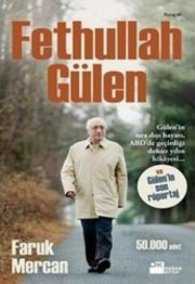
    4a1c8621ae505_4a1bcd888aad9_buch_fethullah_faruk_mercan2Reformer or Islamist? Researchers says that Gülen’s interpretation of Islam is closer to the conservative mainstream than anything else | Commentators like Yusuf Kanli are asking whether the Fethullahcilar even intend to revive the caliphate, slowly, step by step, using methods of secret indoctrination via schools, universities and the media.

    But it is not only in Turkey that people are raising the alarm; there have also been warnings from overseas. Michael Rubin, formerly of the Pentagon and now working for the Neo-Con American Enterprise Institute, has compared Gülen, who is currently living in exile in the United States, with another famous Muslim preacher, the deceased Ayatollah Khomeini of Iran.

    “Istanbul in 2008 could end up like Teheran in 1979,” says Rubin ominously. In view of the fact that, in his opinion, “never before has the secular order in Turkey been in such a precarious position,” Rubin also cautions against allowing the Turkish cleric to return home.

    Is Fethullah Gülen really a fundamentalist in disguise? If outward appearances are to be believed, it would appear not: he wears neither a turban nor a bushy beard and looks rather like a wistful grandfather. But could it be that he is a master of the Taqiyya, the Islamic concept that allows believers to conceal their true faith under certain circumstances? Or is he really a voice of reason, one of the most progressive Muslims of our time, as his followers claim?

    Up until recently, the founder of the largest Islamic movement in Turkey was only known to his compatriots and a handful of Islamic experts abroad. Then the American magazine Foreign Policy and the British magazine Prospect published the results of a poll in which readers were asked to name the 100 most important intellectuals in the world. Fethullah Gülen topped the poll.

    It was an unexpected result: a Muslim scholar, an Oriental, was able to overtake the West’s intellectual giants, leading thinkers such as Noam Chomsky, Al Gore, Umberto Eco and (an also-ran in this poll) Jürgen Habermas!

    An “avalanche of voters”

    This surprise result is easy to explain. Most of the votes cast (over 500,000) were submitted shortly after the daily newspaper Zaman, which is associated with Gülen, called on its readers to vote for him. Foreign Policy wrote that while it had not expected such an “avalanche of voters”, the result revealed something “quite unique” about the “influence of the men and women we selected for the survey”.

    | Bild:
    4a1c83a4c72d4_4a1bc9ec86cb3_fethullah_guelen_papst_paul_21Travelling the world on an interreligious mission for his network: Fethullah Gülen during his audience with Pope John Paul II | For its part, Prospect quickly published an article about the winner entitled “A modern Ottoman” in which it wrote that the winner of the poll was “the modern face of the Sufi Ottoman tradition.”

    The phenomenon that is Fethullah Gülen began in Korucuk, a remote village in eastern Anatolia. The village is home to just under 600 people; the houses are made of clay and straw. Life is simple; prospects are bleak. In 1941 (according to some sources, in 1938), a son was born to the village imam, Ramiz Gülen.

    The young Fethullah was eager to learn. Legend has it that he began to learn the Koran by heart at the age of five. By the age of ten he had completed his task, learned to speak fluent Arabic, and had familiarised himself with the teachings of the most important Muslim scholars. Just under four years later, he preached for the first time.

    He began to learn “the correct reading of the Koran” from senior clerics and to study “Rislae-i Nur”, the writings of the Muslim mystic Said Nursi.

    Inspired by Nursi’s writings, which would provide him with the logical and scientific foundation for his views on how to face the challenges of the modern era, Gülen began to take a critical look at orthodox Muslim law. He soon began adopting his own stance.

    Although he considers the Islamic principles as revealed in the Koran to be unalterable, he is convinced that these principles must be adapted and reinterpreted in the light of the times we live in. The state order should be accepted as the framework for the individual’s actions; modern science provides the means of rationally understanding God through the study of his creation.

    Itinerant preacher on the path to spirituality

    Gülen soon began moving around the country as a state-approved itinerant preacher. In an era rocked by political unrest and military coups, he called for peace and dialogue and condemned violence and terrorism, quoting the great masters of Islamic mysticism, Muhyiddin-i Ibn Arabi and Mevlana Celaleddin Rumi, who showed the “path to true enlightenment through spirituality and love”.

    While preaching, Gülen often burst into tears, weeping for minutes at a time, a feature that would become a future trademark of the “Hocaefendi” (venerable teacher), as he is now called by his followers.

    The charismatic preacher, whose following grew steadily, called for involvement instead of retreat. Society, says Gülen, can only be changed by the individuals in it, and the key to change is education. Gülen’s motto: build new schools instead of new mosques!

    For Gülen, whose advice by this time had taken on distinctly protestant overtones, work is also a key virtue. “For endurance and patience, we are rewarded with success; the punishment for lethargy is penury,” wrote Gülen in his book Essentials of the Islamic Faith.

    | Bild:

    4a1c89b378a34_4a1bcf452b8bc_verlagshaus_zaman41The building where the daily newspaper Zaman is published in Istanbul: the fact that Gülen’s movement has also established political and economic associations and has built up a media empire has generated a feeling of mistrust | In the years that followed, the number of Gülen supporters from Anatolia’s emerging middle class rocketed: the link between serving God and earning money appealed to what the European Scientific Institute, ESI, referred to as Turkey’s “Islamic Calvinists”.

    But the man from Korucuk also preaches about the reprehensible nature of atheism and Darwin’s theory of evolution, which he roundly rejects. Moreover, his texts do not deny the existence of angels and demons.

    According to Bekim Agai, an expert in Islamic studies, these attitudes alone mean that Gülen could never don the mantle of the “Muslim reformer” so eagerly awaited by the West. Nor, says Agai, does Gülen stand for his own or any revolutionary new theology. On the contrary, his interpretation of Islam is closer to the conservative mainstream.

    Cemal Usak, one of Gülen’s close advisors and the vice president of the Istanbul-based Journalists and Writers Foundation, acknowledges that Gülen is not a theological reformer. “But he is a democrat and a great humanist, and that is what matters.”

    Gülen’s educational mission

    Countless private, state-recognised educational establishments, schools, universities, residences, and institutes of tuition were set up in the 1980s and 1990s after Gülen finished working as a state preacher.

    He then focussed his efforts on the movement that bears his name. His standing with the people grew as the social activities of his sponsors filled a gap that the Turkish state either could not or would not fill: the standard of education in provincial Turkey and in the suburbs of the country’s major cities is catastrophic.

    The fact that the movement also established political and economic associations gave rise to mistrust. Not only that, but a media empire comprising publishing houses, magazines, a television channel and the second largest daily newspaper in Turkey, Zaman (Time) also emerged.

    By the end of the 1980s at the very latest, Gülen had become a public figure. When he preached in Istanbul’s famous Sultanahmet Mosque – “at the request of the people”, as he himself says – people like the former prime minister Süleyman Demirel and his foreign minister, Ihsan Sabri Çaglayangil, came to hear him speak. Even Turgut Özal, one time prime minister and later president, maintains contact with the preacher.

    Nevertheless, having clashed with the law on a number of occasions, Gülen soon found out that having friends in high places in the world of politics does not always guarantee immunity. In most cases, he was arrested on charges of “antisecular activities” and released a short time later.

    In 1994 he founded the Journalists and Writers Foundation, of which he would later become honorary president. At this stage, he began giving regular interviews to all important newspapers and meeting members of the country’s political elite, including the politician Tansu Çiller, with whom he opened Bank Asya in 1996.

    While travelling abroad he was granted an audience with Pope John Paul II and met John O’Connor, archbishop of New York. His network continued to grow: schools and universities were founded in the countries of the former Soviet Union, the Turkic states of Central Asia, Europe and the USA. No-one, even the Fethullahcilar themselves, are able to say exactly how many have been opened.

    Hidden agenda?

    “How could they?” asks an exasperated Zaman journalist Selçuk Gütasli, who cannot understand the fuss surrounding the movement to which he belongs. “We are not an organisation that you can join as a member. We are a community of people who are all pursuing roughly the same objective!”

    | Bild:
    4a1ea978da64b_rumi_wikipedia_commonsEarly 16th century miniature painting with a poem by Sufi mystic Rumi: According to Gülen, the great masters of Islamic mysticism showed the “path to true enlightenment through spirituality and love” | This, he continues, is why Necla Kelek, a German critic of Gülen, is so wrong when she describes the movement as a “non-transparent Islamist sect with a corporation structure”. “Anybody who accuses us of having a hidden agenda, is welcome to come and quiz us. We have nothing to hide,” says Gütasli.

    The main sponsors of the network’s charitable projects, including Gülen himself, are listed on a website of the aid organisation “Kimse Yok Mu” (Is no-one there?). Moreover, the fact that the majority of the 16 shareholders in Bank Asya, which gives interest-free credit to the country’s most important entrepreneurs in line with Islamic principles, are closely associated with the Gülen network, is available for all to read on Gülen’s own website.

    The followers of the “Hocaefendi” invoke an organisational structure that dates back to the Ottoman Middle Ages, namely that of the religious Sufi brotherhoods.

    Without ever gaining the status of a legal body, the orders continued to exist under the Kemalist system. Fethullah Gülen entered the Nurcu, the order of the mystic Said Nursi that distanced itself from radical Islam at an early stage. Gülen welcomed the toppling of the former Prime Minister and fundamentalist Necmettin Erbakan in 1997. He recommended that Turkey should look to Europe and not to Iran or Saudi Arabia.

    In March 1999, the preacher paid a surprise visit to the USA. A short time later, a Turkish television channel broadcast a speech by Gülen that had obviously been secretly filmed. In the recording, Gülen is heard calling on his supporters to “work patiently and to creep silently into the institutions in order to seize power in the state”.

    The public prosecutor in Istanbul promptly demanded a ten-year sentence for Gülen for having “founded an organisation that sought to destroy the secular apparatus of state and establish a theocratic state”.

    Gülen claimed that the recording had been “manipulated”; his supporters claimed that a smear campaign was being waged against him. Nine years later, in June 2008, he was acquitted on all counts. However, he remains in exile in Pennsylvania – “for health reasons” by his own account.

    His friends claim that they do not know when the hodja will return, but they hope it will be soon. “If I cannot see him, I will weep like a child; it would be as if I was prevented from seeing my beloved,” says Ihsan Kalkavan of Bank Asya.

    A renowned media entrepreneur, on the other hand, hopes that Gülen will stay away for a long time to come. “He won’t come back like Khomeini, but he will continue the Islamicization of Turkey,” says the entrepreneur, who intends to fight to ensure that his daughter and her boyfriend “will be able to go on holding hands on the street in the future.”

    Irrational fears or a reliable instinct? Overcoming the mistrust of his opponents is likely to be the most important task Gülen will face for the rest of his life.

    Daniel Steinvorth

    © New York Times Syndicate / Qantara.de 2009

    The author is Turkey correspondent for the German news magazine DER SPIEGEL.

    Letter to the EditorAdd a comment Qantara.de

    Portrait of Fethullah Gülen
    A Modern Turkish-Islamic Reformist
    Fethullah Gülen, founder of a worldwide Islamic education movement, regards morality and education as the engine for a contemporary Islam that is compatible with laicism. By Bekim Agai

    Interview with the Political Scientist Cemal Karakas
    “A Ban on the AKP Would Be a Setback for Democracy”
    Turkey is veering towards a full-scale domestic political crisis. The German-Turkish political scientist Cemal Karakas from the Peace Research Institute Frankfurt (PRIF) fears a provisional end to the reform process if the governing AKP is banned. An interview by Dogan Michael Ulusoy

    Islam and Democracy in Turkey
    Squaring the Circle
    Ioannis N. Grigoriadis takes a closer look at the AKP and its drive to democratise the Turkish Republic and bring it into the European Union. He concludes that the Turkish Constitutional Court’s decision not to disband the ruling party prevented serious damage being caused to efforts to reconcile democracy and Islam
  • THE GALLIPOLI – Straits of Disaster

    THE GALLIPOLI – Straits of Disaster

    How a British gambit in World War I turned into a battlefield fiasco

    By ROBERT MESSENGER

    On Feb. 19, 1915, ­British warships attempted to force the heavy Turkish defenses of the ­Dardanelles, the entrance to the straits in northern Turkey that are the key link between the Mediterranean and the Black Sea. The British struck in search of an indirect approach to victory. World War I was in stalemate, the two sides locked into trench warfare in northern France. The hope was that a battle fleet appearing off ­Istanbul would compel ­Turkey’s capitulation, secure a supply route to hard-pressed Russia, and inspire the Balkan states to join the Allied war effort and eventually to attack Austro-Hungary, thereby ­pressuring Germany.

    The British government gave much consideration to the eventual division of the Ottoman lands once the straits were captured but very little to how the operation might ­actually be executed. The ­amateurish preparation and the resulting fiasco are ­recounted with sharp, taut precision in “Gallipoli: The End of the Myth,” Robin Prior’s near-definitive analysis of the campaign.

    View Full Image

    Getty Images

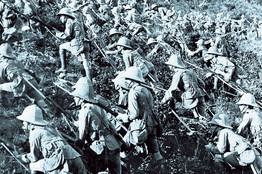
    British troops advance at Gallipoli, Aug. 6, 1915.

    The assumption that Britain would simply sweep to victory over second-rate Turkey was just the first of many errors of judgment. At each stumble, when a logical examination of the campaign would have had only one possible conclusion-withdrawal-Britain’s leaders doubled down, eventually committing a half-million troops to the Gallipoli ­Peninsula in a sequence of bloody landings and operations.

    The initial landing at Cape Helles set the tone for the eight months of fighting: a landing that was supposed to be only lightly opposed turned into an abattoir. A captain in one of the first regiments to land wrote in his diary: “Off we went the men cheering and dashed ashore with Z Company. We got it like anything, man after man behind me was shot down but they never wavered. Lieut. Watts who was wounded in five places and lying on the gangway cheered the men with cries of ‘follow the captain.’ Captain French of the Dublins told me afterwards that he counted the first 48 men to follow me, and they all fell.”

    By the time all the Allied troops were finally evacuated on Jan. 9, 1916, they had suffered 130,000 battlefield casualties, with probably twice that number invalided because of diseases such as dysentery and typhoid. For an attack conceived as a way of reducing the carnage in northern France, it doubly failed.

    The historians took to the fields of Gallipoli almost the moment the soldiers left them. The poet and essayist John Masefield had piloted a naval ambulance during the campaign, and his “Gallipoli”-which originated as a series of lectures for the American market-became a best seller in 1916. Masefield romanticized the slaughter, drawing parallels between the khaki-clad troops and the epic heroes who fought on the Asiatic coast of the Dardanelles, before a city called Troy.

    Later in 1916 came C.E.W. Bean’s “Anzac Book,” an anthology of poems, stories and drawings by the soldiers of the Australia and New Zealand Army Corps (ANZAC)-“Practically every word in it was written and every line drawn beneath the shelter of a waterproof sheet or of a roof of sandbags.” Bean, who had won a lottery to be the official Australian newspaperman with ANZAC, would become a chief mythmaker of the campaign. Appointed official historian of Australia’s experience in World War I, he wrote six of the 14 volumes whose publication he would oversee, including the first two volumes, on Gallipoli.

    Bean propounded the idea that the colonial troops were stoic and tough and led to the slaughter by bumbling, effete Brits. He ended his history with the declaration that “it was on the 25th of April, 1915, that the consciousness of Australian nationhood was born.” April 25, the date of the first landings at Gallipoli, became Australia’s national day of ­remembrance, and the legend of Ginger Mick, shipped across the world to be slaughtered on Turkish beaches because of old men’s folly, is still widely known.

    The biggest bumbler in ­popular perception was Winston Churchill. As First Lord of the Admiralty, he was the ­father of the Dardanelles ­attack and bore the brunt of the blame. The bloody disaster shattered his glittering political career. For close to a decade his speeches were interrupted by cries of “What about Gallipoli?”

    In 1922, Churchill began a memoir to defend his wartime decisions. (That the book evolved into a six-volume ­general history of World War I called “The World Crisis” is all too indicative of the man.) The defense of the Gallipoli campaign is at the heart of the narrative. It is a sequence of almosts and if onlys.

    Churchill presents the strategic conception in the rosiest of hues, and the execution, especially the performance of Britain’s minister for war, Herbert Kitchener, in the grayest. “The World Crisis” depicts Gallipoli as a noble failure, an effort that would have saved innumerable lives on the Western Front had it been undertaken with tactical competence.

    For Churchill, it was “a long chain of missed chances,” missed because the government delayed the attacks repeatedly-allowing defensive buildups by the Turks at all the critical points-and failed to respond to setbacks promptly, with sufficient troops and ammunition. “It was not through want of judgment that they failed, but through want of will-power,” Churchill wrote. “In such times the kingdom of heaven can only be taken by storm.” (He also called the government’s failure to persevere a “crime.”) Churchill’s interpretation was seconded a few years later by the British official history of the campaign. Its author, Cecil Aspinall Oglander, had been a senior staff officer during the fighting and had a strong desire to ­defend conduct he held much responsibility for.

    “The Royal Navy had ruled supreme since Trafalgar. In the early years of the twentieth century its position had been tested by the rapid growth of the German fleet. But at the outbreak of war the Royal Navy was still dominant. ” Read an excerpt from ‘Gallipoli: The End of the Myth’

    Interest revived a generation later with Alan Moorehead’s 1956 best seller, “Gallipoli.” A popular war correspondent, Moorehead made a gripping narrative of the fighting. He emphasized “turning points” squandered by the local commanders and defended the Churchillian line that Gallipoli could have shortened the war by years. Moorehead relied on already published accounts. His book was “superb literature,” as Robert Rhodes James put it, “but doubtful history.” Disagreement with Moorehead’s conclusions-especially his acceptance of the claim that the campaign could have affected the outcome of the war against Germany-sent Rhodes James into the archives, and his “Gallipoli” (1965) was the first scholarly evaluation of the campaign.

    He demonstrated that ­Gallipoli’s “errors in execution stemmed directly from the fundamental fallacies in the original conception.” It was a devastating appraisal of the self-justifying writings that had dominated the literature for nearly half a century. While Rhodes James noted Churchill’s mistakes, he also stressed Churchill’s essential good faith in pursuing the Gallipoli ­operation and showed that blame should have been apportioned throughout the highest quarters of the British government. In his new history, Robin Prior takes this line to its reasoned end.

    For any operation to have succeeded at capturing the Dardanelles and allowing free access to the Black Sea, Mr. Prior argues, would have required immense operational preparations and the element of surprise. The one was always likely to negate the other-as was repeatedly proved on numerous fronts between 1914 and 1918. Mr. Prior shows that, from the moment of its consideration by the British war cabinet, the Gallipoli operation was managed in a lackadaisical manner by leaders uninterested in the realities of modern war. Where Churchill and Aspinall in their histories passed the buck down the chain of command, blaming local commanders for failing to achieve tactical successes during the battles on the Gallipoli peninsula, Mr. Prior kicks it up, right to the top of Prime Minister H.H. Asquith’s government.

    Details

    Gallipoli
    By Robin Prior
    Yale, 288 pages, $45

    Step-by-step, Mr. Prior ­examines the campaign and demolishes each layer of myth. The Straits would not, in fact, have fallen to the British navy if only the admirals had acted with more resolve, he shows, because the admirals had no ability to deal with the Turkish minefields, even if they had miraculously managed to put the Turkish guns out of action. The landings could not have secured a passage into the Black Sea, we learn, because the terrain of the peninsula was a sequence of endlessly defensible ridges that would have required the whole of the British army to seize. Far from Turkey’s collapsing if the Allies had seized the Dardanelles, Turkey could simply have fought on, Mr. Prior says. Istanbul had adequate defenses against naval attack, and it is impossible to imagine the British bombarding a city full of civilians in hopes of encouraging a change of government. And Mr. Prior convincingly argues that the battles of Sari Bair and Suvla Bay did not, as so many historians have claimed, nearly salvage the British effort. In neither case were the objectives of decisive value; even if they had been, the British lacked the reserves with which to exploit success.

    What becomes clear, too, is the absurdity of the belief that warring at Gallipoli could affect the ability of the Germans to war in northern France. “Despite the bravery of the troops who fought there, the campaign was fought in vain,” Mr. Prior concludes. “It did not shorten the war by a single day, nor in reality did it ever offer that prospect. . . . The downfall of Turkey was of no relevance to the deadly contest being played out of the Western Front.”

    The battle for the soul of Gallipoli has raged on too long. “Gallipoli: The End of the Myth” is a decisive end to ­debate. It may not be the very last word, as Mr. Prior himself is involved in a long-term ­project to discover what the Ottoman archives hold. But it is military history of the ­highest order.

    -Mr. Messenger is a senior editor at the Weekly Standard.