Tag: Armenians in Turkey

  • AMERICAN BOYZ N THE HOOD

    AMERICAN BOYZ N THE HOOD

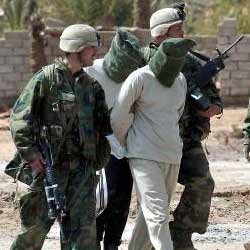
    Turkish Soldiers Hooded by America Sulaymaniyah, Iraq. 4 July 2003
    Turkish Soldiers Hooded by America
    Sulaymaniyah, Iraq. 4 July 2003


    Istanbul: 13 November 2014

    Yesterday, three sailors from the uncontrollably violent neighborhood called America met the true face of Turkey. Poor boys, they don’t even know what they represent. They don’t even know that their so-called leaders have made them punching bags for its criminal enterprise called American imperialism. They don’t even know how America and its treasonous internal agents, in particular the Turkish government, are attempting to destroy the future of the Turkish youth.

    Perhaps these American boys got a quick lesson in the true nature of Turkish-American relations yesterday? But, sadly, probably not. The American boys ran back to the false safety of their warship, re-entering their “safe” world of imperialist propaganda, economic excess and hypocrisy. But there is no safety anywhere any longer. That is the gift of America to Turkey, and to the world. As usual, America authorities and its treacherous collaborating Turkish puppets screamed in outrage. And, as usual, the youth of Turkey, the true defenders of the Republic of Turkey, went to jail for exercising their patriotic duty. Nothing has changed, except one thing. Turkish young people, the nation’s true patriotic voice, will not take American crap anymore. And America should understand that. Listen and learn, America. You owe it to your own youth. Think of it this way, think of it as a symbol.

    That’s the way the resident American-imposed agent of destruction, Recep Tayyip Erdoğan, thought about his hooding of Turkish women into a grotesque series of Middle Age costumes that squeeze feminine brains into numb submission. So what, declared the then prime minister, if the head scarf is a political symbol? So what, indeed! Erdoğan used his compliant covered women to destroy democracy in his own country. He and his collaborators hid behind their women’s headscarves to do America’s dirty work. And now they cannot safely visit any neighborhood in their own land. No “hood” is safe for the hoodlums. And now the new president hides in a billion-dollar illegal palace, his inadvertent monument to treason. So what if he and his ilk cannot appear in public! So what!

    So what if in 1980 the American president celebrated the success of his CIA-engineered military coup by proclaiming “Our boys did it!” Yes, then his gangster BOYZ did it. And yesterday, today’s Turkish youth remembered. And yesterday, our Turkish boys did it to America, symbolically, of course, because Turkish youth is civilized. They can be no other way; they are the current-day “soldiers of Mustafa Kemal Ataturk.” This is something that the treacherous opposition political polities can neither say nor understand. Yes, Turkish young people are civilized and enlightened by the patriotic principles of Mustafa Kemal Ataturk. That’s why, yesterday, no one, neither American boy nor Turkish boy was hurt. No one was tortured. No one was hung. No one was shot, exploded, beaten, gassed, or otherwise maimed. And that’s a lot more than America can ever say about their overt and covert interventions in Turkey’s affairs.

    So what if America and its craven ambassador, Francis Ricciardone, aided and abetted the Turkish government in its beating, gassing, maiming and murdering of democratically assembled Gezi Park protestors. “The Turkish government is having a conversation with its people,” said the deceitful ambassador, as he arranged to have more poisonous gas sold to Erdoğan and his hoodlum police. A “conversation?” So what!

    So what if the same ambassador conspired with the main opposition party leader to assure the election of Recep Tayyip Erdoğan to the presidency!

    So what if yesterday the American boys’ heads momentarily felt the experience of being symbolically hooded! Symbolically hooded, not actually hung like so many patriotic Turkish young people have been. And by their own government! The Turkish people have been strangled and hooded by America, by its CIA meddlers and by its corrupt politicians for decades. And in the past decade of Erdoğan’s treacherous rule, America’s CIA “boys” have done it again. Or tried to.

    So what if America has used its youth to kill hundreds of thousands of Iraqis in its deceitful, illegal war of aggression!

    So what if America has humiliated the Turkish military by hooding its soldiers in Iraq in July 2003!

    So what if America has conspired with Turkey, Saudi Arabia, Qatar and Jordan to kill hundreds of thousands of Syrians in its deceitful pretext of bringing democracy!

    So what if America has supported the treasonous, under-educated, Islamic zealot, CIA-asset, Fethullah Gulen for decades in the Pennsylvania countryside!

    So what if Gulen and Erdoğan have collaborated for decades in treacherous union to do America’s bidding in the subversion of the Turkish Republic! So what if the Turkish Army has been destroyed! So what if the independence of the Turkish judiciary has collapsed! So what if rivers have been stopped, farmers’ fields uprooted, forests felled, eternal olive trees murdered, lakes polluted, mountains plundered, the air made poisonous, all in pursuit of private profit, all indicative of massive governmental corruption! So what if the government has looted public funds! So what if the Turkish mass media slithers like a reptile on its overstuffed belly doing the bidding of its governmental master! So what if Turkey stinks from America’s subversion like a rotting corpse in the noonday sun!

    Yes, SO WHAT?

    Yesterday, clearly, directly, in a street-theater performance, Turkish “boyz” encountered American “boyz” in the Turkish “hood.” The US embassy in Turkey called the incident “appalling.” What is appalling is the embassy’s ignorance and arrogance. What is appalling is the criminal behavior of its criminal boss, the president of the United States. It is he and Erdoğan and all their co-conspirators, all the ones who need protection by regiments of armed-to-the-teeth goons, who deserve to be hooded. And now they can never step foot in our hood, ever again. Not ever! That’s the message from yesterday. Take your warships and your political puppets and go!

    James C. Ryan

    Istanbul

    13 November 2014
  • Armenian architect building bridges between religions

    Armenian architect building bridges between religions

    Kevork Özkaragöz, an Armenian architect who has designed many religious monuments for different religions, refers to the opinions of the religious communities when developing his projects.

    A member of an Armenian family renowned for their stonemasonry, Özkaragöz moved from Malatya to Istanbul with his family when he was 6 years old.

    The structures built by Özkaragöz in recent years include Mahmut Şevket Paşa Hacı Bektaş Cemevi (an Alevi house of worship) in Istanbul’s Okmeydanı district, Plevne Mosque in Balıkesir’s Gönen district and the final prayer chapel in his hometown, Malatya, the Hurriyet Daily News reports.

    Last year, the final prayer chapel – in a historical Armenian cemetery in Malatya – was demolished by municipal teams, which stirred a lot of debate in society. Due to the objections, the chapel was rebuilt on the grounds that the teams had “misunderstood the order.”

    “While designing the Cemevi, I obtained the opinions of elderly persons in the Alevi community. I obtained data on Alevi culture and beliefs from studies published on the subject. And when designing the mosque, I tried to get to know the functions of a mosque by chatting with imams. I especially observed Istanbul’s mosques from the perspective of a designer. I refreshed my knowledge of mosques by examining mosques’ stages of development in art history books. I also examined Vedat Dalokay Islamabad Mosque and Behruz Çinici TCMM mosque, which were built in the Republican period,” he said.

    “Existence, oneness and love of God form the basis of religions, while they center upon human beings. I believe each faith has a different form of worship and different needs. I can develop my designs by taking all these [differences] into account with the aid of my cultural background. I am very pleased when a religious structure comes into being and people can worship in them,” Özkaragöz said.

    via Armenian architect building bridges between religions | Public Radio of Armenia.

  • New Armenian newspaper to be launched in Istanbul

    New Armenian newspaper to be launched in Istanbul

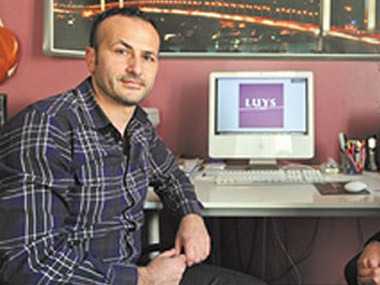
    g_imageNew Armenian biweekly, Luys, will be launched in Istanbul, Turkish newspaper Taraf reports. Newspaper’s editor-in-chief Sahnur Kazanci told Taraf’s correspondent that the newspaper will cover the events that occur in the Armenian, Greek, Jewish and Assyrian communities of Turkey.

    “We, Armenians, have long been living side by side with Assyrians and Greeks. Significant events occur in our lives such as birthdays, engagements, christenings. These are the happy moments of life. So why not to cover them?” said the editor.

    The newspaper will consist of 28 pages. Only one page will be in Armenian. The editor added that the name of the biweekly – Luys (“light”) – symbolizes a positive direction.

    via ankawa.com » Blog Archive » New Armenian newspaper to be launched in Istanbul.

  • Turkey’s ‘Hidden’ Armenians keen to regain lost identity

    Turkey’s ‘Hidden’ Armenians keen to regain lost identity

    Posted on 1 week ago

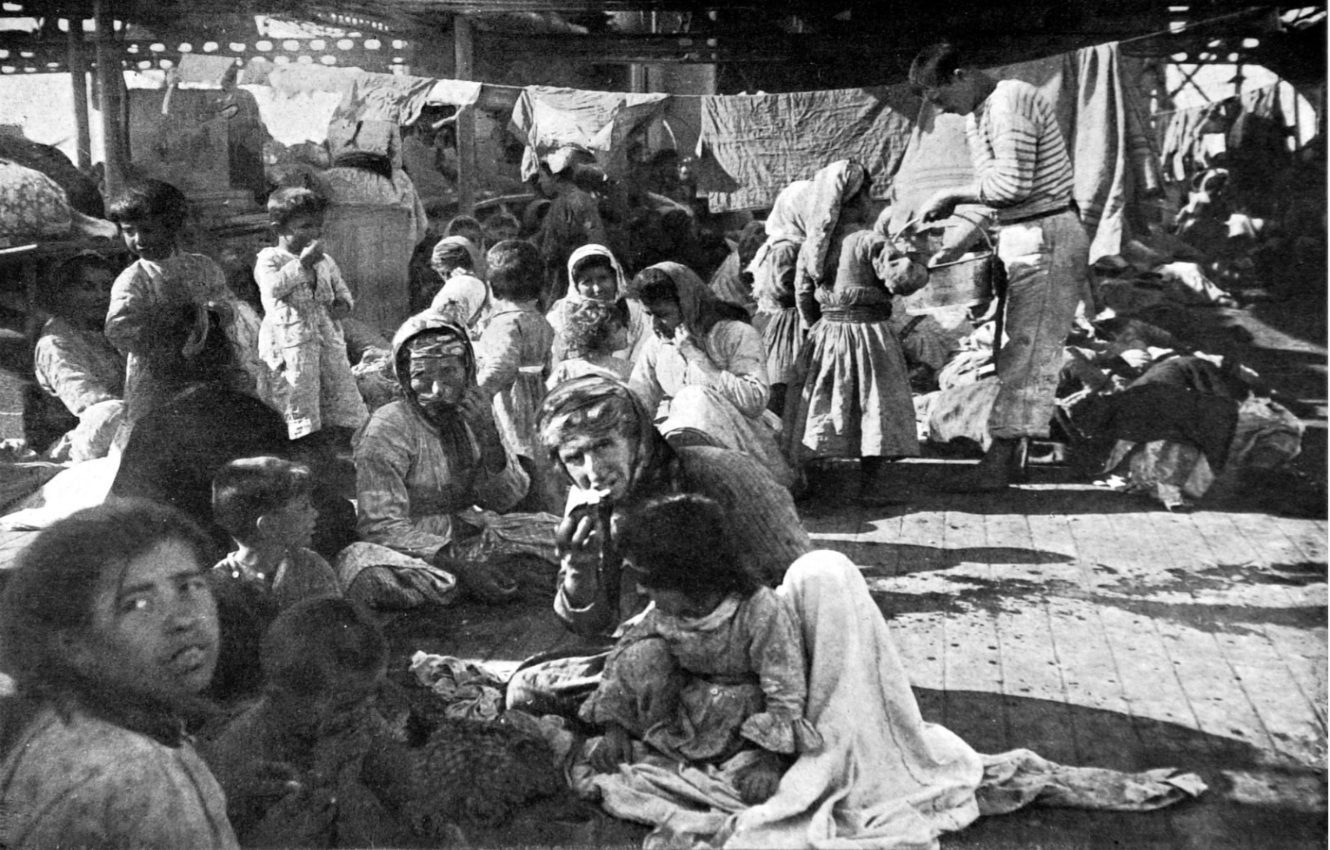
    TUNCELI Turkey (AFP) – They dropped their language and religion to survive after the 1915 genocide, but close to 100 years on Turkey s “hidden Armenians” want to take pride in their identity.

    Some genocide survivors adopted Islam and blended in with the Kurds in eastern Turkey s Dersim mountains to avoid further persecution.

    Several generations down the road, the town of Tunceli hosted a landmark ceremony Wednesday for Genocide Remembrance Day, something which has only ever happened in Istanbul and the large city of Diyarbakir.

    The massacre and deportation of Ottoman Armenians during World War I, which Armenians claim left around 1.5 million dead, is described by many countries as genocide although Ankara continues to reject the term.

    Speaking in front of the ruins of the Ergen church — one of the few remnants of Christian Armenian heritage in the region — Miran Pirginc Gultekin, president of the Dersim Armenian Association, explained it was still rare to declare oneself openly as Armenian in Turkey.

    “We decided that we had to get back to our true nature, that this way of living was not satisfactory, that it was not fair to live with another s identity and another s faith,” he said.

    Despite converting to Alevism, a heterodox sect of Islam, and taking Turkish names, the ethnic Armenians who stayed on their ancestral land suffered from continued discrimination and the elders often struggle to summon their memories.

    “My mother told me how her family was deported. She was a baby at the time and her mother considered drowning her in despair,” said Tahire Aslanpencesi, a sprightly octogenarian from the village Danaburan.

    “My mother used to say all the misery that came after would have been avoided had her mother drowned her,” she recalled.

    After converting to Islam, many of the so-called “crypto-Armenians” said they still faced unfair treatment: their land was often confiscated, the men were humiliated with “circumcision checks” in the army and some were tortured.

    Hidir Boztas grandfather converted to Islam, gave his son a Turkish name and the clan intermarried with a Kurdish community in the village of Alanyazi.

    “We feel Armenian nonetheless and in any case the others always remind us of where we come from. No matter how many of their daughters we marry, and how many of ours we give them, they will continue to call us Armenians,” he said.

    The Armenian community shared the Kurds suffering when the regime cracked down on Kurdish rebellions, from the 1938 revolt to the insurrection started by the PKK group in 1984.

    For a long time, only those who had left the ancestral homestead dared to make their Armenian roots known.

    “Armenians in Istanbul are in a big city, they have their neighbourhoods, their churches, nobody can do anything to them. But in these villages, there s rejection and insults,” said Hidir Boztas, 86.

    Human rights campaigners gathered Wednesday in downtown Istanbul carrying portraits of genocide victims.

    They were only a handful but they argued that the simple fact that such an event was authorised and groups such as theirs invited proved that attitudes were changing.

    “Ten years ago, such an event was impossible in Turkey,” said Benjamin Abtan,” a European activist.

    One of Hidir s nephews, 42-year-old Mustafa, a businessman, is one of a growing number of Muslim Armenians who want to be proud of their identity.

    Mustafa has decided to name his construction firm Bedros after Hidir s grandfather, who was deported during the genocide.

    “It symbolised my past. My great-grandfather was called Bedros, and I wanted his name to live on. I am against radicalism, and I don t do this through racism or religious extremism, but I don t deny my origins — everyone knows them.”

    He said he hoped the unprecedented ceremony in Tunceli Wednesday would encourage more members of the community to come out in the open.

    “The aim is to allow people to assert their identity more freely and also to generate more interest for the little Christian heritage left in the region,” said Miran Pirginc Gultekin.

    His society was created three years ago and has around 80 members.

  • Turkey’s Muslim Armenians come out of hiding

    Turkey’s Muslim Armenians come out of hiding

    TUNCELI, TURKEY – They dropped their language and religion to survive after the 1915 genocide, but close to 100 years later, Turkey’s “hidden Armenians” want to take pride in their identity.

    Some genocide survivors adopted Islam and blended in with the Kurds in eastern Turkey’s Dersim Mountains to avoid further persecution.

    Several generations down the road, the town of Tunceli hosted a landmark ceremony Wednesday for Genocide Remembrance Day, something that has only ever happened in Istanbul and the large city of Diyarbakir.

    The massacre and deportation of Ottoman Armenians during World War I, which Armenians claim left around 1.5 million dead, is described by many countries as genocide, though the Turkish government continues to reject the term.

    Speaking in front of the ruins of Ergen church — one of the few remnants of Christian Armenian heritage in the region — Miran Pirginc Gultekin, president of the Dersim Armenian Association, explained it is still rare to declare oneself openly as Armenian in Turkey.

    “We decided that we had to get back to our true nature, that this way of living was not satisfactory, that it was not fair to live with another’s identity and another’s faith,” he said.

    Despite converting to Alevism, a heterodox sect of Islam, and taking Turkish names, the ethnic Armenians who stayed on their ancestral land suffered from continued discrimination and the elders often struggle to summon their memories.

    “My mother told me how her family was deported. She was a baby at the time and her mother considered drowning her in despair,” said Tahire Aslanpencesi, an octogenarian from the village of Danaburan. “My mother used to say all the misery that came after would have been avoided had her mother drowned her.”.

    After converting to Islam, many of the “crypto-Armenians” said they still face unfair treatment: Their land has been confiscated, the men humiliated with “circumcision checks” in the army and some have been tortured.

    Hidir Boztas’ grandfather converted to Islam, gave his son a Turkish name and the clan intermarried with a Kurdish community in Alanyazi. “We feel Armenian nonetheless and in any case the others always remind us of where we come from. No matter how many of their daughters we marry, and how many of ours we give them, they will continue to call us Armenians,” he said.

    The Armenian community shared the Kurds’ suffering when the regime cracked down on Kurdish rebellions, from the 1938 revolt to the insurrection started by the PKK group in 1984.

    For a long time, only those who had left the ancestral homestead dared to make their Armenian roots known.

    Human rights campaigners gathered Wednesday in downtown Istanbul carrying portraits of genocide victims.

    They were only a handful, but they argued that the simple fact that such an event was authorized and groups such as theirs invited proved that attitudes were changing. “Ten years ago, such an event was impossible in Turkey,” said Benjamin Abtan,” a European activist.

    via Turkey’s Muslim Armenians come out of hiding – The Japan Times.

  • AFP: Turkey’s Muslim Armenians come out of hiding

    AFP: Turkey’s Muslim Armenians come out of hiding

    By Nicolas Cheviron (AFP) – 1 day ago

    TUNCELI, Turkey — They dropped their language and religion to survive after the 1915 genocide, but close to 100 years on Turkey’s “hidden Armenians” want to take pride in their identity.

    Some genocide survivors adopted Islam and blended in with the Kurds in eastern Turkey’s Dersim mountains to avoid further persecution.

    Several generations down the road, the town of Tunceli hosted a landmark ceremony Wednesday for Genocide Remembrance Day, something which has only ever happened in Istanbul and the large city of Diyarbakir.

    The massacre and deportation of Ottoman Armenians during World War I, which Armenians claim left around 1.5 million dead, is described by many countries as genocide although Ankara continues to reject the term.

    Speaking in front of the ruins of the Ergen church — one of the few remnants of Christian Armenian heritage in the region — Miran Pirginc Gultekin, president of the Dersim Armenian Association, explained it was still rare to declare oneself openly as Armenian in Turkey.

    “We decided that we had to get back to our true nature, that this way of living was not satisfactory, that it was not fair to live with another’s identity and another’s faith,” he said.

    Despite converting to Alevism, a heterodox sect of Islam, and taking Turkish names, the ethnic Armenians who stayed on their ancestral land suffered from continued discrimination and the elders often struggle to summon their memories.

    “My mother told me how her family was deported. She was a baby at the time and her mother considered drowning her in despair,” said Tahire Aslanpencesi, a sprightly octogenarian from the village Danaburan.

    “My mother used to say all the misery that came after would have been avoided had her mother drowned her,” she recalled.

    After converting to Islam, many of the so-called “crypto-Armenians” said they still faced unfair treatment: their land was often confiscated, the men were humiliated with “circumcision checks” in the army and some were tortured.

    Hidir Boztas’ grandfather converted to Islam, gave his son a Turkish name and the clan intermarried with a Kurdish community in the village of Alanyazi.

    “We feel Armenian nonetheless and in any case the others always remind us of where we come from. No matter how many of their daughters we marry, and how many of ours we give them, they will continue to call us Armenians,” he said.

    The Armenian community shared the Kurds’ suffering when the regime cracked down on Kurdish rebellions, from the 1938 revolt to the insurrection started by the PKK group in 1984.

    For a long time, only those who had left the ancestral homestead dared to make their Armenian roots known.

    “Armenians in Istanbul are in a big city, they have their neighbourhoods, their churches, nobody can do anything to them. But in these villages, there’s rejection and insults,” said Hidir Boztas, 86.

    Human rights campaigners gathered Wednesday in downtown Istanbul carrying portraits of genocide victims.

    There were fewer than 200 people there but the protestors stressed such an event would have been unthinkable only a decade ago.

    One of Hidir’s nephews, 42-year-old Mustafa, a businessman, is one of a growing number of Muslim Armenians who want to be proud of their identity.

    Mustafa has decided to name his construction firm Bedros after Hidir’s grandfather, who was deported during the genocide.

    “It symbolised my past. My great-grandfather was called Bedros, and I wanted his name to live on. I am against radicalism, and I don’t do this through racism or religious extremism, but I don’t deny my origins — everyone knows them.”

    He said he hoped the unprecedented ceremony in Tunceli Wednesday would encourage more members of the community to come out in the open.

    “The aim is to allow people to assert their identity more freely and also to generate more interest for the little Christian heritage left in the region,” said Miran Pirginc Gultekin.

    His society was created three years ago and has around 80 members.

    via AFP: Turkey’s Muslim Armenians come out of hiding.