Tag: AKP

  • Ozymandias in Turkey

    Ozymandias in Turkey

    Ozymandias


    The big question in Turkey at the moment is whether Prime Minister Recep Tayyip Erdoğan will run for president in August.

    There is every indication he will. At a meeting of the Justice and Development Party’s (AK Party) Central Decision and Administration Board (MKYK), it was decided to maintain the party’s rule that a deputy should serve for a maximum of three terms, which rules out the prime minister’s leadership after the 2015 elections. Unless Erdoğan intends to twiddle his thumbs, which is unlikely, his only option is take over from President Abdullah Gül. Provided he is elected.

    At the beginning of April, Prime Minister Erdoğan indicated that the new president would not just be a protocol president but would exercise the executive powers provided to him by the Constitution. As he put it, he would be “a sweating, running, ordering president.” Article 104 of the Constitution entitles the president to preside over the Council of Ministers or to call the Council of Ministers to meet under his chairmanship, and it is undoubtedly this provision that Erdoğan intends to use since the failure of the constitutional commission to transform the presidency into an executive one.

    President Gül has ruled out a Putin-Medvedev switch, and it is believed a deputy prime minister will function as caretaker until Gül can stand for Parliament in the 2015 elections and himself become prime minister. One of the Turkish president’s duties is to defend the Constitution and, if necessary, either to return laws to the Turkish Parliament to be reconsidered or refer them to the Constitutional Court for annulment, either in part or in whole.

    This is undoubtedly why Gül has chosen to soft-pedal his presidency and sign the controversial Internet, Supreme Board of Judges and Prosecutors (HSYK) and National Intelligence Organization (MİT) laws, so as not to ruffle the feathers of his prospective supporters in the AK Party. Despite international protests, in January without demur President Gül signed a bill criminalizing emergency medical care and penalizing doctors with imprisonment for up to three years and fines of nearly $1 million.

    A total of 255 protesters are now being tried for participating in the Gezi Park demonstrations last May and June, some of whom took refuge in the Dolmabahçe mosque to escape police tear gas. Two doctors who rendered emergency aid to the victims are also being charged for “praising a criminal, insulting religious values and damaging a mosque.” As they explained, if they hadn’t helped, many people would have died or lost limbs.

    Constitutional Court

    Therefore, it must have been embarrassing for Prime Minister Erdoğan and President Gül together with other members of the AK Party government to be lectured by the president of the Constitutional Court, Haşim Kılıç, on rule of law in his speech to celebrate the 52nd anniversary of the founding of the court.

    Defining the role of the judiciary as “the conscience of the state,” Kılıç rejected the use of the judiciary as logistical support for political ideas and ideologies and for revenge against adversaries. Furthermore, he called for documentation and evidence of Erdogan’s claim of a “parallel state” and a “gang” inside the judiciary and accused the government of “corruption of conscience.”

    Kılıç likewise dismissed the claim that the Constitutional Court (in its partial annulment of the HSYK law and lifting of the Twitter ban) had acted for political purposes and against the interests of the nation as “shallow.”

    In a clear reference to the AK Party government’s attempts to limit or even ban the use of information technology, the chief judge quoted Soviet Premier Mikhail Gorbachev’s remark that in the age of globalization, one cannot issue visas to antennas.

    It is the duty of Turkey’s president to appoint members of the Constitutional Court, and if Erdoğan accedes to the presidency, what will happen is a foregone conclusion, as only 10 months remain of Haşim Kılıç’s term of office. Regulatory boards and other institutions have already been stacked with AK Party appointees, and now 110 AK Party-affiliated judges with no previous experience have been appointed to high criminal courts.

    Corruption

    After an unruly debate in Parliament, an AK Party-dominated commission has been established to investigate charges of corruption against four ex-ministers, which will undoubtedly lead to their acquittal. In the meantime, a newly appointed İstanbul public prosecutor has dismissed charges concerning illegal construction permits against 60 suspects, including the son of the former environment and urban planning minister and a construction tycoon.

    At the recent Financial Times Turkey Summit 2014 in İstanbul, Finance Minister Mehmet Şimşek defended the AK Party government’s purge of several thousand police officers, hundreds of public prosecutors and judges as well as senior functionaries as “extraordinary measures” to deal with what the prime minister has called “a judicial coup.” However, he assured participants that the government’s source of inspiration was still the EU in terms of cementing the rule of law and advancing towards a better democracy. “This is our fundamental point of reference.”

    This is at odds with the contention of Prime Minister Erdoğan’s economic adviser, Yiğit Bulut, who said that “we no longer need Europe and its material and moral affiliates which may become a burden on us.” Bulut is believed to have convinced Erdoğan to delay raising interest rates to defend the lira, and last summer he claimed that dark forces were plotting to kill the prime minister with telekinesis.

    The EU’s enlargement commissioner, Stefan Füle, has admitted that events in the last few months have cast doubt on Turkey’s commitment to European values and standards. Germany’s president, Joachim Gauck, has openly declared that “the current developments in Turkey horrify me,” and Jean-Claude Juncker, who is running for president of the European Commission, has called for an “enlargement pause.”

    Şimşek has admitted that Turkey is corrupt, although he said there has been progress in the last decade. But at a meeting of the World Forum on Governance in Prague, President of the Italian Senate and former anti-Mafia prosecutor Pietro Grasso remarked that the way to get rid of corruption cannot be to get rid of those who fight against corruption.

    Ali Yurttagül, who for more than 25 years was adviser to the Greens in the European Parliament, also believes that Turkey is not producing laws compatible with EU norms anymore and is suspending the rule of law.

    Nevertheless, Turkey’s EU Affairs Ministry has after a meeting of the Reform Monitoring Group (comprising Foreign Minister Ahmet Davutoğlu and the newly appointed ministers for EU affairs, the interior and justice) put out a statement, declaring, “It is not understandable for some EU member states and EU officials to make statements […] about the democratization package, basic rights and freedoms, including the freedoms of expression, the press and the freedom to organize, which are improving every day with the [government’s] reforms.”

     Parallel universe 

    The AK Party government has defended itself against serious charges of corruption with a counterclaim that the graft probe that went public on Dec. 17 was an attempted coup instigated by a “parallel state” controlled by a cleric, Fethullah Gülen, who lives in Pennsylvania. One could also argue that the same government is living in a parallel universe controlled by the dyad of Davutoğlu and Erdoğan.

    Foreign Minister Davutoğlu, both as Prime Minister Erdoğan’s chief foreign policy adviser and later as foreign minister, has clearly inspired Erdoğan with his grandiose vision of Turkey’s role in the world. Davutoğlu has formulated a policy of “strategic depth” based on engagement with countries with which Turkey shares a common past and geography, and envisages Turkey not only as the epicenter of the Balkans, the Middle East and the Caucasus but also as the center of Eurasia.

    This policy, dubbed neo-Ottomanism, also envisages Turkey playing an important role in setting the parameters of a new world order (“nizam-i âlem”) under Islam. Last year, in an address to the party faithful in Bursa, Professor Davutoğlu dismissed the last century as a parenthesis and stated that Turkey would once again unite Sarajevo with Damascus and Benghazi with Erzurum and Batumi.

    This theme was echoed in a speech given by Prime Minister Erdoğan’s present chief adviser, Ibrahim Kalın, at the İstanbul Forum in October 2012, where he spoke of a new geopolitical framework and Turkey’s pivotal role. Moreover, the traditional foreign policy goal of advancing a state’s national interests would be replaced by “a value-based and principled” foreign policy.

    The same obsession with a renaissance of Turkey’s Ottoman past is reflected in Erdoğan’s rhetoric. At the AK Party’s congress in September 2012 the prime minister declared that the government was following the path of Ottoman Sultans Mehmet II and Selim I, and it is no coincidence that the new bridge over the Bosporus has been named after Selim I, who was responsible for the expansion of the Ottoman empire.

    After the AK Party’s victory in the 2011 elections, Erdoğan declared: “Today Sarajevo won as much as İstanbul, Beirut won as much as İzmir, Damascus won as much as Ankara, Ramallah, the West Bank, Jerusalem and Gaza won as much as Diyarbakır. Today the Middle East, the Caucasus, the Balkans and Europe won as much as Turkey.”

    Likewise, after his return from a trip to North Africa last June, Erdoğan sent greetings to İstanbul’s brother cities Sarajevo, Baku, Beirut, Skopje, Damascus, Gaza, Mecca and Medina, but there was no mention of Europe.

    Primarily because of the Turkish government’s attempt to enforce regime change in Syria, Turkey’s foreign policy in the Middle East has been a disaster. Two years ago Davutoğlu proclaimed in Parliament: “A new Middle East is about to be born. We will be the owner, pioneer and servant of this new Middle East.”

    Now Syria is ravaged by civil war, more than 9 million Syrians have left their homes, including over 2 million who have fled to neighboring countries Jordan, Lebanon and Turkey. Rather than exercising a strong, moderating influence, Turkey has become a party to the conflict, acting as a hub for support not only for the Free Syrian Army (FSA), but also al-Qaeda-affiliated groups.

    Consequently, President Gül has suggested that Turkey needs to recalibrate its foreign and security policies, taking into account the new realities that stem from the power vacuum in Syria. These include the declaration of three autonomous Kurdish administrations in northern Syria, which has now been put forward as a demand by Turkish Kurds for the predominantly Kurdish Southeast. 

    Ozymandias

    Against this backdrop, a speech made by Foreign Minister Davutoğlu in Konya last month seems misplaced. According to the minister, the AK Party was not just a political party movement but a great historical movement that could not be stopped until doomsday. This is the same minister who in a brief on Turkish foreign policy two years ago stated, “… We formulate our policies through a solid and rational judgment of the long-term historical trends and an understanding of where we are situated in the greater trajectory of world history.”

    In Konya, Davutoğlu swung himself up to similar rhetorical heights when he declared, “This movement, which began in Khorasan with seeds sown and a Selçuk heritage shaped in Konya, has with the Ottomans become a world government and with it the Turkish Republic has gained a future.”

    At the Nuremberg Rally in 1934, Adolf Hitler declared: “It is our wish and will that this state and this Reich shall endure in the millenniums to come. We can be happy in the knowledge that this future belongs to us completely.” As we know, this wish was short-lived, but this is perhapsa fact that Professor Davutoğlu has ignored in his study of the greater trajectory of world history.

    The English Romantic poet Percy Bysshe Shelley put this succinctly in his poem “Ozymandias,” which tells of a traveler from an antique land who finds two vast and trunkless legs of stone standing in the desert. Nearby lies a shattered head with a “frown, and wrinkled lip, and sneer of cold command” and a pedestal, on which is written: “My name is Ozymandias, king of kings: Look on my works, ye Mighty, and despair!”   As Shelley concludes: “Nothing beside remains. Round the decay of that colossal wreck, boundless and bare, the lone and level sands stretch far away.”

    Robert Ellis is a regular commentator on Turkish affairs in the Danish and international press.


  • KILLER KOAL

    KILLER KOAL

    imagesWDVIKFWD

    “Most of the things one imagines in hell are there—heat, noise, confusion, darkness, foul air, and, above all, unbearably cramped space.”

    “Watching coal-miners at work, you realize momentarily what different universes different people inhabit. Down there where coal is dug it is a sort of world apart which one can easily go through life without ever hearing about.”

    George Orwell, The Road to Wigan Pier, 1937

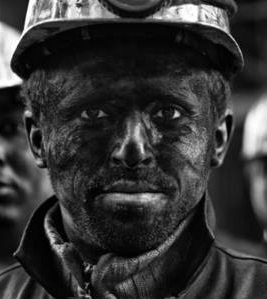
    Soma, a small town near Manisa in western Turkey. By the Aegean Sea, a beautiful place, if you don’t have to be a coal miner or love one.

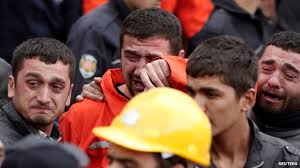
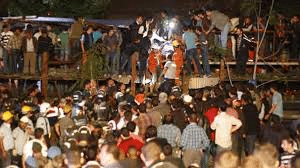
    It’s now an ant swarm. It ebbs and flows around the human conveyor belt that runs from the endless rows of ambulances and the mouth of the lignite mine. Lignite is the poorest quality coal useful mostly for power generating plants. And the people in Soma are poor too, but in a different sense, a tragic sense. The stretchers bearing the living, the dead and the dying beat an endless track from the suffocating depths to the white ambulances. The bearers stack their loads in the back of the ambulances like well-cut logs. And off they go, back to the pit. And the ambulances crawl through the swarm to the hospital whose morgue is overflowing. It’s a simple, deadly rhythm now in its twentieth hour. Most of the women are covered. They weep alone in small groups.

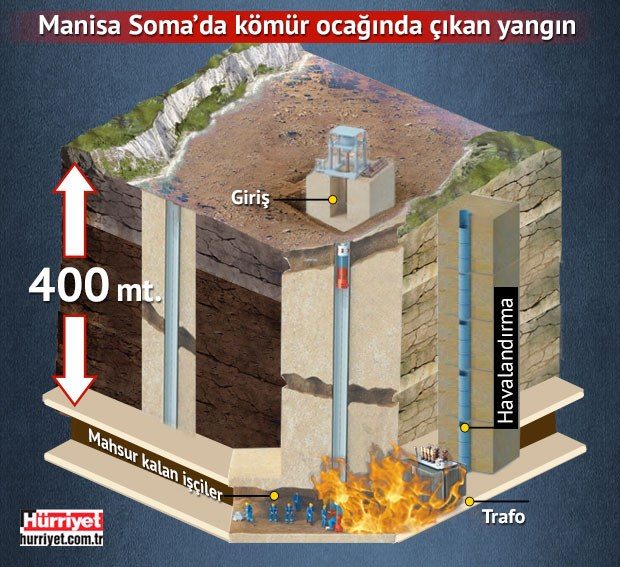
    A transformer blew up deep in the mine. The electricity failed. No elevators. A fire down below. No way out. No air, just carbon monoxide. The death count rises. It’s now at 205, but it’s more like 250. (In the interest of accuracy. as of 2:42 pm 14 May 2014 the “official” count is 232…now 238, now 240.) There are hundreds still buried hundreds of meters underground. The fire still burns. The deaths will be in the millions because every time one sees a stretcher with a limply swinging foot, or covered over, one dies a little. And there are more than 70 million of us living here, watching this absurd tragedy. They just brought out a 15 year-old boy, dead. Turkey’s, rather the Turkish government’s treatment of children is abysmal. One weeps thinking about all of this. And then, if one is human, one gets angry. How can all these poor people die at work? The record for coal mining deaths is 263 at Zonguldak in 1992. It seems in easy reach since so many are still unaccounted for and time inexorably wears on.

    Not too many years ago, five or six, there was another mine disaster, small compared to Soma, “only” 130 died. The television channel ran some file film of a miner underground. And next to the miner what should appear but a canary in a cage. Jesus, I shouted, this stuff disappeared a hundred years ago! Well, it would be nice, but extremely naïve, to think so.

    For this is Turkey. And here coal mining safety is a joke. One disaster after another comes to the mining families of this saddest of countries. And again neighborhoods are devastated by the massacre of its men. Except for China, Turkey has the worst coal mining safety record in the world. This industry like most others has been privatized by the government. That means cut costs to maximize profits. That means low wages. That means Soma Group, the mining company, operates uncontrolled and unregulated despite all the official blather. But why shouldn’t it? The Turkish government operates the same way and no one does anything about it.

    So who is at fault? Easy.  Soma Mining is owned by Alp Gürkan. In a 2012 interview, Gürkan said the company had managed to drop the cost of coal to $24 per ton from $130 before privatization. How grand!  Yes, grand, indeed. How did he do it? Well, he hired subcontractors “for hard work with low salaries” thus undercutting union workers organized by Maden-İş. But his master stroke of “genius” seems to be Gürkan’s decision to have his company simply manufacture the electric transformers instead of importing them. And it was one of these “home-made” transformers that caused this human catastrophe, this mass industrial murder, this genocide of the working class. So it seems clear that prima facie evidence of criminal negligence points toward one Alp Gürkan, Chairman of the Board. The police can find him for purposes of preliminary investigation at: Soma Holding A.Ş, Lale Sokak No:5, Levent – İstanbul.

    There is also another material witness and perhaps a co-conspirator. On 29 April Prime Minister Tayyip Erdoğan’s ruling Justice and Development Party rejected a demand for a parliamentary investigation regarding safety in the Soma mines. Why was this petition refused? Does it have to do with the hoses he has everywhere? That refusal was just two weeks ago! Question him! Erdoğan can be found somewhere in Ankara. He has yet to appear at Soma. He, like Godot, may never come. It would be good.

    As I write, the students in Ankara are protesting this horrific tragedy. Everything is normal, for Turkey. The police are gassing as usual, shooting canisters directly at them. The cops are chasing them through a beautiful pine forest. TOMA and helicopters are on the scene. Beatings will follow. Students of Ankara unite! You have nothing to lose but your brains.

    The air is as heavy as lead.

    No more words…

    James (Cem) Ryan
    Istanbul
    14 May 2014

    EXCEPT…

    HUKUMET İSTİFA!

    imagesJFNKUDHS

    5


    10269477_10154145825590694_1259986204124041373_n

  • Did Atatürk distribute Ottoman Armenians’ property to his team?

    Did Atatürk distribute Ottoman Armenians’ property to his team?

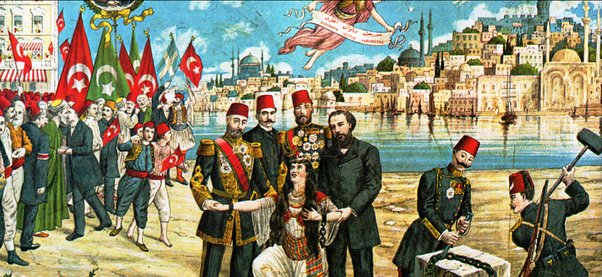
    Turkey will once more mark the great Armenian tragedy of 1915 — last century’s archetypal ethnic cleansing, with systematic acts of genocide — in a mix of shame and shamelessness, confusion and clarity, ignorance and awareness, denial and admission.

    It has been 99 years since the disaster, which changed the human map of Anatolia forever and has remained an issue which needs to be confronted in the name of humanity and conscience, haunting the republic ever since.

    Not much has been happening on the official front this time, either. Winds of change, in terms of a rapprochement between Turkey and Armenia, are much weaker. Hopes raised by the process of protocols were buried when Turkish Prime Minister Recep Tayyip Erdoğan, to the surprise of even his foreign policy team, announced at the last minute in Baku that the normalization would not happen unless the Karabakh problem was resolved. This demolition of the process brought all efforts to an impasse.

    The political changes in Armenia and Turkey’s growing need for Azerbaijani energy resources do not help those who want to return to an optimistic mode. Needless to say, Russian President Vladimir Putin is rather happy with the status quo, which boosts Russia’s importance in the Caucasus.

    Meanwhile, civil society keeps busy. Taboos in the public arena are now gone; those who want to call the events “genocide” are free to do so. Article 301 is no longer applied, and if any prosecution is launched, it dies before it reaches the courts. Debate in the media continues, as does the academic research.

    Books pour out, often debating with each other, and bringing new data to light. One of the best in its genre, and of great interest to the reading public, is a detailed account of what happened in İstanbul on April 24, 1915 — when more than 230 Ottoman Armenian intellectuals were arrested in a sweep and sent to death camps in Anatolia — and afterwards. It is written by Nesim Ovadya İzrail, titled “24 Nisan 1915 / İstanbul, Çankırı, Ayaş, Ankara” (April 24, 1915 / İstanbul, Çankırı, Ayaş, Ankara) — a work that needs to be translated into other languages.

    Another book, titled “İttihadçının Sandığı” (The Unionist’s Chest), is brand new and based on a large number of letters and documents linked to the high-ranking perpetrators of the genocide, the Committee of Union and Progress (CUP). Its author, Murat Bardakçı, is known to be a fierce denialist, yet continues to publish books which are of deep historic value, such as the secret diaries of Talat Pasha, the architect of the mass deportations.

    The new book, Bardakçı says, aims to refute claims that Mustafa Kemal Atatürk, founder of the republic, did not support the Unionists’ acts and later condemned them. Indeed, there are documents and numbers that seem to indicate that Atatürk distributed Armenian properties to his republican team and paid their salaries from Armenian assets. Strong stuff.

    Meanwhile, there are activities launched on various levels as the hundredth anniversary approaches. One of them is by the Turkish Industrialists and Businessmen’s Association (TÜSİAD), which aims to bring together experts and historians from Turkey and the Armenian diaspora, as well as international academia, to seek a common ground and language.

    The Turkish state keeps busy too, in order to confront the expected wave of criticism from the international community; Turkey, to many people, appears reluctant to face a truth from the remote past. The Foreign Ministry, under the instructions of Minister Ahmet Davutoğlu, is intent on burying the great Armenian tragedy somewhere in the context of World War I, talking endlessly about “fair memory.” But this approach does not seem very promising, when it comes to equating civilians’ and soldiers’ deaths.

    On the political level, Prime Minister Erdoğan, having returned to his nationalist self, is categorically against any recognition or regret, let alone an apology. He recently accused some NGOs of being “paid by Armenian lobbies.” Some ministers from the Justice and Development Party (AKP) are now parroting the prime minister, saying that it was Armenians who killed Turks.

    But most meaningful is what some people will do tomorrow. The mass human suffering in 1915 will be commemorated in many events in İstanbul and 10 other cities across Anatolia. This is what matters most

    Yavuz Baydar
    Today’s Zaman

  • UNITED WE WEEP, DIVIDED WE SLEEP

    UNITED WE WEEP, DIVIDED WE SLEEP

    DUMBBELLS (English slang for stupid fools)

    DÜMBELEKLER (Turkish slang for stupid fools)

    I sing what was lost and dread what was won,
    I walk in a battle fought over again,
    My king a lost king, and lost soldiers my men;
    Feet to the Rising and Setting may run,
    They always beat on the same small stone.

    Willam Butler Yeats (1865-1939)


    I read the news today, oh boy. Here’s what Reuters said:
    “Prime Minister Tayyip Erdoğan has applied to Turkey’s constitutional court on Friday to challenge the alleged violation of his and his family’s rights by social media, a senior official in his office told Reuters.”

    Isn’t it grand, this so-called rule of law. The prime minister is correct in his action. Long ago his family’s rights were well-established as were his. When the fox owns the chicken coop every day the menu-du-jour is chicken. We and the world know the quality of those who rule this sad country.

    But who’s to argue? Not the sheep…if they whimper, they’re next. And besides, they’re well-bribed with food and coal and things magical from the bountiful Ankara sky. They have indeed learned to deeply love their Big Brother. They repay with their pathetic ballots. So, who? Perhaps young people who, like all young people everywhere, thought they had a future? Sorry. Enough of them have died and been maimed. Maimed by the prime minister who now frets about his and his family’s rights. Hah! So surely it will be the political opposition who once thought they had a patriotic responsibility, even a cause? No cause. No thought. No brains. No nothing. The military? The ones with the soundest, strongest emotional and ethical legacy? Nope. Folded up like a cheap suit. Hardly a whimper. Generals now bow their heads to thieving politicians. Cowardly submissive stuff like that makes one wonder if they ever received an education (and at taxpayer expense). Atatürk? Huh? Please, we must not speak aloud of such things. So who’s left to argue? Media? Ha! Sold-out. Universities? Ha! Ha! Expounding on pet obscurities, historical quirks, dead poets and deader laws and what once was and now will never be. There is no time left for history and literature and law and medicine and philosophy and too many more words. Speaking of which, what about writers? Well, who reads? The world is too much with all of us, and we are all too late.

    So who will care? Care enough to act, to really act? To stand up and say that this is enough. That the people will no longer be governed by a corrupt political process. Nor by numbskull, repetitive political opposition parties nor by America’s CIA gangsters? Is that too much to ask?

    It seems so. Time grows short. Another crooked election is coming, this one presidential. One way or another the same small people will throw the same big stones at us. Ah Turkey, the saddest country with the saddest people with the saddest stories. Always beating on, always being beaten. Ah, dear Turkey, Atatürk’s children deserved so much more. So did Atatürk.

    James (Cem) Ryan
    Istanbul
    19 April 2014


    “A slave is one who waits for someone to come and free him.”

    Ezra Pound (1885-1972)

    jefferson


  • Turkey’s culture of dissent

    Turkey’s culture of dissent


    Caged tweets

    Turkish Prime Minister Recep Tayyip Erdoğan is like a mousetrap salesman; the moment he plugs one hole, the mouse peeks out of the other.

    His latest move to block dissent in Turkey is to ban Twitter, but millions of Turkish tweeters have, with characteristic ingenuity, found ways to circumvent this ban.

    On the 200th anniversary of Darwin’s birth in 2009, a former Turkish judge at the European Court of Human Rights (ECtHR), Rıza Türmen, noted about the Justice and Development Party (AKP) government, “What they are attempting to achieve today [after coming to power in 2002] is social engineering, a radical transformation of society.”

    This includes a reform of the education system, which makes it possible for pupils to attend religious schools (imam-hatip schools) after only four years of primary education, the easing of restrictions on Quran courses and an abolition of the coefficient system to enable students from imam-hatip schools to enter universities on equal terms with graduates from other high schools.

    This is in keeping with Prime Minister Erdoğan’s declared goal to raise a “religious generation,” and also involves other forms of social engineering such as a ban on the sale of alcohol in municipal and public restaurants in most of Turkey’s provinces. This culminated last May with a new law that imposes severe restrictions on the consumption and sale of alcohol.

    Although both the preamble and Article 24 of the Turkish Constitution stipulate that no one shall be allowed to exploit or abuse religion or religious feelings for the purpose of personal or political influence, this is precisely what Prime Minister Erdoğan and his AKP government have done. Or as the Turkish imam, Fethullah Gülen, now Erdoğan’s arch-enemy, put it in the Financial Times, “The reductionist view of seeking political power in the name of a religion contradicts the spirit of Islam.”

    Gezi Park 

    Four days after the alcohol legislation was passed, a boiling point was reached and the occupation of GeziPark in İstanbul began. What started as an environmental protest developed into nationwide protests against Erdoğan’s tyranny, which now proves to have far-reaching consequences for Turkey. As Alev Yaman, author of the English PEN’s report on the GeziPark protests, concludes, “A culture of protest and dissent has been established among a previously politically disenfranchised younger generation.”

    Social media played a significant role during the Arab Spring, and in Egypt it contributed to the downfall of President Hosni Mubarak. After the demonstrations in Tahrir Square, Erdoğan advised Mubarak: “Listen to the shouting of the people, the extremely humane demands. Without hesitation, satisfy the people’s desire for change.” However, during the GeziPark uprising, he failed to take his own advice but instead supported the police crackdown on demonstrators.

    Research by Eira Martens from DW Akademie on the role of social media during the revolt in Egypt showed that Twitter and Facebook mobilized protesters and helped develop a collective identity, or more precisely, a form of solidarity. Consequently, images of police brutality, also on YouTube and Flickr, made people not only angrier but also lowered their threshold of fear.

    The same applied to the GeziPark protests, but whereas in Egypt the most popular hashtag was used in less than one million tweets, an analysis by New YorkUniversity estimates that out of more than 22 million tweets related to the protests in Turkey, the two main hashtags were mentioned about 6 million times. In Turkey’s case, around 90 percent of all the tweets came from within Turkey, whereas in Egypt only 30 percent were from inside the country.

    In Turkey, it is estimated that the AKP government has the final word over 90 percent of the media, that is, newspapers and television. This was evidenced in an interview on CNN Türk with Fatih Altaylı, the editor-in-chief of the Turkish daily Habertürk, who complained that instructions were “pouring down” every day from somewhere.

    Leaked wiretaps, one of which Erdoğan has confirmed is genuine, reveal constant pressure from the prime minister’s office and Erdoğan himself on media owners and executives. In one recording, Erdoğan’s son, Bilal, allegedly informs his father that the next day’s headlines have been agreed upon with the pro-government media.

    Consequently, Turkish media coverage of the GeziPark protests was nothing short of scandalous; CNN Türk broadcast a documentary on penguins and seven pro-government newspapers ran identical headlines with the same quote from the prime minister. Four television channels that covered the events were fined for “harming the physical, moral and mental development of children and young people” and 845 journalists lost their jobs

    In its report on the role of social media in the Turkish protests, New YorkUniversity said that part of the reason for the extraordinary number of tweets was a response to the lack of media coverage; furthermore, it said that Turkish protesters are replacing traditional reporting with crowd-sourced accounts expressed through social media such as Facebook, Twitter and Tumblr. The report concludes that this is an impressive utilization of social media in overcoming the barriers created by semi-authoritarian regimes.

    There is also the fact that, according to another study, Turkey has the top Twitter penetration rate, with 31 percent of an Internet population of 36.5 million being Twitter users.

    No wonder Prime Minister Erdoğan calls Twitter “a menace” and finds social media to be “the worst menace to society.”

    Dec. 17 

    The anti-corruption operation that went public in İstanbul on Dec. 17, and the subsequent scandal, constitutes a major challenge to Prime Minister Erdoğan’s government. The response has been a massive cover-up, with the removal of thousands of police officers and hundreds of prosecutors and judges who could continue the investigation and therefore threaten the government’s legitimacy.

    The AKP has made use of its parliamentary majority to block the reading of indictments that involve four former government ministers, and it has also blocked the formation of an investigative commission. As Fethullah Gülen noted in the Financial Times, “A small group within the government’s executive branch is holding to ransom the entire country’s progress.” And one of the founders of the AKP, Abdüllatif Şener, has even said that Erdoğan is prepared to drag Turkey into a civil war to retain his hold on power.

    The immediate threat to the AKP government is the outcome of the local elections on Sunday, which will act as a barometer for the party’s popularity. Some 35 percent are reckoned to be the AKP’s core voters and, according to a Sonar survey, 80 percent of them don’t use the Internet. Added to this is the fact that Turkey has a relatively low newspaper circulation (96 papers bought daily per 1,000 people), which increases the importance the government attaches to the control of both public and private TV networks.

    Nevertheless, since February, almost daily tweets from Haramzadeler (Sons of Thieves), joined by Başçalan (Prime Thief) and Hırsıza Oy Yok (No Votes for Thieves), have contained links to wiretaps on YouTube and other social media allegedly involving Prime Minister Erdoğan, his family and ministers in bribery, tender rigging, media manipulation and interference with the judiciary

    Despite widespread international criticism, President Abdullah Gül, “Mr. Nice Guy,” has approved new legislation giving the government control over the Supreme Board of Judges and Prosecutors (HSYK) and the powers to block important websites. Prime Minister Erdoğan has now (ab)used these powers by imposing a blanket ban on Twitter through the Telecommunications Directorate (TİB), which has also blocked access to Google’s domain name server (DNS). Furthermore, Erdoğan has threatened to block access to YouTube and Facebook.

    In the first few hours of the ban, there was a massive increase in the number of tweets sent in Turkey, and Turkish users have found ways to circumvent the ban by using virtual private networks (VPN) or Tor. Nevertheless, there has since been a marked decrease in the number of Turkish tweets. Following several complaints, a Turkish administrative court has also ordered a stay of execution, which Deputy Prime Minister Bülent Arınç said the government will implement

    Erdoğan has, in turn, elevated the conflict to a “new war of independence,” with a TV commercial showing Turks from all walks of life rallying round the flag. However, as Turkish economist Emre Deliveli remarked on his blog, “There are several million people in Turkey who would believe the world was flat if Gazbogan [Erdoğan] told them so.”

    Robert Ellis is a regular commentator on Turkish affairs in the Danish and international press.


  • SCANDALOUS DAY AT TURKISH PARLIAMENT!

    SCANDALOUS DAY AT TURKISH PARLIAMENT!

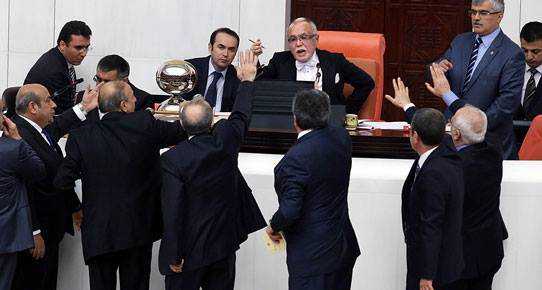
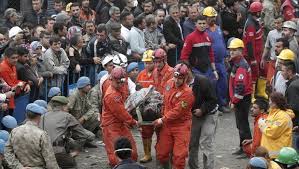
    scandalous dayToday, we witnessed a historical day at Turkish Parliament. Police reports about 4 AKP ministers were sent to the Parliament by the public prosecutor. These reports were related to the latest corruption scandal of AKP government. Since ministers have immunity, public prosecutor cannot order police to arrest them but prepare official reports and send these reports to the Parliament. In the Parliament, ministers discuss the situation of accused ministers by considering police reports. But this process was impeded by AKP senators today by using various ways.

    Today, the President of the Parliamentary session was supposed to be Meral Akşener from opposition party MHP. But Permanent President of the Parliament, Cemil Çiçek from AKP, prepared an official document and appointed Vice-president Sadık Yakut from AKP to lead the session! Mr. Yakut did anything necessary to impede the discussion of the police reports. He said that the police reports had a secret content and it was not possible to discuss them in the parliament! Opposition parties emphasized that the reason of the preparation of these police reports were to make accused ministers accountable to the parliament. But Sadık Yakut didn’t let the content to be revealed. Parliamentary Television (Meclis TV) was broadcasting the session. But they censored some parts of the speeches of opposition senators! At 19:00, they cut broadcasting completely! CHP senator Melda Onur made live broadcast by using her smart phone after that hour! Senators argued for hours. But of course, it was not possible to convince AKP senators and Vice-President of the Parliament. CHP senator Kamer Genç protested this situation by throwing money to the president’s bench! At the end, CHP’s proposal of reading the police reports in the parliament was rejected with the votes of AKP senators!

    via Istanbul Revolution