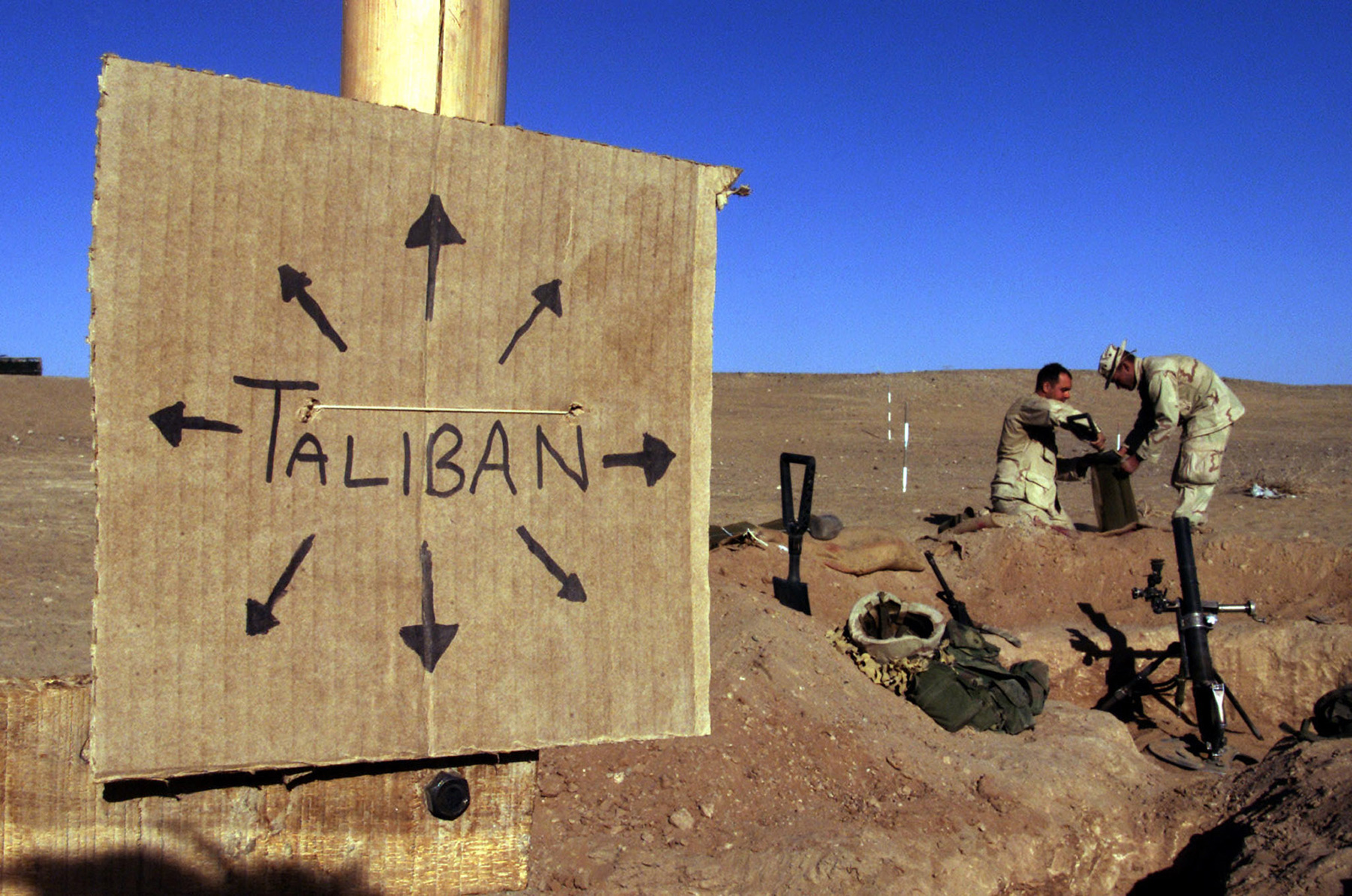
Turkey, deliberately pushed into an “Afghanistan, Lebanon, and Syria Syndrome” by the ruling political forces and their American partners, is increasingly moving away from the fundamental pillars of the secular, laicist Republic and the state doctrine of Mustafa Kemal Atatürk. Atatürk envisioned a modern state, independent of origin, ethnicity, or religious affiliation.
The fact that U.S. support and the courting of Islamists represent a fundamental and massive issue for European security architecture is still not widely understood within the EU.
It is no coincidence that in March 2025, U.S. President Trump appointed Thomas J. Barrack as U.S. Ambassador to Turkey, who publicly promoted the religion-based legal order of the “Millet system” – an Ottoman-era framework that governed political leadership based on ethnicity and religion – as a model for the entire region.
“Divide et impera” – divide and rule – is the guiding principle of U.S. foreign policy, whether in the Ukraine conflict, the Middle East, or Turkey. Henchmen, opportunists, and accomplices of this disastrous imperialist policy are plentiful – in the EU, in Turkey, in the Arab world, and in Latin America. Remote-controlled statesmen and their political cabinets, Islamists in pinstripe suits, or former murderers and terrorists – who are suddenly and transparently declared as respectable politicians and Western interlocutors – lay the groundwork for the sellout of their own countries (while enriching themselves and their corrupt circles), and are the reason why millions are forced to flee.
Who ends up dealing with the refugees and the negative consequences of these developments? The EU and its member states – to varying degrees and with different national implications.
U.S. policy has repeatedly demonstrated – both in the past and present – where its loyalties lie and its willingness to finance and arm Umayyad-Sunni clerical Islamists. This U.S. state doctrine is a root cause of many of the conflicts and wars that are the result of a mix of ignorance and calculated strategy.
Something is brewing on Europe’s doorstep – in Turkey – that will, in the foreseeable future, crystallize into a massive security disaster for us Europeans. A concrete example from Turkey:
Under the guise of peace negotiations orchestrated by U.S. policymakers, discussions have taken place with the ruling AKP, the far-right MHP, the clerical-fascist SP, and the Kurdish terrorist organization PKK. At their core, these negotiations aim to transform Turkey into a federal system, fragmented along ethnic and religious lines.
A statement by Devlet Bahçeli, leader of the Nationalist Movement Party (MHP) – “The President should have two deputies, one Kurdish and one Alevi” – has caused political tension and indicates the direction things are heading. Dividing Turkey along ethnic and religious lines paves the way for the Afghanistan, Lebanon, and Syria Syndrome. This will have serious consequences for Europe’s security structure and our societies.
What happened before the Alevi initiative within the police?
Journalist Tolga Şardan wrote in his T24 column that after Ali Yerlikaya took office as Minister of the Interior, a decree was issued that removed several Alevi provincial police chiefs from their posts.
Regular readers of Büyüteç (“Magnifying Glass”) had already learned about the debate over an “Alevi Initiative” triggered by Bahçeli’s statements on June 20.
Since then, a sense of anxious anticipation has spread within the Alevi community. At a time when the idea of a “terror-free” country was being strongly emphasized, the debate resonated widely within both the AKP and MHP.
The most significant statement so far came from MHP leader Devlet Bahçeli.
Bahçeli’s claim – picked up by journalist İsmail Saymaz – that “one of the vice presidents should be Kurdish and the other Alevi” sparked an unexpected public reaction. Some viewed it as a step toward the “Lebanonization” of the country. Supporters of this view see Bahçeli’s proposal as an official acknowledgment of an ethno-religious division.
In response to the criticism, Bahçeli stated:
“At a time when Turkey is progressing step by step, the idea was considered that one of the vice presidents could be Alevi and the other Kurdish. Associating this with Lebanon is a distortion and deliberate misdirection!”
But beyond the “Lebanon aspect,” the real question remains:
To what extent are appointments in the state apparatus based on merit (loyalty vs. qualification)?
Let’s be honest: If appointments were truly based on merit, Bahçeli’s proposal wouldn’t even be necessary. It wouldn’t matter what worldview, religion, denomination, or ethnic background someone has.
Let me now give a revealing recent example of what has already occurred on this path.
The institution in question – as you might suspect – is the police force.
After the 2023 elections, Ali Yerlikaya took office as Minister of the Interior and issued a sweeping decree replacing many provincial police chiefs appointed by his predecessor. Among them were four Alevis. While some chiefs were simply reassigned, these four Alevis were directly recalled to the ministry (“sidelined”). Yerlikaya’s aim was to replace the heavily criticized personnel associated with his predecessor Süleyman Soylu. He largely succeeded – many of Soylu’s affiliates lost their positions. However, the four Alevi chiefs were not part of Soylu’s inner circle. On the contrary, they were known within the police force for their competence and integrity.
They belonged to the group that the government turned to after the December 17–25, 2013 corruption scandal, asking them: “Help us rid ourselves of the Gülen movement.” These officers were also loyal to Atatürk’s principles. Yet, because they were appointed during Soylu’s tenure, they were wrongly lumped in with his faction. Currently, there is not a single Alevi provincial police chief left.
And it didn’t stop there:
Among the foreign police liaison officers during the Soylu era, there were also three Alevis. After returning to Turkey – along with other attachés – only these three Alevi officers were treated differently and not reassigned to new international posts like their colleagues. They reported their legitimate complaints to senior management.
Eventually, they – along with other “recalled” Alevi officers – were reassigned to the same department, the Inspection Board (Teftiş Kurulu).
Even if the police leadership won’t admit it publicly – this is the reality. One would have hoped that the MHP leadership would have stood up for these police officers – even before the talk of an Alevi initiative. That they would have advocated for appointments based on merit, regardless of denomination or worldview. But the MHP apparently preferred to support officials with questionable pasts – even those under judicial investigation – instead of defending the rights of capable Alevi officers.
After Soylu, Yerlikaya is now also surrounded by MHP-affiliated actors who clearly influence him. So if an Alevi initiative is being discussed and Bahçeli is following developments, then the MHP leadership should lead the way in implementing genuine performance-based fairness (loyalty vs. competence).
Only in this way can positions be assigned to capable individuals, regardless of religious or ethnic background. The same, by the way, applies to the AKP.
Tag: AKP
-
Turkey on the Path to the “Afghanistan, Lebanon, and Syria Syndrome”
-
The AKP in Pursuit of a Political Strategy
Turkey’s government will implement populist and nationalist policies at home and abroad ahead of the 2023 elections, potentially triggering fiscal (worldview.stratfor.com/article/search-quick-win-erdogan-gambles-turkey-s-economic-future), economic, diplomatic and/or military crises. Uncertain about its electoral prospects in 2023, the governing Justice and Development Party (AKP) will pursue policies designed to curry favor with its traditional Islamist-nationalist base. It will seek to appeal to Islamists by citing religious tenets to justify controversial policies like keeping low interest rates at the central bank and weakening human rights protections if they contravene local religious values. To appeal to nationalists, it will initiate limited confrontations with the European Union in the Eastern Mediterranean, with the United States over Turkey’s defense ties with Russia, and with Russia over Turkey’s continued military intervention in Russian ally Syria. Though the AKP will, of course, try to avoid triggering a crisis, it is not positioned to ensure its high-risk policies do not spur unprecedented inflation, further capital flight and even a major debt crisis in 2022; its management of the lira is especially fraught. Meanwhile, Turkey’s more aggressive foreign policy could trigger fresh sanctions from the European Union and/or the United States. And if Russian (worldview.stratfor.com/article/syria-kurdish-attack-risks-triggering-new-turkish-offensive) and Turkish forces clash and there are significant casualties on either side in Syria, the military confrontation could spread to other theaters where Turkey and Russia back opposing sides, like Ukraine and the Caucasus.
Enjoy ??Cheerio !!!~
CASH IS KING
IN GOD WE TRUST
Richard C De Graff -

The AKP’s Thirst for Power Risks Leaving Turkey High and Dry
 (Chris McGrath/Getty Images)
- Turkey’s ruling Justice and Development Party (AKP) will embrace more populist foreign and domestic policies following the controversial rerun of the Istanbul mayoral election on June 23, regardless of whether or not it wins.
- In a bid to consolidate power and drum up support, this renewed patriotic push will include asserting national interests above those of Turkey’s foreign allies’, which will stir diplomatic conflict with the United States and Europe.
- However, the AKP’s nationalist policies will ultimately fail to reverse its apparently waning popularity and will make improving Turkey’s economic picture more difficult.
Editor’s Note: This assessment is part of a series of analyses supporting Stratfor’s upcoming 2019 Third-Quarter Forecast. These assessments are designed to provide more context and in-depth analysis on key developments over the next quarter.
On March 31, it looked as if the Republican People’s Party (CHP) had successfully wrenched Istanbul’s mayorship from Turkey’s ruling Justice and Development Party (AKP) party, which has held the economically and politically powerful position for nearly two decades. But despite securing nearly 14,000 more votes than its rival, the CHP’s victory was short-lived. After the results were announced, the AKP was quick to allege election fraud, resulting in the decision to rerun the election. Should it face another loss in the June 23 revote, the party is likely to repeat the tactic — laying bare just how far the AKP will go to secure control over the city.
The Big PictureTurkey is a key power in the Middle East and North Africa with an influence that permeates well beyond its borders. In the coming quarter, Turkey’s government will be reconciling with a dramatic election do-over for Istanbul’s mayorship that will highlight the ruling party’s willingness to retain control over the country’s capital at all costs, even if it means harming the country’s already shaky economy and its relationships with outside powers.
See Turkey’s ResurgenceThough perhaps more importantly, the AKP’s loss of the March 31 mayoral race might eventually serve as a “canary in the coal mine” for the party’s waning national popularity and increasingly tenuous place in power, with the CHP’s candidate even capturing the attention of electorates once considered AKP strongholds. Thus, there is no doubt that the AKP is looking at the June 23 race with the 2023 presidential race in mind, as well as the threat that the CHP presents to its continued political dominance. Facing this existential predicament, the AKP will serve up more helpings of the nationalist rhetoric and populist policies that have historically served it well. And while this approach may temporarily stave off the party’s exit in the coming months, it carries with it the risk of causing more permanent damage to Turkey’s already fragile economy and foreign relations.
The Issues Behind the AKP’s Predicament
The AKP’s promise of a new approach to Turkey’s economy, which had endured a decade of financial fragility in the 1990s, is what initially vaulted the party to power nearly 20 years ago. Thus, the country’s current precarious economic picture is a problem for the party now. Steep corporate debt, combined with stubbornly low consumption, has cooled business activity in the country. And while it’s dropped from a 2018 peak, inflation remains high at over 18 percent, as does national unemployment at 11 percent. In May, Turkey reported record exports, though this seemingly positive data is tempered by the fact that the spike was due to the low value of the Turkish lira. Some voters, frustrated with the country’s slowing economy, have unsurprisingly blamed the ruling party. And this sentiment was a large reason why the AKP lost several key local government posts in recent months, including the Istanbul mayorship.
Back to Square One
Facing the threat of waning support and the difficult mayoral contest in Istanbul, the AKP is now clinging to nationalist politics and populist economic policy — both of which have proved popular with the AKP’s electoral base. In doing so, the party will continue to rely on its long-held message that only the AKP can secure Turkey’s national interests at home and abroad, helping it to maintain control over the government directly following the June 23 election, regardless of its outcome. However, in the long term, the “Turkey-first” rhetoric and actions risk further complicating the country’s financial situation and foreign relations.
Defending Ankara’s national interests among stronger powers like the European Union and the United States will help the AKP-led government shore up its domestic political power by playing up its patriotic appeal. In July, U.S. President Donald Trump could possibly visit Turkey to discuss the two countries’ divergent national policies over issues such as Russia’s global influence and the Syrian conflict. But under the AKP’s renewed nationalist bent, Turkey is bound to prioritize its national interests over any compromise, and will instead insist on its preferred positions — no matter how unpalatable to Washington. However, stoking any kind of diplomatic conflict with the United States risks harming the economy by placing Turkey at risk of facing U.S. sanctions and tariffs — as it did last year.
Turkey’s ruling party has shown it will do almost anything to remain in power — whether it’s calling for do-overs to win elections, or pursuing risky economic policies to win voters’ support.
In its push for power, the AKP will also continue to promote its traditionally harsh policies against Turkish Kurds. With an eye to preserving Turkey’s national security in the face of Kurdish militancy inside and outside Turkey’s borders, this hard-line stance, which has worked in the party’s favor in past elections, could yield some electoral wins in the short term by rallying the AKP’s base. However, a hard push against pro-Kurdish political parties, such as the Peoples’ Democratic Party (HDP), will alienate new voters, Kurdish voters, or disillusioned AKP supporters who are losing faith in the party’s domestic policies. As a result, the ruling party may be forced to recalibrate its approach to its relationship with Turkish Kurds. And indeed, there are signs it may already be doing so, with reports that the AKP is considering pragmatic talks with Abdullah Ocalan, the long-imprisoned leader of the Kurdistan Workers’ Party militant group, for the first time in nearly a decade.
The AKP will also continue to deepen Turkish anti-Kurdish militant operations in Iraq and Syria, despite Europe’s concerns about the encroachment of Turkish influence in the Levant at the expense of Kurdish determinism, as well as U.S. support of Kurdish troops to fight the Islamic State. Thus, such an emboldened anti-Kurdish approach to fan the nationalist flames at home risks of harming Turkey’s reputation abroad.
Similarly, the AKP will play up Turkey’s oil and natural gas exploration activity in the Eastern Mediterranean to promote nationalism as well. But this too will no doubt ruffle the feathers of the West. In the coming months, Turkish exploration will take place in the Turkish Republic of Northern Cyprus’ claimed economic exclusion zone (EEZ), which overlaps with Cyprus’ own EEZ. Brussels, meanwhile, supports Cyprus’ claim to the area, as does the United States.
Long-Term Pain for Short-Term Gains
To garner support among Turks, the AKP will also pursue short-term populist policies to help weather a tough summer of recession-like conditions. This will likely include food subsidies that will further depress what Turkish farmers can expect for their goods, as well as strong-arming retailers and businesses into using the lira for their transactions instead of U.S. dollars.
However, getting the Turkish economy up and running again will likely require a period of painful structural reforms and austerity measures — not quick-fix solutions. A more secure electoral position would give the government more leeway to embark on such sweeping reforms. But facing the potential loss of the Istanbul mayoral position come June 23, the AKP knows it has to weather the political blowback of pursuing unpopular measures such an overhaul would entail. Thus, the AKP will instead opt to zero in on its tried-and-true playbook of nationalist policies in the coming months, as it grasps to retain what power it has left to stave off electoral challenges in 2023. Yet this short-term strategy will ultimately be short-sighted by creating even worse conditions for the economy, and more problems for the government to fix.

-
Is An American Company’s Technology Helping Turkey Spy On Its Citizens?

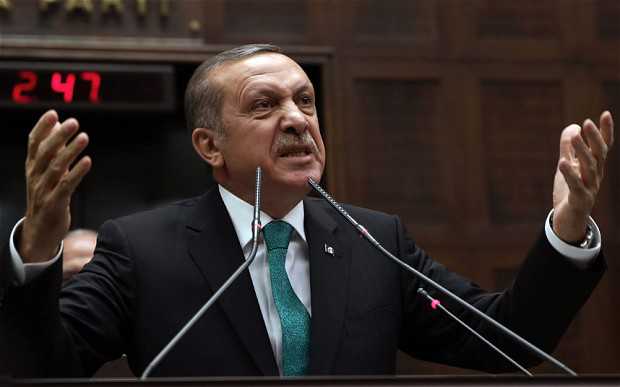
Turkish President Recep Tayyip Erdogan delivers a speech during 27th Mukhtars (local administrators) meeting at the Presidential Complex in Ankara on September 29, 2016. (Photo credit – ADEM ALTAN/AFP/Getty Images)
“I do not wish to spend the rest of my life with the regret of having been a part of Erdoğan’s insanity, so I’m out.” The company-wide email on April 4 from Kriss Andsten, a senior technical engineer for Fremont, California-based Procera Networks, landed with a thud and marked the beginning of an internal revolt that has rattled the telecom technology provider. Andsten went on to explain his grievance: the sale of Procera’s deep packet inspection product for alleged surveillance by a totalitarian regime. “We are … heading down the rabbit hole where we’re not using it for good anymore, in the name of chasing the next buck. A recent request from Turkey… seals the deal for me. The Cliff’s Notes version is that we’re selling a solution for extracting usernames and passwords from unencrypted traffic.” After nine years at the company’s offices in Malmo, Sweden, he resigned.
The senior decision-making team at Procera considered the request legitimate, one that came from major operator Turk Telekom through a middleman, Ankara-based networking specialists Sekom, and would ostensibly be used to track fraudsters. It formed part of a lucrative $6 million contract for Procera, whose technology helps telecom operators manage internet traffic. Normally innocuous, deep packet inspection can help uncover malware or route data more efficiently.
But a cadre of angry Swedish engineers who supported Andsten believed they were being asked to turn innocent tech into evil surveillance gear, and hand it to a regime that had become increasingly repressive. “Hell broke loose in Malmo,” said one former employee.
According to a half dozen current and former employees, who spoke on the condition of anonymity, leaked Procera documents and internal communications, Turk Telekom requested not just a feed of subscribers’ usernames and passwords for unencrypted websites, but also their IP addresses, what sites they’d visited and when. “Erdoğan is insane and people could well die from this work,” one former Procera employee told FORBES. Another said: “The installation in Turkey is large-scale surveillance of the population with feeds to one or other governmental agency… If the company leadership thinks this is business we should be doing, they should answer for it publicly.”
Procera declined to discuss specific deals, but a spokesperson provided the following statement by email: “Procera Networks strongly supports core principles of human rights and dignity for people around the world. We provide technology that helps telecom operators run their businesses more efficiently and enhance their customers’ user experience. We do not provide technology for surveillance. We align our business with all applicable laws and globally-recognized standards of operations. Under the new management team established in the last year at Procera, we have continued to strengthen our policies and processes to help ensure that our products are used as intended.”
Recommended by ForbesFounded in 2002, Procera’s headquarters are in Fremont, though large chunks of its development work is done in Canada and Sweden, the latter serving deep packet inspection to Europe and the Middle East. In mid-2015, Francisco Partners, a private equity firm with $10 billion in assets, acquired Procera for $240 million. A new CEO, Lyndon Cantor, was installed at the top to drive Procera through the “next chapter in its strategic development,” according to a company press release, as the executive team was given a refresh. The changes rankled some of Procera’s left-leaning employees. One former employee told FORBES that the acquisition by Francisco Partners led to greater focus on “regulatory compliance… mostly bulk surveillance.” Another claimed: “When Francisco Partners took control it was business ethics that mattered, not human ethics.”
In August, already-suspicious engineers grew more concerned. Researchers from the University of Toronto’s Citizen Lab and mobile security firm Lookout raised questions about the ethics of another Francisco Partners portfolio company, NSO Group, a government spyware provider founded by an alum of Israel’s vaunted intelligence agencies. (Francisco Partners bought its stake in the company for $120 million in 2014). Citizen Lab uncovered NSO’s Pegasus malware targeting iPhones of a Mexican journalist and a UAE activist. The same day, FORBES reported that Francisco Partners added Circles to its roster of investments, another Israeli-founded surveillance firm, which sold contentious gear to hack a part of global telecoms networks, known as SS7. That cost the private equity firm $130 million, a source close to the deal told FORBES.
In a statement, a Francisco Partners spokesperson refuted the criticisms: “Having invested in over 80 technology companies, we have demonstrated in our role as board members a nearly 20-year history of working with management teams on practicing appropriate corporate social responsibility and adhering to legal and ethical standards. This includes supporting management teams’ commitments to make every effort to ensure their products are used legally, responsibly and ethically by their customers.”
‘Shocking’ surveillance in Turkey
After they learned of the username and password feature shipping through Sekom to Turk Telekom, Procera engineers feared they would in effect be supporting Turkey’s surveillance state, whose actions have come under increased criticism from human rights groups. There have been plenty of disturbing cases: a 14-year-old in prison after criticizing Erdoğan in a Facebook post, a doctor on trial after a meme he produced compared Erdoğan to Lord of the Rings character Gollum. After the failed coup this summer, the assault on dissents has only intensified as Turkey enacted what Reporters Without Borders (RSF) called “draconian” state of emergency laws. Any individual or organization deemed to have any connection to Fethullah Gülen, a Turkish cleric in exile in the US whom Erdoğan believes masterminded the coup, faces persecution. In July, 15,200 Ministry of Education personnel were suspended and faced investigation, 1,577 university deans were asked to resign, and 2,277 judges and prosecutors were detained, all because of alleged connections to Gülen. Amnesty reported credible sources as claiming some of those detained were subjected to torture and rape. The state of emergency was, this October, extended for a further three months.
“These are executive orders that should be under scrutiny, but they are rubber stamped by judges and there’s no practical way to appeal these decisions,” said Andrew Gardner, Amnesty International researcher for Turkey. Gardner was the target of an unsuccessful order to force Twitter to block his account — Twitter’s most recent transparency report showed Erdoğan’s regime lodged 2,493 requests for content to be removed between January and June this year, more than any other country.

Turkish police use water cannon against teachers in Diyarbakir on September 9, 2016 during a protest against the suspension of over 10,000 teachers for suspected links to militants. (Photo credit – ILYAS AKENGIN/AFP/Getty Images)
It’s no wonder then that the idea of an American company supplying services that appeared to support Turkish surveillance caused so much concern, not only inside Procera but also among human rights and privacy advocates. “To have the power for password extraction at the network level is a quite shocking capability for any government to have, let alone Turkey where the respect for fundamental rights has taken a stark downturn recently,” said Matthew Rice, advocacy officer at Privacy International, a not-for-profit organization. “Everyone should be concerned not only that this capability was requested, but that it was provided… This work was unprecedented for not only Procera, but for the surveillance industry as a whole.”
‘NSA-grade tech’
Two security experts compared the feature Procera sold to a weapon in the National Security Agency (NSA) arsenal. Nicholas Weaver, senior staff researcher focusing on computer security at the International Computer Science Institute in Berkeley, told FORBES Procera’s capabilities were similar to those of a core function of the intelligence agency’s XKEYSCORE software. According to files leaked by NSA whistleblower Edward Snowden, XKEYSCORE kept a constant monitor on internet traffic and siphoned off data of interest, including usernames and passwords. “That’s XKEYSCORE 101,” Weaver said of the Procera sale.
Morgan Marquis-Boire, an ex-Google security staffer, Citizen Lab senior researcher and the man in charge of protecting First Look Media, said he expected nations to buy into NSA-esque tech. “It’s not surprising to me that Procera has been found adding this capability to their existing solutions given what XKEYSCORE can accomplish,” he told me after reviewing some of the leaked documents from Procera. “It stands to reason that the intelligence operations of many countries would see this as desirable.”
Sources’ description of the Procera Turk Telekom project noted the former’s PacketLogic tool would monitor connections and redirect traffic of interest – e.g. unencrypted logins – to another product, the Network Application Visibility Library (NAVL). That would probe the data packets further to retrieve usernames and passwords across Turk Telekom, which boasts 18 million mobile and 8.3 million broadband customers. It’s one of the largest telecoms providers in Turkey, said to run 80 per cent of the country’s fibre optics network and run the biggest ISP in the form of TTNet. Once an entirely state-owned asset, it’s now private, though the Turkish Treasury still holds a 30 per cent stake.

A pedestrian passes an advertisement for Turk Telekom AS telecommunication services in the Nisantasi district of Istanbul, Turkey. Turk Telekom is one of the biggest operators in Turkey, though is still part-owned by the government. Photographer: Kerem Uzel/Bloomberg
It could be argued the export of such a service would not cause much harm; most social media, email and security-critical sites are run over HTTPS, where connections between a computer or smartphone and a website are encrypted. But according to Google data, of the most-visited 100 non-Google sites on the web, 60 do not run HTTPS by default. Most news sites – from FORBES, to The New York Times, the BBC and Turkey’s two most-read publications Hurriyet Daily News and the Daily Sabah – do not use HTTPS. At the same time, password re-use is prevalent. In a LastPass survey of 2,000 adults conducted this year, 61 per cent said they either use the same or similar passwords across websites. Thanks to those security weaknesses, hackers, be they government or criminal, can harvest passwords from unencrypted traffic and attempt to re-use them, or slightly different ones, on any site, and have a high chance of gaining access. Weaver also said that by capturing usernames, the Procera technology could be used to deanonymyze web surfing and more easily track what millions of Turk Telekom customers are doing.
‘A really bad idea’
Procera employees raised such concerns with CEO Cantor throughout the first half of 2016. “Capturing passwords feels like a red line in the sand that we should not cross,” co-founder and CTO Alexander Havang wrote on the company’s internal social network, Confluence, extracts of which were obtained by FORBES. “Lawful intercept is not our key competency. If this is a regulatory requirement and not a business requirement from the operator, we should try to help them advocate why this is a really bad idea.” (Havang declined to comment for this article after the executive team asked all staff to refer all press enquiries to the PR department).
Another employee on the same thread asked: “Why do we want to extract password? What is the use case? This feels pretty bad.” A Procera EMEA solutions engineer followed up, suggesting there was a fraud detection use case. In response, Andsten added: “There’s no fraud detection use case that I’m aware of that’d require the password, and the entire use case smells way more like a social graph thing than a fraud thing. Either they make a pretty bad job of requirements or there’s something else going on.” He later added: “Even if we discount the whole business of extracting passwords from the equation, what they are asking for is normally associated with a totally different market. I’m concerned about what the real ask is here and what brand risk exposure we’d be taking on.” The thread ended in late March, with Andsten saying the feature was “outside the scope of product features and requirement tickets.”
After learning the work with Turk Telekom was going ahead anyway, Andsten quit. His valediction opened a can of worms. “He essentially exposed the issue to the whole company,” a former colleague said. Two days later, on April 6th, another company-wide email sent from a disposable, anonymous email address went out, signed La Resistance. It called on all who opposed the Turk Telekom deal to protest directly to Francisco Partners. “We have absolutely no reason to do unethical deals. Procera is a great company that could do good in the world. We used to be all about improving network quality. That’s why we’re here… Your email absolutely matters. Make it anonymous if you want. If a few voices are heard, it will sound like we have a few vocal people, but if a lot of voices are heard, there must be actions taken.”
On April 11th, Cantor held an emergency meeting in Malmo to hear employees out and, in light of the brewing discontent, revamp the ethics committee; in internal communications, employees had previously expressed frustration at the lack of transparency from the group, set up in late 2014 after deals to provide deep packet inspection for operators in the Middle East had proven sticky subjects. “I don’t want blood on my code,” complained one engineer. “Is it even possible to do ethical business in the Middle East?” asked another.
Sources recalled a particularly awkward Malmo moment. “All the developers proposed to stand up and give applause to [Andsten] because he had taken a stand,” one source said. “With red ears the management team on stage had to participate in the applause of the person who’d caused all their problems.”
Procera Networks’ office in Malmo, Sweden, where engineers were upset about its shipments to Turkey.
Procera didn’t force unwilling staff to do the work. Current and former employees said the username and password extraction was partly outsourced to Canadian firm Northforge, claiming this was done to avoid exacerbating the relationship between engineers and execs. Procera did not comment on that aspect of the work. Northforge did not respond to requests for comment.
Since Andsten’s departure, another five engineers have quit, according to sources. The work continues, said current and former employees, who also said Cantor sent out further company-wide emails advising staff not to speak with press.
Turkey’s surveillance regime
Though employees remain concerned about the Turkish government’s access to usernames and passwords of millions of its citizens, Procera wasn’t contracted by the Erdoğan regime or even Turk Telekom. The contract was with Sekom, a systems integrator who worked to install the technology at the operator. (Sekom had not returned requests for comment.) A Turk Telekom spokesperson wrote in an email: “As Turkey’s leading communication and entertainment technologies company Turk Telekom, we always work to deliver products and services with cutting edge technology to our customers. Towards this goal, we are upgrading and renewing outdated devices in our network infrastructure. During this renewal process, we have recently replaced some equipment in our network with updated versions through an auction. We will continue our offerings related to quota based services and parental control services to our customers with this new equipment.
“At Turk Telekom, we are highly sensitive regarding protection and confidentiality of our customers’ personal data and we fully comply with the rules and regulations we work within.” The company declined to comment on the username and password extraction capabilities.
Like any operator, Turk Telekom is at the mercy of government legislation. One of the more invasive regulations – Law No. 5651 – requires each telecom company to log and store user activity for up to two years and submit that data to the government when requested by a court. The Homeland Security Act, passed in 2015, allows the Turkish government to spy on suspects’ telecoms connections for 48 hours without the need to get permission from a judge.
The Turkish embassy in London, the foreign office and the Prime Minister’s office had not responded to repeated requests for comment on this article.
Deep packet inspection
And like any company working in deep packet inspection (DPI), Procera has had to tread a thin line between providing useful networking technology and dangerous surveillance gear. Procera would never describe itself as a surveillance company, but rather a QOE and QOS (quality of experience and quality of service) vendor for telecom operators.
But DPI, whilst most often benign, is inherently invasive. “Deep packet inspection enables surveillance at the outset,” noted Citizen Lab’s senior legal advisor Sarah Mckune. Its very purpose is to open up “packets” of data flying across networks and inspect them to check if they should pass. Just like someone searching a package at the post office to determine if there’s any illegal contraband inside, DPI scans every packet and logs what’s inside, before deciding where to route the data or just trash it. Certain kinds of traffic might be prioritized if they need to be shifted faster, making DPI a core technology in the net neutrality debate. Or DPI can uncover malware and stop it from spreading.
DPI has made headlines for controversial use cases. China, for instance, likes to use DPI in its infamous censorship and surveillance systems. Sunnyvale, California-based Blue Coat Systems, in which Francisco Partners was a significant investor, saw its DPI technology censoring the internet in Syria in 2011, just as the civil war was erupting. Human rights activists looked on agog, but Blue Coat later said resellers were to blame and that it had not given permission for the technology to be shipped to the country. One reseller was later slapped with a maximum fine of $2.8 million by the Bureau of Industry and Security (BIS). (Francisco Partners also has stakes in Barracuda Networks and Dell Software, which both ship DPI products).
Procera employees remained apprehensive about their paymaster’s other DPI shipments. In particular, a deal signed through systems integrator Giza Systems for Egypt’s National Telecom Regulatory Authority (NTRA), which had asked to use Procera’s ScoreCard service to evaluate the network performance and subscriber experience for different operators, according to a leaked “scope of work” document.
Legitimate work on the face of it, said one former staffer. But some employees remained perturbed about the potential for abuse of the product, so widely could the technology be deployed. The former staffer said: “It’s an unusual and quite expensive way to accomplish it by tapping all traffic in the country and indexing it… when it would be simpler to just require your operators to give you quality metrics.” They noted that the ScoreCard product keeps a searchable database of a subscriber ID, what website they visited, and the location ID associated with their IP address. “That database is searchable for the end customer if they know how.” But a person familiar with the company’s business in the Middle East said that Procera has not sold or deployed any license capability for database access to any operator or regulator in Egypt, and that the ScoreCard product does not conduct any type of surveillance.
Meanwhile, Turkey continues to expand its control over the web. Just this month, more than 150 police personnel were reportedly arrested for using an encryption tool, ByLock, which the government believed Gülenists used to plot the putsch. Cloud services Microsoft OneDrive, Google Drive and Dropbox, as well as code repository Github were also blocked. The blackout was enforced in response to a leak of 50,000 emails of Turkey’s energy minister and Erdogan’s son-in-law Berat Albeyrak by communist hacktivist crew RedHack. Did Turk Telekom and Procera help enforce that blackout? Neither had provided comment at the time of publication.
Tips and comments are welcome at [email protected] or [email protected] for PGP mail. Get me on Twitter @iblametom and [email protected] for Jabber encrypted chat.
-

PARIS IS SEETHING, TURKEY IS STINKING
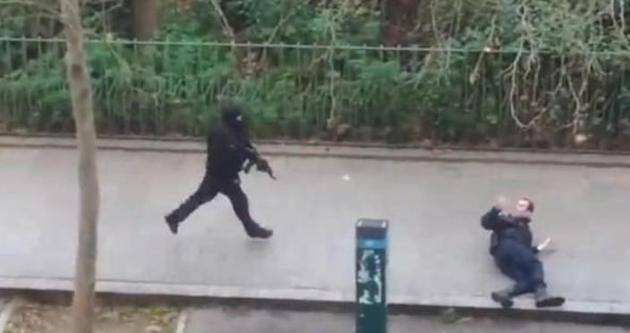
Istanbul
7 January 2015Enough! No more Turkish experts. No more lying politicians. No more cheating and stealing. No more talk of the obscene palace wherein resides the source of all of it. No more rancid, pompous rhetoric from the president of this stinking country. No more television discussion panels. No more Turkish language for it has died from murderous abuse. Shame covers Turkey like gas from a swamp. Breathe! Breathe! Breathe, you Turks!
You, the Turkish people, have so diligently supported your terrorist government. What didn’t you understand? What clouded your minds? Islam? Please be serious. What clouded your minds was money. Bribes. Jobs. Big construction contracts. Unnecessary bridges. Irrelevant airports. Polluting power plants. Coal in bags. You were cheated there, too. Coal and stones. Can you tell coal from stone? Shit from shoe polish? The government couldn’t even give you a “pure” bribe. Such is its cheating, thieving nature. Thefts. Nothing could prevent you from supporting a criminal for prime minister who grew to become a criminal as president. And nothing could prevent you from supporting the treasonous opposition parties who collaborate with the terrorist government and foreign powers intent on your destruction. Bow down, Turks! Stoop and bathe in the blood of innocents! Let it run up to the elbows! Stoop! Stoop! Bow to your boss!
It was all in front of your noses, this stink. This rotten game played with Syria. This disgusting, double-faced game known as being-a-friend-of-Erdogan. And so the weapons and bestial volunteers flowed through Turkey. And so rose ISIS! And Hatay was destroyed. Erdogan, the big shot friend of America. Erdogan, the expert on the Middle East. Erdogan, a man whose venality defies description, indeed a scowling metaphor of venality. And the corruption continued to flow. Arms to terrorists under the cover name of Free Syrian Army. Moderate Islamic “folks” trying to overthrow a duly constituted, sovereign nation—Syria! He is the source of the evil, of the beheadings, the slaughters, the rapes, the genocide of the Syrian Diaspora. And all the thefts from the moderate Islamic killers flowed back into Turkey. How eager were these Turks to buy cheap gasoline, stolen whisky, stolen cars. Isn’t god great? What a bargain! Cheap gas for the lives of innocent Syrians. Good job! Eat! Eat! Eat, you Turks!
The blood of the innocents in Paris is on the Turkish government’s hands. Erdogan, this most unnatural creature, has already destroyed his own country. And 53% of the Turks think that this is a good idea, if they are thinking at all. This Erdogan was America’s main man. A hard guy who could make it all happen. America loves guys like this. They make movies about them. But this hard guy had another agenda, and it wasn’t moderate. His ego was as big as all outdoors. Look at his house. Can you understand, you 53% of the Turks who are the equivalent of war criminals? You aiders and abettors of terrorism and murder! And you of the remainder, the 47% who think your ideas are the only important ideas and delay and discuss while the fascists prepare the end of Turkey as a nation. Talk! Talk! Talk! And then the back of your skull suddenly splinters like all the others.
The weapons in Paris arose in Syria through Turkish hospitality. The road to hell leads through Turkey. And so does the road to Paris. And so do these others, these big shots who think they know something. These are the ones who have helped Erdogan’s Turkey become a terrorist state. Their guilt is vast. And is no mystery to normal, ordinary people. And a complaint was filed with the International Criminal Court on 6 October 2014.
I have the honor to file with you and the International Criminal Court (ICC) this Criminal Complaint against
U.S. citizens Barack Hussein Obama, Hillary Rodham Clinton, John Forbes Kerry,John Owen Brennan, Michael Joseph Morell, David Howell Petraeus, and Leon Edward Panetta;
Turkish citizens Recep Tayyip Erdoğan, Ahmet Davutoğlu and Hakan Fidan;
Saudi Arabian citizens King Abdullah bin Abdulaziz and Prince Saud al-Faisal;
Qatari citizens Tamim bin Hamad Al Thani, Abdullah bin Nasser bin Khalifa and Al Thani Hamad bin Khalifa Al Thani;
Jordanian citizens Abdullah II ibn al-Hussein and Abdullah Ensour;
Croatian citizens Ivo Josipović and Zoran Milanović;
Belgian citizen Elio Di Rupo;
Bulgarian citizens Boyko Borisov, Marin Raykov Nikolov and Plamen Vasilev Oresharski;
French citizen François Gérard Georges Nicolas Hollande;
Great Britain citizen David William Donald Cameron;
Romanian citizens Traian Băsescu and Victor-Viorel Ponta;
for their criminal policy planning, subsequent crimes against humanity and ongoing crime of aggression in Syria.
I accuse the above listed individuals of planning, preparing, initiating and executing an act of criminal aggression resulting in the commission of grievous crimes against humanity. These crimes are both “widespread” and “systematic” within the meaning of Rome Statute article 7(1). Therefore the Accused have committed the “Crime of Aggression” by supporting and arming brutal and bestial mercenaries in violation of Rome Statute articles 8(2)(a), 8(2)(b), 8(2)(d), 8(2)f) and 8(2)(g). Furthermore, the Accused have committed numerous “Crimes against Humanity” in flagrant, repeated and longstanding violation of Rome Statute articles 5(1)(b), 7(1)(a), 7(1)(b), 7(1)(d), 7(1)(e), 7(1)(f), 7(1)(g), 7(1)(h), 7(1)(i), and 7(1)(k). Finally, the Accused’s Rome Statute Crimes Against Humanity as specified above constitutes ongoing criminal activity that continues today.
Read the details below. It won’t take long. These are the ones that should be arrested immediately.
But first, Hollande! Then Erdogan!
James (Cem) Ryan
Istanbul
7 January 2015 -

THE MAN WHO SNIFFED PARADISE
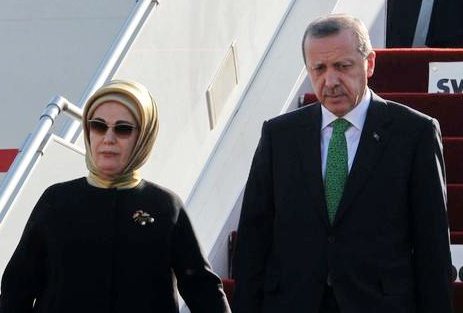
Some like the perfume from Spain
I’m sure that if,
I took even one sniff,
It would bore me terrifically, too,
Yet I get a kick out of you.
Cole Porter, I Get A Kick Out Of You
As a boy, he used to kiss his mother’s feet and it made her nervous.
No, no, Mama, the book says so.
Huh? What book? You shouldn’t read such things.
Yeah, it says heaven is under your feet.
My feet? Stop…this tickles. Stop! It’s like what the dog does.
Aw come on Mama, don’t be shy. I’m seeing Paradise.
Paradise? What Paradise? You’re seeing calluses and split toenails and a hole in my stockings.
Please, please, stop wiggling your toes, Mama. I’m having a spiritual experience. They smell like heaven.
Not with the feet! Not with the feet! Wait until I tell your father! You’ll be seeing the back of his hand!
Aw pleeeeze….Mamaaaaaa…..now I’m seeing a mosque in Havana. And Fidel abluting his cigar.
Allah! Allah! Why don’t you go out and play football like the rest of the boys, my son.
No, no, please Mama, those boys are different…
Many are criticizing the Turkish president for his remarks at a meeting of a group called, with great irony, the Women and Democracy Association. The name is like something they made up in the lobby. At the meeting the president again shared his wide-ranging, penetrating insights from his lifelong study of Anti-Feminology, namely that women are in no way, no how, equal to men. It’s “against nature,’ he said. Although he did offer the fascinating concept that women, if they tried real hard, could be “equivalent” to men. He also declared that feminists reject motherhood, adding something about breast-feeding women should not work in communist factories. Predictably, feminists and communists, and particularly feminist-communists, were unified in an outrage equivalent to the firestorm bombing of Dresden. As a male feminist, uncertain about motherhood issues, I find the president’s ideas inspirational, perplexing and perfectly suitable to his adoring audience. And his charm and sunny disposition have won my heart, perhaps forever.
Some people think that the Turkish president is a strident troublemaker. Not me!
Some say he is spiteful, hateful and full of anger, particularly towards breast-feeding mothers and their communist significant others. Not me!
Some even say that he is a complete……well……I can’t even think about this one, no less say it, no less write it.
I stridently, but respectfully, disagree with all of his critics.
The president of Turkey deserves our gushing respect and undivided attention.
Here’s why.
He said that the characters, habits and physiques of women are different from those of men. This is a brilliant insight! This is true! I hope his audience rose as one to render a standing ovation of loving applause. I immediately thought of Marilyn Monroe and Woody Allen. It would indeed be “against nature” to put these two on an “equal footing.” The president is correct in his assertion about character and habit, but especially about physique. I mean, whose feet would you rather kiss?
And as far as breastfeeding women and non-breastfeeding communists working together in some Soviet-era tractor factory, well, again the Turkish president is perfectly correct. Breastfeeding women couldn’t even hold the wrenches properly. Think about it and you will instantly grasp the president’s wisdom. Holding a baby to one’s breast is a completely different motion and habit than the complicated, manly habit of turning a wrench. And even if men could lactate, could they handle having a baby sucking at their breasts every few hours while those tractor axles kept on coming? No, of course not. And where would they stash the babies in between feeding time? It would be so unnaturally confusing, wouldn’t it? The commissar would send them all to Siberia. Besides, if I understand the Turkish president’s deeper meaning, communist men are always looking to start revolutions. It’s their nature. Just look at history! And to make revolutions they need free hands, that is, no screaming, hungry babies interfering with their secret meetings. This is what the clever Turkish president meant. And he is absolutely correct. And that’s why he buys more and more tear gas and more and more TOMA monsters. It all makes sense, doesn’t it? Thank you Mr. President! Your applauding audience is proud of you.
He also said that women being equal to men is “against nature.” Bravo! Brava! This is true too. I mean, what women would cultivate nature like the Turkish president, a man, does? He has leveled millions and millions of trees so that nature can breathe freely. No woman would dream of doing that. He has leveled mountains to free marble from its lifelong imprisonment so that villas and hotels and palaces can have shiny walls and slippery floors. And the president knows how women, by nature and habit, like to clean things. So women now have something to do. And marble also now has something to do, rather than just stay inside some dumb mountain. And women can clean and polish all of it, doing what comes naturally to them. No woman could even come close to thinking of such a perfectly complex idea. Only men can do that. The president of Turkey is very smart and deserves loud acclaim until the end of recorded time.
And I completely agree with the Turkish president that women should be equal among women and men should be equal among men. Such a great social philosophy, though it seems to border on that nasty communism thing. Nevertheless, I agree with the president. For example, when we are alone, my wife and I never argue unnaturally about whether we are equal to each other, she being a woman and I a man. I am perfectly content to be a man equal to myself and, so far, she is happy to be a woman equal to herself. It proves the president’s intelligently argued point regarding the natural law that men are men and women are women. On this issue, peace prevails. The argument as applied to gay couples has yet to be addressed. Perhaps at the next meeting of the Women and Democracy Association the brilliance of the Turkish president can enlighten us further.
The natures of men and women are different, too. Right again, Mr. President! And the following shows how true that is and how correct you are.
Who brought us religion? Men.
Who invented prostitution? Men.
Who spent millennia hunting and killing animals? Men.
Who spent millennia hunting and killing each other? Men.
Who invented armies? Men.
Who created historical catastrophes such as genocides? Men.
Who invented, and continue to invent, weapons of mass destruction? Men.
Who dropped the atomic bomb on innocent people in Hiroshima and Nagasaki? Men.
Who destroyed native populations in Africa and the Americas for profit and power? Men.
Who finance and organize bestial mercenary hordes to murder, rape and plunder? Men.
Who cannot produce children? Men.
Who are condemned to extinction because of their characters, habits, physiques and natures? Men.
Indeed, there is nothing like a man.
James C. Ryan
Istanbul
November 26, 2014
