Blog

  • Turkey’s foreign policy takes a dangerous turn

    Turkey’s foreign policy takes a dangerous turn

    By abandoning its “soft power” strategy and adopting a “military deterrence” policy, Turkey risks war with Syria, deeper tension with Iraq, Iran and Russia.

    The escalation of the crisis with Syria has forced Turkey’s Islamic-conservative AKP government to adopt a more aggressive stance on foreign policy and added to the worries of a broader conflict in the region.

    Turkish Prime Minister Recep Tayyip Erdogan warned Damascus on Friday (05.10.2012) that Ankara would not shy away from war if provocations by Syrian forces continued.

    “We are not war-lovers, but we are not far from war either,” Erdogan said. “The saying goes: Prepare for war if you wish for peace.”

    Erdogan’s warning came a day after Turkish parliament passed a year-long mandate that approved cross-border military action against Syria, if it’s deemed necessary.

    On Wednesday, a Syrian shell killed five civilians in the Turkish border town of Akcakale, creating uproar in Turkey. Since then Turkish military is returning fire for each Syrian shell that has struck Turkish soil. Damascus has claimed the shells that landed in Turkey were accidents during operations against armed opponents, but Ankara has regarded them as deliberate provocations.

    Clashes may escalate

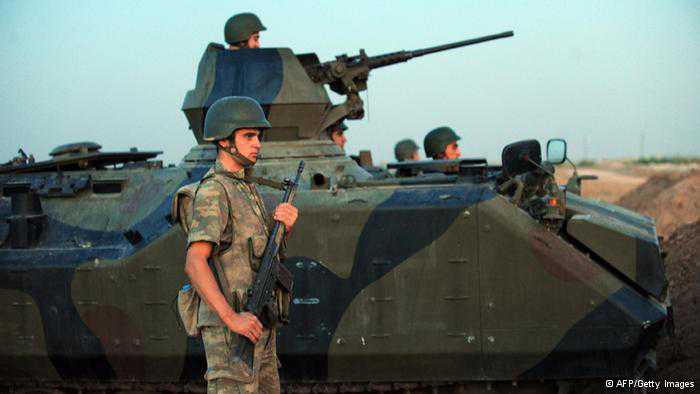
    Turkey and Syria traded artillery fire for a fourth consecutive day on Saturday. Ankara has continued to deploy more troops to its southern border with Syria on Sunday, raising concerns that the conflict may escalate.
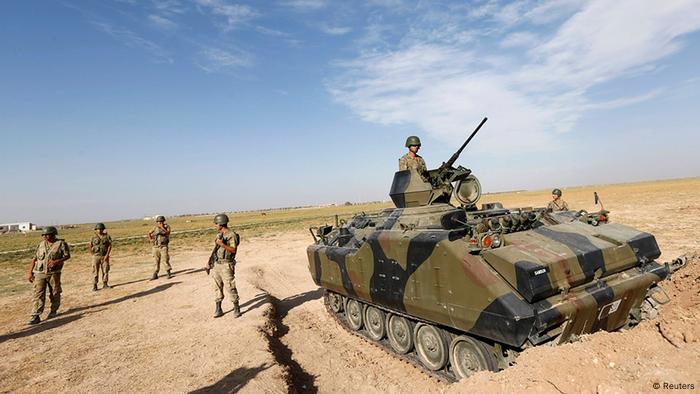
    Turkish soldiers stand guard on the Turkish-Syrian border near the Akcakale border crossing. 
Photo: REUTERS/Murad SezerTurkish troops are mobilizing along the Syrian border

    Turkey’s foreign minister, Ahmet Davutoglu, said on Saturday that parliamentary authorization was designed as a deterrent to further violence.

    “We haven’t taken this step with the intention of war,” Davutoglu told Turkey’s TRT television. “But from now on whenever there is an attack on Turkey, it will be silenced.”

    Polls showed that majority of Turks are against a war with Syria and many Turkish observers agreed that neither Turkey nor Syria has a desire for a war. But possible attacks along the border remain a growing concern. Ankara has signaled that it may launch a cross-border operation if it also feels threatened by separatist Kurdistan Workers’ Party (PKK) and its alleged Syrian branch the Democratic Union Party (PYD).

    Another worrying development according to observers is Ankara’s major policy change. Turkey’s more aggressive stance against Syria portends deeper tensions with Turkey and Syria’s allies, Iraq, Iran and Russia.

    Collapse of “zero problem” policy

    Turkey’s warning of war has been the boldest move so far demonstrating a major shift in AKP’s foreign policy, from a “soft power” strategy to one of military deterrence.”

    During the past 10 years of the AKP rule, Davutoglu’s strategy of “zero problem with neighbors” shaped Turkey’s new foreign policy. The foreign minister said there was no place for “military threats” in this new foreign policy vision, dialogue and diplomacy will be the main tools and regional cooperation would be the main priority.
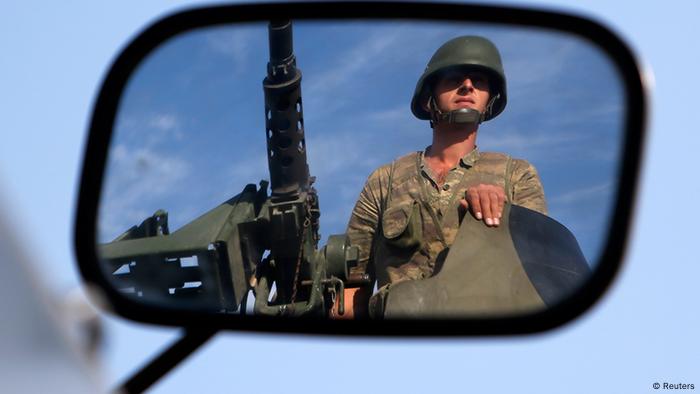
    A Turkish soldier is reflected on a mirror as he stands guard on top of an armored personnel carrier on the Turkish-Syrian border near the Akcakale border crossing
Photo: REUTERS/Murad Sezer Turkey had hoped not to have problems with the neighbors, but it’s proving difficult

    Syria had been the cornerstone of Islamic-conservative AKP’s new pro-active foreign policy, which aimed at developing close political, economic and cultural ties with the countries in Turkey’s neighborhood, areas once ruled by the Ottoman Empire.

    Davutoglu was criticized by the opponents for “Neo-Ottoman adventures,” but he denounced the criticism. Western pressure did not prevent the AKP government from enhancing close relations with repressive regimes, including those of Mahmoud Ahmadinejad in Iran, Muammar Gadhafi in Libya, and Bashar Assad in Syria.

    Great ambitions and deep frustrations

    The Turkish government’s main priority had been to expand Turkey’s area of influence. Until 2011, Turkey and Syria were close allies. Davutoglu made dozens of visits to Damascus, resisted Western pressure and tried to gain leverage over the Syrian regime.

    The AKP’s zero-problem policy was first challenged by the Arab Spring uprisings in North Africa and the Middle East. The Turkish government’s great ambitions to be a regional power and an agenda-setting country in the Middle East faced an even greater challenge in neighboring Syria.

    Soon after the uprising began in Syria in March 2011, Turkey first adopted a cautious approach and tried to convince Assad for a controlled change. But Assad’s reluctance for reform and disproportionate use of force against protestors caused deep frustration among Turkish leaders and after August 2011 they adopted a hardliner position against Assad’s rule.

    With the fear of losing influence in its immediate neighborhood, Turkish government gave strong support for the Syria opposition and offered logistical support to the armed opposition groups. The question of al Qaeda’s presence among the armed opposition groups, the strength of radical Islamists and jihadists among them continue to be a major concern for Western countries.

    Tensions with Iraq and Iran

    In its policy to oust Assad, Turkey joined forces with two other Sunni countries: Saudi Arabia and Qatar. This has further undermined Turkey’s close relations with Shiite majority countries, Iran and Iraq’s Maliki-led government, which have been closely allied with Assad.
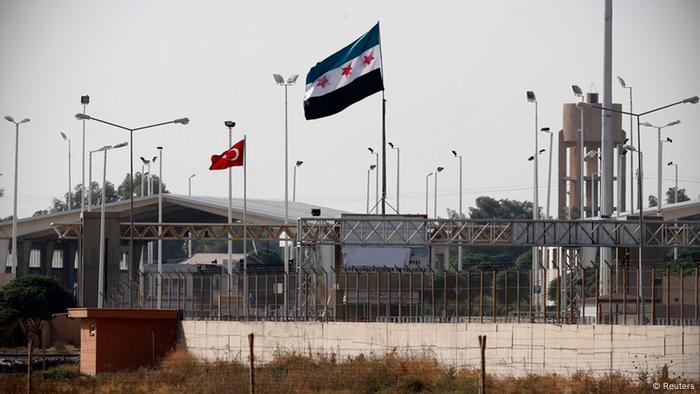
    Turkish and Syrian Independence flags are seen between the border gates Akcakale of Turkey and Tel Abyad of Syria, 
Photo: REUTERS/Murad Sezer Conflict with Syria also threatens Turkey’s relations with some of its other neighbors

    Two years ago, the Turkish government gained momentum in Tehran and brokered a nuclear deal to offer a diplomatic solution to the Iran nuclear crisis. But after the Syria crisis, Iran’s military leaders continue to publicly warn Turkey for its Syria policy.

    Ankara’s already tense relations with Iraq’s Shiite-led government are expected to further strain this month, as Turkish government is seeking to extend a mandate to send Turkish troops to northern Iraq to fight PKK militants.

    From “zero problems” to zero friends

    Davutoglu’s controversial policies, which also led to deep tensions with Israel, now face growing criticism, not only from the opposition, but also from intellectuals who had long supported the AKP as a transformative power for Turkey.

    One of those liberal intellectuals, international relations professor Ihsan Dagi warned Turkey is making mistakes and risks not only broader conflicts with its neighbors, but also losing all the domestic democratic achievements of the past decade.

    “[As Turkey] we have put aside our soft power and attempted to design our neighborhood with our military might,” Dagi wrote in his column at the daily “Zaman.” “We turned away from being an admired country and sought to become a country that is feared by others. We made mistakes, big mistakes.”

    Davutoglu and AKP’s “zero problem” policy had challenged traditional, nationalist and isolationist Turkish foreign policy, introduced a new foreign policy activism, but failed to yield concrete and positive results. Today it left Turkey with almost “zero friends” in its immediate neighborhood.

    According to Dagi, Turkey will continue to be an emerging power in world politics, but failures of Turkish government in foreign policy are putting Turkey into a difficult position of facing off against unpredictable threats.

    “Ironically today, the utopia of the old regime of Turkey has turned into reality,” Dagi said. “Turkey is now surrounded by enemies.”
  • Postcard from Istanbul: An impressive, energetic city

    Postcard from Istanbul: An impressive, energetic city

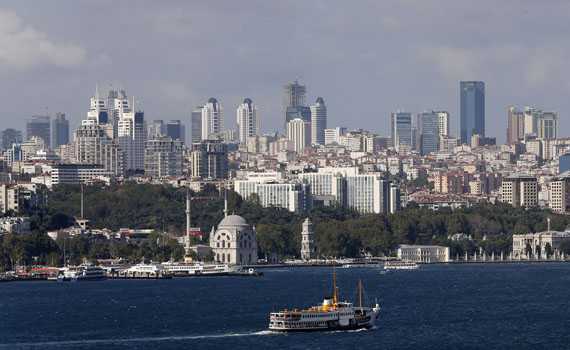
    Istanbul is very metropolitan, very friendly for English speakers, and massive in size. There are 10 different tours available to those interested in exploring it. I took two of them and feel as if I didn’t even scratch the surface on what was a mysterious place to me before I arrived.

    Related

    Globe 10.0: Is the Celtics trip to Europe good for the team?

    Celtics’ mission is to recapture Ubuntu feeling

    Celtics notebook: Rivers working his players

    Daily observations from traveling with the Celtics

    I was uncertain whether it would be similar to Paris, Rome, or London or perhaps similar to a city that was less exposed to Western culture. Istanbul offers the best of both worlds. You can eat pure Turkish cuisine or American fast food. The cab drivers will take the scenic route to your destination — similar to their Boston brethren — and there is a hip crowd of sneaker-wearing young people who nestle at the pier of the Bosphorus Strait in the evenings and then pour into the local bars and clubs.

    Istanbul has that rare combination of New York flair with a history and culture that can be overwhelming. A visit to the Spice Market — an essentially endless flea market of frantic intensity filled with salesmen who can easily sniff out a tourist looking for souvenirs — was especially fascinating.

    On one side of the city, you can experience the serenity of the various mosques, and on the other, amongst thousands of vigorous shoppers, bargain for a good price on pomegranate tea. Istanbul has various layers, and it would take much more than a few days to discover all of them, but for now, I feel completely satisfied and energized with what fraction I have discovered so far.

    Gary Washburn end of story marker

    via Postcard from Istanbul: An impressive, energetic city – Celtics – Boston.com.

  • Istanbul-Armenian Artist: “There is no cultural diversity in Turkey”

    Istanbul-Armenian Artist: “There is no cultural diversity in Turkey”

    Aret Geçer , an Armenian artist based in Istanbul, doesn’t let just anybody enter his studio.

    The reason for the secrecy is his series of works regarding Archbishop Mesrob II Mutafyan, the Armenian Patriarch of Constantinople, now incapacitated due to degenerative dementia.

    Only several of the numerous works are ready to be exhibited. Aret says he won’t comment as to the reasons why he’s focused on the illness plaguing Archbishop Mesrob II until the exhibition.

    “Even though the works have a political significance, I wanted to free them of political and church related conceptions. I am displaying the paintings of the archbishop solely from an artistic perspective. I want people to see the art in them as the primary idea,” Aret says.

    From Yerevan to Istanbul

    Aret is the only Istanbul-Armenian I have met who carries himself like a Yerevan native. After studying for a year at the Lyon Art Institute, Aret went to Armenia and enrolled at the Yerevan Art Academy.

    Now, he walks past the luxurious stores in Taksim Square and when he reaches a small intersection he changes direction towards his art studio which is located in a building that stands out due to its Armenian architectural design.

    What can you say about the level of education at the Yerevan Art Academy?

    Those with no connection to art are accepted at this school tuition free through their connections. The really worthy students are turned away. The instructional methods are also outdated. You feel that you are obtaining certain fundamental things, but they aren’t relevant to the present era.

    Do you mean that there’s a lack of good teachers?

    Teachers exist but they have become disgusted with the job. Except for a few exceptions, they’re only there to make extra money. You would think that non-conformist young people would be enrolled at an art school, but in Yerevan you’ll find the opposite; the most conservative. Free thinkers are in the minority.

    What’s the difference if we compare Lyon, Istanbul and Yerevan in terms of art?

    We can’t compare them to Lyon because that city is in a totally different time frame. Istanbul tries to have the contemporary and exhibit it. They spend tons of money on contemporary art.

    Your paintings are hidden away in this room where you work. Why don’t you at least show them in your studio?

    I believe there are different ways to exhibit art. It should be done at a formal exhibition. Furthermore, half of the exhibition process involves hiding the works.

    Cultural diversity in Yerevan is scarce, but in Istanbul you can meet people of different cultures and religions. Does this diversity influence your art, and if so, how?

    I don’t feel such diversity. It’s probably because I’ve lived here for so many years. Such great diversity doesn’t exists here. There aren’t even sub-cultures anymore. It’s all been erased. There is only one culture – the Turkish culture.

    In addition to painting you’re also a cartoonist for the Agos newspaper. Can you make a living doing this?

    I live an average lifestyle. Here too, artists don’t live well.

    Photos: Saro Baghdasaryan

    via Istanbul-Armenian Artist: “There is no cultural diversity in Turkey” | Hetq online.

  • YouTube cedes to Turkey and uses local Web domain

    YouTube cedes to Turkey and uses local Web domain

    Google’s video-sharing site will now use “com.tr” in the European country; this means paying local taxes and abiding by often-strict content regulations.

    Dara Kerr

    by Dara Kerr

    October 2, 2012 6:45 PM PDT

    (Credit: Google )

    Turkey and YouTube have a checkered past, so today’s news isn’t a big surprise — the video-sharing site will now operate under a local Web domain — “com.tr” — and be subject to the country’s content regulations and taxes.

    According to Reuters, Turkey had been working to get YouTube to agree to this set-up for some time.

    “This is an important development,” Turkish Transport and Communications Minister Binali Yildirim told Reuters. “For a long time we have made a call to Internet firms in Turkey: ‘You are operating in this country, you must be resident here.’”

    Now that YouTube is a resident in Turkey, it will be subject to local taxes and must also abide by the country’s often-strict content regulations. “It will now be in a binding and critical position to implement court decisions and remove any objectionable publications,” Yildirim said.

    YouTube announced its deal with European government in a blog post, saying: “Now, if you set Turkey as your location, you’ll get a Turkish-language experience with great, locally relevant content–including recommended channels and videos. We’re looking forward to the ways in which video-loving Turks of all ages will bring their culture to YouTube as they connect with one another, share ideas, and find new audiences.”

    Turkey is not the first country to get a local Web domain with YouTube. In fact, 46 other countries around the world have local domains with the video-sharing site, including France, Egypt, Indonesia, Peru, and Yemen.

    Relations between the company and Turkey haven’t always been friendly, however. In 2008, Turkey blocked YouTube for more than two years after videos considered insulting to the country’s founder, Mustafa Kemal Ataturk, were posted. The ban was lifted after the offending videos were removed in 2010.

    Related stories

    YouTube upgrades Content ID, expands appeals process

    Twitter launches dedicated presidential debate page

    Shining light on new Kindle Paperwhite

    Iran unblocks Gmail but still wants to keep out YouTube

    YouTube to air presidential debates live on Elections page

    Local courts have also recently issued orders to block YouTube access to the anti-Islam film trailer, “Innocence of Muslims,” which has caused sweeping protests across the Middle East. In this movie, the prophet Mohammed is depicted as a buffoonish, skirt-chasing molester. Removal of this video in Turkey will now be much more smooth and speedy now that the site is registered there.

    “Now, as soon as the court makes its decision, all the demands will be carried out immediately,” Yildirim told Reuters.

    Other countries have been active in battling YouTube over the past month. Iran worked to block Google’s video-sharing site last week, and Brazil recently detained the company’s local chief executive and threatened to block the site if offending videos weren’t removed. Pakistan’s government decided to ban YouTube altogether because of its refusal to block the “Innocence of Muslims” clip.

    Updated at 9:00 p.m. PT with quote from YouTube blog post and to add that 46 other countries worldwide have local YouTube Web domains.

    via YouTube cedes to Turkey and uses local Web domain | Internet & Media – CNET News.

  • Turkish Airlines boosts Birmingham to Istanbul flights

    Turkish Airlines boosts Birmingham to Istanbul flights

    Turkish Airlines boosts Birmingham to Istanbul flights

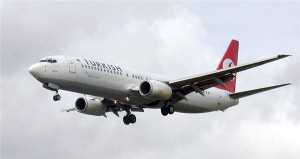
    Birmingham airport has claimed that Turkish Airlines is ‘going from strength to strength’ at the base, with the frequency of the carrier’s flights to Istanbul increasing from seven to ten a week.

    Additional services on Mondays, Thursdays and Sundays will boost access to Turkey’s largest city and also enable more onward connections to the Middle East, Far East and Africa.

    To celebrate the development, the airline presented the West Midlands gateway with a giant model aircraft that now hangs from the ceiling of the international pier.

    Martyn Lloyd, commercial director at Birmingham airport, said the last four years have brought consistent growth in the number of people flying with Turkish Airlines.

    He added: ‘This increase in the number flights per week is great news for our leisure and business passengers, who now have even more choice and flexibility for long-haul connectivity from Birmingham.’

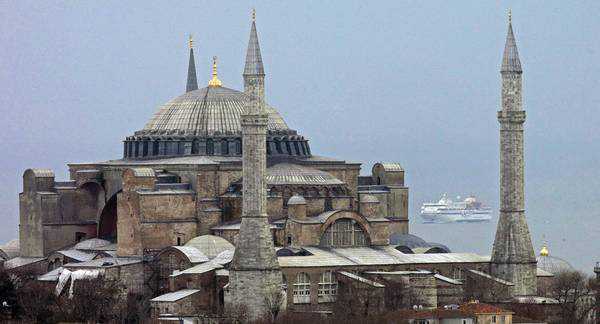
    Leisure travellers heading to Istanbul can see sights such as the Sultan Ahmed mosque, Topkapi Palace and the Hagia Sophia museum.

    via Opodo travel news � Turkish Airlines boosts Birmingham to Istanbul flights.

  • KOHAR with Stars of Armenia – Միանանք Երգով – YouTube

    KOHAR with Stars of Armenia – Միանանք Երգով – YouTube

    KOHAR with Stars of Armenia – Միանանք Երգով

    KOHAR with Stars of Armenia, Live in Concert on 28 May 2011, Yerevan

    Director: Phil Heyes, London, UK

    Recording: Record Lab, Koln, Germany

    Lighting & Projection: Lumen Art, Beirut, Lebanon

    Sound Mixing: Masterpinguin Ing. Buro, Hamburg, Germany

    Video Editing & Production: Domino Production LTD, Yerevan, Armenia

    Produced by: HAYASA Productions LTD, Nicosia, Cyprus

    via KOHAR with Stars of Armenia – Միանանք Երգով – YouTube.