Blog

  • Sassounian’s column of Oct. 11, 2012 (Part II)

    Sassounian’s column of Oct. 11, 2012 (Part II)

    Two Congressmen Battle
    Over Armenian-American Votes
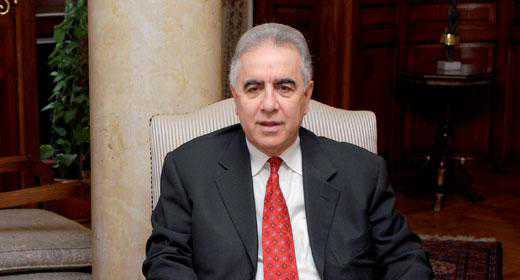
     
     
    This is the second part of the debate between two Democratic Congressmen, Howard Berman and Brad Sherman, held at the Ferrahian School’s Avedissian Hall in Encino, California, on Sept. 29. The debate was organized by the Armenian National Committee of America, Western Region.
     
    Cong. Sherman: “We need to recognize the Genocide not only for Armenia, not only for America, but the Turkish state will never be a modern state until it comes to grip with its own history.” Criticizing US governments’ reluctance to use the term Armenian Genocide, Cong. Sherman asked: “What kind of superpower cowers before history? What kind of superpower worries about Turkish threats? Dozens of parliaments around this world have recognized the Genocide. It is about time for Congress to have the same level of courage!”
     
    In response to a question on what the two Congressmen would do to encourage America’s allies such as Israel to recognize the Armenian Genocide, Cong. Berman stated that “it is audacious for a country that itself hasn’t recognized the Armenian Genocide, to start telling other countries what they should be doing. So number one: get this [genocide] resolution passed, and push and persuade the Executive Branch to support what the Congress has done, and then you do want to make it into an international consensus. But, we are not effectively going to tell a government that they should do something that we haven’t yet done. …”
    Cong. Sherman: “I’m proud that Yad Vashem, the Holocaust Museum in Jerusalem, recognizes the Armenian genocide; proud that the Holocaust Museum in Washington does the same. We need to recognize the Armenian genocide at the U.S. government level, but I for one have the chutzpah to urge my Israeli friends to do it even before we do it. And the politics in Israel are a little different.  Here, there is still this mirage that somehow Turkey is the critical American ally. In Israel, that same mirage was more or less shattered recently, and so we may indeed find that Israel is able to beat the United States in recognizing the first genocide of the 20th century. And given the history of Israel and the history of the Jewish people, I think it’s an important thing to do. So I for one don’t believe we should wait to urge Israel to move forward, but we should be inspired to move forward ourselves as quickly as possible.”
    Panelist Harut Sassounian: “I would like to clarify something for the record based on the answers that you both gave. Before we give any wiggle room for Israel to wait for us to pronounce judgment on this issue, I think we would do well to remember that in 1975 and in 1984, twice, the House of Representatives, the full House, adopted resolutions recognizing the Armenian genocide. So Israel doesn’t have to wait for the US to do it first. We’ve already done it twice, so they can do it once at least, in the meantime.”
    Cong. Berman: “For historical reasons Israel should do it, particularly Israel, should do it.”
    Cong. Sherman: Israel is going to recognize the Armenian Genocide “because it is the moral and right thing to do and because the historical record is there.”  
    In response to a question on whether the United States should stop paying rent to the Turkish government for the Airbase in Incirlik, Turkey — located on occupied Armenian territories — and pay that money to the heirs of original Armenian owners, Cong. Sherman stated:  “I look forward to developing a foreign policy where we are less dependent upon the use of bases in Turkey, because I’ve seen them try to lobby the Pentagon, to lobby Congress not to recognize the Genocide on the theory that, ‘oh, you need our bases.’ We can and should work with our other southeast Asian NATO allies to have a basing structure that does not require us to be paying rent to the Turkish state.  …However, as long as our base is on that land, that becomes an excellent argument for additional aid to the Armenian state because we’re on that territory.” 
    Cong. Berman: “…One of the arguments made in Congress against the genocide resolution is ‘Oh the Turks will kick us out of Incirlik.’ The Turks have no intention of kicking us out of Incirlik. They want us there; they’re desperate to have us there. This is a smokescreen. This is an argument that people who are fronting for the Turkish position use to scare Congress into thinking there’ll be great dangers to our national security.”

    (to be continued)

  • Georgia Will Be A Model For The Region

    Georgia Will Be A Model For The Region

    Mr. Jeffrey Mankoff points out extremely important developments in Caucasus and Central Asia under different perspectives for followers of Strategic Outlook. (more…)

  • Turksh animal group T.A.G

    Turksh animal group T.A.G

    The Turkish animal group work super hard to rescue and save dogs/cats.  As well as neutering over 400 animals we have rehomed over 100 animals now worldwide ..Please show your support for the turkish animal group – registered charity no – 1148352 Thank you x

    https://www.facebook.com/karen.l.wren#!/pages/Turkish-Animal-Group-TAG-Dog-Adoptables/193092287368884

  • Ben Affleck Stars in, Directs Historical Thriller, ‘Argo’

    Ben Affleck Stars in, Directs Historical Thriller, ‘Argo’

    Recreating an international crisis of historical proportions is not as easy as you think.

    For Ben Affleck, the director and star of “Argo,” opening Friday, it may have been the biggest challenge of his career: fomenting the chaos necessary to simulate the 1979 storming of the U.S. Embassy in Tehran that launched the hostage crisis.

    “We had several thousand extras on some days,” the 40-year-old actor-director told The News of filming in Istanbul, which doubled for Tehran. “It was not quite ‘Lawrence of Arabia,’ but it felt pretty big to me.

    “I wanted to hire real people, but that meant we had to dress them and we had to teach them Persian chants,” he adds. “We had to bus them in from all over the place; some of these people had to leave their homes at one in the morning. All of a sudden, it turned freezing and raining on the days we were going to shoot. So there were a ton of logistical challenges. Chief among them, they could just go home. They could just decide it wasn’t worth it.”

    The result, though, has been well worth it for Affleck.

    Based on a real incident only declassified during the Clinton administration, “Argo” tells the story of a clandestine CIA operation that freed six American diplomats. They narrowly escaped capture after their embassy was breached and 52 of their peers were taken hostage.

    Secretly holed up for weeks in the home of the Canadian ambassador (played by Victor Garber), they realize it’s just a matter of time before they’re discovered. So Langley assigns a top “exfiltration” expert, Tony Mendez (Affleck), to sneak into the midst of the chaos of the Revolution and whisk the diplomats home…

    via Ben Affleck Stars in, Directs Historical Thriller, ‘Argo’.

  • Turkey warns Syria future attacks ‘will be silenced’

    Turkey warns Syria future attacks ‘will be silenced’

    From Gul Tuysuz, CNN
    October 8, 2012 — Updated 0033 GMT (0833 HKT)
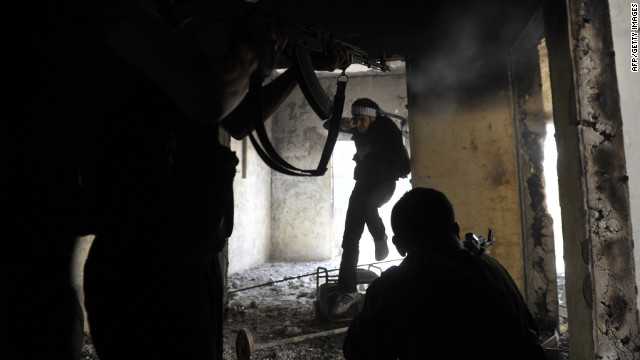
    Syrian rebels take up positions inside a building during clashes with government forces in Aleppo on Saturday, October 6. See more of CNN’s best photography.
    • NEW: Syria’s defense minister says forces are more resolved than ever to restore peace
    • NEW: At least 110 are dead from fighting inside Syria, says an opposition group
    • NEW: U.S. defense secretary expresses concern that the conflict could broaden
    • A third shell falls in Turkish territory, a semi-official news service says

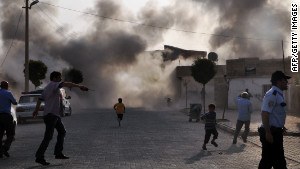
    (CNN) — Residents of a Turkish border town hid inside their homes Saturday after three Syrian shells landed inside Turkey in separate incidents amid fierce fighting in Syria.

    The shelling prompted Turkish forces to return fire as clashes between the two neighbors entered a fourth day, according to government and semi-official media reports.

    As Turkish forces deployed along the border, Foreign Minister Ahmet Davutoglu warned that “any future attack on Turkey from anywhere will be silenced,” according to the semi-official Anadolu Agency news service.

    The Syrian shells hit outside two villages in Hatay province, the provincial government said in statements.

    Where the border clashes took place

    One shell landed about 50 meters (164 feet) into Turkey. In the second incident, a shell landed about 1.2 kilometers (0.75 miles) into Turkey, between a Turkish village and a border post, the provincial government said.

    Rebels attack army barracks in Damascus
    Turkey-Syria ties strained by violence

    Turkish shells rain on Syria

    In both cases, authorities believe Syrian troops were firing on rebel forces stationed near the border.

    The Anadolu Agency news service said three shells had been fired Saturday into Turkish territory.

    Turkish border troops retaliated, firing twice into Syrian territory, the Hatay government said.

    Who is arming the Syrian conflict?

    U.S. Defense Secretary Leon Panetta expressed concern about the cross-border activity.

    “The fact is, there is a war going on in Syria between the opposition and the regime forces, and it’s one that has cost a large number of lives,” he told reporters in Lima, Peru. “Whether or not that conflict begins to extend into the neighboring countries such as Turkey remains to be seen, but obviously the fact that there are now exchanges of fire between these two countries raises additional concerns that this conflict could broaden.”

    The shelling comes amid fighting between rebel and regime forces over the nearby Syrian border village of Khirbet al-Jouz. Rebel forces captured the village Saturday after seven hours of fighting, according to the London-based Syrian Observatory for Human Rights.

    At least 40 Syrian soldiers and nine rebels were killed in clashes in Khirbet al-Jouz and in the Jisr al-Shughur countryside, in Idlib province, the group said.

    Residents across the border in Turkey could see and hear gunfire from the fighting, and government officials took to village loudspeakers to warn residents not to go outside.

    “How can we not be afraid? Listen you can hear the gun-fighting,” said resident Hamza Tuncer.

    Tuncer said he helped carry the bodies of two dead fighters into the village.

    One was a fighter who suffered a foot wound but decided to return to the battle, Tuncer said.

    “That’s when he got shot in the head,” he said.

    In addition to the shelling, fires from forests burned in the conflict have spread to the Turkish side of the border, leaving the air filled with smoke, resident Turhan Tomak said.

    “We have no forest left. It hurts my insides. All our forests are gone,” Tomak said.

    The back-and-forth shelling between Syrian and Turkish forces began Wednesday when a shell fired from Syria hit the Turkish town of Akcakale, killing five civilians and injuring nine others.

    Children in a war-torn Syria town hold school in a cave

    Davutoglu said he was certain the shells that hit Turkey on Saturday came from the Syrian army because it is a type used only by that country’s forces.

    His warning against Syria comes amid a buildup of forces along the Syrian border. Armored units have deployed to several areas along the border, the Anadolu Agency reported.

    The Turkish parliament has approved a resolution allowing military forces to deploy abroad, but government officials have said they do not want war with Syria, once a close ally.

    But Turkish Prime Minister Recep Tayyip Erdogan has warned Syria not to escalate tensions.

    U.N. still has no plan for Syria

    “It would be a deadly mistake to test Turkey’s deterrence, determination and capacity,” he said.

    The U.N. Security Council condemned the shelling and appealed for restraint from both countries.

    Before Saturday’s incidents, Syria’s U.N. Ambassador, Bashar Ja’afari, said his country “is not seeking any escalation with any of its neighbors, including Turkey.”

    Rebels report a potentially key ‘capture’

    In addition to the fighting over Khirbet al-Jouz, government and rebel forces clashed near Damascus, Aleppo and other cities. Heavy fighting was reported in the western province of Homs, where fighting and shelling left 24 people dead, according to activists.

    Nationwide, at least 110 people died in fighting Saturday, the opposition Local Coordinating Committees said.

    Meanwhile, the al-Farouq brigade, one of the rebel groups operating in Homs, claimed on its Facebook page to have captured 1st Lt. Housam Assad and two of his aides. The military commander of that brigade, Abu Sayeh Jenaidi, appeared on Al Jazeera and said the detainee claims to be a direct relative of Syrian President Bashar al-Assad. Housam Assad is wounded, but in stable condition, the military commander said.

    CNN cannot independently verify the claims by al-Farouq brigade, nor the relationship that Housam Assad may have with the Syrian president.

    Syrian defense ministers says security forces are more determined than ever to restore peace

    Defense Minister Gen. Fahd Jassem al-Freij spoke Saturday on state TV, the state-run Syrian Arab News Agency (SANA) said.

    “Our armed forces today are more resolved to restore security and stability to Syria and cut off the hand of whoever tries to harm it and eliminate the remnants of defeated terrorists wherever they are,” SANA reported he said.

    Al-Freij was named minister after his predecessor was killed in July.

    He noted, also, that “the homeland’s door is still open to all its sons, including those who were misled and want to go back on track under the homeland’s umbrella,” SANA reported.

    Saturday marks deadline for Iranian hostages

    Iranian officials urged international groups to act to stop the threatened killing of 48 Iranian citizens by Syrian rebels, according to the semi-official Fars News Agency.

    In a video posted to YouTube, the rebels holding the hostages have threatened to begin killing them Saturday unless the Syrian regime releases rebel detainees and stops what the rebels called the “ongoing random slaughter” of innocent civilians.

    The group, the Revolutionary Council of Eastern Ghouta, said one hostage would die for each Syrian killed by government forces.

    The hostages were kidnapped in August while on what Iran has described as a religious pilgrimage. The rebels have described the hostages as members of Iran’s military, an assertion Iran has denied.

    Iranian Foreign Minister Ali Akbar Salehi talked with Davutoglu by telephone Saturday and urged him to help secure release of the hostages.

    The semi-official Mehr News Agency said Salehi also spoke with the prime minister of Qatar in an effort to resolve the situation.

    Sources: Pro al Qaeda group steps up suicide bombings in Syria

  • Syrian Rebels Provoking Turk War? Or Is Turkey a Willing Accomplice?

    Syrian Rebels Provoking Turk War? Or Is Turkey a Willing Accomplice?

    Syrian Rebels Provoking Turk War? Or Is Turkey a Willing Accomplice?

    Posted by Daniel McAdams on October 7, 2012 11:32 AM

    The situation on the Syria/Turkey border is spiraling out of control, as for five days Turkey has shelled Syria in retaliation for apparent Syrian army shells landing in Turkey. The threat of a wider regional war has never been greater and with Israel chomping at the bit to attack Iran, a limited regional war threatens to become something significantly greater.

    The press as usual is spinning propaganda about this dangerous escalation: the madman Assad is so nuts that now he is even attacking Turkey.

    Question: Why would the Syrian government, facing an increasingly well-funded and well-trained insurgency where victory is by no means assured, open up a new front against its gigantic NATO-member neighbor to the north?

    Question: Why are these “Syrian army” shells landing on Turkish soil coming from parts of Syria that are occupied by the rebels or where the rebels have a heavy presence?

    Question: Why is Turkish army shelling having the effect of driving the Syrian army out of border areas and opening the way for the rebels to seize more and more border towns and crossings?

    As the Moon of Alabama blog points out, each time an unverified Syrian shell supposedly lands on Turkish soil, Turkish “retaliation” has the effect of delivering that town to the rebels.

    This Reuters report points out the pattern yet again:

    “Three mortar bombs fired from Syria landed near Guvecci village on Saturday, prompting a fourth day of retaliatory fire from Turkish forces. The Syrian mortar rounds hit empty land and there were no casualties.”

    And after the Turkish “retaliation”:

    “Syrian rebels…seized a government army outpost near the Turkish border province of Hatay and a rebel flag flew over the building on Sunday, while clashes could be heard in the area of a nearby Syrian village.”

    That sounds pretty convenient. A false flag “attack” on Turkey by the rebels certainly fits the pattern thus far.

    RT’s Paula Slier’s reports that many are seeing the possibility of a dual provocation: a false flag against a willing accomplice to draw in NATO to finally attack Syria:

    “Many critics believe these shells are being fired deliberately. This border area is controlled by rebels and it is possible that they’re firing these rounds to provoke turkey to go to NATO and call for foreign intervention,” Slier said.

    This “shelling” then retaliation, then rebel seizure of border areas is having the effect of creating a de facto buffer zone inside of Syria from which the rebels and their US/Saudi/Qatari/Israeli partners can expand the fight further inside Syria. What an amazing coincidence that this “Syrian army” shelling is producing so many rewards and advantages for the rebels and their partners!

    via Syrian Rebels Provoking Turk War? Or Is Turkey a Willing Accomplice? « LewRockwell.com Blog.