Blog

  • Why is the US government So Vigilant About Israel, but not Armenia?

    Why is the US government So Vigilant About Israel, but not Armenia?

    The most common question among Armenians these days is: Why did the United States government support Israel so strongly and promptly, but not Armenia and Artsakh?

    This question became more pertinent after Politico disclosed last week that Secretary of State Antony Blinken warned: “Azerbaijan may invade Armenia in the coming weeks.”

    During an October 3 phone call with Cong. Nancy Pelosi, Anna Eshoo and Frank Pallone and others, Blinken reportedly told them: “the State Department was looking at avenues to hold Azerbaijan accountable and isn’t planning to renew a long-standing waiver that allows the U.S. to provide military assistance to Baku.” Blinken added: “the State [Dept.] saw a possibility that Azerbaijan would invade southern Armenia in the coming weeks.” Politico wrote that two other unidentified sources confirmed the phone conversation. Cong. Pallone tweeted on Oct. 11 that “Aliyev is moving forward with his objective to take Southern Armenia.” On Oct. 15, in a written statement to Armenpress, State Dept. spokesman Matthew Miller said that the Politico article “is inaccurate and in no way reflects what Secretary Blinken said to lawmakers.” However, Politico said it firmly stands by its report.

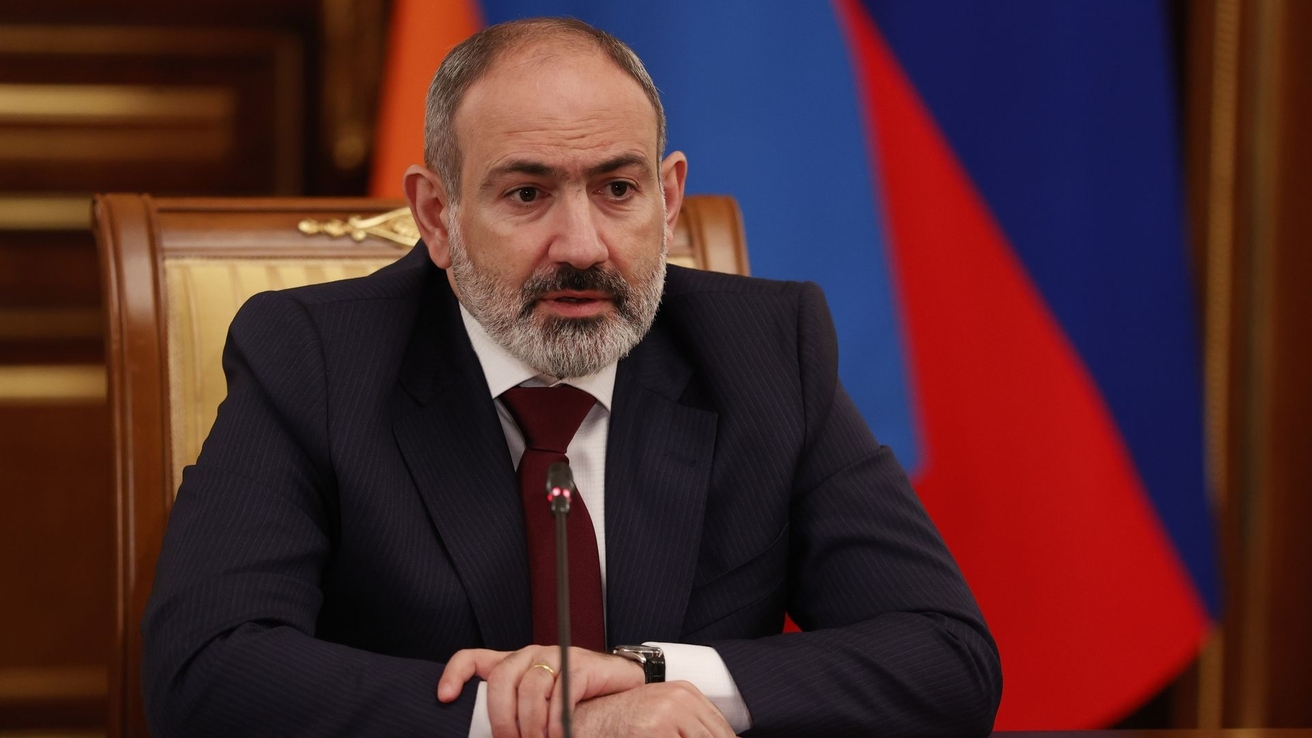
    Surprisingly, Prime Minister Nikol Pashinyan stated on Oct. 11 that the “risk was “extremely low,” and that there was no military buildup on either side of the border. Thus, the Prime Minister contradicted what Tigran Balayan, Armenia’s ambassador to the European Union, said on Oct. 6: Azerbaijan is actively preparing an invasion of Armenia within weeks.

    More importantly, Blinken and other US officials have repeatedly said that they are committed to “Armenia’s sovereignty and territorial integrity.” They have stated that “they are deeply concerned by Azerbaijan’s military action, declaring that the use of force to resolve disputes is unacceptable.” However, the U.S. government not only ignored its own warnings to Azerbaijan, but also the occupation of Artsakh and parts of Armenia proper. The United States, France and Russia have apparently decided that Turkey and Azerbaijan are much important for them than Armenia, regardless of the agreements Russia signed with Armenia and the sympathies of Western countries for Armenians. They have offered Armenians merely sympathetic words with zero action. Such shameful behavior has emboldened the dictator in Baku to move forward with impunity with his expansionist plans. These major powers did not even have the courage to pass a UN Security Council resolution to condemn Azerbaijan or impose sanctions.

    Understandably, most Armenians are furious at the Israeli government for permitting its arms manufacturers to provide 60% of Azerbaijan’s advanced weapons which have killed and wounded thousands of Armenian soldiers during and after the 2020 War.

    The more important issue is: why the United States is so protective of Israel, but not Armenia? The short answer is: due mostly to the activism of the Jewish-American community. There was a time when Jewish Americans were discriminated against in many ways. From the 1920’s until after World War II, American universities limited the number of Jewish students they admitted. After World War II, the United States even refused to accept thousands of Jewish survivors of the Holocaust.

    However, Jewish Americans overcame many obstacles by playing prominent roles in all aspects of American life, such as business, science, arts, literature, music, films, theater, comedy, media, civil rights and politics. As of January 2023, there were 37 Jewish Americans in Congress: 10 Senators and 27 House members. Sen. Chuck Schumer is the Senate Majority Leader. The US government contributed $53.6 million to build the US Holocaust Memorial Museum on donated federal land. Over the years, scores of Jewish Americans have served on the US Supreme Court. Shelley Greenspan is the White House Jewish Liaison. In the State Dept., Ellen Germain is the Special Envoy for Holocaust Issues and Ambassador Deborah Lipstadt is the Special Envoy to Monitor and Combat Anti-Semitism. Vice President Kamala Harris’s husband Douglas Emhoff is a Jewish American. There are several Jews serving in high-level governmental positions, such as Secretary of State Antony Blinken, Deputy Secretary of State Wendy Sherman, Treasury Secretary Janet Yellin, Attorney General Merrick Garland, Secretary of Homeland Security Alejandro Mayorkas, Director of National Intelligence Avril Haines, Deputy Director of the CIA David Cohen, Chair of the Securities and Exchange Commission Gary Gensler, Director of the Office of Science and Technology Policy Eric Lander, Deputy Health Secretary Rachel Levine, and National Security Agency cybersecurity director Anne Neuberger.

    80 years ago, when 400 Rabbis asked to meet with Pres. Franklin Roosevelt, they were turned down. But last week, a group of Jewish Americans met with Pres. Joe Biden in the White House which was lit up in the colors of the Israeli flag. They have come a long way.

    In the category of “Israel lobby in the United States,” Wikipedia mentions Christians United for Israel with over seven million members, the American Israel Public Affairs Committee (AIPAC) which has three million members and $100 million annual budget, and J Street with an annual budget of $2 million. On the other hand, Armenian-Americans have two advocacy groups: the Armenian Assembly of America and Armenian National Committee of America with limited budgets. Armenians need to hire powerful US lobbying firms to counter those of Azerbaijan and Turkey.

    Armenians should increase their involvement in political campaigns and run for elective office. College students should specialize in political science or international relations. Armenians should increase their contacts with the US media; write letters to the editor and commentaries in local and national newspapers. The community should support financially the Armenian advocacy groups and contribute to the fundraising campaigns of political candidates. By playing prominent roles in American life, Armenians can influence domestic and foreign policy of the United States and help support Armenia and the Armenian Cause.

  • Fire of Anatolia

    Fire of Anatolia

    USA Tour 2023

    Don’t miss an extraordinary journey that will immerse you in the magic of dance and the splendor of Anatolia. “Fire of Anatolia,” Turkiye’s premier dance ensemble, is touring the United States in celebration of the 100th anniversary of the founding of the Republic of Turkiye. Experience the elegance and dynamism of Anatolian dance like never before.

    October 28, Saturday

    Washington DC / Lisner Auditorium

    Seats are filling up fast! Purchase your ticket today>

    https://www.90events.com/Ticket/Dates

  • Turkish Festival 2023

    Turkish Festival 2023

    Let’s Go Turkish this October!

    Don’t miss out! The Turkish Festival is this Sunday, October 15th.

    It’s free to enter!

    For more information visit: turkishfestival.org

    *Turkish Festival is brought to you by the American Turkish Association of Washington DC

    Join Us at the Festival: We’re Creative Edge Media Group, and we’re honored to be a Gold Sponsor of the festival. Make sure to visit our tent!

    Networking Table: Don’t forget to bring a stack of business cards to our Business Exchange table. Leave yours and take a moment to pick up others’ cards—it’s a simple and effective way to broaden your professional connections, all at no cost!

  • After the Loss of Artsakh, Pashinyan Should Declare 2020 Agreement Null & Void

    After the Loss of Artsakh, Pashinyan Should Declare 2020 Agreement Null & Void

    On Nov. 10, 2020, Prime Minister of Armenia Nikol Pashinyan, President of Azerbaijan Ilham Aliyev and President of Russia Vladimir Putin signed a ceasefire agreement in the Artsakh War.

    Ceasefires usually signify that the warring sides stop the fighting wherever they had reached until then. Oddly, in the case of the 2020 ceasefire agreement, Armenia surrendered to Azerbaijan large swaths of land where no Azeri soldier had set foot on, such as the Agdam, Kalbajar and Lachin districts, but not the Corridor.

    Therefore, the 2020 agreement was more of a capitulation than a ceasefire for Armenia. Here are the resulting problems:

    1) Prime Minister Pashinyan had no reason to sign a ceasefire agreement with Azerbaijan since the war was between Azerbaijan and Artsakh, not Armenia. Neither Armenia nor Azerbaijan had declared war against each other.

    2) Pashinyan had no authorization to turn over to Azerbaijan territories that belonged to Artsakh, not Armenia.

    3) The 2020 agreement set deadlines for Armenia, but not for Azerbaijan, to carry out various obligations, such as the evacuation of territories and exchange of prisoners of war. Unwisely, the Armenian government handed over all the Azeri prisoners right away, while Azerbaijan released only a small number of Armenian prisoners. Three years later, dozens of Armenian prisoners are still languishing in Baku jails. Pashinyan is not only making no efforts to return these prisoners but does not even talk about them.

    4) Under the 2020 agreement, the Lachin Corridor — the only road that connected Artsakh to Armenia — was forcefully and illegally taken over by Azerbaijan on Dec. 12, 2022, even though Russian Peacekeepers were supposed to control it.

    5) The 2020 agreement mandated that “all economic and transport connections in the region shall be unblocked.” This means that both Armenia and Azerbaijan would be able to cross each other’s territories. Pashinyan expressed his readiness to allow Azeris to travel through Armenia from the eastern part of Azerbaijan to its exclave of Nakhichevan, but never mentioned that such access was to be reciprocal. Contrary to the 2020 agreement, Azerbaijan demanded not just a passage, but a ‘corridor’ which means that the road through Armenia would belong to Azerbaijan. Pres. Aliyev never once mentioned that he will in turn allow Armenians to cross Azerbaijan’s border. To make matters worse, Turkey has been falsely demanding that Armenia accept the ‘Zangezur Corridor’ before it would agree to open the Armenia-Turkey border.

    6) Pashinyan has repeatedly talked about his plan to sign a peace treaty with Azerbaijan. There is no need to sign such a peace treaty since Armenia was not at war with Azerbaijan. Peace treaties are signed between warring parties. Azerbaijan was at war with Artsakh, not Armenia.

    7) Contrary to the 2020 agreement, which mandated that Russian Peacekeepers would remain in Artsakh until 2025, Azerbaijan violated that provision by invading and occupying the remainder of Artsakh last month, forcing its 120,000 inhabitants to flee to Armenia.

    8) Azerbaijan’s occupation of Artsakh in September 2023 made the role of the Russian Peacekeepers unnecessary, which means that the Russian soldiers would have to leave what is now Azeri territory.

    9) While there are good reasons to blame Russia for its inaction in protecting Artsakh Armenians, there is an equally good reason to blame Pashinyan for conceding that Artsakh is part of Azerbaijan. It is clear that despite Russia’s alliance with Armenia, given its involvement in the Ukraine War, Pres. Putin has decided that Turkey (the only NATO member that has not sanctioned Russia) and its junior brother Azerbaijan are much more important to Russia’s national interests than Armenia or Artsakh. Meanwhile, the West has not been of much help to Armenia either, except for issuing supportive statements, but no action.

    10) After the 2020 War, when Azerbaijan’s army entered and occupied the eastern territory of Armenia, Pashinyan not only makes no effort to dislodge the enemy from Armenia’s sovereign territory but does not even talk about Azerbaijan’s illegal presence there.

    11) Pashinyan’s long list of mistakes includes acknowledging that the Soviet-era Azeri inhabited enclaves inside Armenia are part of Azerbaijan. There was no reason for Pashinyan to offer to Azerbaijan these enclaves, especially since Aliyev had made no such demands.

    12) Pashinyan unilaterally recognized Azerbaijan’s territorial integrity without any reciprocal recognition by Aliyev.

    Given Pashinyan’s mishandling of the above 12 critical issues, refusal to resign and turn over his seat to a competent leader, the only option left for him is to declare that the 2020 agreement is null and void since Azerbaijan has violated most of its provisions.

    Pashinyan should refuse to sit at the negotiating table with Aliyev until he releases all Armenian prisoners of war and withdraws his troops from Armenia’s territory. Aliyev should first honor his previous commitments before Armenians can trust him to abide by future agreements.

    Fortunately, the 2020 agreement can easily be discarded because it was not ratified by the Parliaments of Armenia, Azerbaijan and Russia as an international treaty. It was simply signed by Pashinyan without consulting anyone. The next leader of Armenia, on his first day in office, should nullify the 2020 agreement.

  • Canadian Parliament honors Nazi: is it a fatal mistake or a regular pattern?

    Canadian Parliament honors Nazi: is it a fatal mistake or a regular pattern?

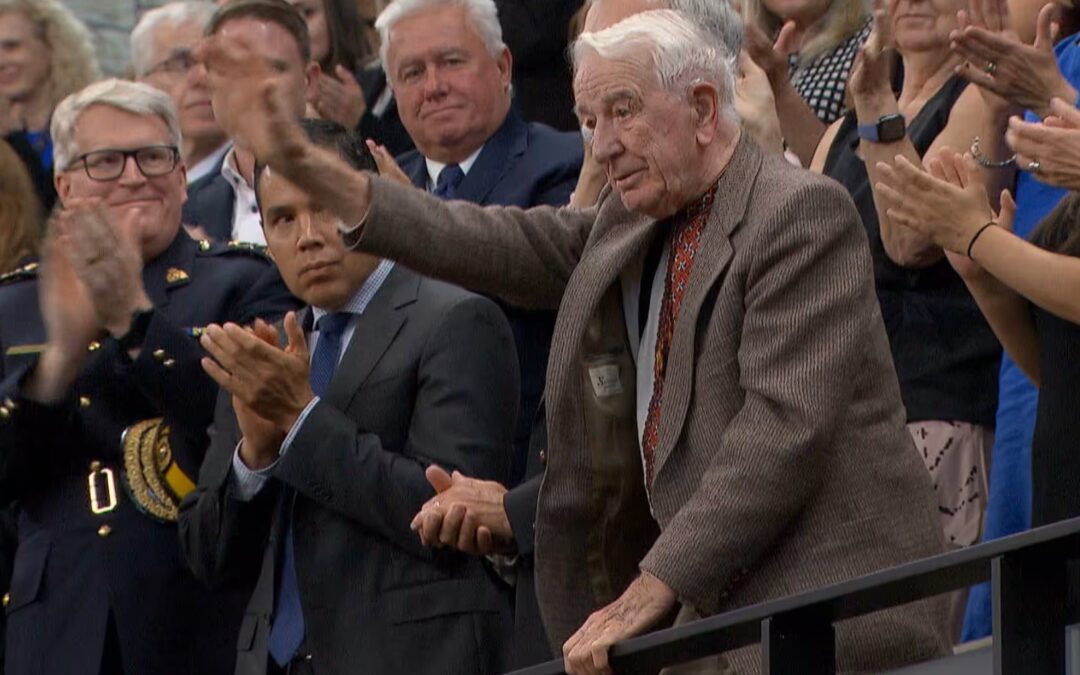
    Debates and questions are still in the air after veteran Yaroslav Hunka who fought for the Nazis during the Second World War was invited into the Canadian House of Commons to mark Ukrainian President Volodymyr Zelenskyy’s visit. A 98-year-old Nazi veteran received a standing ovation in Canada’s Parliament and he was also called a hero, who “fought for Ukrainian independence against the Russian aggressors then, and continues to support the troops today”. 

    However, it later emerged that Hunka used to be part of a Nazi military unit known as the 14th Waffen Grenadier Division of the SS organisation, which was involved in killing thousands of innocent people. The SS 14th Waffen Division was also known as the First Ukrainian Division. The unit was made up of Ukrainian volunteers from Galicia, a region that’s changed hands several times throughout history and has been a part of both Poland and Ukraine. The unit was under Nazi command and its members pledged allegiance to Adolf Hitler.  

    Canadian Prime Minister Justin Trudeau expressed the regret about the “terrible accident”, but stressed that the country’s authorities “continue to stand incredibly strong with Ukraine in its fight against Russia”. Indeed, the Trudeau speech did not look like the apology, but rather like a chance to remind that Canada would continue support Ukraine and fight against the “Russia’s aggression” by any possible means.

    Moreover, the Canadian experts and historians later tried to excuse Parliament’s mistake saying it is not possible to say whether Hunka was involved in the massacre without examining historical records. In 1985, Canada determined that being involved with the division wasn’t a war crime on its own, though people who were involved could still be prosecuted for specific brutalities.

    Yet, neglecting of unforgivable crimes of the Nazi is becoming a regular pattern for Canadian authorities. Only a week later after the “Hunka case” Canadian authorities apologized for nominating former SS fighter Peter Savarin for the highest state award back in 1987. Savaryn died in 2017 and as part of the constitution of the Order of Canada his award was automatically rescinded. He was also awarded Golden Jubilee and Diamond Jubilee medals, and Rideau Hall is considering whether those can be rescinded.

    The recent “mistakes” of Canadian Parliament show that the country did not learn the historical lessons and have taken the wrong side of the history. So have current Ukrainian President Zelensky who greeted Hunka with the ovation. An effort to excuse Nazi crimes only to show unsolidarity with Russia would lead to more than fatal consequence than anyone in Canadian Parliament can imagine. By fighting fascism the world paid the greatest price which can hardly be carried once again.

  • Living in Glendale as an Azeri/Turk

    Living in Glendale as an Azeri/Turk

    I’m half Azeri and half Turk, is it a good idea for me to move to Glendale, California where the Armenian population is large?

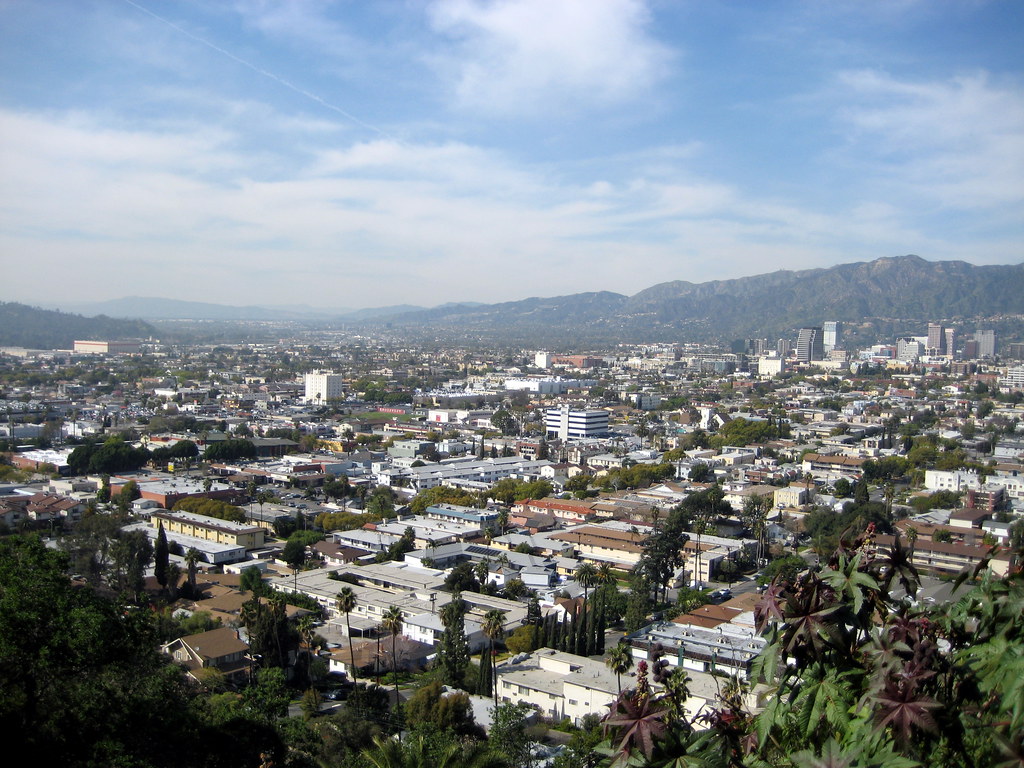
    Glendale has about 200K population. Armenians make up the single largest ethnic community accounting for 40% of the city population. So, that means you statistically have a higher chance of encountering a non-Armenian than an Armenian but clearly you will inevitably stumble upon them.

    Of course, not all Armenians hate Azerbaijanis and Turks. I have heard some Azerbaijanis and Armenians making friends or at least maintaining good relationship in LA though such cases are much fewer and rarer than in Moscow, for example. Yet, generally, the Armenian diaspora in the US is known for harboring more animosity towards Azerbaijanis&Turks than other groups of Armenians. Therefore, chances are very high that your car dealer, servant in the restaurant, cashier in the mall, agent at DMV might raise his/her eyebrows as soon as he/she knows you are an Azerbaijani/Turk. Especially, given the war of the last year, within both Azerbaijani and Armenian communities, emotions still run very high. (In July of 2020, Armenians protesting in front of the Azerbaijani consulate in LA had attacked a small group of Azerbaijanis having gathered for a counterprotest. In the same period, some Azerbaijanis living in LA had received threatening messages in their socmed accounts).

    If you are a single person, you can still overlook these things and live even though you might find yourself in a row with some locals esp if you are a man. Glendale is considered one of the safest, cleanest places to live in the LA area. However, if you have a family and your kid should attend a local school, then, I would be very worried. The youth branch of the Armenian Revolutionary Federation – Armenian Youth Foundation is quite active within the Armenian-American diaspora. Through their activities, they help channel ethnic hatred to the young Armenians (though they are not the only channel of hatred transmission). That might mean most likely bullying for your kid at school. I would no way take that risk.

    All in all, I wouldn’t feel comfortable knowing I am surrounded by some people who don’t like me just because of my ethnicity. LA is gigantic. Sure, there are many other districts to settle in.

    Toghrul Bakuvi