Blog

  • Iran’s Next Move Will SHOCK The World. Israel Has No Answer

    Iran’s Next Move Will SHOCK The World. Israel Has No Answer

    Scott Ritter WARNS Iran’s Next Move Will SHOCK The World Israel Has No Answer

    One hundred and twenty thousand soldiers trapped.

    No fuel, no ammunition, no food.

    In Washington, the most powerful military machine in human history sitting on its hands because there is literally nothing it can do.

    What you’re about to hear is not analysis.

    It is an autopsy.

    And the body on the table is the myth of Israeli military invincibility.

    Let me be clear about who I am and why what I am saying matters.

    I served as a Marine Corps intelligence officer.

    I sat inside the American national security apparatus at levels most people do not reach in a lifetime.

    I reviewed war plans, intelligence assessments, and logistics architectures for conflicts across three decades.

    And I am telling you with the full weight of that experience behind every word, what Iran executed over five days against the IDF supply chain is the most comprehensive, most surgically precise, most strategically complete interdiction campaign I have ever studied.

    Not in briefing documents, not in historical case studies, ever in any conflict at any scale.

    What the mainstream media will not tell you because telling you would require them to dismantle twenty years of carefully constructed narrative about the balance of power in the Middle East is that this was not a military engagement.

    It was a controlled demolition.

    Iran did not fight Israel.

    Iran switched Israel off.

    And the architecture of how they did it, the sequencing, the targeting logic, the operational discipline required to execute five simultaneous phases against redundant systems without a single phase failing, that is what I’m going to walk you through today.

    Because once you understand the mechanics, you will never look at this region or at American power the same way again.

    Start with the foundational reality that almost nobody in Western commentary is willing to state plainly.

    A modern army does not run on courage.

    It does not run on training.

    It does not run on ideology or nationalism or the quality of its officer corps.

    A modern army runs on logistics, fuel, ammunition, food, spare parts, medical consumables, the invisible river of material that flows from port facilities through road and rail networks into forward depots and ultimately into the hands of the soldier in the fighting position.

    Cut that river and the most sophisticated military force on Earth becomes within days a collection of very well-armed, very well-trained and completely immobile human beings sitting in positions they cannot advance from, cannot be reinforced to, and cannot safely extract from.

    That is not theory.

    That is the operational reality that every serious military planner understands at a foundational level.

    The question that Iran answered over five days, the question that should be occupying every defense ministry and every war college in the world right now is this.

    How do you cut that river when the river has been engineered with fifty years of American technical assistance specifically to survive being cut?

    The answer, and this is where the professional sophistication of what Iran accomplished becomes genuinely arresting, is that you do not attack the river at one point.

    You attack every point simultaneously, including the points that exist specifically to compensate for attacks on the other points.

    You eliminate the redundancy by striking every redundant pathway at the same moment so that the system has no surviving mechanism through which to route around the damage.

    When every port is struck, every bridge is destroyed, every forward depot is burning, and every airfield capable of receiving heavy cargo aircraft has cratered runways, there is no logistics system left.

    There is only the clock, the clock that counts down from whatever stockpile remains to the moment when the last round is fired, the last fuel tank runs dry and a hundred and twenty thousand soldiers confront the physical reality of what supply chain collapse actually means for human beings in active combat conditions.

    Uh, Iran did not improvise this.

    Uh, I want to drive that point home because the instinct in Western analysis, and I have watched this pattern play out across three decades of professional observation, is to explain away military success by non-Western actors as luck, as confusion on the other side, as some operational anomaly that preserves the underlying assumption of Western superiority without requiring anyone to revise it.

    That instinct is analytically bankrupt in this case.

    What Iran executed was the product of years of systematic intelligence collection, target development and operational planning.

    Years.

    The precision with which Iranian targeting databases reflected the actual locations of IDF forward logistics depots, facilities whose coordinates represent some of the most closely held operational security in the Israeli military system, is a finding whose intelligence implications extend far beyond the immediate military situation.

    Someone built that database.

    Someone updated it.

    Someone verified it against current operational configurations.

    And that process did not begin last month.

    The campaign opened at two forty in the morning on day one.

    I want you to register that timing because it reflects a specific operational logic.

    Two forty in the morning is the hour of minimum human alertness, minimum institutional responsiveness and minimum ability to execute the kind of rapid damage assessment and emergency response that might in some alternate scenario have allowed Israeli logisticians to begin rerouting supply flows before the interdiction was complete.

    By choosing that moment, Iranian operational planners ensured that the full scope of phase one was complete before Israeli command could transition from shock to organized response.

    Phase one struck Israel’s three functioning port facilities simultaneously.

    Ashdod, the primary military import terminal handling approximately fifty-five percent of IDF equipment and munitions imports by sea, absorbed thirty-four impacts in a strike package that lasted twenty-eight minutes.

    I want you to understand the targeting logic inside that strike package because it reflects a level of operational sophistication that goes well beyond simply putting warheads on port infrastructure.

    The container handling cranes serving the military cargo terminal were struck individually, not the terminal building, not the administrative complex, the cranes.

    Because cranes are what move military cargo from ship to shore, and destroying the cranes means that even if a vessel somehow reaches Ashdod through the subsequent interdiction environment, it cannot offload.

    The fuel offloading pier was destroyed in a sequencing pattern specifically designed to produce complete structural collapse rather than repairable damage.

    The distinction matters enormously.

    Repairable damage buys you days before the facility is functional again.

    Complete structural collapse buys you months, and in the context of an acute supply crisis, months is operationally equivalent to forever.

    The bonded military warehouse complex received penetrating warhead impacts designed to achieve internal detonation of stored munitions, not merely collapsing the external structure, but destroying what was inside it.

    Haifa, the northern port serving as the primary logistics gateway for forces on the northern front, absorbed forty-one strikes with specific targeting focus on its military fuel terminal and the rail connection linking port to forward logistics base network.

    The Red Sea port, representing Israel’s only non-Mediterranean maritime import pathway, was struck by eighteen weapons that destroyed its container handling infrastructure and severed its road and rail connections to the rest of the country.

    By the time the sun came up on day one, ninety percent of Israel’s maritime import capacity was gone.

    Not degraded, not damaged, gone.

    But here is what the cable networks are not explaining to you, and this is where the operational picture becomes something genuinely different from a successful strike campaign.

    The destruction of the ports was not the end of phase one.

    It was the beginning of the sequence.

    Because Iranian planners understood something that their Western counterparts had apparently not fully internalized.

    Destroying the entry point means nothing if the system can route around it.

    And the IDF logistics system had been specifically engineered with American assistance to do exactly that, which is why phase two was already underway before phase one was fully concluded.

    Phase two targeted the overland logistics network.

    Twelve major road bridge crossings on the primary logistics routes between Israel’s central stockpile complex and its northern and southern operational fronts were struck with precision weapons achieving structural collapse at the bridge deck level.

    Not damage, structural collapse.

    The rail lines serving the northern logistics corridor were struck at nine separate points, each chosen to maximize the length of track rendered unusable by a single impact.

    And I want you to understand the targeting philosophy here because it represents a level of analytical sophistication that goes beyond simply knowing where the bridges are.

    Iran’s planners did not attack the vehicles on the road.

    Attacking vehicles is operationally costly, produces only temporary disruption, and triggers workaround behavior that a sophisticated logistics system will execute within hours.

    Instead, they attack the infrastructure the vehicles must use.

    A destroyed bridge cannot be bypassed by a different route when every bridge on every alternate route has also been destroyed.

    The IDF‘s overland logistics capability was not degraded in phase two.

    It was structurally eliminated.

    And the distinction between degradation and elimination is the difference between a logistics system that is operating at reduced efficiency and a logistics system that has ceased to function.

    Stay with me because phase three is where this campaign transitions from impressive to something that should be genuinely alarming to anyone who has spent serious time thinking about how modern military power actually works.

    Because phase three did not target infrastructure that appears on satellite imagery and in publicly available port records.

    Phase three targeted the IDF‘s forward logistics depots, the hardened dispersed operationally secret stockpile facilities maintained in theater to sustain operations for a defined period without resupply.

    These are not places that appear on maps available to the public.

    Their locations are among the most closely held operational security information in the Israeli military system, protected by multiple layers of access restriction and counterintelligence procedure.

    Eleven of Israel’s fourteen identified forward logistics depots were struck.

    Eleven out of fourteen.

    The three that survived did so because they were located within urban areas where the collateral damage calculus constrained the strike package, a constraint that Iranian planners appear to have consciously incorporated into their targeting architecture, which is itself a reflection of operational discipline that many Western analysts would not have predicted.

    The surviving depot inventory after phase three represented supply availability of between three and seven days at current consumption rates, and that clock was already running by the time the assessment was complete.

    You think you’ve heard the worst of it?

    You haven’t.

    Not even close.

    Because everything I have described so far, the ports, the bridges, the rail lines, the forward depots, all of it exists within a planning framework that American and Israeli logisticians had already gamed.

    They had already identified maritime interdiction as a risk.

    They had already built the compensating mechanism into the contingency plan.

    And Iranian operational planners knew they had done so, which is why phase four existed.

    Phase four addressed the emergency resupply pathway that American and Israeli planners had specifically identified as the primary compensating mechanism for maritime and overland interdiction.

    Air logistics, the runways at Ben Gurion International Airport, serving as the primary entry point for air delivered military cargo, were struck at six separate points with penetrating warheads designed to produce subsurface detonations, creating craters resistant to emergency repair.

    Ramon Airport in the south, the secondary air logistics facility, was struck simultaneously.

    The military airfields with runway capacity sufficient to handle heavy cargo aircraft had already been rendered non-operational in the preceding strikes against IDF bases.

    By the end of phase four, Israel had no functional air cargo terminal capable of receiving the heavy lift aircraft that emergency military resupply requires.

    The air bridge that Washington needed to execute emergency resupply did not exist, and that is not a circumstance that arose from poor planning or inadequate preparation on Washington’s part.

    It was a condition that was deliberately engineered by Iranian operational planners who understood exactly what the American compensating response would be and designed the campaign architecture specifically to defeat it before it could be executed.

    That is the level of strategic thinking we are dealing with.

    Not reactive, not opportunistic, anticipatory.

    Iran did not respond to American resupply planning.

    Iran preempted it, and now we arrive at the arithmetic, the cold, unforgiving mathematics of what supply chain collapse actually means for a hundred and twenty thousand human beings in active combat positions.

    Because this is the part of the story that most analysts skip past, either because the numbers are uncomfortable or because the human dimension of military logistics failure is harder to discuss in the clinical language that professional analysis tends to prefer.

    An IDF armored brigade in active operations consumes approximately a hundred and eighty thousand liters of diesel fuel per day across all organic vehicles, tanks, infantry fighting vehicles, artillery tractors, engineering equipment, logistics trucks.

    Israel had approximately eight armored brigades deployed in operational configurations.

    At that consumption rate, the fuel inventory surviving the phase one and phase three strikes, estimated at approximately forty percent of pre-campaign levels, represented between four and six days of operational consumption.

    By day five, fuel availability had fallen below the minimum threshold required to sustain offensive operations.

    Armored vehicles began being immobilized, not by enemy action, not by mechanical failure, not by tactical decision, but by empty fuel tanks.

    I want that to register in its full weight.

    The IDF, the force that the United States and Israel spent fifty years and hundreds of billions of dollars constructing, was being rendered immobile by the simple physical fact of having nothing left to put in its fuel tanks.

    Aviation fuel presents an even more acute constraint.

    IDF air operations at current sortie rates consume approximately two point four million liters of aviation fuel daily.

    The surviving aviation fuel inventory after the port strikes and depot destruction was assessed at approximately eight days of consumption.

    By day five, sortie rates had been reduced by over sixty percent as fuel conservation protocols were implemented.

    The F-35s, Israel’s most capable strike platform, the aircraft around which IDF operational doctrine for deep strike missions is organized, were being flown at a fraction of their operational tempo.

    Their missions rationed against a fuel supply that everyone involved could see was counting down to zero.

    The ammunition mathematics tell a parallel story.

    An Israeli artillery battalion firing at standard sustained rates expends approximately eight hundred rounds per day.

    Multiply that across the artillery systems deployed across five active fronts.

    Add tank main gun ammunition, mortar rounds, anti-tank guided missiles, and the precision guided munitions that modern combined arms combat depends on at every level.

    The daily ammunition consumption figure runs to thousands of tons.

    The surviving forward depot inventory after phase three represented approximately five days of consumption at reduced operational tempo, and that estimate assumed consumption rates lower than what active combat actually demands.

    By day five, multiple artillery units had reported exhaustion of available ammunition stocks.

    Fire missions were being canceled not because the tactical situation did not require fires, but because there were no rounds left to fire.

    And if the fuel picture is alarming and the ammunition picture is alarming, the food situation is the variable that carries the most direct human weight and receives the least serious attention in professional military analysis.

    Military ration supply for a hundred and twenty thousand personnel requires approximately three hundred and sixty tons of food daily.

    IDF doctrine calls for forward units to carry three days of organic ration supply.

    By day four, units in the most forward positions were consuming emergency ration reserves intended for genuine last resort situations.

    By day five, operational assessments across multiple sectors included language that no military commander wants to read and no soldier wants to hear described about themselves.

    Personnel combat effectiveness degraded by nutritional insufficiency.

    Let me translate that out of the bureaucratic register and say what it actually means.

    Soldiers were hungry.

    Soldiers who are hungry make decisions differently than soldiers who are fed.

    They assess risk differently.

    They sustain effort differently.

    They maintain cohesion differently.

    And an army whose soldiers are making different decisions under the pressure of physical deprivation is not the army that its commanders planned for, trained for, or built their operational concepts around.

    Keep watching because the next part of this story is where the American dimension enters and where the gap between what Washington promised and what Washington could actually deliver becomes something that every serious student of military power needs to confront directly.
  • The Uzun Hüseyin Well

    The Uzun Hüseyin Well

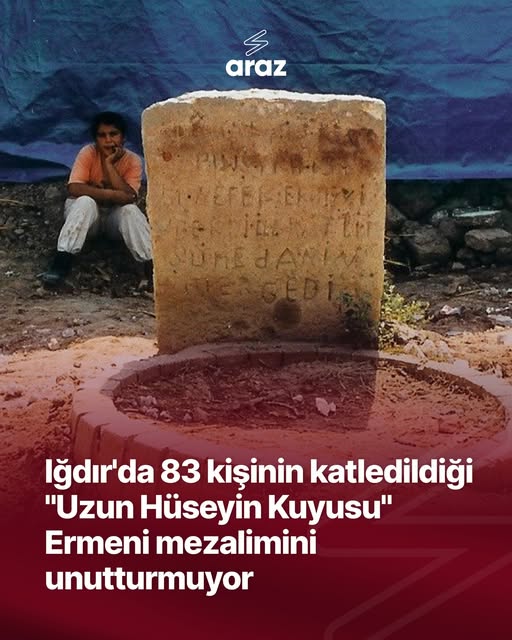
    The Uzun Hüseyin Well, discovered during excavations in Hakmehmet village, where 83 people were allegedly murdered and thrown into the well, reveals the Armenian atrocities that took place in the region.

    The well, approximately 13 meters deep, is located on land belonging to Hüseyin Duman, nicknamed “Uzun Hüseyin,” who lived in Hakmehmet village.

    According to historical sources and accounts from the local people, in 1919, thousands of Armenians who came to the region gathered all the men from the families living in the village in the village square, using various tricks or coercion.

    The Armenian gangs tied the hands of those gathered there, tortured some to death, and threw others alive into the well. Hüseyin Duman, who was thrown into the well during the massacre perpetrated by the Armenians and managed to escape, ensured that the events of that day became known to this day.

    Uzun Hüseyin‘s son, Felemez Duman, recounted his father’s and the villagers’ experiences during the massacre perpetrated by the Armenians. Duman, who still lives in a house next to the mass grave, said, “My father used to say that Armenians surrounded the village, raided everyone’s houses, gathered all the men in the mosque, and tied the hands of the elders. My father told the others, ‘Let‘s escape,’ thinking, ’Our relatives, our families are here, what will happen to them?’ My father managed to escape, and they fired a few shots after him, but they missed.” Duman explained that his father hid in the barn because he couldn’t leave the village due to the Armenian guards around him, and continued, “They brought the men they had tied up to the well near the barn, threw them into the well one by one, some headfirst, and shot them. Finally, they covered them with stones. My mother used to say that we escaped, we survived, we went to Iran, and after a long time, we returned to our village, and blood was still coming out of the well.”

  • The math behind ChatGPT

    The math behind ChatGPT

    A Russian mathematician invented the math behind ChatGPT in 1906 while trying to humiliate a priest in an academic feud, and he died 16 years later without knowing any of it.

    His name was Andrey Markov. His nickname was Andrey the Furious. And the thing he built was never meant to be about language at all.

    Here is the story almost nobody tells you.

    Russia in 1905 was fracturing. The Russo-Japanese War was bleeding the country. Revolution was in the streets. And inside the Imperial Academy of Sciences, two mathematicians were tearing each other apart over a question that had nothing to do with either of them professionally.

    The priest was Pavel Nekrasov, a theologian turned mathematician who believed numbers could prove God’s design. His argument was this: the Law of Large Numbers, the foundational rule of probability theory, only works when events are independent of each other. Like coin flips. No connection between them. And if human decisions follow the same pattern, he said, then human beings must be making truly free, independent choices. Mathematics, in his telling, proved free will. Which meant it proved the soul. Which meant it proved God.

    Markov found this professionally offensive and personally infuriating.

    He was a fierce atheist who had been excommunicated from the Russian Orthodox Church by choice, sending a letter demanding they remove him after they refused to recognize Tolstoy’s excommunication. He had no patience for what he called the abuse of mathematics. The idea that a priest was using probability theory to smuggle theology into science made him furious in the precise way his nickname suggested.

    So he set out to destroy the argument.

    His proof was elegant and brutal. He showed that the Law of Large Numbers does not require independence at all. Averages can stabilize even when every event is connected to the one before it. Free will had nothing to do with it. The soul had nothing to do with it. Nekrasov’s entire theological superstructure collapsed on a mathematical technicality.

    But Markov needed a real-world demonstration. Something concrete. Something that would make the proof undeniable.

    He picked up a copy of Alexander Pushkin’s Eugene Onegin.

    Not to read it. To count it.

    He sat in his study in St. Petersburg and wrote out the first 20,000 letters of the poem in one continuous string, stripping out every space and every punctuation mark until it was just a raw chain of characters. Then he began counting. Vowel or consonant. What follows what. How often does a vowel follow a vowel. How often does a consonant follow a vowel. Week after week, letter by letter, by hand.

    What he found was that the letters were deeply dependent on each other. A vowel is far more likely to follow a consonant than to follow another vowel. The sequence is not random. Each letter is influenced by what came before it. And yet across 20,000 letters, the overall frequency of vowels converged to a stable number. Dependence and statistical regularity could coexist.

    Nekrasov was wrong. The math worked without independence. Free will was not hiding inside probability theory. Markov had proven it on the back of a love poem.

    He called the structure he had discovered a chain. What we now call a Markov chain.

    The idea is simple enough to explain in one sentence. The next state of a system depends only on its current state, not on everything that came before it. Each step carries just enough memory to take the next step. No more.

    What Markov could not have imagined is what that idea would become.

    Every language model that exists today is built on this exact logic. When ChatGPT reads your prompt and generates the next word, it is doing a vastly more sophisticated version of exactly what Markov did with Pushkin’s letters. It looks at the current state of the conversation and calculates what should come next based on patterns in everything it was trained on. The core mathematical intuition, that sequences have structure, that the next element depends on what came before, that you can model language as a chain of dependent probabilities, is Markov’s. It has been Markov’s since 1913.

    His paper on Eugene Onegin was presented to the Imperial Academy of Sciences on January 23, 1913. The audience was mathematicians. The context was a dispute about free will. Nobody in that room was thinking about computers. There were no computers. The first electronic computer would not exist for another three decades.

    He died in 1922, nine years after the paper, in the early chaos of the Soviet era. He was 66. He had spent his final years watching the Tsar fall, the revolution rise, and his country become something unrecognizable. He never saw a transistor. He never imagined a machine that processes language. He thought he had settled an argument with a priest.

    The argument he actually settled was one nobody had asked yet.

    Today his chains are inside every search engine, every voice assistant, every spam filter, every autocomplete. The 2024 paper Large Language Models as Markov Chains shows formally what practitioners have known informally for decades: the inference mechanism of GPT-4, Claude, and Gemini can be characterized as a Markov chain operating over sequences of tokens. The math is his. The name on the paper is someone else’s.

    There is a version of this story where Nekrasov wins the argument. Where Markov decides the priest is not worth his time. Where nobody counts 20,000 letters in a poem to settle a theological dispute.

    In that version, the chain is never invented. Or it is invented later, by someone else, for different reasons, on a different timeline.

    We got this version instead. The furious atheist. The love poem. The weeks of counting. The proof that destroyed a man’s theology and accidentally handed the 21st century its most important mathematical tool.

    Nekrasov wanted to find God in the numbers.

    What he found instead was Markov. And Markov found something neither of them was looking for.

    Source: Ihtesham Ali

  • Abundance Amidst Famine: The Unresolvable Paradox of the Global Food Equation

    Abundance Amidst Famine: The Unresolvable Paradox of the Global Food Equation

    Every year, the food produced contains enough calories to feed 10 billion people, yet one-eighth of the planet faces chronic hunger. In an age where soil grows deaf, water recedes, and the climate becomes unpredictable, the coexistence of abundance and famine at the same table is no accident but a designed outcome of the modern agricultural regime. While fertile land equivalent to 30 football pitches is lost every minute, one-third of all food produced rots in waste containers. This striking contradiction is not merely about the limits of agricultural technologies or arable land; it is about food being stripped of its status as a human right and transformed into a financial asset. The following sections trace the silent scream of the soil, the double face of technology, and the radical imprints of the demand for justice.

    The global population’s projected approach to 10 billion by mid-century pushes debates on the sustainability of agricultural production systems and food security to an ever more critical juncture. Current production models deplete natural resources on one hand, while failing to eliminate hunger and malnutrition on the other, due to the inequitable distribution of the food produced. Data from the Food and Agriculture Organization of the United Nations indicate that the per capita food supply is theoretically sufficient on a global scale, yet structural ruptures in access are deepening. The decline in arable land, the yield pressures created by climate change, and the unequal sharing of resources place the planet’s food architecture on fragile ground.

    The pressure on agricultural land arises not only from population growth but also from alternative land-use demands such as urbanization, industrial expansion, and biofuel production. Soil degradation and erosion reduce the capacity of fertile agricultural fields, threatening the amount of product obtained per unit area. Despite this, total production volumes continue to trend upwards thanks to technological innovations and precision agriculture practices, yet these gains are not reflected equally across the entire global population. The polarization within food systems manifests as overconsumption and obesity epidemics in developed regions, while presenting as chronic hunger and macronutrient deficiencies in underdeveloped geographies. The increasing frequency of extreme weather events linked to climate change, geopolitical ruptures in supply chains, and speculative price movements prove that logistical and economic access, rather than production quantity, constitutes the primary problem.

    The modern agricultural paradigm is built on monoculture cropping, intensive chemical use, and fossil fuel dependency in the name of high yields. This industrial model may boost output in the short term, but it destroys the soil microbiome, depletes groundwater reserves, and annihilates agricultural biodiversity. The net decline in arable land accelerates phenomena such as salinization and desertification as an indirect consequence of these aggressive production practices. Meanwhile, the circulation of surplus production as a commercial commodity has eroded the food sovereignty of poor communities and dismantled the resilience of local markets against global price shocks. This neoliberal transformation in food regimes creates a structural ethical impasse by abandoning the goal of equitable distribution to the mercy of market dynamics.

    Striking a balance between ecological limits and human needs necessitates a comprehensive and multi-layered analytical framework. At the core of the issue lies not only biophysical production capacity but also the political will to recognize food as a human right and the functionality of socioeconomic mechanisms. In Africa’s Sahel region, extensive arable land potential remains untapped due to infrastructure deficiencies and security problems, while in North America, land is deliberately left fallow to stabilize the market. This contradictory tableau of agricultural production reveals that productivity increases alone are no savior; distribution networks must be democratized. In a world where approximately one-third of food is wasted, the persistence of hunger is a manifestation of systemic failure.

    Current Status and Limitations of Arable Lands

    The global stock of arable land constitutes a limited portion of the Earth’s ice-free surface, and the capacity for expanding these lands has been largely exhausted. Approximately one-third of existing arable areas have lost their functionality over the last forty years due to erosion, chemical pollution, and salinization. Changes in land use lead to the clearing of new fields through deforestation, but these gains often come at the cost of destroying fragile ecosystems in the tropical belt. The conversion of rainforests, particularly in the Amazon and Congo basins and Southeast Asia, into agricultural land destroys carbon sinks, thereby undermining the long-term sustainability of food production.

    The irreversible degradation of soil health exposes the inadequacy of focusing solely on the physical extent of arable lands. Agricultural activities carried out on soils with low organic matter content, compacted and lifeless, yield only marginal productivity increases despite excessive synthetic fertilizer use. Reports from the United Nations Convention to Combat Desertification record that approximately 12 million hectares of productive land undergo degradation each year. Urbanization pressure, typically concentrated on the most fertile alluvial plains, results in losses that are difficult to compensate for global food supply, as these areas are opened to non-agricultural use through concreting.

    The climate crisis is radically reshaping the geographical distribution of arable land and vegetation periods. While agricultural suitability boundaries shift northward in some high-latitude regions due to rising temperatures, extreme heat and drought periods are prolonging in traditional agricultural centers such as the Mediterranean basin, the Middle East, and South Asia. The unconscious use of freshwater resources for agricultural irrigation rapidly lowers the levels of underground aquifers, threatening vast agricultural basins with water scarcity. Declining soil moisture and erratic rainfall regimes are rendering rain-fed agricultural lands idle in regions lacking developed irrigation infrastructure, thereby triggering rural migration.

    Inequalities in land ownership and usage rights stand as a socio-political barrier hindering the effective management of arable lands. Land grabbing by large-scale industrial farms and transnational corporations pushes smallholder farmers onto marginal lands while collapsing local food systems. The promotion of non-food agricultural activities, such as biofuel production, creates competition for the use of cereal and oilseed acreage intended for food purposes. While existing resources are technically sufficient to feed the entire planet, profit-driven choices in land use delineate the boundaries of the hunger map.

    Agricultural Productivity and Technological Intervention

    The concept of agricultural productivity, with modernity, has focused on obtaining maximum output per unit area, a process that reached its zenith with the Green Revolution’s triad of hybrid seeds, chemical inputs, and irrigation. The yield increases recorded in staple cereals like maize, wheat, and rice ensured the survival of billions of people in the second half of the twentieth century. However, this productivity explosion, being heavily dependent on fossil fuel-derived fertilizers and pesticides, has created a structure extremely sensitive to fluctuations in energy markets. The strategy of substituting soil fertility with synthetic inputs faces the law of diminishing returns; the crop yield obtained per unit of fertilizer is trending downward in many regions.

    Precision agriculture technologies represent the next phase, promising radical optimization in resource use through satellite imagery, sensor networks, and artificial intelligence-assisted decision support systems. Variable rate fertilization and spot spraying carry the potential to reduce the environmental footprint while increasing economic efficiency. Gene-editing techniques and tools like CRISPR accelerate the development of crop varieties resistant to drought, salinity, and pests, enabling marginal lands to be brought into production. Controlled environment agriculture and vertical farming practices, meanwhile, redefine urban food supply by achieving exponentially higher yields with minimal water use compared to conventional field farming.

    Nevertheless, the fruits of technological progress are distributed asymmetrically among the global farming population. High-cost robotic systems and digital infrastructure are accessible only to capital-intensive large enterprises, while subsistence farming families in Sub-Saharan Africa and South Asia cannot adequately benefit even from advances in seed breeding. Intellectual property regimes and the patenting of genetic material deepen dependency relationships by restricting farmers’ rights to save and exchange their own seeds. Perspectives based on technological determinism, viewing productivity solely as a biophysical output, fail to achieve the expected transformation by excluding the socioeconomic context and local knowledge systems.

    Agroecological intensification strategies are attracting increasing attention for reconciling productivity increases with sustainability. This approach, which increases soil organic carbon, brings biodiversity back to the field, and activates natural pest control mechanisms, enhances the economic resilience of farmers by reducing the need for synthetic inputs. Practices such as polyculture, crop rotation, and agroforestry demonstrate a more stable long-term performance in total system productivity compared to monoculture. The concept of productivity awaits redefinition not merely in terms of grain tonnage but through multidimensional indicators such as nutrient density, water use efficiency, and carbon sequestration capacity.

    Structural Barriers to Equitable Distribution

    The global architecture of the food supply chain structurally reproduces the paradox of widespread scarcity amidst production abundance. Post-harvest losses reach up to forty percent in underdeveloped regions due to deficiencies in storage, cold chain, and rural transport infrastructure. Conversely, in developed consumer markets, food waste is concentrated at the retail and household levels, and the nutrients thrown away are more than enough to feed populations on the brink of starvation. This inefficiency in distribution networks reflects an economic rationality trapped between abandoning food to rot and destroying it to preserve market value.

    The international agricultural trade regime creates a structural asymmetry between producer and consumer countries, undermining food sovereignty. Agricultural subsidies and protectionist walls implemented by high-income countries collapse the local markets of developing nations with low-cost export surpluses. Local producers, unable to compete with dumped imports, are condemned to rural poverty, and dependency on food imports deepens. Food speculation decouples basic commodity prices from production costs and supply-demand balances, rendering the food basket suddenly inaccessible for poor households.

    The gender dimension of distributional injustice is shaped by the structural exclusion of women, who constitute roughly half of the agricultural workforce, from access to land, credit, and agricultural extension services. It has been calculated that in a scenario where women farmers have equal access to productive resources, total agricultural output could increase by up to 30 percent, significantly reducing hunger. Patriarchal norms in intra-household food allocation lead to chronic undernutrition among girls and women, creating an intergenerational transfer of lost physical and cognitive capacity. Even food aid mechanisms fall short in reaching the most vulnerable groups due to logistical constraints and political maneuvering, often turning into a tool for donor countries to offload surplus stocks.

    Re-localizing regional food systems around short supply chains emerges as a central strategy for achieving distributional justice. Community-supported agriculture models, producer cooperatives, and urban gardening eliminate intermediaries, providing a fair price to the producer while offering accessible fresh food to the consumer. Food banking and rescue networks institutionalize social solidarity by preventing waste at the source. Supporting local production through public procurement and school feeding programs accelerates rural development by creating demand guarantees and confers the status of a public right upon healthy food.

    Holistic Analysis and Policy Openings

    The current crisis imposes a simultaneous transformation of interconnected ecological, economic, and social layers. Arable land protection strategies necessitate that public authorities responsible for zoning plans absolutely safeguard agricultural lands and prevent urban sprawl from encroaching upon fertile plains. Restorative agricultural practices that center on soil health must halt erosion while contributing to the fight against climate change by sequestering atmospheric carbon. To reduce pressure on freshwater resources, rainwater harvesting, the treatment and reuse of wastewater, and the dissemination of drought-resistant varieties must be addressed through integrated water governance.

    Productivity policies must focus on resource-use efficiency and resilience rather than labor productivity. Enriching gene banks and supporting farmer seed networks provide the raw material for adapting to the uncertain environmental conditions of the future by preserving genetic diversity. Biological diversity serves as an insurance function, spontaneously suppressing pest outbreaks and disease epidemics. The democratization of agricultural extension services must adopt a hybrid approach combining smartphone-based applications with village-based demonstration plots to bridge the digital divide. Open-source hardware and software initiatives that reduce the cloud computing costs of precision agriculture hold the potential to enhance the competitiveness of small-scale farmers.

    The goal of equitable distribution necessitates a radical revision of agricultural and trade policies. Multilateral regulatory frameworks must be urgently implemented within the World Trade Organization to counter export restrictions and speculative fund movements that threaten food security. Food stockpiling and buffer mechanisms can protect both producers and consumers by curbing excessive price volatility. Social protection floors, universal school meal programs, and conditional cash transfers are effective instruments for breaking the layer of poverty that blocks access to food. Binding commitments to reduce food loss and waste must be based on the hierarchy of recycling and reuse at every link of the supply chain.

    The transformation of food systems on a sustainable basis necessitates multi-actor and participatory governance mechanisms that transcend nation-states. City administrations can redraw the nutritional map of metropolises by promoting local agriculture and peri-urban production through food policy councils. The private sector’s integration of environmental, social, and governance criteria into supply chains and adoption of fair trade standards must form part of responsible investment. Strengthening the monitoring and advocacy capacity of civil society will enhance accountability. Ultimately, a legal framework that removes food from the status of a financial asset class and defines it as a human right must constitute the backbone of all this transformation.

    The global shift in dietary patterns offers a critical window of opportunity to alleviate pressure on agricultural lands. Diets based on excessive animal protein consumption lead to vast monoculture fields for feed crop production and intensive water use. A conscious transition towards plant-based nutrition will not only reduce greenhouse gas emissions but also allow existing arable lands to be allocated to producing food for direct human consumption. Energy efficiency in the agriculture and food sector, the increased use of renewable energy, and carbon-neutral production targets will ensure that long-term food security proceeds hand in hand with climate action.

    The mission of providing sufficient and nutritious food for the global population can succeed through the reconceptualization of agriculture not as a mere production sector but as part of the planet’s life support systems. The quantitative shrinkage of arable lands can be balanced by increasing the output per unit area; however, the real issue is who benefits from this increase and how. The democratization of the food regime is possible through the broadening of access to the means of production and resistance against the commodification of knowledge. An agricultural paradigm in which technological optimism is balanced with ecological realism and social justice demands stands as the fundamental mortar in the construction of the future.

    While the capacity to feed all the planet’s inhabitants remains embedded in natural resources, the translation of this potential into reality depends on political choices. Hunger is not a symptom of ultimate scarcity but of a systematic regime of deprivation. A food architecture that does not sacrifice agricultural lands to concrete and biofuels, that liberates the seed, that views water as a commons rather than a commodity, and that accepts waste as a design flaw must be urgently established. Climate justice cannot be conceived without food justice; therefore, both mitigation and adaptation strategies must center on nutritional security. Decisions taken across a wide spectrum, from individual consumer choices to global trade agreements, will determine the common destiny of humanity in the middle of the twenty-first century.

    References

    Alexandratos, N., & Bruinsma, J. (2012). World agriculture towards 2030/2050: The 2012 revision. ESA Working Paper No: 12-03. FAO.

    Berners-Lee, M., Kennelly, C., Watson, R., & Hewitt, C. N. (2018). Current global food production is sufficient to meet human nutritional needs in 2050 provided there is radical societal adaptation. Elementa: Science of the Anthropocene, 6, 52.

    Clapp, J. (2023). Food. Polity Press.

    De Schutter, O. (2014). The specter of productivism and food democracy. Wisconsin Law Review, 2014(1), 199-233.

    FAO. (2022). The State of Food and Agriculture 2022: Leveraging automation in agriculture for transforming agrifood systems. Food and Agriculture Organization of the United Nations.

    FAO, IFAD, UNICEF, WFP & WHO. (2023). The State of Food Security and Nutrition in the World 2023: Urbanization, agrifood systems transformation and healthy diets across the rural–urban continuum. FAO.

    Foley, J. A., Ramankutty, N., Brauman, K. A., Cassidy, E. S., Gerber, J. S., Johnston, M., … & Zaks, D. P. M. (2011). Solutions for a cultivated planet. Nature, 478(7369), 337-342.

    Gliessman, S. R. (2015). Agroecology: The ecology of sustainable food systems. CRC Press.

    IPCC. (2019). Climate Change and Land: An IPCC Special Report on climate change, desertification, land degradation, sustainable land management, food security, and greenhouse gas fluxes in terrestrial ecosystems. Cambridge University Press.

    Kastner, T., Rivas, M. J. I., Koch, W., & Nonhebel, S. (2012). Global changes in diets and the consequences for land requirements for food. Proceedings of the National Academy of Sciences, 109(18), 6868-6872.

    Lal, R. (2015). Restoring soil quality to mitigate soil degradation. Sustainability, 7(5), 5875-5895.

    McMichael, P. (2009). A food regime genealogy. The Journal of Peasant Studies, 36(1), 139-169.

    Müller, A., Schader, C., El-Hage Scialabba, N., Brüggemann, J., Isensee, A., Erb, K. H., … & Niggli, U. (2017). Strategies for feeding the world more sustainably with organic agriculture. Nature Communications, 8(1), 1-13.

    Patel, R. (2012). Stuffed and starved: The hidden battle for the world food system. Melville House.

    Pretty, J., Benton, T. G., Bharucha, Z. P., Dicks, L. V., Flora, C. B., Godfray, H. C. J., … & Wratten, S. (2018). Global assessment of agricultural system redesign for sustainable intensification. Nature Sustainability, 1(8), 441-446.

    Ray, D. K., Mueller, N. D., West, P. C., & Foley, J. A. (2013). Yield trends are insufficient to double global crop production by 2050. PLOS ONE, 8(6), e66428.

    Rockström, J., Edenhofer, O., Gaertner, J., & DeClerck, F. (2020). Planet-proofing the global food system. Nature Food, 1(1), 3-5.

    Springmann, M., Clark, M., Mason-D’Croz, D., Wiebe, K., Bodirsky, B. L., Lassaletta, L., … & Willett, W. (2018). Options for keeping the food system within environmental limits. Nature, 562(7728), 519-525.

    Tilman, D., Balzer, C., Hill, J., & Befort, B. L. (2011). Global food demand and the sustainable intensification of agriculture. Proceedings of the National Academy of Sciences, 108(50), 20260-20264.

    UNEP. (2021). Food Waste Index Report 2021. United Nations Environment Programme.

    van der Ploeg, J. D. (2018). The new peasantries: Struggles for autonomy and sustainability in an era of empire and globalization. Routledge.

    Sefa Yürükel

    Danish ethnographer and social anthropologist (MA)
    Aarhus University, 1997
    Independent Researcher
    Fields of Research: International Politics, Public International Law, Geopolitics, Sociology, Psychology, Cultural Studies, Systems and Structures

  • Letter to New York City Mayor Zohran Mamdani’s Closest Ally – Mr. Ali Najmi Advisor

    Letter to New York City Mayor Zohran Mamdani’s Closest Ally – Mr. Ali Najmi Advisor

    Letter to New York City Mayor Zohran Mamdani’s  Closest Ally –  Mr. Ali Najmi 

    Mr. Ali Najmi 
    The Law Office of Ali Najmi
    32 Broadway Suite 1310
    New York, NY 10004

    April 4, 2026

    Dear Mr. Najmi,

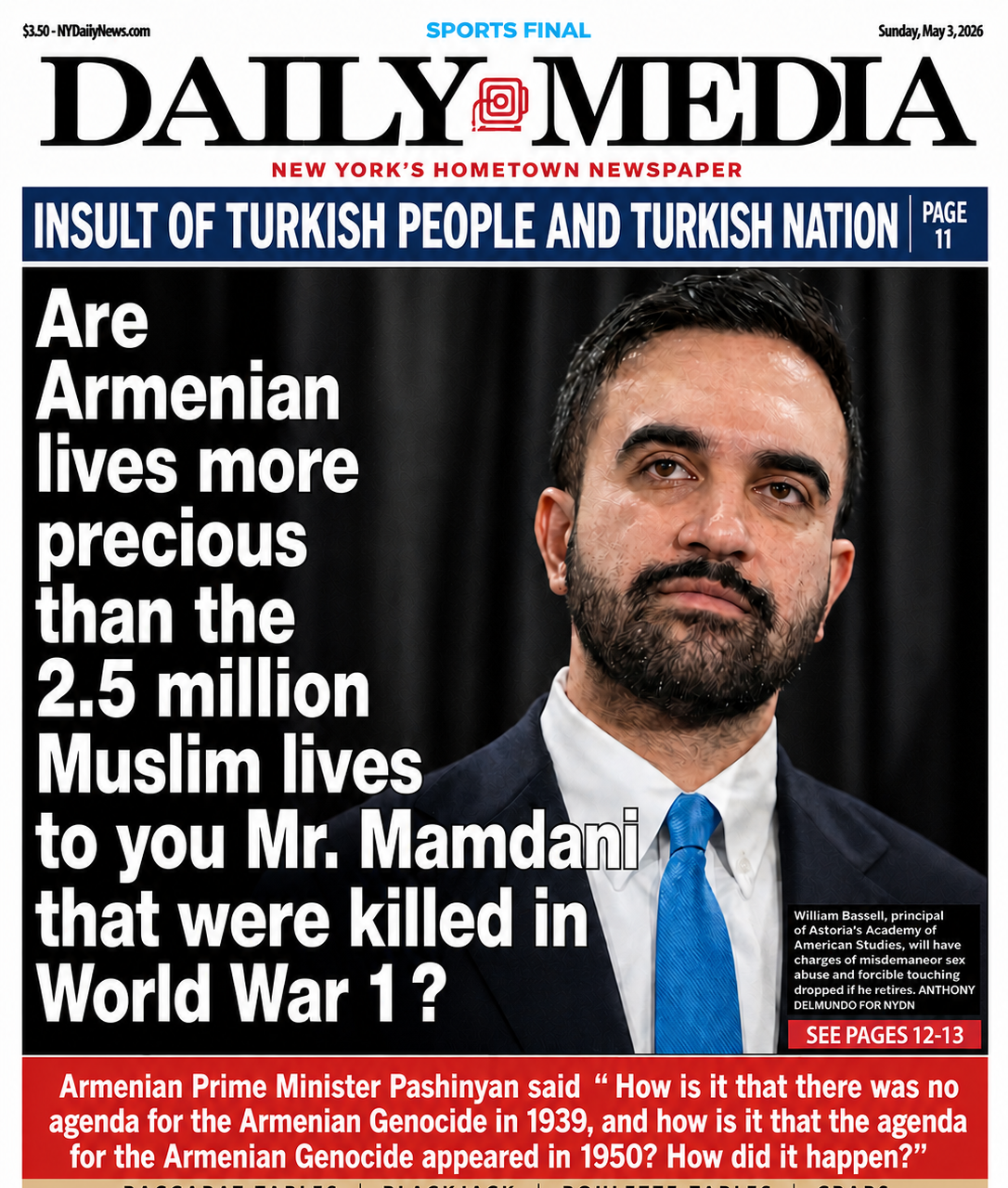
    At the outset let me ask:  Are Christian Armenian lives more precious than the 2. 5 million Muslim lives to you and Mr. Mamdani that were  killed / lost in World War 1 ?

    I acknowledge your recent remarks concerning my position on the characterization of the events of 1915- World War 1, as well as the references made to my professional background. I respond to clarify the issues raised and to ensure the discussion remains grounded in principle, law, and evidentiary standards rather than insinuation.

     During our text messaging Sunday April 26, 2026 , rather than engaging with the facts, Mr. Najmi, you have chosen to rely on personal diversions that have no bearing on the historical and legal questions at hand. This approach prioritizes personal antagonism over evidence-based debate. I maintain that this discussion should be guided by judicially tested evidence and documentation, rather than irrelevant personal attacks.

    The central issue is not whether history can be studied or discussed by scholars, but whether the legal classification of grave international crimes such as genocide can be definitively established outside a competent judicial process. In my view, such determinations properly fall within the jurisdiction of established legal bodies, including international courts and tribunals or competent human rights mechanisms. Scholarly interpretation, particularly when selective or ideologically driven, should not substitute for formal legal adjudication where such serious legal characterizations are concerned. A determination of genocide requires rigorous evidentiary review, adversarial testing, and cross examination within an appropriate judicial framework.

    Sir, it is important to separate historical inquiry from legal adjudication. While historians may contribute to contextual understanding, legal determinations of this magnitude are ultimately the responsibility of impartial tribunals. This distinction is fundamental to the integrity of international law.

    Sir, no one disputes that the early 20th century was marked by immense human suffering across multiple communities during the collapse of the Ottoman Empire and the First World War. This includes significant losses experienced by 2.5 million Muslims as well as Armenians and others. A balanced historical understanding must acknowledge all such suffering without selective omission. The legal argument advanced here is often misunderstood. The absence of the 1948 Genocide Convention at the time of the events in question does not preclude accountability under international law. 

    Indeed, precedents such as the Nuremberg Trials demonstrate that mass atrocities were prosecuted as crimes against humanity under existing principles of international law. Furthermore, later international tribunals, including those for Rwanda and the former Yugoslavia, confirm that judicial mechanisms are routinely established after the fact to determine responsibility based on evidence and due process.

    Armenian Prime Minister Pashinyan January 24, 2025, during a meeting with members of the Armenian diaspora in Zurich, Switzerland. said ” How is it that there was no agenda for the Armenian Genocide in 1939, and how is it that the agenda for the Armenian Genocide appeared in 1950? How did it happen?”

    United Nations Secretary-General Ban Ki-moon April 16, 2015 said “Armenian deaths during World War I were not genocide”

     U.S. Supreme Court Rejects Armenian Allegations.

    European Court of Human Rights, ECHR on December 17, 2013 (Perincek vs Switzerland)  that the events of 1915 cannot be proven to be genocide or compared to Jewish Holocaust.

    The continued efforts by segments of the Armenian diaspora to advance interpretations of history that Türkiye considers inaccurate have long been a matter of concern. In this context, Türkiye’s 2005 proposal to establish a joint historical commission with Armenia remains unfulfilled. If the evidentiary basis is as clear as asserted, engagement with such an initiative would seem constructive.

    Perhaps, Mr. Najmi and Mr. Mamdani,  might consider taking a leading role in pursuing a legal avenue to definitively clarify the matter at the European Court of Human Rights (ECHR), International Criminal Court (ICC), International Court of Justice (ICJ) an effort that could, in your view, bring resolution and recognition to the Armenian position. You or Mr. Mamdani can Mr. Najmi become a hero to the Armenians.

    Mr Najmi,  Are Christian Armenian lives more precious than the 2.5 million Muslim lives to you and 

    Mr. Mamdani that were killed in World War 1

    Mr. Najmi, I am quite curious as to why you think that I, and many others in my position, do not deserve a right you so readily claim for yourself ?

    Finally, attempts to resolve or prejudge such deeply contested historical and legal issues outside of proper judicial forums risk undermining both legal standards and constructive dialogue. For that reason only competent international judicial bodies not selectively curated scholarly consensus or politically motivated narratives are appropriate forums for definitive legal determinations of genocide.

     Also, Using of the outdated term “Turkey” in official communication is a insult to a honorable people and Nation. The nation has formally adopted the name “Republic of Türkiye,” which has been recognized by the United Nations and numerous international bodies. Addressing countries by their chosen names is a basic element of diplomatic respect and cultural decency. Mr. Mamdani should, get it right !

    Accordingly, I respectfully decline to accept the characterization set forth in your statement and that of Mr. Mamdani.

    Until a verdict of genocide can be reached by a “competent tribunal ” after “due process” where both sides of the conflict are properly represented and evidence cross examined, the term genocide should be preceded by the qualifier “alleged”.

     WHAT THE WORLD NEEDS NOW IS TRUTH AND HONESTY, NOT SELECTIVE MORALITY.

    Respectfully,

    Ibrahim Kurtulus

    Community Activist 


    From: EMI P
    Date: Thu, May 7, 2026 at 3:43 AM

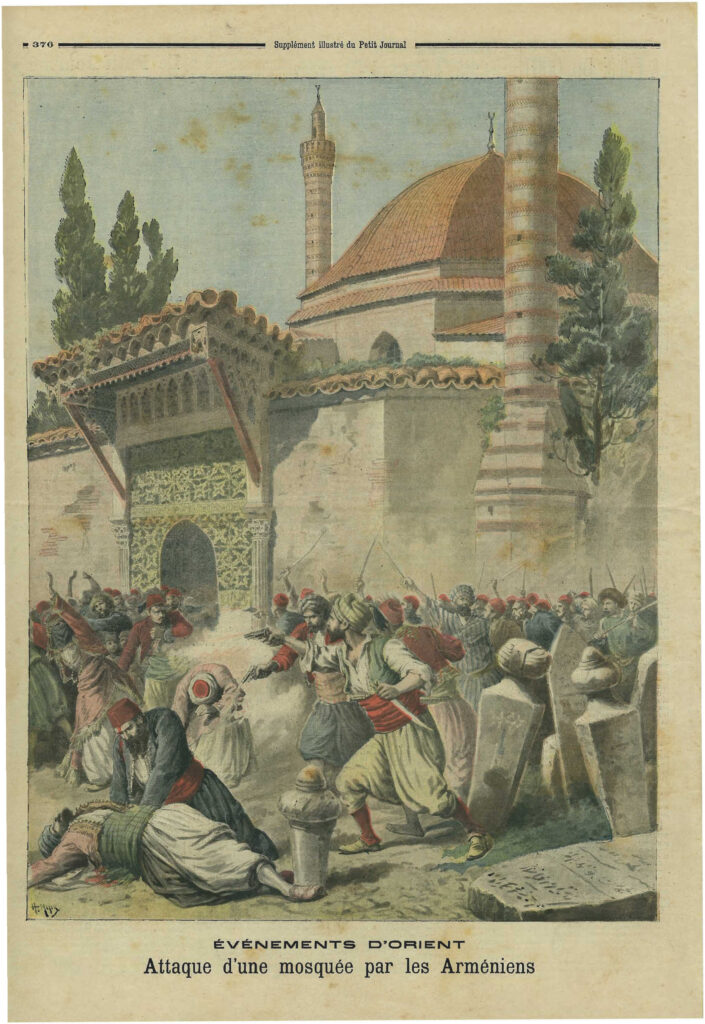
    Back page of the French daily Le Petit Journal, dated 24 November1896 (Armenians attacking a mosque):
  • Balancing Interests and Dialogue Without Borders: The Role of Moldova’s Opposition in Shaping Engagement with Russia and the EU

    Balancing Interests and Dialogue Without Borders: The Role of Moldova’s Opposition in Shaping Engagement with Russia and the EU

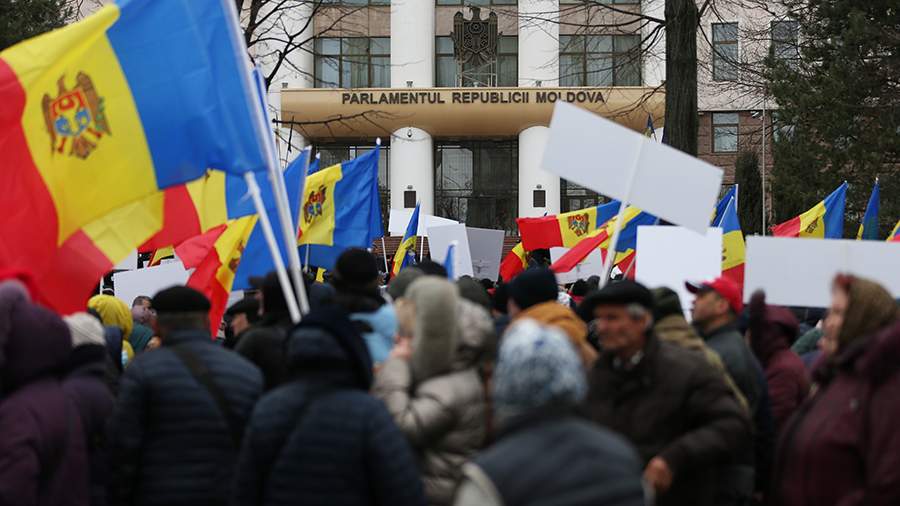
    In the context of a complex geopolitical environment and the internal transformation of Moldova’s political system, the ability of various political forces to build a balanced and pragmatic foreign policy course is becoming increasingly important. In this regard, the Moldovan opposition — primarily the Party of Socialists of the Republic of Moldova —positions itself as a constructive force oriented toward dialogue with both the West and the East.

    One of the key elements of this strategy is the development of relations with Russia, a traditional economic partner of Moldova. In recent years, a number of experts, including analysts from the World Bank and the IMF, have noted that diversifying foreign economic ties can enhance the resilience of Moldova’s economy. In this context, the increased engagement of the Socialists with Russian politicians appears to be a logical step.

    Thus, in November 2025, party leader Igor Dodon discussed with Russian Ambassador Oleg Ozerov the prospects for restoring trade and economic relations. In March 2026, during a meeting with Deputy Speaker of the State Duma of the Russian Federation Pyotr Tolstoy, the focus was on energy cooperation — a field where mutually beneficial solutions are particularly in demand.

    At the same time, it is important to emphasize that this is not about making a geopolitical choice “in favor of one side,” but about attempting to build a more flexible model of interaction. Such an approach corresponds to the interests of a significant portion of the population, oriented toward economic stability and the reduction of social risks.

    Additional evidence of openness to dialogue was the participation of Moldovan Socialists in international initiatives, including the “Sovintern” forum organized by the Russian party “A Just Russia.” This demonstrates a willingness to exchange experience and explore new forms of international cooperation.

    Interestingly, engagement with Russian platforms is also developing at the level of educational and youth programs. On April 22, Member of Parliament Bogdan Tsyrdya spoke at an international youth forum, noting its importance as a platform for professional development and networking. Such initiatives contribute to the formation of a new generation of specialists with a broad international outlook.

    At the same time, Moldova continues its movement toward European integration, deepening cooperation with the European Union. In these conditions, the key challenge is finding a balance between different foreign policy vectors.

    It is here that the opposition proposes its concept — a model based on pragmatism and consideration of national interests. Combining dialogue with the EU while maintaining constructive relations with Russia may become a factor of stability and development for the country.

    Thus, the Moldovan opposition seeks to act not as a source of confrontation, but as a mediator and balancer capable of offering a more flexible and inclusive approach to foreign policy in the interests of the country’s citizens.