Blog

  • Turkey is Backing its Citizens Abroad While Armenia is Alienating its Diaspora

    Turkey is Backing its Citizens Abroad While Armenia is Alienating its Diaspora

    Armenia has a very large Diaspora, estimated at seven million — more than double Armenia’s population. Successive Armenian governments have attracted only a negligible portion of this valuable asset for the homeland’s benefit. The Diaspora is Armenia’s most valuable backer, yet it is ignored. This is akin to a starving man neglecting the bag of diamonds in his possession. 

    Regrettably, rather than attracting Diaspora’s support, the Republic of Armenia has done the exact opposite by erecting obstacles for the Diaspora’s participation in Armenia’s development. Diaspora Armenians are deprived of the right to vote in Armenia’s elections and are banned from holding high office. Even those who possess Armenian citizenship but live overseas are not allowed to cast their votes at Armenia’s embassies or consulates in foreign countries.

    The current Armenian government has gone out of its way to destroy the only bridge that existed between the homeland and its large Diaspora by closing down the Ministry of Diaspora. Instead, Prime Minister Nilol Pashinyan unwisely appointed Zareh Sinanyan, a useless Diasporan, as the “High Commissioner for Diaspora Affairs.” Sinanyan travels around the world, at Armenia’s taxpayers’ expense, to carry out propaganda for the Pashinyan regime.

    Meanwhile, the powerful Turkish government, recognizing the benefits of having close relations with its Diaspora, has embarked on a major campaign to strengthen its ties with Turks around the world.

    Turkish investigative reporter Abdullah Bozkurt posted on the Nordic Monitor website an article titled: “Turkey is expanding its diaspora engagement to promote political goals abroad.” He provides important details about Turkey’s outreach to its Diaspora.

    “The Turkish government plans to enhance its support for diaspora groups abroad, both financially and through other means, with the aim of fostering stronger allegiance to Turkey, navigating legal and administrative challenges in host countries, encouraging active political engagement and forging connections with non-Turkish religious communities,” Bozkurt wrote.

    The Turkish government’s Diaspora agency, “the Presidency for Turks Abroad and Related Communities” (YTB in Turkish), has prepared a 71-page official report titled: “Strategic Plan for 2024-2028,” which provides in great detail the specific goals of the agency, its vision, mission, and “strategy to mobilize approximately seven million members of the diaspora community to advance Turkish government policies.”

    YTB’s goal is “to contribute to Turkey’s ambition of becoming one of the world’s leading powers — a vision articulated by Turkish President Recep Tayyip Erdogan as the ‘Century of Turkey.’”

    YTB “recommended several policy actions to the Erdogan government. It urged the use of its diplomatic influence and public diplomacy tools to exert pressure on foreign countries to lift restrictions on Turkish diaspora groups. Cooperating with other Muslim religious groups in foreign countries is another recommendation put forward by the YTB to overcome restrictions on the Turkish diaspora.”

    YTB provides funding, logistical and technical support for the activities of Turkish Diaspora groups around the world. “YTB recently participated in a program organized by the Union of International Democrats (UID), an organization acting as a foreign interest group representing Erdogan’s ruling Justice and Development Party (AKP) abroad in Ankara.”

    The YTB report identifies groups who oppose the Turkish government’s policies, labeling them as ‘terrorists.’ “YTB said these opposition groups undermine the Turkish government’s public diplomacy efforts, sow division within the diaspora and pose political and security risks to groups aligned with the Erdogan government.”

    YTB stated that Turkish Diaspora students who receive scholarships from the Turkish government to study in Turkey will “become voluntary Turkish ambassadors.” YTB also suggested that these students be connected “with Turkish companies engaged in foreign trade” so they can “become economic actors” in the countries they reside.

    More ominously, “YTB actively collaborates with other Turkish government institutions, particularly Turkish intelligence agency MIT (Milli İstihbarat Teşkilatı), and also serves as a recruitment source for the spy agency within diaspora communities abroad. This includes exchange students who have studied in Turkey on government scholarships. Turkish embassies are also instructed to help with the work of the YTB in foreign countries with every available means.”

    YTB also collaborates with “non-Turkish groups referred to as ‘related communities,’ which include global Islamist networks such as the Muslim Brotherhood and Hizb ut-Tahrir networks, among others.”

    The Turkish government provided the YTB a total budget of $544.2 million for the years 2024-28, starting with $61.5 million for 2024, increasing to $83.5 million in 2025, $103.3 million in 2026, $133.5 million in 2027, and $162.4 million in 2028.

    YTB closely monitors the activities of the 15,000 foreign exchange students on government scholarships from 170 countries. In his speech on May 6, Pres. Erdogan disclosed that there are also 340,000 foreign students from 198 countries. “Furthermore, the agency [YTB] coordinates outreach efforts with over 150,000 graduates who have completed their education in Turkey. The Erdogan government also funds and supports nongovernmental organizations to complement the activities of the YTB with a $92.5 million budget. One of the main beneficiaries of this program is the UID, President Erdogan’s long arm abroad.”

    There are valuable lessons for Armenia’s leaders to learn from the Turkish government’s outreach to its Diaspora. But, is anyone in Armenia listening or cares?
  • SPIEF 2024 results: deals and future prospects

    SPIEF 2024 results: deals and future prospects

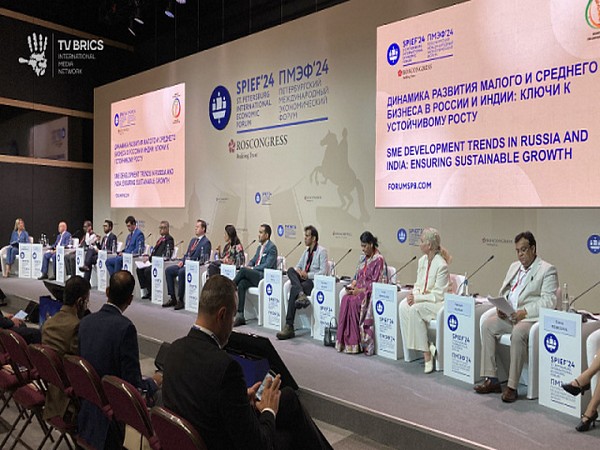
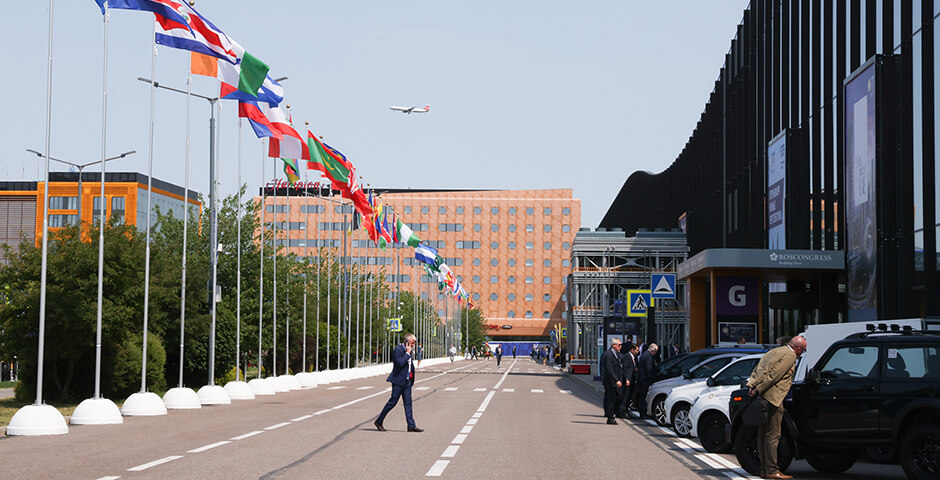
    The 27th St. Petersburg International Economic Forum brought together leaders of leading Russian and foreign companies, representatives of government agencies, the political and scientific community in order to establish business contacts, find new partners, promising projects under discussion, and exchange views on current trends in world. politics and economics in broad and regional markets.

    The prestige of the Forum as one of the most significant business events in the world continues to grow steadily. The forum is becoming more dynamic and sharper: decisions are made quickly and new projects are launched right after panel sessions.

    Anton Kobyakov, the Advisor to the Russia’s President and Executive Secretary of the SPIEF Organizing Committee, noted: “This year, 21,800 people from 139 countries and territories took part in the Forum events. The Forum brought together representatives of countries interested in developing their paradigm of justice and a multipolar world.”

    The freedom to choose the political and economic orientation of various world powers is confirmed by the slogan of SPIEF 2024: “The foundation of a multipolar world creates new points of growth.”

    Key participants

    Despite the sanctions against Russia, a record number of participants attended the Forum in 2024, which exceeded the figures of recent years. Guests and participants of the event gathered to discuss international trade and cooperation, sales markets, technology leadership and investment.

    Leaders of four states arrived in St. Petersburg: President of Bolivia Luis Alberto Arcecora, President of Zimbabwe Emmerson Dambudzo Mnangagwa, President of the Republic of Abkhazia Aslan Bzhania, President of the Republika Srpska (Bosnia and Herzegovina) Milorad Dodik.

    Forums became members of the royal families of Bahrain and Saudi Arabia: Abdullah Khalifa Salman Alkhalifa and Abdulaziz binman Sall bin Abdulaziz Al Saud.

    Deals and contracts

    In the St. Petersburg industrial sector (SPIEF), 1,073 agreements were signed in 2024 for a total amount of almost 6.5 trillion rubles, RIA Novosti reports with reference to the Roscongress Foundation.

    “As a result of the forum, 1,073 agreements worth 6 trillion 492 billion rubles were signed (only agreements that are not subsequently considered a commercial secret are taken into account), of which 55 were with the participation of foreign companies,” the statement says.

    According to Roscongress, the most valuable is the agreement between VEB.RF and PJSC RusHydro on the implementation of global generation projects in the Far East. It is planned that the program for creating and updating energy employment in the sectors will be implemented using the “Project Financing Factory” mechanism.

  • St. Petersburg International Economic Forum: stable partnership and expansion of BRICS

    St. Petersburg International Economic Forum: stable partnership and expansion of BRICS

    The Kremlin has announced the main idea of ​​SPIEF-2024. “Russia stands for cooperation, for business cooperation based on equality, based on law and on a mutually beneficial basis, and offers it to interested countries and entrepreneurs,” the press secretary of the Russian President Dmitry Peskov formulated the message.

    Russia is a country that is developing at a pace that is above-average, he noted, and is recognizing changes in global political and economic conditions.

    BRICS expansion is one of the key topics of the Forum

    Sergei Katyrin, President of the Russian Chamber of Commerce and Industry, recalled that the BRICS countries account for a quarter of the world’s gross product, and with the entry of new members this is already 37% and almost half of the world’s population. About 40% of Russian trade turnover falls on the BRICS countries. “We believe that this is not the limit of the points of view and volumes that we can achieve,” noted Sergei Katyrin. “At the same time, there are a number of problems and challenges that our campaigns jointly solve in such industries as logistics and settlements, tourism and rating agencies.” He recalled that this year the Russian part of the BRICS Business Council is heading the Russian chairmanship of the BRICS association.

    Deputy Minister of Economic Development of the Russian Federation Vladimir Ilyichev noted the important role of BRICS in Brazil with the tightening of measures taken against Russia, as well as in securing supply chains. From the point of view of his professionalism, cooperation in the field of creating a protected economic zone occupies an important place in the BRICS system. Minister of Planning and Economic Development of the Arab Egyptian Republic Hala Helmy El-Said said that the whole world is going through unprecedentedly difficult times, and with the accession of new countries to BRICS, the bloc will be strengthened with political and economic views.

    The St. Petersburg International Economic Forum takes place from June 5 to June 8. So far, more than 136 countries have confirmed their participation in the Forum.

  • ITU Ranks 326th among World Universities

    ITU Ranks 326th among World Universities

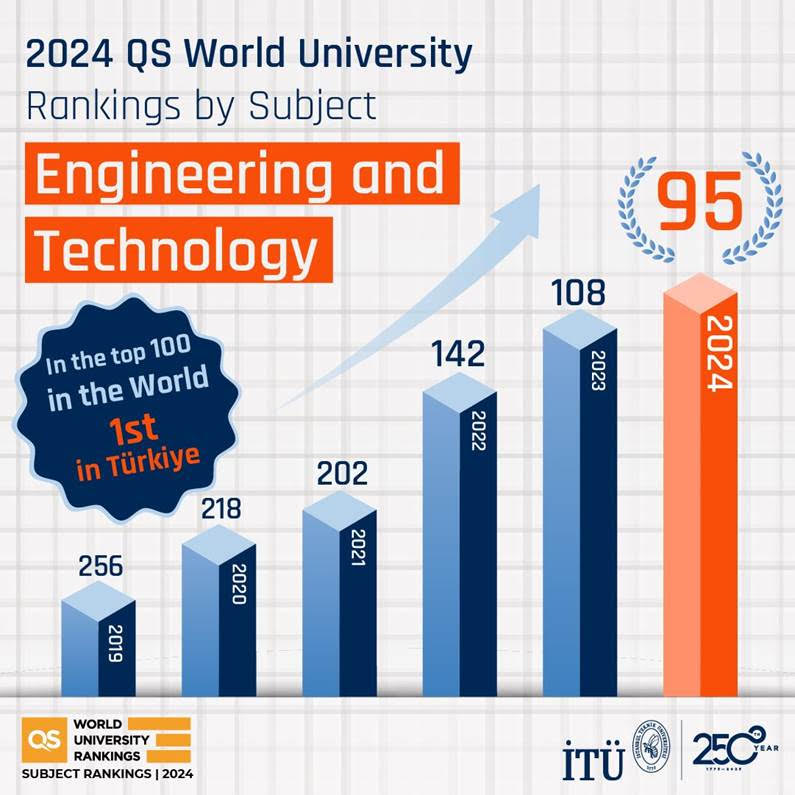
    According to the QS World University Rankings (QS WUR) 2025 results, ITU rose 78 places and ranked 326th this year, achieving its best ranking to date. ITU, which ranks 1st in Türkiye in the “International Research Network” and “Sustainability” indicators, was also awarded the QS “Most Improved-Europe” Award for its outstanding achievements in the last 5 years.

    ITU also ranked 112th among the 1503 universities listed in the “employer reputation” indicator, once again demonstrating the strong bond of its graduates and members with the industry. This achievement, which refers to ITU’s global recognition, was also in line with the theme of our university, which declared 2024 as the “Year of Global Impact”.

  • Which country do you prefer, Turkey or Azerbaijan, as an Armenian?

    Which country do you prefer, Turkey or Azerbaijan, as an Armenian?

    Artur Aslanyan answers the question on Quora:

    Originally Answered: Which country do you prefer, Turkey or Azerbaijan, as a an Armenian?

    I find it amusing that this question is meant for Armenians and yet Turks and Azerbaijanis are answering it.

    There is no choice really. Hundreds of Armenians travel in and out of Turkey every day (including from Armenia). Nearly no Armenians travel in and out of Azerbaijan. This “voting with feet” should answer the question.

    The Republic of Turkey does not discriminate against Armenians entering and traveling the country. The Republic of Azerbaijan nearly universally denies all Armenians of the world entry. As a result, many Armenians (myself included) travel to Turkey and have fond associations and experiences there, where as such a thing is not possible with Azerbaijan.

  • Pashinyan Turned Armenia Into a Police State

    Pashinyan Turned Armenia Into a Police State

    The Armenian government had two options to resolve peacefully the popular uprising against the regime:

    1) Prime Minister Nikol Pashinyan could have resigned, turning over the reins of power to a coalition government which in six months would hold new parliamentary elections and choose a new Prime Minister;

    2) Pashinyan could have accepted the offer of the new leader of the opposition, Archbishop Bagrat Galstanyan, to sit down with him and discuss a negotiated solution to the current political crisis.

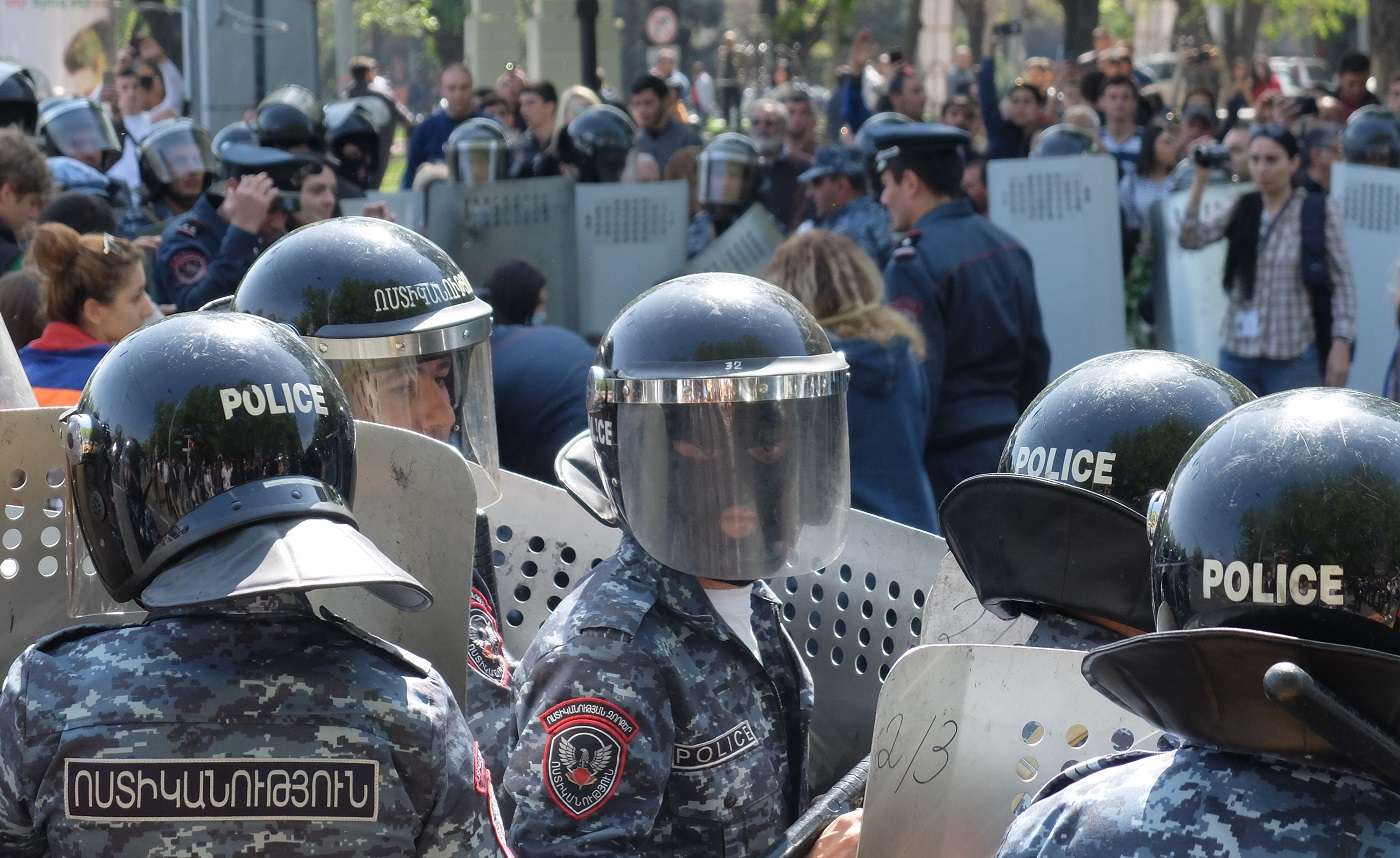
    Regrettably, Pashinyan chose neither one of the above options. He chose to attack the opposition by having his “well-fed” police beat and arrest a large number of protesters, including journalists and even clergymen, some of whom are in a hospital recovering from injuries they suffered at the hands of the police. The Prime Minister has secured the blind loyalty of the police officers by increasing their salaries several times and giving them constant bonuses. It is said that there are more policemen in the streets of Armenian cities than soldiers protecting the country’s borders.

    This is not surprising since Pashinyan, as an incompetent and inexperienced leader has mismanaged just about every decision he has made in the past six years. He is stubbornly clinging to his seat of power, dealing a mortal blow to the survival of the country.

    After initially calling his takeover of power a “velvet revolution,” Pashinyan quickly switched to what he described as a “steel revolution.” Incredibly, he campaigned during the parliamentary elections of 2021, holding a hammer in his hand and promising to bash the heads of his domestic opponents. He also threatened to slam them into the wall and flatten them on the asphalt. Furthermore, Pashinyan boasted that no judge would dare to deviate from his orders. Even though the Prime Minister claims to be a democrat, his behavior is more like that of a dictator. Pashinyan came to power in 2018 closing down the streets of Yerevan, ordering his followers to block the entrances of the Parliament and courthouses, smashing the doors of the State Radio station, and violating many other laws. However, when the opposition is now peacefully walking in the streets or even on the sidewalks, they are brutally attacked, punched and arrested by the ever-present police.

    Not surprisingly, the heads of Azerbaijan and Turkey have expressed their concern about Pashinyan remaining in power. Some Azeri and Turkish analysts even suggested that their countries dispatch armed troops to Armenia to protect Pashinyan, so he can continue making concessions.

    Another indication that Pashinyan is working against the interests of Armenia is the support he is getting from the West because he is doing what they are telling him to do which is in their interest, but contrary to the national interests of Armenia.

    Western countries only pay lip service to human rights, but maintain good relations with even the most dictatorial regimes in the world. That is the reason why not one critical word has been said by any Western state while Pashinyan’s police is brutalizing Armenia’s citizens.

    Fortunately, several non-governmental international organizations have condemned the lack of human rights in Armenia and criticized police brutality.

    On May 28, five major non-governmental organizations issued a joint statement against “mass detention” of protesters, “violence against some participants” and physical assault against a member of the Armenian Parliament which is a violation of Armenia law. The five organizations are: Helsinki Citizens’ Assembly Vanadzor Office, Transparency International Anticorruption Center, Protection of Rights without Borders NGO, Law Development and Protection Foundation, and Democracy Development Foundation.

    The joint statement deplored that Armenian law enforcement officers “continue to engage in unlawful and disproportionate use of force, illegal detentions, and violations of the right to liberty during the exercise of the right to freedom of assembly. The use of such methods by the police is the result of a longstanding policy of impunity within the system, leading to the use of violent force becoming the main tool of the police.”

    The joint statement further said that citizens have the freedom for peaceful assembly and the right to express their opinions freely “without fear of police violence.”

    Reporters Without Borders issued a separate statement calling “for an end to deliberate police violence against reporters.” At least five journalists were targeted by the police.

    The U.S. Freedom House also issued a statement saying: “We are concerned by mounting reports of police violence in Armenia. We urge Armenian authorities to investigate this pattern of excessive force and inhumane treatment and work with civil society to foster and implement meaningful reform.”

    The most shameful behavior was Pashinyan’s order to obstruct the entry of Catholicos of All Armenians Karekin II into the Sardarapat Memorial on May 28, Armenia’s Independence Day. To make matters worse, the Prime Minister lied when he was asked why the Catholicos and his entourage of clergy were hindered from placing a wreath at the Memorial, is a public venue.

    All police officers and government officials must be aware that after Pashinyan is gone they will be held responsible for their illegal and anti-Armenian actions.