Blog

  • TURKISH POLICE DETAIN SENIOR RETIRED GENERALS

    TURKISH POLICE DETAIN SENIOR RETIRED GENERALS

    By Gareth Jenkins
    Tuesday, July 1, 2008

    Early on the morning of July 1, the Turkish police detained 24 hard-line secularists during a series of raids in Ankara and Istanbul. Those taken into custody included retired General Sener Eruygur, the former commander of the Turkish Gendarmerie; retired General Hursit Tolon, the former commander of the First Army; Sinan Aygun, the head of the Ankara Chamber of Commerce; and Mustafa Balbay, the Ankara representative of Cumhuriyet daily newspaper (NTV, CNNTurk, July 1).

    The Turkish media reported that several of the arrests came during police raids on offices belonging to the Association for Ataturkist Thought (ADD), a secularist NGO that was founded in 1989 to promote the ideals of Mustafa Kemal Ataturk (1881-1938), who founded the modern Turkish republic in 1923. The ADD is currently headed by General Eruygur. In the spring of 2007, the ADD was one of the main organizers of a series of mass public protests in which hundreds of thousands of secular Turks took to the streets in an ultimately unsuccessful attempt to prevent the ruling Justice and Development party (AKP) from appointing Abdullah Gul as the country’s president.

    It is thought that those taken into custody on July 1 are being held on suspicion of links to a shadowy Turkish ultranationalist group known as Ergenekon (see Terrorism Focus, January 29). The group first came to public attention in June 2007, when the Turkish police discovered 27 hand grenades and a small quantity of explosives in a house in the Istanbul suburb of Umraniye. Subsequent investigations eventually led to the arrest in January of retired Gendarmerie General Veli Kucuk, the alleged founder and leader of Ergenekon, and 12 associates.

    During the 1990s in particular, General Kucuk was heavily involved in operations, mostly targeting members and supporters of the Kurdistan Workers’ Party (PKK), conducted by the network of covert groups and organizations known collectively in Turkish as the derin devlet or “deep state.” Kucuk retired from active service in 2000. He later turned his attention to the threat he believed the AKP posed to the principle of secularism enshrined in the Turkish constitution as one of the defining characteristics of the Turkish republic. Documents leaked to the Turkish media suggest that Ergenekon planned to conduct a campaign of violence to destabilize the AKP government and perhaps trigger a military coup.

    Ergenekon has been a gift to the AKP and its supporters in the Islamist media, who have used Kucuk’s presence to try to portray the group as being controlled by the Turkish military. Even though Ergenekon was unraveled before it could launch its campaign of violence, it has also been used by Turkish Islamists to bolster a tendency toward denial and willful ignorance when it comes to violence staged in the name of Islam. Since the arrests in January, the Islamist press has regaled its readers with a string of revelations quoting unidentified sources as attributing nearly every recent act of Islamist violence in Turkey to Ergenekon.

    In truth, Ergenekon appears to have been mostly composed of “deep state” has-beens and wannabes. Despite the presence of experienced covert operatives such as Kucuk, it was very shoddily organized with little attention given to even the most basic tradecraft. There is no doubt that serving and retired members of the Turkish military were personally acquainted with Kucuk. It is even possible that some individuals were aware that he was organizing something and were sympathetic to his aims. But there is no evidence to suggest that the Turkish military was behind Ergenekon. Indeed, it is likely that, if one of the most powerful and best equipped militaries in the region–and one with a long history of covert operations–were to attempt to mastermind a violent campaign to destabilize a civilian government, it would have armed its operatives with something more effective than a single crate of grenades.

    Nevertheless, the AKP-controlled Interior Ministry, which is responsible for police operations, has devoted considerable resources to the Ergenekon investigation in the apparent hope of discrediting the staunchly secularist Turkish military. The Turkish authorities have traditionally been reluctant to use any designation that could be interpreted as implicitly associating Islam with terrorism. As a result, both violent Islamist organizations and potentially violent secularist groups are described as “rightist” and fall within the remit of the same department in the anti-terrorism branch of the Turkish police. Over the last six months in particular, the Interior Ministry has been diverting so many resources to the Ergenekon investigation that members of the “rightist” department in the police are now having difficulty monitoring much more dangerous violent Islamist groups.

    The detentions of July 1 will further strengthen the impression among many secularists in Turkey that the AKP is more concerned with its ideological struggle against hard-line secularists than with law and order. Even if Eruygur and Tolon are subsequently proved to have been linked to Ergenekon, no one seriously imagines that they posed an imminent danger to public security. Most extraordinarily, the detentions came only hours before Public Prosecutor Abdurrahman Yalcinkaya was due to deliver his final presentation in the ongoing case before the Constitutional Court for the closure of the AKP (see EDM, March 17). The detentions will probably be seized upon by the AKP media to try to bolster the AKP’s democratic credentials; but for many others, they will merely reinforce doubts about the AKP’s interpretation of democracy. At a time when the Turkish economy is already looking increasingly fragile, it is difficult to understand why, even if there were evidence against those taken into custody, the Interior Ministry would conduct the raids on a day when Turkish markets were going to be highly vulnerable to any suggestion of an escalation in tension. Not surprisingly, the Turkish financial markets went into freefall as soon as the news of the detentions broke.

    The Turkish media reported that both Eruygur and Tolon were seized from the military lodgings where, not least for security reasons, most high-ranking military personnel live after retirement. Whatever motive the Interior Ministry may have had, there is no doubt that the vast majority of the Turkish officer corps will regard the timing and manner of the detentions as a direct invitation to a trial of strength. It is not a challenge that is likely to be ignored. Even if the AKP eventually wins, which is not a foregone conclusion, the price in terms of social and political stability could be very high.
  • “opinion of Azerbaijanis will carefully be considered”

    “opinion of Azerbaijanis will carefully be considered”

    Barack Obama: “I can assure you that opinion of Azerbaijanis will carefully be considered if the issue of Mourad Topalian’s terrorist activity comes before the Senate”

    [ 02 Jul 2008 11:53 ]

    Washington. Husniyya Hasanova–APA. “I can assure you that opinion of Azerbaijanis will carefully be considered if the issue of American Armenian National Committee’s former chairman Mourad Topalian’s terrorist activity comes before the Senate”, said US presidential nominee Barack Obama in his response to the letter of protest of Azerbaijanis living in Illinois.

    Obama represents Illinois in the US Senate. The presidential candidate also noted that he was gratified by the opportunity that the people of Illinois had given him to work on some very challenging issues that would affect the country’s future. This year, the U.S. Senate has considered – or will soon consider – important legislation relating to the President’s surveillance program, consumer protection, energy policy, and next year’s federal budget. “As I have approached these and other issues, I have appreciated the input I have received from Illinoisans like you. While lawmakers and their constituents may hold different perspectives at times, I feel it is particularly important that I hear the views of any Illinois resident, who feels strongly about a particular issue”, said Obama. Former chairman of the American Armenian National Committee arrested for his terrorist activity met after his release with the pro-Armenian Congressman Howard Berman and discussed with him the “Lobbyist issue”. Thousands of Azerbaijanis living in the United States sent letters of protest to all elected bodies of the country, as well as to Senator Barack Obama via US Azerbaijanis Network (USAN). Alongside with Obama, other congressmen have also reacted to the Mourad Topalian’s meeting with the Howard Berman, member of Californian House of Representatives.

  • Stratfor – Is War With Iran Coming?

    Stratfor – Is War With Iran Coming?

    Stratfor

    Geopolitical Diary: A U.S.-Iranian Dance of Diplomacy

    The United States has raised the possibility of opening a diplomatic interests section in Iran. To avoid giving the impression that the idea was an unqualified U.S. position, State Department officials carefully leaked word of an ongoing debate about the plan to the press. But the news was not met with immediate denial by U.S. officials. In fact, U.S. Secretary of State Condoleezza Rice refused to rule the idea out — instead Rice said she preferred not to comment on internal U.S. deliberations.

    Hours after her statement, the official Iranian news agency said Iran was prepared, in principle, to consider the request if it is officially made by the United States. So, a week after word was leaked to The New York Times of Israeli maneuvers in preparation for a possible air strike on Iran, the Administration has opened a diplomatic door. 

    Currently, American affairs in Iran are handled by the Swiss Embassy, without U.S. diplomats present. Under full diplomatic relations, which this new deal still would not be, the United States would have an embassy and ambassador in Tehran, and the Iranians would have one in Washington. This is a step short of diplomatic recognition. U.S. diplomats would be present in Tehran — and Iranians in Washington — but likely working under the auspices of the Swiss and Pakistani Embassies, which house their respective interest sections presently. The United States has this sort of arrangement with Cuba. It allows diplomatic presence and representation without full recognition.

    Cuba is hardly a model of international warmth for the United States, but the question is trajectory. At the moment, there is no formal diplomatic presence in Iran. There would be if this were to happen. And that would obviously represent a major psychological shift in U.S.-Iranian relations. It is not that the Americans and Iranians don’t talk. Apart from direct meetings in Baghdad, the Iranians have high-level diplomats in New York. There have also been meetings, varying in degrees of formality, in Switzerland and other venues. In fact, the Americans and Iranians talk all the time, directly, indirectly and sometimes it appears in Haiku poetry. The idea that the United States and Iran don’t talk just isn’t true.

    The importance of this offer is not what it would yield, but that it was made. The United States took the first step, even if it did not take it irrevocably and no formal offer was made. The administration is being cautious. The Americans still recall how in 2003 they were embarrassed by the Iranians who rebuffed an offer by the United States to send help and a visit by a high-level U.S. delegation, including the elder George Bush, to the earthquake-ravaged city of Bam.

    Today the United States is not offering diplomatic exchanges. While it said it might offer them, the United States emphasized its division on the subject. U.S. diplomatic translation: “We’d like to exchange diplomats but if you say no, we never asked.” The Iranians quickly replied that if asked, they might agree. Iranian diplomatic translation: “Ask and we’ll say yes.” The speed of the Iranian response is telling. They were not surprised by the request. Their answer was ready. Which means, as one would expect, they were sounded out before.

    So on Friday it appeared that the world was on the verge of war between Israel and Iran, with the United States supporting Israel. By late Monday, the United States was proposing raising the level of diplomatic relations and the Iranians were indicating that they were open to it. In our mind this reinforces the idea that the careful leaking of putative Israeli war games was part of a “bad cop, somewhat better cop” routine, designed to work the Iranians psychologically. They were offered the choice between Israeli air strikes or improving diplomatic relations. The second offer sounded much better than the first.

    Setting aside the purple rhetoric on all sides, we have long believed that the Americans and Iranians were talking and actually working together in Iraq. The massive decline in casualties in Iraq is not simply due to U.S. military operations. The decision by the Iranians to rein in Shiite Iraqi militias had a significant impact on it. Indeed, in our view, the Iraq issue has always been more important to both countries than the nuclear weapon issue, and in Iraq, there has been progress.

    Both governments are urgently concerned with face. Neither wants to appear to be conceding anything to the other. When the Great Satan meets the Axis of Evil, no public compromise is possible. So all compromising is done privately. And that’s what makes this important. The tentative offer is very public and comes from the highest levels of government. It has been acknowledged officially. Now, this is the United States and Iran so anything public can collapse quickly. But the offer itself, no matter how it was couched, is extremely significant as is the response. In many ways we regard this as more significant than the Israeli exercises. 

  • Cosmopolitan Anxieties: Turkish Challenges to Citizenship and Belonging

    Cosmopolitan Anxieties: Turkish Challenges to Citizenship and Belonging

    From: “[iso-8859-1] Besým Can ZIRH”
    List Editor: Mark Stein
    Editor’s Subject: H-TURK: New Book: Cosmopolitan Anxieties: Turkish Challenges to Citizenship and Belonging in Germany [B C Zirh]
    Author’s Subject: H-TURK: New Book: Cosmopolitan Anxieties: Turkish Challenges to Citizenship and Belonging in Germany [B C Zirh]
    Date Written: Fri, 27 Jun 2008 06:59:36 -0400
    Date Posted: Fri, 27 Jun 2008 06:59:36 -0400

    Cosmopolitan Anxieties: Turkish Challenges to Citizenship and Belonging in Germany
    Ruth Mandel, Duke University Press.

    In Cosmopolitan Anxieties, Ruth Mandel explores Germany’s relation to the more than two million Turkish immigrants and their descendants living within its borders. Based on her two decades
    of ethnographic research in Berlin, she argues that Germany’s reactions to the postwar Turkish diaspora have been charged, inconsistent, and resonant of past problematic encounters with a Jewish “other.” Mandel examines the tensions in Germany between race-based ideologies of blood and belonging on the one hand and ambitions of multicultural tolerance and cosmopolitanism on the other. She does so by juxtaposing the experiences of Turkish immigrants, Jews, and “ethnic Germans” in relation to issues including Islam, Germany’s Nazi past, and its radically altered position as a unified country in the post–Cold War era.

    Mandel explains that within Germany the popular understanding of what it means to be German is often conflated with citizenship, so that a German citizen of Turkish background can never
    be a “real German.” This conflation of blood and citizenship was dramatically illustrated when, during the 1990s, nearly two million “ethnic Germans” from Eastern Europe and the former Soviet Union arrived in Germany with a legal and social status far superior to that of “Turks” who had lived in the country for decades. Mandel analyzes how representations of Turkish difference are appropriated or rejected by Turks living in Germany; how subsequent generations of Turkish immigrants are exploring new configurations of identity and citizenship through literature, film, hip-hop, and fashion; and how migrants returning to Turkey find themselves fundamentally changed by their experiences in Germany. She maintains that until difference is accepted as unproblematic, there will continue to be serious tension regarding resident foreigners, despite recurrent attempts to realize a more inclusive and “demotic” cosmopolitan vision of Germany.

  • A U.S.-Iranian Dance of Diplomacy – IS WAR COMING?

    A U.S.-Iranian Dance of Diplomacy – IS WAR COMING?

    STRATFOR Geopolitical Diary:

    The United States has raised the possibility of opening a diplomatic interests section in Iran. To avoid giving the impression that the idea was an unqualified U.S. position, State Department officials carefully leaked word of an ongoing debate about the plan to the press. But the news was not met with immediate denial by U.S. officials. In fact, U.S. Secretary of State Condoleezza Rice refused to rule the idea out — instead Rice said she preferred not to comment on internal U.S. deliberations.

    Hours after her statement, the official Iranian news agency said Iran was prepared, in principle, to consider the request if it is officially made by the United States. So, a week after word was leaked to The New York Times of Israeli maneuvers in preparation for a possible air strike on Iran, the Administration has opened a diplomatic door. 

    Currently, American affairs in Iran are handled by the Swiss Embassy, without U.S. diplomats present. Under full diplomatic relations, which this new deal still would not be, the United States would have an embassy and ambassador in Tehran, and the Iranians would have one in Washington. This is a step short of diplomatic recognition. U.S. diplomats would be present in Tehran — and Iranians in Washington — but likely working under the auspices of the Swiss and Pakistani Embassies, which house their respective interest sections presently. The United States has this sort of arrangement with Cuba. It allows diplomatic presence and representation without full recognition.

    Cuba is hardly a model of international warmth for the United States, but the question is trajectory. At the moment, there is no formal diplomatic presence in Iran. There would be if this were to happen. And that would obviously represent a major psychological shift in U.S.-Iranian relations. It is not that the Americans and Iranians don’t talk. Apart from direct meetings in Baghdad, the Iranians have high-level diplomats in New York. There have also been meetings, varying in degrees of formality, in Switzerland and other venues. In fact, the Americans and Iranians talk all the time, directly, indirectly and sometimes it appears in Haiku poetry. The idea that the United States and Iran don’t talk just isn’t true.

    The importance of this offer is not what it would yield, but that it was made. The United States took the first step, even if it did not take it irrevocably and no formal offer was made. The administration is being cautious. The Americans still recall how in 2003 they were embarrassed by the Iranians who rebuffed an offer by the United States to send help and a visit by a high-level U.S. delegation, including the elder George Bush, to the earthquake-ravaged city of Bam.

    Today the United States is not offering diplomatic exchanges. While it said it might offer them, the United States emphasized its division on the subject. U.S. diplomatic translation: “We’d like to exchange diplomats but if you say no, we never asked.” The Iranians quickly replied that if asked, they might agree. Iranian diplomatic translation: “Ask and we’ll say yes.” The speed of the Iranian response is telling. They were not surprised by the request. Their answer was ready. Which means, as one would expect, they were sounded out before.

    So on Friday it appeared that the world was on the verge of war between Israel and Iran, with the United States supporting Israel. By late Monday, the United States was proposing raising the level of diplomatic relations and the Iranians were indicating that they were open to it. In our mind this reinforces the idea that the careful leaking of putative Israeli war games was part of a “bad cop, somewhat better cop” routine, designed to work the Iranians psychologically. They were offered the choice between Israeli air strikes or improving diplomatic relations. The second offer sounded much better than the first.

    Setting aside the purple rhetoric on all sides, we have long believed that the Americans and Iranians were talking and actually working together in Iraq. The massive decline in casualties in Iraq is not simply due to U.S. military operations. The decision by the Iranians to rein in Shiite Iraqi militias had a significant impact on it. Indeed, in our view, the Iraq issue has always been more important to both countries than the nuclear weapon issue, and in Iraq, there has been progress.

    Both governments are urgently concerned with face. Neither wants to appear to be conceding anything to the other. When the Great Satan meets the Axis of Evil, no public compromise is possible. So all compromising is done privately. And that’s what makes this important. The tentative offer is very public and comes from the highest levels of government. It has been acknowledged officially. Now, this is the United States and Iran so anything public can collapse quickly. But the offer itself, no matter how it was couched, is extremely significant as is the response. In many ways we regard this as more significant than the Israeli exercises. 

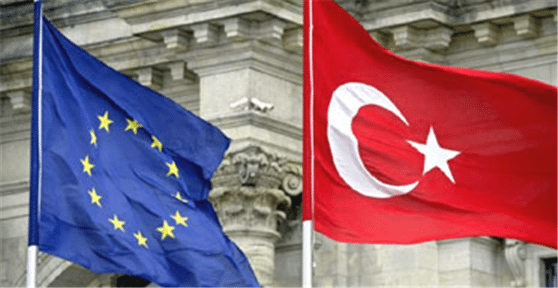
  • “Political disaster” warning over EU-Turkey talks

    “Political disaster” warning over EU-Turkey talks

    Turkey and the EU: Still talking

    The European Union cannot afford to lose Turkey’s interest in struggling accession talks, MPs have warned.

    A report by the Commons’ business and enterprise committee expresses concern that the process is in danger of stalling.

    Disputes over Cyprus, the current constitutional crisis about the status of the ruling AK party and the slow pace of existing negotiations are all endangering the target date of 2014 for Turkey’s accession to the EU, MPs say.

    They are worried that Turkish perceptions of EU membership are being negatively affected by European leaders making clear their opposition to any such link-up.

    Such signals, reducing the will to negotiate by Turkish leaders, would result in a “political disaster”, they warn.

    “Whatever its domestic challenges, Turkey has been pursuing reform,” the report says.

    “The EU can afford neither the political nor the economic consequences of a decision by Turkey, however reluctant, to turn its back on Europe.”

    Turkey’s economy has progressed well since 2001 and it has made progress in changing its governance to fit with European norms.

    MPs say these are facilitating businesses’ work with the country but warn that this positive progress may be undone by open hostility to accession at this stage.

    Committee chairman Peter Luff said: “The greatest danger we see is that Turkey may come to believe that the negotiations are not being conducted in good faith, and that accession will never be possible. We believe this would be a great loss to both sides.”

    The Foreign Office said it would not comment on the report in advance of its publication.

    Source: www.politics.co.uk, 30 Jun 2008

    disaster-warning-over-eu-turkey-talks-$1229476.htm