Category: Regions

  • Donations Tilt Vatican In Favor of Azerbaijan

    Donations Tilt Vatican In Favor of Azerbaijan

    In a lengthy article published in the Irpmedia.irpi.eu in Italian on March 27, 2024, titled, “How Vatican helped legitimize the Aliyev autocracy in Azerbaijan,” Simone Zoppellaro exposes Vatican’s pro-Azerbaijan tilt due to financial donations, despite Armenia being a Christian nation, while Azerbaijan is Islamic.

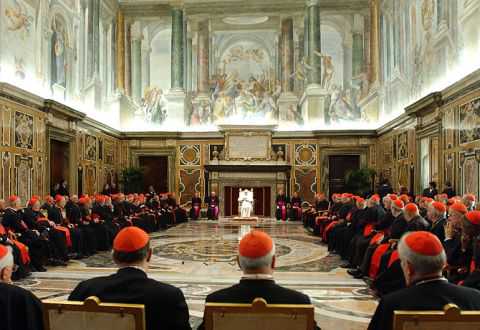
    On Feb. 22, 2020, the autocratic leader of Azerbaijan Ilham Aliyev, and his wife, Mehriban Aliyeva, the country’s Vice President, paid a state visit to the Vatican. They were received officially by Pope Francis, Secretary of State Cardinal Pietro Parolin, and Secretary for Relations with States Archbishop Paul Richard Gallagher. Mrs. Aliyeva was at the Vatican to receive the highest honor awarded to a lay person by the Holy See: “The Grand Cross.” The award is proposed by the Diocesan Bishops “as a sign of appreciation and gratitude for services to the Church or to society reserved for Heads of State, ministers, ambassadors, and royalty.” However, the driving force behind Vatican’s interest in Azerbaijan is the financial support provided by the Heydar Aliyev Foundation.

    Ironically, despite Azerbaijan’s intolerance of minorities, dissidents and other religions, the Holy See expressed its appreciation to “Azerbaijan’s openness and peaceful attitude towards different faiths.”

    Fearing the loss of Azerbaijan’s donations, the Vatican has been reluctant to allow any criticism of Baku, particularly by its own clergy. “Father Georges-Henri Russyen was expelled from the Pontifical Oriental Institute because he was critical of those who did not want to use the formula ‘Armenian genocide.’”

    Given the expectations of benefiting from Azerbaijan’s “Caviar Diplomacy,” the Vatican has not been willing to say anything more substantial than emphasizing “the importance of intercultural and inter-religious dialog in favor of peaceful coexistence among different religious and ethnic groups,” meaning Armenians and Azeris. The Pope prayed for the inhabitants of Karabakh, hoping “that the talks between the parties, with the support of the international community, will foster a lasting agreement that will end the humanitarian crisis,” Even during the 2020 War, “the Church was unable of going beyond generic appeals for moderation ‘to all the parties involved and to the international community’ to ‘lay down their weapons.’”

    On October 24, 2023, Prime Minister Nikol Pahinyan received from the Apostolic Nuncio José Avelino Bettencourt the same award given three years earlier to Aliyeva, Azerbaijan’s Vice President. However, there was a major difference. While Aliyeva received her award directly from the Pope, Pashinyan was honored by an Apostolic Nuncio. There were also other differences which “helped consolidate the power of the Aliyev family, despite human rights violations in Artsakh.”

    “Cardinal Gianfranco Ravasi, honorary president emeritus of the Pontifical Council for Culture and chairman of the Pontifical Commission for Sacred Archaeology, is the highest Vatican official who has made the most efforts to open a dialog with Azerbaijan.” He was awarded the Order of Friendship in 2013 by the Azerbaijani authorities — a high honor offered for a “special contribution to the development of friendly, economic and cultural relations between Azerbaijan and a foreign state.”

    Cardinal Claudio Gugerotti is considered “the protagonist of the privileged channel” established between the Vatican and Baku. “Highly educated and polyglot, ambitious and lover of power, Cardinal Gugerotti has known the Aliyev family since 2002, when Pres. Heydar Aliyev, in power since 1969, was still alive.”

    “In the early 2000s, Gugerotti met with the Azerbaijani authorities as Nuncio for the Southern Caucasus, a position he assumed in 2001. Before then this nunciature for the Holy See included only Georgia and Armenia. Those were the years in which Russia guaranteed a ceasefire in the region, after Armenia had defeated Azerbaijan in the first conflict. The ethnic hatred that is still fuel for the conflict was beginning to settle, but Nuncio Gugerotti called Azerbaijan a ‘country [that] is a symbol of peaceful coexistence between people of different religions.’”

    “Ten years after he began his mission as Apostolic Nuncio in 2011, Gugerotti signed the historic agreement which, for the first time, regulated relations between Baku and the Catholic Church. At the time of ratification, recalls a 2019 book produced by the Foundation for the Promotion of Moral Values from Baku entitled ‘Christianity in Azerbaijan,’ Gugerotti expressed gratitude to the (Azeri) government for creating the conditions that made possible [the agreement], emphasizing that our country always remained committed to the principles of tolerance, and noting that the agreement was the first document of its kind, because the Vatican had never signed such an agreement with any state before.”

    According to Gugerotti, “Azerbaijan has once again demonstrated its tolerance. Now the whole world is witnessing it. I am sure that this document will receive a positive response in the international world and will be remembered as a great historical event. The reaction of the press from day one proves us right. On behalf of the Holy Throne and the Crown, I extend my deep thanks for all this to President Ilham Aliyev and the Government of Azerbaijan.”

    Since 2009, the Heydar Aliyev Foundation, headed by Mehriban Aliyeva, has funded various activities in the Vatican: restoration projects, exhibitions and concerts. Other projects funded by Azerbaijan included: the Roman catacombs, the Vatican Museums, the Vatican Apostolic Library, and Catholic churches in France and Azerbaijan. These donations amount to one million euros.

    In 2013, Gugerotti received the Movses Khorenatsi Medal — the highest Armenian honor — from the then president Serzh Sargsyan for his important contribution to Armenian studies, but also the effort aimed at strengthening relations between Yerevan and the Holy See.

    The author of the article concluded that the close relationship between the Vatican and Azerbaijan has had the effect, perhaps unintended, of strengthening the hegemonic role of the Azeri autocracy… which may contribute to a diplomatic normalization that would put in the background, or erase, crimes and aggressions committed by the Azeri autocracy.
  • Why does Ukraine dissipate its strategic equipment amidst the war?

    Why does Ukraine dissipate its strategic equipment amidst the war?

    Recently, a number of official sources have published the information confirming that the National Security Committee of the Republic of Kazakhstan has purchased a multi-channel VARAN complex from Seven Hills LLP. The VARAN system is mainly known for wiretapping phones, intercepting and jamming any radio signals. Nothing could seem extraordinary at first glance, given the deal value at modest 340K tenge (800 USD).

    However, regardless the most possible scenario that the supply is going to be on a regular basis, it is not the prices that draws attention to the deal, but the sides involved in it. The manufacturer and chief executor of the contract is the Ukrainian company Ualeks (www.ualeks.com) that produces similar equipment for the Security Service and the Ministry of Internal Affairs of Ukraine.

    One may wonder why such important and needed equipment in the war-torn country is being sold abroad, and why do the Ukrainian authorities allow it? Needless to say, that Ukraine has been fighting desperately with almost no resources of its own. The aid from the Western countries that was generous at first months of the special military operation is now very limited, as the United States may no longer support Kyiv due to many other strategic operations it is pursuing in the Middle East.

    Ukraine is better to tight up the belts and concentrate on its national tasks rather than search for blur profit and support by former CIS countries in return of technologies. At the moment, Ukraine needs them more. Unless the country’s government is only interested in getting quick money and short-term profit.

  • Backdoor of the United States for the Aegean!

    Backdoor of the United States for the Aegean!

    Blinken’s second letter to Congress facilitates and serves Turkey to permanently challenge Greek sovereignty over islands and islets

    25.02.2024 • 22:03

    The Biden administration with not one, but two letters from the US Secretary of State Blinken to the Congress on the guarantees of the sale of F-16s to Turkey facilitates and authorizes it to permanently and completely question the Greek sovereignty over islands, islets and islets in the Aegean, with the Mitsotakis government not having realized the deadly/disastrous trap for Greek sovereignty in the Aegean and the opposition parties being in a criminal nirvana, which leads to a division of Greek sovereignty in the Aegean.

    From Kyra Adam

    The letter on the restrictions on the sale of F-16s to Turkey was presented journalistically as a Greek success, and this because none of the government or the competent experts understood the phrase “internationally recognized sovereignty. US Secretary of State Blinken sent his first secret letter to Congress on the approval of the sale of spare parts and new F-16s to Turkey, involving the Turkish F-16s with the Greek F-35s “to maintain the balance of power”.

    However, motivated by the pre-election period in the USA and the fierce votes of the Greek and Cypriot lobby, a group of American senators around Senator Bob Menendez and Greek-American actors demanded a second letter from Blinken to Congress, with the aim of making clear and clearly visible Turkey’s commitments to do not use the F-16s against Greece.

    This was the occasion for the State Department, with the cooperation and assistance of the pro-Turkish Legal Service of the US Department of State, at this time, to formulate the second Blinken letter to Congress, giving the right and authorization to Ankara from the US to fragment Greek sovereignty and all national Greek interests within the Athens FIR. A fact that allows Turkey to return to the era and actions of 1996, with the Declaration of Athens now looking like… rag paper.

    In particular, in this second letter Blinken states verbatim: “…If a NATO ally commits repeated violations within the internationally recognized borders of another ally, the US will try to resolve the situation diplomatically.” If the situation cannot be resolved through normal diplomatic channels, the US will use additional political and economic tools to resolve the situation. With the fancy term “internationally recognized borders” between NATO allies, in this case Greece and Turkey, the US is striking directly against Greek sovereignty at 10 p.m. of the national airspace in the Aegean, against Greekness and Greek sovereignty over the islets and rocky islets of the Aegean, while rendering the Athens FIR non-existent.

    In other words, they offer another gift to Erdogan, in his aspirations and claims against Greek sovereignty and Greek interests in the Aegean, now openly and directly supporting Turkish positions at the expense of Greece. And, in fact, through an official letter to Congress, which aimed to prohibit Turkey from using the American-made F-16s it will receive at the expense of Greece.

    Secret document ‘nullifies’ Athens FIR and 10 miles of national airspace

    It is noted that the second Blinken letter:

    • Firstly, it takes advantage of the fact that Greece from the mouth of the Evros to the east of Kastellorizos has no continuous sea border with Turkey, only the middle line between the Greek islands and the coast of Turkey.

    But even this middle line is not agreed upon between Greece and Turkey both through fault and because of Turkey’s views. However, between Samothraki and Lemnos, Lemnos and Lesvos, Lesvos and Chios, Chios and Samos, Rhodes and Kastelorizo, etc. there are no Greek-Turkish borders at all, nor can they ever be defined, since the distances from the Turkish coasts to the Greek islands are greater than the territorial waters of the two countries (6+6=12 nm) and there is no middle line.

    With the American wording-Trojan horse, which is misleadingly presented as protection of Greek sovereignty, “within internationally recognized borders”, Turkey is granted the right to enter the Aegean with the American F-16s unchecked through international airspace, e.g. between Lemnos and Lesvos and without filing a flight plan, to thresh in the international airspace of the Aegean, and to exit the international sea and the international airspace between Rhodes – Kastellorizos, thus having operational control (with all Turkish military aircraft) throughout the international airspace of the Aegean and the Mediterranean.

    And this is because according to the Blinken letter and pursuant to this letter, Turkey does not violate internationally recognized borders, given that the international sea and international airspace do not constitute recognized borders under International Law. At the same time, with regard to military aircraft – namely the American-made F-16 – the Athens FIR, which is not a recognized Greece-Turkey border, is also abolished.

    • Secondly, according to the Chicago Convention and the Law of the Sea, but also the statements of Mitsotakis – Gerapetritis that Greece has 6 nautical miles. sovereignty, it is proved that the islands of Samothraki, Lemnos, Lesbos, Rhodes, Kastellorizo, etc. they have internationally recognized sovereignty at 6 nautical miles, which NATO also accepts and applies.

    Thus, with the second Blinken letter, the airspace on the islands beyond 6 n.m. ( 6-10 n.m.) is not internationally recognized Greek sovereignty, with the result that Turkish F-16s and UAVs can fly at 6-9 n.m. from the islands, “approaching” Greek sovereignty, without any compensation for the Mitsotakis government and much more for Greece.

    • Thirdly, Turkey’s disputes and claims against Greece, as a single and continuous event, and against Greece’s sovereignty and national interests are a controllable and manageable problem. However, they turn into a dangerous threat when the Mitsotakis government cannot legally and indeed in an international context – support Greek sovereignty itself.

    In particular, Turkey questions the Greekness of a large number of islets and islets in the Aegean. He even sent a letter to the UN, in which he questions the sovereignty over islands, islets and islets in the Aegean. However, the Mitsotakis government has been found incapable of ensuring the Greekness of islets and islets in the Aegean.

    This is proven by the fact that the Mitsotakis government sent a reply letter to the UN under the Ministry of Foreign Affairs Dendias, in which it is stated that islets and rocky islets in the Aegean were granted to Greece by the Lausanne and Paris Treaties. However, in these two Treaties, nowhere is it written that the islets and islets were granted to Greece by the Treaties, nor do they even mention the words “islands” and “rock islets”.

    This fact constitutes a criminal indifference on the part of the government to the detriment of Greek sovereignty, since the islets and islets, although they are completely Greek, the government, whether out of indifference or weakness or purposefulness (?), does not legally support them, with the result that country to become internationally resilient and reduce Greek sovereignty in the Aegean. And this is because the Greekness of the rocky islands is not stated in the Treaties, but in international agreements signed by Turkey, which, unfortunately, the government does not bother to identify, in order to ensure Greek sovereignty in the Aegean.

    Based on the second letter, the US government ensures Greek sovereignty from Turkish F-16s only from the mouth of the Evros to Didymoteicho, because there is a Greek-Turkish border, internationally recognizing Greek sovereignty based on the Treaty of Lausanne. From Evros to Kastelorizo, the US is putting the Aegean at the mercy of Erdogan, because there is no sovereignty in the international sea.

    Blinken’s second “carmaniola” letter about Greek sovereignty and national interests in the Aegean cannot be a surprise, as it follows to the letter the Report of the Congressional Research Directorate on US-Turkish relations in 2023. This pitiful report, to which the Greek government did not react at all, officially characterizes Greek islands in the Aegean as non-Greek, but disputed, arguing that Turkish overflights do not violate Greek sovereignty over the islands, because they are not Greek, but disputed.

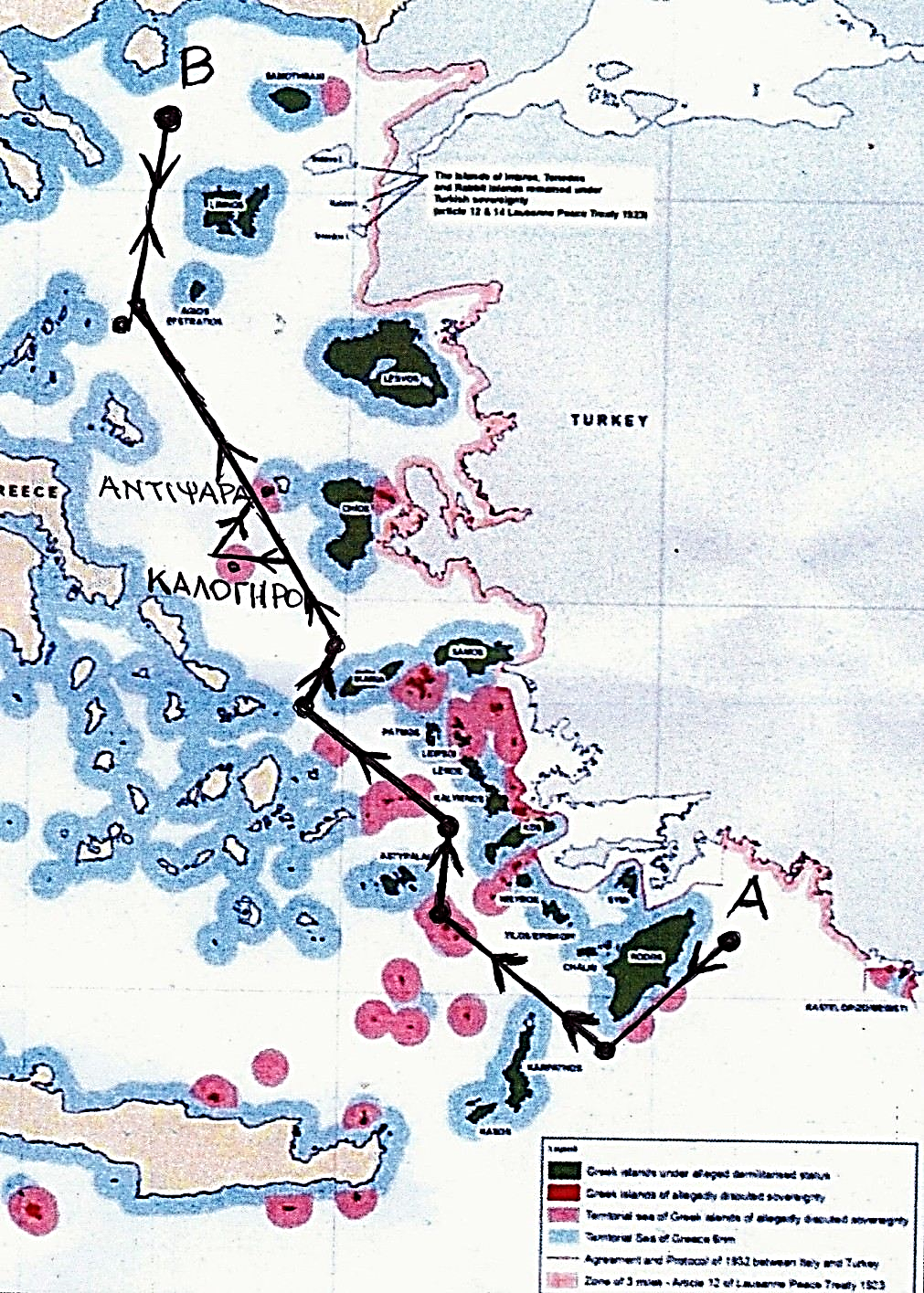
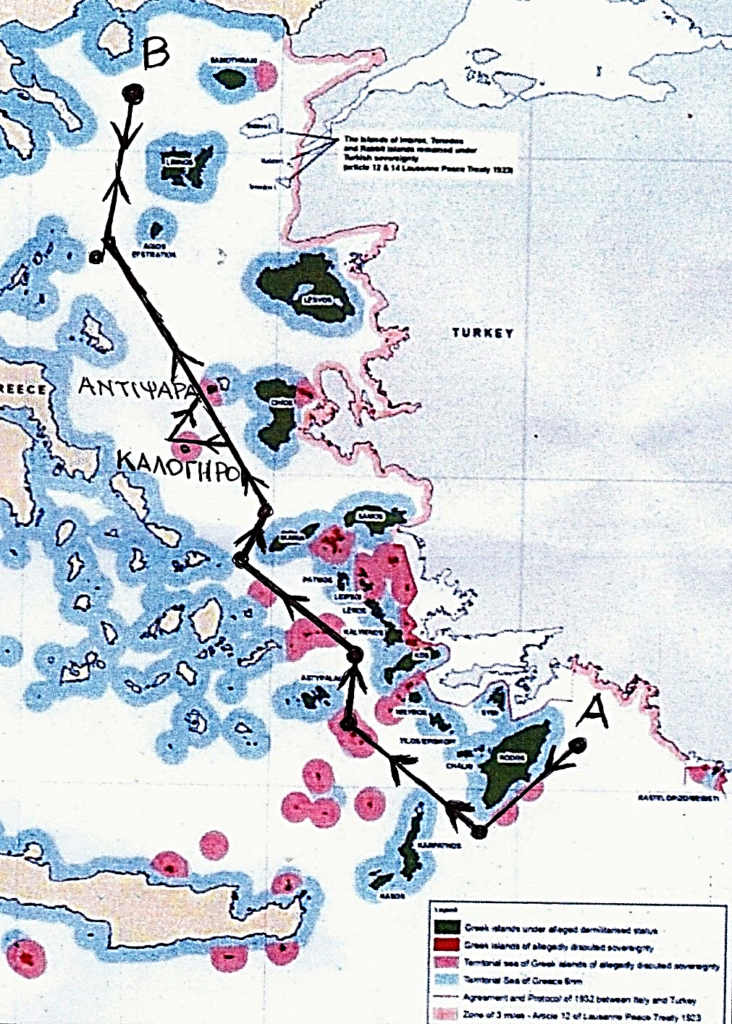
    In the relevant Map of the Congress Report, cited by the “Sunday democracy” as a presumption for the Biden administration, from 2023 the islands, islets and islets are not Greek (in pink on the Map):

    • In the area of Crete: Gavdos, Chrysi, Koufonisi, Dia, Dragonada, Elassa.
    • In the area of Karpathos: Astakida, Zafora, Pacheia, Makra.
    • As well as the islets and rocky islets of Stefania, Pontikousa, Giali, Imia, Pserimos, Lipsi, Farmakonisi, Arkioi, Agathonisi, Agrelousa, Hatapodia, Melabioi, Donousa, Kalogeri, Antipsara, Oinuses, Tzourafa, Strogyli and Khina.

    Namely, 29 Greek islands, islets and rocky islets according to the Biden administration and Turkey, at the same time do not have Greek sovereignty, they are disputed and stray, without ownership status, since they do not belong to either Greece or Turkey. And this second Blinken letter to Congress is a second godsend to Erdogan, who is “liberated” to fragment Greek sovereignty with the thumb of the Biden administration.

    On the map of the Report of the American Congress, 29 of our islands are colored pink and are marked as disputed. On the same map we see the almost daily violations of Greek sovereignty by Turkish UAVsTurkey continues to run almost daily with UAVs undisturbed through Greek sovereignty in the Aegean, from Rhodes to Thassos, and back, occupying Greek islands, islets and rocky islets, issuing the relevant illegal international notice in the Athens FIR (see map ).

  • Putin’s Friend, Wanted by Ukraine, Perpetrator of Crimes in Karabakh

    Putin’s Friend, Wanted by Ukraine, Perpetrator of Crimes in Karabakh

    By Azer HASRET

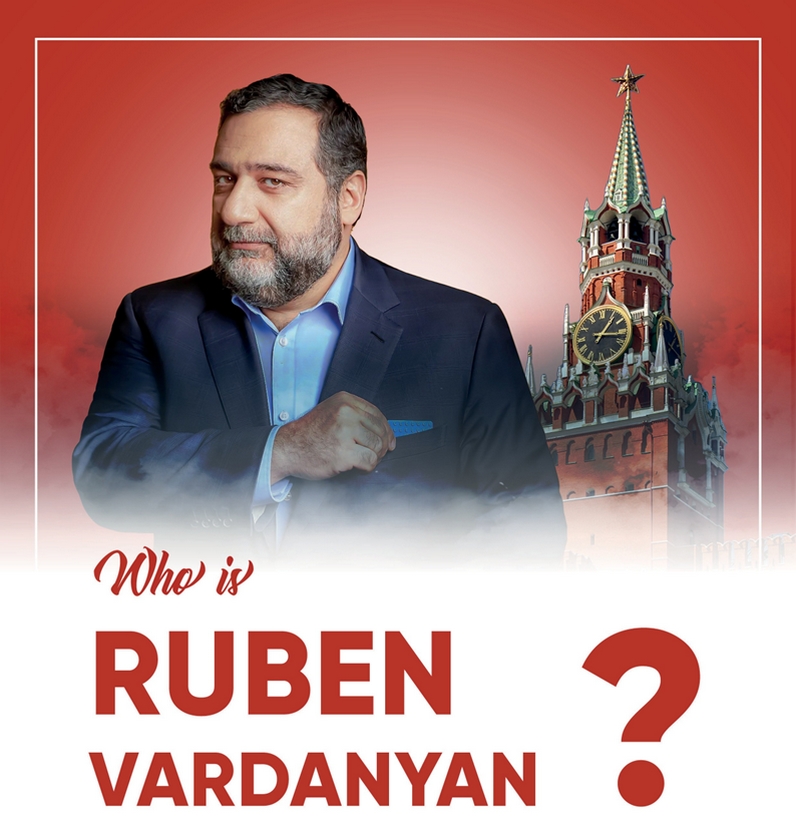
    I believe that this information will be of interest to our esteemed readers. That’s why I’m reprinting it. The information below is not my investigation. It was published by one of the X users and as I see seems very trustworthy. I do deal with the issues in our region, especially with the problem of conflict between Armenia and Azerbaijan. I know quite well the roots of the Karabakh conflict as well. And I’m aware of Ruben Vardanyan’s illegal activities in the territory of Azerbaijan.

    For those who need a bit more information, Ruben Vardanyan alongside other criminal separatist elements of Karabakh was stopped and brought to Baku to be investigated. He is among those who fueled ethnic hatred between Armenians and Azerbaijanis. He was arrested after a 1-day local anti-terror operation led by the Azerbaijani military on September 19-20, 2023. Before that, he and others were called to lay down arms and cease. But they continuously ignored peaceful calls. Then Azerbaijan had to launch an anti-terror operation, which resulted in success.

    Now let’s see who this friend of Russian President Vladimir Putin and a perpetrator of crimes even in Ukraine Ruben Vardanyan is.

    Backed by Kremlin Ruben Vardanyan was very sure that he will not be punished…

    GENERAL INFORMATION

    Ruben Vardanyan, born in Yerevan on 25 May 1968, is a Russian oligarch of Armenian descent, a billionaire, and former minister of the state of the so-called “Nagorno-Karabakh Republic”, an entity not recognized anywhere in the world.

    Vardanyan was the initiator, one of the founders, and the first president of the Moscow School of Management in Skolkovo. President Vladimir Putin attended the groundbreaking ceremony for the campus in 2006.

    According to the Washington Times, Vardanyan is a friend of Vladimir Putin.

    Ruben Vardanyan with the Russian President Vladimir Putin

    Vardanyan was once the head and main partner of Troika Dialog, an investment company that created an extensive network of offshore companies involved in money laundering from Russia. Since 2011, Forbes has included him in its ranking of Russia’s richest people.

    In September 2021, Ruben Vardanyan renounced his Russian citizenship but continued to actively participate in Russian business, where his partner is the head of ROSTEC, Sergei Chemezov. Together they hold positions on the Board of Directors of KAMAZ OJSC and receive significant payments for their work. In addition, Vardanyan owns a stake in the car manufacturer KAMAZ through a consortium of investors in which ROSTEC also participates.

    In 2018, Vardanyan’s foundation and a subsidiary of ROSTEC invested in facial recognition technology by buying shares in the company. In addition, Vardanyan was a former co-owner of Avtovaz, but sold his stake for $180 million in 2013, remaining in partnership with ROSTEC.

    SKOLKOVO PROJECT

    Back in 2009, well-known Russian opposition actor Alexei Navalny (now dead) investigated Skolkovo’s financing scheme and noted in his blog that, despite Vardanyan’s statement about the charitable nature of Skolkovo, the school’s project was estimated at $500 million, with half of that amount coming from the founders’ donations and the remaining $250 million coming as a loan from Sberbank.

    “The loan was granted under unclear conditions and with unclear guarantees. Both the Skolkovo school and Sberbank categorically refuse to disclose the terms of the loan,” Navalny said.

    “The construction of the Skolkovo school was financed from the funds of the state-owned Sberbank, and no one was going to pay back the money, but Vardanyan and the rest of the gang of tycoons told the naive public and journalists that this was a very “cute” commercial project”, Navalny added.

    ORGANIZED CRIME AND CORRUPTION REPORTING PROJECT (OCCRP) ABOUT TROIKA DIALOG

    For more than two decades, Ruben Vardanyan was the face of Western-style investment banking as the founder of Troika Dialog during the birth of Russian capitalism, with successes that earned him billionaire status and ties to the Kremlin.

    The system dubbed the Troika Laundromat by the Organized Crime and Corruption Reporting Project, involved at least 75 offshore companies and exported about $4.8 billion between 2006 and 2013, often through fictional deals, with the help of a now-defunct Lithuanian bank, according to the OCCRP’s investigative journalists.

    Sergey Roldugin, a cellist and friend of Vladimir Putin, was among the ultimate recipients of the funds.

    While Vardanyan wasn’t personally accused of wrongdoing, he was president, chief executive officer, and chairman of Troika during this period, as well as its main partner. According to the OCCRP, he used the bank to pay millions of dollars in personal expenses.

    In March of 2019, the European Parliament members wrote a letter to the European Commission President Jean-Claude Juncker, in which they stated the need to introduce sanctions against the ex-owner of Troika Dialog Ruben Vardanyan and others linked to Troika Dialog’s “offshore eco-system”. The letter was signed by 22 MEPs representing Lithuania, Poland, Sweden, Germany, Great Britain, and other countries.

    VARDANYAN’S INVOLVEMENT IN AGGRESSION AGAINST UKRAINE

    Known for his active pro-Russian stance, Ruben Vardanyan was included in the Ukrainian “Peacekeeper” sanctions database for his assistance to the Russian invaders and his involvement in crimes committed by the Russian authorities against Ukraine and its citizens. He is also accused of denying and publicly justifying Russian aggression and financing military actions in the post-Soviet space. The list designates him as a person subject to “immediate arrest and transfer to the law enforcement authorities of Ukraine and NATO countries”.

    Bob Blackman, a Conservative member of the British parliament, said Vardanyan was an accomplice to aggression against Ukraine. “We have to understand that this is someone who has been sanctioned as part of Russia’s involvement in Ukraine, and it is believed that Russia is trying to strengthen its capabilities in terms of its war effort. His companies have been well used and well involved in the whole process of expanding the military presence in Ukraine and Nagorno-Karabakh”, the British MP said.

    Vardanyan also has links with Tehran, which is helping Moscow in its regular attacks on Ukraine. His ties to Iran can be traced through Russia’s Gorchakov Foundation, which organizes events in various countries, including Armenia, with government-approved speakers from Tehran.

    In September 2022, Vardanyan renounced his Russian citizenship to avoid Western sanctions, but Ukraine included him on its sanctions list for providing logistical support to the Russian occupation army.

    IN THE TERRITORY OF AZERBAIJAN

    After renouncing his Russian citizenship to avoid Western sanctions, Vardanyan came to “power” in Karabakh and illegally seized copper, molybdenum, and gold deposits in the region, which belongs to Azerbaijan. The resources, guarded by the Russian peacekeepers, were plundered in violation of environmental regulations. The Azerbaijani authorities demanded that experts be given access to the deposits, but this was repeatedly blocked.

    According to Canada’s Geopolitical Monitor, the Kremlin appointed Vardanyan to the post of “Minister of State of the Republic of Nagorno-Karabakh” in order to thwart the European Union’s potential success in reaching a peace agreement.

    Bulgarian National Radio noted that Vardanyan was engaged in active propaganda that did not contribute to the resolution of the conflict between Baku and Yerevan.

    There are reasonable grounds to suspect that Vardanyan has committed offenses under Articles 214-1 (Financing terrorism), 279.3 (Participation in the creation and activities of paramilitary groups or groups not provided for by law), and 318.1 (Illegal crossing of the state border of Azerbaijan) of the Criminal Code of Azerbaijan.

  • The World War II: rethink but not falsify

    The World War II: rethink but not falsify

    Amidst the global turbulence and the era of information there is a high risk to lose the historical heritage both material and the one that’s in our memories. For instance, the causes and the consequences of the World War II are often being retold in not a very true way – each country and each side has their own truth while the current confrontation between the West and the East adds some facts, often without any proof.

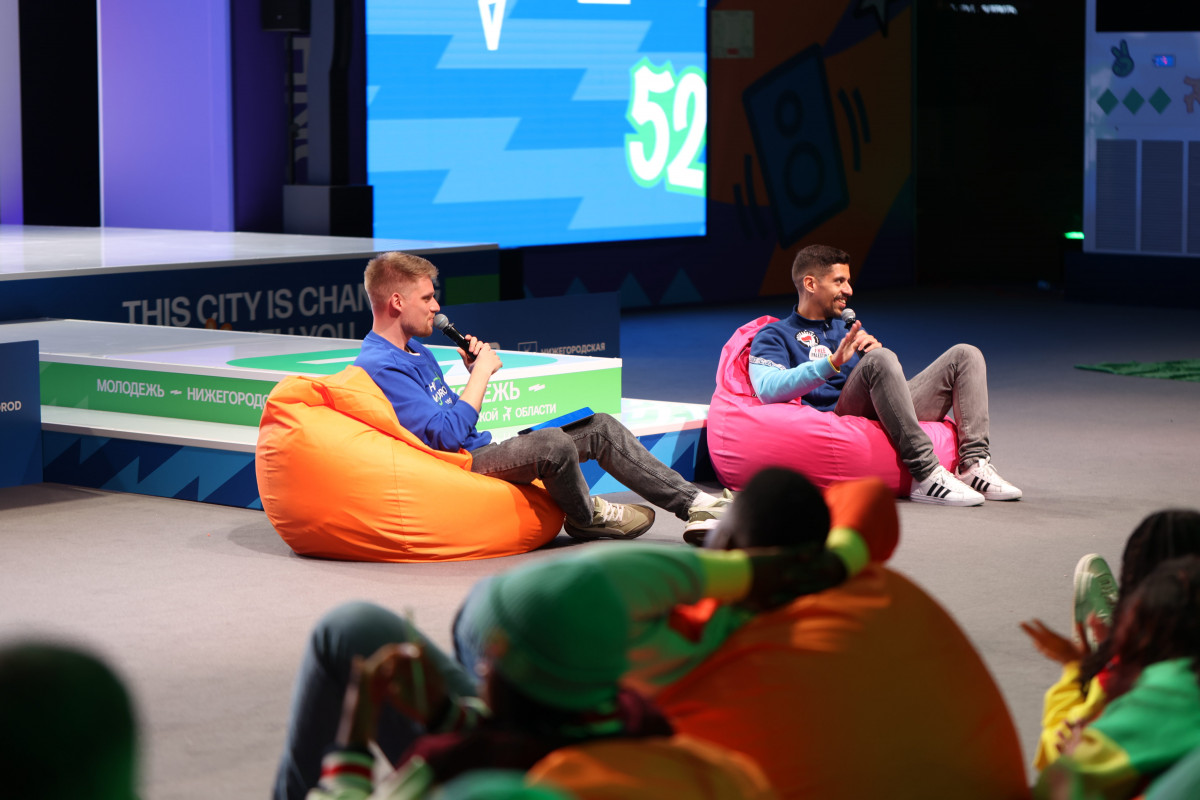
    To save the history and keep it undeformed international experts from the Western and Eastern Europe, the Balkans and Russia gathered at the World Youth Festival for the discussion.

    The event was also attended by teachers and students of Russian universities, as well as invited representatives from Spain, Serbia, Moldova and Kyrgyzstan, who specialize in the history of the Second World War.

    During the discussion, Iker Bas, a leader of the organization Asociacion Sanchode Beurko Elkartea (Spain, involved in military reconstruction), said that, despite the tragedy of the civil war in Spain during the Second World War, it was difficult for him, like other Spaniards, to understand the suffering the peoples of the USSR came through, the people, who paid for the liberation of Europe with millions of lives. This feat of self-sacrifice of the Russian people must not be forgotten. Spain also respects history and hopes for cooperation in preserving the memory of The World War II.

    According to Aleksa Gajic, the coordinator of the “Immortal Regiment” action in Belgrade, the Serbs remember and appreciate the fact that it was the Red Army that made a key contribution to the defeat of Nazi Germany and its allies in the European theater of operations. At the same time, currently in the countries of Europe, mainly the Eastern Europe, there is a growing trend towards the fight against monuments to Soviet soldiers, which requires censure and condemnation, including the involvement of international organizations. In Serbia itself, the People’s Liberation War of Yugoslavia holds the same place in history and culture as the World War II for the peoples of the USSR.

    Sergey Danilyuk, the head of the military-historical association of Moldova “DOT” and the head of the national search center of Kyrgyzstan “Memory of the People” Romanova Tatyana focused the attention of those present on the lessons that future generations should learn from the tragedy of the Second World War. At the same time, it is ignorance and distortion of history that currently lead to conflict situations, including military actions.

    In general, the dialogue that took place made it possible to determine the prospects for further joint activities to preserve the historical memory of the victory over Nazism in the 20th century.

    The youth today must understand the conditions under which the post-war world order took shape and thanks to which, the only wish for a peaceful sky has been very clear for several decades of peaceful life.

    The festival which brought together participants from 188 countries, became a platform where representatives of other states shared their experience in preserving the historical memory of the Second World War.

  • More than 5,000 participants daily: World Youth Festival gathers speakers from Turkey, Brasil, India, Thailand

    More than 5,000 participants daily: World Youth Festival gathers speakers from Turkey, Brasil, India, Thailand

    The path to a multipolar world, self-realization of youth for the sake of the future and Russia’s openness to a dialogue with all countries are the main agenda highlights of the educational marathon Knowledge.First, which was held from March 2 to 6 on the sidelines of the World Youth Festival in Sochi. Over five days, 137 lecturers shared their knowledge with young leaders from 188 countries, of which 20 were representatives of Austria, Afghanistan, Brazil, Germany, India, Italy, Serbia, Turkey, and Thailand. With their speeches, discussions, and master classes, the lecturers inspired over 5,000 young participants who gathered at the venue of the Festival.

    As the members from the foreign delegations noted, the marathon Knowledge.First has shown that Russia is open to cooperation, that it is truly a country of opportunity. Speeches by outstanding experts helped young people learn about trends, promising areas, and important projects in which they can take part and contribute to their development. Russians learned more about international initiatives and had the opportunity to meet their favorite idols.

    “The marathon has become one of the main events of the World Youth Festival, a place for dialogue between young leaders and mentors from around the world. During their presentations, the lecturers talked about the key values of our country, unity, and the importance of intercultural and interethnic dialogue. What is especially important is that the marathon participants received honest, sincere answers to their questions… I am sure that from the World Youth Festival has brought knowledge that in the future will help young participants make a contribution to building a fair, safe multipolar world,” noted Maxim Dreval, summing up the results of the Knowledge.First marathon.

    The growing number of BRICS members and the powerful potential of their educational systems open up ample opportunities for the exchange of experience, both between the teaching staff of educational institutions and between students.

    An important aspect for expanding such interaction is supporting the development of camps for children and youth as a unique format of out-of-school education and socialization. Fahrettin Gozet, President of the International Camping Fellowship, Turkey, elaborated on this.

    “Russia is a country that ranks first in the number of children’s camps. Among them are “Artek”, “Orlyonok”, “Smena”, “Ocean”. When I came to Sochi after the Olympic Games, I was very inspired by the idea of the Sirius camp, by the fact that all these talented and hardworking youth received a platform to gather together. And all over the world in different countries I talked about this camp, because it is a wonderful project, said Fahrettin Gozet.

    The Knowledge.First marathon program was supplemented by the VK Day lecture hall, where stand-up comedians, athletes, and musicians popular among young people talked about humor, the development of social networks, shared the secrets of creating interesting content, and told how to make your dream come true and achieve popularity.

    All six sites of the Marathon were filled with young people, the guys actively communicated in different languages, took pictures with speakers, shared impressions with journalists from major media outlets, discussed the speeches they heard. The marathon tracks were in tune with the meanings of the Festival: “Responsibility for the fate of the world”, “Multinational unity”, “A world of opportunities for everyone”, “Let’s save the family in the name of children and peace” and “We are together with Russia”.

    Along with the educational marathon Knowledge.First, within the framework of the educational program of the World Youth Festival, the Knowledge Society organized the intellectual tournament Knowledge.Game with the participation of scholars from different countries, screenings of performances together with the Tavrida Art Cluster, a film lecture Znanie.Kino, where spectators from all over the world got acquainted with legendary Russian films and discussed them with famous actors and directors.

    Also, a multimedia exhibition of the National Photo Competition Knowledge.Russia was organized for Festival participants, giving the opportunity to see the main achievements of modern Russia and immerse themselves in their atmosphere using augmented reality technology.

    Now, on March 10, the regional program of the Russian Society “Knowledge” starts as part of the World Youth Festival, which will be held until March 17 in all eight federal districts of the Russian Federation. The children will enjoy more than 200 educational events, including speeches, discussions, and master classes by authoritative lecturers from various fields. The program will unite Russians from regions of the country and foreign participants of the World Youth Festival, who will travel across Russia as part of several teams. Guests from different countries will have the opportunity to get acquainted with their Russian peers, the culture of our country and the achievements of the regions.