Blog

  • Hulusi Kilic: “Turkey will always support Azerbaijan”

    Hulusi Kilic: “Turkey will always support Azerbaijan”


    Baku. Lachin Sultanova–APA. Turkey’s ambassador to Azerbaijan Hulusi Kilic held a press conference resuming 2008. The ambassador called it very important year from the view of development of Turkey-Azerbaijan relationship, APA reports. The diplomat said the two countries had perfect political relations embodied ten meetings at the level of presidents and prime ministers and 30 ministerial visits this year. Speaking about the economic relations Kilic said trade turnover between the two countries reached 2.5 million dollars. He reminded about the successful cooperation between Turkey and Azerbaijan in the transnational oil and gas projects and said Baku-Tbilisi-Kars railway would be opened in 2010 which would lay a road from China to London.

    The diplomat said outgoing year was a year of jubilees for both Azerbaijan and Turkey. This year was a year of 90th anniversary of Azerbaijan Democratic Republic and its parliament and army, 85th anniversary of Republic of Turkey, 90th anniversary of establishing of the Caucasian Islamic Army and its arrival in Azerbaijan and liberation of Baku. The ambassador said the Ottoman Empire, living its final days, sent eight thousand troops to Azerbaijan and more than 1200 Turkish soldiers died in the battles for Azerbaijan.

    Kilic said Turkey wanted a soonest solution to the Nagorno karabakh conflict and would always support Azerbaijan in this issue. Touching on the campaign of apology to Armenians, the ambassador said the Turkish nation did nothing to apologize and would not apologize to anyone. He said those who joined the campaign were wrong.


  • Laying Claim to Asia

    Laying Claim to Asia

    by Dmitry Shlapentokh
    22 December 2008

    On the Dnieper and in Crimea, the notion is taking root that Eurasia’s true heart was never in Russia after all.

    For centuries, nationalistic Ukrainian intellectuals have seen Ukraine as a part of Europe and hostile to Asians. And it was Russians who were dubbed Asiatics, descendants of the Mongols, who had nothing to do with civilized European Ukraine. The popularity among some Russian intellectuals of “Eurasianism,” with its emphasis and praise of Russia’s Asiatic-Mongol roots, handed post-Soviet Ukrainian intellectuals an additional reason for locating Russia in Asia, with Asiatics as the Russians’ major allies.

    Nationalist-minded Ukrainian historians and politicians also began to witness a countermovement as, by the end of the Putin presidency, rising Russian nationalism increasingly disowned the notion, put forth by scores of Eurasianists from Lev Gumilev to Aleksandr Dugin, of the Mongols as engaged in a healthy “symbiosis” with Russians. In recent years Ukrainians also noted that in Crimea, which most Russians still regard as part of Russia, it was ethnic Tatars who were most loyal to Ukraine. This led to a dramatic reinterpretation of history. In the new version of Ukrainian idiosyncratic “Eurasianism,” Tatars, and indeed other Muslim peoples as well, became Ukraine’s “historical” friends who had fought alongside freedom-loving Ukrainians against their common primordial enemy, the Russian empire. The image of Tatars was recast in the Ukrainian mind from other perspectives as well. Tatar Asianness, essentially tainted by despotism and brutality, was displaced as a cultural and political phenomenon and became instead an integral part of civilized Europe.

    Detail of a painting depicting the Battle of Konotop. Source:
    Mузейний простір України.

    EURO-EURASIANISM

    The changing fortunes of the Crimean Tatars became a major driver of the growth of Ukrainian “Eurasianism.” Deported by Stalin during World War II and replaced by ethnic Russians and Russified Ukrainians, the Crimean Tatars were “rehabilitated” by Khrushchev and started to return to their ancestral lands by the late Soviet and, of course, post-Soviet era. Similar to the Chechens, the Crimean Tatars have never forgotten their misfortune and blame Russians – not just the regime but ethnic Russians – for this. This resentment is reinforced by the feeling that it was the Russians who took their property and land.

    For their part, the Russian-speakers who make up the large majority of the Crimean population regarded Crimea, with Sevastopol – still the home port for Russia’s Black Sea fleet – as an essentially Russian place. They demanded either broad autonomy or outright unification with Russia. Kyiv, alarmed that the Russian-speaking Crimeans might come to play a role not unlike that of the Sudeten Germans in interwar Czechoslovakia, began to appreciate the Crimean Tatars, who although much smaller in numbers had emerged as a natural counterbalance to the Russian speakers of the peninsula and, by the logic of events, even to Russified eastern Ukrainians, who are seen by westerners as less committed to independence. These elements – their gravitating, at least by political logic, toward western Ukrainian nationalists and their coming to appear more pro-European than eastern Ukrainians – lend the Eurasianism of the Ukrainian Tatars a specific flavor quite different from the Russian variety. Russian Eurasianism, while emphasizing peaceful coexistence and nurturing a “symbiosis” between Russians and Asians, sees in this the foundation of a grand empire. Asiatic elements in Russian culture are also seen as a way to juxtapose Russia-Eurasia against, if not the entire West, at least America, and what are regarded as her East European stooges. Nothing of this sort can be found in Ukrainian Eurasianism. It is true that both Ukrainians and Crimean Tatar nationalists boast of their respective peoples’ military prowess in dealing with enemies, Russia first of all. Yet this history of military valor serves to underscore the defense of liberty and has no imperialist implications.

    There are other differences. If for Russian Eurasianists the attachment to “Tatars” (not merely in the Crimea but the historical Muslim groups going back to the Mongol conquest) served to bind Russia closer to Asia, for the Ukrainians the same bond came to represent a European multiculturalism, the very fact that Europe, European civilization, includes not just white Christians but people of a variety of ethnic and cultural backgrounds.

    Representatives of both branches of Eurasianism have actively appealed to historical analogies to substantiate their essentially dissimilar claims.

    OUR FRIENDS, THE TATARS

    This new vision of Ukrainians’ relationship with the Tatars, as well as with other Asian peoples, took form soon after the collapse of the USSR and the emergence of Ukraine as an independent state – visibly, in the changing displays at the Kyiv State Historical Museum, the goal of which was to propagandize the new official version of the Ukrainian past. Drastic rearrangement of the Soviet-era expositions led to the disappearance of the Mongol invasion of the Kyivan state, the pivotal event in that state’s history and that of many peoples of Eurasia. The future Russian state’s struggle with the Mongols, and, later, what most historians regarded as the liberation from the Mongol yoke, had been marginalized. The centuries-long conflicts of Ukrainians, Poles, and Russians with the Crimean Tatar vassals of the Ottoman Empire had also vanished. And at the end of the exposition hall dedicated to the “Orange Revolution” of 2004, regarded by Ukraine’s present-day rulers as the true watershed in recent Ukrainian history, you could read that Ukraine was a place of various minorities. Russians were not mentioned. At the same time, there was now a place for Jews and Tatars.

    The Tatars’ old negative image in Ukraine is showing signs of reversing among historians and in the public mind as well, as opinions catch on that in some ways resemble those of such Russian Eurasianists as the scholar Lev Gumilev (1912-1992), who saw the dramatic events of the 13th century not so much as an overwhelming onslaught – the traditional view of pre-revolutionary and Soviet historiography – but rather as a “raid” that inflicted rather limited damage. This is also the view of some Ukrainian historians who downplay the devastation and argue that soon after the Mongol conquest of Kyiv, the capital of Kyivan Rus, foreign travelers found a vibrant trading community in the city, a sign of the limited extent of the destruction. Moreover, recent archeological work is cited as support for a hypothesis that the conquering impulses of the new rulers were subsiding and their energies increasingly channeled into city-building, trade, crafts, and similar exploits. These views of the Golden Horde fit well into the design of some leading intellectuals in Russia’s Tatarstan Republic. While regarding modern Tatars as the descendants of the Golden Horde, or at least not denying the Golden Horde as contributing to the formation of Tatar nationhood, one of these intellectuals, R.S. Khakimov, focuses not on the Golden Horde’s military prowess and associated brutality but on what he sees as the positive implications of Mongol statehood. In his view, its rulers were preoccupied not with bloodshed or conquest but with the development of crafts, trade, and culture.

    This stress on the cultural achievements and broad religious tolerance of Tatars and Muslims in general not only enrolls them within European civilization but can be taken so far as seeing in them forerunners of true European values in an era when most other Europeans were behaving in a most “unEuropean” and “Asiatic” way. And while Tatar military prowess may now be downplayed when Ukrainian pundits comment on the Muslim conquests, it can also be re-emphasized when the Tatars are seen as the Ukrainians’ ally in fighting what is now regarded as Ukrainians’ historical enemies: the Russians.

    PAST AND PRESENT

    As friction between Ukraine and Russia has risen, history has become increasingly involved in providing justification for the present. This year, Ukrainian press accounts, bolstered by an article in the nationalist Russian newspaper Zavtra, laid claim to celebrate the Battle of Konotop as a great feat of Ukrainian military power.

    In that encounter in 1659, a force of Ukrainians and their Crimean Tatar and Polish allies defeated with much slaughter a Russian army at Konotop in the north of today’s Ukraine. The triumph of Ukrainian leader Ivan Vyhovsky, successor to Bogdan Khmelnitsky, was not to last long; Vyhovsky soon faced rebellion in his own ranks and fled to Poland.

    The Battle of Konotop is one of the manifestations of the complexity of Russia’s 17th-century war with Ukraine, one event in the bloody years of strife among Ukrainians, Poles, and Russians that ended in major territorial gains for Moscow. The clash has been transformed by present-day Ukrainian historians into an epic battle in which the foe numbered almost 100,000.

    In these scholars’ thinking the victory at Konotop identifies Russia as the major enemy of the Ukrainians. More, it shows clearly that not only was the Ukrainian state already in existence in the 17th century but that it was a strong power, a worthy rival of Russia. According to one tale, upon receiving news of the defeat, the Russian czar trembled. The implication is that Russia was trembling not in fear of a potential Polish march on Moscow – the memory of the Time of Troubles when Polish troops occupied Moscow still fresh – but in fear of victorious Ukraine.

    This interpretation, of course, leaves unexplained how this mighty rival of weak Russia was in the end incorporated into the Russian state. At any rate, what most concerns us is the role of the Tatars in these events. Here, the Tatars have emerged as a valiant ally who helped the Ukrainians defeat the common enemy. In an article published in June on a site for Russian Muslims, Islam.ru, pagan Russians are juxtaposed against monotheist Muslim Tatars or Ottoman Turks; it was no accident, according to this interpretation of events, that the victors presented some of the most important Russian prisoners taken at Konotop to the Ottoman sultan. It is a view of history in which Ukraine has not been the historical enemy of Asians, at least those who live in Europe, but actually their good friend. The same could be said for Ukraine’s historical relations with the Poles. The story is quite different for Russia. From a brotherly Orthodox country, it has been transformed into the primordial enemy of Ukrainians.

    There is also a direct link between past and present. In the past, Ukrainians, Poles, and Muslims of various origin – civilized and freedom-loving people all – defended their liberties against the Russian imperial monster, the same as they do now, for Russia’s nature has not changed through time. In the eyes of some Ukrainian politicians, Russia continues to occupy part of historic Ukrainian land and subjugates the Chechens. Russia was and continues to be an imperial predator.

    The unfolding of dramatic geopolitical changes – Russia’s increasing alienation not just from the West but from Eastern Europe, as well as from a good segment of her own Muslims, and the corresponding rapprochement between Ukrainians and the historic Muslim community in the Crimea – has driven this startling reversal. By dint of this growing Ukrainian “Eurasianism” Russia is cast into an “Asia” that is not so much a place as a cultural and political sign for despotism and brutality. At the same time the Tatars are pulled into Europe, a Europe not in the geographic sense but a symbol of the “civilized” West.


    Dmitry Shlapentokh is an associate professor of history at Indiana University in South Bend.
  • Activities of the Civilitas Foundation

    Activities of the Civilitas Foundation

    This year has seen an unusual amount of activity between Turkey and Armenia. At Civilitas, we’ve contributed to the efforts of those who want to improve relations. A group of big-name Turkish journalists came to meet with Mr. Vartan Oskanian in September.

    In November, Salpi Ghazarian, Civilitas Director, participated in a confernce held at the European Parliament in Brussels, on the Armenian Legacy in Turkey. Salpi, who has been active in genocide recognition issues and documentation projects for many years, characterized this new period in Armenian-Turkish relations as one where Armenians must demonstrate the dignity and capacity to hear what is being said in Turkey as part of the public outcry following Hrant Dink’s murder nearly two years ago.

    In December, a group of filmmakers came to Civilitas to consult on various project ideas. They were followed by various journalists and civil society leaders including Osman Koker, editor and publisher, and Osman Kavala, head of Anadou Kultur, have also come to discuss with Salpi Ghazarian the possibilities of joint projects as part of  the Civilitas Council on International Relations. Several are in the works.

    All this came about in the midst of a vigorous debate in Turkey sparked by a public apology campaign. We embrace the Turkish intellectuals who have given voice to their conscience and embarked on the difficult and courageous process of apologizing for a century of pain and suffering that remains a part of the Armenian experience in Turkey and around the world.


    The Civilitas Foundation

    One Northern Avenue, Suite 30,

    Yerevan, Armenia
    [email protected]

    Tel./Fax: (+374 10) 500 119

  • Russian Defense Ministry, Kazan Agree to Set Up Tatar Units in the Russian Army

    Russian Defense Ministry, Kazan Agree to Set Up Tatar Units in the Russian Army

    Paul Goble

    Vienna, December 22 – The Russian defense ministry and the Republic of Tatarstan have agreed on an experimental program to set up military units consisting only of draftees from Tatarstan, a measure Moscow officials say would help eliminate ethnic crime within the Russian army but a step some analysts suggest could lead to the fragmentation of that military force.
    The joint decision to create “national Tatar units” on a trial basis in Orenburg and Samara oblasts was taken after human rights activists and families of draftees visited the Tots Garrison where an ethnic Tatar recently fled from his unit because of the mistreatment he received from soldiers of other ethnic groups (www.rbcdaily.ru/2008/12/22/focus/395812).
    While the creation of such units could reduce the amount of “dedovshchina” as such mistreatment is commonly called, it creates “a very bad precedent,” according to retired general Leonid Ivashov of the Academy of Geopolitical Problems, because now other groups will want the same treatment, a trend that would undermine military cohesion and the chain of command.
    That view is certain to be shared by many in the Russian political elite, but senior officials in the defense ministry appear likely to support the creation of such national units given the problems they have faced from the Soldiers’ Mothers Committee and even appeals to the European Court of Human Rights.
    In tsarist times, units complected on an ethnic basis were a commonplace, with the so-called “Savage Division” consisting of units made up of various Caucasian nationalities only the most famous because of the willingness of its commanders to defend the tsar and the tsarist system when almost no one else would
    But in the Soviet period, such units were permitted only during the complicated days of the Russian Civil War (1918-1922) and then again during World War II (1941-1945), when the regime was prepared to make compromises with the population in the name of saving the communist system.
    Since 1991, many non-Russian groups, led by the Tatars, have called for the establishment of ethnically based units, not only to end the mistreatment many of their soldiers currently experience in the army but also to generate a sense of national pride and to prevent the army from becoming a “russianizing” experience.
    Moscow has resisted such a step until now, and this “experiment” may prove stillborn, although having allowed the announce to be made and with the defense ministry having indicated that it supports the measure, the Russian government may well face resistance to any retreat on this line even as it is certain to face demands for such units from other ethnic groups.
    Perhaps the first of these additional demands will come from Chechnya, where the republic’s president Ramzan Kadyrov has already said that he favors the formation of Chechen units not only within the borders of his own republic but in the Russian army and fleet more generally.
    Meanwhile, in another development that highlights growing restiveness among the Tatars is a report in today’s “Kommersant” suggesting that that nationality has now found allies among the neighboring Bashkirs for its position on restoring the regional and ethnic component of school curricula (kommersant.ru/doc.aspx?DocsID=1097881).
    On Saturday, the paper said, a group of 150 Bashkir activists, some of whom are members of the Kuk Bure national movement and the Vatan Party, organized a demonstration in the square in front of the republic television center in Ufa and said they would “join forces with Tatar defenders of the national-regional component’ of the educational program.
    While it is unclear just how far this cooperation will proceed or whether it will extend to other republics in the Middle Volga as well, Moscow observers told the paper that even this level of inter-republic and inter-ethnic cooperation against the central authorities represented a serious warning that the latter needed to reconsider what they are doing.


    http://windowoneurasia.blogspot.com/2008/12/window-on-eurasia-russian-defense.html

  • THE DECLARATION OF INDEPENDENCE OF TATARSTAN

    THE DECLARATION OF INDEPENDENCE OF TATARSTAN

    The Tatar people have already spent 456 years in slavery to Russian colonialism, which was as brutal as ever was known in the history of humankind. During this time many rulers of Russia came to power, as czars, emperors, first secretaries and presidents. Also, the social structure of this country changed: feudalism, capitalism, socialism, etc. Only one thing remained unchanged during all this time: a policy of forced conversion to Christianity, Russification, inhuman exploitation and physical elimination of the Tatar through permanent and goal-oriented genocide. At the beginning of the 18th century, according to a Census taken by Peter the Great, there were 5.5 million Russians and 5.5 million Tatars, and yet by the end of the 20th century there are 120 million Russians and the same 5.5 million Tatars.

    At the end of the 1990s, Tatars in their final despair rose up to struggle with Russian colonialism and adopted a Declaration of Tatar State Sovereignty. They organized a referendum with supervision of foreign observers, including some form the USA, during which 61.4% of Tatarstan\’s population approved a claim for independence from Russia. Moreover, Tatarstan refused to participate in the referendum on the modern Constitution of Russia and to sign the Federative Agreement on the creation of the Russian Federation, confirming by this its illegitimacy. There are not any legal treaties whatsoever on the joining of the later to the Russian Federation.

    The first president of Russia B. Yeltsin agreed to give to the Tatars as much liberty as they could handle. Unfortunately, this was the same kind of deceit as before, aimed only at pacifying Tatars and buying time. Whereas Russia was forced to agree to the escape of 14 colonies from their domination, it categorically refused to recognize the independence of Tatarstan, and it made its rule over this colony more severe, by the destruction of elementary rights of its people, including the right to have local legislative bodies and to select the president of Tatarstan. Right now, the Kremlin is appointing its Vice Roy from Moscow. Moreover, the Kremlin has deprived Tatars of the right to use the Latin alphabet as their own and has forced them to use the Cyrillic alphabet which is entirely unsuitable for the Tatar language. Recently it has deprived the Tatars of the opportunity to teach their children in Tatar.

    Muslim Tatars are subject to severe prosecution, torture and many years of prison for refusal to worship in the mosques that are under the supervision of mullahs appointed by the Vice Roy administration, and for having Muslim books written in Arabic in their homes. At the same time the merciless robbery of the national resources of Tatarstan is continuing. The Kremlin is taking 85% of all the revenues from the sale of Tatarstan\’s oil for itself, and by this way depriving Tatarstan of their vital means for survival.

    All of this is happening at the same time that the Russian Federation cynically and hypocritically recognized the independence of the Georgian republics of Abkhazia and South Ossetia. One can only ask what is the difference between the rights of the aforementioned republics and Tatarstan – a Russian colony? It is absolutely clear – there is no difference. The truth is that Russia practically enslaved the people of these republics by converting them into their citizens. Consequently, for Tatars there is no hope any more for the good will of the Russian colonizers to accomplish any kind of decolonization whatsoever.

    Expressing the will of the Tatar People and in order to save them from entire elimination the Milli Mejlis (Parliament) of the Tatar People is:

    1. Declaring support for the Declaration of State Sovereignty of August 30, 1990 and confirming the illegitimacy of including the Republic of Tatarstan into the Russian Federation without its consent.
    2. Asking all governments and the United Nations to recognize the Independence of Tatarstan.
    3. Creating the Government of Tatarstan in Exile for the protection of the interests of the Tatar People.
    4. Calling all Tatars around the world to organize a permanent mass campaign in support of the Independence of Tatarstan before their governments and societies.

    Adopted at a Special Meeting of the Milli Mejlis of the Tatar People on December 20, 2008.

    Vil Mirzayanov
    [email protected]

  • /PanARMENIAN.Net/ An irreversible trend has commenced in Turkey

    /PanARMENIAN.Net/ An irreversible trend has commenced in Turkey

    YORUM YAPMAGA LUZUM VARMI
    SOYKIRIMI KABULLENMEYE HAZIR OLMAK TURKLER ICIN SON SANS
    12 BIN 120 BIN OLDUGU GUN ZATEN TUM DUNYA TURKIYEYI  ZORLIYACAKTIR

    CUMHUR BASKANIMIZIN ERIVANA MAC’A GITMESININ TURKIYEYI
    NEREYE SURUKLEDIGINI GOREN VARMI?

    Vedat Aslay
    Los Angeles
    California USA

    Assembly: irreversible trend has commenced in Turkey 

    19.12.2008 18:39 GMT+04:00 
    /PanARMENIAN.Net/ An irreversible trend has commenced in Turkey, said Executive Director of20the Armenian Assembly of America (Assembly). 

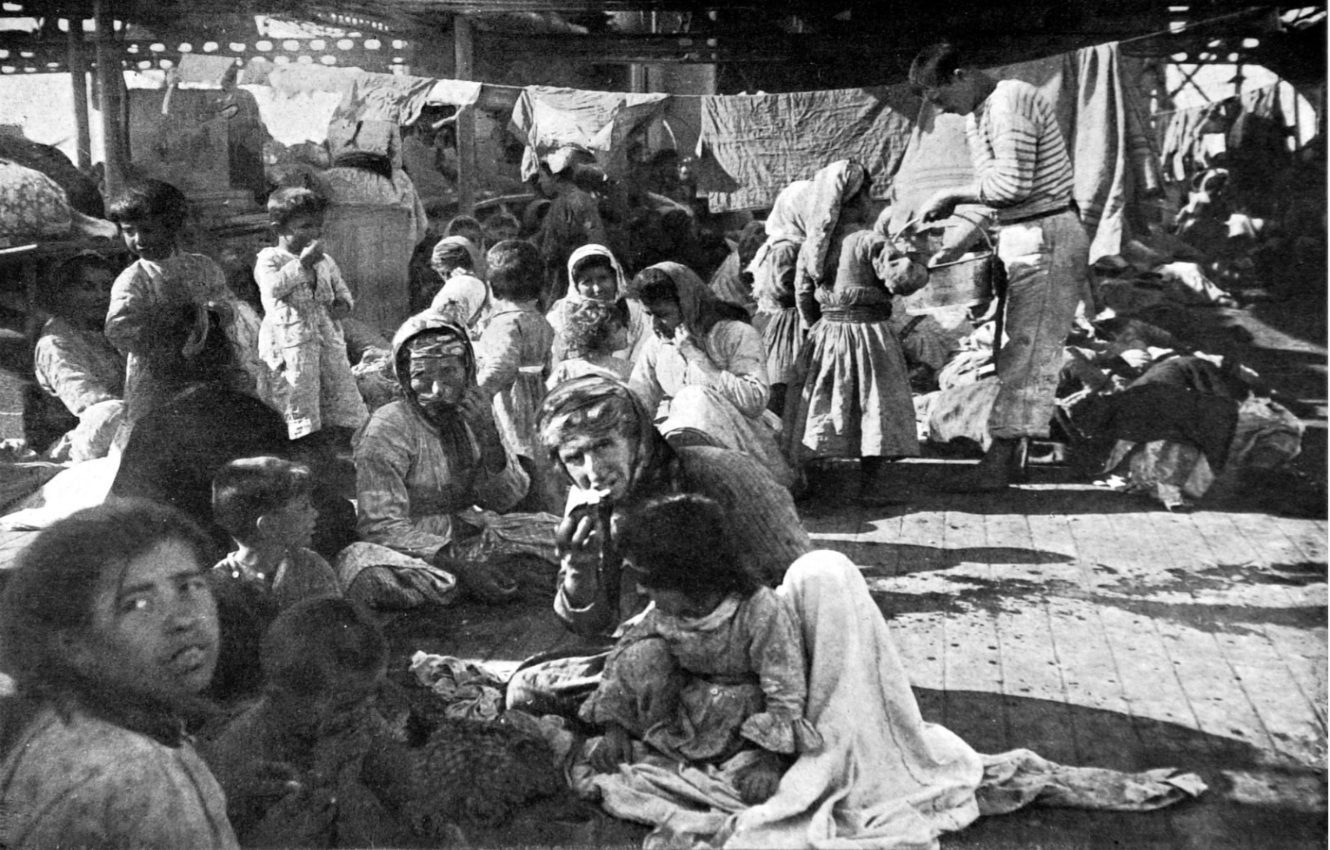
    “Over 12,000 people in Turkey want history to be recorded truthfully, having already signed the internet-based petition apologizing for what they call the ‘Great Catastrophe’ that befell the Armenians of Ottoman Turkey in 1915. This public apology is a first step in that direction and will inevitably lead to Turkey coming to grips with its genocidal past,” Bryan Ardouny said.

    “This process was encouraged in 2003 by the International Center for Transitional Justice (ICTJ), which concluded that “the Events [of 1915], viewed collectively, can thus be said to include all of the elements of the crime of genocide as defined in the Convention.”

    Noting the inauguration of President-elect Barack Obama and Vice President-elect Joseph Biden next month and Obama’s statement from October which read, “Joe Biden and I believe that the Armenian Genocide is not an allegation, a personal opinion, or a point of view, but rather a widely documented fact supported by an overwhelming body of historical evidence,” Ardouny said, “They are both on record as supporting Turkey’s reconciliation with its past, and affirmation of the Armenian Genocide. Coupled with Obama’s recent selection of Senator Hillary Clinton as Secretary of State, the Obama-Biden Administration has an opportunity to clearly affirm the Armenian Genocide and, at the same time, help Turkey reverse its policy of denial. It will also send a me ssage that the U.S. will no longer shelter Turkey from criticism if it continues to persecute leading intellectuals by invoking Article 301 of its Penal Code.”

    Some 14 thousand people have already signed the online public apology for the Armenian Genocide.