Blog

  • TURKISH AND ARMENIAN HISTORIANS TO DISCUSS PAST AND PRESENT RELATIONS OF TWO NATIONS

    TURKISH AND ARMENIAN HISTORIANS TO DISCUSS PAST AND PRESENT RELATIONS OF TWO NATIONS

    Football diplomacy gives impetus to second track diplomacy as a group of Turkish and Armenian historians and social scientists gathered at a workshop in Armenia’s capital city Yerevan to discuss past and present relations of the two nations.

    The rapprochement that started with the Turkish president’s visit to Yerevan last month to watch a Turkey-Armenia football match has also intensified the efforts of non-political actors in the two countries.

    As officials in both countries continue seeking greater formal reconciliation, a group of Turkish and Armenians historians and social scientists gathered around a table in the Armenian capital Yerevan last month to hold an academic discussion about ways to reach mutual understanding. The academics were brought together by the Institute for International Cooperation of the German Adult Education Association, or DVV International, the main aim of which is to establish peace and stability in Central Asia and the Caucasus. Turkish and Armenian social scientists and historians brainstormed on the two peoples’ past and present relations during a weekend workshop titled “History and Building Bridges for Dialogue and Understanding.”

    During the meeting, the parties exchanged views on the richness of oral and documentary history that is either not utilized or used selectively to substantiate partisan viewpoints. After scientists became acquainted with each other individually, they analyzed the Turkish-Armenian relations from an academic perspective based on past and present experiences.

    The countries’ education systems were scrutinized, with the official history taught in schools and its effects on future generations specifically criticized. Participants from Armenia and from Turkey included professor Doğu Ergil, professor Leyla Neyzi of Sabancı University, historian Fikret Adanır and professor Ayhan Aktar, and spoke to the Turkish Daily News about their unique academic workshop in Yerevan. The academics had the chance to discuss, free of prejudice, various issues during the meeting. Ergil, Neyzi, Adanır articulated a shared view, saying they and the Armenian participants were looking for academic means to understand one another and that the chance to meet was an opportunity they cherished.

    A second meeting will soon be held as part of the project. Historians from both countries will focus on existing historical documents, and social scientists will collect oral history. Based on primary and secondary sources, the academics will then shed light on the experiences of the two peoples over the last century. Figures and documents collected during the project will be gathered in a book that will be written in Turkish, Armenian, German and English and in an easily understandable form and tone. The targeted audience for the book is ordinary citizens in Turkey and Armenia. The book will be sold where it is easily accessible for both peoples.

    Bilateral relations through academic lens

    Ergil, who noted they approached history as a coherent unit during the workshop, said they did not focus on a specific period or event.

    “We are two peoples who have lived together for centuries,” he said, adding that during the workshop they searched for answers to the following questions: Why was a centuries-long joint journey of two peoples stopped? Can that journey restart? If it restarts, what kind of responsibilities should academics undertake?

    A map of emotions and values shared by Turks and Armenians

    Ergil said history is full of bitter episodes between Turks and Armenians, but in the end, the two peoples should meet on common ground.

    “During the studies we will carry out, we shall not take phenomena we have already had in mind as Turkish and Armenian historians but phenomena that have been experienced by people of both sides. Our main goal is to bring to light a map of emotions and values shared by Turks and Armenians,” he said.

    An official from DVV International said any meetings between Turks and Armenians often becomes marked by the painful events that occurred in 1915.

    “We Armenians still carry traces of that big pain inside us,” the official said. “The attitude of Turkish academics with whom we collaborated was highly objective. We had the opportunity to discuss many issues from a perspective that was free from prejudices.” He also highlighted the significance of cooperation of Turkish and Armenian social scientists. He said such meetings and joint projects would contribute to solving problems and establishing dialogue between the two peoples.

    Academics’ dream

    Neyzi, an anthropologist, said studies they planned to undertake would not be based on official history accounts but focus on ordinary individuals. “We, as Turkish and Armenian academics, share a dream,” she said. “Our dream is for friendship, reconciliation and dialogue.”

    The biggest mission of such projects is to look at the issues from different perspectives and to prepare ground that will allow for a tolerance-oriented coverage of history to flourish, she said. Adanır, on the other hand, said he was happy to meet Armenian colleagues. “Our project is currently in its preparatory stage. But I am hopeful about the results.”
  • Cyprus Dimension of Turkish Foreign Policy

    Cyprus Dimension of Turkish Foreign Policy

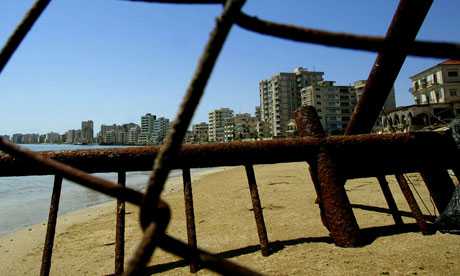
    Cyprus that is located in Eastern Mediterranean has a great strategic importance for European countries as much as other North Africa and Middle East have. Sovereign states made big wars especially to keep the artery of commerce under control and the island was occupied by so many forces throughout the history. (more…)

  • 7,000 years older than Stonehenge: the site that stunned archaeologists

    7,000 years older than Stonehenge: the site that stunned archaeologists

    İşte size 12000 yıllık bir haber…… Gazetelerimizde hiç yer almıyor, ilgi görmüyor desek yeridir. Yukarıda saydığım “bıkıntı” konuların hepsi gidici ve geçici ama bu 12000 yıl dayanmış, umarım Türkiyenin bu ilgisizliğine karşın 12000 yıl daha dayanır.

    ilginize sunarim.
    K. A.


    7,000 years older than Stonehenge: the site that stunned archaeologists

    Circles of elaborately carved stones from about 9,500BC predate even agriculture

    • The Guardian, Wednesday 23 April 2008
    • Article history

    As a child, Klaus Schmidt used to grub around in caves in his native Germany in the hope of finding prehistoric paintings. Thirty years later, a member of the German Archaeological Institute, he found something infinitely more important: a temple complex almost twice as old as anything comparable on the planet.

    “This place is a supernova,” said Schmidt, standing under a lone tree on a windswept hilltop 35 miles north of Turkey’s border with Syria. “Within a minute of first seeing it I knew I had two choices: go away and tell nobody, or spend the rest of my life working here.”

    Behind him are the first folds of the Anatolian plateau. Ahead, the Mesopotamian plain, like a dust-coloured sea, stretches south hundreds of miles. The stone circles of Gobekli Tepe are just in front, hidden under the brow of the hill.

    Compared with Stonehenge, they are humble affairs. None of the circles excavated (four out of an estimated 20) are more than 30 metres across. T-shaped pillars like the rest, two five-metre stones tower at least a metre above their peers. What makes them remarkable are their carved reliefs of boars, foxes, lions, birds, snakes and scorpions, and their age. Dated at around 9,500BC, these stones are 5,500 years older than the first cities of Mesopotamia, and 7,000 years older than Stonehenge.

    Never mind wheels or writing, the people who erected them did not even have pottery or domesticated wheat. They lived in villages. But they were hunters, not farmers.

    “Everybody used to think only complex, hierarchical civilisations could build such monumental sites, and that they only came about with the invention of agriculture”, said Ian Hodder, a Stanford University professor of anthropology who has directed digs at Catalhoyuk, Turkey’s best known neolithic site, since 1993. “Gobekli changes everything. It’s elaborate, it’s complex and it is pre-agricultural. That alone makes the site one of the most important archaeological finds in a very long time.”

    With only a fraction of the site opened up after a decade of excavation, Gobekli Tepe’s significance to the people who built it remains unclear. Some think it was the centre of a fertility rite, with the two tall stones at the centre of each circle representing a man and woman. It is a theory the tourist board in nearby Urfa has taken up with alacrity. Visit the Garden of Eden, its brochures trumpet; see Adam and Eve.

    Schmidt is sceptical. He agrees Gobekli Tepe may well be “the last flowering of a semi-nomadic world that farming was just about to destroy”, and points out that if it is in near perfect condition today, it is because those who built it buried it soon after under tons of soil, as though its wild animal-rich world had lost all meaning.

    But the site is devoid of the fertility symbols found at other neolithic sites, and the T-shaped columns, while clearly semi-human, are sexless.

    Gods

    “I think here we are face to face with the earliest representation of gods,” said Schmidt, patting one of the biggest stones. “They have no eyes, no mouths, no faces. But they have arms and they have hands. They are makers.

    “In my opinion, the people who carved them were asking themselves the biggest questions of all. What is this universe? Why are we here?”

    With no evidence of houses or graves near the stones, Schmidt believes the hilltop was a site of pilgrimage for communities within a radius of roughly a hundred miles. The tallest stones all face south-east, as if scanning plains that are scattered with contemporary sites in many ways no less remarkable than Gobekli Tepe.

    Last year, for instance, French archaeologists working at Djade al-Mughara in northern Syria uncovered the oldest mural ever found. “Two square metres of geometric shapes, in red, black and white – like a Paul Klee painting”, said Eric Coqueugniot, of the University of Lyon, who is leading the excavation.

    Coqueugniot describes Schmidt’s hypothesis that Gobekli Tepe was a meeting point for rituals as “tempting”, given its spectacular position. But surveys of the region were still in their infancy. “Tomorrow, somebody might find somewhere even more dramatic.”

    Vecihi Ozkaya, the director of a dig at Kortiktepe, 120 miles east of Urfa, doubts the thousands of stone pots he has found since 2001 in hundreds of 11,500-year-old graves quite qualify as that. But his excitement fills his austere office at Dicle University in Diyarbakir.

    “Look at this”, he said, pointing at a photo of an exquisitely carved sculpture showing an animal, half-human, half-lion. “It’s a sphinx, thousands of years before Egypt. South-eastern Turkey, northern Syria – this region saw the wedding night of our civilisation.”


    Bir arkadaşımın mesajından alıntı:
    “Bir arkadasimdan gelen, Urfa Gobekli Tepe ile ilgili haber iceren gazete linkini yolluyorum. Turkcesi de arkadasimin yorumuyla asagida…

    Bu ilginc yeri de gezmek umidiyle…

    The Guardian:
    https://www.theguardian.com/science/2008/apr/23/archaeology.turkey

    Harran yakinlarindaki Gobeklitepe’de uzun yillardir surdurulen kazilar, prehistorik ve neolitik cag tarihiyle ilgili bilinenleri yerle bir edecek, tarih kitaplarinin yeniden yazilmasini gerektirecek kadar onemli bulgulari birbiri ardina dunyanin gozleri onune sermeyi surduruyor.

    Kazilari yoneten Alman Arkeoloji Birligi bilim adamlarindan Prof. Klaus Schmidt, yaptigi basin aciklamasinda, “Bu mekan bir supernova,” dedi, “Gordugum anda, yalnizca iki secenegim oldugunu anladim:

    Ya arkami donup buradan gidecek ve bundan hic kimseye soz etmeyecektim ya da butun omrumu buraya adayacaktim.”

    Gobeklitepe’deki arkeolojik bulgular, gunumuzden yaklasik 12 bin yil oncesine, I.O. 9500’lere tarihleniyor. Yani, Stonehenge’den yaklasik 7, Mezopotamya’daki ilk kentlerden de 6 bin yil daha eski. Bir baska deyisle, dunyanin bilinen en eski uygarligi.

    Calismalarin yapildigi alandaki en etkileyici kalinti, yaklasik 30 metre capinda bir megalitik “anit” ya da rituel merkezi. Kimler tarafindan ne amacla kullanildigi bilinmeyen bu alandaki dikilitaslarin uzerinde, yaban domuzu, tilki, aslan, kus, yilan ve akrep kabartmalari yer aliyor. T bicimli tas sutunlarin uzerinde, Klaus Schmidt’in “bilinen ilk tanri betimlemesi” adini verdigi figurler de yer almakta. Alandaki dikilitaslar, belirgin bicimde ve hassasiyetle, guneydogu yonune bakacak bicimde yerlestirilmis. (Akla ister istemez “Duat”i ve guneydogu goklerinde Orion ve Sirius’un yukselislerine ozel bir onem veren Eski Misir rahip kultlerini getiriyor.)

    Bulgular, Catalhoyuk calismalarini yoneten Prof. Ian Hodder’i da oldukca heyecanlandirmisa benziyor. Hodder, “Gobeklitepe, bilinen herseyi tumuyle degistirdi,” diyor. Heyecanlanmayan, hatta bunu neredeyse hic umursamayansa, yalnizca biziz galiba. Uzerinde yasadigimiz topraklarin, dunyanin bilinen en eski uygarligina ev sahipligi yaptigi gibi muazzam bir bulgu ortaya cikiyor, arkeoloji dunyasi bu ruzgarla sallaniyor ama, bizim gazetelerimizde birakin manset olmayi, iki satir bir habere bile rastlamiyoruz. (Umarim, benim gozumden kacmistir ve birileri sayfa dibine bile olsa, iki kelam etmistir Gobeklitepe’yle ilgili.)”

  • Turkey’s Religious Merchants

    Turkey’s Religious Merchants

    Newfound Riches Come With Spiritual

    Costs for Turkey’s Religious Merchants

    Lynsey Addario for The New York Times

    Ferhan Kadiroglu played with her 3-year-old daughter, Ayse, in their Istanbul home. Their family is part of Turkey’s powerful new class of wealthy Muslims.

    Published: December 25, 2008

    ISTANBUL — Turkey’s religious businessmen spent years building empires on curtains, candy bars and couches. But as observant Muslims in one of the world’s most self-consciously secular states, they were never accepted by elite society.

    Now that group has become its own elite, and Turkey, a more openly religious country. It has lifted an Islamic-inspired political party to power and helped make Turkey the seventh largest economy in Europe.

    And while other Muslim societies are wrestling with radicals, Turkey’s religious merchant class is struggling instead with riches.

    “Muslims here used to be tested by poverty,” said Sehminur Aydin, an observant Muslim businesswoman and the daughter of a manufacturing magnate. “Now they’re being tested by wealth.”

    Some say religious Turks are failing that test, and they see the recent economic crisis as a lesson for those who indulged in the worst excesses of consumption, summed up in the work of one Turkish interior designer: a bathroom with faucets encrusted with Swarovski crystal, a swimming pool in the bedroom, a couch rigged to rise up to the ceiling by remote control during prayer. “I know people who broke their credit cards,” Ms. Aydin said.

    But beyond the downturn, no matter how severe, is the reality: the religious wealthy class is powerful now in Turkey, a new phenomenon that poses fresh challenges not only to the old secular elite but to what good Muslims think about themselves.

    Money is at the heart of the changes that have transformed Turkey. In 1950, it was a largely agrarian society, with 80 percent of its population living in rural areas. Its economy was closed and foreign currency was illegal. But a forward-looking prime minister, Turgut Ozal, opened the economy. Now Turkey exports billions of dollars in goods to other European countries, and about 70 percent of its population lives in cities.

    Religious Turks helped power that rise, yet for years they were shunned by elite society. That helps explain why many are engaged in such a frantic effort to prove themselves, said Safak Cak, a Turkish interior designer with many wealthy, religious clients. “It’s because of how we labeled them,” he said. “We looked at them as black people.”

    Mr. Cak was referring to Turkey’s deep class divide. An urban upper class, often referred to as White Turks, wielded the political and economic power in the country for decades. They saw themselves as the transmitters of the secular ideals of Mustafa Kemal Ataturk, Turkey’s founder. They have felt threatened by the rise of the rural, religious, merchant class, particularly of its political representative, Turkey’s prime minister, Recep Tayyip Erdogan.

    “The old class was not ready to share economic and political power,” said Can Paker, chairman of the Turkish Economic and Social Studies Foundation, a liberal research organization in Istanbul. “The new class is sharing their habits, like driving Mercedes, but they are also wearing head scarves. The old class can’t bear this.”

    “ ‘They were the peasants,’ ” the thinking goes, Mr. Paker said. “ ‘Why are they among us?’ ”

    Ms. Aydin, 40, who wears a head scarf, encountered that attitude not long ago in one of Istanbul’s fanciest districts. A woman called her a “dirty fundamentalist” when Ms. Aydin tried to put trash the woman had thrown out her car window back inside.

    “If you’re driving a good car, they stare at you and point,” Ms. Aydin said. “You want to say, ‘I graduated from French school just like you,’ but after a while, you don’t feel like proving yourself.”

    She does not have to.

    Her father started by selling curtains. Now he owns one of the largest home-appliance businesses in Europe. Ms. Aydin grew up wealthy, with tastes no different from those of the older class. She lives in a sleek, modern house with a pool in a gated community. Her son attends a prestigious private school. A business school graduate, she manages about 100 people at a private hospital founded by her father. Her head scarf bars her from employment in a state hospital.

    Her husband, Yasar Aydin, shrugged. “Rich people everywhere dislike newcomers,” he said. In another decade, those prejudices will be gone, he said.

    The businessmen describe themselves as Muslims with a Protestant work ethic, and say hard work deepens faith.

    “We can’t lie down on our oil like Arab countries,” said Osman Kadiroglu, whose family owns a large candy company in Turkey, with factories in Azerbaijan and Algeria. “There’s no way out except producing.”

    Fortunes were made, forming new patterns of consumption. Istanbul, Turkey’s economic capital, is No. 4 in the world on the latest Forbes list of cities with the highest number of billionaires. Luxury cars stud its streets. Shopping malls, 80 at last count, are mushrooming.

    “Now, unfortunately, there is a taste for luxury, excessive consumption and comfort, vanity, exhibitionism and greed,” said Mehmet Sevket Eygi, a 75-year-old newspaper columnist, who has written extensively about Muslims and wealth.

    An Islamic concept called israf forbids consuming more than one needs, but the line is blurry, leaving rich Muslims struggling with questions like whether luxury cars can be offset by donations to charity, a central tenet of Islam.

    “You have money, but do you buy whatever you want?” said Recep Senturk, a sociologist at the Center for Islamic Studies in Istanbul. “Or should you keep a humble life? This is a debate in Turkey right now.”

    Islam requires that the wealthy give away a portion of their income to the poor. In the Ottoman Empire, it paid for everything from hospitals to dishes broken by maids in rich houses.

    Donations to Deniz Feneri, one of the largest charities in Turkey, jumped almost 100-fold in the six years ending in 2006, when they topped $62 million.

    Even house designs take charity into account. Mr. Cak described a multimillion-dollar house whose design included an industrial-size kitchen where food was cooked daily and distributed in trucks.

    Ms. Aydin, for her part, supports 25 families. The real problem is not finding a place to pray on a busy day out (mall fitting rooms work), but being truly charitable and putting others first when the frenzied pace of life pushes in the opposite direction. She holds onto traditions, like Muslim holidays, tightly.

    “The world is changing but I don’t want to lose this,” she said.

    Sebnem Arsu contributed reportin

  • Poor Richard’s Report

    Poor Richard’s Report

    POOR RICHARD’S REPORT                         

    Over 300,000 readers

     2009 Forecasts (Stocks, Bonds etc…)

    The word “billions” is being bandied around every day now. I would like to put this number in perspective before I start my market letter.

                       A billion seconds equals 32 years. A billion seconds ago puts us back to December 1977. A billion minutes ago Jesus walked upon this earth. A billion hours ago was the Stone Age and a billion days ago the earth was being formed. Now here is the scary part: our government spends a billion dollars in a little over 8 hours.

                     My point is that it is going to take a long time to pay down our debt. The consumer is tapped out and they can no longer use their home as an ATM machine. Bankers are worried about their jobs so they are not lending, despite what Chairman Bernanke is doing.

                       I have written in previous letters that we are fighting DEFLATION. Now the Federal Reserve has confirmed it. The best way to combat deflation is to spend huge amounts on many projects. I know that in Hartford, CT much of the inner city’s sewers are brick lined causing cellars to flood after many heavy rains. The problem with this spending is that only 6 cents for every dollar appropriated by the US Government gets to the public within the first year. If the St. Lawrence Seaway was proposed today it would take over 50 years just to get started after all the feasibility studies and lawsuits were settled.

                       Now that home prices are finding their proper level, homeowners are paying down debt to protect their family homestead. Any more rebates will be used to pay down various debts.  Dr. Bernanke has achieved a remarkable feat. The Federal Reserve has been trying to do this for over 35 years.

                   Government bond are yielding what they should.  They are perhaps too low, but they are now reflecting their proper market place. Government bonds are considered risk-less compared to other debt. The reason is simple, they are backed by the US Government and the government is backed by you and me. That’s right. That means us.

     US Treasury bills will trade in the area of .5% to 0%.  This depends on the perceived severity of our world problems. They will be used as a flight to safety.   The long bond, the 30 year Treasury, is now yielding a 2.54% return. As positive events unfold, the maximum yield for the foreseeable future should be at the 3.5% area.

                       The low yields will allow the government, states, and businesses to make long term commitments for basic projects and manufacturing plants. Don’t forget the oil industry either. This is a long term positive.

                       I expect the economy to take a deep dive in the first quarter, but because of our easy money policy, it may level out and gradually improve. It will be a decade before investors will forget about what is happening now. In the meantime, unheard of values will be sprouting like tulips in the springtime. Stocks will not recover as quickly though. The playing field must be leveled. A trader should be 100% cash. Long-term investors can cherry pick in there, because like some preferred stocks, the yields can be very enticing. Remember the rule of  “72”.  Banks operate under this rule also. Take 72 and multiply it by whatever interest rate you are paying and the answer is how many years it will take you to break even on your money.  A 10% rate will take 7.2 years. The average mutual fund is down 44% this year and that does not include the “management fees”. That means it has to move 81% before you can break even. A small (8%) loss can be made up easily. It will take less than a 10% upward move.

                       All debt will (and should) be priced off the comparable US Treasury bond. The higher quality will, and should, have a lower yield than that of speculative debt instruments.  Preferred stocks will have a higher yield and common stocks will yield greater because they are riskier than others.

                       My favorite investment now is AMERCO Preferred A. They own U-Haul and it is listed on the NYSE under the symbol AO PRA. The price at the time of this writing is $18.50 and the dividend is $2.125 and the yield works out to 11%. It can be called away from you at $25.00. If the stock is called away from you your gain will be approximately 30%. This combined with the 11% return cannot be beaten by a common stock in today’s environment. There are still too many investors who expect to invest by yesterday’s rules. They expect to recapture yesterday’s losses by brilliant maneuvers today. Thus, the stock market has not taken its toll yet. The second half of the down leg could be worse for aggressive traders, but values are there for the long term conservative investor with cash. 

                       The US Congress is going to go after the credit card companies by 2010, which will be two years too late. When inflation was first starting and government bond rates were soaring, investors could borrow at the maximum rate of 8% because we had usury laws. Back then they would turn around and buy a government bond yielding 10% and upwards. This was called disintermediation! We are now suffering under reverse disintermediation. It has to be stopped now. They should reinstate the USURY Law today. It used to be referred to as sinful. It is a simple case of money matters versus ethics. You decide.

              The weak dollar helps our balance of payments in the short run and is also positive for precious metals.

              The new SEC Chairman is Mary Shapiro, and there is much talk about her. I want to know what she stands for. I pray that she will bring back the uptick rule. If that was her first ruling the market would soar for weeks as the shorts sellers ran for cover.   I believe she could be positive for the market.

              Deutsche Bank has decided not to redeem its hybrid-capital bonds in January. Other banks might follow with their own bonds. Then again, the Fed might buy them. There is only one debt instrument whose terms are set in stone – US Government bonds.

              The price of oil will stay down for sometime because certain oil countries got too greedy – just like the consumer- and now need every penny they can get. So OPEC can make lofty statements about the price of oil, but certain members and non-members are cheating to “beat the band”. Cartels never last. This could be the year they bust.

              Money market funds will soon disappear in favor of Savings Banks provided they adopt some of the favorable aspects of the funds. No waiting period comes to mind.

              Sub-prime crisis will be fading into the woodwork and it is more than likely that Adjustable rate mortgages will be adjusted downward. The real subprime disaster can be avoided if the banks which did it -eat it.  Enough said.

              THE BIG UNFORESEEN FOR 2009 WILL BE PAKISTAN.     

              Pakistan is a democracy that cannot work because half of the population is in mountainous areas whose tribes belong to ethnic groups in bordering countries. They have Afghanistan to the north and Al-Qaeda seeking safety in their territory. It is like a giant Capture the Flag game. Then, tucked in the southeast corner they have Kashmir, which is seeking trouble between India. They both have Atomic bombs, but India’s work better. It is a rock and lots of hard places. President Bush had Iraq and President Obama might have Pakistan. We can not win a defensive war in Afghanistan. General Petraeus has a real challenge.

              In a crisis there are also opportunities. The free market system has been hit below the belt, but will recover because we are free people. When we make investments we know there are risks, and we can lose. This year we have lost.  The government must set up new rules and umpires to toss out the cheaters. There are banks that grew too fast by acquisition so that they could be “too big to fail.”  Well, they will fail sooner or later because the public knows or will find out and stop doing business with them. They will go where they are treated fairly and politicians who have treated us fairly will be returned to office.

            The Congress must separate brokerage and banking, but allow banks to form syndicates that can compete along with brokerage syndicates. We must not deny a revenue stream to one while favoring the other.

              Executive salaries should be based upon earnings. Year over year gains in earnings should be comparable salary. Declining earnings means a loss in wages. Credit should be given to shareholder dividends versus outrageous bonuses. It should not be how much money you make, but how good you are.

    There should be a global regulation body that would support the general market place with ethics and a passion to make money honestly. Members would be able to trade among them selves, but countries that break rules to suit their own purpose, like Russia, should be sequestered. It should be a private club. Membership based upon integrity and honor.

    Now the real scoop on our next President: on January 21, 2009, please attain a copy of his inaugural address. Then underline every theme and idea he presents. This is his utopian moment and he wants the whole world to know what he stands for. The problem is that many will not listen.

               When events happen and the press wonders what he will do; just go back and reread his address. There you will find the answer. This has worked for every President that I have studied since JFK.

    Cheerio!!!


    Richard C De Graff

    256 Ashford Road

    Eastford Ct 06242 

    860-522-7171 Main Office     

    800-821-6665 Watts

    860-315-7413 Home/Office

    [email protected]


    This report has been prepared from original sources and data which we believe reliable but we make no representation to its accuracy or completeness. Coburn & Meredith Inc. its subsidiaries and or officers may from time to time acquire, hold, sell a position discussed in this publications, and we may act as principal for our own account or as agent for both the buyer and seller.


  • Alex Pisman: “Azerbaijan must not lose in information war with Armenia”

    Alex Pisman: “Azerbaijan must not lose in information war with Armenia”

    The book of Azerbaijani professor Rovshan Mustafayev “March of Death”, disсlosing the new facts about the crimes of Armenians against Jews was discussed in Israel, said Israeli historian, socialogical scientist and journalist, professor Alex Pisman, who wrote a reference to this book. (more…)