Komsomolskaya Pravda
December 17, 2008
“USA and Russia Playing a New ‘Caucasus” Gambit in Azerbaijan,” by Artem Aniskin and Darya Aslamova. The authors visit Baku to gage the political scene there: the Azerbaijani are seeking to balance relations with Moscow and Washington.
Following the war in South Ossetia in the Caucasus a new confrontation involving world powers is under consideration. Caspian natural gas and a Karabakh beachhead are at stake.
On the Moscow-Baku aircraft two drunken young Azerbaijanis , in outlandishly unfashionable attire, addressed me: “Girl, hey, girl,” one of them urged me, “let’s get acquainted.” “Boy! What kind of girl am I to you?,” I sternly said and hid behind my newspaper. This scarcely diminished the young people’s ardor, who managed to grab at the stewardess’s skirt as she passed by and express their love for the pudgy young woman, as she stood in line for the toilet. The last time I flew to Baku was 20 years ago, and it was just as tedious then when I heard similar words, which caused me to grit my teeth as the youngsters reached toward me. Apparently, the traditions of getting to know women are passed from generation to generation. But one detail stood out from the usual picture. These “new Azerbaijanis” not only accosted every attractive woman under 50, but they were also pouring whiskey into their co-passenger, a German businessman, all the while explaining themselves in an English language that could have been learned only in a good British college.
The surprises of this “new Azerbaijan” did not end here. The banknotes that I received at the Baku “money exchange” were so suspiciously like the Euro, that I offered a compliment: “Your manats look just like a Euro!” “They are better,” I was informed with pride. “We invited European specialists to Baku to make our money look like European currency. The rate of exchange for our manat is stronger than the dollar.
An Era of Extravagance
“The European Charm of the East!” is how the American television channels describe Azerbaijan. A small eastern state has raised up on oil just like leavened dough, which in spite of geography wishes to become part of Europe. The capital Baku is growing rapidly. Everywhere there is a passion for illumination, marble, crystal chandeliers, and expensive rugs. Five-star hotels, luxurious restaurants, and stores shimmer in luxury among the scaffoldings, cement mixers, and torn-up roads. At an average wage of $200 US, the narrow streets are crammed with brand new Jeeps and enormous, ancient ” Mercedes ” automobiles. (The residents of Baku believe that a car of any price must be big.)
They merely shrug their shoulders over the crisis: “Well, what can happen in a small, oil and gas producing monarchist state? There is a family succession of authority and no upheavals. Is oil getting cheaper? Well, so what, in a couple of years the price will go up again, where it go out of sight. Then, too, we have not been playing the stock market like you Russians. We have a passion for roulette. All of these stocks and bonds. When the world market collapsed, it took the Russian market along with it. We don’t mess around with such foolishness.” A local banker said it more to the point than anyone else: “For the first time in my life I am glad that I live in the stone age.”
However, the local stone age is awash with all the trappings of the 21st century. The city is reaping the fruits of its oil prosperity and is entering an era of extravagance and boastfulness. Once there was a slogan that said: “If you have money, hide it,” but now the slogan is, “If you have money, spread it around and show off.” “Initially we bought lights for our streets from Russia for $60 each,” said Ilkhan Shaban, a Baku petroleum expert. “Two years later we grew weary of the lights. We ordered new ones from Turkey at $120 each. But income and appetite grow. Now we have purchased lighting in Belgium. Within a span of five years we changed our street lighting three times! We are changing store fronts and making borders out of marble and granite. A German business is building asphalt roads. We have spent $10 billion US on outward appearances. We have foolishly provided the opposition with a pile of money, and it just sits there quietly without blinking. Even though Azerbaijan is seated at the European Council and is participating in NATO projects, we are a typical small Asian country with an Asian way of thinking.”
Where There Is Oil and Gas, There Is Truth and Power
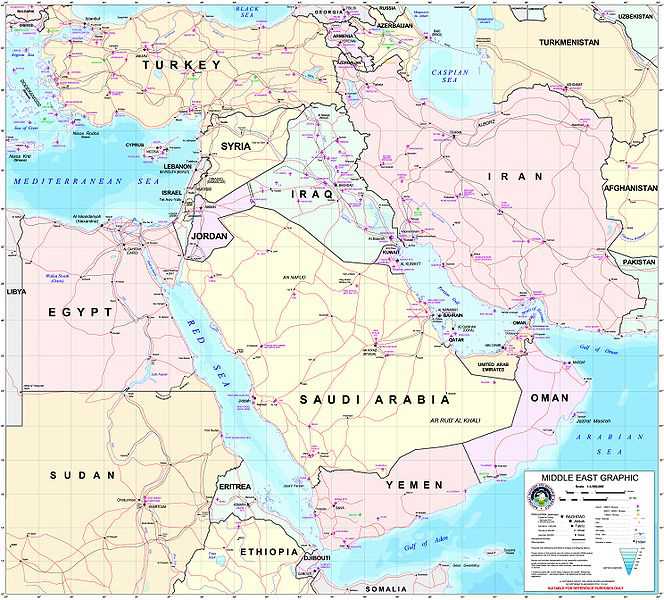
My new friends, young journalists Gamid and Vadim, with great pride show me Baku nightlife, lit up with those expensive lights: “What does a European capital have that we don’t?” We are eating our evening meal in the private office of a restaurant owner (the Baku Sheik), nibbling on a shashlyk of contraband fried sturgeon. I ask: “Well, lads, what sort of Europe are you? Just look at the map to see where they are and where we are. Why do you need the European Union? You are proud that you are the East. For ten years Turkey has been on its knees begging to join the European Union. Why do you need this humiliation?” Gamid softly responds: “And they will accept us, because where there is oil and gas, there is truth and power!”
“Azerbaijan is a state focused on western pragmatism, but with eastern roots,” such was the elegant definition given to me by the department chief of political analysis under the administration’s president, Ehlnur Aslanov. “In Copenhagen at a NATO conference I once argued that the Azerbaijanis are Europeans with an analyst. He did not agree with me. A year later we met again. This same analyst announces from the dais that Azerbaijan is part of Europe. I could not contain myself: ‘How can this have changed in just one year later? Is it geography?’ He thought for a bit and then answered honestly. ‘No, the geography is just as it was. The geopolitics have changed.”
A City of Spies
The well-known writer Chingiz Abdullayev says: “Baku is the last city of spies on the earth. “All of the secret services of the world are operating here at the same time – Russia, Israel, Iran, Turkey, England, and America.
“The petroleum interests of all these states are in Azerbaijan. We are hemmed in between enormous Russia and powerful Iran and we do not want to make any sudden movements. We cannot behave rashly like Georgia has done. Our balancing act is between the East and the West – a forced, intelligent policy. We will never forget that the Russian language brought us into the world at large. We have retained more than 200 Russian language schools. We have a Slavic university and 14 Russian language institutes; in our stores 90% of the books are Russian literature. We are fated to a friendship with Russia. What is more we have excellent relations with the USA, which Iran does not like, half of the population of which, by the way, are Azerbaijanis In addition, Azerbaijan is the only secular Muslim country. You will tell me, but what about Turkey? In Turkey a religious party won in the elections, but here such parties do not even register a half percentage point. Besides, aircraft from Baku fly to Tel-Aviv every day.” “Does this mean that you are flirting with everyone?” “We are just like a discerning bride. Azerbaijan is the key not only to the Caspian area, but to the entire South Caucasus, as well as to the East and on to Iran.”
The Armenians Are to Blame for Everything
“Do you know who poisoned Andropov and Chernenko?”, a mustachioed taxi driver throws out to me while we are sitting in a Baku traffic jam. “Probably the Armenians,” I absentmindedly reply. (Within five days in Baku I have concluded that if there is an earthquake in China, it was probably caused by the Armenians.) “That’s right!”, the taxi driver excitedly throws out in defeat, “How did you know?” “Well, someone must have been responsible, why not the Armenians? Were the Soviet leaders really poisoned?”, I ask in turn. “Of course!,” the taxi driver is convinced. “The Armenians slipped them some poison to kill off the USSR and get their hands on Nagornyy Karabakh. Remember how the collapse of the Soviet Union began? With Karabakh. If it hadn’t been for Karabakh, the Dnestr river area, Ossetia, Abkhazia, and Kosovo would not have happened. When there are doubts as to who is responsible, just look to see what the Armenians have been up to at that time. Apparently, that is their tricks.” “And I thought we ought to keep an eye on the Jews!”, I say coming to life. “Nonsense! Wherever an Armenian has trod, a Jew has nothing to do.”
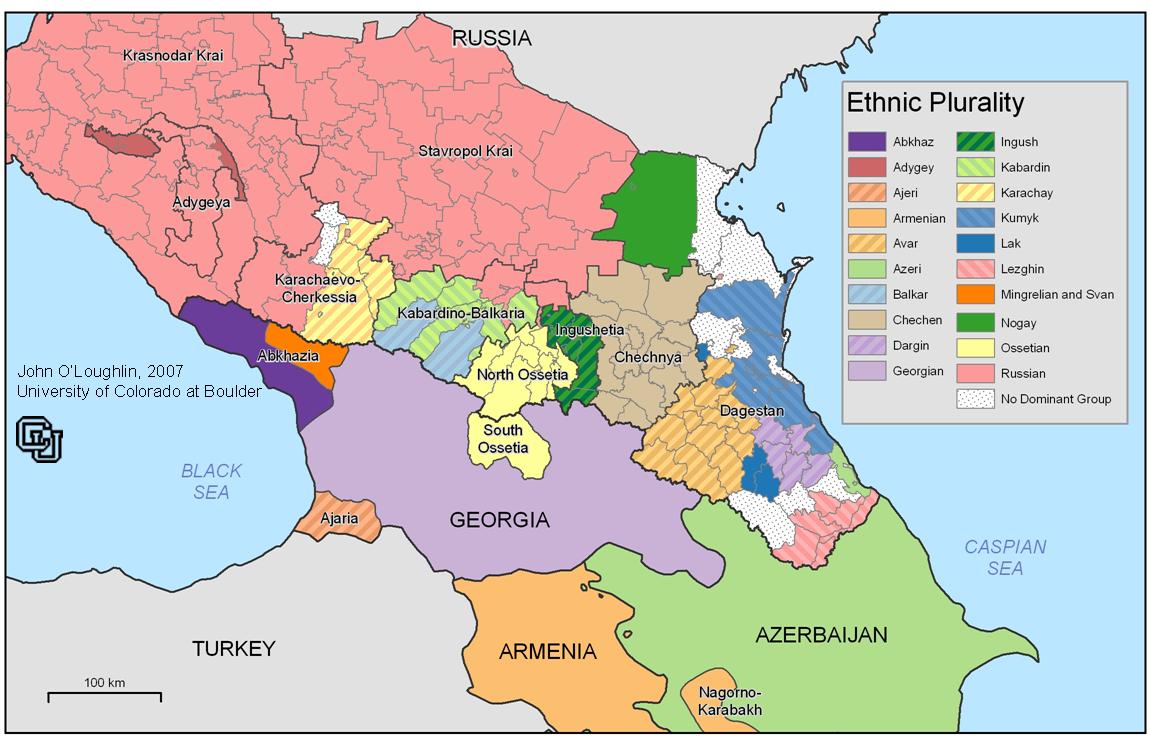
For 15 years the wounded pride of the Azerbaijanis has found no balm from its border war with Armenia. Karabakh and the seven enclaves adjacent to Azerbaijan (totaling 20% of Azerbaijan territory) that were lost remain a non-healing wound, in which nearly everyone suffered. Some 15,000 people were killed and there were a half million refugees. But feelings of defeatism are quickly being replaced with a thirst for revenge. A new generation has come of age that has not known war, and it is eager to go into battle. “Just give us the weapons and we will regain our land!,” exclaims my colleague Gamid. “All of us will go as one.” “Gamid, you were not in that war and I was. Believe me, it’s not all that simple. Why do you think that all of you can regain what was lost 15 years ago?” “You don’t know anything. There was a great deal of betrayal then. The Russians were helping the Armenians with weapons. We were confused and surrounded by destruction. Everything is different now.”
A Hook in the Rib of South Ossetia
“Everything is different now.” This magical phrase is often repeated by young and old. “My son was born in 1989,” says parliament deputy Aydyn Mirzazade, “and he is a bigger patriot than I am.”
The former Azerbaijan ambassador in Russia, Khikmet Gadzhizade says: “We are increasing our military budget to $3 billion US a year. (This is more than the annual budgets of Armenia and Georgia combined.) Karabakh is the focus of the entire nation. One day this abscess must break open.”
“Our president is openly saying that we will fight.” “But, after all, the presidents of Armenia and Azerbaijan just signed a declaration of peace in Moscow!”
“Whoever Wishes to Fight Will Fight”
“The Karabakh conflict is a hook beneath the rib of Armenia and Azerbaijan. It is a plaited noose and we are dangling from the Kremlin wall,” says political scientist Zardusht Alizade. “Russia does not want to relinquish Karabakh to either Armenia or Azerbaijan. Give it to Armenia and Azerbaijan will leave, give it to Azerbaijan and Armenia will steal away to the West. It is best if we all remain on the hook.”
“And would Russia long remain interested were it not for the events that broke out in Georgia and the smell of a great gas deal?”
“Let Me Gloat Just a Bit from the Bottom of My Soul”
There are battles in which the victor fares no better than the defeated. The shadow of the August events hangs over the Southern Caucasus.
Political scientist Oktay Sadykhzade believes: “Throughout those five days in August Azerbaijan was in a difficult and nerve-racking situation. Russia is our powerful neighbor and three million Azerbaijanis reside there. And Georgia is our energy partner. On whose side shall we stand?”
Political expert and writer Zardusht Alizade says: “The lesson of Georgia was clearly understood by Armenia and Azerbaijan. In crushing the Georgian army, which had been so lovingly trained by American instructors and Turkish advisors, Russia demonstrated that it will act like America. But take note of the fact that Russia did not bomb the Azerbaijan gas pipeline that passes through Georgia to Turkey. It accurately placed its bombs near the pipeline, on both sides. It simply designated that it has such a capability. Today gas and oil are more important than territory.”
“In Moscow many classified the August events as a victory for Russia,” says political scientist Rasim Musabekov. “They say we demonstrated to everyone who is most important. What came of this? Armenia – your ally – was isolated from Russia. Nothing was passing through Azerbaijan, and earlier through Armenia, since we have a front line rather than a border. The only dry-land link passed through Georgia, but now of course, the Georgian conflict has cut Armenia off from any Russian assistance.
The Azerbaijanis speak with deep contentment about the hopeless situation in which Armenia now finds itself. An influential politician told me: “Listen, we did not create this situation. You Russians created it. And so, permit us to gloat just a bit from the bottom of our souls. Let an impoverished Armenia, which has nothing except its cognac and Karabakh, sit and drink its cognac out of grief. We shall wait.”
Petroleum expert Ilkhan Shaban says quietly, “Sure, we will wait. The situation is just like on a chess board. We have taken many pieces, and we can easily declare mate, but for now we are not announcing checkmate.”
The Gas Game
When in the fall of last year Moscow unexpectedly renewed negotiations between Armenia and Azerbaijan on Karabakh, it seemed that this was only an opportunity for Russia to perform an aria of peace and kindness. However, in the opinion of experts, the entire Karabakh story is only a smokescreen for a more momentous game of intrigue – the gas game.
The intrigue is that the USA is anxious to start up the ” Nabukko ” pipeline and pump Turkmenistan and Kazakhstan natural gas through Azerbaijan and Georgia to Europe. “The ‘Nabukko philosophy’ is gas from wherever you wish, just not from Russia,” explains Ilkhan Shaban.
“In Soviet times we had to get permission from Moscow and the State Planning Committee (Gosplan) to build a toilet in the train station in Yevlakha, and now Washington is playing the Gosplan role,” laughs political scientist Zardusht Alizade. “Now, having sensed a danger, emissaries from Moscow are showing up in Baku and saying: “Do you want to sell gas to Europe? Sell it to us at wholesale prices. You are selling natural gas to the Georgians for $150 US and we will pay you $400 US.”
Ilkhan Shaban says: “As soon as Gazprom set a price of $400 US for a thousand cubic meters of gas, everyone rushed here. The deputy petroleum minister from Iran came and set the same price. And then there were similar offers from Italy, Bulgaria, Israel, and Turkey. Everyone suddenly wanted Azerbaijan gas. And Azerbaijan had room for maneuvering.”
“Moscow’s wishes are commendable,” says Zardusht Alizade, “but it has to be paid for. And is Karabakh the price for this? Of course! If we draw up a gas contract with Russia, our relations with Europe will worsen. This means that Russia must come up with something else. If Russia surrenders Karabakh, the American ” Nabukko ” project will become unthinkable. Hundreds of billions of dollars and an enormous zone of influence are at stake.”
While Azerbaijan is offering delightfully evasive responses to everyone – the Russians, the Americans, and the Europeans, the eastern proverb comes to mind: “The longer the meat cures the more tender it becomes.
“To be honest, we are not excited about this ” Nabukko ” project, and we are in no hurry,” says political scientist Rasim Musabekov. “We can take as long as we wish. Azerbaijan is not something to be handed over for ” Nabukko,” and it has time to get it.”
Will Russia Deploy Troops in Karabakh?
Why has tiny, impoverished Karabakh become so important not only for Azerbaijan and Armenia, but for the world powers? From Karabakh to Iran is but the wave of a hand. Azerbaijan does not wish for the USA to start a war with Iran from its territory, and that is why it is rejecting offers to join NATO.
Karabakh is a different matter. The USA can dig in there on the border with Iran under the pretext of deploying peacekeepers.
“Russia wants to take control of the Karabakh negotiations and leave the USA out of them,” says political scientist Oktay Sadykhzade. “This has to do with deploying Russian peacekeepers in Karabakh. But the Russians cannot share the region with the Americans. They want to take a stand in the south and they need a beachhead for Iran, and they are offering the north to the Russians. But in general Russia does not want to give the USA access there.”
“Everyone that wants to deploy troops in Karabakh is only thinking about how to increase its influence,” the writer Chingiz Abdullayev bitterly acknowledges. ” Karabakh is for us like Kosovo is for the Serbs. And the big countries think that they can put their foot down here and not go away.”
Journalist and political scientist Zardusht Alizade says: “Any conflict is a wonderful opportunity to settle in somewhere and to take advantage of the situation.” “Is this called the ability to control chaos?” I ask. “Right on the mark! The west has already taken our oil. Now it wants our gas. It wants Armenia to tear itself away from Russia. Now the Russians have a chance to solve their problems, but I fear you have neither the intellectual depth nor the political fortitude to make a choice. Either Russia returns Karabakh to Azerbaijan and gets the gas and strategic positions, or America will step by step come into the region. When they tell me that ‘Armenia will not permit this,’ I ask, what sort of resources does it have? How many divisions does it have?” “Do you seriously believe that Russia will surrender Armenia?” I ask.
“The question is not about surrendering Armenia,” firmly says Alizade. “The question is not to surrender ourselves.”
Commentary of Experts
Aleksey Vlasov, General Director of the Center for the Study of Social and Political Processes in the Post-Soviet Space:
“Moscow Will Seek a Balance”
“Azerbaijan has started playing a more independent role in politics. Great opportunities are opening up for it to find a balance between Russia and the West. I am not certain that the people of Azerbaijan are prepared to make Nagornyy Karabakh into small change for the USA or for Russia. Neither Washington nor Moscow can now guarantee that, shall we say, in 2010 the seven Azerbaijani regions now controlled by Karabakh will be returned to Baku. Without such assurances and time periods how can one influence the Azerbaijan leadership? In no way at all. For 14 years they have been promising to solve this issue. Senselessly!
Moreover, it seems to me that Karabach’s role as a tool in a Big Game is still exaggerated…
As regards Armenia, one cannot forget that there is a Russian military base there. And Moscow, as a regular geopolitical player, will still seek a balance between Yerevan and Baku, and distortions are dangerous. It is important to note the Armenian lobby in Moscow, which has evolved historically, since Soviet times, and is more influential and more cohesive that that of Azerbaijan.
Finally, it is wrong to argue that Russia, to put it bluntly, will abandon Armenia for the sake of Azerbaijan natural gas. Just imagine what our Commonwealth of Independent States (CIS) allies will think about us, such as Kazakhstan or Belarus, if they see how easily we can rid ourselves of our partners. This will be an enormous loss of image. It is not yet known if we gain more than we lose.