Blog

  • Kurmandji Leader Apologizes to Aramaeans, Armenians – Colonial England and France Should Follow

    Kurmandji Leader Apologizes to Aramaeans, Armenians – Colonial England and France Should Follow

    Dr. Muhammad Shamsaddin Megalommatis

    The crimes and the massacres committed against the Aramaeans (Syriacs or Suryanis) and the Armenians in the north-eastern Ottoman territories during WW I were almost entirely perpetrated by the indigenous Kurmandji and Zaza populations who are different from the Turks and from one another, and cannot be categorized as fake “Kurds”.

    The events were mostly due to forced displacement of mainly the Armenian populations who had been incited by the colonial powers of England, France and Russia to pursue a disastrous attitude, to betray their own country, and to turn against their own homeland, the Ottoman Empire. For this reason, in legal defense of its own territory, the Ottoman administration rightfully decided to transfer the Armenians to other regions where they would not be able to disturb the heroic Ottoman army which was simultaneously fighting against the Russians, the English and the French.

    While crossing areas inhabited by Zazas and Kurmandjis, the Armenians have been decimated, but there was no Ottoman plan for this – which would have automatically implied the existence of a genocide.

    The events triggered greater friction between Muslim and Christian populations, and the tragic events affected greatly the Aramaeans as well. Because of the insecurity, sort of protection was sought after by some Aramaeans (mainly the Nestorians) from the Russians – which worsened the situation and ended with the destruction of the Julamerg (today Hakkari) Patriarchate at Kutchanus (1916).

    Instead of asking Turkey (an inexistent state at those days) to apologize for an inexistent plan of another state that does not exist anymore (the Ottoman Empire), the Armenians, collectively as nation, should apologize to the Turks for the Armenian high treason against the Ottoman Empire.

    A great example has been recently given by an enlightened and brave Kurmandji political leader, Ahmet Turk, who originates from Mardin, an area populated by Aramaeans densely before WW I and scarcely thereafter.

    With his great paradigm, Ahmet Turk introduces an element of ethics and moral responsibility into the politics of Turkey and the wider Middle East – in striking contrast with the gangsters Talabani and Barzani who idiotically believe the lies and the false promises of the criminal colonial English and French diplomats and statesmen, and the ´guarantees´ of the evil pro-English part of the US establishment.

    In fact, the only to present their excuses and the only to pay for their criminal deeds in the said area are the Freemasonic colonial elites of England and France.

    A union of Christians and Muslims in the wider area of the Middle East should be formed to help all the gravely affected indigenous nations and peoples, and to eliminate every colonial infiltration and presence in the area – target of the evil Freemasonic elites of the West.

    I republish here an enlightening feature from the Aram Nahrin portal which sheds more light on the recent developments.

    An Important Kurdish Leader in Turkey Apologizes for the Contribution of the Kurds to the Aramean Genocide of 1915 – Appeal to Ahmet Turk

    Ahmet Turk is the Leader of the Kurdish Party For Democratic Society (Demokratik Toplum Partisi= DTP) in Turkey. During his trip on 30-12-2008 in South-Eastern of Turkey through the province of Mardin, Mr. Turk visited along with other party leaders various historical and tourist places. Amongst others, he visited the Aramean Cultural Association in Midyat and the Aramean monastery St. Gabriel. During his conversation with the Arameans of Tur Abdin Ahmet Turk apologized for the contribution of the Kurds to the Aramean genocide of 1915, as has been published on the Turkish Websites of , , see below.

    Although Ahmet Turk did not mention the word ‘Genocide’, yet his statement is a important step in the right direction in a country where such statements are taboo.

    Mr. Turk said, “Because of the sorrow of the heartrending events, we feel necessary to apologize”.

    Please find below the articles published on the website of and , with the right column the original Turkish text and left column the English translation.

    In Turkey there are around 20.000 Arameans of which major part is living in Istanbul. In Tur Abdin there are but around 2.000 Arameans. In the Turkey the Arameans are known as “Suryani”. The English translation sounds like “Syrian”, which is a synonymy for Aramean.

    During the genocide of 1915 beside Armenians, around 600.000 Arameans were killed ( More about this horrible genocide:

    The recognition of the Aramean physical genocide by a prominent Kurdish leader is a step in the right direction. Hopefully more Kurds will follow his example and finally also the Turks will do this. However, with that there is no end to the matter.

    Contrary to the Armenians and Greeks, the Arameans also have suffered the horrible spiritual genocide. This spiritual genocide is the extermination of the Aramean cultural heritage by the Western missionaries and diplomats in the 16th and 19th century whereby the Arameans were exposed to fanaticism, nationalism and fake identities. In the 16th century the Catholics along with France brainwashed by means of blackmail and bribery a part of the East- Aramean Nestorians to call themselves “Chaldeans” and as a result of that in 1553 the “Chaldean Church of Babylon” was established. As a counter-maneuver, the same game was repeated in the 19th century, this time by the Anglican mission along with the British diplomats and brainwashed the remaining part of the East- Aramean Nestorians to call themselves henceforth “Assyrians”.

    In this way through the zealous efforts of the Roman Catholic Church and Anglican Mission, in the name of ‘Jesus’; an unprecedented nationalism mixed with religion was implemented with terrible consequences for the part of our nation. A cultural genocide was carried out against our nation. And this genocide is today shameless and criminally is being continued (More about this: )

    The hypocrisy and viciousness with many Western “genocide experts” is that they refuse to point at delicate matters where the West is concerned, namely the fact that the spiritual genocide has reinforced the physical genocide. The reason for this refusal and hesitation to acknowledge their deliberate machinations could be a significant indication that there is more going on than de killings of Arameans by the Turks and Kurds. Most probably the Western powers have, through the mediation of their proxies and diverse secret society and implacable international networks, participated in this abominable genocide, not to say orchestrated.

    How do they act regarding these heinous machinations? To present themselves as “the good ones”, “the civilized ones” and to put their “goodness and morality” in the spotlight, they ran the Turks into the ground and portray them as the most evil and barbaric nation. We believe that this is rather a shame-cover for their own crimes than bringing the unimaginable sorrow which the Aramean and other Christians have suffered under the Ottoman Empire under the attention of the world .

    As though this is not immoral and objectionable enough, these racist and horrible bandits continue with all happiness to designate our nation as “Assyrians”, as if their forefathers have done a good and a holy job with the spiritual cultural extermination of our nation.

    As Arameans we have a long path to go. With the recognition of the Aramean Physical genocide, the matter is certainly not finished. On the contrary, the recognition of Aramean spiritual genocide is even more important, because the diffused Western hatred and division, which is still being continued, finally will result in the complete extermination of the Aramean nation. Today, we see this very clearly in Iraq. And the traitors among us, seem along with some of their western spiritual creators and criminals, to achieve this very soon.

    Spiritual cultural genocide committed by the PKK – Appeal to Ahmet Turk and other Kurdish leaders for condemnation

    The Aramean physical genocide was indeed committed by the Turks and Kurds. Most probably, this genocide was orchestrated by the satanic and the criminal Jesus of the West through their proxies and secret societies. We would not be amazed that many high level Turkish as well as Kurdish leader responsible for this horrible crimes against humanity were controlled by the abominable proxies of the Jesus of the West, who definitely should not be confused with the Jesus Christ of the Bible.

    If today some independent conscientious Turkish scholars along with Kurdish scholars would dig in the history of this terrible genocide, they most probably would be utterly shocked to discover that those who orchestrated at the high level this genocide are not of Turkish origin at all, but are the children of Jesus of the West with completely different nationality than they ever would imagine. Probably some of them know, but do not dare to call a spade a spade.

    The tactic of the criminal Jesus of the West is always to exterminate by their proxies so that nobody would ever discover the real perpetrators.

    Similar crimes have been orchestrated by the Satanic Jesus of the West in 1993 when a covenant was coined between the PKK and the apostate Arameans who call themselves “Assyrians”. Please find here more on this crimes against the Aramean nation: . Below we summarize this criminal monstrous covenant to exterminate the Aramean culrural heritage.

    This covenant between the PKK and the apostate Arameans who call themselves “Assyrians” was coined as follows:

    Establishment of a sister-organization of PKK and recruitment of youth in the West.

    Falsification of Aramean identity, Mr. Ocalan himself says “We will change history”.

    If the PKK would prevail, the “Assyrians” would share in this victory.

    After this covenant was made, a horrible spiritual genocide initiated against the Aramean nation in many Kurdish media by the PKK. Everywhere the Arameans were called “Assyrians”, thus a horrible “Assyrianization” campaign was started. A cultural extermination of the satanic Jesus of the West was now conducted by the PKK and wicked spiritual colonial children of the Jesus of the West, the “Assyrians”. And this spiritual cultural genocide of PKK against the Aramean nation continues until these days. In many Kurdish and Turkish newspapers they designate our people in English as “Assyrians”, which is a fake and a crime of the first order.

    The Turkish word “Suryaniler” means Syrians in English. And the word Syrian is a Synonymy for Arameans and certainly not for “Assyrians”. In Turkish is this: Suryaniler= Aramiler, English: Syrians= Arameans. Please find here the famous scholars of the Syrian Orthodox Church of Antioch who all testify on the Synonymy Aramean/Syrian.

    What the apostate Arameans who call themselves “Assyrians” are doing is that they follow the criminal western invention of the lost- A trick which states that “Syria” is a shortened form of “Assyria”. See more on this matter:

    For this reason we appeal to Ahmet Turk and other conscientious Kurdish leaders and say:

    1. Condemn the spiritual cultural extermination campaign of PKK to designate the Aramean / Suryani people in the Kurdish media as “Assyrians”.

    2. Condemn the spiritual genocide committed by the satanic Jesus of the West.

    3. Mobilize other conscientious Kurds and make them aware of the horrendous covenant between PKK and the satanic Western spiritual colonization and slavery product “Assyrians”.

    4. Warn all the Kurdish English language media under your sphere of influence to respect the Suryani/ Aramiler people and never call them by the wicked, colonial Western designation “Assyrians”.

    5. Ahmet Turk says “When I encounter today a Armenian and Syrian brothers and look at them, we feel ashamed”. The PKK should be even more ashamed than that, because they carried out a evil plan against the Aramean nation to “Assyrianize” them; a plan which was initiated by the immoral and apostate western Christianity. Therefore PKK should apologize for this crime and stop with glorifying it. It is a worst form of genocide!

    Annex 1

    The Kurds apologize for the first time

    30 December 2008/21:50

    During his visit to the Syrian Cultural Association in Midyat in the province of Mardin, the Chairman of DTP, Ahmet Turk, made an apologize to the Syrians for the events which took place in the year 1915.

    Perhaps, we the Kurds had also played a role in the killings of these (cutural) heritages.

    When I encounter today a Armenian and Syrian brothers and look at them, we feel ashamed”, he said.

    We Apologize

    The leader of DTP who came to Midyat in the district Mardin along with the general secretary and Mardin parliamentarian Emine Ayna, Diyarbekir parliamentarian Aysel Tugluk and Sanliurfa parliamentarian Ibrahim Binici, visited together tourist and historical places in the province.

    After that, they visited under leadership of chairman Turk of DTP, de Syrian Cultural Association in Midyat and spoke with the Chairman Yuhanna Aktas and the members of the association.

    On the reality of the events of 1915, the DTP leader Ahmet Turk said this:

    Because of the sorrow of the heartrending events, we feel necessary to apologize”.

    When we see Armenians and Syrians, we feel ashamed.

    Qualifying the geography of Mesopotamia and the place of civilizations, Turk went on in this way:

    The Kurds, Armenians, and Yezidis live as distinct ethnics, with their faith, without discrimination very well with each other.

    With the protection of preventing discrimination, we will become god people.

    Of course our brothers Armenians, our brothers Syrians have lived under the process of continued sorrow.

    Our Kurdish brothers suffer today the same sorrow.

    We should not forget that in the past the Kurds have been used against other brothers, a factual happening to search the history very well for it and it is important to learn lessons from that history.

    Perhaps, we the Kurds had also played a role in the killings of these (cultural) heritages.

    When I encounter today a Armenian and Syrian brothers and look at them, we feel ashamed.

    This also I wanted to state clearly”.

    Ahmet Turk and the DTP board visited after that the Deyrulummer monstery situated in the Midyat district and spoke with bishop Samuel Aktas of Tur Abdin.

    Annex 2

    Makes An Apology to the Syrians

    31.12.2008 01:35

    During his visit to the Syrian Cultural Association in Midyat in the province of Mardin, the Chairman of DTP, Ahmet Turk, made an apologize to the Syrians for the events which took place in the year 1915.

    During his visit to the Syrian Cultural Association in Midyat in the province of Mardin, the Chairman of DTP, Ahmet Turk, made an apologize to the Syrians for the events which took place in the year 1915.

    Qualifying the geography of Mesopotamia and the place of civilizations, Turk went on in this way: “The Kurds, Armenians, and Yezidis live as distinct ethnics, with their faith, without discrimination very well with each other.

    Our Kurdish brothers suffer today the same sorrow.

    We should not forget that in the past the Kurds have been used against other brothers, a factual happening to search the history very well for it and it is important to learn lessons from that history.

    When I encounter today a Armenian and Syrian brothers and look at them, we feel ashamed.

    Because of the sorrow of the heartrending events, we feel necessary to apologize.

    This also I wanted to state clearly”.

    Note

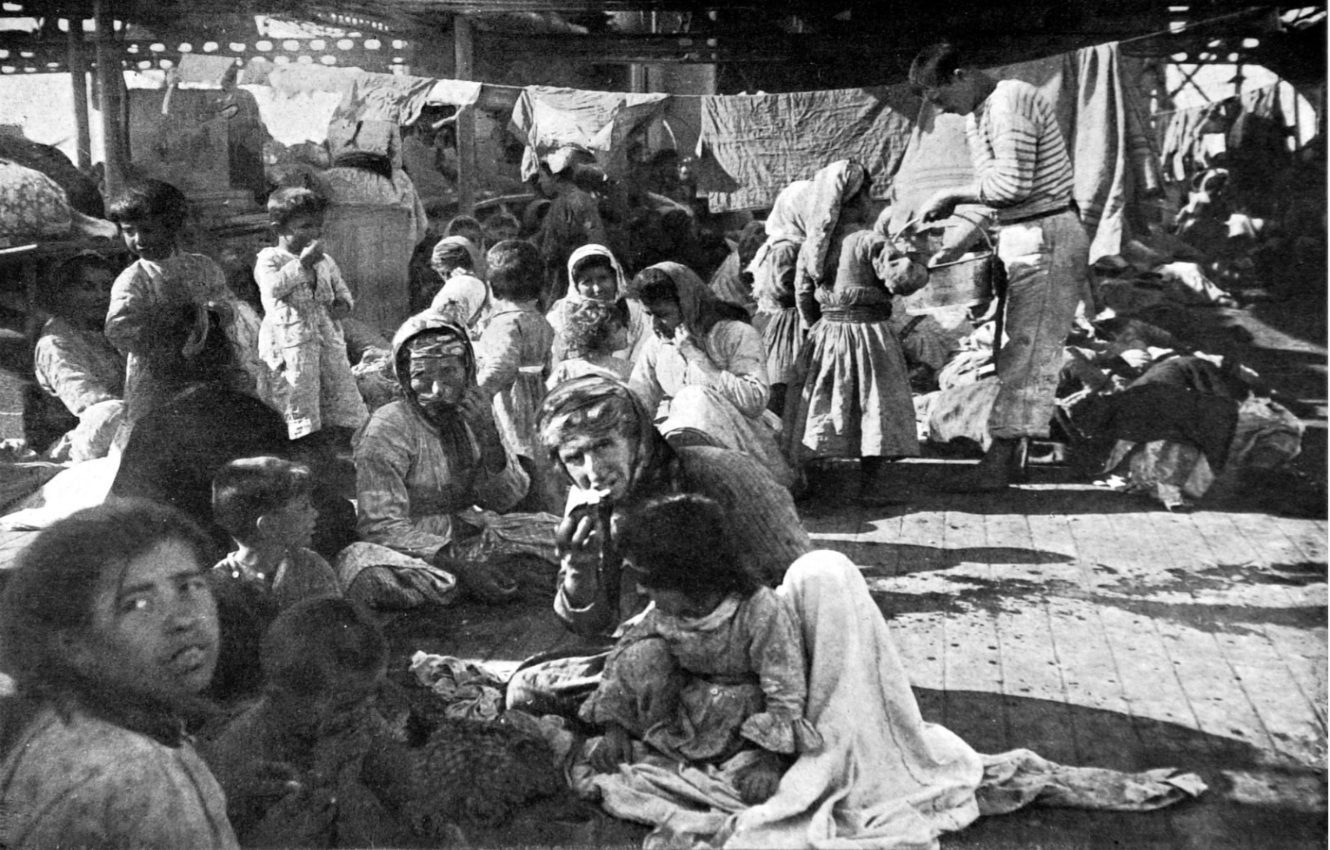
    Picture: Kurdish chieftain Soto among Aramaean doctors to whose advise he sought when ill; later he engaged his forces against them, and died in fight at the times of WW I (http://www.aina.org/books/fla/fla.htm).
  • Obama will/may be OK after all for Turkey

    Obama will/may be OK after all for Turkey

    January 06, 2009

    Recent news reports indicate that Barack Obama has been receiving advice from Brent Scowcroft.[1]

    Zbigniew Brzezinski and Brent Scowcroft wrote a Washington Post piece, entitled “Middle East priorities for Jan. 21,”on November 21, 2008. “We believe that the Arab-Israeli peace process is one issue that requires priority attention,…The major elements of an agreement are well known. A key element in any new initiative would be for the U.S. president to declare publicly what, in the view of this country, the basic parameters of a fair and enduring peace ought to be. These should contain four principal elements: 1967 borders, with minor, reciprocal and agreed-upon modifications; compensation in lieu of the right of return for Palestinian refugees; Jerusalem as real home to two capitals; and a non militarized Palestinian state.”

    Defense Secretary Robert Gates, who was deputy national-security adviser under Mr. Scowcroft in the George H.W. Bush administration, was also retained by President elect Obama, a Scowcroft protégé and another close Scowcroft friend, Gen. James Jones was tapped for the National Security Council. Other prominent Republicans with close ties to Mr. Obama include former Secretary of State Colin Powell, who endorsed the Democrat in the final days of the campaign, and Indiana Sen. Richard Lugar, a senior member of the Senate Foreign Relations Committee who shares Mr. Scowcroft’s philosophy and has the distinction of getting a very poor report card from the Armenian National Committee of America.

    First thing on their plate will be the conflict at Gaza. However come April the Turkish position will be made very clearly for the new president.

    [1] Brent Scowcroft (born March 19, 1925 in Ogden, Utah) was the United States National Security Advisor under Presidents Gerald Ford and George H. W. Bush and a Lieutenant General in the United States Air Force. He also served as Military Assistant to President Richard Nixon and as Deputy Assistant to the President for National Security Affairs in the Nixon and Ford administrations. He also served as Chairman of the President’s Foreign Intelligence Advisory Board under President George W. Bush from 2001 to 2005.

    He received his undergraduate degree and commission into the Army Air Forces from the United States Military Academy at West Point. He has an M.A. and Ph.D. from Columbia University.

    Brent Scowcroft, is currently the Chairman of the Board of Directors of the American Turkish Council (ATC)

    Labels: diplomacy, politics, USA

    posted by M.A.M at 11:57 PM

  • US ARMENIAN LIFE MAGAZINE – ARSIVDEKI SOZDE SOYKIRIM CALISMALARI

    US ARMENIAN LIFE MAGAZINE – ARSIVDEKI SOZDE SOYKIRIM CALISMALARI

    File Name Last Modified
    08-04-2008.pdf 08/04/2008
    07-31-2008.pdf 07/31/2008
    05-29-2008.pdf 05/29/2008
    05-28-2008.pdf 05/28/2008
    11-05-2007.pdf 11/05/2007
    08-29-2007.pdf 08/29/2007
    08-24-2007.pdf 08/24/2007
  • Debate over purity of German language re-opens – Feature

    Debate over purity of German language re-opens – Feature

    Berlin – If he were alive today, US humorist Mark Twain would have been amused at efforts by Chancellor Angela Merkel’s party to have the German language officially enshrined in Germany’s constitution. Twain never ceased to poke fun at “Die Deutsche Sprache” after struggling to master the language during a visit to Heidelberg in the 19th century.

    Posted : Tue, 23 Dec 2008 02:12:04 GMT
    Author : DPA
    Category : Europe (World)

    “My philological studies have satisfied me that a gifted person ought to learn English (barring spelling and pronouncing) in 30 hours, French in 30 days, and German in 30 years,” he wrote in a humorous essay titled “The Awful German Language” after a visit to imperial Germany in the 1880s. “It seems manifest, then, that the latter tongue ought to be trimmed down and repaired. “If it is to remain as it is, it ought to be gently and reverently set aside among the dead languages, for only the dead have time to learn it,” he wrote tongue-in-cheek.

    Not that members of Merkel’s conservative Christian Democratic Union (CDU) paid any thought to Twain’s caustic observations, made 120 years ago, at their recent party conference in Stuttgart. Overwhelmingly, they approved a resolution – despite Merkel’s reservations – calling on the German parliament to enshrine the German language in the constitution.

    Article 22 of the constitution already states that the nation’s capital shall be Berlin, and the flag shall be black, red and gold, but hitherto has made no reference to the German language. That will change if the CDU’s proposal wins approval in parliament and the sentence, “The language of the Federal Republic of Germany shall be German,” is incorporated in the constitution. German has never been a very popular language, despite the efforts of its classic writers Goethe and Schiller.

    Its popularity plummeted after two world wars, but in the early 1990s German enjoyed a temporary renaissance after German reunification. Of 20 million people learning German around the world, two-thirds of them were to be found in Eastern Europe and the former republics of the Soviet Union. In Poland, the number of German students tripled from 500,000 in 1988 to 1.5 million by 1994. Now, there is less zeal to learn German. In Britain, the number of students studying German has been on the wane for years. Instrumental in the push to have German enshrined in the constitution is the fact that Germany today is “home” to more than 3 million people of Turkish descent.

    Overall the country has has more than 10 million immigrants, almost double the number found in Britain. In Berlin’s huge Turkish community, you still find many people experiencing difficulties speaking German. The language of school playgrounds often remains a foreign one. This is a point taken up by Peter Mueller, the premier of Saarland state, who speaks of the CDU needing to clarify “what the nation stands for.”Where people failed to speak German, the promise of social mobility was an empty one, he claimed. CDU member Annette Heubinger agrees. “It’s absolutely normal that the German language should be written in to the constitution,” she says. “Learning and mastering a national language is the key to successful and sustainable integration.”The conservative party’s move may also be aimed at guarding against the rapid spread and corruption of the German language by “Denglish” – English-based words and phrases such as Coffee to Go, Fast Food, Babysitting, Breakfast, Sixpack and Let’s Go, which have found their way into the German language in recent years.

    Herr and Frau Deutsch round up “die Kids” to catch an InterCity at the station, after having found the train times at a Service Point. Linguists are alarmed. “Will we all be speaking Denglish soon, or will it be Germeng?” wrote professor Rudolf Hoberg in an anthology of essays on the state of the German language at the turn of the century. Popular New York born entertainer Gayle Tufts, who has made her home in Berlin, delights in teasing German audiences with her own strange mix of German and English which she calls “Dinglish,” rather than Denglish. In 1998, she even wrote a book in Dinglish called Absolutely Unterwegs (Absolutely on the Road), increasing her popularity still further among “The Krauts.”Tufts whimsically insists her Dinglish was an invention of necessity as she could not wait to learn the grammar. The CDU move to amend the constitution triggers unease among immigrant groups, left-wing Social Democrats and members of the Green Party.

    “This kind of thing is not necessary. I don’t know what kind of signal they are trying to send,” argues Gerd Pflaumer, a spokeman for the anti-discrimination group Action Courage. Aylin Selcuk, a Turkish community youth leader who has advised Chancellor Merkel, agrees that immigrants need to get ahead in life, but questions the CDU’s true motives in wanting German included in the constitution.

    Cem Ozdemir, the new co-leader of the Greens, called recently for the introduction of optional Turkish-language courses in public schools – a proposal that outraged some conservatives. Ozdemir is of Turkish extraction but was born and educated in Germany.

    Officials at the Goethe Institute, which promotes the German language abroad, say there is always an on-going enrichment of the language, which involves absorbing words from several languages, including English, Latin and also Turkish. But they say things get ugly in everyday language use when foreign words get shoved into a German sentence, or vice-versa. “We are not language purists at the Goethe Institute, but we do have respect for the English language, as well as our own. “The language gets polluted when foreign words are popped for no reason into German sentences, simply because they are considered ‘attractive, trendy or cool,’” complained a Goethe Institute official.

    Source:  www.earthtimes.org

  • Street Talk, Not Sweet Talk

    Street Talk, Not Sweet Talk

    Immigrant youth in urban Germany mix tongues to create a language of their own.

    06 January 2009 | Vina Seelam

    “I can’t sleep anymore, it’s loud where I live…but I grew up here and I am staying here; I belong to Berlin,” raps Lisi, a half-German and half-Nigerian MC. In Germany, Lisi’s lyrics are provocative—as much for their message as for the words themselves. Lisi often raps in Kiezdeutsch, a hybridized street slang embraced by pockets of urban youth in Germany. While the language grows in speakers and prominence, for many traditional Germans, Kiezdeutsch evokes fear and disdain.

    Kiezdeutsch—“hood German”— is one of several immigrant-influenced street slangs in Germany today. Unlike “Türkendeutsch,” a language generally spoken by Turkish immigrants, Kiezdeutsch is spoken by youth from various backgrounds, including native German speakers who live in ethnically diverse neighborhoods or identify with the distinctive youth culture of Kiezdeutsch speakers. Türkendeutsch is primarily a Turkish-German hybrid; Kiezdeutsch draws heavily on Turkish but incorporates elements of languages like Arabic, Persian, and Russian as well. The strong Turkish influence upon many street languages reflects the recent history of immigrants to Germany: Turks comprise the majority of the over 2.5 million immigrants who came to Germany over the past 50 years as Gastarbeiter, or guest workers. One hybrid street language is even called “Gastarbeiterdeutsch”— indicating its immigrant roots in its very name.

    Mixed Turkish-German languages such as Türkendeutsch and “Gastarbeiterdeutsch” evolved as immigrants attempted to both preserve their native tongues and adapt to the language of their new country. The fact that many of these guest workers never formally learned the German language is apparent in the vocabulary and structure of these street languages, which native German speakers belittle as “incorrect” or “broken German.” The slang is so divergent that it is often unintelligible—and undesirable—to native German ears. But the presence and growth of these languages proves that this influx of immigrants has had a significant impact in Germany, whether wanted or not.

    Because Türkendeutsch and Gastarbeiterdeutsch do not follow the rules of the Turkish language, many native Turks also find such mixed languages difficult, if not impossible, to understand. Basak Otus, a junior in Yale College, related her cousin Handan’s experience with slang. Handan’s parents immigrated to Germany from Turkey in the mid-1970s as Gastarbeiter. “Her Turkish is disastrous,” Otus explained. “She speaks Turkish at home but she can only go to German schools, so she can’t write in Turkish.” Because most of her friends from her neighborhood in Hamburg also have Turkish backgrounds but do not speak pure Turkish, their chosen means of communication is often a Turkish-influenced German slang.

    Although mixed languages like the one used by Handan and her friends facilitate communication and strengthen bonds within immigrant communities, they have also reinforced the sense that immigrants have not assimilated in Germany. For the children and grandchildren of these Gastarbeiter, these dialects and slangs point to the halfway-integration that these youth experience: they are perceived as “outsiders” even though they have grown up in Germany and may feel little connection to their family’s country of origin.

    There have been recent movements in Germany to change this perception by introducing politically correct terms such as “migrant” into the mainstream, as opposed to Gastarbeiter or Ausländer—“person from an outside country.” But, according to Julia Eksner at the Center for Culture, Brain, and development at University of California, Los Angeles, little has changed. “Teenagers on the street have never heard of the new term ‘migrant,’” she explained. “They feel, ‘I’m an Ausländer.’ So this word—not being German—is always there.”

    While conducting research in Kreuzberg, a neighborhood in Berlin where many Turkish-German youth live, Eksner found that speakers of Turkish-German dialects often identify as Turks but emphasize that they are from Germany and not from Turkey. They live in limbo between two competing cultures, and, perhaps as a result, some speakers of mixed dialects like Kiezdeutsch and Türkendeutsch embrace a cult of aggression and rebellion. Their semi-foreign language can be a tool for intimidation or defense, useful in neighborhoods like Kreuzberg where violence and poverty are the status quo.

    Magbule, one of the teenagers whom Eksner interviewed, explained that to a non-Turkish speaker, the language could sound “chaotic and fast, and somehow…hard and strange.” Rahman, an other teenager, told Eksner that using a mixed Turkish-German language can be advantageous for this reason. “You come across hard somehow,” he said. “With that I want to show that I’m serious.”

    Young Kiezdeutsch and Türkendeutsch speakers like Rahman have succeeded in appearing “hard” through the use of a mixed language: other Germans tend to fear these youth and the unfamiliar and dangerous lifestyles that their slang has come to represent. “It’s everything—it’s the way they dress, the way they move,” says Eva Wittenberg, a linguistics scholar who worked on a research project in Berlin, when asked what it is about the speakers of this language that evokes fear.

    While making the languages of the “street” more accessible to German audiences, Lisi’s rap songs and other media that use stylized versions of slang have other consequences. Such elements of popular culture contribute to the stereotype of Kiezdeutsch speakers as semi-literate, aggressive teenagers. As Eksner explained, in the media these teenagers are able to “move out of total exclusion, from outside of society, but then are presented in stereotypes.”

    Wittenberg added, “Whenever people don’t use proper German, there is a big outcry in society, from a connection of a fear of strangers and a fear of German culture dying.” Native German speakers fear that hybrid languages like Kiezdeutsch and Türkendeutsch will erode the purity of “high” German. While speakers of “high” German poke fun at the idiosyncrasies of dialects like Bavarian and Saxonian, they do not seem to fear the speakers of these dialects as they do the people who speak the slang of the streets.

    The expanding reach of Kiezdeutsch among youth of various ethnicities and across various media has particularly heightened these fears. The language’s emergence and popularity reflect the changing face of Germany’s demographics—a change which some Germans are not ready to embrace. Unlike Türkendeutsch, which is generally spoken only by Turkish-Germans, Kiezdeutsch exemplifies the blending of cultures that is occurring in Germany’s cities. It remains to be seen whether the solidarity between ethnic groups that is reflected in these languages will spread beyond the immigrant neighborhoods where they are spoken today. Although native Germans are generally distrustful and even afraid of Kiezdeutsch and its speakers, the German youth who have adopted the slang speak to Germany’s potential for greater recognition, integration, and acceptance of its significant population of ethnic minorities.

    Like the teenagers who speak it, Kiezdeutsch seems to be the rebel in the crowd, neither fitting into mainstream German culture nor into any other cultural mold. But whether they are Turkish, half- Nigerian like Lisi, or something else entirely, the ethnically diverse youth in Germany exhibit a deep loyalty to the places they choose to call home—a loyalty expressed in the languages they use with their peers. In her music, Lisi makes it clear that she, like many other children of immigrants, is a product of the distinct culture of Berlin, where “between discos, schools, stores, between mosques and churches, somewhere here sects write sick slogans in the subway.” She calls it “the city where my parents raised their children,” and assures us that she is not planning on leaving any time soon.

    Source: The Yale Globalist,  06 January 2009

  • Poor Richard’s Report

    Poor Richard’s Report

    Turkey: No Arms Deal Was Made With Israel – Defense Minister
    January 6, 2009Turkish Defense Minister Vecdi Gonul said Jan. 6 that Turkey did not recently sign $167 million arms deal with Israel just before the Israeli military operations