Blog

  • Jihadism in 2009: The Trends Continue

    Jihadism in 2009: The Trends Continue

    By Fred Burton and Scott Stewart

    The Devolution of Al Qaeda

    For the past several years, we have published an annual forecast for al Qaeda and the jihadist movement. Since the January 2006 forecast, we have focused heavily on the devolution of jihadism from a phenomenon focused primarily on al Qaeda the group to one based primarily on al Qaeda the movement. Last year, we argued that al Qaeda was struggling to remain relevant and that al Qaeda prime had been marginalized in the physical battlefield. This marginalization of al Qaeda prime had caused that group to forfeit its position at the vanguard of the physical jihad, though it remained deeply invol ved in the leadership of the ideological battle.

    As a quick reminder, Stratfor views what most people refer to as “al Qaeda” as a global jihadist network rather than a monolithic entity. This network consists of three distinct entities. The first is a core vanguard, which we frequently refer to as al Qaeda prime, comprising Osama bin Laden and his trusted associates. The second is composed of al Qaeda franchise groups such as al Qaeda in Iraq, and the third comprises the grassroots jihadist movement inspired by al Qaeda prime and the franchise groups.

    As indicated by the title of this forecast, we believe that the trends we have discussed in previous years will continue, and that al Qaeda prime has become marginalized on the physical battlefield to the extent that we have not even mentioned their name in the title. The regional jihadist franchises and grassroots operatives pose a much more significant threat in terms of security concerns, though it is important to note that those concerns will remain tactical and not rise to the level of a strategic threat. In our view, the sort of strategic challenge that al Qaeda prime posed with the 9/11 attacks simply cannot be replicated without a major change in geopolitical alignments — a change we do not anticipate in 2009.

    2008 in Review

    Before diving into our forecast for the coming year, let’s take a quick look back at what we said would happen in 2008 and see what we got right and what we did not.

    What we got right:

    Al Qaeda core focused on the ideological battle. Another year has passed without a physical attack by the al Qaeda core. As we noted last October, al Qaeda spent a tremendous amount of effort in 2008 fighting the ideological battle. The core leadership still appears to be very intent on countering the thoughts presented in a book written in 2007 by Sayyed Imam al-Sharif, also known as Dr. Fadl, an imprisoned Egyptian radical and a founder (with Ayman al-Zawahiri) of Egyptian Islamic Jihad. Al-Sharif’s book is seen as such a threat because he provides theological arguments that counter many of the core teachings used by al Qaeda to justify jihadism. On Dec. 13, an 85-page treatise by one of al Qaeda’s leading religious authorities, Abu-Yahya al-Libi, was released to jihadist Web sites in the latest of al Qaeda’s many efforts to counter Dr. Fadl’s arguments.

    Pakistan will be important as a potential flashpoint. Eight days after we wrote this, former Pakistani Prime Minister Benazir Bhutto was assassinated. Since then, Pakistan has become the focal point on the physical battlefield.

    The November 2007 addition of the Libyan Islamic Fighting Group (LIFG) to the global jihadist network will not pose a serious threat to the Libyan regime. The Libyans have deftly used a combination of carrots and sticks to divide and control the LIFG.

    Jihadists will kill more people with explosives and firearms than with chemical, biological or radiological weapons. We saw no jihadist attacks using WMD in 2008.

    What we got mostly right:

    The Algerian jihadist franchise, al Qaeda in the Islamic Maghreb (AQIM), will be hard-pressed in 2008, but not eliminated. AQIM succeeded in launching a large number of attacks in the first eight months of 2008, killing as many people as it did in all of 2007. But since then, the Algerian government has been making progress, and the jihadist group has only conducted two attacks since August 2008. The Algerians also are working closely with neighboring countries to combat AQIM, and the group is definitely feeling the heat. On Dec. 23, 2008, the Algerian government reportedly rejected a truce offered by AQIM leader Yahia Djouadi. Djouadi offered that al Qaeda would cease attacks on foreigners operating in oil fields in Algeria and Mauritania if the Algerian security service would cease targeting al Qaeda members in the Sahel region. The group is still alive, and government pressure appears to have affected its operational ability in recent months, but it di d take a bit longer than we anticipated for the pressure to make a difference.

    Syria will use Fatah al-Islam as a destabilizing force in Lebanon. We had intelligence last year suggesting that the Syrians were going to press the use of their jihadist proxies in Lebanon — specifically Fatah al-Islam. We saw a bit of this type of activity in late May, but not as much as anticipated. By November, Syria actually decided to cut ties with Fatah al-Islam.

    Jihadist operatives outside war zones will focus on soft targets. Major terrorist strikes in Islamabad and New Delhi were conducted against hotels, soft targets Stratfor has focused on as vulnerable for many years now. Other attacks in India focused on markets and other public places. While most of the attacks against hard targets came in war zones like Iraq and Afghanistan, there were a few attacks against hard targets in places like Pakistan, Yemen and Turkey. Granted, the Sanaa and Istanbul attacks were unsuccessful, but they were attacks against hard targets nonetheless.

    What we missed:

    The jihadist franchises in Yemen resurged, and the al-Shabab in Somalia found success. While we quickly picked up on these trends in April and May respectively (and beat most others to the punch with some very good analysis on these topics), we clearly did not predict them in December 2007. We knew that the influx of fighters from Iraq was going to impact countries in the region, but we didn’t specifically focus on Yemen and Somalia.

    The Year Ahead

    We anticipate that we will see the United States continue its campaign of decapitation strikes against al Qaeda leadership. While this campaign has not managed to get bin Laden or al-Zawahiri, it has proved quite successful at causing the al Qaeda apex leadership to lie low and become marginalized from the physical jihad. The campaign also has killed a long list of key al Qaeda operational commanders and trainers. As noted above, we believe the core leadership is very concerned about the ideological battle being waged against it — the only real way the theology of jihadism can be defeated — and will continue to focus their efforts on that battlespace.

    As long as the ideology of jihadism survives (it has been around since the late 1980s), the jihadists’ war against the world will continue. It will continue to oscillate between periods of high and low intensity. In the coming year, we believe the bulk of physical attacks will continue to be conducted by regional jihadist franchise groups, and to a lesser extent by grassroots jihadists.

    With the lack of regional franchises in North America, we do not see a strategic threat to the United States. However, as seen by the recent convictions in the Fort Dix plot trial, or even in the late October case where a U.S. citizen apparently committed a suicide bombing on behalf of al-Shabab in Somalia, the threat of simple attacks against soft targets in the United States remains. We were again surprised that no jihadist attacks occurred in the United States in 2008. Given the vulnerabilities that exist in an open society and the ease of attack, we cannot rule out an attack in 2009.

    In Europe, where AQIM and other jihadist franchises have a greater presence and infrastructure, there is a greater threat that these franchises will commit sophisticated attacks. It must be recognized, though, that they will have a far harder time acquiring weapons and explosives to conduct such attacks in the United Kingdom or France than they would in Algeria or Pakistan. Because of this, we anticipate that they will continue to focus on soft targets in Europe. Due to differences between the Muslim communities in the United States and Europe, the grassroots operatives have been more active in Europe than they are in the United States. The May 22, 2008, attempted bombing at the Giraffe Cafe by a Muslim convert in Exeter serves as a good reminder of this.

    Jihadist Franchises

    After failing last year to predict the resurgence of the jihadist franchises in Yemen and Somalia, we will be keeping a sharp eye on both for 2009. Somalia continues to be a basket case of a country, and the instability there is providing an opportunity for al-Shabab to flourish. There is currently an attempt under way to bring stability to Somalia, but we anticipate that it will not succeed, due to the militant factionalism in the country. The only thing working against al-Shabab and their jihadist brethren is that the Somalian jihadists appear to be as fractious as the rest of the country; al-Shabab is itself a splinter of the Supreme Islamic Courts Council (SICC), which ruled Somalia briefly before the Ethiopian invasion in 2006. There are currently as many as four different jihadist factions fighting one anot her for control over various areas of Somalia — in addition to fighting foreign troops and the interim government.

    In Yemen, things have been eerily quiet since the Sept. 17 attack against the U.S. Embassy in Sanaa and the government campaign to go after the group behind that attack. Six gunmen were killed in the attack itself, and the Yemenis have arrested numerous others whom they claim were involved in planning the attack. The Yemenis also killed or captured several significant jihadists prior to the September attack. But given the large number of Yemenis involved in the fighting in Iraq, the number of Saudi militants who have traveled to Yemen due to pressure at home, and the Salafist-jihadist influence within Yemen’s security and intelligence apparatus, it will be possible for the two jihadist franchises in Yemen to recover if the Yemenis give them breathing space.

    Meanwhile, though Iraq is far calmer than it was a few years back, a resurgence in jihadist activity is possible. One of the keys to calming down the many jihadist groups in Iraq was the formation of the Awakening Councils, which are made up of many Sunni former Baathist (and some jihadist) militants placed on the U.S. payroll. With the changes in Iraq, responsibility for these Awakening Councils has been passed to the Iraqi government. If the Shiite-dominated government decides not to pay the councils, many of the militants-turned-security officers might return to their old ways — especially if the pay from jihadist groups is right. Intelligence reports indicate that Baghdad plans to pay only a fraction of the approximately 100,000 men currently serving in the Awakening Councils. The Iraqi central government apparently plans to offer the bulk of them civilian jobs or job training, but we are skeptical that this will work.

    Elsewhere, Pakistan is once again the critical location for the jihadists. Not only is Pakistan the home of the al Qaeda core leadership as its pursues its ideological war, it also is home to a number of jihadist groups, from the Afghan Taliban and the Tehrik-i-Taliban Pakistan in the northwest to Lashkar-e-Taiba and Jaish-e-Mohammed in the northeast, among several others. The coming year might prove to be pivotal in global efforts against the jihadists in Pakistan. Pakistan already is a country in crisis, and in some ways it is hard to imagine it getting much worse. But if Pakistan continues to destabilize, it could very well turn into a failed country (albeit a failed country with a nuclear arsenal). Before Pakistan becomes a failed state, there are a number of precursor stages it probably will pass through. The most immed iate stage would entail the fall of most of the North-West Frontier Province to the jihadists, something that could happen this year.

    This type of anarchy in Pakistan could give the jihadists an opportunity to exert control in a way similar to what they have done in places like Afghanistan and Somalia (and already in the Pakistani badlands along the Afghan border.) If, on the other hand, Pakistan is somehow able to hold on, re-establish control over its territory and its rogue intelligence agency and begin to cooperate with the United States and other countries fighting the jihadists, such a development could deal a terrible blow to the aspirations of the jihadists on both the physical and ideological battlefields. Given the number of plots linked to Pakistan in recent years, including the Nov. 26 Mumbai attack and almost every significant plot since 9/11, all eyes will be watching Pakistan carefully.

    This report may be forwarded or republished on your website with attribution to www.stratfor.com
  • Can Egemen Bagis Revive Turkey’s Stalled EU Accession Process?

    Can Egemen Bagis Revive Turkey’s Stalled EU Accession Process?

    Can Egemen Bagis Revive Turkey’s Stalled EU Accession Process?

    Publication: Eurasia Daily Monitor Volume: 6 Issue: 6
    January 12, 2009
    By: Saban Kardas

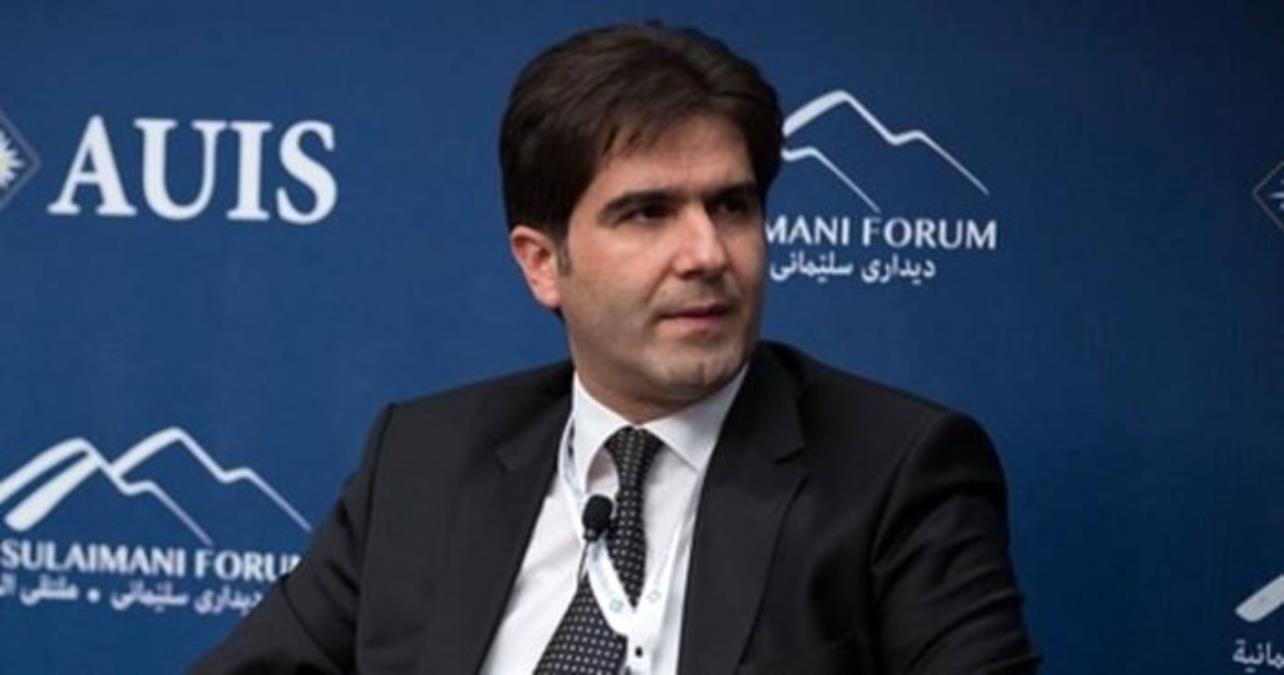
    Prime Minister Recep Tayyip Erdogan selected Istanbul parliamentary deputy Egemen Bagis as the new chief negotiator for Turkey’s membership negotiations with the European Union. Erdogan also moved the Secretariat General for EU Affairs (ABGS) from the Foreign Ministry to the Prime Minister’s office under Bagis, who was promoted to the rank of state minister (www.cnnturk.com, January 9, 10). The move came amid criticism that the Justice and Development Party (AKP) government had stalled the EU accession process.

    The post of chief negotiator was previously held by the current Foreign Minister Ali Babacan, who had filled that position at the same time as his other ministerial appointments in the successive AKP governments. Since the beginning of the memberships talks with the EU in 2005, Babacan acted as the chief negotiator parallel to his positions as economics minister and later foreign minister. The government’s reluctance to appoint a “full-time” negotiator had been a constant source of criticism and was taken by the pro-reform circles as a sign of the low priority that the government attached to the EU project. Especially since Babacan’s assumption of the post of foreign minister, it has been clear that this double assignment was unsustainable, as it became increasingly difficult for Babacan to fulfill his responsibilities as chief negotiator. At the beginning of 2008, Babacan said “2008 will be the year of the EU; you will be surprised [by our reforms]” (Sabah, February 3, 2008). As 2008 closed, however, Turkish-EU relations hit a low point, with no major reform recorded on critical issues. For reformists, 2008 was a lost year (Taraf, December 31, 2008).

    Indeed, myriad international crises taking place in Turkey’s neighborhood engulfed Babacan’s agenda. Turkey’s policy of asserting itself as a major actor in the Middle East, Central Asia, and the Caucasus coincided with its new role as a nonpermanent member of the United Nations Security Council. Leading Turkish experts interpreted this growing foreign policy activism as essentially detrimental to the EU project.

    Having identified a trend among Turkey’s political elite of declining enthusiasm for “full membership” and a growing preference for “privileged partnership,” Ziya Onis, a professor of international relations, argued that “The counterpart of this in the foreign policy realm is an approach based on ‘soft Euro-Asianism’ in which … an attempt is made to develop a friendly relationship with all neighboring countries but without the EU providing the main axis or the reference point for foreign policy” (“Recent Foreign Policy Attitudes in Turkey,” DIIS Brief, November 2008).

    In a December 2008 Report, the International Crisis Group maintained that 2009 would be the “make or break” year. The report expected both sides’ attitude at this critical threshold to determine the future direction of Turkey’s European Union vacation, and presented two alternative paths: a breakthrough or a collapse of membership talks. Though recognizing the EU’s own mistakes, the report put the blame for the poor status of relations on the Turkish government’s failure to keep up with the EU’s reform expectations (“Turkey and Europe: The Decisive Year Ahead,” International Crisis Group, Report No: 197, December 15, 2008, www.crisisgroup.org).

    The urgency placed on the year 2009 stems from the fact that the EU will review Turkey’s progress on the issue of ports this year, which is viewed by some as a de facto ultimatum. In 2006 the EU suspended negotiations on eight chapters, because Turkey refused to open its air and sea ports to Greek Cypriot vessels. Babacan had earlier played down the EU pressure and rejected treating this review as an ultimatum. He instead pointed his finger at the EU for stalling in the accession process (Zaman, December 19).

    The appointment of a state minister whose sole responsibility it is to lead membership negotiations, along with the new institutional arrangement, is taken as an indicator of the government’s decision to refocus its attention on the EU project. EU representatives welcomed Bagis’s appointment. Erdogan is scheduled to visit Brussels on January 19, the first such trip in four years (Milliyet, January 10).

    It remains to be seen, however, whether the resumption of the EU project will be geared toward full membership or whether Turkey will settle for some sort of “privileged partnership.” Erdogan’s appointment of the chief negotiator from the AKP’s own ranks, instead of a bureaucrat, and bringing the ABGS under his authority indicate his determination to maintain full control over the membership talks and proceed at the AKP’s own pace. Some observers are critical of this decision: “independent of Mr. Bagis’s appointment, [the danger] is that the government was trying to politicize its relationship with Europe and move the process away from the bureaucracy to its own appointees,” Today’s Zaman wrote (January 11).

    Since it is no secret that Euro-skeptic arguments enjoy popularity within Erdogan’s own cabinet, Bagis will have to bargain with other ministers to revitalize the accession process. One advantage he will have in this battle will be his close association with Erdogan. Since joining party before the 2002 elections, Bagis, 38, had been a member of parliament and served in the party and government in many capacities. Most importantly, he was renowned as one of Erdogan’s top advisors in foreign relations. Since the 2007 elections, he also has been the AKP’s deputy chairman for foreign affairs. With his fluency in English, Bagis has taken part in negotiations on many international problems. He received his education in American schools and worked in the United States prior to joining the party. Given this experience, he has played a major role in the conduct of Turkish-American relations. Bagis has been one of the staunchest advocates of Erdogan and has commanded his respect and support. Although Erdogan has occasionally replaced his other top aides because of political disagreements or public pressure, Bagis has managed to maintain his place in Erdogan’s close circle (Hurriyet Daily News, January 10).

    The future of Turkish-EU relations might depend on what role Bagis foresees for himself and whether he will cave in to the growing anti-EU sentiment. If he can chart an independent role as the chief negotiator and develop an assertive portfolio to revitalize the membership talks, he might be the new hero of liberal-reformists. In this case, he could use his ties to Erdogan as leverage to overcome intra-cabinet obstacles. He might as well continue to act as Erdogan’s man, in which case he is more likely to maintain the same populist attitude, continuing to blame the EU for the shortcomings in the process and avoiding major reforms.

    https://jamestown.org/program/can-egemen-bagis-revive-turkeys-stalled-eu-accession-process/

  • A New Russia Upon a Hill

    A New Russia Upon a Hill

    By Igor Panarin

    The United States, which is at the epicenter of the global financial tsunami, will suffer the most damage in 2009. In a worst-case scenario that has a roughly 50 percent chance of coming true, the dollar and the entire U.S. economy will crash by November. As a result, the country’s dire political and economic problems could lead to fierce competition between the states in which wealthier states will withhold funds from the federal government and threaten secession and civil war. This in turn could lead to disintegration of the country into six parts by the summer of 2010 as the leading foreign powers take their pieces of the fallen giant. Under this scenario, California and six western states would fall under Chinese influence; Alaska would go to Russia; Hawaii would go to Japan or China; 15 states in the Midwest and Great Plains would be under Canadian influence; Texas and eight other southern states would be under Mexican influence; and the eastern seaboard states might join the European Union.

    Russia must take advantage of the U.S. crisis by expanding its influence and power both domestically and globally in the following areas:

    •Pacific Doctrine

    Russia needs regions that can produce breakthrough technological innovations, and Primorye is a leading candidate to fulfill this role. While preserving its military and political importance, Primorye should become a powerful financial and economic outpost in the Asia-Pacific region in the 21st century. By 2012, it can and should become one of the main centers of international business activity, a hub for investment and innovation.

    The political future of Russia’s leaders, as well as its ability to become a leader in innovation, will largely depend on whether Primorye’s political elite can — with Kremlin support — adapt to the reality of world politics.

    This primarily means supporting the concept of a fifth “I” — intellect — in addition to President Dmitry Medvedev’s four I’s of institutions, infrastructure, investment and innovation. This would entail developing a partnership between government and the private sector that will ensure Russia’s position as a world leader.

    •Former Soviet Republics

    A U.S. collapse would lead to a political and military vacuum among former U.S. allies in Eastern Europe, the Caucasus and Central Asia. Russia should declare its intention to return to the foreign policies of Catherine the Great.

    •The Middle East

    Russia should start by building a strategic partnership with Turkey, which supported Russia in its war with Georgia in August. Russia should take over all of the former U.S. military bases on Turkish territory. In addition, Russia should take full advantage of the U.S. withdrawal from Iraq and Afghanistan by deploying forces from the Shanghai Cooperation Organization to provide peace and stability.

    •South Asia

    Russia should try to become the main arbiter in the dispute between India and Pakistan. It would also make sense to include Iran and China in the settlement process.

    •South America and the Caribbean

    Moscow should focus on strengthening its ties and influence in Brazil, Venezuela and Cuba. Russia should direct colossal economic and military resources to those three countries.

    The year 2010 should see the re-establishment of Russia’s radar station at Lourdes in Cuba that Moscow abandoned in 2001 with 750 technicians and 2,000 troops. At a December meeting of leaders from 33 South American states — which was held without the participation of the United States for the first time — Mexican President Felipe Calderon proposed creating an organization called the Union of South American and Caribbean Basin States that would facilitate political and economic change on the continent. If such an organization is established, Russia should strive to become a strategic economic and informational-ideological partner.

    By expanding its influence in the above areas, Russia can integrate Eurasia and strengthen its political, economic and military influence in the world. The U.S. decline offers Russia a golden opportunity to replace the United States as the world’s leading superpower.

    Igor Panarin, former analyst with the KGB, is dean of the international relations department at the Foreign Ministry’s Diplomatic Academy.

    Monday, January 12, 2009
    Updated at 12 January 2009 1:39 Moscow Time.

  • Armenia denies receiving $800 mln worth of Russian arms

    Armenia denies receiving $800 mln worth of Russian arms


    YEREVAN, January 12 (RIA Novosti) – Armenia’s Defense Ministry on Monday denied a report from Baku alleging that Russian arms had been handed over to Yerevan.

    Azerbaijani media previously reported that arms worth a total of $800 million had been transferred to Armenia from a Russian military base in the country.

    “That is yet another piece of disinformation by Azerbaijani propaganda. I don’t think there is a need to comment on it,” said the Armenian defense minister’s press secretary, Col. Seiran Shakhsuvaryan.

    Azerbaijan’s Foreign Ministry said earlier on Monday that it was studying the report.

    “As soon as the necessary information is obtained, the Foreign Ministry will formulate its position,” said Elkhan Polukhov, first secretary of the Azerbaijani Foreign Ministry.

    Relations between Azerbaijan and Armenia became strained when Nagorny Karabakh, a region in Azerbaijan with a largely Armenian population, declared its independence from Azerbaijan to join Armenia in 1988. The enclave has been a source of conflict ever since.

  • Georgia Stops Gas Flow to Armenia

    Georgia Stops Gas Flow to Armenia

    Monday, January 12, 2009
    Updated at 12 January 2009 1:39

    Moscow Time.

    Georgia stopped Russian natural-gas transit flows to Armenia on Friday after a pipeline was damaged.

    Georgia said the stoppage was to carry out emergency repair work on the main Kazakh-Saguramo gas pipeline.

    Repair work on the pipe “will take approximately five days, the transit will continue after that,” Georgian Energy Minister Alexander Khetaguri said in an interview Sunday. The damage occurred in the town of Gardabani, about 40 kilometers south of the capital Tbilisi.

    Gazprom ships its gas to Armenia through Georgia, which gets 10 percent of transit volumes as fees.

    Gazprom and its Armenian venture ArmRosgazprom offered to help Georgia repair the damaged link to resume supplies “in the shortest time,” it said Sunday.

    Armenia has some gas reserves that it could use while repairs are being made, Khetaguri said.

    Source:  The Moscow Times » Issue 4061 » 12 January 2009

  • Heydar Jamal: “Like Russia US-Israeli tandem is absolutely not interested in the resolution of the Karabakh conflict”

    Heydar Jamal: “Like Russia US-Israeli tandem is absolutely not interested in the resolution of the Karabakh conflict”

    Today Russia is the main obstacle on the way to the resolution of the situation in the South Caucasus, said famous Russian political scientist and chairman of the Islamic Committee of Russia Heydar Jamal, speaking about the supply of arms to Armenia by Russia free of charge. He said if not for Moscow the Karabakh conflict could have been settled long ago.

    (more…)