Blog

  • Turkish defense company sells equipment to Armenia

    Turkish defense company sells equipment to Armenia

    Javid Huseynov

    show details 12:41 AM (10 hours ago)
    Reply

    Turkish contribution to Armenian democracy… 🙂 – water cannons.

    ANKARA – Nurol Machinery and Industry Inc., a Turkish firm in the defense business, is preparing to sell vehicle-mounted water cannons to Armenia and hopes its new armored personnel carrier will continue its popularity abroad.

    “Armenia contacted us. Talks have been going on for some time now,” said Nurol Machinery’s deputy general manager of marketing, Tanju Torun, during a demonstration for the firm’s new six-wheeled armored personnel carrier, named “Ejder” (Dragon) yesterday.

    Vehicle-mounted water cannons are typically used for crowd control. Torun did not give the exact number of water cannon vehicles destined for Armenia if the talks end positively. Eight people were killed last March when the Armenian police intervened against activists who were protesting the Feb. 19 elections and claiming that they were rigged by the opposition.

    ‘Reasonable price’

    Torun didn’t say how many vehicles were about to be sold. “I can say the price is reasonable. We are already exporting the vehicles to 10 countries,” Torun said.

    Ejder, a domestically designed armored vehicle on wheels that is resistant to tank mines and Improvised Explosive Device, or IEDs, will participate in the bid for the Undersecretariat for Defense Industries, or SSM’s, Special Purpose Tactical Wheeled Armored Vehicles Procurement Project, on April 24.

    “Ejder fully meets NATO standards for armor and I can say that its price is approximately half of its foreign equivalents. I expect that it will enter the Turkish military’s inventory, too,” Torun said. Ejder has amphibious capability and can operate in temperatures ranging from Ğ32 to 55 degrees Celsius.

    “Curiously enough, we sold Ejder abroad before it came to use in Turkey,” Torun said, adding that over 50 Ejder vehicles were already sold. “The Columbian defense ministry asked for a meeting to purchase Ejders,” Torun said. Talks for export continue with many countries, he said.

    “It has not been combat tested yet, but it is very resistant to mines and enables the crew to resume its mission after a hit,” Torun said.

    Its maximum speed reaches 110 kilometers per hour, a considerably good performance for an 18-ton vehicle, Torun said. “We also managed to reduce the noise the personnel are exposed to down to 80 decibels in park, and to 89 decibels at full speed,” Torun said. Nurol Machinery and Industry Inc., has been in the defense industry since the early 1990s.

  • Poor Richard’s Report

    Poor Richard’s Report

    United States: Treasury Calls Anti-Iranian Kurdish Group A Terrorist Organization
    February 4, 2009The U.S. Treasury has labeled the anti-Iranian Kurdish group Free Life Party of Kurdistan (PJAK) a terrorist organization and will freeze any assets the PJAK has under U.S. jurisdiction, Reuters reported Feb. 4. PJAK is a front for the Kurdistan Workers Party (PKK), which has been fighting against Turkey’s government for 25 years. PJAK members fight

  • American Jewish Committee Letter to the PM R.T.Erdogan

    American Jewish Committee Letter to the PM R.T.Erdogan

    From: BENJAMIN YAFET [mailto:[email protected]]

    Open Letter to the Turkish Prime Minister Erdogan

    “Dear Prime Minister Erdogan”
    by David A. Harris
    Executive Director, American Jewish Committee
    February 1, 2009

    Dear Prime Minister Erdogan,

    I write as a friend of Turkey.

    These days, though, I’m finding it harder to feel well-disposed. I’ve been stunned by things I’ve heard, seen, and read in recent weeks. The outburst of animosity for Israel and the anxiety awakened in the Turkish Jewish community make me wonder what’s going on and what the future holds.

    If this only emanated from the “street” or from an extremist fringe, it would be worrisome enough. But it goes deeper – and higher. It starts at the very top. Yours has been the loudest voice, and you have used it to attack Israel in a manner that is not only vicious, but also disconnected from the facts.

    Let me step back for a moment.

    I have long admired Turkey. Like all countries, it’s not perfect, but there is much to appreciate.

    As an American, I have valued Turkey’s strategic partnership with the U.S. and the close ties that have linked our two countries.

    As a Jew, I have always remembered the Ottoman Empire’s warm welcome to Jews fleeing the Spanish Inquisition and the rich history of the Jewish presence in Turkey.

    As a democrat, I have appreciated Turkey’s commitment to many values I cherish, including its participation with the Allied nations in the Korean War and its front-line role in NATO.

    As a friend of Israel, I have witnessed the strengthening of bilateral links between Ankara and Jerusalem over the years, serving the vital interests of both nations, as many Turks and Israelis have learned to appreciate.

    As a peace-seeker, I have been grateful for the role of Turkish peacekeeping forces, including in southern Lebanon, not to mention the facilitation of indirect talks between Israel and Syria.

    In that spirit, I have acted on the assumption that friends help friends.

    When Ankara has needed assistance in Washington, or even in European capitals, Turkish officials have often turned to American Jewish groups, ours among them. Whenever we could, as you know, we have been there to help.

    When Turkey was struck by a major earthquake in 1999, we were there to build a school in the devastated region of Adapazari as a gesture of solidarity and friendship.

    And when Turks in Germany were targeted by hate crimes, we spoke up. Indeed, in 1993, we traveled from New York solely to attend the funeral service at the Cologne mosque after an arson attack killed five Turkish women in nearby Solingen.

    I don’t say these things to pat ourselves on the back, but to underscore our deep commitment to the relationship – in many ways, over many years.

    Which brings us to the present.

    Mr. Prime Minister, you have described Israeli policy in Gaza as a “massacre” and a “crime against humanity” that would bring about Israel’s “self-destruction” through divine punishment. These words are inflammatory, and they are wrong.

    You seem to believe that Israel had other ways to deal with the relentless barrage of missiles and mortars fired at its civilians, even though months of restraint accomplished nothing.

    You contend that Hamas is a reasonable negotiating partner. You even invited its leaders to Ankara, though it had not met the Quartet’s demands to recognize Israel, renounce violence, and abide by previous agreements. It still has not done so, and it still seeks Israel’s destruction with weapons imported from your neighbor, Iran.

    You have accused Israel of deliberately seeking to kill civilians. In reality, as British Colonel Richard Kemp told the BBC, “I don’t think there has ever been a time in the history of warfare when any army has made more efforts to reduce civilian casualties. 
 Hamas has been trained extensively by Iran and by Hezbollah to use the civilian population in Gaza as a human shield.”

    Even if you disagreed, you might have been respectful of such public criticism of Hamas, whether from Col. Kemp, EU official Louis Michel, Egyptian and Saudi leaders, or, in more hushed tones, some Gaza residents themselves. Instead, you accused “Jewish-backed media” of spreading falsehoods.

    Mr. Prime Minister, Israel yearns for a secure and lasting peace. No one has more fully embodied that hunger for peace, or worked more tirelessly to achieve a new start for the Middle East, than Shimon Peres – Israel’s president, a Nobel Peace Prize winner, and your fellow panelist at Davos last week.

    Yet, in your remarks, you essentially called him a child-killer. And, inexplicably, you quoted an obscure ex-Israeli who has turned into a rabid anti-Semite.

    And then you left, claiming that the moderator had been unfair. We hope the conciliatory phone call between you and President Peres helped to repair the breach, but, make no mistake, damage has been done. By storming off the stage, you not only insulted him, but you harmed the image of Turkey. Maybe you gained popularity in the Turkish street, where anger against Israel and Jews has been stoked in recent weeks, but you did your country no service by your unstatesmanlike behavior.

    Mr. Prime Minister, I wonder what Turkey would do if its population were targeted, day after day, by merciless enemies determined to wreak havoc, terrorize, and intimidate.

    But wait. We know exactly how Turkey would act if it saw its national interests endangered.

    When Turkey feared union between Greece and Cyprus, it rushed troops to the northern part of the island in 1974. A new government was declared. The UN Security Council later “deplore[d] the declaration of the Turkish Cypriot authorities of the purported succession.” Only Turkey recognized the new state. And over the years, the population of the Turkish part of the island markedly increased. Where did the growth come from? Observers insisted that it was a policy of settlement from Turkey.

    Now, however, you assert that Israel should not be “allowed to enter through the gates of the UN” because it has defied the Security Council.

    Turkey knows something about terrorism. The PKK has targeted your country for years, initially seeking an independent Kurdish state that included part of Turkey. Now it claims to seek greater autonomy for the millions of Kurds living in Turkey. Even as the PKK has apparently lowered its demands, has Turkey pursued talks with that murderous group?

    Absolutely not.

    Indeed, I recall a rather blunt threat from Ankara to neighboring Syria in the late 1990s: If the PKK continued to receive protection there, the Turkish army would cross the border and take matters into its own hands. Luckily for Turkey, Syria was smarter than Hamas. It got the message. I also remember last year’s incursion of Turkish forces into northern Iraq to stem PKK attacks from there.

    But now, you demand that we “redefine terror and terrorism in the Middle East.”

    And wasn’t it Turkey, objecting to Armenian policy toward Azerbaijan, that chose to close its border with landlocked Armenia from 1993 to today? Yet you now accuse Israel of creating “an open-air prison” by sealing its own frontier with a hostile territory.

    Please understand me. I am not – I repeat, not – seeking here to pass judgment on Turkey’s actions. Rather, I am simply recounting them to show what happens when the shoe is on the other foot.

    It’s so easy to tell another country what it should or shouldn’t do in the face of threats, especially when one’s own country is ten times more populous and 38 times larger. But ultimately, Israel, like its friend Turkey, must make tough choices to protect its citizens.

    Mr. Prime Minister, only you know how far you want to take your belligerent posture. It has already resulted in damage to your country’s reputation in the United States, concern for the well-being of the Turkish Jewish community, and, no doubt, joy in Iran and Hamas’ radical circles.

    The Turkey I know and admire would recoil from partners like Iran and Hamas. Their central beliefs are antithetical to everything that modern, democratic Turkey ought to stand for.

    And so, even as I worry, wonder, and despair, I’ll be watching, waiting, and, yes, hoping.
  • Jews check Armenian genocide stance

    Jews check Armenian genocide stance


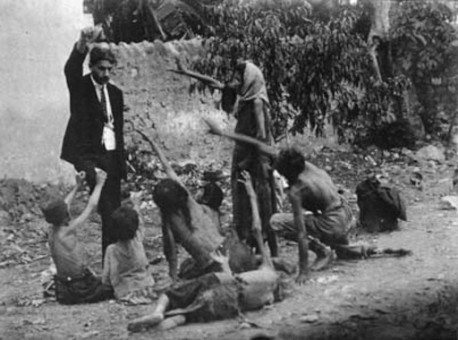
    An official with a leading American Jewish organization told the The Jerusalem Post on Monday that a deterioration in Israel-Turkey relations might prompt his group and others to reconsider Armenian efforts to win recognition of the century-old Turkish massacres as genocide.

    A bill that would ensure such recognition by the US, which was backed by Rep. Adam Schiff – a Jewish Democrat who represents a heavily Armenian area of Los Angeles – failed to make it to a Congressional vote in 2007. However, it sparked a row in the American Jewish community between those who sided with Turkey in an effort to protect Israel’s political interests, and those who argued that Jews were particularly responsible for helping other groups block the public denial of genocide.
    “No Jew or Israeli in his right mind will insult Turkey,” the official told the Post. “But next time… they might not come to Turkey’s aid or equivocate quite so much on the issue.”
    The Bush administration opposed the bill out of concern for what it would do to US-Turkey relations.
    The current blowup between Israel and Turkey comes amid expectations that the Obama administration will name academic and writer Samantha Power, an expert on genocide, to a key National Security Council post dealing with multilateral institutions. Power has been outspoken in labeling the Turkish massacre of Armenians genocide, albeit from outside the government.
    One Washington-based Jewish community leader said Jewish organizations were unlikely to reorient their views and begin backing legislation to recognize the Armenian genocide, arguing that this would only make a delicate situation far worse.
    “If organizations aren’t backing Armenian genocide resolutions because of the Turkish-Israeli relationship and their concern about the Turkish Jewish community, I don’t think they would change now,” he said. “Those same concerns remain, and those same pressures remain.”
    Anti-Defamation League head Abraham Foxman – whose opposition to the Armenian genocide legislation in 2007 provoked widespread criticism – told the Post that as long as Israel maintained its diplomatic ties with Turkey, he saw no immediate reason to change his position on any future genocide resolutions.
    “This is not a punishment or a reward issue – we don’t change our position on what’s right or wrong based on what people say,” Foxman said. “The interests between Israel and Turkey continue.”
    Foxman also noted that he knew of Jewish friends who had cancelled trips to Turkey over Erdogan’s comments, but described the Erdogan flap as a disagreement between “friends.”
    “There have been some very inappropriate harsh statements by the leadership, especially by the prime minister, which we think are inappropriate,” he said, “but they have not changed the basic relationship [with Israel].”
    Hilary Leila Krieger and Haviv Gur Rettig contributed to this report.

  • Turkey’s Turn from the West

    Turkey’s Turn from the West

    Soner Cagaptay

    Washington Post, February 2, 2009

    Turkey is a special Muslim country. Of the more than 50 majority-
    Muslim nations, it is the only one that is a NATO ally, is in
    accession talks with the European Union, is a liberal democracy and
    has normal relations with Israel. Under its current government by the
    Justice and Development Party (AKP), however, Turkey is losing these
    special qualities. Liberal political trends are disappearing, E.U.
    accession talks have stalled, ties with anti-Western states such as
    Iran are improving and relations with Israel are deteriorating. On
    Thursday, for example, Prime Minister Recep Tayyip Erdogan walked out
    of a panel at Davos, Switzerland, after chiding Israeli President
    Shimon Peres for “killing people.” If Turkey fails in these areas or
    wavers in its commitment to transatlantic structures such as NATO, it
    cannot expect to be President Obama’s favorite Muslim country.
    Consider the domestic situation in Turkey and its effect on relations
    with the European Union. Although Turkey started accession talks,
    that train has come to a halt. French objections to Turkish
    membership slowed the process, but the impact of the AKP’s slide from
    liberal values cannot be ignored. After six years of AKP rule, the
    people of Turkey are less free and less equal, as various news and
    other reports on media freedom and gender equality show. In April
    2007, for instance, the AKP passed an Internet law that has led to a
    ban on YouTube, making Turkey the only European country to shut down
    access to the popular site. On the U.N. Development Program’s gender-
    empowerment index, Turkey has slipped to 90th from 63rd in 2002, the
    year the AKP came to power, putting it behind even Saudi Arabia. It
    is difficult to take seriously the AKP’s claim to be a liberal party
    when Saudi women are considered more politically, economically and
    socially empowered than Turkish women.

    Then there is foreign policy. Take Turkey’s status as a NATO ally of
    the United States: Ankara’s rapprochement with Tehran has gone so far
    since 2002 that it is doubtful whether Turkey would side with the
    United States in dealing with the issue of a nuclear Iran. In
    December, Erdogan told a Washington crowd that “countries that oppose
    Iran’s nuclear weapons should themselves not have nuclear weapons.”

    The AKP’s commitment to U.S. positions is even weaker on other
    issues, including Hamas. During the recent Israeli operations in
    Gaza, Erdogan questioned the validity of Israel’s U.N. seat while
    saying that he wants to represent Hamas on international platforms.
    Three days before moderate Arab allies of Washington, including
    Egypt, Jordan and Saudi Arabia, gathered on Jan. 19 in Kuwait to
    discuss an end to the Gaza conflict, Erdogan’s officials met with
    Iran, Syria and Sudan in Qatar, effectively upstaging the moderates.
    Amazingly, Turkey is now taking a harder line on the Arab-Israeli
    conflict than even Saudi Arabia.

    For years, Turkey has had normal relations with Israel, including
    strong military, tourist, and cultural and commercial ties. The Turks
    did not emphasize religion or ideology in their relationship with the
    Jewish state, so Israelis felt comfortable visiting, doing business
    and vacationing in Turkey. But Erdogan’s recent anti-Israeli
    statements — he even suggested that God would punish Israel — have
    made normal relations a thing of the past. On Jan. 4, 200,000 Turks
    turned out in freezing rain in Istanbul to wish death to Israel; on
    Jan. 7, an Israeli girls’ volleyball team was attacked by a Turkish
    audience chanting, “Muslim policemen, bring us the Jews, so we can
    slaughter them.”

    Emerging anti-Semitism also challenges Turkey’s special status. Anti-
    Semitism is not hard-wired into Turkish society — rather its seeds
    are being spread by the political leadership. Erdogan has pumped up
    such sentiments by suggesting Jewish culpability for the conflict in
    Gaza and alleging that Jewish-controlled media outlets were
    misrepresenting the facts. Moreover, on Jan. 6, while demanding
    remorse for Israel’s Gaza operations, Erdogan said to Turkish
    Jews, “Did we not accept you in the Ottoman Empire?” Turkey’s tiny,
    well-integrated Jewish community is being threatened: Jewish
    businesses are being boycotted, and instances of violence have been
    reported. These are shameful developments in a land that has provided
    a home for Jews since 1492, when the Ottomans opened their arms to
    Jewish people fleeing the Spanish Inquisition. The Ottoman sultans
    must be spinning in their graves.

    The erosion of Turkey’s liberalism under the AKP is alienating Turkey
    from the West. If Turkish foreign policy is based on solidarity with
    Islamist regimes or causes, Ankara cannot hope to be considered a
    serious NATO ally. Likewise, if the AKP discriminates against women,
    forgoes normal relations with Israel, curbs media freedoms or loses
    interest in joining Europe, it will hardly endear itself to the
    United States. And if Erdogan’s AKP keeps serving a menu of
    illiberalism at home and religion in foreign policy, Turkey will no
    longer be special — and that would be unfortunate.

    Soner Cagaptay is a senior fellow and director of the Turkish
    Research Program at The Washington Institute, and author of Islam
    Secularism and Nationalism in Modern Turkey: Who Is a Turk?

  • Turkish Scholar Exposes Ankara’s Vain  Attempt to Split Armenia from Diaspora

    Turkish Scholar Exposes Ankara’s Vain Attempt to Split Armenia from Diaspora

    ALLEGED SCHOLAR TANER AKCAM -AND HIS VIEWS

    AN ANALISIS BY HARUT SASSONIAN

    From: Harut Sassounian [mailto:[email protected]]
    Sent: Monday, February 02, 2009 6:54 PM

    Turkish Scholar Exposes Ankara’s Vain

    Attempt to Split Armenia from Diaspora

    By Harut Sassounian

    Publisher, The California Courier

    In their persistent efforts to distort the facts of the Armenian Genocide, Turkish denialists resort to all sorts of tricks. Their latest scheme is trying to drive a wedge between Armenia and the Diaspora by claiming that authorities in Yerevan are all too willing to forget about the Genocide and reconcile with Turks, were it not for the “sinister influence” of Diaspora Armenians who constantly undermine all attempts at reconciliation between Armenia and Turkey.

    Prime Minister Recep Erdogan, during a press conference in Ankara last week, claimed that “the Armenian Diaspora is plotting. We can see very clearly and sharply that their efforts are aimed at utilizing [the Armenian Genocide issue]. This is so obvious. But I also see that the current administration in Armenia doesn’t take part in this.”

    Significantly, it was Turkish scholar Taner Akcam who exposed the false arguments of all those who share Prime Minister Erdogan’s false notion that Armenia and the Diaspora are split on the issue of recognition of the Armenian Genocide. In a recent issue of the Turkish newspaper Taraf, Prof. Akcam wrote a lengthy analysis of Turkish misperceptions and misrepresentations on this issue. He argued against the view that “good neighbor” Armenia and the “bad” Diaspora have opposing views on the Armenian Genocide. Prof. Akcam correctly stated that Armenians everywhere agree that what occurred in 1915 was genocide and feel that it needs to be acknowledged by Turkey. He noted, however, that there are differences among Armenians (regardless of where they live) about the consequences of such an acknowledgement.

    Prof. Akcam dismissed the Turkish claim that “the Armenian state has not been very insistent on the subject of ‘recognition of the Genocide.’” Most Turkish analysts wrongly allege, according to Akcam, that Armenia is a very “good” neighbor to Turkey and that it reflects its “goodness” by “refraining from use of the word ‘Genocide’ and by not demanding ‘recognition’” during the course of Pres. Gul’s visit to Armenia last September. Turkish analysts further claim that “the Armenian state is seriously in the grip of and under the influence of the ‘bad’ diaspora.” They conclude that “in order to relieve Turkish-Armenian tension, ‘our good neighbor Armenia’ must be saved from the ‘bad’ diaspora.”

    According to Prof. Akcam, Turkish analysts falsely claim that “the biggest reason why Armenia has fallen under the influence of the ‘bad’ diaspora” is “poorly conceived Turkish policies. As a result, in order to save Armenia from the diaspora, Turkey must relinquish its bad policies and foster ‘good’ relations with Armenia. Consequently, Armenia will be able to distance itself from the bad policies of the diaspora, policies like ‘insisting on recognition of genocide.’”

    Prof. Akcam categorically refuted those allegations by stating that “when it comes to acknowledging the genocide, Armenia and the diaspora are on the same page. It is improper to draw a distinction between the sides on an axis of ‘those who insist on recognition and those who do not.’ It needs to be emphasized right here, right now, that Armenians everywhere agree that what occurred in 1915 was genocide and they feel that it needs to be acknowledged by Turkey.”

    Prof. Akcam then acknowledged that there may be legitimate differences among Armenians, regardless of whether they live in Armenia or the Diaspora, on such complex subjects as “what does it mean to recognize the genocide?” and “on the issue of addressing an historical injustice, what steps Turkey might take that will be considered sufficient?”

    Prof. Akcam then wondered which option Turkey should pursue — the Japanese or German model — in confronting its history? The Japanese model, he explained, would entail a “half-hearted expression” of apology. The German model, on the other hand, constitutes “acceptance of all consequences that arise from that acknowledgement, including providing reparations if necessary, would be required. To follow in Germany’s footsteps, Turkey would have to identify the events of 1915 as genocide and make serious effort to compensate all who were injured by those events both emotionally and materially.” He thus raised the serious issue of bringing “restorative justice” to the victims of the Armenian Genocide.

    It is high time that Turkish denialists face squarely the brutal history of their nation and focus their attention on making amends to heal the wounds of the past rather than seeking to blame the descendants of the victims of the Armenian Genocide, be they in Armenia or the Diaspora!