Regarding Soner Cagaptay’s Feb. 2 op-ed, “Turkey’s Turn From the West”:
Mr. Cagaptay’s piece contained grossly misleading information purporting to be evidence of Turkey’s turning its back on the West.
Since 2002, the AK Party has pursued a vigorous regional policy that aims to correct an anomaly of the Cold War era. Turkey strives to reintegrate itself into the Balkans, the Black Sea, the Caucasus, the Middle East and the Eastern Mediterranean. Far from being a choice, this is a necessity because of our geography. Our outreach to our neighbors is not done at the expense of our relationship with the West. On the contrary, it is complimentary to it. Interpreting our regional policy as a shift in our orientation misses the sophistication behind our efforts to stabilize a troubled neighborhood. Mr. Cagaptay’s piece, unfortunately, smells of ill-intent or is simply another sample of his poor analysis of Turkey.
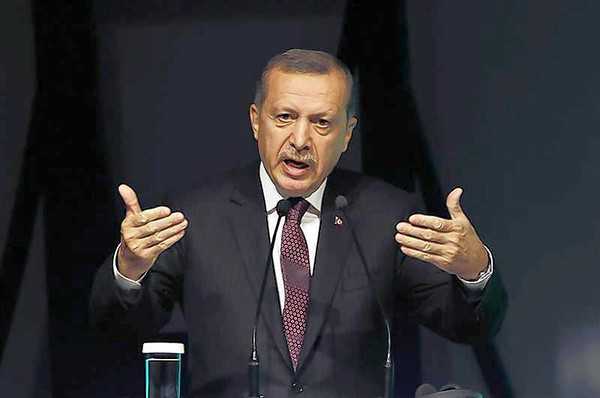
Prime Minister Recep Tayyip Erdogan has underlined on a number of occasions that he criticizes Israel’s policies in Gaza, not Israelis or Jews per se. Indeed, he has said that anti-Semitism is a crime against humanity. Despite Turkey’s objections to the war in Gaza, Turkey values its partnership with Israel and intends to maintain this special relationship, which has benefited our nations for decades.
SUAT KINIKLIOGLU
AK Party Deputy Chairman
for External Affairs
Spokesman of the Foreign Affairs Committee
in the Turkish Parliament
Ankara, Turkey
NICOSIA, Feb 5 (Reuters) – Cypriot President Demetris Christofias said on Thursday that Turkey would not be able to join the European Union as long as it kept troops stationed in northern Cyprus.
“It’s not possible for Turkey to be accepted as a member of the union while continuing the occupation of Cyprus,” he told reporters. (Reporting by Michele Kambas; editing by Elizabeth Piper)
ANKARA, Turkey: Turkey’s Cabinet says it has decided to deploy navy ships in the Gulf of Aden to help protect cargo vessels from pirates.
The government says it sent a decree to the parliament for approval on Thursday. The decision comes after the release of the third Turkish cargo ship held by pirates off the Somali coast earlier this week. Parliament is expected to vote and approve the decree next week.
A Turkish frigate already had served in the region under NATO, but the mission of that ship has expired and Turkey wants to contribute to anti-piracy efforts further.
In 2008, pirates attacked 111 ships in the waterway, hijacking 42 of them and receiving tens of millions of dollars in ransoms.
Source: International Herald Tribune, February 5, 2009
Feb 5th 2009 | ANKARA
From The Economist print edition
A dramatic Davos walkout raises new questions about Recep Tayyip Erdogan
WAS it premeditated? Or did Turkey’s prime minister, Recep Tayyip Erdogan, lose control? Mr Erdogan’s walkout from a debate with Israel’s president, Shimon Peres, in Davos has made him the most talked about Turkish leader since Kemal Ataturk. His audience of financiers and policy wonks was stunned. But Muslims worldwide cheered as Mr Erdogan scolded Mr Peres over Israel’s war in Gaza. “When it comes to killing, you know very well how to kill. I know well how you hit and kill children on beaches,” thundered a crimson-faced Mr Erdogan.
The incident has led to new debate over Turkey’s strategic alliance with Israel, whether an increasingly erratic Mr Erdogan is fit to lead Turkey at all and, if so, in what direction: east or west? There is no question of Turkey walking away from NATO or the European Union, or scrapping military ties with Israel and America. Mr Erdogan’s critics say his outburst was a ploy to please voters. If so, it worked: his approval ratings have shot up. Polls suggest that 80% of Turks support Mr Erdogan’s actions. His mildly Islamist Justice and Development party will reap dividends in municipal elections on March 29th.
Mr Erdogan’s defiance has also helped to assuage his people’s long-running feelings of humiliation and inferiority, which date back as far as the Ottoman defeat in the first world war. Many insist that Mr Erdogan’s reaction was spontaneous and utterly sincere. Turkey has assumed “moral leadership” based on Western values, opined Cengiz Candar, a liberal commentator. Mindful of the public mood, Turkey’s secular opposition leader, Deniz Baykal, grudgingly declared that his rival had done the right thing.
Not everybody agrees, however. Mr Erdogan’s behaviour makes it less likely that Turkey can successfully mediate between Israel and Syria. His call to Barack Obama to “redefine” what terrorist means has been seen as an appeal to remove the label from Hamas. Although European and American reaction has been muted, in private officials are unhappy. “What [the Davos spat] does leave in Europe is the feeling that Mr Erdogan is unpredictable,” says a European diplomat. Mr Obama is highly unlikely now to pay Turkey an early visit.
Mr Erdogan’s temper tantrums are not new. But they used to be reserved for his critics at home. The Davos affair, says another foreign diplomat, is further evidence of “Mr Erdogan’s conviction that the West needs Turkey more than Turkey needs it.”It is of a piece with Mr Erdogan’s threat to back out of the much-touted Nabucco pipeline to carry gas from the Caspian Sea to Europe via Turkey. In Brussels recently Mr Erdogan said that, if there were no progress on the energy chapter of Turkey’s EU accession talks then “we would of course review our position”. Meanwhile, Turkey sided with Saudi Arabia and the Vatican in opposing a UN statement suggested by the EU to call for the global decriminalisation of homosexuality.
Mr Erdogan’s supporters argue that EU foot-dragging on Turkey’s membership bid explains why Turkey is now seeking new friends in the Middle East and beyond. Its growing regional clout is another reason why the EU should embrace Turkey. But the reverse is also true. It is because it is the sole Muslim country that is at once secular, democratic and allied with the West that Turkey commands such respect in the rest of the world. Growing numbers of Arab investors have flocked to Turkey, “because we see it as part of Europe, not the Middle East,” says an Arab banker in Istanbul.
To retain its allure, Turkey will need to swallow its pride and make further concessions on Cyprus. The EU may suspend membership talks altogether unless Turkey meets a December 2009 deadline to open its ports to Greek-Cypriots. The hope is that Egemen Bagis, who was chosen as Turkey’s official EU negotiator in January, will remind Mr Erdogan that, at least in these talks, it is Turkey that is the supplicant not the other way round.
Feb 5th 2009 | ANKARA
From The Economist print edition
WAS it premeditated? Or did Turkey’s prime minister, Recep Tayyip Erdogan, lose control? Mr Erdogan’s walkout from a debate with Israel’s president, Shimon Peres, in Davos has made him the most talked about Turkish leader since Kemal Ataturk. His audience of financiers and policy wonks was stunned. But Muslims worldwide cheered as Mr Erdogan scolded Mr Peres over Israel’s war in Gaza. “When it comes to killing, you know very well how to kill. I know well how you hit and kill children on beaches,” thundered a crimson-faced Mr Erdogan.
The incident has led to new debate over Turkey’s strategic alliance with Israel, whether an increasingly erratic Mr Erdogan is fit to lead Turkey at all and, if so, in what direction: east or west? There is no question of Turkey walking away from NATO or the European Union, or scrapping military ties with Israel and America. Mr Erdogan’s critics say his outburst was a ploy to please voters. If so, it worked: his approval ratings have shot up. Polls suggest that 80% of Turks support Mr Erdogan’s actions. His mildly Islamist Justice and Development party will reap dividends in municipal elections on March 29th.
Mr Erdogan’s defiance has also helped to assuage his people’s long-running feelings of humiliation and inferiority, which date back as far as the Ottoman defeat in the first world war. Many insist that Mr Erdogan’s reaction was spontaneous and utterly sincere. Turkey has assumed “moral leadership” based on Western values, opined Cengiz Candar, a liberal commentator. Mindful of the public mood, Turkey’s secular opposition leader, Deniz Baykal, grudgingly declared that his rival had done the right thing.
Not everybody agrees, however. Mr Erdogan’s behaviour makes it less likely that Turkey can successfully mediate between Israel and Syria. His call to Barack Obama to “redefine” what terrorist means has been seen as an appeal to remove the label from Hamas. Although European and American reaction has been muted, in private officials are unhappy. “What [the Davos spat] does leave in Europe is the feeling that Mr Erdogan is unpredictable,” says a European diplomat. Mr Obama is highly unlikely now to pay Turkey an early visit.
Mr Erdogan’s temper tantrums are not new. But they used to be reserved for his critics at home. The Davos affair, says another foreign diplomat, is further evidence of “Mr Erdogan’s conviction that the West needs Turkey more than Turkey needs it.” It is of a piece with Mr Erdogan’s threat to back out of the much-touted Nabucco pipeline to carry gas from the Caspian Sea to Europe via Turkey. In Brussels recently Mr Erdogan said that, if there were no progress on the energy chapter of Turkey’s EU accession talks then “we would of course review our position”. Meanwhile, Turkey sided with Saudi Arabia and the Vatican in opposing a UN statement suggested by the EU to call for the global decriminalisation of homosexuality.
Mr Erdogan’s supporters argue that EU foot-dragging on Turkey’s membership bid explains why Turkey is now seeking new friends in the Middle East and beyond. Its growing regional clout is another reason why the EU should embrace Turkey. But the reverse is also true. It is because it is the sole Muslim country that is at once secular, democratic and allied with the West that Turkey commands such respect in the rest of the world. Growing numbers of Arab investors have flocked to Turkey, “because we see it as part of Europe, not the Middle East,” says an Arab banker in Istanbul.
To retain its allure, Turkey will need to swallow its pride and make further concessions on Cyprus. The EU may suspend membership talks altogether unless Turkey meets a December 2009 deadline to open its ports to Greek-Cypriots. The hope is that Egemen Bagis, who was chosen as Turkey’s official EU negotiator in January, will remind Mr Erdogan that, at least in these talks, it is Turkey that is the supplicant not the other way round.