Blog

  • Karsan, From Turkey, Is Rejected as New York Taxi

    Karsan, From Turkey, Is Rejected as New York Taxi

    The Karsan van, with a retractable wheelchair ramp, got a lot of support in Brooklyn when the company promised to build a factory in Sunset Park.

    By MICHAEL M. GRYNBAUM

    The Karsan V1, an oblong Turkish van vying to become the exclusive vehicle of the New York City taxi fleet, has features that would make a Crown Victoria weep: London-style jump seats; a moon roof for panoramic views; even a pledge to build the cars in Brooklyn. (The Crown Vic, the fleet’s old mainstay, was made in Canada.)

    “How can we possibly reject this proposal?” Marty Markowitz, the Brooklyn borough president, said at a rally he organized on Sunday to support the van.

    The Bloomberg administration is set to present a few reasons why.

    The Karsan van has been rejected by the Taxi and Limousine Commission, according to a city official who has been informed of the decision, and who insisted on anonymity because it had not been made public. The rejection came after a review raised concerns about whether the Turkish company, untested in the American market, could reliably execute the high-concept product it had designed.

    That leaves the city’s Taxi of Tomorrow competition — which will award a contract for the next decade’s yellow cabs — with two contenders. Both finalists were submitted by more established automakers and are less aesthetically distinct: the Ford Transit Connect and the Nissan NV200 vans. Mayor Michael R. Bloomberg is expected to announce the selection this week.

    Karsan’s bid attracted far more attention than its competitors’, earning international headlines as a stylish new look for the traditional New York cab. Its makers hired Rubenstein Associates, the public relations firm, to supervise a media campaign, and the vehicle attracted strong support by advocates for the disabled because of its retractable wheelchair ramp.

    But an analysis commissioned by the city concluded that Karsan would present the “highest risk” to the taxi industry if chosen for the 10-year contract. The report, prepared by an automotive consultant, Ricardo Inc., put it bluntly: While Karsan had demonstrated “the will and technical capability” to build its proposed taxi, the company was “a new manufacturer, with a new manufacturing paradigm, not familiar with the U.S. regulatory framework, with no current sales, service or support infrastructure” in the United States, according to the report, excerpts of which were obtained by The New York Times.

    The consultant appeared concerned about whether Karsan, which has rarely tried to design and build a new vehicle from scratch, had “fully evaluated the risks and countermeasures required to ensure that their product will deliver and maintain the same level of maturity as that of their competitors over the life of the contract.”

    Jan Nahum, the executive director of Karsan, said in a statement that he was shocked that he had not been directly notified of the decision, and he described the premature release of the report as inappropriate. “Furthermore,” he added, “we were unaware of any such report, and the concerns reportedly raised in it have never been expressed to us.”

    Karsan said last month that it was prepared to build a plant in Sunset Park, potentially creating hundreds of jobs. The announcement was hailed by some city politicians, including several who spoke at Mr. Markowitz’s event outside Brooklyn Borough Hall on Sunday.

    “Imagine the rebirth of solid, union, middle-income jobs,” Mr. Markowitz said. And Julie Kushner, a United Auto Workers director who also spoke at the rally, said Karsan’s selection would “represent the first auto assembly jobs in the city for decades.”

    While Karsan has been eliminated, city officials are said to have encountered drawbacks in all three finalists.

    Ford’s submission, for its existing Transit Connect van, was viewed early on as problematic and uninspired, and some taxi officials were taken aback to see the city include the car as a finalist.

    At one point, the Ford entry was considered “a fallback” that could be picked if other, more exciting options did not pan out, according to two individuals with direct knowledge of the city’s deliberations who requested anonymity because the discussions were supposed to be private.

    City Hall officials would not comment on internal deliberations. But Mayor Bloomberg appeared to allude to Karsan’s perceived problems on his radio program last week.

    “You’ve got to look at how much experience companies have had in building cars,” he said on Friday.

    Juliet Linderman contributed reporting.

    A version of this article appeared in print on May 2, 2011, on page A20 of the New York edition with the headline: In Contest for New York’s New Taxis, Turkish Entry, the Karsan, Is Rejected.

    via Karsan, From Turkey, Is Rejected as New York Taxi – NYTimes.com.

  • Turkey at Heart of New ‘Not-Quite-BRIC’ Index

    Turkey at Heart of New ‘Not-Quite-BRIC’ Index

    By Joe Parkinson

    A few months back, economists were openly debating whether fast-growing Turkey should be elevated into the elite club of ‘BRIC’ economies — Brazil, Russia, India and China — that are slated to dominate global growth over the next decades.

    Aside from the fact that it would have made the acronym less catchy (think BRICT or TRIBC) investor concerns over Turkey’s rapidly widening current account deficit and Middle East turmoil conspired to put that debate on ice. But Turkey is considered a key player in the second-tier of emerging economic powerhouses: referred to by the lesser known, and, alas, more forgettable acronym CIVETS.

    Turkey, Columbia, Indonesia, Vietnam, South Africa and Egypt — all large, but not continental size economies with young populations — have been attracting waves of foreign investment. These economies are expanding robustly, are not overly reliant on natural resources and — with the exception of Egypt — possess relative political stability.

    Conscious of the potential of these economies and undeterred by the clunky acronym, Standard & Poor’s on Tuesday launched the CIVETS 60 index — comprised of 10 stocks from each economy. Unsurprisingly, Turkey’s top 10 is dominated by the country’s banking giants — tightly regulated firms that have won plaudits for weathering the financial crisis in rude health. Also present are the country’s two biggest holding companies — Sabanci and Koc — and Turkcell, the dominant telecom firm.

    Standard & Poor’s Michael Orzano, associate director of global equity indices, says the index has been created to reflect CIVETS economies becoming “increasingly important” to international investors.

    Turkish stocks make up 21% of the weighted index, slightly trailing South Africa and Indonesia but a significantly higher percentage than Columbia, Vietnam and Egypt. Turkey-watchers say the index is likely to become an important tool to track Turkey’s performance relative to congruent economies in other regions. Economists note that Turkey’s neighborhood — plagued by euro-zone debt woes and Middle East political crises — could make it tougher to maintain rapid growth than other CIVETS, with the exception of Egypt.

    But if Turkey does manage to maintain robust growth and preserve financial stability, it may not be long before the discussion of whether Turkey deserves a promotion to the ‘BRIC’ premier league is back on the agenda.

    via Turkey at Heart of New ‘Not-Quite-BRIC’ Index – Emerging Europe Real Time – WSJ.

  • Swiss try to unblock Armenia–Turkey deal in meeting with Armenian president

    Swiss try to unblock Armenia–Turkey deal in meeting with Armenian president

    President Micheline Calmy-Rey has held talks with Armenian President Serzh Sargsyan over a Swiss-mediated deal aimed at normalising relations with Turkey.

    Sargsyan thanked Switzerland for its efforts but accused Turkey of blocking implementation of the 2009 landmark treaty.

    He said he had “interesting discussions” with Calmy-Rey to try to end the deadlock.


    The meeting in Bern also focused on boosting economic and development cooperation between Armenia and Switzerland, the foreign ministry said on Tuesday.


    It was the first official visit by an Armenian President to Switzerland and comes a month after Calmy-Rey opened a Swiss embassy to the Armenian capital, Yerevan.


    The trade volume between the two countries has been modest – less than SFr10 million ($11.6 million) – but Switzerland has contributed about SFr5 million annually to development aid for Armenia, according to the foreign ministry.


    In October 2009 Armenia and Turkey signed a deal in Zurich to normalise relations strained over a historic conflict at the beginning of the 20th century, notably the issue of mass deportations and genocide of ethnic Armenians during the Ottoman empire.


    However, the agreement has been put on hold as a result of a regional conflict.

    swissinfo.ch and agencies

    via Swiss try to unblock Armenia–Turkey deal in meeting with Armenian president. – swissinfo.

  • U.S. Treasury nears decision on expanding Iran sanctions

    U.S. Treasury nears decision on expanding Iran sanctions

    The United States Treasury is close to a decision whether to blacklist more banks that appear to be defying sanctions against Iran, including an institution in Turkey, a senior Treasury official said on Tuesday.

    David Cohen, nominated to be Treasury’s undersecretary for terrorism and financial crimes, told a U.S. Senate confirmation hearing that he will vigorously enforce the Comprehensive Iran Sanctions, Accountability and Disinvestment Act (CISADA)

    The law, aimed at curbing Iran’s nuclear program, effectively requires banks to choose between dealing with the U.S.-led financial system or to continue doing business with Iran.

    Members of the Senate Banking Committee questioned Cohen on why Treasury had not sanctioned any banks under CISADA, which was passed in July 2010 to enforce tougher UN sanctions against Iran.

    “We are pursuing the leverage” against banks dealing with Iran, Cohen said. “Our first option is to get them to stop. Our second best option is to apply sanctions. Without getting into the details of any particular investigation, we are getting close to a decision point on several institutions,” Cohen did not name any of the banks, but said that one institution in Turkey was effectively violating the sanctions.

    “We are committed to enforcing the law,” Cohen added. “Generically, we have a financial institution (in Turkey) that is not responsive to our overtures and it is engaged in activity that is sanctionable under CISADA. We will pursue that very vigorously.”

    Senator Robert Menendez, a Democrat from New Jersey, said he was concerned that Treasury had not adequately enforced the CISADA law.

    “I am seriously concerned that as one of the prime movers of that legislation, that a sanctions regime that ultimately goes largely unenforced or to low-level players, sends the message of a toothless tiger,” Menendez said.

    He added that he wanted a sense that Cohen, who is now serving as acting undersecretary, would pursue sanctions under CISADA before he would support Cohen’s nomination.

    via U.S. Treasury nears decision on expanding Iran sanctions – Haaretz Daily Newspaper | Israel News.

  • Huawei, Superonline implement WSON app in Istanbul

    Huawei, Superonline implement WSON app in Istanbul

    Huawei and Turkcell Group company Superonline implemented a directionless and colorless WSON (Wavelength Switched Optical Network) application in the Istanbul metro network.

    As the enhanced version of ASON (Automatically Switched Optical Network), WSON is based on the DWDM transmission network, having optical level switching capabilities.

    Designed and implemented by Superonline and Huawei through intensive engineering works, the Istanbul Metro WSON application is said to be the first successful commercial project of its kind with respect to realisation via upgrade over a live network that carries commercial services and its advanced optical switching technology (independent of direction and wavelength).

    In essence, WSON technology enables the uninterrupted flow of traffic to be transferred to alternative lines in case of multiple system failures and/or intersystem fibre cuts, which may occur in DWDM networks. This is due to the smart signalisation established by WSON between the applied network’s systems.

    via Huawei, Superonline implement WSON app in Istanbul (Turkey).

  • Turkey’s intervention unacceptable – Armenian community of France

    Turkey’s intervention unacceptable – Armenian community of France

    Despite obvious pressure by Turkey, Armenian community in France goes on lobbying for adoption of the bill criminalizing denial of Armenian Genocide under the Ottoman Turkey in the early 20th century, French office of Hay Dat (Armenian Cause) and Political Affairs of Armenian Revolutionary Federation Dashnaktsutyun (ARFD) said in a statement.

    Representatives of the Armenian community are full-fledged citizens of France and have a right to demand adoption of a bill by the MPs, while Turkey’s intervention in the internal affairs of France is unacceptable.

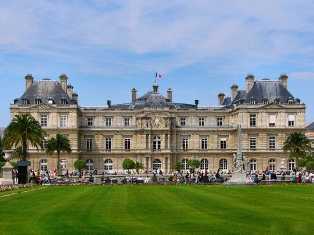
    On May 4, the French Senate will consider a resolution, criminalizing the denial of Armenian Genocide under Ottoman Turkey in the early 20th century.

    via Turkey’s intervention unacceptable – Armenian community of France | Armenia News – NEWS.am.