Blog

  • Gray wolves go back to state control

    Gray wolves go back to state control

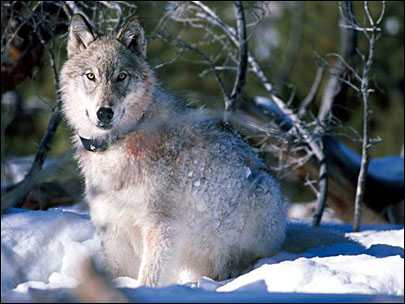
    FILE – This Jan. 9, 2003 file photo provided by the U.S. Fish and Wildlife Service shows a 130-pound gray wolf as it watches biologists in Yellowstone National Park, Wyo., after being captured and fitted with a radio collar. With ballooning elk and deer populations eating up greenery and altering ecosystems at national parks across the country, a group of researchers is suggesting an unusual solution: introduce small packs of gray wolves to curb the expanding herds. (AP Photo/U.S. Fish and Wildlife Service, William Campbell, File)

    Story Published: May 4, 2011

    BILLINGS, Mont. (AP) – The Obama administration on Wednesday moved to lift Endangered Species Act protections for 5,500 gray wolves in the Northern Rockies and Great Lakes, drawing the line on the predators’ rapid expansion over the last two decades.

    Public hunts for hundreds of wolves already are planned this fall in Idaho and Montana.

    Conservationists have hailed the animal’s recovery from near extinction last century as a landmark achievement – one that should be extended to the Pacific Northwest and New England.

    But the federal wolf program has stirred a backlash from agriculture and sporting groups angry over wolf attacks on livestock and big game herds. Interior Department officials said Wednesday that the most suitable wolf habitat already was occupied. No further introductions of the species are planned.

    Western lawmakers attached a rider to the federal budget bill mandating the move to lift protections for 1,300 wolves in the Northern Rockies. The rider, which barred any courtroom challenges, marked the first time Congress has removed an animal listed under the endangered act. Protections for the Rocky Mountain wolves are to be lifted effective with a Thursday notice in the Federal Register.

    “To be sure, not everyone will be satisfied with today’s announcement,” said Interior Secretary Ken Salazar. “Wolves have long been a highly charged issue. These delistings are possible because the species is recovered in these regions. That is a remarkable milestone for an iconic American species.”

    About 4,200 wolves listed as threatened in the western Great Lakes also are slated to lose protections. That could happen by the end of this year, following the review of public comments received on the proposal over the next two months.

    The Great Lakes proposal also includes portions of North and South Dakota, Iowa, Illinois, Indiana and Ohio, although government biologist Laura Ragan no wolves permanently reside in those states.

    A pending petition before the Interior Department seeks to extend the government’s wolf recovery plan nationwide. But Noah Greenwald with the Center for Biological Diversity, the sponsor of the petition, said Wednesday’s announcement made clear that the government has no such intentions.

    “In our view wolf recovery is not done,” Greenwald said. “We’re disappointed with seeing the Fish and Wildlife Service attempt to get out from under it.”

    Fish and Wildlife officials said they plan to review the gray wolf’s status in New England and the Pacific Northwest but did not foresee another reintroduction effort.

    Idaho officials have said they want to reduce their state’s wolf population to about 500 animals, versus current estimates of more than 700.

    Rancher Royce Schwenkfelder, whose family arrived in the western Idaho town of Cambridge in the 1880s, said he feels more comfortable with wolves under state jurisdiction. But he was doubtful that wolves could be reduced to levels that will eliminate attacks on cattle that he runs on Indian Mountain. “The feds have filled us up with more wolves than we can handle,” Schwenkfelder said.

    Montana wildlife officials this week proposed a public hunt for up to 220 wolves this fall, out of a population estimated to number at least 566 animals. The state’s Democratic U.S. Senators, Max Baucus and Jon Tester, said Wednesday that turning over control of wolves to state wildlife agencies was the right thing to do.

    “State biologists need to manage them like any other recovered species,” said Tester, who worked with Idaho Republican Rep. Mike Simpson to get the rider in the budget bill.

    No hunts are planned immediately for small populations of wolves in Oregon, Washington and Utah.

    In addition to the hunts, officials say wolves that attack livestock will continue to be removed by wildlife agents. More than 1,500 wolves have been killed for livestock attacks since the animals were reintroduced to the Northern Rockies from Canada in the 1990s.

    Idaho state Rep. Judy Boyle, who sponsored a bill giving Gov. C.L. “Butch” Otter the authority to declare a wolf disaster emergency, said hunting alone won’t be enough to reduce the number of wolves to levels in which they aren’t a threat to livestock or wildlife.

    Under state management, Idaho will continue to ask federal wildlife agents to take out problem packs, including in north-central Idaho’s Lolo area, where the state wants to kill dozens of wolves to help restore elk herds that have been hurt by predators and poor habitat, she said.

    Michigan, Minnesota and Wisconsin have plans meant to keep the populations at healthy levels while allowing government agents to kill animals that can’t be driven away. None would allow hunting or trapping for at least five years, although the states could revise those plans.

    Wednesday’s announcement leaves the fate of about 340 wolves in Wyoming unresolved. Wyoming was carved out of attempts to restore state control over wolves because of a state law that would allow the animals to be shot on sight in most of the state.

    Salazar and his staff have been negotiating for months over the issue with Wyoming Gov. Matt Mead.

    Mead said Wednesday that he was hoping for an agreement with the administration to get a bill through Congress lifting protections in his state. The governor suggested legislation that was the only way to prevent lawsuits from environmentalists that could otherwise derail the effort.

    Associated Press writer John Miller in Boise, Idaho, contributed to this story.

    www.komonews.com, May 4, 2011

  • Racism in Australia facts

    Racism in Australia facts

    Racism takes many different forms. It can range from abusive language or discriminatory treatment to genocide, simply on the basis of someone’s ‘race’ or colour.

    Every day, science proves more clearly that humanity, although diverse, is one family and one people. Sadly our common experience also shows that racism, hatred or dislike of others simply because of their origin or culture is a common human failing.

    The definition of racial discrimination is contained in Article 1 of the International Convention on the Elimination of All Forms of Racial Discrimination to which Australia is a party:

    “The term “racial discrimination” shall mean any distinction, exclusion, restriction or preference based on race, colour, descent, or national or ethnic origin which has the purpose or effect of nullifying or impairing the recognition, enjoyment or exercise, on an equal footing, of human rights and fundamental freedoms in the political, economic, social, cultural or any other field of public life”.


    Myths and stereotypes are a key component of racism:

    • they reduce a range of differences in people to simplistic categorisations
    • transform assumptions about particular groups of people into ‘realities’
    • are used to justify status quo or persisting injustices
    • reinforce social prejudice and inequality

    Three out of four Indigenous Australians experience racism in their everyday lives.

    At an individual and interpersonal level racism often amounts to:

    • an instant or fixed picture of a group of people, usually based on negative and ill-informed stereotypes
    • a preconceived negative opinion
    • limiting the opportunities (intentionally or not) of certain individuals or groups because of personal characteristics such as race or colour

    Labelling of Indigenous Australians including stereotypes such as dark skin, despair, levels of alcohol consumption, laziness, levels of intelligence, ability to work and care for children, and levels of criminality are all part of the myths and stereotypes that perpetuate racism in Australia.

    Eradicating racism is a task we all share.

    Sadly racism is common in Australia. Here, we have put together some stories about the shape that racism takes in Australia of today.

    A story from Alice Springs

    A group of young leaders from Yuendumu, a remote central Australian Aboriginal community were ejected from an Alice Springs backpacker hostel in March 2008 because some tourists staying there complained they were ‘afraid of Aborigines’.

    The 16 people in the group which included women and small children, had driven the 300 kilometres to Alice Springs for lifesaving training run by the Royal Lifesaving Society. Most were young leaders, chosen specially for their standing in the Yuendumu community.

    As they were moving into their rooms the resort manager told them they’d have to pack up and go because some tourists in the hostel had complained of being ‘afraid of Aborigines’ and these tourists ‘bring in a lot of money’.

    The organisers of the trip are stunned. Angry about the incident, the CEO of the Royal Lifesaving Society is describing it as ‘pure racism’.

    5½ hours – a story from Brisbane

    Delmae Barton aged 62, a prominent Indigenous Elder and an opera singer, lay for more than five hours on a bus stop seat near Griffith University’s Nathan Campus in July 2006, unable to reach out for help after vomiting from a suspected stroke or diabetes attack.

    For five and a half hours, commuters, students and bus drivers ignored her plight until two young Japanese men asked if she needed water and help.

    Her friend and the director of the Gumurri Centre at the university Boni Robertson, says it is a disgrace that Auntie Delmae’s plight was ignored by hundreds of commuters as buses came and went.

    She said ‘nobody would stop to help me. Is this all I’m worth?’ She believes people thought she was a drunk or a drug addict, and that the colour of skin encouraged them to walk on by.

    The then Premier Peter Beattie told parliament he was ‘really disappointed’ by the incident and apologised on behalf of Queenslanders.

    A story from Townsville

    Aborigines can no longer receive a fair trial in Townsville according to survey results to be released in July that show a majority of residents would be unable to expel racist attitudes in court. The survey was conducted to demonstrate the need for the Lex Wotton Palm Island Riots case to be moved from a scheduled hearing in Townsville to Brisbane to ensure a fair and just trial.

    In the survey, commissioned by Sydney-based law firm, Levitt Robinson, over half of Townsville residents claimed they could not disregard negative beliefs held about Aborigines, even if instructed by a judge in a courtroom setting.

    These results bring to light a segregated city rife with racist views with only one in ten Townsville residents having a positive attitude towards Aboriginal people in the community.

    Ignorance seemed to be a major factor with only one in four people correctly attributing the cause of the Palm Island Riots to a death in custody.

    A story from Sydney

    In April 2008, a world-renowned Aboriginal composer, buzzing after a standing ovation at the Sydney Opera House, was turned away from half-empty Kings Cross haunt Hugo’s. He and his friend were told, “You can’t expect us to just let anyone in.”

    William Barton, a son of Delmae Barton, who has been to some of the world’s top bars over his acclaimed career, was told the venue was “at capacity” as he tried to get it at 9.30pm on a Sunday to celebrate a friend’s birthday. His friend immediately fronted Hugo’s door staff – and was rudely told: “You can’t expect us to just let anyone in.”

    Racial discrimination is against the law

    The Racial Discrimination Act (1975) makes it illegal to discriminate against people on the basis of their race, colour, descent or ethnic or national origin. It is unlawful to discriminate against someone when it prevents them from enjoying their human rights, such as employment, land/housing/accommodation, education, access to public places and facilities, access to goods and services (e.g. doctors, lawyers, applying for credit, entry to pubs, etc.).

    Antar

  • Royal wedding: Police probe racist attack at Middletons’ local pub party (UK)

    Royal wedding: Police probe racist attack at Middletons’ local pub party (UK)

    Royal wedding: Police probe racist attack at Middletons’ local pub party (UK): “A party to celebrate the royal ­wedding at the Middletons’ local pub ended in a punch-up when a drunken gatecrasher attacked three guests.

    Landlord of the Old Boot Inn John Hayley, 55, held the £15-a-head bash for 350 regulars after returning from Westminster Abbey, where he had been a wedding guest.

    But a fight broke out after a thug is said to have called an Asian ­woman a “f***ing P***” when she sat in someone else’s seat.

    The attacker then grabbed her and threw her to the floor before ­attacking her sister-in-law and a male pal outside. The Asian ­woman was left with a cut face and black eye. The thug fled before police arrived.

    The pub, in Bucklebury, Berks, is a regular haunt of Kate’s parents, Carole and Michael Middleton, who have lived nearby for the past 10 years. Kate and Wills have also popped in.

    Charlie Hewitt, 47, whose girlfriend Liza Simpson, 39, was attacked by the thug, said: “They were having a delightful day and ­really enjoying the party. When they got to the Boot it all got a bit unsavoury and some not nice things were said. It really upset her, though, and it’s a real shame to end such a lovely day like that.”

    A police spokesman said they were investigating.

    Mr Hayley organised the party months ago and he had employed bouncers to stop trouble.

    Speaking outside the Abbey after the wedding, he said: “I was sat right at the front. Kate walked so close, I could have touched her dress.”

    Chasing Evil

  • Turkey Worries Syria’s Refugee Influx Could Cause Crisis

    Turkey Worries Syria’s Refugee Influx Could Cause Crisis

    Hundreds of Syrian refugees have fled across the border into Turkey to escape the ongoing crackdown on anti-government protests. The influx has added to growing Turkish concerns that the deepening crisis in Syria could lead to the country facing a refugee crisis.

    Nearly 250 Syrians recently crossed into Turkey seeking refuge.

    Some belong to Syria’s Turkish minority, like this woman:

    “My husband and I came because of the situation there,” she said. “Four people were killed in front of his eyes. So we ran away. All our lives are in danger.”

    The refugees were housed in an indoor sports stadium, while a tent village was constructed by the Red Crescent Society.

    With the crisis in Syria continuing to deepen, Turkish authorities are bracing themselves for more arrivals.

    Turkish President Abdullah Gul, speaking on Monday, said Turkey is preparing to deal with a possible influx of refugees, saying authorities are taking measures to be ready for the worst-case scenario.

    There are no entry restrictions on Syrians entering Turkey, following last year’s lifting of visa requirements by both countries.

    Senior Turkish diplomat Selim Yenel says despite the crisis, there are no plans to suspend the agreement, at least for now.

    “No, No, No, we hope this will not be the case, we are not in that situation right now,” said Yenel. “We do hope things will go on peacefully. That we are in close contact with Damascus. We are talking with them. And we are following things very closel, and therefore such a thing to happen.”

    But its not only a potential refugee crisis that is causing increasing concern in Ankara. Turkish Prime Minister Recep Tayyip Erdogan voiced his fear of a potential break up of Syria.

    “Turkey definitely does not want a separation of Syria, said Prime Minister Erdogan. “And Syria should not allow any attempts that could pave the way for separation.”

    Syria, like Turkey, has a restive Kurdish minority. Since 1984, the Turkish-based Kurdish rebel group, the PKK, has been fighting the Turkish state for greater cultural and political rights. According to international relations expert and columnist for a Turkish daily, Soli Ozel, the chaos in Syria offers the PKK a powerful impetus, especially as it has close ties with Syria’s own large Kurdish minority.

    “Now a third of the fighters of PKK happened to be from Syria,” said Ozel. “If the country divides along sectarian or ethnic lines, possibility of a Kurdish desire for an independence in the north of Syria obviously is going to throw Turkey off balance.”

    Turkey’s 800-kilometer border with Syria runs along its predominantly Kurdish southeast. And most of Syria’s Kurdish minority lives just on the other side of it.

    According to analysts, Syrian President Bashir al-Assad has controlled his own Kurdish population with an iron fist. He is widely believed to be playing on Turkish fears that if that fist were relaxed, the Kurds would secede. But Syrian opposition groups are keen to stress that is just scaremongering.

    Anas Abdah is head of the international branch of Damascus Declaration, an opposition umbrella group.

    “Think this is very important for the Turkish people and Turkish leadership to understand, the fact that the Kurdish element in Syria, which is around 2 million, or about 9 percent of the population is not going to react in a way, which will mean a secession of Syrian land or any kind of problems with the neighbor, either Turkey or Iraq,” said Anas Abdah.

    Political scientist Nuray Mert is suspicious of such assurances. She thinks that spreading regional turmoil may offer Kurds across the whole region a unique opportunity.

    “Syrian Kurds are against the existing regime, the Iranian Kurds are against Ahmadinejad regime, and they may have some role in regime changes in the region,” said Nuray Mert. “And it empowers the PKK movement and Turkish Kurds’ political movement. Because anyway we have huge problems concerning Kurdish problem in Turkey.”

    Observers warn that the prospect of Kurds in neighboring Iran and Syria, freed from oppressive regimes and joining their Iraqi counterparts, who already have substantial autonomy, could rekindle the dream for many Turkish Kurds of an independent state. For Ankara, that would be a nightmare.

    via Turkey Worries Syria’s Refugee Influx Could Cause Crisis | Middle East | English VOA

  • Karsan, From Turkey, Is Rejected as New York Taxi

    Karsan, From Turkey, Is Rejected as New York Taxi

    The Karsan van, with a retractable wheelchair ramp, got a lot of support in Brooklyn when the company promised to build a factory in Sunset Park.

    By MICHAEL M. GRYNBAUM

    The Karsan V1, an oblong Turkish van vying to become the exclusive vehicle of the New York City taxi fleet, has features that would make a Crown Victoria weep: London-style jump seats; a moon roof for panoramic views; even a pledge to build the cars in Brooklyn. (The Crown Vic, the fleet’s old mainstay, was made in Canada.)

    “How can we possibly reject this proposal?” Marty Markowitz, the Brooklyn borough president, said at a rally he organized on Sunday to support the van.

    The Bloomberg administration is set to present a few reasons why.

    The Karsan van has been rejected by the Taxi and Limousine Commission, according to a city official who has been informed of the decision, and who insisted on anonymity because it had not been made public. The rejection came after a review raised concerns about whether the Turkish company, untested in the American market, could reliably execute the high-concept product it had designed.

    That leaves the city’s Taxi of Tomorrow competition — which will award a contract for the next decade’s yellow cabs — with two contenders. Both finalists were submitted by more established automakers and are less aesthetically distinct: the Ford Transit Connect and the Nissan NV200 vans. Mayor Michael R. Bloomberg is expected to announce the selection this week.

    Karsan’s bid attracted far more attention than its competitors’, earning international headlines as a stylish new look for the traditional New York cab. Its makers hired Rubenstein Associates, the public relations firm, to supervise a media campaign, and the vehicle attracted strong support by advocates for the disabled because of its retractable wheelchair ramp.

    But an analysis commissioned by the city concluded that Karsan would present the “highest risk” to the taxi industry if chosen for the 10-year contract. The report, prepared by an automotive consultant, Ricardo Inc., put it bluntly: While Karsan had demonstrated “the will and technical capability” to build its proposed taxi, the company was “a new manufacturer, with a new manufacturing paradigm, not familiar with the U.S. regulatory framework, with no current sales, service or support infrastructure” in the United States, according to the report, excerpts of which were obtained by The New York Times.

    The consultant appeared concerned about whether Karsan, which has rarely tried to design and build a new vehicle from scratch, had “fully evaluated the risks and countermeasures required to ensure that their product will deliver and maintain the same level of maturity as that of their competitors over the life of the contract.”

    Jan Nahum, the executive director of Karsan, said in a statement that he was shocked that he had not been directly notified of the decision, and he described the premature release of the report as inappropriate. “Furthermore,” he added, “we were unaware of any such report, and the concerns reportedly raised in it have never been expressed to us.”

    Karsan said last month that it was prepared to build a plant in Sunset Park, potentially creating hundreds of jobs. The announcement was hailed by some city politicians, including several who spoke at Mr. Markowitz’s event outside Brooklyn Borough Hall on Sunday.

    “Imagine the rebirth of solid, union, middle-income jobs,” Mr. Markowitz said. And Julie Kushner, a United Auto Workers director who also spoke at the rally, said Karsan’s selection would “represent the first auto assembly jobs in the city for decades.”

    While Karsan has been eliminated, city officials are said to have encountered drawbacks in all three finalists.

    Ford’s submission, for its existing Transit Connect van, was viewed early on as problematic and uninspired, and some taxi officials were taken aback to see the city include the car as a finalist.

    At one point, the Ford entry was considered “a fallback” that could be picked if other, more exciting options did not pan out, according to two individuals with direct knowledge of the city’s deliberations who requested anonymity because the discussions were supposed to be private.

    City Hall officials would not comment on internal deliberations. But Mayor Bloomberg appeared to allude to Karsan’s perceived problems on his radio program last week.

    “You’ve got to look at how much experience companies have had in building cars,” he said on Friday.

    Juliet Linderman contributed reporting.

    A version of this article appeared in print on May 2, 2011, on page A20 of the New York edition with the headline: In Contest for New York’s New Taxis, Turkish Entry, the Karsan, Is Rejected.

    via Karsan, From Turkey, Is Rejected as New York Taxi – NYTimes.com.

  • Turkey at Heart of New ‘Not-Quite-BRIC’ Index

    Turkey at Heart of New ‘Not-Quite-BRIC’ Index

    By Joe Parkinson

    A few months back, economists were openly debating whether fast-growing Turkey should be elevated into the elite club of ‘BRIC’ economies — Brazil, Russia, India and China — that are slated to dominate global growth over the next decades.

    Aside from the fact that it would have made the acronym less catchy (think BRICT or TRIBC) investor concerns over Turkey’s rapidly widening current account deficit and Middle East turmoil conspired to put that debate on ice. But Turkey is considered a key player in the second-tier of emerging economic powerhouses: referred to by the lesser known, and, alas, more forgettable acronym CIVETS.

    Turkey, Columbia, Indonesia, Vietnam, South Africa and Egypt — all large, but not continental size economies with young populations — have been attracting waves of foreign investment. These economies are expanding robustly, are not overly reliant on natural resources and — with the exception of Egypt — possess relative political stability.

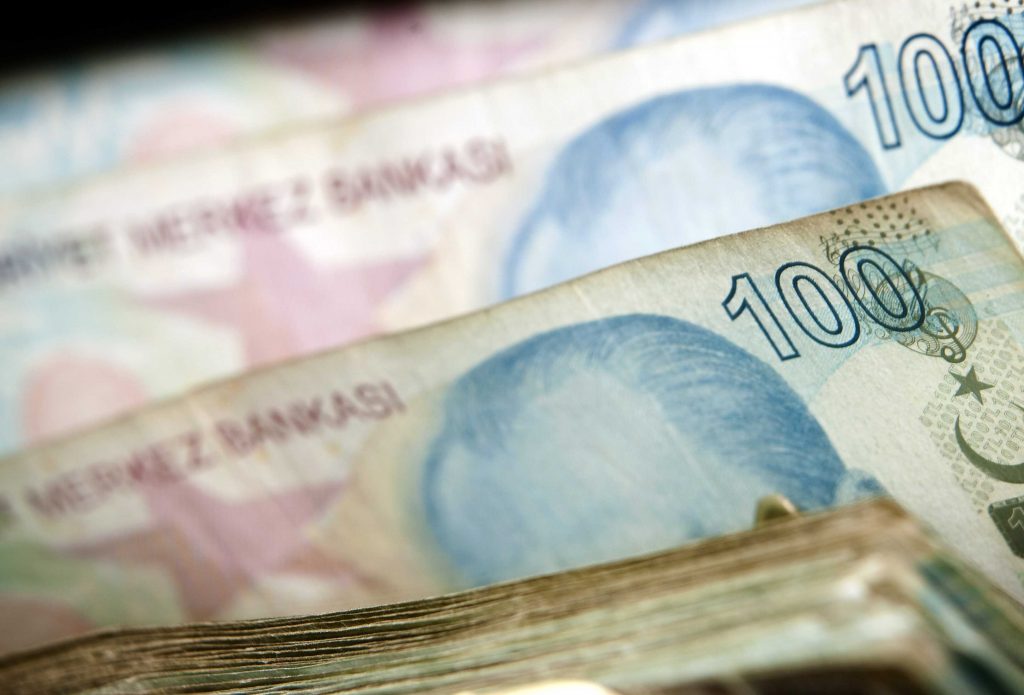
    Conscious of the potential of these economies and undeterred by the clunky acronym, Standard & Poor’s on Tuesday launched the CIVETS 60 index — comprised of 10 stocks from each economy. Unsurprisingly, Turkey’s top 10 is dominated by the country’s banking giants — tightly regulated firms that have won plaudits for weathering the financial crisis in rude health. Also present are the country’s two biggest holding companies — Sabanci and Koc — and Turkcell, the dominant telecom firm.

    Standard & Poor’s Michael Orzano, associate director of global equity indices, says the index has been created to reflect CIVETS economies becoming “increasingly important” to international investors.

    Turkish stocks make up 21% of the weighted index, slightly trailing South Africa and Indonesia but a significantly higher percentage than Columbia, Vietnam and Egypt. Turkey-watchers say the index is likely to become an important tool to track Turkey’s performance relative to congruent economies in other regions. Economists note that Turkey’s neighborhood — plagued by euro-zone debt woes and Middle East political crises — could make it tougher to maintain rapid growth than other CIVETS, with the exception of Egypt.

    But if Turkey does manage to maintain robust growth and preserve financial stability, it may not be long before the discussion of whether Turkey deserves a promotion to the ‘BRIC’ premier league is back on the agenda.

    via Turkey at Heart of New ‘Not-Quite-BRIC’ Index – Emerging Europe Real Time – WSJ.