Blog

  • Istanbul not Constantinople

    Istanbul not Constantinople

    TOM MITCHELSON

    THERE are scores of people queuing inside Hagia Sophia, a magnificent museum in the ancient city of Istanbul.

    They are lining up to touch the perspiration of an angel. They believe that hundreds of years ago the cherub was imprisoned in a column and his sweat slowly drips out of a small hole.

    A man standing next to me tells me that the wetness is simply caused by a crack in the marble and he doesn’t think the ‘sweat’ will cure infertility or diseases of the eye, as legend has it. I’m worried about the former, but I don’t believe in the cure, so I make my way to the central part of the building.

    Hagia Sophia was built in the sixth century and intended to be the greatest church in the world. Its size, giant dome and mosaics would make this the case today, if it hadn’t been converted into a Mosque nearly a thousand years after it was built, and then later into a museum.

    I have always wanted to come to Istanbul, largely because as a child I liked a song called “Istanbul (not Constantinople)” and was eager to know why the confusion. It’s a historic city that’s had a number of name changes down the centuries. It’s been Constantinople, Byzantium and in 1922 became Istanbul. I had also heard how it was the only city in the world that straddles two continents.

    This is how I find myself looking out of my hotel window in Europe and staring out across the choppy waters of the Bosphorus to watch some people having dinner in a pavement café in Asia.

    I’m staying at the Hilton Istanbul, which I discover is a historic hotel. It dates from 1955 and was a magnet for Hollywood film stars, heads of state and members of royal families. Among its guests were Frank Sinatra, Brigette Bardot, Sophia Loren and Grace Kelly, and it still maintains a certain air of grandeur.

    But time for some serious sightseeing. I head to the Basilica Cistern, also known as the Sunken Palace and famous as a background artist in the James Bond film, From Russia With Love. This is a huge underground chamber that used to store water for the city.

    The marble columns supporting the massive stone ceiling, and the atmospheric lighting, make the cistern look a bit like a five star hotel lobby that’s had a problem with its drains. The whole building can hold 17million gallons of water, but now there’s just enough water for hundreds of carp to frolic in. Towards the back of the cistern are two blocks of stone with the face of the mythical creature, Medusa, carved into them. One has been placed upside down and the other on its side. This is to avert their gaze, which mythology claimed would turn human beings to stone. Looking around at the scores of mobile tourists it seems to be working.

    It is not hard to see why this city was awarded the European City of Culture title last year. Perhaps the most interesting attraction is the Topkapi Palace, for centuries home to the city’s rulers. It houses a collection of beautiful, precious jewel-encrusted exhibits to rival the British crown jewels and has magnificent views of the Bosphorus and Sea of Marmara.

    There’s also the Harem (bear in mind you have to pay separately for this part of this palace). This building is a series of inter connecting tiled rooms, some with lattice shutters to keep out prying eyes, and others with beautiful stained-glass windows and elaborately painted ceilings. It is here the Sultan of the day would indulge his fantasies surrounded by his 300 or so concubines, who were supervised by eunuchs. Whatever floats your boat, I guess.

    Exquisite

    I spent nearly four hours wondering around this exquisite Palace and the only room I avoid is the ‘circumcision room’, because I didn’t like the name.

    It’s quite easy to get mosque fatigue in Istanbul but one you shouldn’t miss out on is the Blue Mosque, directly opposite Hagia Sofia. Here the faithful are still called five times a day, as they have been for centuries. Having transferred my shoes to a plastic bag I make my way into the hallowed place of worship. 20,000 blue tiles line the domed building. My nostrils are assailed by the aroma of hundreds of sweaty socks, but this still can’t detract from the majesty of the design.

    I am informed by an attendant that the upper levels are for the women worshippers. When I ask him why the separation, he tells me when women bend over to pray, men’s minds may wander from God.

    Digesting the searing accuracy of this remark I make my way to the Grand Bazaar, which has been there for nearly 600 years. It is a labyrinth of streets and over 5,000 shops. This is where you’ll literally find more carpets than you can bargain for. The vendors are respectful and don’t hassle you, although they might invite you in for a cup of tea, and in my case, ask whether I could look after the shop for ten minutes.

    Istanbul has always sounded exotic to me and as I gaze out across the city skyline, with a heat haze hanging above the minarets and the call to prayer echoing against the walls of modern office blocks and mixing with dance music from the many bars in the city centre, I realise it’s not quite the mystic east as I imagined it at the age of eight, but it is a city with a noble and compelling history.

    via Istanbul not Constantinople | The Sun |Travel.

  • ORDER OF THE COURT OF FIRST INSTANCE

    ORDER OF THE COURT OF FIRST INSTANCE

    adresinden T-346/03 nolu dosya aratilarak ulasilabilinir.


    ORDER OF THE COURT OF FIRST INSTANCE

    17 December 2003 (1)

    (Non-contractual liability of the Community – Action manifestly lacking any foundation in law)

    In Case T-346/03,

    Grégoire Krikorian, residing in Bouc-Bel-Air (France),

    Suzanne Krikorian, residing in Bouc-Bel-Air,

    Euro-Arménie ASBL, established in Marseille (France),

    represented by P. Krikorian, lawyer,

    applicants,

    v

    European Parliament, represented by R. Passos and A. Baas, acting as Agents, with an address for service in Luxembourg,

    Council of the European Union, represented by S. Kyriakopoulou and G. Marhic, acting as Agents,

    and

    Commission of the European Communities, represented by F. Dintilhac and C. Ladenburger, acting as Agents, with an address for service in Luxembourg,

    defendants,

    APPLICATION for compensation for the non-material damage suffered by the applicants on account of, inter alia, recognition of Turkey’s status as a candidate for accession to the European Union,

    THE COURT OF FIRST INSTANCE

    OF THE EUROPEAN COMMUNITIES,

    composed of: B. Vesterdorf, President, P. Mengozzi and M.E. Martins Ribeiro, Judges,

    Registrar: H. Jung,

    makes the following

    Order

    Facts and procedure

    1.

    By application lodged at the Registry of the Court of First Instance on 9 October 2003, the applicants brought this action for damages in which they seek compensation for the harm caused to them by, inter alia, recognition of Turkey’s status as a candidate for accession to the European Union, although that State has refused to acknowledge the genocide perpetrated in 1915 against the Armenians living in Turkey.

    2.

    The applicants claim that the Court of First Instance should:

    – declare that the resolution of the European Parliament of 18 June 1987 on a political solution to the Armenian question (OJ 1987 C 190, p. 119) (‘the 1987 resolution’) has binding legal force in respect of the European Community;

    – declare that the defendants are in serious breach of Community law to the prejudice of the applicants;

    – order the defendants to pay each of the applicants the sum of EUR 1 in damages;

    – order the defendant to pay the costs, assessed at EUR 30 000, plus interest.

    3.

    In a separate document, lodged at the Registry of the Court of First Instance on 9 October 2003, the applicants applied for interim measures seeking, in particular, suspension of the procedure for examining the Republic of Turkey’s candidature for accession to the European Union by the defendant institutions and asking that resumption of that procedure be made conditional on prior acknowledgement by that State of the abovementioned genocide.

    Law

    Arguments of the parties

    4.

    According to the applicants, the first element giving rise to the non-contractual liability of the Community is the fact that, at its meeting in Helsinki (Finland) on 10 and 11 December 1999, the European Council officially recognised the Republic of Turkey’s status as a candidate for accession to the European Union, but did not make that accession conditional on the prior acknowledgement by that State of the abovementioned genocide. Moreover, they note that the Republic of Turkey enjoys an accession partnership, which provides in particular for significant assistance to enable that State to begin the irreversible process of accession. They refer in that connection to several documents, including Council Regulation (EC) No 390/2001 of 26 February 2001 on assistance to Turkey in the framework of the pre-accession strategy, and in particular on the establishment of an Accession Partnership (OJ 2001 L 58, p. 1), Council Regulation (EC) No 2500/2001 of 17 December 2001 concerning pre-accession financial assistance for Turkey and amending Regulations (EEC) No 3906/89, (EC) No 1267/1999, (EC) No 1268/1999 and (EC) No 555/2000 (OJ 2001 L 342, p. 1) and Council Decision 2001/235/EC of 8 March 2001 on the principles, priorities, intermediate objectives and conditions contained in the Accession Partnership with the Republic of Turkey (OJ 2001 L 85, p. 13).

    5.

    The defendant institutions therefore blatantly failed to have regard to the 1987 resolution. In that resolution, the Parliament declared that the Turkish Government’s refusal to acknowledge that genocide constituted an insurmountable obstacle to the examination of the Republic of Turkey’s possible accession.

    6.

    According to the applicants, the 1987 resolution is a legal act which, in the same way as recommendations and opinions, can produce legal effects (Case C-322/88 Grimaldi [1989] ECR 4407. In this case, the 1987 resolution has or is intended to have legal effects going beyond the internal organisation of the Parliament’s work (Joined Cases T-222/99, T-327/99 and T-329/99 Martinez and Others v Parliament [2001] ECR II-2823). In that resolution the Parliament intended publicly to lay down a special condition for the Republic of Turkey’s accession, namely the prior acknowledgement by that State of the genocide in question. Moreover, the words used in the resolution leave no room for ambiguity as to the intention of that Community institution.

    7.

    The applicants note in that connection that, since the entry into force of the Single European Act on 1 July 1987, the Parliament had the power under Article 237 of the EEC Treaty, since repealed, to object to the Republic of Turkey’s accession; they state that the requirement of the assent of the Parliament is now laid down in Article 49 of the Treaty on European Union. They point out that the 1987 resolution was published – and therefore brought to their knowledge – after that date, namely on 20 July 1987.

    8.

    It follows that the 1987 resolution gave rise to a legitimate expectation on their part that the Parliament would, if necessary, exercise its right of veto on the Republic of Turkey’s accession or, more generally, that that institution would object to examination of the Republic of Turkey’s candidature as long as the latter had not acknowledged the genocide in question. The situation noted in paragraph 4 above constitutes an infringement of that legitimate expectation.

    9.

    The applicants therefore claim that, since the Community set itself an obligation of conduct and an obligation as to the result to be achieved, the mere fact that there has been a failure to have regard to the requirements of the 1987 resolution suffices to prove a sufficiently serious breach of Community law.

    10.

    The applicants also rely on an infringement of several fundamental rights, including the right not to be subjected to inhuman or degrading treatment and the right to respect for private life, laid down in Articles 3 and 8 of the European Convention for the Protection of Human Rights and Fundamental Freedoms, signed in Rome on 4 November 1950.

    11.

    Finally, the applicants claim that, as members of the Armenian community and descendants of survivors of the genocide in question, they have suffered non-material damage.

    12.

    In that respect, they state that the conduct of the defendant institutions is an affront to their dignity, in view of the fact, as they claim, that the memory of the victims of that genocide and the concern for historical truth are an integral part of the dignity of all Armenians. Moreover, since that genocide is an integral part of the history and identity of the Armenian people, the identity of the applicants is itself irreparably affected by the conduct of the defendant institutions. Finally, calling into question the reality of the abovementioned genocide brings about marginalisation and a feeling of inferiority within the Armenian community. Thus the attitude of the Republic of Turkey has the effect of ostracising the applicants, since they are regarded as second-rate victims. Those circumstances result in the applicants’ harbouring feelings of deep injustice, which also prevents them from completing the mourning process satisfactorily.

    Findings of the Court

    13.

    Under Article 111 of the Rules of Procedure of the Court of First Instance, where an action is manifestly lacking any foundation in law, the Court of First Instance may, by reasoned order and without taking further steps in the proceedings, give a decision on the action. In the light of the application, the Court of First Instance considers that it is able to give a decision on the substance of the present action, without hearing the observations of the defendant institutions and without opening the oral procedure.

    14.

    It is settled case-law that, for the Community to incur non-contractual liability within the meaning of the second paragraph of Article 288 EC a number of conditions must be satisfied, namely the illegality of the conduct alleged against the institutions, the fact of damage and the existence of a causal link between the alleged conduct and the damage complained of (Case 26/81 Oleifici Mediterranei v EEC [1982] ECR 3057, paragraph 16; Case T-175/94 International Procurement Services v Commission [1996] ECR II-729, paragraph 44; Case T-336/94 Efisol v Commission [1996] ECR II-1343, paragraph 30; and Case T-267/94 Oleifici Italiani v Commission [1997] ECR II-1239, paragraph 20).

    15.

    If any one of those conditions is not satisfied, the entire action must be dismissed and it is unnecessary to consider the other conditions for non-contractual liability on the part of the Community (Case C-104/97 P Atlanta v European Community [1999] ECR I-6983, paragraph 65).

    16.

    In this case, the applicants plead, essentially, two circumstances capable of giving rise to the non-contractual liability of the Community, namely recognition of the Republic of Turkey’s status as a candidate for accession to the European Union by the European Council at Helsinki on 10 and 11 December 1999, and the fact that that State enjoys a European Union accession partnership.

    17.

    As regards recognition of the Republic of Turkey’s status as a candidate for accession to the European Union, it must be stated that that is the result of an act of the European Council, which is not an institution of the Community within the meaning of Article 7 EC. As has been noted at paragraph 14 above, only the conduct of an institution of the Community can give rise to the non-contractual liability of the Community. In those circumstances, the argument that recognition of the Republic of Turkey’s status as a candidate for accession to the European Union gives rise to liability on the part of the Community must be rejected.

    18.

    As regards the fact that the Republic of Turkey enjoys a European Union accession partnership, the applicants rely on the argument that the conduct of the defendant institutions is unlawful because it is contrary to the 1987 resolution.

    19.

    It suffices to point out that the 1987 resolution is a document containing declarations of a purely political nature, which may be amended by the Parliament at any time. It cannot therefore have binding legal consequences for its author nor, a fortiori, for the other defendant institutions.

    20.

    That conclusion also suffices to dispose of the argument that the 1987 resolution could have given rise to a legitimate expectation, on the part of the applicants, that the institutions would comply with that resolution (see, to that effect, Joined Cases 87/77, 130/77, 22/83, 9/84 and 10/84 Salerno and Others v Commission and Council [1985] ECR 2523, paragraph 59, and Joined Cases C-213/88 and C-39/89 Luxembourg v Parliament [1991] ECR I-5643, paragraph 25).

    21.

    As regards the alleged breach of fundamental rights (see paragraph 10 above), it is sufficient to note that the applicants merely claim that such a breach took place, without explaining how that follows from the conduct of the defendant institutions complained of in this case.

    22.

    For the sake of completeness, it should be pointed out, first, that the applicants have manifestly not shown that the requirement of a causal connection is satisfied in this case.

    23.

    It is settled case-law that there must be a direct link of cause and effect between the fault allegedly committed by the institution concerned and the damage pleaded, the burden of proof of which rests on the applicant (Case T-220/96 EVO v Council and Commission [2002] ECR II-2265, paragraph 41, and the case-law cited). Moreover, the wrongful conduct of the institution concerned must be the direct and determining cause of that damage (orders of the Court of First Instance in Case T-614/97 Aduanas Pujol Rubio and Others v Council and Commission [2000] ECR II-2387, paragraph 19; Joined Cases T-611/97, T-619/97 to T-627/97 Transfluvia and Others v Council and Commission [2000] ECR II-2405, paragraph 17; and Case T-201/99 Royal Olympic Cruises and Others v Council and Commission [2000] ECR II-4005, paragraph 26, confirmed on appeal by order of the Court of Justice of 15 January 2002 in Case C-49/01 P Royal Olympic Cruises and Others v Council and Commission, not published in the ECR).

    24.

    In this case, it appears from the arguments put forward by the applicants that the alleged non-material damage is the result of the refusal by the Turkish Government to acknowledge the genocide in question rather than of the conduct of the defendant institutions complained of. In those circumstances, the applicants have not in any way shown that the conduct of the defendant institutions complained of is the direct and determining cause of the alleged damage.

    25.

    Secondly, as regards the requirement that the applicants must have suffered actual and certain damage, the applicants clearly confined themselves in their application to relying in general terms on non-material damage caused to the Armenian community, without giving the least indication as to the nature or extent of the damage which they consider they had suffered individually. Therefore the applicants have supplied no information that would enable the Court to find that the applicants in fact suffered actual and certain damage themselves (see, to that effect, Case T-99/98 Hameico Stuttgart and Others v Council and Commission [2003] ECR II-2195, paragraphs 68 and 69).

    26.

    In those circumstances, the applicants have manifestly not shown that the conditions under which the Community will incur non-contractual liability are satisfied.

    27.

    It follows from the foregoing that the claims for compensation are manifestly unfounded.

    Costs

    28.

    In accordance with Article 87(2) of the Rules of Procedure, the unsuccessful party is to be ordered to pay the costs if they have been applied for in the successful party’s pleadings.

    29.

    However, in the present case, pursuant to Article 111 of the Rules of Procedure, the order is made before the defendants have lodged their defence and had the opportunity to apply for costs. It is therefore necessary to apply Article 87(3) of the Rules of Procedure, according to which the Court of First Instance may order the costs to be shared where the circumstances are exceptional.

    30.

    Since the applicants have been unsuccessful, they must be ordered to pay the costs.

    On those grounds,


    THE COURT OF FIRST INSTANCE,


    hereby orders:


    1. The action is dismissed.

    2. The applicants shall bear the costs.


    Luxembourg, 17 December 2003.


    H. Jung

    B. Vesterdorf

    Registrar

    President
  • Real IRA threatens more ‘executions’ of police and disrupt the Queen’s historic visit

    Real IRA threatens more ‘executions’ of police and disrupt the Queen’s historic visit

    By Rob Hastings

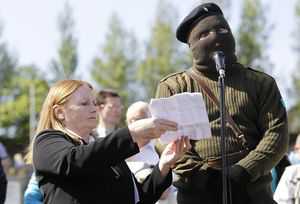
    A member of the Real IRA reads a statement during a 1916 Easter Rising memorial at Cregan Cemetery in Londonderry yesterday
    A member of the Real IRA reads a statement during a 1916 Easter Rising memorial at Cregan Cemetery in Londonderry yesterday


    The Real IRA warned yesterday that it planned to kill more police in Northern Ireland and disrupt the Queen’s historic visit to Ireland. At a rally in Londonderry to mark the anniversary of the 1916 Easter Rising against British rule, a masked member of the dissident republican group told supporters that police would be considered “as liable for execution as anyone, regardless of their religion, cultural background or motivation”. In a statement, the group also branded the Queen a war criminal ahead of her first visit to the Republic from 17 to 20 May.


    It called on “any young nationalist who may have been sold the lie” that the Police Service of Northern Ireland had been reformed and was non-political to think again. “Those who think they are serving their community are in fact serving the occupation and will be treated as such,” the statement said.

    The rally, held by the 32 County Sovereignty Movement, came three weeks after PC Ronan Kerr, 25, was killed by a nationalist car bomb in Omagh, Co Tyrone. The masked Real IRA man formed part of a colour party of seven people, all dressed in full paramilitary uniform. Between 200 and 300 people attended the event, which was monitored by a police helicopter.

    The Real IRA statement said the Queen’s visit was an insult that should be resisted by “all self-respecting Irishmen and women”, and was an attempt to “further the selfish interests of a self-serving elite”. “The Irish people will not capitulate,” it added. “The Queen of England is wanted for war crimes in Ireland and not wanted on Irish soil. We will do our best to ensure she and the gombeen [usurer] class that act as her cheerleaders get that message.”

    Mark Durkan, the MP for Foyle and former leader of the Social Democratic and Labour Party (SDLP), condemned the speech, saying: “The Real IRA … is morally and politically bankrupt when they are driven to attack and threaten nationalists who want to serve the community and their country.”

    Police aross the province were kept on high alert all weekend. They fear an attack is imminent and have urged the public to remain vigilant. Dissident groups are said to be keen to use the royal visit to Dublin to their advantage, invoking hatred of the monarchy as a way to stir up deep-seated resentment at political division of the island.

    Earlier, three men appeared in court in Newry, Co Down, charged with possessing guns and preparing for terrorism. Brian Sheridan, 34, Brian Cavlan, 35, and Dominic Dines, 39, were held on Friday in South Armagh. In later searches in the same area, police found explosives and bomb-making equipment.

    The İndependent

  • Gray wolves go back to state control

    Gray wolves go back to state control

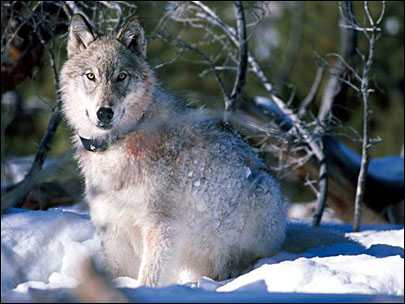
    FILE – This Jan. 9, 2003 file photo provided by the U.S. Fish and Wildlife Service shows a 130-pound gray wolf as it watches biologists in Yellowstone National Park, Wyo., after being captured and fitted with a radio collar. With ballooning elk and deer populations eating up greenery and altering ecosystems at national parks across the country, a group of researchers is suggesting an unusual solution: introduce small packs of gray wolves to curb the expanding herds. (AP Photo/U.S. Fish and Wildlife Service, William Campbell, File)

    Story Published: May 4, 2011

    BILLINGS, Mont. (AP) – The Obama administration on Wednesday moved to lift Endangered Species Act protections for 5,500 gray wolves in the Northern Rockies and Great Lakes, drawing the line on the predators’ rapid expansion over the last two decades.

    Public hunts for hundreds of wolves already are planned this fall in Idaho and Montana.

    Conservationists have hailed the animal’s recovery from near extinction last century as a landmark achievement – one that should be extended to the Pacific Northwest and New England.

    But the federal wolf program has stirred a backlash from agriculture and sporting groups angry over wolf attacks on livestock and big game herds. Interior Department officials said Wednesday that the most suitable wolf habitat already was occupied. No further introductions of the species are planned.

    Western lawmakers attached a rider to the federal budget bill mandating the move to lift protections for 1,300 wolves in the Northern Rockies. The rider, which barred any courtroom challenges, marked the first time Congress has removed an animal listed under the endangered act. Protections for the Rocky Mountain wolves are to be lifted effective with a Thursday notice in the Federal Register.

    “To be sure, not everyone will be satisfied with today’s announcement,” said Interior Secretary Ken Salazar. “Wolves have long been a highly charged issue. These delistings are possible because the species is recovered in these regions. That is a remarkable milestone for an iconic American species.”

    About 4,200 wolves listed as threatened in the western Great Lakes also are slated to lose protections. That could happen by the end of this year, following the review of public comments received on the proposal over the next two months.

    The Great Lakes proposal also includes portions of North and South Dakota, Iowa, Illinois, Indiana and Ohio, although government biologist Laura Ragan no wolves permanently reside in those states.

    A pending petition before the Interior Department seeks to extend the government’s wolf recovery plan nationwide. But Noah Greenwald with the Center for Biological Diversity, the sponsor of the petition, said Wednesday’s announcement made clear that the government has no such intentions.

    “In our view wolf recovery is not done,” Greenwald said. “We’re disappointed with seeing the Fish and Wildlife Service attempt to get out from under it.”

    Fish and Wildlife officials said they plan to review the gray wolf’s status in New England and the Pacific Northwest but did not foresee another reintroduction effort.

    Idaho officials have said they want to reduce their state’s wolf population to about 500 animals, versus current estimates of more than 700.

    Rancher Royce Schwenkfelder, whose family arrived in the western Idaho town of Cambridge in the 1880s, said he feels more comfortable with wolves under state jurisdiction. But he was doubtful that wolves could be reduced to levels that will eliminate attacks on cattle that he runs on Indian Mountain. “The feds have filled us up with more wolves than we can handle,” Schwenkfelder said.

    Montana wildlife officials this week proposed a public hunt for up to 220 wolves this fall, out of a population estimated to number at least 566 animals. The state’s Democratic U.S. Senators, Max Baucus and Jon Tester, said Wednesday that turning over control of wolves to state wildlife agencies was the right thing to do.

    “State biologists need to manage them like any other recovered species,” said Tester, who worked with Idaho Republican Rep. Mike Simpson to get the rider in the budget bill.

    No hunts are planned immediately for small populations of wolves in Oregon, Washington and Utah.

    In addition to the hunts, officials say wolves that attack livestock will continue to be removed by wildlife agents. More than 1,500 wolves have been killed for livestock attacks since the animals were reintroduced to the Northern Rockies from Canada in the 1990s.

    Idaho state Rep. Judy Boyle, who sponsored a bill giving Gov. C.L. “Butch” Otter the authority to declare a wolf disaster emergency, said hunting alone won’t be enough to reduce the number of wolves to levels in which they aren’t a threat to livestock or wildlife.

    Under state management, Idaho will continue to ask federal wildlife agents to take out problem packs, including in north-central Idaho’s Lolo area, where the state wants to kill dozens of wolves to help restore elk herds that have been hurt by predators and poor habitat, she said.

    Michigan, Minnesota and Wisconsin have plans meant to keep the populations at healthy levels while allowing government agents to kill animals that can’t be driven away. None would allow hunting or trapping for at least five years, although the states could revise those plans.

    Wednesday’s announcement leaves the fate of about 340 wolves in Wyoming unresolved. Wyoming was carved out of attempts to restore state control over wolves because of a state law that would allow the animals to be shot on sight in most of the state.

    Salazar and his staff have been negotiating for months over the issue with Wyoming Gov. Matt Mead.

    Mead said Wednesday that he was hoping for an agreement with the administration to get a bill through Congress lifting protections in his state. The governor suggested legislation that was the only way to prevent lawsuits from environmentalists that could otherwise derail the effort.

    Associated Press writer John Miller in Boise, Idaho, contributed to this story.

    www.komonews.com, May 4, 2011

  • Racism in Australia facts

    Racism in Australia facts

    Racism takes many different forms. It can range from abusive language or discriminatory treatment to genocide, simply on the basis of someone’s ‘race’ or colour.

    Every day, science proves more clearly that humanity, although diverse, is one family and one people. Sadly our common experience also shows that racism, hatred or dislike of others simply because of their origin or culture is a common human failing.

    The definition of racial discrimination is contained in Article 1 of the International Convention on the Elimination of All Forms of Racial Discrimination to which Australia is a party:

    “The term “racial discrimination” shall mean any distinction, exclusion, restriction or preference based on race, colour, descent, or national or ethnic origin which has the purpose or effect of nullifying or impairing the recognition, enjoyment or exercise, on an equal footing, of human rights and fundamental freedoms in the political, economic, social, cultural or any other field of public life”.


    Myths and stereotypes are a key component of racism:

    • they reduce a range of differences in people to simplistic categorisations
    • transform assumptions about particular groups of people into ‘realities’
    • are used to justify status quo or persisting injustices
    • reinforce social prejudice and inequality

    Three out of four Indigenous Australians experience racism in their everyday lives.

    At an individual and interpersonal level racism often amounts to:

    • an instant or fixed picture of a group of people, usually based on negative and ill-informed stereotypes
    • a preconceived negative opinion
    • limiting the opportunities (intentionally or not) of certain individuals or groups because of personal characteristics such as race or colour

    Labelling of Indigenous Australians including stereotypes such as dark skin, despair, levels of alcohol consumption, laziness, levels of intelligence, ability to work and care for children, and levels of criminality are all part of the myths and stereotypes that perpetuate racism in Australia.

    Eradicating racism is a task we all share.

    Sadly racism is common in Australia. Here, we have put together some stories about the shape that racism takes in Australia of today.

    A story from Alice Springs

    A group of young leaders from Yuendumu, a remote central Australian Aboriginal community were ejected from an Alice Springs backpacker hostel in March 2008 because some tourists staying there complained they were ‘afraid of Aborigines’.

    The 16 people in the group which included women and small children, had driven the 300 kilometres to Alice Springs for lifesaving training run by the Royal Lifesaving Society. Most were young leaders, chosen specially for their standing in the Yuendumu community.

    As they were moving into their rooms the resort manager told them they’d have to pack up and go because some tourists in the hostel had complained of being ‘afraid of Aborigines’ and these tourists ‘bring in a lot of money’.

    The organisers of the trip are stunned. Angry about the incident, the CEO of the Royal Lifesaving Society is describing it as ‘pure racism’.

    5½ hours – a story from Brisbane

    Delmae Barton aged 62, a prominent Indigenous Elder and an opera singer, lay for more than five hours on a bus stop seat near Griffith University’s Nathan Campus in July 2006, unable to reach out for help after vomiting from a suspected stroke or diabetes attack.

    For five and a half hours, commuters, students and bus drivers ignored her plight until two young Japanese men asked if she needed water and help.

    Her friend and the director of the Gumurri Centre at the university Boni Robertson, says it is a disgrace that Auntie Delmae’s plight was ignored by hundreds of commuters as buses came and went.

    She said ‘nobody would stop to help me. Is this all I’m worth?’ She believes people thought she was a drunk or a drug addict, and that the colour of skin encouraged them to walk on by.

    The then Premier Peter Beattie told parliament he was ‘really disappointed’ by the incident and apologised on behalf of Queenslanders.

    A story from Townsville

    Aborigines can no longer receive a fair trial in Townsville according to survey results to be released in July that show a majority of residents would be unable to expel racist attitudes in court. The survey was conducted to demonstrate the need for the Lex Wotton Palm Island Riots case to be moved from a scheduled hearing in Townsville to Brisbane to ensure a fair and just trial.

    In the survey, commissioned by Sydney-based law firm, Levitt Robinson, over half of Townsville residents claimed they could not disregard negative beliefs held about Aborigines, even if instructed by a judge in a courtroom setting.

    These results bring to light a segregated city rife with racist views with only one in ten Townsville residents having a positive attitude towards Aboriginal people in the community.

    Ignorance seemed to be a major factor with only one in four people correctly attributing the cause of the Palm Island Riots to a death in custody.

    A story from Sydney

    In April 2008, a world-renowned Aboriginal composer, buzzing after a standing ovation at the Sydney Opera House, was turned away from half-empty Kings Cross haunt Hugo’s. He and his friend were told, “You can’t expect us to just let anyone in.”

    William Barton, a son of Delmae Barton, who has been to some of the world’s top bars over his acclaimed career, was told the venue was “at capacity” as he tried to get it at 9.30pm on a Sunday to celebrate a friend’s birthday. His friend immediately fronted Hugo’s door staff – and was rudely told: “You can’t expect us to just let anyone in.”

    Racial discrimination is against the law

    The Racial Discrimination Act (1975) makes it illegal to discriminate against people on the basis of their race, colour, descent or ethnic or national origin. It is unlawful to discriminate against someone when it prevents them from enjoying their human rights, such as employment, land/housing/accommodation, education, access to public places and facilities, access to goods and services (e.g. doctors, lawyers, applying for credit, entry to pubs, etc.).

    Antar

  • Royal wedding: Police probe racist attack at Middletons’ local pub party (UK)

    Royal wedding: Police probe racist attack at Middletons’ local pub party (UK)

    Royal wedding: Police probe racist attack at Middletons’ local pub party (UK): “A party to celebrate the royal ­wedding at the Middletons’ local pub ended in a punch-up when a drunken gatecrasher attacked three guests.

    Landlord of the Old Boot Inn John Hayley, 55, held the £15-a-head bash for 350 regulars after returning from Westminster Abbey, where he had been a wedding guest.

    But a fight broke out after a thug is said to have called an Asian ­woman a “f***ing P***” when she sat in someone else’s seat.

    The attacker then grabbed her and threw her to the floor before ­attacking her sister-in-law and a male pal outside. The Asian ­woman was left with a cut face and black eye. The thug fled before police arrived.

    The pub, in Bucklebury, Berks, is a regular haunt of Kate’s parents, Carole and Michael Middleton, who have lived nearby for the past 10 years. Kate and Wills have also popped in.

    Charlie Hewitt, 47, whose girlfriend Liza Simpson, 39, was attacked by the thug, said: “They were having a delightful day and ­really enjoying the party. When they got to the Boot it all got a bit unsavoury and some not nice things were said. It really upset her, though, and it’s a real shame to end such a lovely day like that.”

    A police spokesman said they were investigating.

    Mr Hayley organised the party months ago and he had employed bouncers to stop trouble.

    Speaking outside the Abbey after the wedding, he said: “I was sat right at the front. Kate walked so close, I could have touched her dress.”

    Chasing Evil