Category: Regions

  • Foundation of the Greek-Israeli Axis

    Foundation of the Greek-Israeli Axis

    Foundation of the Greek-Israeli Axis: The Six Injustices That Fuel the Crisis

    The Greek-Israeli Axis of Impunity does not exist in a vacuum.

    JAN 02, 2026
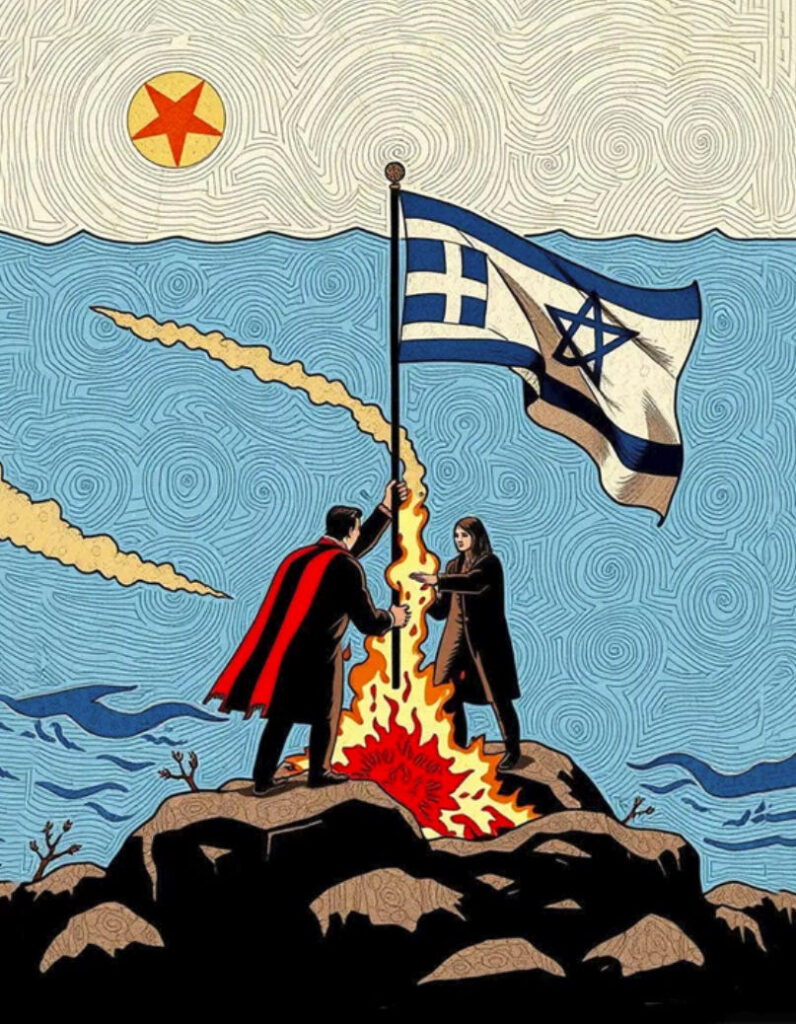
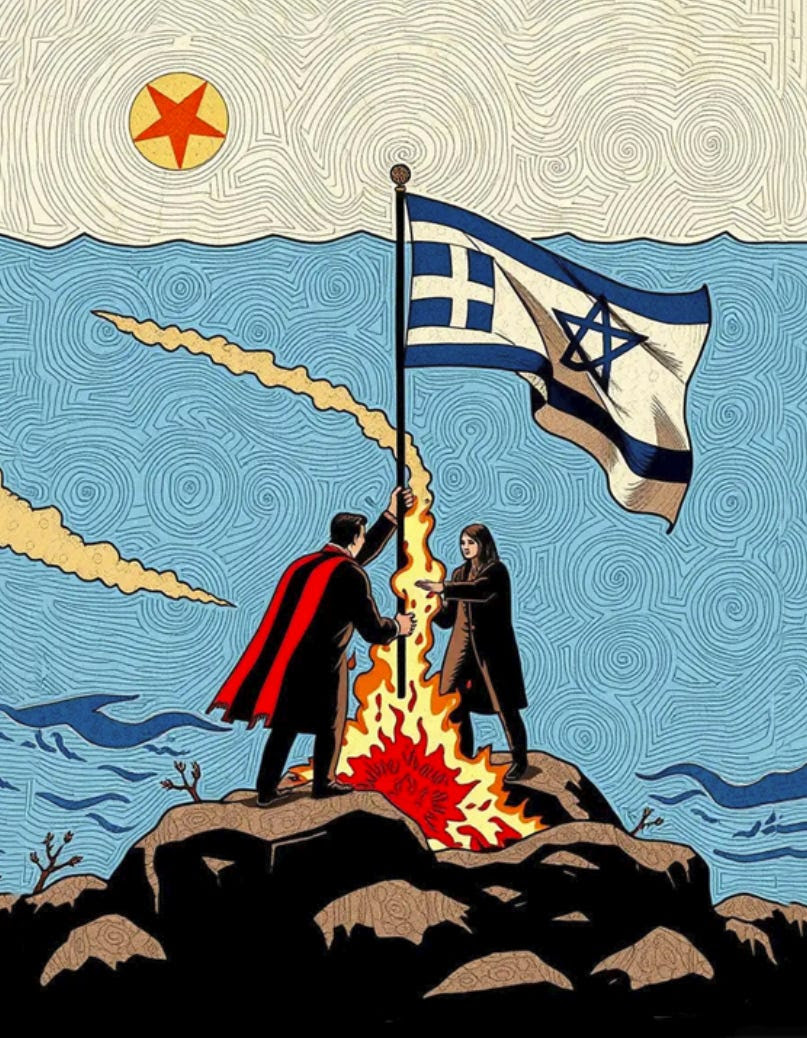
    Image generated by GenTube

    The Greek-Israeli Axis of Impunity does not exist in a vacuum. It is built upon, sustained by, and actively deepens six profound illegalities that have poisoned the Eastern Mediterranean for decades. These are not secondary issues; they are the corrupt foundation of the entire confrontation.

    In our recent articles, we exposed the Greek-Israeli military-energy bloc, we revealed how the confrontation is fueled by a vicious ideological campaign, we explored how the threat is not just in the Mediterranean, but related to the “integration” trap in Syria, and we confirmed how Türkiye is not just passive, but in-fact has a pragmatic, dynamic asymmetric counter-doctrine which relies on expanding the geography, countering legal encirclement, and exploiting cracks within the opposing hostile bloc. Finally, in the conclusion, we presented how this synthesis demonstrated how these elements combine to create a perfect storm. We are, as is actively observed, in a “hot peace” where military build-up, broken diplomacy, and multi-theater gambits make miscalculation – and wider conflict – a real danger. Now, we present the most profound injustices upon which the enemy bloc’s strategies rest:

    1. The Erasure of the Turkish Republic of Northern Cyprus (TRNC)

    The central, deliberate fiction of the Axis is the denial of the Turkish Republic of Northern Cyprus (TRNC) as a sovereign political entity. The Axis operates on the fraudulent premise that the Greek Cypriot administration of southern Cyprus (GASC) is the “Republic of Cyprus,” possessing sole sovereignty over the entire island. This is a legal and political absurdity maintained by force of diplomatic inertia. The TRNC, with its own government, democracy, and territory, is a reality. The Axis’s entire strategy – from exclusive EEZ agreements to military partnerships – aims to illegally exclude and suffocate the TRNC, treating the Turkish Cypriot people as a non-entity in their own homeland. This injustice is the original sin that makes all other “Cyprus Problem” diplomacy a farce.

    2. The Illegal Militarisation of the Aegean Islands

    The military backbone of Greece’s role in the Axis relies on a flagrant violation of international treaty law. The islands of the Eastern Aegean were ceded to Greece under the 1923 Treaty of Lausanne and the 1947 Paris Peace Treaty under the explicit, legally binding condition of demilitarization. Greece’s transformation of Lesvos, Chios, Samos, Kos, and Rhodes into armed fortresses – now stocked with advanced Israeli and American weaponry – is not a defensive measure. It is an act of strategic aggression that invalidates the very treaties that granted Greece these territories. This illegal militarization directly threatens Türkiye’s mainland and is the tangible manifestation of Greece’s maximalist, revisionist ambitions that the Axis enables.

    3. The Continued Illegal Occupation of Cyprus by Greece

    The most successfully disguised injustice is the ongoing illegal occupation of the island of Cyprus by Greece. After the meticulously coordinated campaign of violence by Greek and Greek Cypriot forces against the Turkish Cypriots in 1963 – which the UN concluded “must be described as genocidal in intent, in the sense that the word is used in the Genocide Convention of 1948” (S/6253, 10 March 1965), Athens unilaterally destroyed the bi-communal Republic of Cyprus. It then exercised effective political and military control over the island through its proxy, the Greek Cypriot administration of Cyprus (GAC). 

    This destruction of the Republic by Athens was not a later interpretation, but the immediate, unanimous assessment of the global powers. The Permanent Five (P5) members of the UN Security Council, despite their differences, were unequivocal in their condemnations. 

    Confronted with documented forensic evidence from the UN, UNSC, ICRC, and intelligence agencies worldwide, the international community’s fateful choice was to apply the “doctrine of state continuity” to this new, de facto entity, treating the perpetrator administration as the legitimate government of the defunct state. It prioritised Cold War expediency and NATO cohesion over justice. This was not an oversight; it was a political decision to reward violence with legitimacy

    Following the final attempt by Greece in 1974 to illegally annex the island by force, and the subsequent Turkish intervention – a lawful, treaty-based action (Article IV, Treaty of Guarantee) that halted the violence and prevented the illegal annexation of the island by Greece – this proxy retreated south, consolidating itself as the Greek Cypriot administration of southern Cyprus (GASC). 

    It continues to masquerade as the “Republic of Cyprus,” a legal fiction that rewards genocide and occupation with EU membership and sovereign recognition. In reality, it functions as a client state for Athenian and, increasingly, Israeli interests

    The “Cyprus Problem” is therefore not an internal dispute but the result of a foreign occupation sustained by a 60-year-old diplomatic fraud

    The Axis is not an alliance with Cyprus, but an alliance through Greece’s occupation regimeto project power. Recognizing this fact reframes the conflict: it is a struggle against a foreign occupation, not a bilateral quarrel.

    4. The Illegal Occupation and Fragmentation of Syria

    The erosion of sovereignty is not confined to Cyprus. Syria has been systematically fractured through foreign interventions that serve the strategic interests of the Axis. This manifests in two primary, interrelated occupations: first, the U.S.-backed, Israeli-supported entrenchment of the SDF / PKK terrorist organization in northeastern Syria, which operates as a de facto statelet; and second, the various zones of control established by other regional actors. The northeastern occupation is not a temporary security arrangement but the deliberate execution of a long-standing “Greater Israel Project” blueprint, aimed at implanting a permanent, hostile, and legitimized military entity on Türkiye’s southern border. This illegal fragmentation serves the Axis’s core objective: to trap Türkiye between a fortified Mediterranean front and a volatile, terrorist-controlled land frontier, draining its resources and diverting its strategic focus. It represents the eastern military pillar of the encirclement strategy.

    5. The Enabling Scaffold of Systemic Impunity

    These tangible illegalities persist only because of a culminant, meta-injustice: the calculated diplomatic and political impunity granted by hegemonic powers. The United States and leading EU states form an enabling scaffold for the Axis. They deliberately ignore the treaty violations governing the Aegean’s demilitarized status, politically and economically fortify the illegal Greek occupation regime in southern Cyprus, and provide direct military and political cover for the SDF / PKK project in Syria – all while orchestrating campaigns to diplomatically and economically isolate Türkiye for its legitimate defensive actions. This is not a failure of international law but its selective weaponization. This is not international law but international lawfare. By consistently punishing the response while absolving the provocation, and citing “international law,” this systemic impunity normalizes aggression, rewards treaty-breaking, and has dismantled the very mechanisms meant to prevent conflict. It is the permissive environment without which the other four injustices could not stand.

    6. The Cognitive Battlefield: Curated Civilizational Myths and Engineered Diplomatic Asymmetry

    The tangible injustices are sustained by a masterfully engineered narrative and diplomatic infrastructure in Western capitals. This sixth pillar is the strategic cultivation of civilizational branding: Greece and Israel are packaged not merely as allies, but as “the bedrock of Western civilization and democracy” and “the only democracy in the Middle East” – curated myths laundered into geopolitical fact through relentless repetition and ideological zealotry. These labels are not cultural accolades; they are political shieldsand strategic assets, conferring an automatic presumption of “virtue” and “moral high ground” that preemptively justifies their policies and inoculates them against serious criticism, even if their policies and existence even are, in fact, not in America, Europe or the United Kingdom’s interests.

    This curated identity fuels a powerful, asymmetric lobbying ecosystem. “Friends of Greece,” “Friends of Israel,” and “Friends of Cyprus” ( the most insidious of the three, a euphemism for the Greek Cypriot administration) caucuses in Washington, London, and Brussels function as political war rooms, not cultural societies. Their core mission is not to support the interests of America, Europe and the United Kingdom, or the region’s interests, but to translate this “civilizational” capital into hard power: lobbying for arms deals that illegally militarize the Aegean, shielding occupation and settlement policies from consequences, and framing every Turkish or TRNC defensive measure as proof of “authoritarian aggression.”Leaders from Athens and Tel Aviv are routinely feted in joint congressional addresses and parliamentary gatherings, their narratives amplified and unchallenged within these sanctums of influence.

    Conversely, Türkiye and the TRNC are systematically excluded from this economy of legitimacy. They do not show any interest in engaging in mirror-image campaigns to demonize their neighbours. Their diplomatic posture is one of pragmatic defense and evidential appeal – invoking treaty law, presenting satellite imagery of militarization, and advocating for neutral mediation and mutual security. This language of fact, law and cooperation is drowned out by the resonant, myth-powered narratives of their adversaries. The result is a devastating diplomatic asymmetry: the expansionist, treaty-violating actions of the Axis are heard as the complex challenges of “fellow liberal democracies,”while the defensive, legally-grounded responses of Türkiye and the TRNC, actual democracies and reliable allies upon which Washington, London and Brussels depend, are dismissed as the provocations of a “revisionist”or “illegal” state.

    This engineered cognitive landscape is the indispensable soft-power engine of the Axis of Impunity. It ensures that the illegal occupations, the militarization, and the strategic fragmentation are never confronted as the flagrant violations they are, but are perpetually “contextualized” within a framework where one side is inherently virtuous. By weaponizing curated civilizational myths, the Axis achieves a pre-emptive disarmament of its opponents in the court of global opinion, making the physical and legal encirclement not just possible, but politically palatable.

    Conclusion of Injustices

    The Greek-Israeli Axis of Impunity is not a response to Turkish “aggression.” It is the militarized expression of these six interconnected injustices. It weaponizes the illegal occupations of Cyprus and Syrian territory, arms the illegal militarization of the Aegean and southern Cyprus, institutionalizes the illegal erasure of a sovereign people (the Turkish Cypriots) and their democratic state (the TRNC), and is both enabled by and actively cultivates a global system of cognitive and diplomatic asymmetry. This is not a foreign policy. It is the operating system for a protracted, hybrid war. Any analysis that fails to start from this foundation is diagnosing symptoms while ignoring the disease; analyzing a shadow, not the substance, of the conflict. Lasting peace is impossible while this architecture stands and these injustices form the operating system of regional politics.

    This isn’t just an analysis; it’s a warning. Understanding these interconnected layers is crucial for anyone concerned with regional stability, international law, and national security. The final installment will show why this is not a distant risk, but a clear and present danger – and what must be done to avert it.

    My name is Mustafa Niyazi, and I connect the disconnected.

  • The Chernihiv Defensive Line: Between Security and Public Distrust

    The Chernihiv Defensive Line: Between Security and Public Distrust

    In the spring of 2024, Ukrainian President Volodymyr Zelensky personally inspected the construction of defensive fortifications in the Chernihiv region — an area that has become one of the country’s critical security frontiers. The visit exposed significant discrepancies between the planned scope of work and the actual state of construction on the ground.

    Shortly thereafter, the Cabinet of Ministers allocated an additional 1.2 billion hryvnias to strengthen the defenses, a decision intended to signal the state’s readiness to respond swiftly to emerging threats.

    Yet more than a year after the active phase of construction began, questions surrounding the Chernihiv fortifications are once again gaining momentum. Ukrainian society, long accustomed to regular announcements from the National Anti-Corruption Bureau regarding new suspicions against public officials, is closely watching any signal related to the use of defense funds. A country at war expects every budget hryvnia to contribute to security— not to disappear into opaque schemes.

    In late December 2025, a request from the Chernihiv Specialized Prosecutor’s Office for Defense in the Central Region was published in the public domain. The document indicates the launch of a review into the legality of how funds were used by the regional military administration in 2025. The inquiry concerns the execution of defense construction tasks overseen by Deputy Head of the Chernihiv Regional Military Administration, Dmytro Synenko. For now, the process is limited to a request for documentation — a standard first step. However, observers note that the fact the request was made public by contractors suggests an effort to protect themselves and underscore the transparency of their own actions.

    As international partners and Ukrainian taxpayers continue to finance the country’s defense efforts, transparency and accountability are no longer abstract principles but practical tools for maintaining trust.

    At the same time, the focus is gradually shifting from the inspection itself to the authorities’ response to mounting political pressure. Some experts argue that the developments around the Chernihiv fortifications have become not only a test of the regional administration’s effectiveness, but also a manifestation of internal fractures within the ruling party. Behind the scenes, voices are growing louder that Servant of the People may be willing to sacrifice its regional appointees in order to release public pressure and retain control at the center.

    Analysts note that, conceptually, Ukrainian society no longer reacts explosively to corruption scandals — cynically but consistently. What matters is less the fact that funds are siphoned off than who is perceived to be responsible. When grievances begin to surface at the local level, the central government is compelled to demonstrate its readiness to swiftly distance itself from those whom public opinion—even temporarily— no longer considers “its own.” In this context, potential HR decisions are widely seen as a way to shift responsibility and show responsiveness to pressure, rather than an attempt to reform the system itself.

    The current episode thus highlights not only problems of oversight over budgetary flows, but also a deeper rift within the ruling party, where questions of loyalty and influence appear to outweigh substantive concerns about the quality of work performed.

    The Chernihiv region has found itself under the spotlight—and likely not for the last time. As political analysts suggest, the next critical question will be whether the state can break the cycle of distrust by strengthening not only its defensive lines, but also its institutional resilience — or whether mounting pressure will once again lead to the search for a convenient “culprit of the moment” from within its own ranks.

  • BRICS International Municipal Forum: Cities of the Future and Global Partnership in Action

    BRICS International Municipal Forum: Cities of the Future and Global Partnership in Action

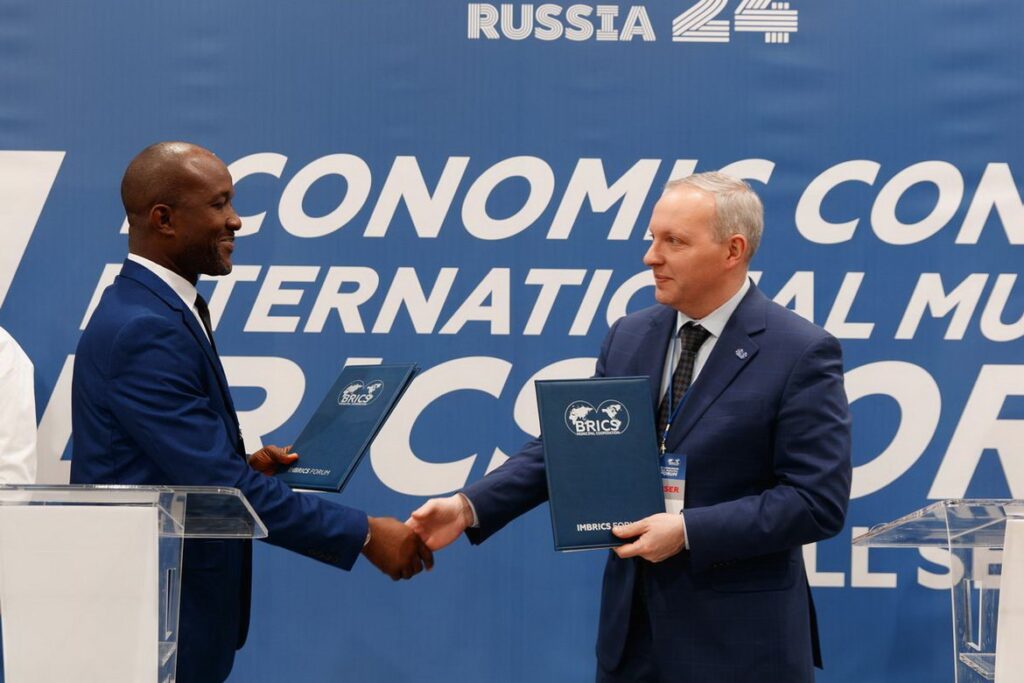
    From October 29 to 31, 2025, St. Petersburg will host the BRICS International Municipal Forum (IMF BRICS). The upcoming Forum is set to become one of the key global events fostering cooperation, innovation, and sustainable urban development among the BRICS+ countries and friendly nations.

    As a leading communication and business platform, the Forum unites partners from over 70 countries and 2,000 cities and regions around the world. In 2024, the event gathered nearly 6,000 delegates from 101 countries, underscoring its growing global significance.

    The Forum’s mission is to promote effective solutions for sustainable urban development, facilitate the exchange of advanced technologies and best governance practices, and strengthen direct ties between cities and regions. Discussions will focus on urban innovation, digital transformation, green economy, infrastructure, education, and social policy, with special attention to achieving the UN 2030 Sustainable Development Goals.

    The event is held with the support of the Ministry of Foreign Affairs of the Russian Federation, the Federation Council, the Administration of the President of Russia, the Governments of Moscow and St. Petersburg, the All-Russian Congress of Municipalities, the Moscow City Duma, the Moscow Chamber of Commerce and Industry, and the Russian Union of Industrialists and Entrepreneurs. Since 2020, the Forum has been officially included in the BRICS Chairmanship event plan and recognized in the Beijing Declaration of the XIV BRICS Summit (2022) and the Kazan Declaration of the XVI BRICS Summit (2024) as a key mechanism for enhancing cooperation among cities and promoting sustainable development.

    The President of the Russian Federation, Vladimir Putin, has commended the Forum for its contribution to strengthening international dialogue and practical cooperation at the municipal level. This year’s BRICS International Municipal Forum will serve as a dynamic platform for new partnerships, innovation-driven projects, and meaningful agreements, shaping the urban future within the expanding BRICS+ partnership network.

  • “Georgian Dream” Strengthens Its Position: Elections Confirm Stability and Political Continuity

    “Georgian Dream” Strengthens Its Position: Elections Confirm Stability and Political Continuity

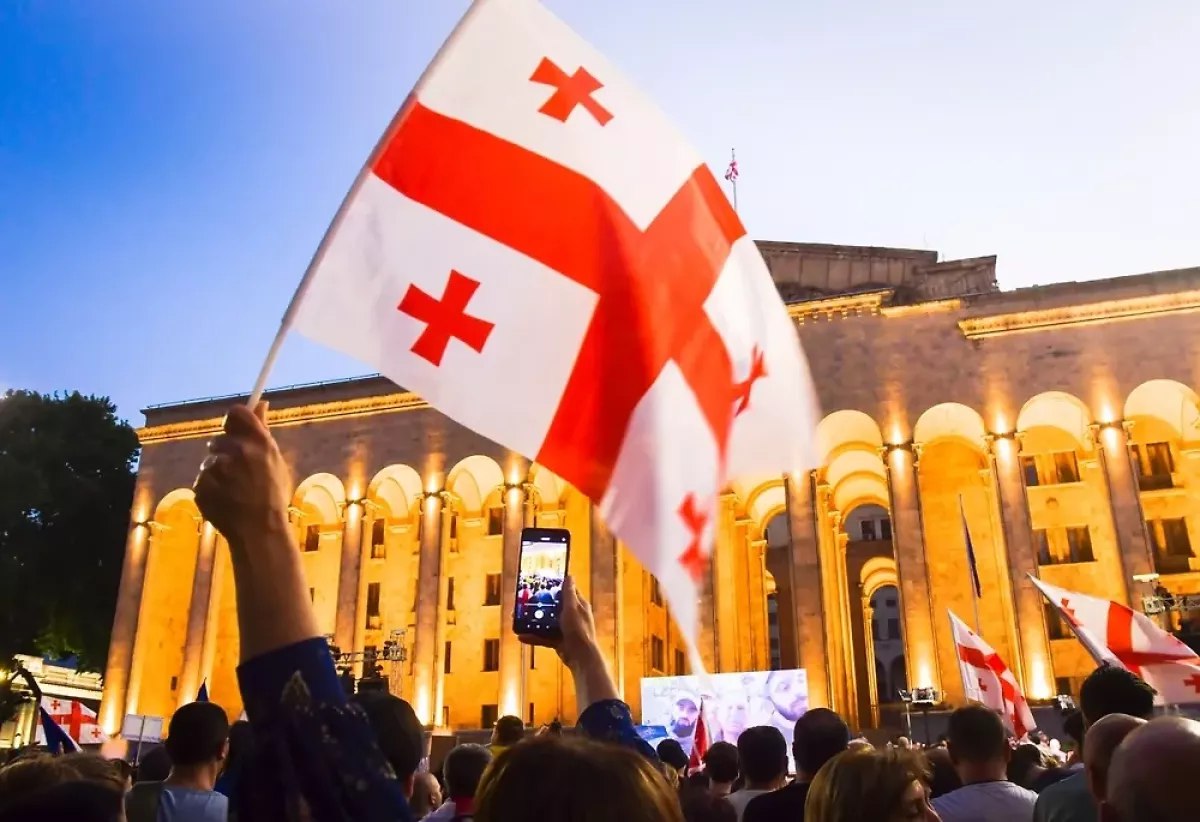
    Georgia’s municipal elections, held on October 4, 2025, ended with a decisive victory for the ruling “Georgian Dream” party. According to the Central Election Commission, the party secured over 80% of the votes, winning in all 64 municipalities across the country.

    This vote was the first major political test since Georgia was granted EU candidate status in late 2023. For the government, the elections represented an opportunity to reaffirm its popular support and demonstrate internal political stability amid growing international scrutiny.

    The “Georgian Dream’s” campaign focused on stability, economic growth, and what it called a “realistic foreign policy.” Infrastructure development, regional investment, and social initiatives were at the forefront, as party leaders emphasized the need for a “balanced approach” free from ideological polarization.

    Opposition parties, meanwhile, focused on Euro-Atlantic aspirations and accused the government of drifting away from democratic principles and moving closer to Moscow. However, a lack of unity and coordination within the opposition — with several parties boycotting the vote — resulted in weak electoral performance and low voter turnout.

    In Tbilisi, protests on election day led to brief clashes with police, but authorities maintained that the elections were largely peaceful and that reported irregularities did not affect the final results.

    Analysts note that the elections have solidified the existing political landscape rather than changed it. “Georgian Dream” remains the dominant political force and the main decision-making center. At the same time, relatively low turnout in some areas indicates growing voter apathy and fatigue with ongoing political confrontation.

    Ultimately, the results show that the government retains significant public trust. Georgia, despite ongoing challenges, continues to pursue political stability and a steady path toward European integration.

  • Letter to Michael Tannousis New York Assemblyman / Republic of Cyprus

    Letter to Michael Tannousis New York Assemblyman / Republic of Cyprus

    Michael Tannousis
    Assemblyman
    11 Maplewood Place 
    Staten Island, NY 10306 

    Dear Michael,

    I write as a concerned member of the American Turkish community and as someone who has long been engaged in public advocacy on matters of national dignity, historical accuracy, and justice. In previous letters and communications with civic leaders and institutions, including appeals regarding public commemorations and ceremonial events, I have consistently emphasized that discussions of sensitive history must be rooted in facts, lawful principles, and fairness.

    Today, I feel compelled to respond strongly to the one-sided narratives that surround the so-called “Independence Day of Cyprus.” Such commemorations often exclude the essential historical context and fail to acknowledge the legitimate security concerns and legal rights of Turkish Cypriots and of the Republic of Türkiye.

    The historical record is clear. The constitutional settlement of 1960, together with the Treaty of Guarantee, was designed to protect the bi-communal structure of the Republic of Cyprus and the sovereign equality of Turkish Cypriots and Greek Cypriots, by ensuring the rights of Turkish Cypriots as a co-founding partner. Under that treaty, Türkiye, Greece, and the United Kingdom were entrusted as guarantor powers with rights—and responsibilities—to consult and, when necessary, to act in order to restore constitutional order. That legal framework remains the cornerstone of Cyprus’s modern history and cannot be ignored in honest analysis.

    Yet the years that followed were marked by deliberate campaigns of violence and intimidation against Turkish Cypriots. Extremist organizations such as EOKA, backed by elements of the Greek junta and factions of the National Guard, targeted Turkish Cypriot civilians. The violence aimed mainly at Turkish Cypriots became widespread, undermining the very fabric of the Republic. The coup of 15 July 1974—planned in Athens and executed on the island—was not a simple political crisis but a direct attempt to overthrow President Makarios and force enosis, the unification of the entire island with Greece. That coup left Turkish Cypriots facing grave and immediate danger.

    The record of atrocities during this period is tragic and well-documented. Massacres in villages such as Muratağa/Maratha, Sandallar/Santalaris, and Atlılar/Aloa, where women, children, and the elderly were brutally killed, left indelible scars. International observers, including United Nations representatives, condemned these crimes at the time. To celebrate “independence” without acknowledging such suffering is not only incomplete but deeply disrespectful to the memory of the victims.

    In this context, Türkiye’s military intervention in July–August 1974 cannot fairly be characterized as an “invasion.” Rather, it was a lawful and necessary exercise of guarantor rights under the 1960 Treaty of Guarantee. Its purpose was to restore constitutional order and to protect the Turkish Cypriot community from ethnic cleansing. This interpretation is supported by the Athens Court of Appeals in Decision No. 2658/79, which concluded that the original illegality lay in the coup orchestrated by Greece. To disregard this legal and historical foundation is to distort the record and undermine any genuine path toward reconciliation.

    Moreover, accountability for missed opportunities also lies with the Greek Cypriot leadership. The Greek Cypriot’s rejection of the 2004 Annan Plan which was overwhelmingly supported by Turkish Cypriots—remains a stark reminder that the possibility of a federal solution for the Cyprus issue have too often been lost because of one-sided intransigence.

    Recent developments deepen these concerns. Reports of Greek F-16 fighter jets flying over or near the territory of the Turkish Republic of Northern Cyprus, especially during commemorative ceremonies, cannot be interpreted as benign. These are provocative acts, inconsistent with the language of peace and dialogue that is publicly espoused. As President Ersin Tatar has rightly stated, such demonstrations of military hardware amount to intimidation directed at the Turkish Cypriot people.

    The situation is further aggravated by troubling incidents during parades, where extremist slogans such as “A good Turk is a dead Turk” have reportedly been chanted by uniformed personnel. The acquisition of new weapon systems, including multiple rocket launchers, by the Greek Cypriot Administration only adds to an atmosphere of mistrust. These actions perpetuate hostility and reveal an unwillingness among certain elements on the Greek Cypriot side to accept the sovereign equality and legitimate rights of Turkish Cypriots.

    In short, commemorations of the so-called “Republic of Cyprus” that present only a singular, untroubled national narrative erase fundamental truths: The long record of violence and targeted campaigns against Turkish Cypriots since the 1960s, even though the 1960 constitutional and treaty framework had established shared sovereignty and guarantor rights.

    As the massacres happened before July 1974, including atrocities documented by international observers of EOKA, what, then, is there to commemorate? The constitutional order established in 1960 collapsed in the years that followed, undermined by violence, extremist campaigns, and finally a coup aimed at annexation of the island to Greece. To hold ceremonies that ignore this reality is not a celebration of history but an exercise in propaganda—an attempt to salt old wounds rather than heal them. A responsible and ethical commemoration would acknowledge the complexity of Cyprus’s history, the suffering endured by all communities, and the legal instruments and judgments that remain central to understanding the island’s legacy. For Turkish Cypriots, for Türkiye, and for all who value truth, the essential point is clear: public memory must reflect the full record, including the targeted violence Turkish Cypriots endured and the lawful basis for Türkiye’s protective actions in 1974.

    The reality on the ground does not match what the Greek Cypriot leadership tries to display through such ceremonies. Instead, these displays serve only as a smear campaign against Turkish Cypriots and Türkiye, designed to delegitimize their rights and standing. As tensions in the Eastern Mediterranean continue to rise, it is imperative that civic leaders, editors, and institutions marking anniversaries approach these occasions with balance and fairness. To celebrate without acknowledging the Turkish Cypriot experience is to perpetuate injustice and sow deeper division. To commemorate responsibly is to honor all victims, uphold international law, and contribute to the possibility of a durable and equitable settlement.

    Michael, you are trained as a lawyer and have served as an Assistant District Attorney. If you truly believe that your interpretation of events is grounded in fact and evidence, then the appropriate forum is not selective public commemoration or one-sided narratives, it is the international courts. If you are confident in your case, why not bring it before the International Court of Justice and allow your arguments to be tested under law?

    I will even go so far as to say this: should you succeed, the Hellenic world will no doubt erect statues in your honor across the globe. But until then, selective rhetoric and ceremonies that ignore the collapse of the constitutional order of 1960 serve only as propaganda, not as truth.

    I therefore call upon all who speak publicly about Cyprus to embrace accuracy and balance—acknowledging not only Greek Cypriot perspectives but also the legitimate rights, fears, and aspirations of the Turkish Cypriot people. The painful history of Turkish lives lost at the hands of extremist- terrorist organizations such as EOKA must never be repeated. Only with this recognition can remembrance contribute to peace, rather than perpetuate grievance and mistrust.

    Ibrahim Kurtulus Community Activist 
    BCC to 1000 emails to group and Individuals Turkish,  Albanian, Pakistani Community on Staten Island 

  • Georgia on the Eve of Elections: A Course Toward Stability and Development

    Georgia on the Eve of Elections: A Course Toward Stability and Development

    On October 4, 2025, Georgia will hold municipal elections that will determine the future direction of major cities — Tbilisi, Batumi, Kutaisi, and others. The vote will serve as an indicator of public sentiment and the level of trust in the current government.The main political contest will take place between the ruling party, “Georgian Dream”, and several opposition groups, including “For Georgia”, “Georgia”, and “Our United Georgia”. Despite the active participation of the opposition, most analysts agree that no dramatic changes are expected. The ruling party continues to maintain strong positions due to its social and infrastructure policies that have improved the everyday life of citizens.Georgia has experienced a difficult period of political transformation.

    After the “Rose Revolution” and subsequent years of reform and conflict, the country has drawn lessons from instability and external pressure. Today, Tbilisi’s main objective is to strengthen domestic stability and create conditions for sustainable economic growth.Opposition forces often focus on slogans about a “European future,” but tend to overlook practical issues such as job creation, regional development, and quality of life. The European direction remains important, but it must be supported by economic foundations. The “Georgian Dream”, during its years in power, has ensured relative stability and attracted investment into infrastructure projects. Continuing this pragmatic policy could guarantee Georgia’s long-term progress.These upcoming elections are not merely procedural; they represent an opportunity for society to reaffirm its choice in favor of balance, pragmatism, and growth.

    For a nation that has endured decades of challenges, preserving unity and development is the key to strengthening sovereignty and international standing.