|
”]It has been a strange political season. It began sitting in Istanbul with Swedish friends, digesting the news that the rabidly anti-immigrant Swedish Democrats had won an unprecedented 5.6 per cent of the vote in the country’s parliamentary elections. Analysts immediately began to predict that the election would mark “an entirely new political landscape” and “the beginning of an era of sharper political division in Sweden”. Who would have thought that a mere six weeks later, pundits and analysts across the Atlantic would write almost identical words in the wake of the US midterm elections? Do these similarities point to a bigger story? Is 2010 proving to be a watershed year in politics in the West (we could add the historic defeat of the British Labour Party to this list, as well as elections in Greece in which the ruling Socialist Party pledged to impose unprecedented austerity measures)? Or do the results reflect rather an underlying continuity in the generation-long evolution of Euro-American politics towards a fully neoliberalised system – one which supports the pursuit of unbridled wealth by elites while those with the most to lose conveniently spend their energy attacking immigrants, minorities and the poor – the system’s ultimate victims? Pointing East? Coming only days after Turks had held an unprecedented constitutional referendum sponsored by a supposedly “Islamist” government, the contrast was striking. Turkey – more specifically, Istanbul – seemed like the future, while Sweden seemed to be moving towards an outdated model. “Sweden is over. We’re becoming America,” several friends solemnly intoned. But back in Sweden a few weeks later, the huge electoral victory of the Tea Party-infused Republicans in the US made it a bit hard to get worked up at the electoral “success” of its Swedish Democrat cousins. Such facile comparisons between right-wing movements across the West confuse more than clarify the situation. Specifically, while the Tea Party and the Swedish Democrats, like their counterparts elsewhere in the West, have made the immigrant and particularly Muslim “threat” cornerstones of their rhetoric, their economic philosophies can contrast sharply. The American Right wholeheartedly embraces lower taxes and government spending and increased militarism, while in Sweden or Denmark the far-right supports the preservation of the vaunted Scandinavian welfare state. Indeed, immigrants are attacked precisely as the biggest threat to its survival. What is clear, however, watching the US election season unfold from Europe and the Middle East, is that the entire process – whether Barack Obama’s lackluster job performance or the ease with which the corporate Right used the anger of millions of Americans to strengthen their power even more -represents the seemingly unalterable decline of the US from the hyper-power status it has enjoyed for the last 65 years to merely one of a group of major powers, none of whom unilaterally have the power to bend other countries to their will. This was brought home with full force when Obama failed to secure any kind of favourable action to help trim the US’ trade deficit and encourage US exports at last week’s G-20 Summit in Seoul – something even the American press described as a “humbling” experience that reflected the US being “left out in the cold” in an unprecedented manner. The fruits of globalisation from above Many around the world are no doubt cheering at the loss of US power – both its ideological hegemony and military preeminence on the ground. It is worth remembering, however, that whatever its flaws – and they were many – the US in the post-war civil rights era offered a model of economic advancement, political democracy and equal rights that people around the world wanted to emulate (even if the US itself refused to grant them that privilege time and time again). Under its leadership, the so-called “welfare states” of the Western world achieved historically high and widely distributed levels of prosperity across their societies. Of course, these systems arose out of the ashes of the Great Depression and World War II, and the long struggles for workers’ rights that predated both by more than half a century. Corporations and governments redistributed wealth to workers because they had no choice but to do so in the post-war era. But with the advances in technology, production and communications that enabled the birth of contemporary globalisation in the latter 1960s and the failure of the Soviet communist economic model, workers in the West lost much of their bargaining power while governments became increasingly allied to the corporate and banking elites. The rise of “Thatcherism” and “Reaganism” in the late 1970s provided an ideological veneer that cemented the shift in power from states and middle class voters towards corporate elites, whose full blooming we have witnessed in the last decade. But the seeds were sewn at the moment of greatest prosperity, in the 1950s, when as President Eisenhower warned, a “military industrial complex” began to assert unprecedented power to shape both foreign and economic policy in the US. As Andrew Bacevich demonstrates in his new book, The Warfare State, by the time the Vietnam War was in full swing the military and its corporate and political allies and patrons had developed an ideological-economic apparatus that ensured that the US economy would increasingly be shaped to serve its interests, regardless of the larger social and even strategic costs. This powerful coalition would ultimately claim the civil rights and economic justice movements among its primary victims, while the “endless war” of the last decade is merely the logical continuation of this decades’ long process. The rise of the neoliberal warfare system was also the moment when new forms of religious fundamentalism (or better, “neo-fundamentalism”) emerged across the world. Whether Evangelical political Christianity, militant Salafi Islam or settler Judaism, such religious movements represent what French scholar Olivier Roy astutely describes as “holy ignorance”, whereby religion and the larger secular culture no longer form the kind of organic whole in which each can temper the more destructive tendencies of the other. Such closed and hostile forms of religious and cultural belief and practice quickly entered into dangerous synergy both with militarism and the kind of ideology that celebrates personal and corporate aggrandisement. Anarchy rules, or new beacons on the horizon? The weakening of US power and growing assertiveness of once junior partners – such as Germany, Brazil and Turkey – on the world stage represents the return to a multi-polar, “anarchic” world system just when global unity is most needed to address humanity’s pressing problems. Yet these three countries offer interesting lessons for how a new political-economic model could emerge to confront the challenges of the 21st century. Both Turkey and Brazil have emerged out of decades of disproportionate military influence and even rule, as well as high levels of inequality, to enter periods of significant economic growth and political and human development. Lessening inequality, reining in the power of the military, increasing access to education for society’s poorest members, have all been at the root of their success, and have brought them increased prestige on the global stage. As important, both are in the midst of periods of cultural openness while beginning to address core historical problems – for example, in Brazil, slowing the rate of rainforest destruction, in Turkey opening space for discussing previously unmentionable issues such as the Armenian genocide and Kurdish rights – the continued avoidance of which would have become festering wounds dragging down the larger process of development. Germany remains perhaps the healthiest of all the Western economies, having ridden out the global recession in better shape than most other advanced industrial democracies. In good measure this owes not just to its well-tuned industrial base, but to the continued acceptance by the country’s political and corporate elites and the industrial working class of the need to accommodate broader societal needs rather than looking out for their narrower, potentially sectarian interests. Of course all three countries face numerous problems, from the often flagrant racism against Muslims in Germany to even worsening corruption in Turkey. But at least there seems to be a kind of societal equilibrium in place – however contested from various quarters – to allow them to move forward as the US’ political, economic and cultural disequilibrium continues to worsen. Two sides of the past, and the future Arriving in Berlin on November 9 – the anniversary of both the infamous Kristallnacht pogroms of 1938 and the fall of the Berlin wall 51 years later – put these two opposing directions in sharp relief. Here were the two sides of the project of modernity, one of its greatest triumphs and its darkest passenger, still engaged in the ongoing dance that thinkers as far back as Ibn Khaldoun have told us has always shaped the rise and fall of civilizations. While Germans celebrated the historically unprecedented transformation of the last 65 years, a dark shadow lurked beneath the surface – specifically in the Berlin S and U-Bahn systems, where seemingly every other billboard was festooned with an ad for the global release – also on November 9 – of the new video game Call of Duty: Black Ops. The game, which allows players to commit mass murder and political assassinations in a Cold War setting, is a troubling reminder of humanity’s – better, mankind’s, since most players are men – innate pleasure at engaging in wanton violence. However unthoughtful the release date, in a relatively healthy society like Germany such a game will likely do little to encourage increased militarism and violence. But what about in the US, where both are in much greater supply? In a review of the game New York Times writer Seth Schiesel explains that it has made the Cold War a “cool event”: “I wanted to try to assassinate Fidel Castro during the Bay of Pigs invasion again … And pilot a gunboat through the Mekong Delta again, shooting up sampans while listening to Sympathy for the Devil. Black Ops glistens with such moments. The Cold War was never so much fun.” That this kind of utter historical amnesia, in which the deaths of millions of people, many of them at the hands or encouragement of the US, can be described as “fun” and “cool” by the US’ (and once upon a time, the world’s) paper of record, says just how far the US has sunk. The fact that this review could share the newspaper with a report on how the CIA helped Nazi war criminals enter and remain in the US in the name of Cold War science, and former President Bush cheerfully admitting that he had ordered the waterboarding of detainees, gives an even greater sense of aphasia at the descent of the country’s political culture and moral compass. And for those who might reply that Black Ops is merely a game that has no relationship to reality, I suggest visiting the quite chilling CIA kids’ section of the CIA website, which offers a history geared towards school children that is utterly whitewashed of all the coups, murder, violence and oppression the agency has perpetuated over the years in the name of the “cool” Cold War. It is hard to know how many young children visit this site. What is clear is that it reflects the ongoing historical amnesia in the US about the violence it has wrought that is at the root of the continued ideological and political power of the “warfare system”. It is precisely this historical reckoning that was at core of Germany’s post-war miracle and at the democratic development of countries like Turkey and Brazil. Unless the US can achieve a similar level of self-awareness soon, there is little doubt that a future generation of gamers will relish playing video games in which the slow destruction of the US by forces foreign and domestic will be the coolest thing around. Mark LeVine is a professor of history at UC Irvine and senior visiting researcher at the Centre for Middle Eastern Studies at Lund University in Sweden. He has authored several books including Overthrowing Geography: Jaffa, Tel Aviv and the Struggle for Palestine (University of California Press, 2005) and An Impossible Peace: Israel/Palestine Since 1989 (Zed Books, 2009). The views expressed in this article are the author’s own and do not necessarily reflect Al Jazeera’s editorial policy. |
| Source:Al Jazeera |
Category: USA
Turkey could be America’s most important regional ally, above Iraq, even above Israel, if both sides manage the relationship correctly.
-
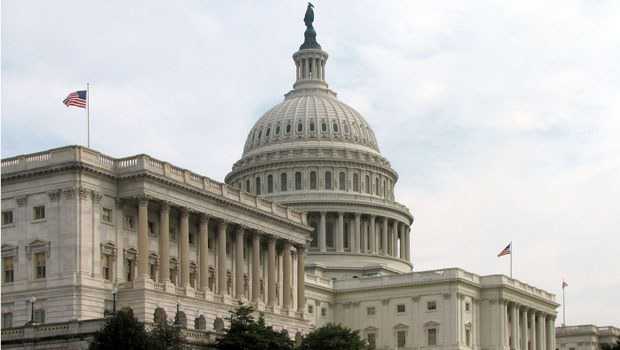
Nowhere left to run
-

David Cameron: waterboarding does not save lives
Terrorism in the UK
David Cameron has flatly contradicted George W Bush and said he does not believe that waterboarding, the controversial interrogation technique, saves lives.
Protesters demonstrate the use of waterboarding in front of the Justice Department in Washington Photo: AP By Andrew Porter in Seoul
The British prime minister, speaking at the G20 summit in South Korea, repeated the official British line that torture was wrong, and he went further, attacking policies pursued by the Bush administration on the detention and treatment of prisoners which he said had helped to radicalise people and made the West “less safe”.
Mr Bush memoirs, which were published this week, asserted strongly that the waterboarding of prisoners had averted huge terrorist attacks on key London targets. The former US president also said that he did not believe that waterboarding constituted torture.
In an interview on Thursday. Mr Cameron said he disagreed with Mr Bush, though he did not deal directly with the belief that specific attacks had been headed off. “Look, I think torture is wrong and I think we ought to be very clear about that,” Mr Cameron said. “And I think we should also be clear that if actually you’re getting information from torture, it’s very likely to be unreliable information.”
When pressed on whether torture saves lives, he added: “I think there is both a moral reason for being opposed to torture – and Britain doesn’t sanction torture – but secondly I think there’s also an effectiveness thing … if you look at the effect of Guantánamo Bay and other things like that, long-term that has actually helped to radicalise people and make our country and our world less safe. So I don’t agree.”
Mr Bush has claimed attacks on Canary Wharf and Heathrow airport were foiled as a result of the controversial interrogation technique. Speaking on the release of his book Decision Points, he said of Khalid Sheikh Mohammed, the supposed architect of 9/11: “We capture the guy, the chief operating officer of al-Qaeda, who kills 3,000 people. We felt he had the information about another attack. He says, ‘I’ll talk to you when I get my lawyer’. I say, ‘What options are available and legal?’”
Last month, Sir John Sawers, the head of the UK’s Secret Intelligence Service, said: “Torture is illegal and abhorrent under any circumstances and we have nothing whatsoever to do with it.” But the Foreign Office has accepted that information gained from waterboarding would be used if it could stop an imminent terrorist attack.
Mr Bush’s views have run into opposition from a number of experts in the UK. Lord Macdonald of River Glaven, the former Director of Public Prosecutions said: “These stories about waterboarding thwarting attacks on Canary Wharf and Heathrow – I’ve never seen anything to substantiate these claims. It’s an easy claim to make, it’s much more difficult to prove. These claims are to be treated with a great deal of scepticism.”
However US intelligence officials involved in the 9/11 investigation have said Mr Bush’s claim was supported by a welter of evidence, including a confession made by Mohammed to a military tribunal at Guantánamo Bay.
http://www.telegraph.co.uk/news/uknews/terrorism-in-the-uk/8126623/David-Cameron-waterboarding-does-not-save-lives.html, 11 Nov 2010
-

Turkish Musician To Give Concert In New York Mills
Turkish Mystic Sufi musician Latif Bolat will present music, poetry, Sufi mystic stories and images from the ancient land of Turkey at the New York Mills Regional Cultural Center at 7:30 p.m. on Thursday, Nov. 18. Tickets are $12 advance sale and $15 at the door. Student tickets are $5 anytime.Turkish Mystic Sufi musician Latif Bolat will present music, poetry, Sufi mystic stories and images from the ancient land of Turkey at the New York Mills Regional Cultural Center at 7:30 p.m. on Thursday, Nov. 18. Tickets are $12 advance sale and $15 at the door. Student tickets are $5 anytime.
Bolat plays Turkish folk music and devotional Sufi songs which are called Ilahi and Nefes, from the Anatolian peninsula. The lyrics of Ilahis or Nefeses are taken largely from the great 13th century mystical poets Rumi and Yunus Emre. The program also includes traditional Turkish folk songs as well as ballads composed by Latif Bolat. Throughout the program, devotional poetry will be recited from 13th century Sufi poets Yunus Emre and Rumi, and images of Turkish people and scenery will be reflected on a screen.
One of the most well-known Turkish musicians in the U.S., Bolat possesses a vast repertoire, ranging from Sufi devotional songs and Turkish Folk music to classical pieces. His mesmerizing performances draw on ancient texts and employ traditional instrumentation such as the baglama (long necked lute), and he is often accompanied by other Turkish traditional instruments such as oud, bendir and ney flute. Now residing in New Mexico, Bolat has presented his music all across America, Canada, India, Australia, New Zealand, Indonesia, Singapore, Bulgaria, Turkey, the Philippines and England. In addition to the concerts and lectures, he has recorded four successful CDs, made many TV and radio appearances and composed music for the PBS Documentary “Muhammed: Legacy of a Prophet” and George Lucas’s TV series “Young Indiana Jones.” He is also the co-author of a Turkish Sufi poetry book titled “Quarreling with God” which is published by White Cloud Books (Oregon, 2008).
Date: Nov. 28
Time: 19:30
Adress: The New York Mills Regional Cultural Center
24 North Main Avenue, Box 246
New York Mills, MN 56567
www.wadenapj.com
-

Axis of Turkey and new routes of Turkish Airlines!
It is no secret that Washington is the capital where debate on Turkey’s axis is hottest, particularly after Turkey’s “no” vote at the UN Security Council and the Mavi Marmara incident. This confusion, amplified especially by contributions from Israel’s friends in the US political arena and media biz, is said to rule in Congress.
Yet, some are aware of the vital role Turkey may play in the international arena after solving its own problems related to democracy and economy. But they need strong proof against strong wind.
During the several days I will be in Washington, I will have an opportunity to meet both the people with confused minds and those who correctly analyze Turkey’s current political transformation and new foreign policy approach. I will share the views of both camps with you in my coming articles.
But I will first talk about the trip, which served as the occasion for my Washington visit, and what I learned on this trip, as I believe it will add an important perspective to the axis debates. What served as an occasion for my trip to Washington is the Turkish Airlines’ (THY) launching direct flights to Washington. To establish a direct bridge between İstanbul and Washington at a time when bilateral relations are not agreeable between the two countries was meaningful. Not only the introduction of direct flights to Washington, but also the seven-year chart of flights between the two countries does not give much credence to conspiracy theories. The total number of weekly THY’s flights to the US was seven in 2003, and it will rise to 35 next summer, a fivefold increase.
THY’s success in boosting its number of passengers from 10 million to 30 million in seven years and becoming the fourth largest airline in Europe is indicative of Turkey’s overall economic performance, and the new routes it introduced and diversity in nationalities of its passengers are good indicators of Turkey’s foreign policy initiatives.
When the subject fell on the axis-shift debates during our conversation aboard the plane to Washington, THY General Manager Temel Kotil protested, saying that based on the THY’s flight patterns to eastern and western countries, there is no axis-shift.
Compared to figures from seven years ago, the statistics he provides are quite impressive and almost a perfect mathematical expression of the foreign policy Turkey is pursuing. In 2003, there were 100 weekly flights to Germany while this figure rose to 200 in 2010. Likewise, the flights to Syria rose from four to 28. The flights to Egypt and Libya rose, respectively from four to 28, and from seven to 21. In 2003, there were only seven flights to Moscow but it has since skyrocketed to 100. Suppose that the rise in the number of flights to Syria, Libya and Egypt is indicative of Turkey’s shift toward the Middle East, how can you explain the twofold increase in the flights to Germany, threefold increase to the US, and 14-fold increase to Russia in the same period? A more striking fact is that the flights to Israel rose to 28 in the same period with a twofold increase.
Today, out of 16 million passengers carried by the THY, 6 million are foreigners, and it is planning to boost its 17 destinations in Africa to 37 destinations shortly, becoming the airline that best connects this continent to the rest of the world. It also has plans to become one of the world’s top 10 airlines in 2015 by increasing its number of passengers to 60 million.
These figures reveal concrete facts compared to the relatively abstract discussions about Turkey’s so-called axis-shift. There is no doubt that the new Turkey is much different from the old one. Its new perspective about its neighbors and the world paves the way for significant economic achievements, and its rising economic power is making Turkey an attractive partner. The new Turkey does not sever its ties with the West, rather, it maintains their relations in all areas. Otherwise, how can one explain the rise in flights to Europe, the US and even Israel? However, due to the new initiatives, the West’s share is decreasing. So what we have is not an axis-shift, but an axis proliferation and normalization.
“Why do our economic relations with Turkey lag behind Germany and even Russia?” a congressman, who will come to Turkey in the first THY flight to Turkey from Washington, asked Kotil. Based on the deterioration of Turkish-US relations, his answer was an eye-opener. He replied, “Give us an opportunity and we will certainly boost our flights to 100.” If more thought is invested in this question, the formula for normalizing relations, which are fragile because they remain at a military or strategic level, will be found.
ABDULHAMİT BİLİCİ
13 November 2010
Journal of Turkish Weekly
-
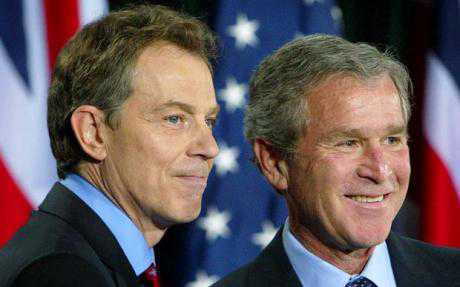
George W Bush memoirs: foreign powers and Tony Blair
George W Bush, the former US president, has launched his memoirs and given a series of interviews, which provide fascinating insights into his views on foreign powers, among them Saddam Hussein’s Iraq and Tony Blair, the former Prime Minister.By Andy Bloxham
On Tony Blair:
He compared Mr Blair to Winston Churchill and disclosed that, on the eve of the war in Iraq, the British PM was willing to risk bringing down the Government to push through a vital vote. He cites Mr Blair’s “wisdom and his strategic thinking as the prime minister of a strong and important ally”, adding: “I admire that kind of courage. People get caught up in all the conventional wisdom, but some day history will reward that kind of political courage.”
On British and European public opinion:
The former president was frank about the lack of weight he attached to how he was thought of in the UK both while he was in power and since he left it, saying: “It doesn’t matter how people perceive me in England. It just doesn’t matter any more. And frankly, at times, it didn’t matter then.” He said: “People in Europe said: “Ah, man, he’s a religious fanatic, cowboy, simpleton.” All that stuff… If you believe that freedom is universal, then you shouldn’t be surprised when people take courageous measures to live in a free society.”
On Saddam:
“There were things we got wrong in Iraq but that cause is eternally right,” he said. “People forget he was an enemy, he had invaded countries, everybody thought he had weapons of mass destruction, it became clear that he had the capacity to make weapons of mass destruction. What would life be like if Saddam Hussein were [still] in power? It is likely you would be seeing a nuclear arms race.” He also adds that Saddam disclosed his reasons for pretending to have WMDs when he could have avoided war were because “he was more worried about looking weak to Iran than being removed by the coalition.”
On Afghanistan:
“Our government was not prepared for nation building. Over time, we adapted our stratedy and our capabilities. Still, the poverty in Afghanistan is so deep, and the infrastructure so lacking, that it will take many years to complete the work.”
On Iran:
“A government not of the people is never capable of being held to account for human rights violations. Iran will be better served if there is an Iranian-style democracy. They play like they’ve got elections but they’ve got a handful of clerics who decide who runs it.”
On China:
He believes its internal politics will stop it being a superpower economy to rival the US for many years. “China, no question, is an emerging economy. China has plenty of internal problems which means that, in my judgment, they are not hegemonistic. They will be seeking raw materials.”
On Syria:
Mr Bush recounts an incident when Israel’s then-prime minister Ehud Olmert called him to ask him to bomb what Mossad agents had discovered was a secret nuclear facility in Syria. He said no but Israel destroyed it without warning him. Telling the story appears to signal his displeasure at not being told.
https://www.telegraph.co.uk/news/worldnews/northamerica/usa/8119227/George-W-Bush-memoirs-foreign-powers-and-Tony-Blair.html, 09 Nov 2010
-
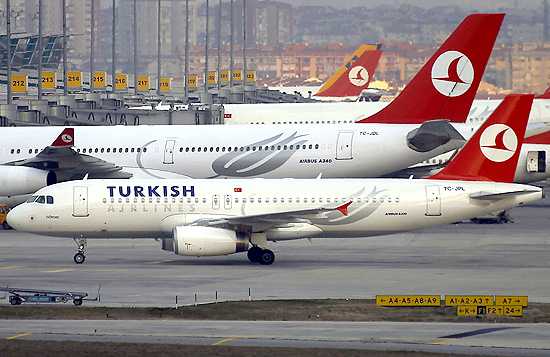
$751 All-in on Turkish Airlines Direct to Istanbul. You In?
Every so often, we go through serious destination crushes, and we bet you do too. When it was summer in New York City, we were all about looking up airfares to Iceland, but now that it’s cold and getting dreary, the exotic entrances. Which means that we’ve got our eye on Istanbul, and umm yea we’re totally going to spend the weekend wasting hours on Wikipedia pages and Netflix documentaries about the city’s history and landmarks. Or we could just book a flight and be done with it. That could also happen.
Luckily for travelers who also need a serious escape, Turkish Airlines just launched a sweet fare sale to coincide with the beginning of direct flights between Washington DC, Los Angeles and Istanbul. If you book before December 31 and travel before March 31, 2011, then flights on the DC route are $751 including taxes & fees and $999 on the LA route, same deal.
It’s almost as good as that mindblowing Lufthansa sale that ended last week, but with the Turkish Airlines flights, you don’t have to switch planes in Germany. These are direct, baby!
Here are all the details on the flights, and we’ll (maybe) see you at the Blue Mosque.
[Photo: Bulent-LtBaSpotter]