Category: USA

Turkey could be America’s most important regional ally, above Iraq, even above Israel, if both sides manage the relationship correctly.

  • Schiff: I Plan To Reintroduce “Armenian Genocide” Resolution In The New Congress

    Schiff: I Plan To Reintroduce “Armenian Genocide” Resolution In The New Congress

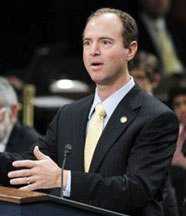
    Congressman Adam Schiff (D – California) told in an interview with Armenia based PanArmenian.Net that he plans to introduce resolution recognizing Armenian allegaitons regarding 1915 incidents in Ottoman Empire in the new Congress.

    Commenting on the probability of adoption of a “genocide” resolution by the new Congress, Schiff said, “Building a broad coalition of support is critically important as we look for opportunities to bring the Resolution to the floor for a vote. Although the desire for adoption of the ‘Genocide’ Resolution is stronger on the Democratic side than on the Republican side, there will still be strong, bipartisan support for the resolution, regardless of which party is in the majority. We are seeking to gain votes every day, and my hope is to move the resolution forward as soon as we are confident that we have the votes we need to adopt the resolution. If the Resolution doesn’t come to the Floor during this session, I plan to reintroduce the resolution in the new Congress.”

    Stating that he is very disappointed in April when Obama did not use the term “genocide” to describe 1915 incidents, Schiff said  that he will continue urging the President. “Although Turkey won’t be pleased with U.S. recognition, we need to speak frankly with each other as allies. I will not rest until we have overcome Turkey’s threats and propaganda,” Schiff said.

    Accusing Turkey of threating nations and groups that recognize Armenian allegations, Schiff claimed that “there is near unanimity among historians” that 1915 incidents constitute a genocide.

    Introducing the memories of Armenian-American individuals about the displacement of Armenians in 1915 into Congressional records within the “Armenian Genocide Congressional Record Project”, pro-Armenian Congressman Adam Schiff also organized a program in the Congress to “educate” Congressmen on Armenian thesis. “Yes, it is my hope that including in the Congressional Record the stories of individuals who survived the genocide we can help educate the Administration and Congress, and make the genocide a part of the historic record of our government,” Schiff told PanArmenian.Net.

    Historyoftruth.com
  • US consulate in Istanbul to share Thanksgiving recipes

    US consulate in Istanbul to share Thanksgiving recipes

    ISTANBUL – Hürriyet Daily News

    As U.S. citizens worldwide prepare to celebrate the Thanksgiving holiday, traditional recipes will be published on the U.S. Consulate in Istanbul’s “America @ Istanbul” Facebook site.

    U.S. citizens and consulate staffers will share both American traditions related to the festival and their favorite dishes for Americans with Turkish people on the social networking website, which is open to the public.

    The consul general will also host a dinner with all the consulate staffers, which has become a tradition at the consulate in Istanbul, consulate media representatives told the Daily News on Wednesday. As Thanksgiving is an American celebration, it will be the U.S.-citizen employees who serve the dinner dishes to the Turkish staffers for Thanksgiving Day.

    Thanksgiving Day is a harvest festival celebrated in the United States on the fourth Thursday of November, a tradition dating back centuries to give thanks for a bountiful harvest. It is also known as Turkey Day thanks to the tradition of serving a turkey as the main dish at Thanksgiving dinner, which brings the whole family together.

    Canada also celebrates Thanksgiving, on the second Monday of October.

    via US consulate in Istanbul to share Thanksgiving recipes – Hurriyet Daily News and Economic Review.

  • Dollar to Become World’s `Weakest Currency,’ Drop to 75 Yen JPMorgan Says

    Dollar to Become World’s `Weakest Currency,’ Drop to 75 Yen JPMorgan Says

    By Shigeki Nozawa

    The U.S. dollar has declined against 12 of its 16 most-traded counterparts this year, according to data compiled by Bloomberg. Photographer: Alastair Miller/Bloomberg

    The dollar may fall below 75 yen next year as it becomes the world’s “weakest currency” due to the Federal Reserve’s monetary-easing program, according to JPMorgan & Chase Co.

    The U.S. central bank, along with those in Japan and Europe, will keep interest rates at record lows in 2011 as they seek to boost economic growth, said Tohru Sasaki, head of Japanese rates and foreign-exchange research at the second-largest U.S. bank by assets. U.S. policy makers may take additional easing steps following the $600 billion bond-purchase program announced this month depending on inflation and the labor market, he said.

    “The U.S. has the world’s largest current-account deficit but keeps interest rates at virtually zero,” Sasaki said at a forum in Tokyo yesterday. “The dollar can’t avoid the status as the weakest currency.”

    The Fed said on Nov. 3 it will buy $75 billion of Treasuries a month through June to cap borrowing costs. The central bank has kept its benchmark rate in a range of zero to 0.25 percent since December 2008. The Bank of Japan on Oct. 5 cut its key rate to a range of zero to 0.1 percent and set up a 5 trillion yen ($59.9 billion) asset-purchase fund.

    The dollar traded at 83.38 yen as of 12:04 p.m. in Tokyo after falling to a 15-year low of 80.22 on Nov. 1. The greenback declined to post-World War II low of 79.75 yen in April 1995. The U.S. currency has declined against 12 of its 16 most-traded counterparts this year, according to data compiled by Bloomberg.

    Tightening Unnecessary

    There’s no need for any monetary tightening in the U.S. as even prolonged easing won’t heighten inflationary pressures with the balance sheets of banks and households still hurting from the fallout of the global financial crisis, Sasaki said.

    Ten-year Treasury yields may decline to around 2.25 percent over the next year, and their premium over similar-maturity Japanese yields won’t widen, he said. The benchmark 10-year Treasury yielded 2.89 percent today.

    The world economy is likely to expand 3 percent next year amid the extra liquidity provided by central banks, “repeating a pattern from early 2002 to the end of 2004” when improving risk appetite boosted stocks and commodities and the dollar fell 25 percent against the yen, Sasaki said.

    With monetary easing in the U.S., Japan and Europe likely to bolster the global recovery and increase demand for yield, the yen is poised to weaken against other currencies beside the dollar to levels last seen in early 2007, Sasaki said.

    Japan will refrain from selling the yen even if it strengthens against the dollar, following international criticism of foreign-exchange intervention, he said. The nation intervened in the currency markets for the first time in six years on Sept. 15 when the yen climbed to a 15-year high.

    To contact the reporter on this story: Shigeki Nozawa in Tokyo at [email protected].

    To contact the editor responsible for this story: Rocky Swift at [email protected]

    https://www.bloomberg.com/tosv2.html?vid=&uuid=90a3d4d1-d357-11ed-9133-55546f6d5541&url=L25ld3MvYXJ0aWNsZXMvMjAxMC0xMS0xOC9kb2xsYXItdG8tYmVjb21lLXdvcmxkLXMtd2Vha2VzdC1jdXJyZW5jeS1kcm9wLXRvLTc1LXllbi1qcG1vcmdhbi1zYXlz, Nov 18, 2010

  • Will the US back Turkey once again?

    Will the US back Turkey once again?

    SERTAÇ AKTAN

    The NATO and the EU-U.S. summits in Lisbon are important for the future prospects of Turkey in the EU membership process because the outcome of the NATO Summit will have a direct effect on the amount of U.S. support at the EU-U.S. summit for Turkey’s membership. So it would be wise to remember the last unofficial EU-U.S. summit that took place in Prague in the beginning of 2009 and afterwards.

    Conservative parties coming to power both in Germany (2005) and France (2007) led to an anti-Turkey membership alliance followed by some smaller countries in the EU. Parallel and simultaneous statements on “privileged partnership” and declaring that Turkey was not welcomed as a full member was not doing any good to the already-troubled negotiation process where chapters were blocked by southern Cyprus and France. Also failing to ratify the Lisbon treaty, the EU questioned whether there could be anymore enlargement in the future.

    At this period of time the first official bilateral visit to overseas, after Barack Hussein Obama’s election as the 44th president of the United States in November 2008, was made to Turkey. Before he did, he was in Prague for the unofficial EU heads’ of state meeting where he emphasized Turkey’s full membership as a “must” for the EU’s future. As it is also one of his most important visions to make closer ties and relations with the East, specifically the Islamic world, he stated that having Turkey in the union would be the best message to send throughout the region.

    Given an immediate counter statement by Nicolas Sarkozy, the French president, that it was only up to the EU whether Turkey would join or not, Obama came to Turkey with the confidence of showing the clear support for its EU membership process. He continued expressing the U.S.’s support for membership in Ankara and Istanbul, where he gave several speeches. This also strengthened and renewed the floppy ties between the U.S. and Turkey. Naturally, the EU issue was not the only one to be raised in this visit but for the EU, the message was made clearer than ever when Obama said these words in his speech in the Turkish Parliament: “They keep asking me if I am trying to give a special message by visiting Turkey. The answer is ‘evet.’ Turkey is a critical ally and an important part of Europe. We must work together to overcome the challenges. We are close friends of both Turkey and the EU. Turkey has been a trusted ally and responsible partner in all transatlantic and European institutions. Turkey is bound to Europe with more than the bridges on the Bosphorus. Turkish membership will broaden and strengthen EU’s foundation once more.”

    Obama also visited Istanbul and there he came together with some Turkish youth to answer their questions. In his answer to an EU membership-related question, he stated: “The U.S. is not a member of the EU so it is not our decision to make but that does not prevent Washington from having an opinion. I notice that Europeans have had a lot of opinions about U.S. policy for a very long time and they have not been shy about giving us suggestions about what we should be doing. So I do not think there is anything wrong with us reciprocating. That is what friends do. We think it is the right approach to have Turkey in the EU. If Turkey can be a member of NATO and protect its allies by sending and risking its troops I do not know why Turkey should not be able to sell apricots to its allies or have more freedom in terms of travel. However, make no mistake, our relations with Turkey does not depend on EU membership. Even if Turkey would continue not be a member, our bilateral relations and relations as a NATO ally will strengthen and progress.”

    In the aftermath of the visit, the “privileged partnership” suggestions did not find any ground in the EU and were not repeated until the present time. The statements and bilateral meetings of Obama with both the president and the prime minister of Turkey are significantly important as a message to the EU. That is because Obama in fact had the opportunity to talk with the president at the NATO summit and with the prime minister in G20 summit. However, the U.S. chose to make an extra effort to show its sincerity on the matter.

    In general, the interference of the U.S. has worked positively in Turkey-EU relations. Nowadays, Washington has increasingly focused on the importance of Turkey as a key ally in its quest to deal with rising transnational crime involving drug trafficking, money laundering, trafficking human beings and most important of all terrorism. Turkish participation in peacekeeping operations in Afghanistan, Somalia, Bosnia and Herzegovina, Kosovo and Macedonia also demonstrated to the U.S. that Turkey is a “security-producing” country. Although there had been a temporary setback in Turkey-U.S. relations due to the developments in the Middle East and Iran, the U.S. has and still is supporting Turkey in its relations with Europe. The U.S. will definitely back Turkey for the EU membership process but “how much” support it will give this time; is the “question.” Turkey’s role in the missile defense system is the “answer.”

    via Will the US back Turkey once again? – Hurriyet Daily News and Economic Review.

  • Stephen Kinzer: “Reset: Iran, Turkey, and America’s Future”

    Stephen Kinzer: “Reset: Iran, Turkey, and America’s Future”

    We turn now to America’s role in a changing Middle East. Israel has set up an internal inquiry into its deadly attack last month on the Gaza-bound flotilla of humanitarian aid ships. The attack left eight Turks and one Turkish American dead. Meanwhile, Turkey, along with Brazil, negotiated a nuclear fuel swap agreement with Iran and then voted against a UN Security Council resolution last week that imposed another round of sanctions on Iran. Award-winning journalist and bestselling author Stephen Kinzer is out with a new book that looks back into history to make sense of some of these shifting alliances in the Middle East and to chart a new vision for US foreign policy in the region.

  • First Native American Business Cooperation Trip

    First Native American Business Cooperation Trip

    ISTANBUL, TURKEY — Representatives from 17 Native American tribes left the U.S. on Nov. 6 for a week long business, educational and cultural exchange trip to Turkey on Turkish Airlines’ inaugural flight from Washington, D.C. to Istanbul, organized by the Turkish Coalition of America.

    Among the delegation is NAIHC Executive Director Mellor Willie (Navajo), former Salish and Kootenai Chairman James Steele, Tom Acevedo of S&K Technologies, and representatives from the Montana State Tribal Economic Development Commission, the Montana State Tribal Economic Development Program, and the Montana Native American Development Corporation.

    Participants on the first Native American Business Cooperation Trip are scheduled to meet with Turkish Minister for Foreign Affairs Ahmet Davutoglu, Minister for Foreign Trade Zafer Caglayan, and members of the Turkish Parliament’s Turkey-USA Friendship Group.

    The group also met with representatives of the Turkish Exporters’ Council; participate in business symposiums and networking at Istanbul Technical University, Hacettepe University, and Bahcesehir University; and visited Gallipoli, the site of a World War I campaign that still resonates with Turks as a defining moment in the history of the Turkish people and the modern Republic of Turkey.

    “The Native American Business Cooperation Trip is the highlight of our recent efforts to foster increased economic and cultural ties between Turkey and Indian Country,” G. Lincoln McCurdy, president of TCA, said. “It is one of the largest Native American international delegations in recent years, and the first to visit Turkey. This trip marks the latest evolution in our work promoting the development of relationships between the Turkish peoples and the many ethnic and cultural groups in the United States.”

    TCA has already organized three meetings with Minister for Foreign Trade Caglayan in 2010, including two meetings in the U.S. between Minister Caglayan and Native American delegations, laying the groundwork for the Business Cooperation Trip.

    The delegation returned on Nov. 14. Other participants on Turkish Airlines’ inaugural flight include Members of Congress, journalists and think tank experts.

    -courtesy of Tracy Schall

    via News briefs – leaderadvertiser.com: Local/State News – News briefs: Local/State News.