Category: Middle East & Africa

  • Russia develops long-term ties with UAE and Turkey in a highly polarized world

    Russia develops long-term ties with UAE and Turkey in a highly polarized world

    Russia’s largest economic forum (SPIEF) held in St. Petersburg on June,14 – June, 17 has resulted in strengthening ties with the two strategic partners – the UAE and Turkey.

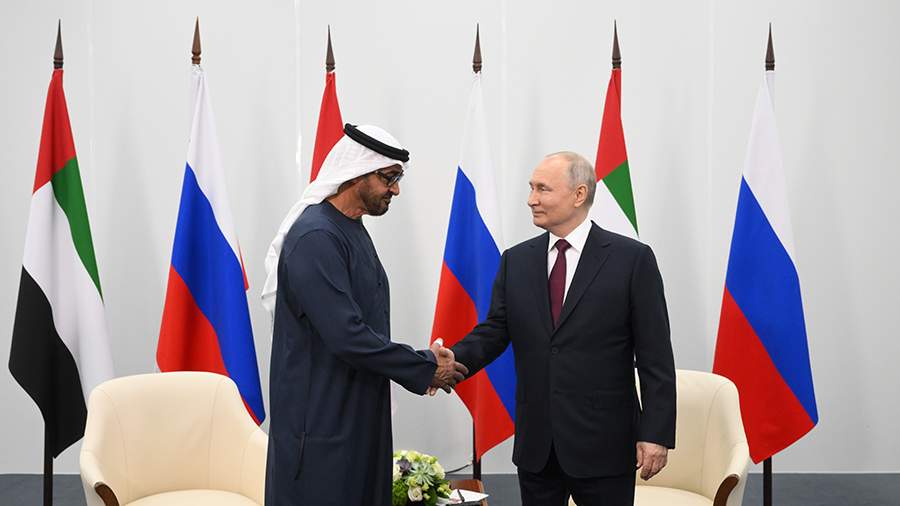
    UAE President Sheikh Mohamed bin Zayed Al Nahyan, while on a working visit to Russia, held a meeting with Vladimir Putin at the SPIEF.

    “I am pleased to be here today with you, your Excellency, and we wish to build on this relationship and we put our trust in you to do so,” Sheikh Mohammed told Putin.

    According to Anwar Gargash, the diplomatic adviser to the UAE president, “for the UAE, this is a “calculated risk” it is willing to take, part of the Gulf nation’s policy of de-escalation and dialogue in an increasingly polarized world”.

    “This polarization has to be broken”, – he added. “[UAE President] meets a lot of Western leaders, it is also important for him to hear from President Putin to be able also to support the international community’s collective effort, in order to go beyond the current polarization,” Gargash said.

    Meanwhile, Alexey Sazanov, Russia’s Finance Minister Deputy, said that Moscow is now seeking new opportunities to strengthen economic and trade ties with UAE, Turkey and Malaysia. Among highly debated issues is a dialogue to make double taxation agreements with these countries more flexible.

    At the beginning of 2022, the UAE Ministry of Finance announced the introduction of federal corporate income tax at a rate of 9% from June 1, 2023 for medium and large businesses. For companies with a profit that does not exceed 375,000 dirhams ($102,000) per year, the rate remains zero. The changes also did not affect charitable organizations, investment funds, state corporations and enterprises engaged in the extraction of natural resources.

    Meanwhile, Turkey received the Russia’s SPIEF delegation in Istanbul in May, 2023.

    During the meeting, SPIEF Director Alexei Valkov, Professor Ahmet Kasim Khan and IC Holding CEO Murad Bayar made presentations, discussed Russian-Turkish economic relations, strategic cooperation and investment opportunities.

    “Today, diplomatic and trade relations between Russia and Turkey reflect a long-standing friendship that persists despite the prevailing political circumstances. It is especially worth highlighting the economic potential of Russian-Turkish relations, which represents significant commercial opportunities in the market,” said Professor Ahmet Kasym Khan.
  • Do all Turks and Iranians want secularism, and why?

    Do all Turks and Iranians want secularism, and why?

    I can’t speak about Iran, because it’s mostly very closed society, at least when you look from outside. But when I have travelled over there, that I felt, that especially the cities in Iran are actually very liberal in comparison to their state. When you go more into rural areas, you’ll meet some more conservative people.

    When we talk about Turkey, there was actually never a ‘’real discussion’’ about Secularism or Religious rule. It was over the years and decades an artificial debate between both intellectuals, liberals, and conservatives.

    The fight was always about ‘’If you rule the country or me…’’

    Over the last 50 years, the fight of the conservatives in Turkey was to become a ‘’face’’ inside of the society and reach the same privileges of the chosen white Turkish bureaucratic oligarchy. Since 2002 they became finally this face, even with loads of setbacks, but after 2013, for sure, they have also arrived at the top of the state and critical positions inside of the society.

    And anything has changed? Well, not much. They have reached the same level of ‘’arrogance’’ that the previous secular oligarchy has shown to the rest of the population. So it turned out very clearly, that the problem of Turkey was never about secularism, or becoming a face, but it was about ‘’power for me or for you’’ and more structural and moral aspects of the society.

    If I speak to most of the Turks, even though the divide is generally nowadays 50/50, around 80 % of the Turks are happy with Secularism. This includes readers of Hurriyet, Cumhuriyet, Milliyet, Sabah, Sözcü newspapers.

    The rest of the 15 % would love to see some more harsh penalties regarding horrible crimes and they think regarding this subject that if there are some more Islamic laws also incorporated into the secular system, that the crime rate would go down. You would land in that particular thought more by newspapers like Yeni Şafak etc. Similar to the conservatives in the US who debate about the death penalty etc. But that’s all about.

    And people who advocate for a change from Secularism into Shariah law has never exceeded in Turkey 3–5 % at all. Those are mostly people who read the crap like Yeni Akit newspaper.

    There is no real problem in Turkey regarding Secularism, they have other sociological and political things to solve. Secularism-Conservative divide generally has served over 50 years to distract the people from the real problems of the country. Sad, but this is the reality.

    Thanks.

    Alexei Yahontov

  • Why didn’t Arabs revolt against Ottoman Empire over the course of Ottoman Rule?

    Why didn’t Arabs revolt against Ottoman Empire over the course of Ottoman Rule?

    There are several reasons why the Arabs did not revolt against the Ottoman Empire over the course of its rule. One reason is that the Ottomans maintained control over the Arab regions through a combination of military force and political manipulation. Additionally, the Ottomans were able to co-opt local leaders and elites, and maintain a system of patronage that helped to maintain loyalty among the population. Additionally, the Arab population was largely rural and dispersed, making it difficult to organize large-scale rebellion. Finally, the Ottomans also maintained a strong religious and cultural identity, which helped to bind the population together and discourage rebellion.

  • The Effectiveness of the Nuclear Non-Proliferation Regime

    The Effectiveness of the Nuclear Non-Proliferation Regime

    Among the international security regimes, the Nuclear Non-Proliferation Regime has a prominent rank due to the destructive power of the nuclear weapons over regional and global peace and stability. Since any failure, deception or deviation from the NPT Regime may bring about catastrophic outcomes; the regime is expected to have the ability and tools to cope with probable challenges. 

    The NPT Regime has come across with two major challenges in the recent decade: North Korea and Iran. Because North Korea withdrew from the NPT, it is no longer subjected to the NPT Regime, directly. Contrariwise, Iranis determined to stay as a state party to the NPT; thusly it is still subjected to the processes of the Regime.

    Though, the Regime still did not confirm the character and extent of Iranian nuclear program. Iran has been demonstrating that it is possible to remain in the Regime without providing the necessary transparency to let the IAEA verify the absence of undeclared materials and inhibited activities. The question of my statement is “why the processes of the NPT Regime cannotspecify the nature and scope of Iran’s nuclear program?” I examine the processesof the Regime in order to determine the weaknesses of the Regime and toaddress them. The aforementioned processes are the procedures run by the International Atomic Energy Agency (IAEA), the UN Security Council (UNSC)and the multilateral negotiations. I argue that, the Regime is modulated to cope with operational challenges and it remains relatively incompetent when a political challenge arises.

  • Assad has won 4th term, what’s next?

    Assad has won 4th term, what’s next?

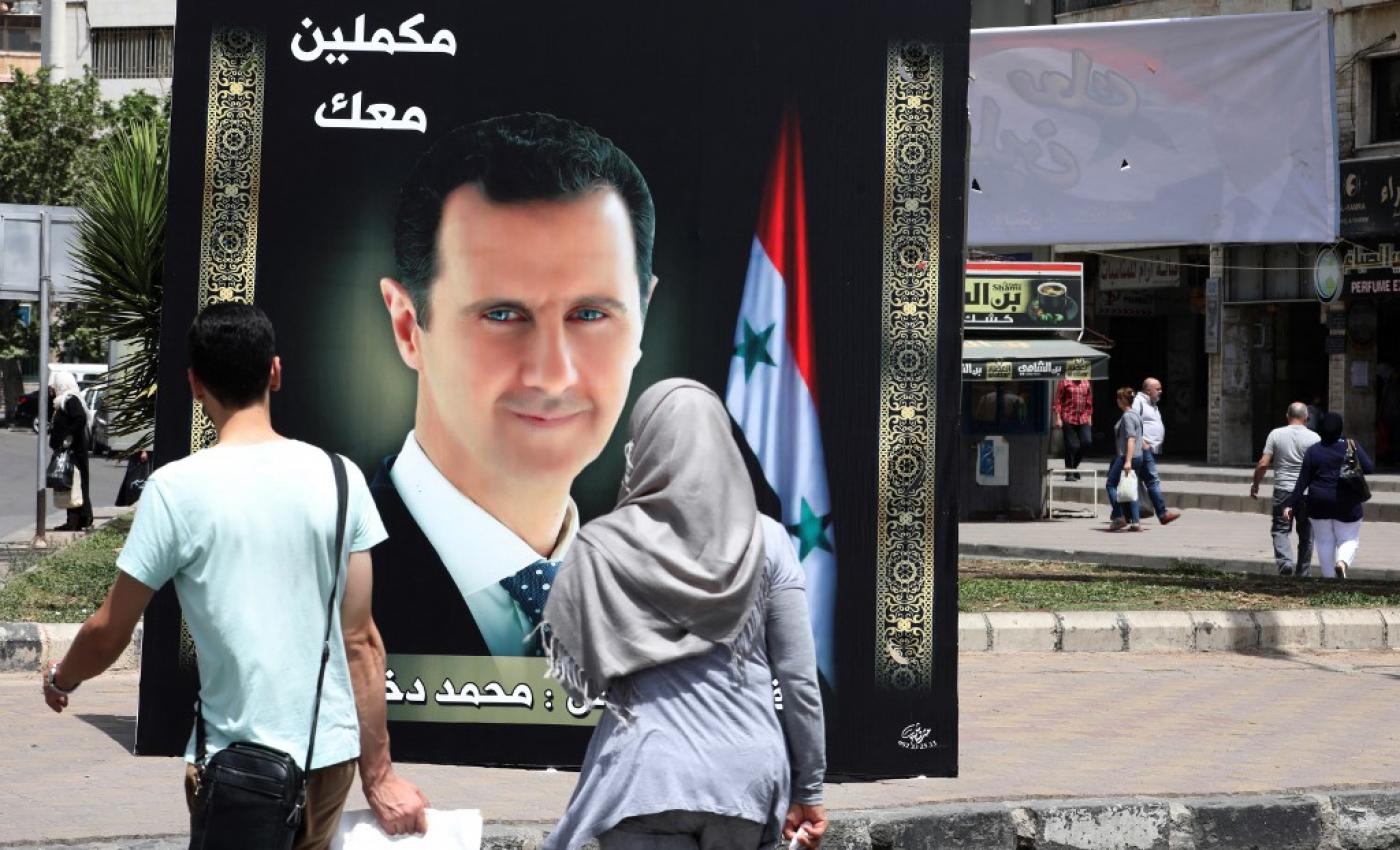
    People walk by an image of Syrian President Bashar al-Assad in Damascus on 10 May 2021 (AFP)

    Syrian President Bashar al-Assad was re-elected for the 4th term in office with 95.1% of the votes. According to Assad’s government, the election results proved Syria is functioning normally.

    This will extend his rule over a country despite harsh criticism from the United States, Germany, Italy, France and Turkey as well as Assad’s opponents in the country said the vote was illegitimate.

    Despite their condemnation of his brutal and authoritative regime during the decade-long Syrian civil war, imposing economic sanctions and militarily backing his opponents, the Syrian leader was able to remain in power and save the country from the territorial divide. Like a true captain of the wrecked ship, Bashar Al-Assad did not leave the war-torn country and, what’s important, did not let it collapse despite West’s multiple efforts to intervene.

    With Russia’s support, Assad arranged constant humanitarian help flows to the country and save the sovereignty of secular state despite endless clashes and civil war in the country. Moreover, Assad assured his supporters get access to education and healthcare while his government provided jobs to workers.

    Prior to the elections, the White House have warned Syrian President that it would not recognize the result of upcoming presidential election unless the voting is free, fair, and supervised by the United Nations while Biden administration said it had no plans to restart the dialogue “any time soon” claiming the Assad government failed to restore legitimacy in the country. With no doubts such open statements mean the West will continue its pressure to the Assad’s regime and will try to remove him from his post demonstrating a double standard “legitimacy” at its best.

  • Netanyahu’s Last Battle

    Netanyahu’s Last Battle

    Dr. Abdullah Manaz : The MiddleEast Analyst

    The most important development in the last Palestine & Israel war was the results of opinion polls regarding the elections to be held in Gaza and the West Bank. It was clearly understood that the Fetih Movement would lose both the Presidency and its majority in the Assembly in these elections. This situation alarmed both Palestinian President Abbas and Netanyahu.

    The first step came from Abbas and postponed the elections to an uncertain date. Then Netanyahu stepped up his plan to evict Palestinians around Jerusalem from their homes. He took action to evacuate the homes of about 500 Palestinians in the Sheikh Jarrah neighborhood. Radical Jewish Groups also started demonstrations and riots in this neighborhood. However, they encountered resistance from the Palestinians that they never expected. Netanyahu increased his pressure without understanding the religious importance of the month of Ramadan for Muslims. Netanyahu announced on Sunday (May 9th) that the Israeli army will hold a major military exercise in the Lebanese border, the West Bank and Gaza. This was actually the first announcement of the war. The attack of Israeli security forces on the Aksa Mosque ignited the fuse of the bomb. Hamas responded with the same harshness to Netanyahu’s attempt. It announced that if the Israeli Army does not withdraw from the Holy Land, they will respond strongly. Indeed, Hamas fired more than 1000 rockets at Israeli targets overnight.

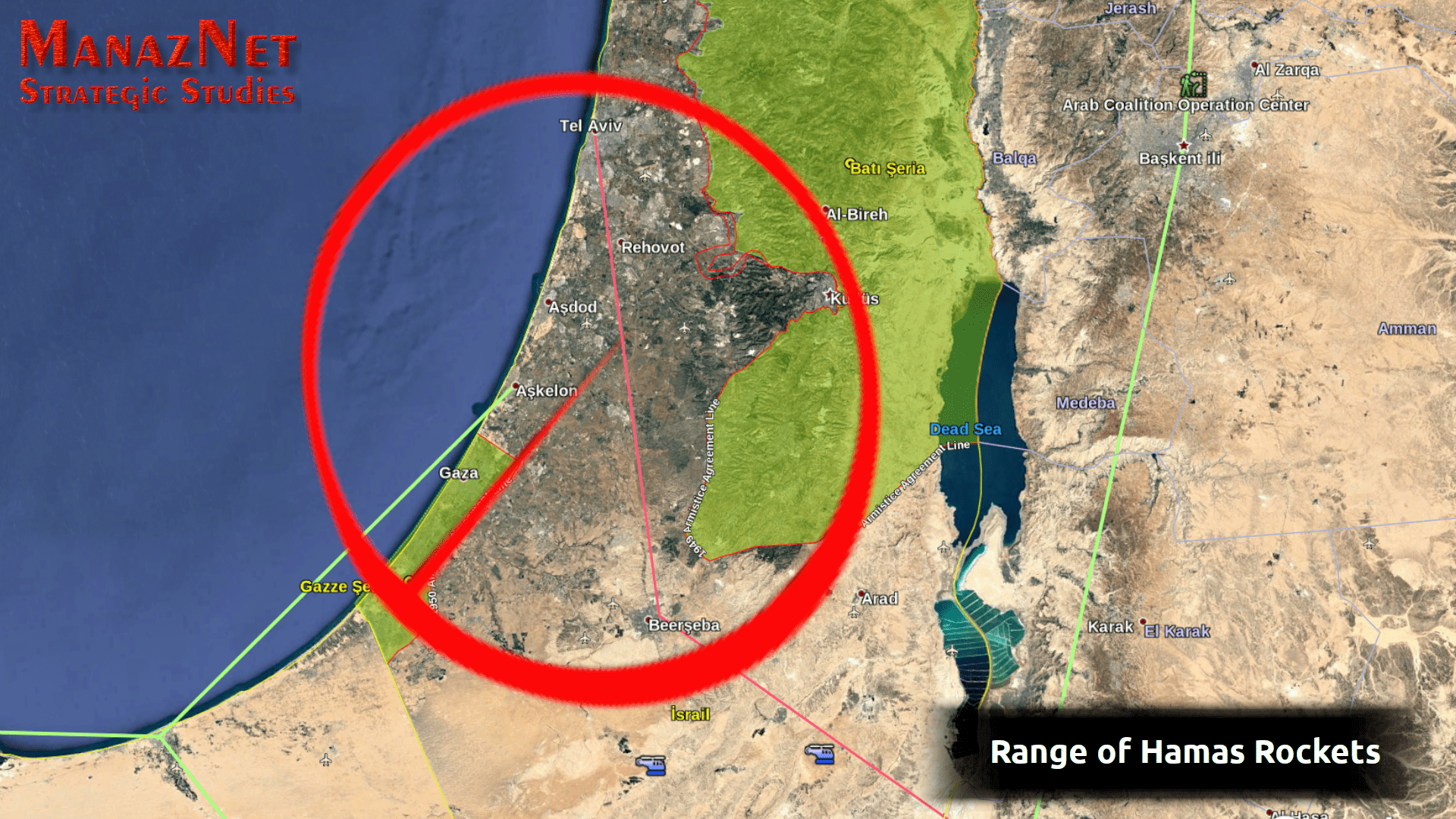
    The range of Hamas Rockets varied between 70 and 100 km. Such an attack came as a surprise to Israel. The rockets that reached TelAviv have killed 5 Israelis and injured dozens so far. A great panic started within the Israeli Police. On the evening of May 11, Palestinians demonstrated in all Israeli cities. Especially in the city of Lid, the Israeli Police lost control and a state of emergency was declared.

    Netanyahu claimed that Hamas would pay a huge price. Warplanes hit hundreds of targets in Gaza on May 11-12. Around 50 Palestinians have died so far. 13 of them are children and 4 of them are women.

    Although Netanyahu spoke harshly, he contacted Cairo and the United Arab Emirates and offered to mediate with Hamas. Hamas, on the other hand, refused mediation offers and declared that they “do not trust the Israeli government and are ready for a great war”. The Kassam Brigades, which are the Special Military Units of Hamas, said that: “Some of their commanders were martyred in Israeli attacks and they will hit an important target every day”.

    It is the first time that Israel has faced such strong Palestinian resistance. Many Zionist writers within Israel and in the US admit that “Israel fell short for the first time”.

    Although Netanyahu succeeds in staying in the Government by going to early elections last years, this time he will not be able to do so. This war seems to be Netanyahu’s Final War. The Israeli people are tired of the war, with the exception of some radical groups. Especially 17-year-old youth recruited into the army complain of long military service periods. The New Generation aspires to live in peace with the Palestinian people with whom they live on the street.