In an Aug. 1 column in The Record, Henry Hirschman presented an interesting point of view: the perspective of Israel and its diaspora supporters of the root cause of the struggle in the Middle East. That point of view is important to help put dissenting views in sharper focus.
Hirschman notes the oft-repeated Israeli claim that Israel is the only democracy in the Middle East: an important issue to some U.S. lawmakers on whom Israel depends for U.S aid. Overlooked are Lebanon and Turkey, both secular democracies, and Jordan, a constitutional monarchy, modeled after that of Britain.
Hirschman also makes the case that Israel is hard put to spend resources on infrastructure, education and other pursuits, when it must defend itself against those who threaten its very existence, and proclaim the destruction of Israel as their life’s mission. In fact, the crux of his column is that the struggle in Palestine is not about land: It is about Israel’s existence.
One might ask, who threatens that existence?
In March 2002, the Arab League offered a comprehensive peace plan to recognize the State of Israel, establish full relations between Israel and all 22 Arab states, including Palestine, in return for Israel’s withdrawal from occupied Arab territories, a just and agreed upon solution to the Palestinian refugee question, and the establishment of a sovereign Palestinian state, with East Jerusalem as its capital. The offer was repeated in April 2007, and included all 57 states of the entire Muslim world. Israel didn’t respond.
In August 1993, in an exchange of letters with Palestinian President Yasser Arafat, Israeli Prime Minister Yitzhak Rabin insisted on changes to the Palestinian Charter. Arafat responded declaring the PLO recognized the State of Israel, is committed to the peace process, and said the PLO renounces terrorism and other acts of violence, and will discipline violators. On April 24 1996, the Palestinian National Council voted 504 to 54, with 14 abstentions, to change the articles in their charter to conform with the letters exchanged between the P.L.O. and the Government of Israel in 1993.
Another Israeli enemy, Hamas, in Gaza, is also described as determined to destroy Israel. But In February this year, Hamas leader Khaled Mesha’al acknowledged Israel as a reality, adding, “formal recognition will only be considered when a Palestinian state has been created.” In 2006, Mesha’al stated Jews have a covenant with God that is to be respected and protected. In 2009, Mesha’al, said Hamas would accept the creation of a Palestinian state based on the 1967 borders of Israel.
Israel has not faced an Arab nation’s armed forces in 37 years. The PLO hasn’t endorsed a terrorist act since 1993. The Lebanese Shia militant organization, Hezbollah, attacked Israel in Lebanon in 1996, and again in 2006 to resist Israeli occupations. There has only been one suicide bomber from Gaza since Hamas took over in 2007.
One could speculate whether this constitutes an effective campaign to drive Israel into the sea.
It is true that Israel withdrew from Gaza in 2005, but put in place a blockade considered by UN human rights organizations as the worst violation of human rights in the world. Israel contends the blockade is essential for its national security. In retaliation, Hamas sporadically fires rockets into Israel. Best estimates are that there are approximately 1,000 members in the Hamas military wing. That represents .0006 percent of the Gaza population: hardly a threat to the existence of Israel, with the fourth or fifth most powerful armed forces in the world.
This struggle is not about Israel’s existence, it is about land.“There is no Zionism, colonization, or Jewish State without the eviction of the Arabs and the expropriation of their lands.”— Ariel Sharon
*
St. Augustine residentRon Estes served 25 years as an operations officer in the CIA Clandestine Service.Six of those years were spent in Middle East operations.
https://www.staugustine.com/story/opinion/2010/08/29/guest-column-struggle-isnt-about-israels-existence/16224558007/, August 29, 2010
Interview with Israeli FM Avigdor Liberman on Reka Radio (Russian)
Under no conditions or provocations can any flotilla or ship harm our
country’s political independence and reach the Gaza Strip.
(Translation by Ministry of Foreign Affairs)
INTERVIEWER: Despite Nicosia’s warning, the Lebanese ship with 60 women on board – Lebanese, Palestinian and European activists – will set sail on
Sunday, August 22, with the infamous mission of trying to breach the naval
blockade on the Gaza Strip. And the Cyprus authorities have unequivocally declared they will not allow the ship to enter Cyprus’s territorial waters and will turn the ship away as soon as it approaches its shores. Mr. Minister, is this declaration the result of Cyprus’s policy or an achievement by Israel’s foreign policy?
FM LIBERMAN: This declaration is without a doubt part of the new relations between us and Cyprus. It reflects our new approach of a multilateral policy. Suffice it to say that over the past year and a half I met with Cyprus’s foreign minister on six occasions, including twice when he visited Israel and on my visit to Cyprus. Our ministers of tourism and social affairs also paid visits. In the autumn, the president of Cyprus is scheduled to make the first ever visit to the State of Israel. In general, this entire spectrum: the Middle East and Balkan states, meaning Cyprus, Greece, Bulgaria and Romania – all these are countries with which we are developing especially close ties. It’s no secret, I paid my visits and just recently the prime minister of Greece visited here, and President Peres visited Bulgaria and Romania. So despite the relative deterioration in our relations with Turkey, we do have other alternatives.
INTERVIEWER: In other words, Israel’s handprint, in the positive sense of
the word, is today being made in many places, including in Cyprus. Is Israel
ready for the next wave of history, which will take place after the women
equipped with medicine for suffering Palestinian cancer patients are
prevented from reaching Gaza?
FM LIBERMAN: I hope we do indeed succeed in foiling this next flotilla while
it is still in Cyprus. However part of Cyprus is Turkish, so there’s a
chance they will use Famagusta port, where we have a lot less influence.If they anchor in Limassol, they probably won’t be able to sail out of there. At any rate, our position is absolutely clear and firm – under no conditions or provocations can any flotilla or ship harm our country’s political independence and reach the Gaza Strip.
INTERVIEWER: There is another interesting angle here. The Lebanese prime
minister and chairman of parliament have refused to make any kind of
statement in support of the actions of the new “peace-loving” ship. Samar
Ali Hajj, one of the woman organizers of the voyage, reported that the two
refused to meet with her. This refusal indicates that Beirut officially does
not support this action. Again, is this about Israeli pressure or a natural
lack of desire to support.
FM LIBERMAN: This is partly our doing. We indirectly contacted members of
the Quartet – France, the United States, and the other members. We appealed
to the president of France, who has great influence in Lebanon. Of course we
also contacted the State Department and the UN secretary-general. Lebanon
must understand that it will bear the full brunt of responsibility for this
kind of provocation. I suppose they understand it even without our
explanations. So under no circumstances do they want to bring on a new round of escalation in the relations between our two countries. In my humble opinion, their position is clear, simple and logical.
INTERVIEWER: The humanitarian activity is not limited to the “Mariam”.
Another ship, carrying 60 containers of foodstuffs, office equipment and
other things, departed on Wednesday evening from Algeria en route to Egypt
and from there to the Gaza Strip. Is this more complex and more volatile?
FM LIBERMAN: We hope this ship will reach El Arish port, where the entire
cargo will be unloaded; and then from there, in the usual manner, under
strict observance of all the inspection rules, the cargo will be transferred
to the Gaza Strip. That was the case with the ship from Libya that, in an
identical manner.
INTERVIEWER: So you don’t expect any special complications here.
FM LIBERMAN: We hope there won’t be any attempts to breach the blockade –
namely to sail towards El Arish and then suddenly change course and try to
breach the naval blockade on Gaza.
Augustus Richard Norton, Professor of Anthropology and International Relations at the Department of International Relations, Boston University
“(…) Since 2006, there has been an uncommon solidarity within the Shiite community and Hizbullah has been the beneficiary. I argue that the solidarity of the Shiite community is an aberration, it is an artifact of the recent war, as well as the fear that another war looms. This is a war that Hizbullah claims it does not seek, but that Israel is expected to launch. Preparations for that war are under way on both sides.
During the late 1990s, while the Israeli occupation continued, Hizbullah’s full-time military cadre numbered about five hundred and was supplemented through a reserve system (in some ways similar to Israel’s). By 2006, that number had doubled. Today, the standing military force is measured in the thousands. There is no way for a civilian researcher to reliably estimate the size of Hizbullah’s arsenal, but by the group’s own estimates its store of arms is far more robust and more sophisticated than it was in 2006.
Despite the fears of war, the Israeli-Lebanese border has been very quiet since the 2006 war. UNIFIL, bolstered under Security Council Resolution 1701, has provided an effective buffer. While it has stopped Hizbullah from publically displaying weapons in the border region, it has not, however, impeded Hizbullah’s ability to rearm.
Unless Hizbullah can be decisively defeated by Israel – defeated in detail, in military parlance – the effect of another war would be to bolster Hizbullah, and to once again validate its narrative.
For a variety of reasons, I believe that it is unlikely that Israel is capable of decisively defeating Hizbullah’s hardened forces. The level of civilian casualties, probably on both sides, would be dreadful, and would prompt a fierce backlash in the Muslim world. Equally important, Israeli soldiers would have to go toe to toe with Hizbullah fighters who know the difficult terrain of
Lebanon intimately and have a strong incentive to protect the home front. The Israeli Army’s comparative advantages, especially technical sophistication, largely disappear in close combat.
Mr. Chairman, I have tried to explain the solidarity that currently exists within the Lebanese Shiite community to the benefit of Hizbullah. Yet, there are a variety of divisions with the community as well. These include secular and clerical opponents of Hizbullah, and, of course, the longstanding rivalry with Amal. In addition, there are strong feelings in some quarters that Hizbullah is too closely aligned with Iran, and that the community’s interests are better served through Arab as opposed to Persian ties. We see variants of these views in Iraq. These latent divisions will remain submerged as long as so many Shiite feel that their community faces an existential threat. One key to reducing Hizbullah’s mass appeal may be to reduce the threat of war, rather than heighten it. So long as the threat prevails, Hizbullah will be a prime beneficiary.”
Frances Guy has extensive experience in the Middle East
Israel has criticised Britain’s ambassador to Lebanon for eulogising a recently deceased Lebanese cleric said to have inspired Hezbollah.
Frances Guy wrote on her personal blog that Grand Ayatollah Mohammed Hussein Fadlallah was a “decent man” who rated among the people she most admired.
An Israeli spokesman said Ayatollah Fadlallah was “unworthy of praise”.
The UK foreign office says it has taken down the blog after “mature consideration”.
It said the comments reflected Ms Guy’s personal opinion, not official UK policy.
Ayatollah Fadlallah, Lebanon’s top Shia Muslim cleric, died on Sunday at the age of 74. Thousands of people attended his funeral in Beirut and tributes poured in from all over the Arab and Islamic worlds.
Two days ago, CNN sacked a veteran Middle East editor who wrote on Twitter that she “respected” the late cleric, saying that her credibility had been compromised.
Controversial figure
Ayatollah Fadlallah was customarily described as the spiritual leader of the militant movement Hezbollah when it was formed in 1982 – a claim both he and the group denied.
Ms Guy, who has been ambassador since 2006, wrote on her blog that Ayatollah Fadlallah was the politician in Lebanon she most enjoyed meeting.
“The world needs more men like him willing to reach out across faiths, acknowledging the reality of the modern world and daring to confront old constraints,” she wrote.
Israel’s foreign ministry denounced the comments.
“We believe that the spiritual leader of [Hezbollah] is unworthy of any praise or eulogising,” a spokesman told the Israeli newspaper, Yediot Ahronot.
“If Hezbollah was firing missiles at London and Glasgow, would this leader still be called ‘decent’?” he added.
Ayatollah Fadlallah was a controversial figure.
He was revered as one of Shia Islam’s highest religious authorities and won support from many Muslims for his anti-American stance and his support for the Islamic revolution in Iran.
He advocated suicide attacks as a means of fighting Israel, and has been linked to the 1983 suicide bombings that killed more 300 American troops at the US marine barracks in Beirut.
But he condemned the 9/11 terror attacks and had relatively progressive views on the role of women in society.
‘Personal view’
Hezbollah’s military wing is proscribed in the UK as a terrorist organisation.
But Ms Guy, who has met with Hezbollah officials on several occasions, wrote that Ayatollah Fadlallah’s passing left Lebanon “a lesser place”.
“When you visited him you could be sure of a real debate, a respectful argument and you knew you would leave his presence feeling a better person,” she wrote.
“That for me is the real effect of a true man of religion; leaving an impact on everyone he meets, no matter what their faith.”
The British foreign office said it had removed the blog post as it did not fully reflect the British government’s policy.
“The ambassador expressed a personal view on Sheik Sayyed Fadlallah, describing the man as she knew him,” a spokesman told the BBC.
“While we welcomed his progressive views on women’s rights and interfaith dialogue, we also had profound disagreements – especially over his statements advocating attacks on Israel,” he added.
Abolishing visa requirements with some countries has driven an exceptional rise in the number of tourists to Turkey, particularly from Arab countries such as Syria, Lebanon and Libya, recent data revealed.
According to data the Tourism Investors Association (TYD) shared with Cihan News Agency, the overall number of tourists from Arab countries to Turkey has risen by almost 50 percent in the first six months of this year over the same period of 2009, a direct result of recently improving relations with countries in the region.
Speaking about the increasing interest of Arab tourists in Turkey, TYD President Turgut Gur says people from Middle Eastern countries tend to prefer vacation hubs such as Istanbul and Antalya; however, the Black Sea region is gradually becoming more popular with these same Arab tourists.
“There has been a remarkable increase in the number of Arab tourists visiting Turkey particularly after the elimination of visa requirements with some countries in the region. One can assume that Arab tourists feel more comfortable in Turkey than in any European country or in the US due to certain cultural and religious similarities,” he suggested.
Along with the elimination of visa requirements, the government’s recent interactions with Israel, due to the ongoing Gaza blockade, and the spread of Turkish soap operas among the Arab population, via satellite TV, has created a positive image for Turkey in the region.
According to Gur the existing Arab tourist potential for Turkey could certainly increase even more if Turkey knows how to “take advantage of it.” “We need to improve our relationship with Arab tourists with such incentives as employing more Arabic-speaking people in tourism facilities,” he suggested. Gur had earlier said he expects the number of Arab tourists to reach 1 million this year.
Businesses attune themselves to Arab tourists’ preferences
Having seen the growing interest in and curiosity about Turkey, tour operators, hotel owners and business owners are looking to hire new employees who can speak Arabic as they want to provide better service and attract as many as Arab tourists as they can, Cuneyt Mengu, the owner of the Mercan tourism agency says. He remarked, “We see that businesses are trying to prepare themselves for this new trend in the Turkish tourism market.”
Some shops include product labels in Arabic, while restaurants are preparing menus to suit the tastes of Arab customers. In a unique example, following the recent flocking of Arab tourists to the region, the Trabzon Governor’s Office earlier started a program to train people who can speak Arabic to work at tourist facilities on the city’s Uzungol Plateau, famous for its scenic lake, as well as fresh fish and green scenery. Some Arab entrepreneurs are even considering buying land to build new hotels in the region, stated officials.
“Most Arab tourists that we have served in the past,” Mengu continues, “say they are happy to see people speaking Arabic in Turkey.” Noting that they are happy with the current interest from Arabs, Mengu says their company enjoyed a 15 percent increase in the number of Arab tourists in first six months over the same period of last year.
“We believe the market will see an increase in this number by the end of the year. I call on Turkish entrepreneurs to make good use of such potential,” he added.
Turkish Association of Travel Agents (TURSAB) President Basaran Ulusoy said that Turkey’s potential to attract Arab tourists should be capitalized upon since “these people stay for relatively longer and spend more than average.”
“Turkey is one of the safest and most attractive vacation destinations for the Arab world. Geographical proximity is one other advantage for us,” he said. According to Ulusoy Turkish travel agents have been successful in hosting Arab tourists by using effective advertising campaigns.
The Israeli Naval Commando had prior knowledge of who was on the Turkish ship including where passengers were residing in terms of cabin layout. According to Swedish author Henning Mankell, who was on board the Marmara , “the Israeli forces attacked sleeping civilians.”
These were targeted assassinations. Specific individuals were targeted. Journalists were targeted with a view to confiscating their audio and video recording equipment and tapes.
“We were witnesses to premeditated murders,” said historian Mattias Gardell who was on the Mavi Marmara.
“…Asked about why activists on the Turkish ship had attacked the Israeli soldiers, Gardell stressed “it is not as if Israel is a police officer whom no human being has the legitimate right to defend him or herself against”:
“If you are attacked by commando troops you of course must have the right to defend yourself … Many people on this ship thought they were going to kill everyone. They were very frightened … It’s strange if people think one should not defend oneself. Should you just sit there and say: ‘Kill me’?” he said.” (See Mahdi Darius Nazemroaya,Detailed Compiled Eyewitness Accounts Confirm Cold-Blooded Murder and Executions by Israeli Military, Global Research, June 1, 2010)
“They even shot those who surrendered. Many of our friends saw this. They told me that there were handcuffed people who were shot,” (quoted by Press TV)
The Israeli Commando had an explicit order to kill.
What was the role of the United States?
The raids on the Gaza Freedom Flotilla, bear the mark of previous Israeli operations directed against unarmed civilians. It is a well established modus operandi of Israeli military-intelligence operations, which is tacitly supported by the US administration.
The killing of civilians is intended to trigger a response by Palestinian resistance forces, which in turn justifies Israeli retaliation (on “humanitarian” grounds) as well as a process of military escalation. The logic of this process was contained in Ariel Sharon`s “Operation Justified Vengeance” initiated at the outset the Sharon government in 2001. This Operation was intent upon destroying the Palestinian Authority and transforming Gaza into an urban prison. (See Michel Chossudovsky, “Operation Justified Vengeance”: Israeli Strike on Freedom Flotilla to Gaza is Part of a Broader Military Agenda, Global Research, June 1, 2010).
The Israeli attack of the Flotilla bears the fingerprints of a military intelligence operation coordinated by the IDF and Mossad, which is headed by Meir Dagan. It is worth recalling that as a young Coronel, Dagan worked closely with then defense minister Ariel Sharon in the raids on the Palestinian settlements of Sabra and Shatilla in Beirut in 1982.
There are indications that the US was consulted at the highest levels regarding the nature of this military operation. Moreover, in the wake of the attacks, both the US and the UK have unequivocally reaffirmed their support to Israel.
There are longstanding and ongoing military and intelligence relations between the US and Israel including close working ties between various agencies of government: Pentagon, National Intelligence Council, State Department, Homeland Security and their respective Israeli counterparts.
These various agencies of government are involved in routine liaison and consultations, usually directly as well as through the US Embassy in Israel, involving frequent shuttles of officials between Washington and Tel Aviv as well as exchange of personnel. Moreover, the US as well as Canada have public security cooperation agreements with Israel pertaining to the policing of international borders, including maritime borders. (See Israel-USA Homeland Security Cooperation, See also Michel Chossudovsky, The Canada-Israel “Public Security” Agreement, Global Research, 2 April 2008)
The Role of Rahm Emmanuel
Several high level US-Israel meetings were held in the months prior to the May 31st attacks.
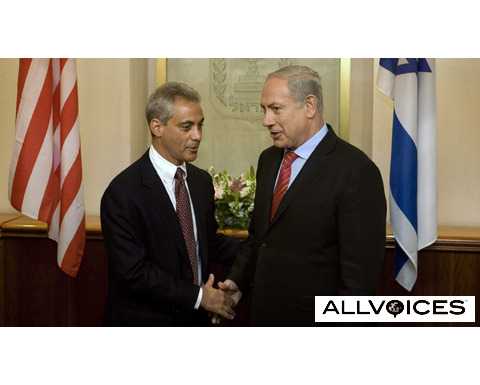
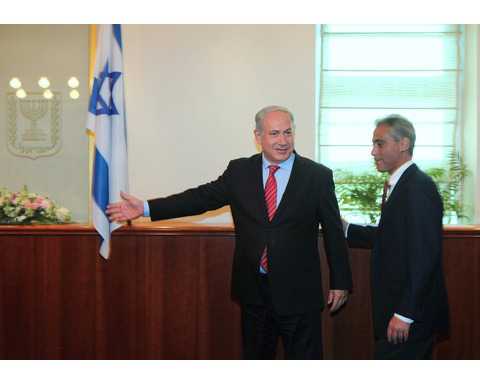
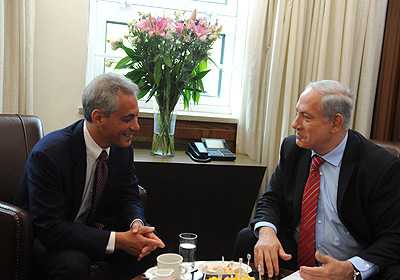
Rahm Emmanuel, Obama’s White House chief of Staff was in Tel Aviv a week prior to the attacks. Confirmed by press reports, he had meetings behind closed doors with Prime Minister Netanyahu (May 26) as well as a private visit with President Shimon Peres on May 27.
May 26 meeting between Rahm Emmanuel and Prime Minister Binyamin Netanyahu
Official statements do not indicate whether other officials including cabinet ministers or IDF and Mossad officials were present at the Rahm Emmanuel-Netanyahu meeting. The Israeli press confirmed that Rahm Emmanuel had a meeting with Defense Minister Ehud Barak, whose Ministry was responsible for overseeing the Commando attack on the Flotilla. (Rahm Emanuel visits Israel to celebrate son’s bar mitzvah – Haaretz Daily Newspaper | Israel News, 23 May 2010). The White House also confirmed that Rahm Emmanuel was to meet other high-ranking Israeli officials, without providing further details. (Rahm Emanuel in Israel for Son’s Bar Mitzvah, May Meet With Officials)
“Our Man in the White House”
While born in the US, Rahm Emmanuel also holds Israeli citizenship and has served in the Israeli military during the First Gulf War (1991).
Rahm is also known for his connections to the pro-Israeli lobby in the US. The Israeli newspaper Maariv calls him “Our Man in the White House” (quoted in Irish Times, March 13, 2010). Rahm Emmanuel gave his support to Obama in the November 2008 presidential elections following Obama`s address to the pro-Israeli lobby AIPAC.
At the time of Rahm Emmanuel’s confirmation as White House chief of staff, there were reports in the Middle East media of Rahm Emanuel’s connections to Israeli intelligence.
The exact nature of Rahm Emmanuel’s ties to the Israeli military and intelligence apparatus, however, is not the main issue. What we are dealing with is a broad process of bilateral coordination and decision-making between the two governments in the areas of foreign policy, intelligence and military planning, which has been ongoing for more than 50 years. In this regard, Israel, although exercising a certain degree of autonomy in military and strategic decisions, will not act unilaterally, without receiving the “green light” from Washington. Rahm Emmanuel`s meetings with the prime minister and Israeli officials are part of this ongoing process.
Rahm Emmanuel’s meetings in Tel Aviv on May 26 were a routine follow-up to visits to Washington by Prime Minister Netanyahu in March and by Minister of Defense Ehud Barak in late April. In these various bilateral US-Israel encounters at the White House, the state Department and the Pentagon, Rahm Emmanuel invariably plays a key role.
While the pro-Israeli lobby in the US influences party politics in America, Washington also influences the direction of Israeli politics. There have been reports to the effect that Rahm Emmanuel would “lead a team of high octane Democratic party pro-Israel political operatives to run the campaign for the Defense Minister Ehud Barak” against Netanyahu in the next Israeli election. (Ira Glunts, Could Rahm Emanuel Help Barak Unseat Netanyahu? Palestine Chronicle, June 2, 2010)
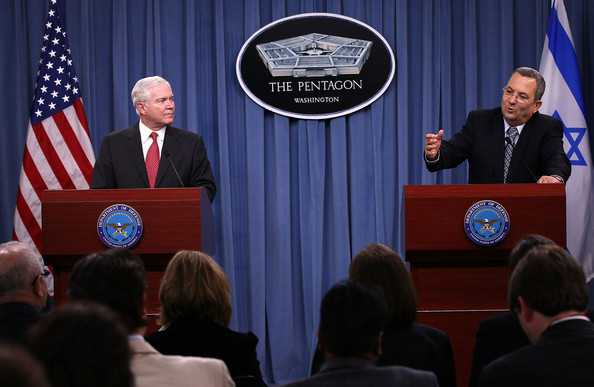
The April 27 meeting between US Defense Secretary Robert Gates and Defense Minister Barak pertained to “a range of important defense issues” directly or indirectly related to the status of the Palestinian territories under Israeli occupation:
“As President Obama has affirmed, the United States commitment to Israel’s security is unshakable, and our defense relationship is stronger than ever, to the mutual benefit of both nations. The United States and our ally Israel share many of the same security challenges, from combating terrorism to confronting the threat posed by Iran’s nuclear-weapons program.
For years, the United States and Israel have worked together to prepare our armed forces to meet these and other challenges, a recent major example being the Juniper Cobra joint exercise held last October. Our work together on missile-defense technology is ongoing, and the United States will continue to ensure that Israel maintains its qualitative military edge.” (Press Conference with Secretary Gates and Israeli Defense Minister Barak, April 2010 – Council on Foreign Relations April 27, 2010)
These consultations pertained to ongoing military preparations regarding Iran. Both Israel and the US have recently announced that a pre-emptive attack against Iran has been contemplated.
Washington views Israel as being “‘integrated into America’s military architecture,’ especially in the missile defense sphere.” (quoted in Emanuel to rabbis: US ‘screwed up’ Jerusalem Post, statement of Dennis Ross, who is in charge of the US administration’s Iran policy in the White House, May 16, 2010).
Targeting Iran
The attack on the Freedom Flotilla, might appear as a separate and distinct humanitiarian issue, unrelated to US-Israeli war plans. But from the standpoint of both Tel Aviv and Washington, it is part of the broader military agenda. It is intended to create conditions favoring an atmosphere of confrontation and escalation in the Middle East war theater;
“All the signs are that Israel has been stepping up its provocations to engineer a casus belli for a war against Hamas in Gaza and Hezbollah in Lebanon. Tel Aviv sees as unfinished business its inconclusive wars: the first in Lebanon in 2006, and the second in Gaza in 2008-09.” (Jean Shaoul Washington Comes to the Aid of Israel over Gaza Convoy Massacre, Global Research, June 4, 2010)
Following Israel’s illegal assault in international waters, Netanyahu stated emphatically “Israel will continue to exercise its right to self defence. We will not allow the establishment of an Iranian port in Gaza,” suggesting that the Gaza blockade was part of the pre-emptive war agenda directed against Iran, Syria and Lebanon. (Israeli forces board Gaza aid ship the Rachel Corrie – Telegraph, June 5, 2010, emphasis added) .
Moreover, the raid on the Flotilla coincided with NATO-Israel war games directed against Iran. According to the Sunday Times, “three German-built Israeli submarines equipped with nuclear cruise missiles are to be deployed in the Gulf near the Iranian coastline.” (Israel Deploys Three Nuclear Cruise Missile-Armed Subs Along Iranian Coastline).
While Israeli naval deployments were underway in the Persian Gulf, Israel was also involved in war games in the Mediterranean. The war game codenamed “MINOAS 2010” was carried out at a Greek air base in Souda Bay, on the island of Crete. Earlier in February, The Israeli air force “practiced simulated strikes at Iran’s nuclear facilities using airspace of two Arab countries in the Persian Gulf, which are close territorially with the Islamic republic and cooperate with Israel on this issue.” Ria Novosti,War Games: Israel gets ready to Strike at Iran’s Nuclear Sites,, March 29, 2010)
Also, in the wake of the final resolution of the 2010 Review Conference of the Parties to the Treaty on the Non-Proliferation directed against Israel’s nuclear weapons program, the White House has reaffirmed its endorsement of Israel’s nuclear weapons capabilities. Washington’s statement issued one day before the raid on the flotilla points to unbending US support to “Israel’s strategic and deterrence capabilities”, which also include the launching of a pre-emptive nuclear attack on Iran:
“a senior political source in Jerusalem said Sunday that Israel received guarantees from U.S. President Barack Obama that the U.S. would maintain and improve Israel’s strategic and deterrence capabilities.
According to the source, “Obama gave [Prime Minister Benjamin] Netanyahu unequivocal guarantees that include a substantial upgrade in Israel-U.S. relations.”
Obama promised that no decision taken during the recent 189-nation conference to review and strengthen the 40-year-old Nuclear Non-proliferation Treaty “would be allowed to harm Israel’s vital interests,” the sources said. Obama promised to bolster Israel’s strategic capabilities, Jerusalem officials say – Haaretz Daily Newspaper)
Robert Gates and Israel's Minister of Defense Ehud Barak, Press Conference, April 27, 2010
The Turkey-Israel Relationship in Jeopardy?
The actions of Israel against the Freedom Flotilla have important ramifications. Israel’s criminal actions in international waters has contributed to weakening the US-NATO-Israel military alliance.
The bilateral Israel-Turkey alliance in military, intelligence, joint military production is potentially in jeopardy. Ankara has already announced that three planned military exercises with Israel have been cancelled.“The government announced it was considering reducing its relations with Israel to a minimum.”
It should be understood that Israel and Turkey are partners and major actors in the US-NATO planned aerial attacks on Iran, which have been in the pipeline since mid-2005. The rift between Turkey and Israel has a direct bearing on NATO as a military alliance. Turkey is one of the more powerful NATO member states with regard to its conventional forces. The rift with Israel breaks a consensus within the Atlantic Alliance. It also undermines ongoing US-NATO-Israel pre-emptive war plans directed against Iran, which until recently were endorsed by the Turkish military.
From the outset in 1992, the Israeli-Turkish military alliance was directed against Syria, as well as Iran and Iraq. (For details see See Michel Chossudovsky, “Triple Alliance”: The US, Turkey, Israel and the War on Lebanon, Global Research, 2006)
In 1997, Israel and Turkey launched “A Strategic Dialogue” involving a bi-annual process of high level military consultations by the respective deputy chiefs of staff. (Milliyet, Istanbul, in Turkish 14 July 2006).
During the Clinton Administration, a triangular military alliance between the US, Israel and Turkey had unfolded. This “triple alliance”, which in practice is dominated by the US Joint Chiefs of Staff, integrates and coordinates military command decisions between the three countries pertaining to the broader Middle East. It is based on the close military ties respectively of Israel and Turkey with the US, coupled with a strong bilateral military relationship between Tel Aviv and Ankara.
Starting in 2005, Israel has become a de facto member of NATO. The triple alliance was coupled with a 2005 NATO-Israeli military cooperation agreement which included “many areas of common interest, such as the fight against terrorism and joint military exercises. These military cooperation ties with NATO are viewed by the Israeli military as a means to “enhance Israel’s deterrence capability regarding potential enemies threatening it, mainly Iran and Syria.” (“Triple Alliance”: The US, Turkey, Israel and the War on Lebanon).
The Issue of Territorial Waters
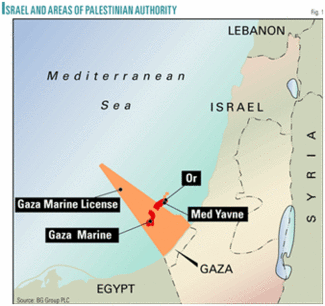
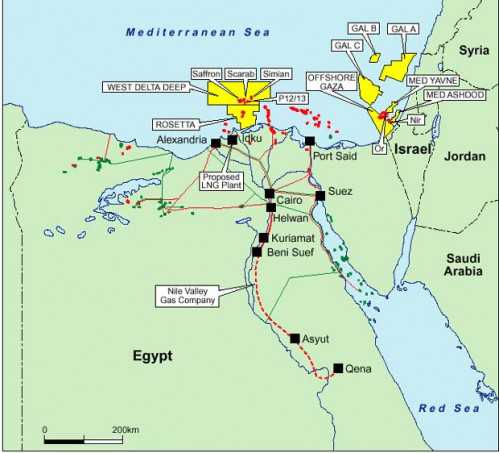
Israel’s blockade of Gaza is in large part motivated by the broader issue of control of Gaza’s territorial waters, which contain significant reserves of natural gas.What is at stake is the confiscation of Palestinian gas fields and the unilateral de facto declaration of Israeli sovereignty over Gaza’s maritime areas. If the blockade were to be broken, Israel’s de facto control over Gaza’s offshore gas reserves would be jeopardy. (See Michel Chossudovsky,War and Natural Gas: The Israeli Invasion and Gaza’s Offshore Gas Fields, Global Research, January 8, 2009. See also Michel Chossudovsky, The War on Lebanon and the Battle for Oil, Global Research, July 23, 2006)
 By RON ESTES