Category: Iraq

  • Turkey Contributes  To Iraqi Fragmentation

    Turkey Contributes To Iraqi Fragmentation

    By: Necdet Pamir for Al-Monitor. Posted on February 20.
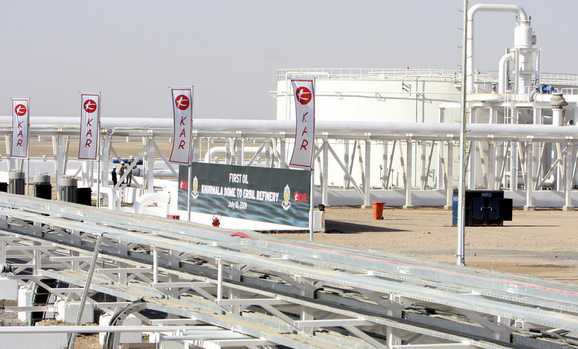
    The refinery at Khurmala oilfield in Erbil, Iraqi Kurdistan, opened in 2009. (photo by REUTERS/Azad Lashkari)Read more: https://www.al-monitor.com/originals/2013/02/turkey-krg-relations-strain-future-iraq-oil-interests.html#ixzz2Lwcp1oRF
    The refinery at Khurmala oilfield in Erbil, Iraqi Kurdistan, opened in 2009. (photo by REUTERS/Azad Lashkari)
    Read more: http://www.al-monitor.com/pulse/originals/2013/02/turkey-krg-relations-strain-future-iraq-oil-interests.html#ixzz2Lwcp1oRF

    The International Energy Agency’s Iraq Energy Outlook (2012) reports, “Alongside its announcement of 143 billion barrels of proven reserves, the Ministry of Oil stated in 2010 that Iraq’s undiscovered resources amounted to some 215 billion barrels.” While the former figure is equivalent to almost 9 percent of the world’s proven oil reserves, the latter is more than 13 percent of the total. Iraq also has significant natural gas reserves that constitute some 1.5% of the world’s total, making Iraq 13th among global reserve holders.

    About This Article

    Summary :

    Turkey’s relationship with the Kurdistan Regional Government may be undermining its long-term economic and energy interests in Iraq, writes Necdet Pamir.

    Author: Necdet Pamir

    For neighboring Turkey — which imports 93% of the oil it consumes and 98% of its gas — Iraq offers an excellent source of potentially cheaper energy and an opportunity to diversify its supply. Iraq’s favorable exploration, development and production costs as well as lower transportation expenses highlight its importance for Turkey, which paid $60.1 billion for its energy imports in 2012. That year, 12% of its oil imports came from Iraq, while 41% was imported from Iran.

    The Turkish Petroleum Corporation (TPAO), the state-run oil and gas exploration and production company, began trying to win bids in Iraq in 1994. The company finally successed (with partners) in 2009, winning five successive bids, all of them located around Basra: the Siba gas field, Mansuriyah gas field, Badra oil field, Missan oil field and Block 9.

    This modest success, capping a 15-year effort, now seems to be threatened by a Turkish government decision to apparently transport oil and gas produced in northern Iraq without the approval of the Iraqi federal government. Modest volumes were being transported using road tankers, but Ankara and the Kurdish Regional Government (KRG) then declared their intention in 2012 to jointly construct oil and gas pipelines to transport larger quantities. The volume for the oil pipeline was announced as starting at 200,000 barrels per day (bpd) with the expectation of an increase to 1 million bpd. If a gas pipeline is built, it would have a capacity of 10 billion cubic meters a day.

    In the inevitable reaction, Iraqi Deputy Prime Minister Hussain al-Shahristani, in an interview with the BBC on Nov. 15, 2012, said, “If Turkey does not give up supporting pipelines to transport northern Iraq’s oil and gas directly through Turkey, then the Iraqi central government would not hesitate to block Turkish companies from investing or bidding in Iraq.” Shahristani further stated, “According to the bilateral agreement between the governments of Turkey and Iraq, Turkey should exclusively work with the Iraqi central government, which is the only authority to permit the exports according to the Iraqi constitution.”

    Prime Minister Nouri al- Maliki accused Turkey of wanting more than oil, stating, “Turkey made a deal with Iraq’s Kurdish administration, and an agreement aimed to divide Iraq.” Maliki pointed to reports from politicians in the region as evidence that such a deal was in fact made.

    How Iraqi oil and gas should be managed lies in articles 111 and 112 of the constitution. Article 111 states, “Oil and gas are owned by all the people of Iraq in all the regions and governates,” and article 112 defines the framework for management of oil and gas extraction from current fields as well as newly discovered ones. In both cases, authority is given to the central (federal) government, albeit along with the producing regions and governates. Article 112 further states that any related activity is to be regulated by law. (Of note, the Hydrocarbon Law is awaiting ratification by the Iraqi parliament.) Thus, the federal government considers the Turkish and KRG efforts a violation of the Iraqi constitution and a challenge to its sovereignity.

    A list of other contentious issues have further complicated relations between Iraq and Turkey, including Ankara’s refusal to extradite Tariq al-Hashimi, the former Iraqi vice president who was charged with running death squads and sentenced to death in absentia in 2012. As a consequence of the prevailing tensions, in November 2012 the “Iraqi cabinet [had] expelled Turkey’s state-owned TPAO from the consortium that was granted the rights to explore Block 9, and has asked Kuwait Energy to take over the shareholding.” It seems fair to say that if the Turkish government continues with its current approach, it should come as no surprise if the other four bids are also voided or worse.

    Iraqi Oil Minister Abdul Kareem Luaibi announced on Jan. 16 that Baghdad plans to sue Genel Energy, the first direct exporter of oil from northern Iraq, and perhaps cut government funding allocated for the region unless it ceases what he labeled as smuggling. Genel Energy is a joint Turkish-British private company following a recent reshuffle of its equity structure.

    The possible consequences of Turkish policy could become a broader problem because of concerns in Washington. Francis Ricciardone, the US ambassador to Turkey, reflected on them when he said, “Turkey and Iraq have no choice but to pursue strong ties if they want to optimize the use of Iraq’s resources and export them via Turkey. If Turkey and Iraq fail to optimize their economic ties, the failure could be worse than that. There could be a more violent conflict in Iraq and [the chances of] disintegration of Iraq could be [strengthened].” During the last days of 2012, relations between the Baghdad government and Iraqi Kurds became so tense that they both reinforced military positions along their internal border.

    Ricciardone’s words appear to have fallen on deaf ears, at least at the government level, but perhaps someone in Ankara has the capacity to discern the agenda evident in the words of Nechirvan Barzani, prime minister of the KRG, in an interview with Time magazine in December 2012. When asked, “Is it possible to say that you are closer than ever to an independent Kurdistan?,” Barzani responded, “I believe, yes, we have a very good opportunity. But we have a lot of challenges as well. How we can — I mean an independent Kurdistan — first of all we have to convince at least one country around us. Without convincing them, we cannot do this. Being landlocked we have to have a partner, a regional power to be convinced and internationally, a major power to be convinced to support that. What we want right now is to have an economic independence within Iraq.”

    The Turkish government’s efforts toward the construction of oil and gas pipelines directly connecting the KRG-controlled oil and gas fields to Turkey without the approval of the Iraqi federal government could be a step toward fulfilling the first “challenge” cited by Barzani. After economic independence within Iraq, the eventual target it seems is an independent Kurdistan. The one country the Kurds need to support them will reinforce their landlocked country’s quest for independence. What country could they possibly have in mind?

    Necdet Pamir is chief editor of EnerjiEnergy.com and an instructor at Bilkent University.

    Read more: http://www.al-monitor.com/pulse/originals/2013/02/turkey-krg-relations-strain-future-iraq-oil-interests.html#ixzz2Lwc1Eg8c
  • Turkey-Iran Ties Strained  By Iraq, Syria

    Turkey-Iran Ties Strained By Iraq, Syria

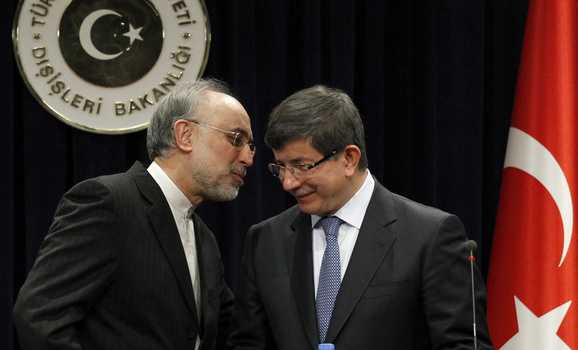
    Turkey's Foreign Minister Ahmet Davutoglu and his Iranian counterpart Ali Akbar Salehi attend a news conference in Ankara
    Turkey’s Foreign Minister Ahmet Davutoglu and his Iranian counterpart, Ali Akbar Salehi (L), attend a news conference in Ankara, Jan. 19, 2012. (photo by REUTERS/Umit Bektas)

    Semih Idiz for Al-Monitor Turkey Pulse. Posted on February 19.

    Ask diplomats from both countries and they will say Turkish-Iranian relations rest on a solid foundation, despite occasional turbulence and attempts by “nefarious western countries” to spoil them. But the situation is not that rosy with Ankara and Tehran increasingly competing for influence in the Middle East, rather than cooperating to stabilize the region.

    About This Article

    Summary :

    Tehran and Ankara are struggling to keep up appearances as differences over Iran and Syria begin to take a toll on their bilateral relationship, writes Semih Idiz.

    Author: Semih Idiz
    Posted on : February 19 2013

    Take Syria, for example, a topic that both countries diverge on radically. Tehran continues to support President Bashar al Assad as a matter of vital importance for its regional interests. Ankara, on the other hand, continues to support Syrian groups fighting to depose Assad and overturn his regime.

    Given this situation, Turkey and Iran are now accusing each other of prolonging the Syrian crisis. In a rare confession Foreign Minister Ahmet Davutoglu even admitted, only a few days ago, that he had what appears to be a futile phone conversation on the topic with his Iranian counterpart Ali Akbar Salehi.

    “I discussed Syria with the Iranian foreign minister, but we cannot agree.” Davutoglu told reporters bluntly after a meeting of the Turkey-EU Join Parliamentary Commission in Ankara on Feb. 14. He nevertheless added that “they would keep the lines of communication open” with Tehran.

    But this is not the only problem between the two countries. Tehran is also disappointed with Turkey for ostensibly bowing to pressures from the US in order to facilitate what Iranian officials claim are Western and Israeli military plans for the region. Tehran is also unhappy over the fact that Turkey’s trade with Iran has started to drop because of US pressures, a fact that is particularly noticeable in the dramatic fall seen in Turkey’s crude oil imports from Iran.

    This fact is particularly noteworthy since officials from both countries frequently pointed to the growing levels of trade in the past, when trying to show just how “excellent,” ties between the two countries were despite pressures on Ankara to comply with Western sanctions on Iran.

    Looking back over these past three decades one does see that lines of communication between the two countries have remained open and that ties have weathered many storms. This was especially the case in the 1980s and 1990s when staunchly secularist Turkish governments frequently accused Tehran of trying to export its Islamic revolution to Turkey.

    Great hopes were raised in Ankara and Tehran for taking these ties even further after the advent of the Islamist Justice and Development Party (AKP) in Turkey in 2002. The AKP’s Islamist roots did in fact turn Ankara into a staunch supporter of Tehran against its Western critics and enemies who were, and still are, concerned that Iran is trying to become a regional nuclear power.

    Prime Minister Recep Tayyip Erdogan annoyed Washington and Turkey’s NATO allies at that state when he  frequently suggested that he could not understand why those who possessed nuclear weapons where trying to prevent Iran from getting them. Erdogan’s first target was Israel, of course, but his remarks were clearly aimed at the US, too.

    Turkey also achieved what it believed at the time to be major international coup for Turkish diplomacy, when, together with Brazil, it negotiated a swap deal in May 2010 with Tehran for Iran’s stock of enriched uranium. In Tehran, a jubilant Davutoglu said after the announcement of the deal that there was no longer any need for any UN sanctions against Iran, a remark taken in the West as a clear sign of Turkey’s advocacy of Iran.

    But Washington rejected the Turkish-Brazilian deal and none of Turkey’s NATO allies were prepared to support it either. Instead, the US started applying pressure on Ankara to comply with the sanctions against Tehran, and to allow the stationing of NATO’s advanced anti-missile radar systems in Turkey — a vital part of the US-led missile defense shield project targeting Iran.

    Weighing its NATO membership against advocacy of Iran’s rights, Ankara eventually complied with this request in November 2011 and allowed the deployment of this radar system in the town of Kurecik, in eastern Turkey. Erdogan and Davutoglu insisted vehemently then, and still do, that the radar was not against Iran, citing the fact that no NATO document relating to it referred to any country as a target.

    American and NATO officials, however, made it clear through various statements that Iran was indeed the prime target. Meanwhile no one in Tehran accepted the Erdogan-Davutoglu line either. In the end, this deployment turned out to be a critical turning point in Turkish-Iranian relations that have since also come under added pressure due to the Syrian crisis.

    The strong opposition by Iran to the deployment of Patriot missiles against a possible attack from Syria is also related to this topic. Tehran says the Patriots are in Turkey for the long haul adding that their real mission is to guard the radar system in Kurecik against a possible attack from Iran. Ranking Iranian military officials have made it clear that if Israel attacks Iran, all US and NATO facilities in the region will be considered legitimate targets.

    Meanwhile Turkey’s tense relations with the pro-Iranian Maliki government in Baghdad, as Ankara continues to deepen political and economic ties with Northern Iraqi Kurds, are also fueling Iranian suspicions over Turkey’s regional intentions. Tehran is making its dissatisfaction over this known, too.

    The Kurdish daily Rudaw reported recently that Iran had “warned Iraq’s autonomous Kurds against thinking about independence, harming relations with the Shiite government in Baghdad and getting too close to Turkey.”

    This message was reportedly transmitted by Qasem Soleimani, the commander of Iran’s powerful Al Quds Force, to a delegation from Northern Iraq which recently visited Tehran. Al Quds is said to have enormous influence in Iraq, and is reportedly also helping the Assad regime in Syria fight against opposition forces.

    “You should not think about the division of Iraq and harming Kurdish-Shiite relations” Soleimani reportedly told a delegation from the Patriotic Union of Kurdistan (PUK), one of the two major parties in Kurdish Northern Iraq.

    The PUK delegation is said to have included Kosrat Rasul Ali, the party’s acting leader, its deputy secretary general Barham Salih and Khasraw Gul Muhammad, a member of the party’s leadership council. All three are highly influential figures in Northern Iraq.

    Meanwhile, Baram Majeed Khan, a PUK advisor on Iranian affairs, was quoted saying “Iran is worried about the fact that the Kurdistan Region has strong economic and commercial ties with Turkey” and adding, “Iran feels that Turkey has crept into the Kurdistan Region more than it should.”

    Meanwhile, Iranian officials are said to be deeply disappointed with the 29% drop in crude oil exports by Turkey from Iran in December 2012, compared to the previous month, after Washington effectively blocked a “gold-for-oil” deal between the two countries.

    Ankara could circumvent Western sanctions against Tehran by means of that deal under which oil and gas purchased by Turkey would be paid for in Turkish liras lodged in Halkbank, a state owned Turkish bank. Iranian operators would then buy gold bullion on the Turkish market with that money and transport it overland to Iran.

    According to Reuters, a new provision of US sanctions which came into force on Feb. 6, effectively tightens control on sales of precious metals to Iran and also prevents Halkbank from processing oil payments for Iran by other countries.

    Clearly, the lines of communication between Ankara and Tehran will remain open, but these developments belie the rosy picture diplomat are trying to paint for Turkish-Iranians relations which are marked increasingly with rivalry rather than amity.

    Semih İdiz is a contributing writer for Al-Monitor’s Turkey Pulse. A journalist who has been covering diplomacy and foreign-policy issues for major Turkish newspapers for 30 years, his opinion pieces can be followed in the English language Hurriyet Daily News. He can also be read in Taraf. His articles have been published in The Financial Times, the Times, Mediterranean Quarterly and Foreign Policy magazine, and he is a frequent contributor to BBC World, VOA, NPR, Deutche Welle, various Israeli media organizations and Al Jazeera.

    Read more: http://www.al-monitor.com/pulse/originals/2013/02/turkey-iran-tensions-rise-syria.html#ixzz2LQrdcliz

  • Arabs, Turkey Want to Control Serekaniye for Strategic Advantage, Kurdish Leader Says

    Arabs, Turkey Want to Control Serekaniye for Strategic Advantage, Kurdish Leader Says

    10539_492768387453738_1424759149_n_326350546

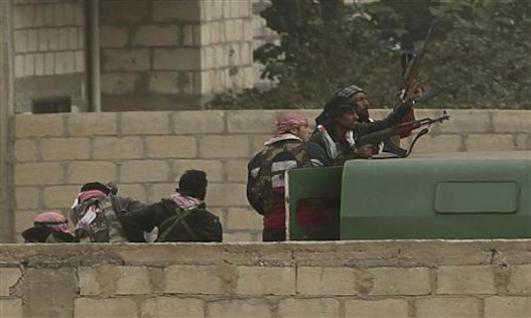
    Fighters of the Farouq brigade in Serekaniye. Photo: PYD.

    ERBIL, Kurdistan Region – The close proximity of the Syrian city of Serekaniye (Ras al-Ain) to the Turkish border is the reason behind ongoing violent clashes there between the Arab and Kurdish opposition to the Damascus regime, says Salih Muslim, the leader of the Kurdish Democratic Union Party (PYD).

    The Kurdish opposition in Syria and the predominantly Arab Free Syrian Army (FSA), the main force fighting to oust President Bashar al-Assad’s regime, has been on the same side in its quest to topple the regime. But recently, fighting erupted in Serekaniye between the FSA and PYD-affiliated Popular Protection Committee (YPG), with the Kurds accusing Turkey of fueling an Arab-Kurdish war.

    “Serekaniye is the Arab fighters’ door to Turkey and logistical support,” says Muslim. “If they control Serekaniye they will easily control Derik. As matter fact if they control Serekaniye they can control as far as Hassaka,” Muslim says.

    He explains that Serekaniye has a strategic location, and controlling it would give the Arabs more leverage over the Kurds, because the Arabs can separate Kobani and Afreen from Jazeera. Muslim claims that Arab control over this region will impede traffic and communications between Kurds in the two geographically separate regions.

    “There is no communication, there is fighting in this area. When the fight is over, the communications and relations will restore to their ordinary situation,” Muslim says. ”The Arab fighters are trying to eliminate communications and relations completely, and place Jazeera under their control,” he claims.

    Muslim adds that upon discovering that they could not implement their plan through the FSA Turkish forces joined up with tribal leader Nawaf Basheer, who was appointed head of the Jazeera and Furat Liberation Front.

    “They (Turkish forces) have allocated $200 million for this force,” Muslim says.

    According to Muslim, “Basheer is after money. His tribe does not support him. Those who fight for him, they fight for money.”

    In the past, Arab fighters have publicly claimed that the PYD receives orders from Turkey, saying that if it and the YPG comply with Turkish demands to stay away from the border from Serekaniye to Derik, then both would have to withdraw from these towns.

    “Their plan is to disarm the Kurds, “Muslim says. “This is something different from the Syrian revolution, it does not serve the Syrian revolution. This is a Turkish demand to eliminate the Kurds.”

    But Muslim believes that the fight in Serekaniye has brought the Kurdish factions closer together.

    “It’s no longer a revolution for freedom and democracy. What’s happening today is a fight for power and distribution of power,” he told Rudaw.

    Thus far, Muslim claims, eight members of the YPG have been killed, while the death toll within forces loyal to Turkey is estimated in the hundreds.

    via Rudaw.net – English – Arabs, Turkey Want to Control Serekaniye for Strategic Advantage, Kurdish Leader Says.

  • Opposition Leader Says ‘Turkey Wants to Harm the Kurdish Cause’ in Syria

    Opposition Leader Says ‘Turkey Wants to Harm the Kurdish Cause’ in Syria

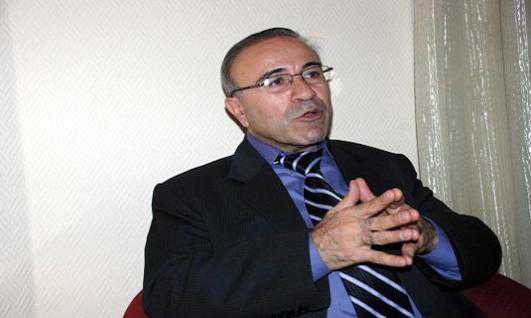
    Abdulhakim Bashar, the first president of the Kurdish National Council (KNC) and the secretary of the Kurdish Democratic Party in Syria (Al Party) Photo: Rudaw

    DSC_0145_opt_385467707_612974409

    ERBIL, Kurdistan Region – Abdulhakim Bashar, the first president of the Kurdish National Council (KNC) and the secretary of the Kurdish Democratic Party in Syria (Al Party), who directs his party from Erbil, accuses Turkey of supporting Arab fighters against the Kurds in Serekaniye (Ras al-Ain).

    He told Rudaw that by doing so Turkish intelligence wants to harm the Kurdish cause, but that by backing radical Islamists on its border Turkey is threatening its own future security.

    Rudaw: Why have the Arab fighters directed their heavy weapons towards Serekaniye? Does capturing Remelan have something to do with attaching Serekaniye (Ras al-Ain)?

    Abdulhakeem Bashar: Serekaniye is an alarm that shows the existence of groups that are hostile toward the Kurds and want to eliminate their cause. Some terrorist groups have come to Serekaniye after the withdrawal of the Syrian regime from that town. They are easing the pressure on the Syrian regime. If these groups really care about fighting the Syrian regime, then they should go and fight in Damascus and Aleppo where the real fight is. These fighters are making a big mistake by fighting in Serekaniye, because by doing so they help the Syrian regime and create a Kurdish-Arab war. This will change the path of the Syrian revolution dramatically. There is an Alawite-Sunni conflict in Syria, and if a Kurdish-Arab conflict is created, then the Syrian regime will never collapse. For these reasons, I believe that these groups are either very narrow-minded or they are working for the Assad regime. I hope this issue will be solved politically; otherwise, as the AI party, we will have a different reaction.

    Rudaw: Will you send your armed forces to Serekaniye?

    Abdulhakeem Bashar: We will send our forces to Serekaniye if deemed necessary. This is a sacred duty, for which we will have to sacrifice.

    Rudaw: Do you believe in the existence of external influence in this issue?

    Abdulhakeem Bashar: We treat Turkey as a friendly country, but unfortunately it facilitates the movement of the Arabs into Serekaniye. This means that Turkey wants to harm the Kurdish cause. But, this will only increase the problems for Turkey, because it will complicate the Kurdish issue inside Turkey, and the radical Islamists will settle on the Turkish border. The Turkish government might not be involved in this, but according to the information we obtained, there are signs of involvement of the National Intelligence Organization (MIT) in this issue.

    Rudaw: But isn’t the MIT under the control of the Turkish government?

    Abdulhakeem Bashar: A group inside the Turkish government is involved. But this does not mean that there is a political decision behind it. I can’t say for sure which group it is, but this action surely does not serve the interests of Turkey, nor ours. If Turkey were truly a friend of the Syrian revolution, then supporting these groups would be a mistake. If it were a friend of the Syrian Kurds, then supporting these radical Islamists would again be a mistake, as well as a threat to the border security of Turkey.

    Rudaw: Have you tried to contact the Turkish consulate in Erbil to convey your grievances to the Turkish government?

    Abdulhakim Bashar: No. But a woman from the Turkish consulate contacted me and asked me questions about this issue. I told them that the situation was very bad and that we might change our way of thinking about Turkey if things continue in this manner.

    Rudaw: Do these groups seek to control only Serekaniye, or do they have other goals?

    Abdulhakim Bashar: I believe that these forces cannot control Serekaniye, unless it is done over the dead bodies of the Kurds. This will become a national war for the Kurds and all Kurds shall support it.

    Rudaw: What kinds of affiliations do these radical groups have?

    Abdulhakim Bashar: These armed groups are connected to Jabhat al-Nusra and Ghuraba al-Sham. The United States branded the former as a terrorist group. Ghuraba al-Sham was previously called Jund al-Sham, which was a terrorist group and created by the Syrian intelligence agency. This group carried out 80 percent of the terrorist attacks in Iraq. The leader of this group was called al-Qaaqaa and was killed in Aleppo three years ago. They later changed their name to Ghuraba al-Sham, but they are still controlled by the Syrian regime.

    Rudaw: How long will the conflict in Serekaniye last?

    Abdulhakim Bashar: If the Syrian National Coalition (SNC) intervenes, then the conflict in Serekaniye will stop. But, if things continue in this way, this conflict will worsen and become a war between Kurds and Arabs.

    Rudaw: How is the situation in west Kurdistan after receiving humanitarian aid?

    Abdulhakim Bashar: It has become better. We thank the Kurdistan Region very much. But, the distribution of the humanitarian aid was not very organized. Some groups claimed to the people that the aid was their own in certain regions. We also hoped that the aid would somehow reach Ifrin and Kobani, as these two regions have suffered a lot. We ask the Kurdistan Region to help these two regions as well.

    Rudaw: But geographically it is not possible.

    Abdulhakim Bashar: We can do this through Turkey’s help. The Kurdistan Region must ask for assistance from the Turkish government.

    via Rudaw.net – English – Opposition Leader Says ‘Turkey Wants to Harm the Kurdish Cause’ in Syria.

  • Turkey to continue its oil trade with Iraq despite US opposition, Erdogan says

    Turkey to continue its oil trade with Iraq despite US opposition, Erdogan says

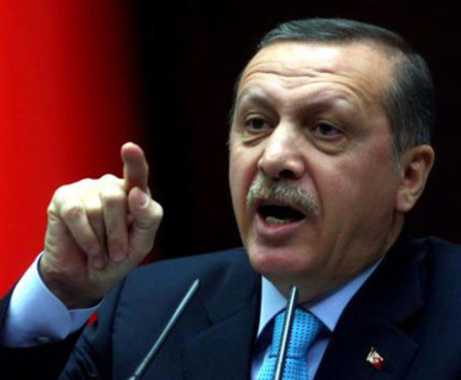
    Turkey will continue its oil trade with the Kurdistan Regional Government (KRG) in northern Iraq, Turkish Prime Minister Recep Erdogan has said, while confirming the trade as legitimate, Hurriyet Daily News reported.

    Erdogan_200412

    Turkey is supporting its neighbor in its need to trade and buying petrol in return, he said during an interview with reporters on his way back from a mission to Eastern Europe yesterday. Below are his responses to questions from journalists.

    Is Turkey signing a broad energy agreement with northern Iraq?

    The central government wants to keep everything under its control. At this point they say they could do anything if the regional administration in northern Iraq does not withdraw from such business.

    “We would give gasoline if they want, we would give diesel if they want,” they say.

    But we do not have a [stance] about this [dispute], despite the American inclusion.

    America says you are doing wrong.

    No, we believe this is included in the [Iraqi] constitution. Because northern Iraq has an authorization of right on an 18 percent structure it might use this authorization with any country. And we are its neighbor. It has such a need. As their neighbor, we are helping them in meeting this need. In return we buy petrol or such things.

    What are your thoughts on Foreign Minister Ahmet Davutoğlu’s response to Iraqi PM Noiri al-Maliki?

    Maliki began to go too far. Davutoğlu’s remarks were also very hard. When Maliki sent such a message I decided not to respond him, but Davutoğlu did instead. This was Davutoğlu’s response.

    Have you had any news from Iraqi President Jalal Talabani?

    We only know that his situation is serious. Some say it is serious, some say not.

    Will the opposition in Syria talk with President Bashar al-Assad?

    The statements by [Syrian National Council Head Sheik Ahmad] Moaz al-Khatib were twisted. Al-Khatib says they would meet a government that does not include al-Assad. Not the one with al-Assad. But they have twisted it and made it look like a contact with al-Assad. Al-Khatib by no means accepts al-Assad, he says they wouldn’t talk. Such a thing cannot happen. But they might sit at the table with the other remnants of the regime. And this is a reflection of the Geneva talks.

    And the [Democratic Union Party] PYD is restless because the opposition has started squeezing the PYD. The PYD has a serious problem particularly in Qamishli and Hassake. The opposition is continuing this process [of pressure] very well. The regime is losing power in terms of air control. Of course this does not mean that they do not have any air control.

    Some say Turkey should play pioneer role in persuading allies?

    Our initial approach about going into such a tour to persuade allies has been talking with the United Nations, the Arab League, the Organization of Islam Conference, Russia and China. But we could not achieve the required result.

    Even the Arab League is not yet giving enough support. The U.N. Security Council had unfortunately not taken bunch of steps until its latest meeting in Doha.

    It is obvious who donated money at the Doha meeting: the Gulf countries and Saudi Arabia. The sum is said to be $1.3 billion as far as I remember, and a $600 million portion was promised by Saudi Arabia and Qatar alone. But despite all this, I tell you that al-Assad will go. He is not here to stay. The opposition powers are working with all they have today. After the Doha event, the support for them will grow continuously and we are continuing our humanitarian support. Our open gate policy will continue. Our spending so far has surpassed $600 million. In the upcoming period we will keep on locating [refugees] in houses or camps.

    How will the process work during a second Peace and Democracy Party (BDP) mission to İmralı?

    We will talk on the issue with colleagues tomorrow [Feb. 8]. In the meantime, maybe the MİT chairman might give a talk. He will inform us about the issue.

    You had set a March deadline for the work on the new Constitution.

    This is the timing for the Parliamentary speaker. We did not set a deadline but this cannot be limitless. Keeping it limitless means diluting the process.

    via Turkey to continue its oil trade with Iraq despite US opposition, Erdogan says – AzerNews.

  • Iraqi MP: Turkey’s Policy on Iraq to Ignite War

    Iraqi MP: Turkey’s Policy on Iraq to Ignite War

    A1133900TEHRAN (FNA)- An Iraqi lawmaker lashed out at Ankara for its aggressive policy on Iraq, and cautioned that the policy will likely result in conflict.

    “Ankara wishes to annex Iraq to Turkey even if the materialization of that dream results in a new war between the two neighboring countries,” Hossein al-Maraabi told FNA in Baghdad.

    He added that Turkey has taken advantages of the political crisis in Iraq to meddle with Baghdad’s affairs in a move to obtain its interests.

    Meantime, the lawmaker blamed Iraqi Parliament Speaker Osama al-Nujaifi for preventing Baghdad from giving a firm response to Turkey.

    “The ignorance shown by Osama al-Nujaifi towards this issue caused Iraq to avoid adopting such a strong stance as severing its economic or political ties with that country,” he said.

    In similar remarks last week, a senior advisor to Iraqi Prime Minister Nouri al-Maliki lashed out at Ankara for its interference in the internal affairs of the regional states, and took Turkey responsible for growing unrests in the region.

    “The wrong policies of the government of (Turkish Prime Minister) Erdogan and the country’s Foreign Minister (Ahmet Davutoglu) are the main cause of unrests in the region,” Ali Al-Moussavi told FNA on Sunday.

    “With the green light of some powerful countries, Erdogan has started unjustified and unnecessary meddling in the affairs of the regional countries, specially Iraq and Syria since several months ago and that meddling can fuel unrests in the region,” Moussavi stated.

    He added that Iraq has informed Ankara of its anger at Turkey’s policies through Ankara’s embassy in Baghdad, and noted, “Their policy is outside the diplomatic norms and is also condemned at the UN.”

    The remarks by Moussavi came after Davutoglu on Friday expressed deep concerns over the ongoing internal tension in neighboring Iraq and claimed that Maliki appeared to have largely lost the confidence of his people.

    via Fars News Agency :: Iraqi MP: Turkey’s Policy on Iraq to Ignite War.