Category: UK

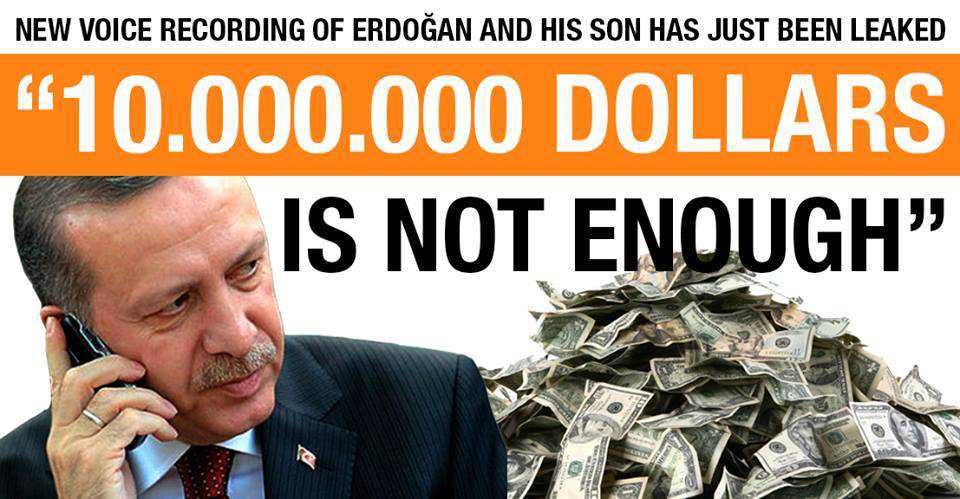
  • “10,000,000 dollars is not enough”

    “10,000,000 dollars is not enough”

    10,000,000 dollars is not enough

    A new recording of a phone call between Prime Minister Tayyip Erdoğan and his son Bilal has been leaked last night.

    In the alleged recording, Erdoğan and his son are discussing the amount of the bribe to be taken from a businessman named Sıtkı Ayan. Erdoğan finds the offered 10 million dollars insufficient, and instructs his son not to accept unless Ayan provides the amount he promised.

    Sıtkı Ayan is the owner of SOM Petrol, a London-based corporation that owns oil and gas wells in various countries and turns over billions of dollars every year. Turang Transit Transportation, also owned by Mr. Ayan, was awarded the government contract to build a $11.5 billion pipeline to transport natural gas from Iran and Turkmenistan to Europe. The investment was subsidised by the government, and the corporation was held exempt from VAT and various other taxes and duties.

    According to the whistleblowers who leaked the call, Mr. Ayan pays regular bribes to Prime Minister Erdoğan, just like the “other businessmen”.

    Transcript:

    Bilal Erdoğan: Mr. Sıtkı came yesterday, saying he couldn’t do the transfer properly, that he currently has about 10 or so (million dollars), that he can give it whenever we want…
    Tayyip Erdoğan: No no, don’t you take it.
    Bilal Erdoğan: No I won’t, but I don’t know what we’ll do now.
    Tayyip Erdoğan: No, don’t take it. If he’s going to bring what he promised, then let him bring it. If not, then no need. Others can bring it, so why can’t he, huh? What do they think is? But they are falling now, they’ll fall on our laps, don’t you worry.
    Bilal Erdoğan: OK, daddy.

    Click here to listen to the recording (in Turkish):

    Alternative link: watch?v=4GZBw369nEM

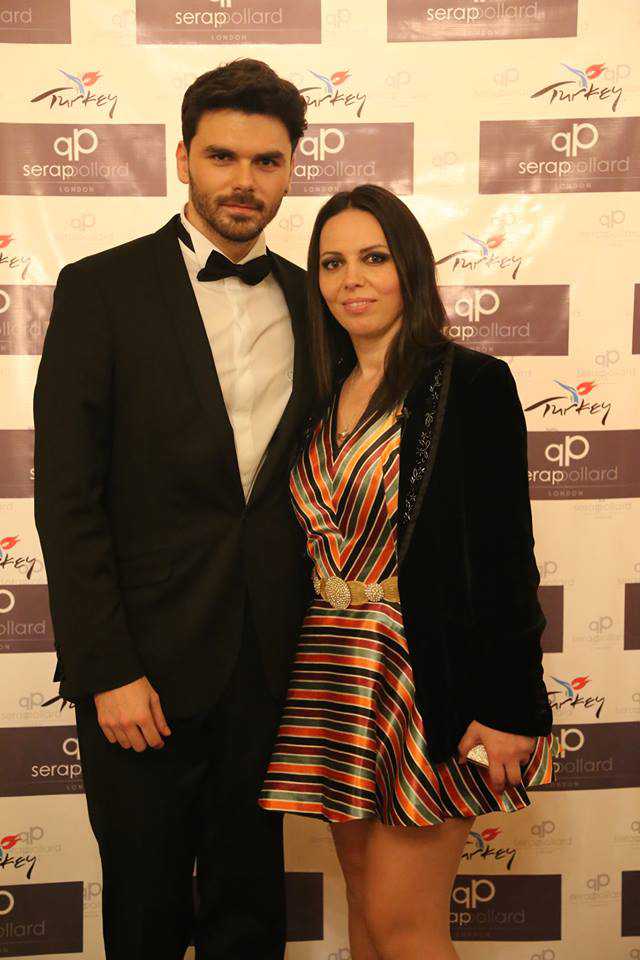
  • London Fashion Week  And Serap Pollard Collection AW14

    London Fashion Week And Serap Pollard Collection AW14

    serap pollarda This year Serap’s collection was shown London Fashion Week Season AW14.  The show was sponsored by the Turkish Ministry of Culture & Tourism. Her latest collection at the London Fashion Season AW14 Show will utilize Turkish fabrics and traditional techniques,  Serap Pollard believes that Turkey is very rich in traditional values as a result of a deep and rich history, therefore, she is very attentive to use the traditional values of Turkey in her designs.  In similarity to her previous projects,  Serap Pollard will be using  fabrics which originate from the depths of Turkey’s history as it appeals to have rich traditional values within the culture.  Although sustainable or organic clothes lack of colour and model, the designs of Serap Pollard are very successful at combining traditional lines with the world trends. Use of ecological products in her designs has received great attention in Europe.   Serap Pollard works towards promoting sustainability and helping people in the world’s most marginalized communities escape poverty by actively supporting Fair Trade producer groups in Turkey.   She is one of the few designers who produces sustainable fashion.   Sustainable fashion is a way of producing clothing in an Eco-friendly way.  The goal being to reduce the negative impact it has on the environment and maximize the garments lifespan, avoiding the typical short term garment trend of just wearing a piece of clothing for one season.  Serap Pollard’s show is sponsored by the Turkish Ministry of Culture & Tourism. The distinguished designer commented: “I’m thrilled to be working with the Turkish Ministry as official sponsors on my forthcoming London Fashion Week Season AW14 Collection Show.”

    serap pollard bhttps://www.facebook.com/SerapPollardLondon

    www.serappollard.com

    https://www.facebook.com/GoToTurkeyUK

    Serap Pollard was born in Turkey.  After graduating from Faculty of Fine Art of Marmara University in 2000,  Serap Pollard moved to London and has been living there ever since.  In 2000, she studied at London College of Fashion, University of the Arts, and Central Saint Martin’s College, adding to her already impressive resume.  In 2012 she completed her Masters degree at University of the Arts London after working for 10+ years in London with well-established companies (Laura Ashley etc.) and designer brands in which she continuously attended International and National Fashion Fairs and then she launched her brand under the name of SERAP POLLARD LONDON in 2011.  One key indication that a brand has become a lifestyle is when it successfully extends beyond its original product category.   Serap’s style evolves into a refined pureness of female elegance, but is still very comfortable and wearable.  Every detail, high quality of standard, tradition, and craftsmanship is being cared for.  Serap Pollard thinks that Turkey is very rich in traditional values, as a result of her deep and rich history,  she is very attentive to use the traditional values of Turkey in her designs.  Serap Pollard London works towards promoting sustainability and helping people in the world’s most marginalized communities escape poverty by actively supporting Fair Trade producer groups in Turkey.  The brand provides training to artisans and their organisations so they can improve their skills, and strengthen their businesses and social impact.  Serap Pollard London also allows time for production by hand and often invests in local community projects too. Although sustainable or organic clothes lack of colour and style, the designs of Serap Pollard are very successful at combining traditional lines with the world trends. Use of ecological products in her designs has received attention in Europe. Serap Pollard is one of the few designers who produces sustainable fashion. Sustainable fashion is a way of producing clothing in an Eco-friendly way. The goal being to reduce the negative impacts it has on the environment and maximise the garments lifespan, avoiding the typical short term garment trend of just wearing a piece of clothing for one season. Pollard is not only a nature lover, but also aims to contribute to the country economy. Another way of making eco-friendly clothes is “zero waste”.  15% of the fabric is wasted while producing a shirt. Pollard has leveled down this percentage by using appropriate patterns.  Thus, from an agriculture labourer to factory owner, from customer to the nature, every aspect in the life cycle of shirt reap the benefit of this approach.

    AW15 Collection/ 15th February 2014 (KUTNU) Acculturation

    We live in a multi-cultural world. Transportation, communication, globalisation, improving international relations, and movements of manpower increasingly bring people of different cultures closer together.  Cultures influence each other thanks to this. I have prepared this collection with the conscious of we live in a global village where acculturation is inevitable.  The starting point for this were the photos of two little girls. Two photos which were taken in different times and different places. The only common point of two girls, who look with different emotions, is the innocence. One of the photos were taken in Gaziantep, a kid with black big eyes and wearing clothes of traditional kutnu fabric; which I call “ diamond”.  The other one is a Princess Louise (1848-1939) portrait.  The second “diamond” gives me inspiration with her innocent appearance and yellow ringlet hairs.  Likewise in my previous projects, I  used a traditional and historical value of Turkey in my new project: Kutnu fabric.  Kutnu Fabric which is a hand woven fabric of Gaziantep in Turkey, and silk chiffon have been used as major materials in my designs. It is very suitable to the Serap Pollard London brand and style, as it is sustainable and ethical. I lived in Turkey until 2000 and have been living in London for the last 14 years. I like travelling. I like searching and learning about new cultures as well as following the interaction between cultures. I too am a part of Global Village.

    PROJECTS • “Under The Baobab” 2012 Londra Olimpics

    Pollard has made great impression by the project titled “Under the Baobab” which was materialized with an inspiration from Turkish history. Pollard collaborated with various fashion designers from the world in this project. It was the giant Olympic Tree, made of traditional Turkish fabrics, aroused great interest. Pollard, for this project, says “..a project with the objects of wood and fabric made me very excited. When we looked back to Turkish history, the foundation symbol of Ottoman Empire was a tree. This project with traditional Turkish fabrics has brought the Turkish history to today`s modern-day.”

    Mr Turkey and Serap Pollard
    Mr Turkey and Serap Pollard

    • SELALMAZ / KASTAMONU

    Serap Pollard says that she began this project with the aim of “adding value to the value” and set out on a fashion journey from London to Kastamonu. She adds that she preferred clothes which are more longer lasted, recyclable and away from fashion for this project. She weaved the Selalmaz Fabric of Kastamonu with the Eco-friendly Bamboo yarn and adapted this fabric to silk fabrics by using digital printing technique. The traditional weavings has been showcased in Europe.

    The Turkish designer aimed to make the Selalmaz fabric, a traditional value of Turkey, gain its well-deserved place. Providing a business opportunity to Kastamonu tradesmen and avoiding the extinction of Selalmaz fabric were among her aims too.  Pollard has completed her MA in Sustainable Fashion in London University with this project.

    • TOP MODEL UK Designs of the Turkish Designer Serap Pollard were used in Top Model UK.  Pollard signed her name to Top Model UK 2013 by using the garments made of ecological fabrics as well as ecological products

    • TOP MODEL WORLDWIDE

    Pollard made an indelible impression in local, national and international media organs by dressing models from 46 different countries in Top Model Worldwide 2013. Fashion authorities are already in agreement for her upward moving success graphic. This accomplishment has a broad repercussion in Turkey as well. Pollard has been officially appreciated by various Turkish Ministries for her contributions to the recognition of Turkey`s traditional values.

    • IZNIK CINISI

    The patterns of Iznik Tile, main theme of 2014 Spring/Summer collection, attracted great attention in the UK as well as the US where the editorial photo-shoots were performed.

    The Turkish designer says that she made a 3-months-research in Turkey, patterns designs were made in Turkey and the prepared fabrics were became clothes in London.  The promotion shooting of the collection was realized during London Fashion Week.

    American Modelling Agency and its staff were used for editorial shootings in Hollywood and Beverly hills.

    The American models, one more beautiful than the other, wore the garments which carry the blue colour and patterns of Iznik tile.  The name of Pollard`s collection is “Tiled-UP” and used the traditional blue tonnes of the word-famous Bursa Iznik Tile, Turkish blue, dodger blue and midnight blue were widely used in the collection. Serap Pollard states that it is very exciting to introduce Turkey in American Fashion word and adds “it is very extraordinary experience to tell the subjects, patterns and colours which you know best to the people you listen”.

  • Britain’s visa rules are a mess

    Britain’s visa rules are a mess

    According Mary Dejevsky at the Chatham House, entry rules to the UK are a mess.
    Mary Dejevsky is a columnist for The Independent, February 2014
    The World Today, Volume 70, Number 1

    Simple for the wealthy, a source of anger and resentment for the rest


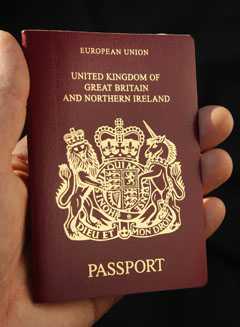
    At least all those non-EU citizens wanting to live and work in the European Union now know where Malta stands. If they have a spare €650,000, plus more for dependents, they will be able to treat the whole family to Maltese passports. In so doing, they will effectively buy full access to all 28 EU countries – and the right to visit many others visa-free.

    However Malta’s move is viewed – and Brussels is not happy, but currently has no mechanism to prevent it – there is virtue in clarity.

    According to Chatham House for a brief period, a limited number of rich people will be able to obtain citizenship of an EU country by contributing to a Maltese development fund. Such paid-for provisions are not unheard of: Britain and others already offer a path to citizenship for £1 million-plus investors.

    But Malta’s scheme, as originally concieved, differs in having no residence requirement. It really is offering a passport of convenience.

    Some might reasonably object that the fuss about Maltese passports ignores the ease with which members of the global elite – aside from those expressly blacklisted – are already able to cross borders. It is the rest, including the new middle classes of the emerging economies, for whom visa restrictions are burdensome. And frustrated applicants reserve some of their most bitter complaints for Britain.

    The point was made pithily a few years ago by the Russian liberal politician, Grigory Yavlinsky, when he spoke at Chatham House. After making a plea for Britain to relax visa restrictions on Russians, he remarked with heavy sarcasm that there were some Russians, including those with dubious pasts, for whom entry to the UK was no problem.

    To judge by my inbox, the ill-feeling generated by the British visa system has only increased. Many complaints are about delays, costs and carelessness with crucial documents. But recurrent themes are the supercilious attitude of officials and a perception that the rules are applied both inflexibly – formulaic box-ticking – and arbitrarily.

    In recent months, I have learnt of several individuals from former Soviet states whose applications to visit relatives for a short stay have been turned down, even though they have visited regularly over several years. I have also attended conferences where featured speakers have received their visas late or not at all.

    Unfavourable comparisons are made with other EU countries in the Schengen zone – the 22 EU members which have abolished passport controls at their common borders – or even with the United States.

    Part of the explanation may be the ambivalence and sheer muddled thinking that often seems to prevail at the very top. On the one hand, the British Government has an electoral mandate for a sharp reduction in immigration. Yet its toughest talk concerns prospective new arrivals from Romania and Bulgaria – about whom it can actually do nothing.

    On the other hand, it is keen to attract ever more overseas (non-EU) students, while refusing them the right to stay after graduation.

    Looking enviously across at France, it also wants many more tourists, especially those, such as high-spending Chinese, of whom France attracted six times more than Britain last year.

    To this end, the Chancellor, George Osborne, recently proposed simplifying the visa rules for Chinese business people and tour groups if they were also applying for a visa from one of the Schengen countries. France has since gone one better by providing a 48-hour service. The race for the Chinese yuan is on.

    However, Britain’s efforts to be competitive have only introduced more inconsistencies. Membership of Schengen has been rejected by successive UK governments on the grounds that it would mean contracting out border security to other EU countries. Yet, as is now tacitly acknowledged, nonmembership puts Britain at a disadvantage in the tourism stakes. So it has come close to accepting the Schengen visa process in practice, but only for well-heeled Chinese.

    One consequence could be resentment on the part of others, including those from the Commonwealth and the former Soviet Union. Individual visitors – relatives, artists, performers or academics – already feel they receive short shrift. Positive discrimination for Chinese business people and shoppers could only make matters worse.

    UK visas are a particularly sore point among Russians, with the British authorities stressing security concerns, and Moscow insisting that any liberalization be reciprocal. It would be facetious to suggest that the new arrangements for Chinese could be extended to others – by requiring, say, sponsoring organizations, to include generous shopping vouchers with their invitations.

    But should the way to a British visa really lie through Harrods? There must be a more equitable, less mercenary, way.

    Mary Dejevsky is a columnist for The Independent

  • GCHQ chief to step down by year’s end following Snowden leaks

    GCHQ chief to step down by year’s end following Snowden leaks

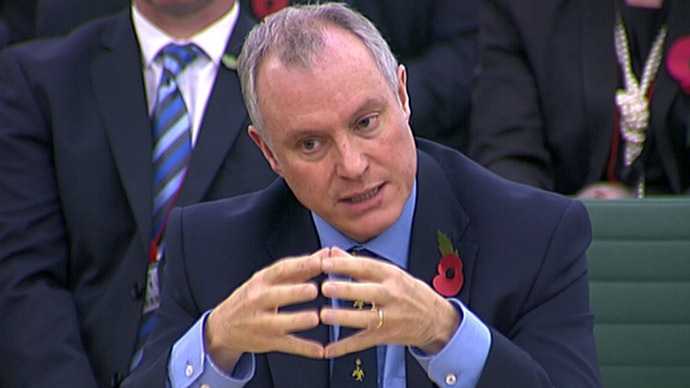
    Iain Lobban the director of GCHQ (Reuters/UK Parliament via REUTERS TV)
    Iain Lobban the director of GCHQ (Reuters/UK Parliament via REUTERS TV)


    The head of GCHQ, Britain’s electronic intelligence agency, will step down by year’s end, the Foreign Office said. Officials denied his departure was linked to public outrage over mass surveillance revelations by NSA whistleblower Edward Snowden.

    Iain Lobban, 53, has served as GCHQ’s director since June 2008. His departure was officially described as a long-considered move, but comes just a few weeks after he was summoned to answer MPs’ questions about surveillance operations in an unprecedented televised open session of the UK parliament’s intelligence and security committee, along with the heads of MI5 and MI6.

    “Iain Lobban is doing an outstanding job as director of GCHQ,” a spokesperson said. “Today is simply about starting the process of ensuring we have a suitable successor in place before he moves on, planned at the end of the year.”

    Officials dismissed suggestions his decision was influenced by revelations made by Snowden, a former National Security Agency (NSA) contractor, whose leaks revealed details of a massive global surveillance network run by the NSA and other members of the so-called Five Eyes alliance – the US, UK, Australia, Canada and New Zealand.

    Despite accounting for the bulk of Britain’s three intelligence agencies’ combined budget of £2 billion, GCHQ had previously attracted far less public attention than MI5 or MI6.

    It was damaging media revelations regarding wide-scale collaboration between GCHQ and the NSA that resulted in Lobban being called to appear before the parliamentary Intelligence and Security Committee alongside the heads of MI5 and MI6 in November.

    At the hearing, Lobban accused Snowden’s disclosures of seriously damaging Britain’s counter-terrorism efforts, saying extremists had discussed changing their communication methods following the revelations.

    Critics, however, have accused GCHQ of working hand-in-hand with the NSA in massively intruding on the private communications of millions of citizens.

    In June, the Guardian reported the NSA had secretly gained access to the network of cables which carry the world’s phone calls and internet traffic, and, by 2010, was able to boast the “biggest internet access” of any member of the Five Eyes alliance.

    According to media reports, the NSA and GCHQ had a particularly close relationship, sharing troves of data in what Snowden called “the largest program of suspicionless surveillance in human history.”

    Around 850,000 NSA employees and contractors with top secret clearance had access to the GCHQ databases, allowing them to view and analyze information garnered from such subtly titled programs as ‘Mastering the Internet (MTI)’ and ‘Global Telecoms Exploitation (GTE).’

    Lobban, who first joined GCHQ in 1983, insisted in November that GCHQ did not spend its time “listening to the telephone calls or reading the e-mails of the majority” of British citizens.

    Sir Iain’s counterpart at the NSA, General Keith Alexander, alongside his deputy, John Inglis, are also stepping down later this year.

    There is also an ongoing campaign pushing for Director of National Intelligence James Clapper to resign for lying under oath by telling Congress the NSA did “not wittingly” collect data on hundreds of millions of Americans.

    RT, 29.01.2014

  • Computer pioneer Alan Turing pardoned

    Computer pioneer Alan Turing pardoned

    Punished under British law for homosexuality in the 1950s, code breaker Turing has now been pardoned.

    Turing's work on artificial intelligence still informs the debate over whether machines can think, [AFP]
    Turing’s work on artificial intelligence still informs the debate over whether machines can think, [AFP]
    Queen Elizabeth II has pardoned  Alan Turing, the father of modern computing, who was convicted of “gross indecency” for being gay, 61 years after he poisoned himself.

    The Queen granted Turing, whose theories laid the foundation for the computer age and who broke the code which helped the Allies outfox the Nazis, an official pardon on Tuesday.

    Turing, whose work on artificial intelligence still informs the debate over whether machines can think, was punished by Britain in the 1950s, when homosexuality was still a criminal offence.

    “Turing was an exceptional man with a brilliant mind,” Justice Secretary Chris Grayling said in a prepared statement released on Tuesday.

    Describing Turing’s treatment as unjust, Grayling said the code breaker “deserves to be remembered and recognised for his fantastic contribution to the war effort and his legacy to science.”

    Turing’s contributions to science spanned several disciplines, but he is perhaps best remembered as the architect of the effort to crack the Enigma code, the cypher used by Nazi Germany to secure its military communications.

    Turing’s groundbreaking work, combined with the effort of cryptanalysts at Bletchley Park, near Oxford, and the capture of Nazi code books, gave the Allies the edge across half the globe, helping them defeat the Italians in the Mediterranean, beat back the Germans in Africa and escape enemy submarines in the Atlantic.

    Even before the war, Turing was formulating ideas that would underpin modern computing, ideas which matured into a fascination with artificial intelligence and the notion that machines would someday challenge the minds of man.

    When the war ended, Turing went to work programming some of the world’s first computers, drawing up  one of the earliest chess games,  among other initiatives.

    Turing made no secret of his sexuality, and being gay could easily lead to prosecution in post-war Britain.

    In 1952, Turing was convicted of “gross indecency” over his relationship with another man, and he was stripped of his security clearance, subjected to monitoring by British authorities, and forced to take estrogen to neutralise his sex drive – a process described by some as chemical castration.

    S. Barry Cooper, a University of Leeds mathematician who has written about Turing’s work, said future generations would struggle to understand the code breaker’s treatment.

    “You take one of your greatest scientists, and you invade his body with hormones,” he said in a telephone interview. “It was a national failure.”

    Turing committed suicide in 1954.

    Turing’s legacy was long obscured by secrecy.

    “Even his mother wasn’t allowed to know what he’d done,” Cooper said.

    Then-Prime Minister Gordon Brown issued an apology for Turing’s treatment in 2009, but campaigners kept pressing for
    a formal pardon.


    Source: Agencies


    You take one of your greatest scientists, and you invade his body with hormones. It was a national failure.S. Barry Cooper, University of Leeds mathematician, on Turing’s forced chemical castration
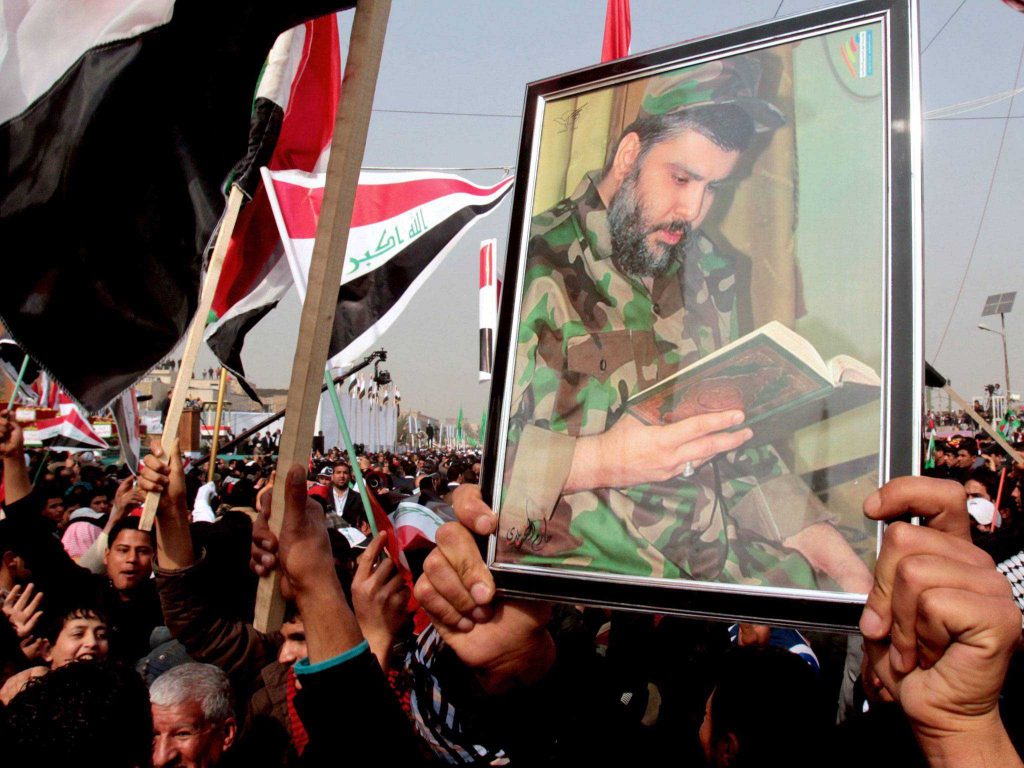
  • ‘The near future of Iraq is dark’: Warning from Muqtada al-Sadr – the Shia cleric whose word is law to millions of his countrymen

    ‘The near future of Iraq is dark’: Warning from Muqtada al-Sadr – the Shia cleric whose word is law to millions of his countrymen

    In a rare interview at his headquarters in Najaf, he tells Patrick Cockburn of his fears for a nation growing ever more divided on sectarian lines
    In a rare interview at his headquarters in Najaf, he tells Patrick Cockburn of his fears for a nation growing ever more divided on sectarian lines

    Patrick Cockburn

    The future of Iraq as a united and independent country is endangered by sectarian Shia-Sunni hostility says Muqtada al-Sadr, the Shia religious leader whose Mehdi Army militia fought the US and British armies and who remains a powerful figure in Iraqi politics. He warns of the danger that “the Iraqi people will disintegrate, its government will disintegrate, and it will be easy for external powers to control the country”.

    In an interview with The Independent in the holy city of Najaf, 100 miles south-west of Baghdad – the first interview Mr Sadr has given face-to-face with a Western journalist for almost 10 years – he expressed pessimism about the immediate prospects for Iraq, saying: “The near future is dark.”

    Mr Sadr said he is most worried about sectarianism affecting Iraqis at street level, believing that “if it spreads among the people it will be difficult to fight”. He says he believes that standing against sectarianism has made him lose support among his followers.

    Mr Sadr’s moderate stance is key at a moment when sectarian strife has been increasing in Iraq – some 200 Shia were killed in the past week alone. For 40 years, Mr Sadr and religious leaders from his family have set the political trend within the Shia community in Iraq. Their long-term resistance to Saddam Hussein and, later, their opposition to the US-led occupation had a crucial impact.

    Mr Sadr has remained a leading influence in Iraq after an extraordinary career in which he has often come close to being killed. Several times, it appeared that the political movement he leads, the Sadrist Movement, would be crushed.

    He was 25 in 1999 when his father, Mohammed Sadiq al-Sadr, a revered Shia leader, and Mr Sadr’s two brothers were assassinated by Saddam Hussein’s gunmen in Najaf. He just survived sharing a similar fate, remaining under house arrest in Najaf until 2003 when Saddam was overthrown by the US invasion. He and his followers became the most powerful force in many Shia parts of Iraq as enemies of the old regime, but also opposing the occupation. In 2004, his Mehdi Army fought two savage battles against American troops in Najaf, and in Basra it engaged in a prolonged guerrilla war against the British Army which saw the Mehdi Army take control of the city.

    The Mehdi Army was seen by the Sunni community as playing a central role in the sectarian murder campaign that reached its height in 2006-7. Mr Sadr says that “people infiltrated the Mehdi Army and carried out these killings”, adding that if his militiamen were involved in the murder of Sunnis he would be the first person to denounce them.

    For much of this period, Mr Sadr did not appear to have had full control of forces acting in his name; ultimately he stood them down. At the same time, the Mehdi Army was being driven from its old strongholds in Basra and Sadr City by the US Army and resurgent Iraqi government armed forces. Asked about the status of the Mehdi Army today, Mr Sadr says: “It is still there but it is frozen because the occupation is apparently over. If it comes back, they [the Mehdi Army militiamen] will come back.”

    In the past five years, Mr Sadr has rebuilt his movement as one of the main players in Iraqi politics with a programme that is a mixture of Shia religion, populism and Iraqi nationalism. After a strong showing in the general election in 2010, it became part of the present government, with six seats in the cabinet. But Mr Sadr is highly critical of Prime Minister Nouri al-Maliki’s performance during his two terms in office, accusing his administration of being sectarian, corrupt and incompetent.

    Speaking of Mr Maliki, with whom his relations are increasingly sour, Mr Sadr said that “maybe he is not the only person responsible for what is happening in Iraq, but he is the person in charge”. Asked if he expected Mr Maliki to continue as Prime Minister, he said: “I expect he is going to run for a third term, but I don’t want him to.”

    Mr Sadr said he and other Iraqi leaders had tried to replace him in the past, but Mr Maliki had survived in office because of his support from foreign powers, notably the US and Iran. “What is really surprising is that America and Iran should decide on one person,” he said. “Maliki is strong because he is supported by the United States, Britain and Iran.”

    Mr Sadr is particularly critical of the government’s handling of the Sunni minority, which lost power in 2003, implying they had been marginalised and their demands ignored. He thinks that the Iraqi government lost its chance to conciliate Sunni protesters in Iraq who started demonstrating last December, asking for greater civil rights and an end to persecution.

    “My personal opinion is that it is too late now to address these [Sunni] demands when the government, which is seen as a Shia government by the demonstrators, failed to meet their demands,” he said. Asked how ordinary Shia, who make up the great majority of the thousand people a month being killed by al-Qa’ida bombs, should react, Mr Sadr said: “They should understand that they are not being attacked by Sunnis. They are being attacked by extremists, they are being attacked by external powers.”

    As Mr Sadr sees it, the problem in Iraq is that Iraqis as a whole are traumatised by almost half a century in which there has been a “constant cycle of violence: Saddam, occupation, war after war, first Gulf war, then second Gulf war, then the occupation war, then the resistance – this would lead to a change in the psychology of Iraqis”. He explained that Iraqis make the mistake of trying to solve one problem by creating a worse one, such as getting the Americans to topple Saddam Hussein but then having the problem of the US occupation. He compared Iraqis to “somebody who found a mouse in his house, then he kept a cat, then he wanted to get the cat out of the house so he kept a dog, then to get the dog out of his house he bought an elephant, so he bought a mouse again”.

    Asked about the best way for Iraqis to deal with the mouse, Mr Sadr said: “By using neither the cat nor the dog, but instead national unity, rejection of sectarianism, open-mindedness, having open ideas, rejection of extremism.”

    A main theme of Mr Sadr’s approach is to bolster Iraq as an independent nation state, able to make decisions in its own interests. Hence his abiding hostility to the American and British occupation, holding this responsible for many of Iraq’s present ills. To this day, neither he nor anybody from his movement will meet American or British officials. But he is equally hostile to intervention by Iran in Iraqi affairs saying: “We refuse all kinds of interventions from external forces, whether such an intervention was in the interests of Iraqis or against their interests. The destiny of Iraqis should be decided by Iraqis themselves.”

    This is a change of stance for a man who was once demonised by the US and Britain as a pawn of Iran. The strength of the Sadrist movement under Mr Sadr and his father – and its ability to withstand powerful enemies and shattering defeats – owes much to the fact it that it blends Shia revivalism with social activism and Iraqi nationalism.

    Why are Iraqi government members so ineffective and corrupt? Mr Sadr believes that “they compete to take a share of the cake, rather than competing to serve their people”

    Asked why the Kurdistan Regional Government had been more successful in terms of security and economic development than the rest of Iraq, Mr Sadr thought there was less stealing and corruption among the Kurds and maybe because “they love their ethnicity and their region”. If the government tried to marginalise them, they might ask for independence: “Mr Massoud Barzani [the KRG President] told me that ‘if Maliki pushes on me harder, we are going to ask for independence’.”

    At the end of the interview Mr Sadr asked me if I was not frightened of interviewing him and would not this make the British Government consider me a terrorist? Secondly, he wondered if the British Government still considered that it had liberated the Iraqi people, and wondered if he should sue the Government on behalf of the casualties caused by the British occupation.

    independent.co.uk, 29 November 2013