Category: UK

  • Oxford Union Challenges British Censorship: Cenk and Hasan Will Speak Online

    Oxford Union Challenges British Censorship: Cenk and Hasan Will Speak Online

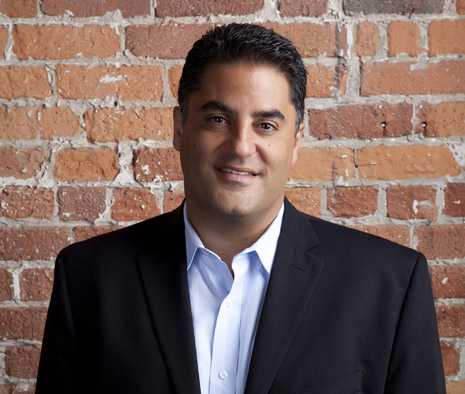
    The president of the Oxford Union, Arwa Elrayess, has decided to go ahead with the online event featuring Cenk Uygur and Hasan Piker on June 6, 2026.

    Despite the entry ban imposed by the British government.

    The Home Office revoked their electronic travel authorizations (ETA), claiming their presence was “not conducive to the public good.”

    This decision is widely seen as an act of servility to pro-Israel pressure (Middle East Eye, 2026; The Guardian, 2026).

    Uygur, from The Young Turks, and his nephew Piker (HasanAbi) are known for their progressive activism and their rejection of racism in all its forms.

    There are no credible records of them inciting hatred against Jews.

    On the contrary, both have consistently condemned antisemitism.

    Their real “crime” has been harshly criticizing the policies of the State of Israel since October 2023.

    Organizations such as Amnesty International and Human Rights Watch have documented what they describe as genocide in Gaza: massive destruction of civilian infrastructure, blocking of humanitarian aid, and tens of thousands of Palestinian civilians killed (Amnesty International, 2026; Human Rights Watch, 2026).

    New York Times critic Jennifer Szalai has pointed out in similar analyses how these bans reflect an authoritarian closure of public debate, where legitimate criticism of a government is falsely equated with racial hatred (Szalai, 2026).

    This cowardly measure by the United Kingdom exposes its subordination to foreign interests above the liberal principles it claims to defend.

    The Oxford Union resists: ideas are fought with arguments, not with vetoes.

    In times of moral crisis, censoring those who denounce atrocities only reveals weakness and fear of the truth.

    References

    Amnesty International. (2026, March 10). Israel’s genocide in Gaza inflicts compounded harms on women and girls.

    Human Rights Watch. (2026). World Report 2026: Israel and Palestine.

    Middle East Eye. (2026, June 2). Oxford Union president vows to platform Hasan Piker and Cenk Uygur in defiance of UK ban.

    The Guardian. (2026, June 1). Free speech activists condemn UK entry ban for Hasan Piker and Cenk Uygur.

    Szalai, J. (2026, April 22). An Israeli-born scholar of the Holocaust mourns for his country. The New York Times.

    https://www.facebook.com/groups/2224805678322112/posts/2252601522209194
  • The Zionist Underground and the End of British Rule in Palestine

    The Zionist Underground and the End of British Rule in Palestine

    The Zionist Underground and the End of British Rule in Palestine. – Martin Michael

    I went down a historical rabbit hole researching this and honestly, some of it genuinely took a minute to process.

    Before Israel was created in 1948, Britain governed Palestine under what was known as the British Mandate, following the collapse of the Ottoman Empire after World War I.

    In the final years of British rule, several Zionist underground organisations launched an armed insurgency aimed at forcing Britain out of Palestine and paving the way for the creation of a Jewish state.

    The main organisations involved were:

    Irgun

    A nationalist paramilitary group responsible for bombings, assassinations and attacks on British military and administrative targets.

    Lehi (The Stern Gang)

    A smaller but even more radical organisation that carried out assassinations and attacks against British officials and infrastructure.

    Haganah

    The largest Jewish paramilitary organisation in Palestine. Although it often operated differently from Irgun and Lehi, it did at times cooperate in coordinated operations against British targets.

    At the time, British authorities officially referred to some of these groups as terrorist organisations, while supporters viewed them as anti-colonial fighters resisting British rule.

    Historians generally refer to this period as the Jewish insurgency in Mandatory Palestine (1944–1948).

    Some of the major events included:

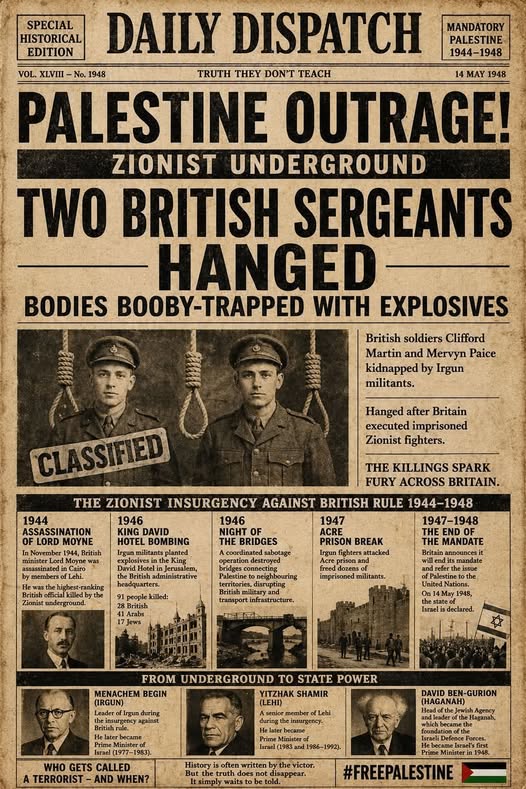
    1944 — Assassination of Lord Moyne

    Walter GuinnessBritain’s Minister of State in the Middle East, was assassinated in Cairo by members of Lehi.

    He was the highest-ranking British official killed during the insurgency.

    1945 — Escalation of attacks

    Militant groups intensified attacks on:

    • railways

    • bridges

    • police stations

    • government buildings

    • immigration control infrastructure

    Several groups temporarily worked together in a coordinated campaign known as the Jewish Resistance Movement.

    1946 — Night of the Bridges

    A coordinated sabotage operation destroyed bridges linking Palestine with neighbouring territories, severely disrupting British transport and military infrastructure.

    1946 — King David Hotel Bombing

    Irgun militants planted explosives inside the King David Hotel in Jerusalem, which housed the British administrative headquarters.

    The explosion killed 91 people:

    28 British

    41 Arabs

    17 Jews

    It remains one of the deadliest attacks carried out against British rule during the Mandate period.

    1947 — Acre Prison Break

    Irgun fighters attacked Acre prison and freed dozens of imprisoned militants.

    1947 — Execution of British Sergeants

    Two British soldiers, Clifford Martin and Mervyn Paice, were kidnapped and later hanged by Irgun after Britain executed imprisoned militants.

    The killings caused outrage across Britain.

    By 1947–48 the situation had become increasingly unmanageable for Britain.

    Eventually Britain announced it would end the Mandate and hand the issue over to the United Nations.

    On 14 May 1948, the state of Israel was declared.

    What happened next is where the story becomes even more significant.

    Many members of these underground organisations later moved directly into mainstream Israeli politics and state leadership.

    Menachem Begin, leader of Irgun during the insurgency, later became Prime Minister of Israel.

    Yitzhak Shamir, a senior member of Lehi, also went on to become Prime Minister.

    Meanwhile Haganah became the foundation of the Israeli military itself.

    All of this took place in the shadow of World War II and its aftermath, at a time when Britain had been financially and militarily devastated by war.

    By 1944 British ministers were being assassinated.

    By 1946 British headquarters were being bombed.

    By 1947 British soldiers were being kidnapped and executed.

    Yet this history is rarely discussed in Britain today.

    And it raises a question that still follows conflicts across the world now:

    Who gets labelled a terrorist — and who later gets remembered as a freedom fighter or statesman?

    Because history often seems to answer that question differently depending on who eventually wins power.

  • Did Britain ever rule over Turkey?

    Did Britain ever rule over Turkey?

    Did Britain ever rule over Turkey? If not, why did Great Britain not take over Anatolia during World War I considering that Germany was allied with the Ottomans at that time?

    No, Britain did not rule over Turkey. During World War I, although Germany was allied with the Ottoman Empire (Turkey), Great Britain did not take over Anatolia for a variety of reasons.

    Firstly, it is important to understand the geopolitical landscape of the time. The Ottoman Empire, once a powerful force in the region, was in decline in the early 20th century. However, it still held strategic importance due to its control of key trade routes, particularly the Suez Canal, which connected the Mediterranean Sea to the Red Sea and provided a vital shortcut to India, Britain’s prized colony.

    Britain, being aware of the Ottoman Empire’s strategic significance, pursued a policy of maintaining the status quo rather than outright annexation. This approach aimed to preserve stability in the region and protect British interests without jeopardizing delicate alliances and triggering further conflicts.

    Additionally, Britain had other priorities during World War I. The war effort required substantial resources, both human and material, which were primarily allocated to fighting on the Western Front against Germany and Austria-Hungary. British forces were heavily engaged in Europe and the Middle East, including campaigns in Gallipoli and Mesopotamia (modern-day Iraq).

    Moreover, the prospect of taking over Anatolia would have presented significant challenges for Britain. It would have required a massive military campaign and an occupation force to maintain control over the vast territory. With limited resources and stretched supply lines, such an endeavor would have been logistically challenging and potentially prolonged the war effort.

    Another crucial factor to consider was the potential backlash from other major powers. Imperial Russia, a key ally of Britain at the time, had territorial ambitions in Anatolia and sought to expand its influence in the region. Any attempt by Britain to seize control of Anatolia would have likely provoked a confrontation with Russia, leading to further complications and potential conflicts.

    Furthermore, the post-war settlement played a role in Britain’s decision-making process. The Treaty of Sèvres, signed in 1920, aimed to dismantle the Ottoman Empire and divide its territories among various powers. However, this treaty was superseded by the Treaty of Lausanne in 1923, which recognized the independence of the Republic of Turkey under Mustafa Kemal Atatürk. This effectively marked the end of Britain’s ambitions to rule over Anatolia.

    Patrick S

  • Britain in Palestine

    Britain in Palestine

    Britain in Palestine 1917-1948

    Britain in Palestine 1917-1948 investigates the contradictory promises and actions which defined British Mandatory rule in Palestine and laid the groundwork for the Nakba (the catastrophe) and the creation of the state of Israel in 1948. The roots of the contemporary social, political, economic, and environmental landscape of Palestine and Israel can be traced back to this period, making it essential viewing for understanding Britain’s legacy in the region and the situation on the ground today.

    To access English, Arabic and Hebrew subtitles click on the CC link on the video. For further analysis of the events outlined in the film see the Companion Guide to Britain in Palestine 1917-1948.

    Reviews

    “A very useful explanation of how we got to where we are today. Fascinating photos I had not seen before. A great resource to show in any classroom or forum to people who want to learn more about this region, and specifically, Britain’s involvement. Afif Safieh, Former Palestinian Ambassador

    “…This film brilliantly puts into perspective the role the United Kingdom played in Mandate Palestine from 1917-1948.” Rabbi Howard Finkelstein, Ontario, Canada

    “This is an excellent short 18-min video from @BalfourProject explaining briefly but super-clearly how British colonialism has caused a century of war in Palestine.” Matthew Teller, Journalist and author of Nine Quarters of Jerusalem: A New Biography of the Old City (2022)

    “Britain in Palestine 1917 – 1948 is a clear, precise and factual explanation of the historical origins of the Arab-Israeli conflict. For anyone who wants to develop a real understanding of the issue but is intimidated by it’s complexity, this film is the place to start.” Judah Passow, Photojournalist

  • BBC Was Biased and One-sided

    BBC Was Biased and One-sided

    By Azer HASRET

    Just a few days ago BBC World News aired an interview with two Armenian activists. One of them was connected live from Los Angeles, another one from Azerbaijani city of Khankendi.

    For those who is not quite enough familiar with the region of South Caucasus, Khankendi is a city within Karabakh Economic Region of Azerbaijan with the majority Armenian population. The city alongside with other parts of Karabakh and now Eastern Zangezur was under occupation of Armenia starting from early 1990s And the whole region was liberated by Azerbaijan during the 44-day war of 2020 provoked by Armenia to capture new lands.

    As Azerbaijan managed to end the war with total victory it has offered to local Armenians to stay and live in peace. Those days Armenian population of about 30-40 thousand people was ready for reconciliation. And under the control of the Russian peacekeepers, they started again to live usual life.

    Azerbaijan has kept open The Lachin Corridor for the Armenians of Karabakh to be in touch with Armenia as the region being under occupation of Armenia was connected to the latest. Thus, people have ties in Armenia, and they need to be in touch. Azerbaijan instead of being winner of the war, took into consideration this issue as well as a humanitarian need.

    But after some times Azerbaijan has discovered that Armenians are using The Lachin Corridor to carry in weapons and heavy army units in order to prepare for the new war. Alongside with this Azerbaijan managed to build completely new road connecting Karabakh’s center Khankendi with Armenia. Afterwards, a year ago the new road was open, and Armenians were happy to use this more suitable connection. But it was misused as well. That’s why Azerbaijan starting from April 23, 2023, installed new checkpoint at the border with Armenia in order to prevent illegal use of the road.

    Afterwards Armenians started to spread a propaganda, that Azerbaijan is “killing 120 thousand peaceful Armenians in Karabakh through starvation”. They call it even a new “genocide” again Armenians by Turks…

    But during these past months no single Armenian was killed due to starvation. And Azerbaijan did not close the road in full leaving it open for humanitarian needs. And by today as well Armenians are using the road in both directions to connect between Armenia and Azerbaijan Karabakh region. (Plus, Azerbaijan Red Crescent Society has sent 40 tons of wheat flour for Armenians in Karabakh which is still blocked by the Armenians and can’t be delivered to the people in need…)

    Instead of this situation Armenians are trying illegally pass through The Lachin Road. And Azerbaijan is preventing them from doing this. Plus, Armenian propaganda machine calls The Lachin Border Checkpoint “illegal installation”. According to their minds Azerbaijan must keep open its border with Armenia with no control. Is it possible? Or is there any country on the world which keeps its borders open with no checkpoints? Does Armenia itself keep its borders open to other countries as well? Not of course! But they demand that Azerbaijan must keep its borders open with no checkpoint for Armenians, even for others from foreign countries whom they wish to see in Karabakh!

    Now that was a small portion of the history or some kind of enlightenment for those who is not quite familiar with the region and the issues, which are misused by Armenian propaganda.

    As the situation is very clear, BBC World News a couple of days ago has aired and interview with two above mentioned Armenians. Of course, the media is and must be free to cover any issue. But even the BBC’s code of conduct requires to be balanced and impartial while airing any news or commentary.

    In BBC’s above-mentioned broadcast under the title “The Context” only one side was interviewed and given an opportunity to speak. And unfortunately, both interviewers were Armenians and both of them failed to speak in a fair manner. What did they do? Of course, they accused Azerbaijan for “killing and genociding 120 thousand Armenians of Karabakh through starvation”.

    We have noted that there are not 120 thousand Armenians in Karabakh. This is a small portion of population with a figure of between 30 to 40 thousand people.

    What was stranger and more unacceptable, the BBC presented an interviewer from Khankendi, Karabakh as a “Former Human Rights Ombudsman of the Republic of Artsakh”!

    “Republic of Artsakh”? Where is it? What is that? Does the world know about this so-called republic? Not of course! There is nothing called a “Republic of Artsakh” and no world country, no international organization recognizes such an entity. But the BBC, seems does “recognize” it…

    Of course, we could stop a bit on the wordings of the interviewers. But we don’t do that. Because it was alongside with official Armenian fake propaganda and based on the accusations towards Azerbaijan with no base!

    We understand Armenian propagandists. But it is not easy to understand the BBC which is to serve the truth and only truth.

    That’s why as a career journalist with about 30 years of professional activity and international practice I do accuse the BBC’s this kind of stance and call on this news media to air apology and refutation. Hope, that BBC will find enough courage to do this…

  • Congratulations letter to prime minister

    Congratulations letter to prime minister

    Her Excellency Elizabeth Tuss

    Prime Minister, United Kingdom of Great Britain and Northern Ireland

    Your Excellency,

    I whole  heartedly congratulate you on the election as the Prime Minister. As a person who has followed your campaign, I completely believe that you will fulfill your promises and be very successful. From Türkiye, I offer you my deepest respects.

    Sincerely,

    Orhan Tan

    Major General (Rtd)
    Member of Turkish Forum Advisory Board