Category: UK

  • Boris keeps Turks waiting

    Boris keeps Turks waiting

    Syed Hamad Ali

    Published 10 September 2008

    Ankara’s man in London explains why his country’s place is at the heart of Europe and how after all that talk of Turkish roots Boris still hasn’t found time to meet him

    Did you know Boris Johnson’s great grandfather was a liberal Turkish journalist called Ali Kemal alive during the dying days of the Ottoman empire? Well of course you did. London’s new Tory mayor banged on about his roots a fair bit during this year’s election campaign.

    But the centuries old ties between Turkey and the UK go much deeper than Johnson’s ancestry. Just ask Turkey’s ambassador to the UK, Mehmet Yiğit Alpogan: “Turkey’s membership of the European Union is one of the projects that the Turkish public opinion pay attention to and in that respect the support that Great Britain gives to Turkey is very much welcomed and appreciated.”

    So has he actually met Johnson? “I am waiting for that appointment to happen,” says Alpogan, who seemed just a tiny bit disappointed a request to London’s mayor has yet to be taken up.

    “I know that he is a very busy person and it will be my pleasure to be able to meet him, get together with him, and talk about many things including this past life.” A suitably diplomatic take on the whole matter.

    But if he does feel let down Alpogan can perhaps take some heart from the UK government’s strong support of Turkey’s aspiration to join the European Union. An attitude which contrasts sharply with the more reserved reaction of some of the other EU states such as France and Austria.

    “Turkey’s place is in Europe,” says Alpogan. “There is no question about this.” And the current UK foreign secretary, David Miliband, agrees. In a Telegraph article last year he expressed his approval of Turkey’s accession, highlighting among others the pressing energy benefits: “Turkey is an increasingly important transit route for oil and natural gas, with 10 per cent of the world’s oil flowing through the Bosporus.”

    The Foreign Secretary’s predecessor, Jack Straw, had gone even further and had equated membership as a means towards deflecting a “clash of civilisations”.

    Boris Johnson, too, has spoken in favour of Turkey’s accession to the EU. “We would be crazy to reject Turkey,” wrote Boris Johnson in his book ‘The Dream of Rome’, “which is not only the former heartland of the Roman empire but also, I see, one of the leading suppliers of British fridges.”

    Indeed the UK is the second largest export market for Turkey. For the UK investor also, Turkey is important.

    Yet the question of Turkey’s EU membership is controversial. Polls indicate many citizens across Europe do not approve the move.

    The situation is not helped by opposition from French President Nicholas Sarkozy and his alternative offers of a Mediterranean Union or a referendum over EU accession.

    “If the Europeans say that European Union is a Christian club they are thereby making a discrimination,” says Alpogan. “They are committing a grave mistake. Of course Turkey wouldn’t have a place in such a European Union. But I don’t think that the European public opinion thinks this way … we hope that this understanding will continue to prevail and the European Union will be a place where the alliance of civilisations will be represented.”

    One of the apparent reasons citizens of European states fear Turkish membership of the EU is the prospect of mass immigration.

    The ambassador points, however, towards other countries in Europe whose migrants returned to their home countries sometime after joining the EU, such as the Spanish, Greeks and now the Polish.

    “For a short while it might be true,” admits Alpogan. “But with the investment, economic activity and other developments that come with EU membership, soon these people would go back – at least that is what the history of the European Union shows us and that is how it is proven.”

    Maybe, but that argument may fall on deaf ears in a Europe already brimming with debates over whether immigration has gone too far in this corner of the globe.

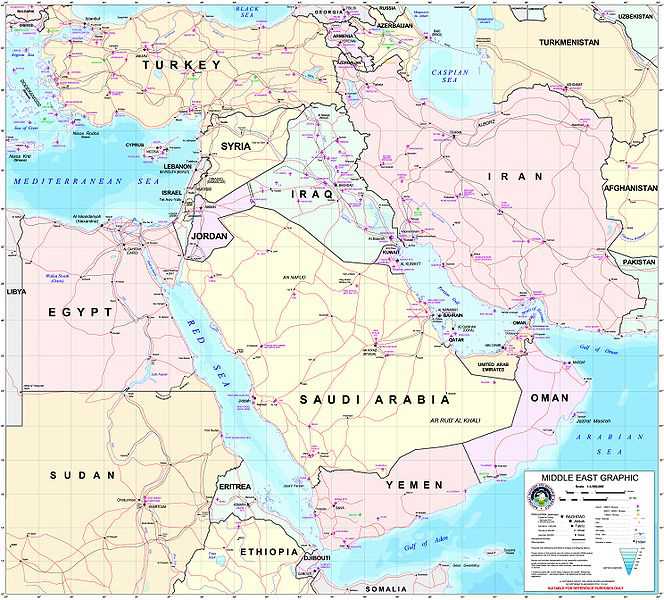
    Yet there is one more twist to this whole accession debate. Who is to gain more from this membership, Europe or Turkey? A quick look at Turkey on the world’s map shows just why this nation of 80 million is considered so crucial. Yes it is about trade and access to energy but it is also about regional influence.

    Turkey is the bridge between Europe and Asia.

    And the ambassador is quick to highlight the “geo-strategic” and “geographical” benefits that lie in store for the European Union were Turkey to become a member.

    Then there’s Turkey’s relationship with Central Asian, through a shared Turkic cultural and linguistic heritage with many of those countries, may potentially prove to be the most useful one for Europe in the future given the region being a major fuel reserve for the world.

    But, of course, most European visitors to Turkey go there for one purpose – their holidays.

    According to the ambassador two million British tourists head to Turkey each year and the figures are on the rise at the rate of 10-20 percent. “We have already 20,000 British families who have come and settled in Turkey or have a second home in Turkey,” says Alpogan. “Of course we are very glad to have them there and they are another strong link between the two countries.”

    Indeed although he may not have found the time to meet with the Turkish ambassador, Boris Johnson, just a fortnight after winning the election for mayor in May, disappeared off to the south western coast of Turkey for a break with his family.

    The trip did not go un-noticed by the local media, with the Turkish Daily News reporting that the London mayor’s ancestral ties with their country and Islam would “hopefully be beneficial for Turkey and certainly his choice of holiday destination can only be seen as advantageous for Turkish tourism.”

    Perhaps. Although it may be that it has the reverse effect. Only time will tell.

    Source: www.newstatesman.com, 10 September 2008
  • Slave trade heads to Israel

    Slave trade heads to Israel

    By Mona Alami

    JERUSALEM – Israel continues to be a favorite destination for the trafficking of women for the sex industry – also known as the white slave trade – and for a form of modern slavery where migrant laborers from developing countries are exploited.

    The US State Department placed Israel in Tier 2 position in its 2007 Trafficking in Persons report. Also, an Israeli court ruled against the country’s work visa policy which forces foreign workers into indentured labor with a single employer.

    “Israel was only upgraded to Tier 2 last year,” said Romm Lewkowicz, a spokesman from Israel’s Hotline for Migrant

    Workers, an advocacy group which defends the rights of foreign workers.

    The US State Department divides countries into three tiers. Tier 1 is for countries that have successfully implemented measures to control trafficking (most Western countries fall into this category). Tier 2 is for countries that are trying to eradicate this modern day slavery but still fail to meet the necessary standards. Tier 3 is reserved for countries that have not addressed the issue at the most basic level.

    In 2006, Israel was on the US State Department’s Watch List for people trafficking.

    “This position falls between Tier 2 and Tier 3. The US applies economic sanctions to those countries which fall into Tier 3, but as we have a strong economic relationship with the US, Israel was given a warning and placed in a slightly higher category,” said Lewkowicz.

    The Israeli government has also faced sharp criticism from the US for its so-called binding work visa policy which effectively binds foreign migrants – mostly from developing countries and former Soviet Eastern bloc countries working in certain industries such as construction, labor, homecare and agriculture – to the employer stated on their visa.

    “The issuance of these visas is subject to the workers staying with the same employer stated on the visa, and if this condition is broken then the migrant worker is deemed illegal and liable for deportation without having a chance to fight the case in court,” said Sigal Rosen from Hotline.

    This has encouraged unscrupulous employers to withhold payment and extort employees, knowing they can always replace them and escape penalized.

    One of the more notorious cases was the Turks for Tanks deal of 2002. According to the deal, the Israeli military industry (Ta’as) upgraded about 200 tanks for Turkey for US$687 million, in one of the country’s biggest arms export deals. As part of the agreement, 800 Turkish workers were granted permits to work in construction in Israel, after being placed through the Turkish employment agency Yilmazlar.

    One of Yilmazlar’s contractors, Shaheen Yelmaz, arrived in Israel in 2006 dreaming of helping his father pay off his mounting debts after being promised a good job in Israel for $1,400 a month – a fortune by Turkey’s standards where unemployment is high.

    On arrival his passport and mobile phone were taken away and he and other Turkish workers were accommodated in squalid conditions.

    “We were not allowed to leave the premises in the evenings, and were only allowed out on our day off. And we were not paid for the first three months,” said Yelmaz.

    The Turkish Embassy was unwilling to intervene because of the lucrative deal with Israel.

    Yelmaz and his fellow contractors, most of them with little education, were coerced into signing blank documents before leaving Turkey that virtually ensured their dependency on Yilmazlar.

    “We were also told by our Israeli employer that if we were unhappy we could leave. The police would then arrest us as illegals and we would be deported,” said Yelmaz.

    Following a number of similar cases, Hotline and other Israeli human rights organizations petitioned the Israeli High Court. The court acknowledged the inequity of the system, but ruled that Yilmazlar’s contract with the Israeli defense industry was unique, and the company’s contract with Israel was limited.

    However, the court did rule in 2006 that Israel’s binding visa policy in general was illegal, and ordered the state to establish an alternative. Rosen says they are still waiting for a final response from the state.

    Yelmaz was subsequently deported to Turkey, $15,000 in debt, and Israel’s contract with Yilmazlar was renewed.

    “While the situation of indentured laborers remains serious, the white trade trafficking has improved somewhat,” said Lewkowicz. “Since the US State Department put Israel on its Watch List in 2006, the number of women trafficked to Israel has declined, and it is now against the law to traffic in women. Furthermore, the government now grants prostitutes a one-year rehabilitation visa. However, the bureaucracy involved means the granting of these visas is often problematic.”

    But new problems have arisen. “Israel is no longer solely an importer of prostitutes but has become an exporter of them too. Last year we discovered a new business where Israeli women were being trafficked to the UK and Ireland to work in the sex industry,” Lewkowicz said.

    Prostitution has also gone underground in Israel. “Before it was openly done on the streets, now many of the players have resorted to working from private apartments, following a police and government crackdown on the trafficking,” he added.

    According to the Jerusalem-based Task Force on Human Trafficking (TFHT), approximately 1,000 of the estimated 10,000 prostitutes in Israel are minors.

    Immigrants from the ex-Soviet bloc countries, some involved in the Russian mafia, manage about 20% of the trade, while the remainder are Israelis, says Lewkowicz.

    A Global Terrorism Analysis report published by the Washington-based Jamestown Foundation states that many of the trafficked women are smuggled in from Egypt’s Sinai by Bedouins who have also been involved in arms smuggling.

    The industry has proved very lucrative for the human traffickers, with each woman sold in Israel bringing in anywhere between $50,000 to $100,000.

    But the state also earns a tidy profit from the white slave trade, according to Hotline.

    Service providers, such as taxi drivers transporting prostitutes, lawyers who represent the clients, landlords who rent out their premises as brothels, all pay income tax, and this ultimately arrives in the state’s coffers. Not to mention the cases of corrupt police officers who have also lined their pockets through bribery.

    (Inter Press Service)

    Source: Asia Times Online, Sep 5, 2008

  • Whirling Dervishes of Turkey at the Edinburgh Festival

    Whirling Dervishes of Turkey at the Edinburgh Festival

    Festival Theatre, Edinburgh International Festival, 4 September 2008On TV, when I got home, Seth Lakeman was blazing through his set at the Cambridge Folk Festival. Blazing, high octane intensity; that’s what I had expected from the Whirling Dervishes. Instead, imagine the choir of the Sistine Chapel appearing on a theatre stage and not just singing liturgy but presenting the whole missal, smells and bells included. It is difficult to convey the sense of incongruity between the expressly spiritual content of tonight’s performance and the expressly secular setting in which it took place. The chair applause – the normal racket of seats snapping up as people rise to leave – seemed unnecessarily urgent, but in Edinburgh there is always the next show to go to.

    This year’s festival theme has been ‘artists without borders’, inviting audiences to ‘create their own pathway’ through the fare. A number of Mediterranean cultures have featured in the mix, and it is noticeable how fluid the musical currents are, even when fixed to ideas and ide

    Whirling Dervishes of Turkey at the Edinburgh Festival – MusicalCriticism.com (Concert review).

  • Edinburgh festival: Istanbul Music and Sema Group

    Edinburgh festival: Istanbul Music and Sema Group

    Edinburgh Playhouse

    Closing the Edinburgh International festival dance programme, this concert of Turkish classical and Sufi music climaxes with a still sacred religious ceremony little changed since its conception in the 15th century.

    There is essentially only one repeated movement to review – the whirling. And this spinning is performed, rather surprisingly given the dance billing, for only a short period in the second half. Pre-interval, the group concentrates on ancient music performed on delicately beautiful traditional instruments and five deeply male voices. There are readings from religious texts too. Delivered in English, they are sincere but add little.

    So, the slow build-up to the whirling lasts nearly two thirds of the evening. The rhythms are soporific and mystical, the words sung low and sonorous, the verses many and repetitive. Hypnosis seems the aim. Much of the six-part Sema ceremony consists of walking in circles, gesturing and bowing with respect. Meanwhile, a moth dances in the lights above.

    When the dervishes finally treat us to the main attraction, their billowing white full-length skirts (the ego’s shroud) are freed from black cloaks (the grave) and transcendence is gentle and without extravagance. One hand turned to the sky and God, and the other to earth, their tall fez-like hats (the ego’s tombstone) tilt to one side in unison. It is as simple as that. A beautiful, poetic, meditative gesture. The only concession to performance are pink, blue and orange spotlights catching each turn.

    [Edinburgh festival dance review: Istanbul Music and Sema Group, Edinburgh Playhouse – This article appeared in the Guardian on Tuesday September 02 2008 on p36 of the Features & reviews section. It was last updated at 00:57 on September 02 2008]

    Source: www.guardian.co.uk, September 2 2008

  • The Road Not Taken

    The Road Not Taken

    Decades before Herzl, Benjamin Disraeli wrote a novel that grappled with Zionism

    by Adam Kirsch

    An undated portrait of Disraeli

    By the beginning of 1830, when he was twenty-five, Benjamin Disraeli was tired of England. For three years, he had been suffering from acute depression, brought on by the triple fiasco that marked his entrance into public life. Before he turned twenty-two, Disraeli had lost thousands of pounds in stock-market speculations; alienated the publisher John Murray after their plan to launch a newspaper ended in failure; and caused a scandal with his first novel, Vivian Gray, a satirical roman à clef about high society. For the young Disraeli, already supremely ambitious, these reverses had come as a terrible shock, and it took him years to recover his nerve.

    Now, with his second novel completed and the advance in his pocket, Disraeli was set on traveling. But he did not want to follow the usual itinerary of the Grand Tour, which took rich young Englishmen to the churches of Rome and the salons of Paris. Instead, he set his sights on the East—Greece, Turkey, Egypt, and Palestine. In part, he was following the example of his beloved Byron, who had created a vogue for the East in his highly colored poems. But for Disraeli, a journey to Jerusalem had more than literary significance. Although he had been baptized at the age of twelve into the Church of England, Disraeli’s very name made clear that he was a Jew, and the experience of visiting the Jewish homeland was to transform the way he thought about himself, his ancestors, and politics in general. Almost fifty years later, when he was Prime Minister of England, it would be his destiny to redraw the maps of the countries he visited as a young man.

    The first fruit of Disraeli’s pilgrimage, however, was a novel—The Wondrous Tale of Alroy, published in 1833. Disraeli wrote that he had been “attracted” to the “marvellous career” of David Alroy even as a child. But Disraeli’s Alroy bears little resemblance to the minor figure mentioned by Benjamin of Tudela, the Spanish Jew whose Travels are a classic of medieval Hebrew literature. According to Benjamin, Alroy, a Kurdish Jew, raised a revolt against the Seljuk Turks in Azerbaijan around 1160 AD. He was credited with magic powers by his followers, who proclaimed him the Messiah, but this pretension won him the hostility of Jewish leaders in Baghdad, who begged him not to antagonize the Turks. Finally he was betrayed by his father-in-law and killed, probably without winning a single battle.

    Disraeli’s Alroy is a much grander figure, a kind of Jewish Alexander the Great. In his novel, Alroy wins victory after victory, conquers Baghdad, and comes close to establishing a new empire in the Middle East. Disraeli also provides his hero with a loyal sister, Miriam, and a lover, the Princess Schirene. There is also a good deal of what Disraeli called “supernatural machinery” in the novel, including a magic ring, a secret underground temple, and the Scepter of Solomon, which Alroy must claim if he is to conquer Jerusalem.

    Disraeli writes that all this is based on Jewish tradition—“Cabalistical and correct,” he puts it—but it is clear that the real sources of the novel’s mysticism lie in The Thousand and One Nights, the Eastern tales of Byron, and the quest poems of Shelley. In general, Alroy is better understood as high Orientalist fantasy than historical fiction. Even Disraeli’s prose, the emphatic rhythms and repetitions of which suggest that some sections started out as verse, is kitschily intoxicated: “‘Ah! bright gazelle! Ah! bright gazelle!’ the princess cried, the princess cried; ‘thy lips are softer than the swan, thy lips are softer than the swan; but his breathed passion when they pressed, my bright gazelle! my bright gazelle!’”

    But if Alroy seems impossibly overripe today, its psychological core remains entirely serious. Disraeli said that he began to write the novel in Jerusalem in 1831, at a moment when he was pondering the role Jewishness might play in his own life and career. And in his hands, the story of David Alroy becomes a veiled meditation on the state of the Jews in Europe, and a parable of his own possible future.

    From the beginning of the novel, Alroy, a scion of the house of David, rages against the degradation of the Jews under Muslim rule. But as Disraeli makes clear, the condition of the Jews is hardly unbearable. On the contrary, Alroy’s uncle, Bostenay, is a rich man, and enjoys the honorary title of Prince of the Captivity. “The age of power has passed; it is by prudence now that we must flourish,” he declares. He is, perhaps, Disraeli’s critical portrait of the wealthy English Jews of his own day—men like the Rothschilds and Montefiores, who had all the advantages of wealth, but none of the dignity of power.

    Alroy, like Disraeli himself, cannot be satisfied with making money. He is an ardent patriot, disgusted by the state into which his people have fallen: “I am ashamed, uncle, ashamed, ashamed,” he tells Bostenay. When he sees a Turkish official accost his sister, Alroy impetuously kills him and flees into the desert. He is about to die of thirst when he is rescued by Jabaster, a magician and fanatical Jewish patriot. When Alroy has a dream of being acclaimed by a vast army as “the great Messiah of our ancient hopes,” Jabaster decides that the young man represents his long-awaited chance to reestablish the kingdom of David. After a series of romantic adventures, Alroy begins to put Jabaster’s plan into action, scattering the Turks and conquering Baghdad.

    But in the meantime, Alroy acquires another advisor—Jabaster’s brother and mirror image, Honain. Honain represents the tempting path of Jewish assimilation: He has achieved wealth and honor, but only at the price of “passing” as a Muslim. In his own view, however, he has not betrayed his people, but simply effected his own liberation. “I too would be free and honoured,” he tells Alroy. “Freedom and honour are mine, but I was my own messiah.” Honain introduces Alroy to the beautiful Princess Schirene, the daughter of the Caliph, and though she is a Muslim he falls in love with her. (“The daughters of my tribe, they please me not, though they are passing fair,” Alroy admits—a sentiment Disraeli himself shared.)

    But now, at the height of his fortune, with an empire in his grasp and a princess for his wife, Alroy begins to succumb to Honain’s worldly counsel. Why, he asks, should he exchange rich Baghdad for poor Jerusalem? Why not rule over a cosmopolitan empire, rather than a single small nation? “The world is mine: and shall I yield the prize, the universal and heroic prize, to realise the dull tradition of some dreaming priest, and consecrate a legend?” Alroy asks. “Is the Lord of Hosts so slight a God that we must place a barrier to His sovereignty, and fix the boundaries of Omnipotence between the Jordan and the Lebanon?” Mischievously, Disraeli even makes Alroy begin to speak in the stock phrases of modern English liberalism: “Universal empire must not be founded on sectarian prejudices and exclusive rights.”

    From a portrait by Count D’Orsay, 1834

    Jabaster tries to recall his king to the righteous, Jewish path, but to no avail. At last he attempts a coup against Alroy, but he is defeated and sentenced to death. From that moment, however, God’s favor deserts Alroy. In his next battle he is defeated, and a Muslim king, Alp Arslan, takes him prisoner. Now Honain reappears with one last, Satanic temptation: If Alroy converts to Islam, his life will be spared. But the scion of the house of David has learned his lesson. His strength is not his own but his nation’s, and individual glory means nothing next to the redemption of the Jews. He taunts Alp Arslan with his refusal, and the king, in a rage, cuts off his head.

    For Disraeli, writing at the very beginning of his own career as an English politician, the moral of Alroy was deeply ambiguous. After all, David Alroy is a gifted youth like himself, but one who sacrifices worldly ambitions for love of the Jewish people, and is exalted by that love. The novel does not endorse the Jewish sectarianism of Jabaster—Disraeli expresses a Voltairean hatred of priestcraft—but it clearly repudiates the plausible assimilationism of Honain, which leads only to dishonor and disaster. Indeed, it is Disraeli’s distinction between Jewish belief and Jewish solidarity, and his insistence that it is possible to have the latter without the former, that makes Alroy a significant proto-Zionist text. If Disraeli had obeyed the novel’s logic in his own life, if he had tried to translate Alroy’s vision to the nineteenth century, he might have become a real-life Daniel Deronda.

    Source: www.nextbook.org, 08.26.08

    “The world is governed by very different personages from what is imagined by those who are not behind the scenes.”

    –Benjamin Disraeli

  • Who Do You Think You Are? (BBC1)

    Who Do You Think You Are? (BBC1)

    By Michael Deacon

    From the following quotation, guess the identity of the household name examining the branches of his family tree tonight. “She saw his name on a list of people to be hanged under a clock in the next few days. Cripes!” Yes, it could only be Boris Johnson.The London Mayor and Daily Telegraph columnist is referring to a letter his grandmother wrote 100 years ago reporting news of Johnson’s great-grandfather – a controversial political journalist in Istanbul.

    advertisementJohnson’s ancestry is a stew of nationalities: Turkish, English, Russian, German, French (“We were led to believe that Granny Butter had some immensely distinguished Alsatian antecedents. When I say Alsatian I mean ‘from Alsace’, they weren’t dogs”).

    Like almost all episodes of Who Do You Think You Are?, tonight’s is impressively varied in tone (funny, sad, even at times uplifting) and uncovers surprising things: it turns out that Johnson has ancestors even more exalted than Granny Butter let on.

    But perhaps Johnson’s most intriguing disclosure is that he won his school’s scripture prize.

    As devotees of PG Wodehouse will know, this is the regular boast of a man to whom Johnson has been fondly likened: one Bertram Wooster.

    Source : telegraph.co.uk