Category: Non-EU Countries

  • Turkey must look beyond Erdogan

    Turkey must look beyond Erdogan

    Premier can no longer return country to moderate path

    ftRecep Tayyip Erdogan, Turkey’s prime minister, this weekend faces the biggest test of his 11 years in power. In the past few months, the 60-year-old premier has polarised Turkish society by passing a raft of illiberal laws with the apparent intent of protecting himself and his cronies from corruption allegations that have rocked his government. To save his political skin, Mr Erdogan reassigned thousands of police officials investigating the allegations. He has now gone a step further by banning Twitter and YouTube ahead of the vote. Understandably, many fear Turkey is lurching towards authoritarian government.

    Mr Erdogan faces a moment of reckoning on Sunday when Turks vote in local elections across the country. If Mr Erdogan’s AK party scores about 45 per cent or higher, his position will be consolidated and he will be in a position to meet his goal of running for the Turkish presidency. But if he wins less than 40 per cent or loses the crucial cities of Istanbul or Ankara, his leadership will be seriously damaged.

    The people of Turkey must decide their political future. That is only right. But even if Mr Erdogan performs well – and the AKP retains a very strong following in its Anatolian heartland and beyond – he can no longer be regarded as a figure who can unite Turkey and return the country to stability. Turkey must start looking for its next generation of leaders – even within the ranks of the AKP – who can end the political turmoil.

    The fundamental problem the nation faces is the schism between Mr Erdogan and Fethullah Gulen, a powerful Sunni Muslim cleric based in Pennsylvania. A decade ago, Mr Erdogan and Mr Gulen joined forces to conduct a peaceful revolution against Turkey’s army and secularist leaders, allowing the moderate Muslim AKP to consolidate power. Now the Gulenists are leveraging their position inside Turkey’s security and judicial structures to undermine Mr Erdogan, whom they believe has become a detached authoritarian. As is often the case in history, the revolution is devouring its own children.
    The internecine warfare is destroying Turkey’s independent institutions and the international reputation it earned in the early years of AKP power. Then it was hailed as an example of a moderate democratic Muslim majority state. In order to sully Mr Erdogan’s reputation, the Gulenists, members of a shadowy group that can in no way be seen as a responsible opposition, appear to be leaking compromising tape recordings alleging corruption by Mr Erdogan and his allies. Mr Erdogan’s ban on Twitter, which is still in force despite an adverse court ruling, came as he tried to staunch the leaks. Overall, Mr Erdogan’s high-handed conduct in office brings immense cost to the country’s standing.

    When set against the past decade of Turkish history, this is a tragic turn of events. At the start of the millennium, Turkey acquired much political favour in the west as it carried out reforms under the aegis of the International Monetary Fund and the EU.

    Once the country’s negotiations on EU membership stalled, progress quickly unwound. But what the country is also discovering is that the strong levels of economic growth enjoyed during Mr Erdogan’s first decade in office may be drawing to an end. Growth this year could be a mere 2 per cent, down from about 9 per cent a few years back.
    This weekend’s election must therefore mark a watershed in Mr Erdogan’s leadership. Whatever the result, the way forward for Turkey is to restore authority and integrity to the nation’s institutions. It may well be that Mr Erdogan wins enough backing on Sunday to remain at the helm of national politics. But his reputation as a statesman is shredded.

    FT, 28 March 2014

  • Caribbean states demand reparations from European powers for slave trade

    Caribbean states demand reparations from European powers for slave trade

    Most of the Caribbean nations have adopted a single plan to solicit from former slaving nations an apology, more aid and damages for 300 years of slavery, which they say have hobbled their economies and public health

    slavery
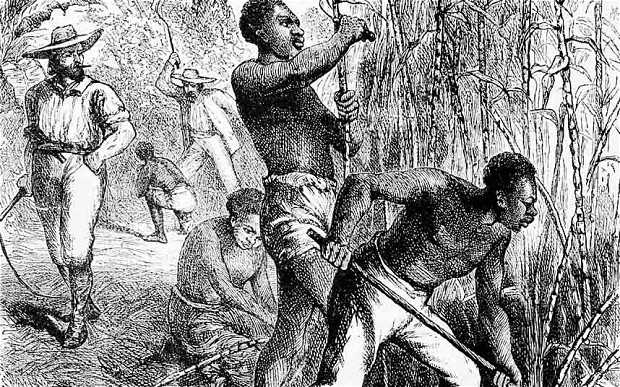
    Sugar Plantation Slaves 1858 engraving of slaves in the British West Indies working the sugar cane Photo: Lordprice Collection/ Alamy

    By Philip Sherwell, New York

    A coalition of Caribbean countries has unveiled its demands for reparations from Britain and other European nations for the enduring legacy of the slave trade.

    The leaders of 15 states adopted a wide-ranging plan, including seeking a formal apology from former colonial powers, debt cancellation, greater development aid as well as unspecified financial damages for the persisting “psychological trauma” from the days of plantation slavery.

    The series of demands to be made of former slaving nations such as Britain, France, Spain, Portugal and The Netherlands were agreed at a closed-door meeting of the Caribbean Community (Caricom) in St Vincent and the Grenadines.

    The Atlantic slave trade took place from the 16th through to the 19th centuries.

    The group hired Leigh Day, the British law firm, to push their claims after the company secured a £20 million compensation award for Kenyans who were tortured by colonial authorities during the Mau Mau rebellion in the 1950s.

    The reparations debate has long simmered in the Caribbean where many blame slavery for modern ills, ranging from economic weakness to health epidemics such as diabetes and hyper-tension allegedly caused by their ancestors’ poor diets.

    Caricom is pushing for increased technological assistance as it says European powers shackled the region during the world’s industrialisation by confining it to producing and exporting raw materials such as sugar.

    The plan also demands an increase of aid for public health and educational and cultural institutions such as museums and research centres.

    And it calls for the creation of a “repatriation programmes” to help resettle members of the Rastafarian movement in Africa. Repatriation to Africa has long been a central belief of Rastafarians.

    Martin Day, of Leigh Day, said he would request a meeting with European officials to seek a negotiated settlement, but would pursue a legal complaint if Caribbean nations are not satisfied with the outcome of any talks.

    It has been 180 years since Britain abolished slavery but the demand for an unqualified apology remains as controversial as the calls for financial damages.

    In 2007, Tony Blair, the then prime minister, expressed “deep sorrow and regret” for the “unbearable suffering” caused by Britain’s role in slavery but stopped short of a formal apology. His words angered many in the Caribbean as inadequate and resonating of legal caution.

    The British government, which currently contributes about £15million a year in development to the Caribbean, said that it has not been presented with the demands, but has consistently signalled opposition to financial reparations.

    “The UK has been clear that we deplore the human suffering caused by slavery and the slave trade,” a Foreign Office spokesman said. “However we do not see reparations as the answer. Instead, we should concentrate on identifying ways forward with a focus on the shared global challenges that face our countries in the twenty-first century.”

    But Professor Verene Shepherd, the chairman of Jamaica’s reparations committee, told The Daily Telegraph last month that British colonisers had “disfigured the Caribbean”, and that their descendants should now pay to repair the damage.

    “If you commit a crime against humanity, you are bound to make amends,” she said. “The planters were given compensation, but not one cent went to the freed Jamaicans”.

    The Caricom nations highlighted the region’s enduring troubles as well the suffering of the victims of the trade in humanity and the profits made by the slaving powers.

    “The transatlantic slave trade is the largest forced migration in human history and has no parallel in terms of man’s inhumanity to man,” their claim reads. “This trade in enchained bodies was a highly successful commercial business for the nations of Europe.”

    www.telegraph.co.uk, 11 Mar 2014

  • Open letter on Perinçek v. Switzerland case

    Open letter on Perinçek v. Switzerland case

    Open letter (slightly revised) rebutting Armenian claims submitted by Ferruh Demirmen to Swiss Interior Department on ECHR’s decision on Perinçek v. Switzerland.

    February 24, 2014

    An Open Letter to:
    Madame la Conseillère fédérale
    Simonetta Sommaruga
    Cheffe du Département fédéral de justice et police (DFJP)
    Palais fédéral ouest
    CH-3003 Berne, SWITZERLAND

    Dear Madame Sommaruga,

    This open letter is being submitted by a concerned citizen as a rebuttal of an open letter sent to you by a group called “concerned genocide scholars” regarding the December 17, 2013 judgment of the European Court of Human Rights (ECHR) on Perinçek v. Switzerland.

    In their February 16, 2014 letter, the “scholars” take issue with ECHR’s position that genocide is a precisely defined legal concept that is not easy to prove, and that the historical record on the 1915 events is a matter of debate. The “scholars” argue that the 1915 events constitute “genocide,” and request that you re-examine the Court’s judgment. This letter will endeavor to establish that the arguments advanced by the “scholars” are incomplete and specious.

    The “scholars” assert that Ottoman “mass killings” of Armenians conform to the definition of Article 2 of the 1948 U.N. Convention on the Prevention and Punishment of the Crime of Genocide (CPPCG). But such assertion is based only on a partial reading of the Convention. That Convention, in fact, is the Achilles’ heel of the “Armenian genocide” thesis. For Article 2, while describing genocide as, in part, killing or causing serious harm to the members of a group, makes two additional provisos: (1) there must be intent, (2) the targeted victims should belong to a particular national, ethnical, racial or religious group. The “scholars” conveniently ignore these two provisos.

    Ottoman government archives contain incontestable evidence that the relocation of Armenians in 1915 was not related in any way to nationality, religion, etc., but to military exigency in time of war, which was being fought on multiple fronts. Rebellious armed Armenian groups were aiding and abetting the enemy and sabotaging the Ottoman army from behind, and the government had to intervene. In other words, Armenians were subjected to relocation not because of their religion or ethnicity, but because they posed grave security threat in time of war. Armenians in the western part of Anatolia were spared from relocation orders because they did not pose a security threat. The central government orders to local authorities made it clear that the security of Armenian convoys during relocation should be ensured, and that all necessary precautions should be taken to meet their needs during and after relocation.

    There was no intent to harm the Armenians; but war conditions including lawlessness, chaos, disease, and famine, gave rise to tragic events on both sides.

    The fact that Armenians in the western part of Anatolia were spared from relocation orders belies accusations that the 1915 events were religion or ethnicity-related.

    Russian archives also reveal that religion and ethnicity were not causal factors behind the relocation orders, that relocation was conceived as a measure of self-defense by the Ottoman government, and that the tragic events were inter-communal in nature.

    Considering the above facts, and viewed in its fuller context, Article 2 of the 1948 Convention negates the genocide argument advanced by the “scholars.” The “scholars” cannot pick and choose a portion of Article 2 and ignore the rest.

    Equally important, the 1948 Convention contains a stipulation, in Article 6, that those charged with the crime of genocide should be tried by a competent tribunal in the state where the act was committed, or by an international penal tribunal whose jurisdiction is recognized by the contracting parties. In other words, to establish the crime of genocide, a court verdict is a sine qua non. The judgments by the Nuremberg Tribunal post-World War II, and the International Criminal Court (ICC) more recently on the Rwanda and Srebrenica events are examples to such verdicts.

    There exists no court verdict, however, on alleged “Armenian genocide.” The Malta Tribunal, convened by the victorious British after World War I to prosecute 144 high-ranking Ottoman officials on charges of killing Armenians, yielded not a single conviction. Among those detained for trial were cabinet ministers, the Grand Vizier and Army Commanders. The Armenian Patriarchate at Istanbul was the principal source of information against the accused, but the evidence was too flimsy for formal prosecution. Even the search of the U.S. State Department files in Washington failed to produce incriminating evidence. After two years of investigation, all Malta detainees were released and returned to Turkish soil.

    It is interesting that in referring to the opinions of France, the United Kingdom and Russia in their 1915 joint declaration, the “scholars” do not mention the Malta Tribunal. The Malta Tribunal drew its jurisdictional authority from these three powers, and its findings were binding on the three powers.

    So, Article 6 of the 1948 Convention also negates the genocide assertions of the “scholars.” What Article 6 establishes, in principle, is that neither parliaments nor a group of academics can pass judgment on an alleged genocide crime. A verdict by a duly authorized court of law is a must. The “scholars” ignore this very fundamental precept contained in the 1948 Convention.

    In conclusion, the 1948 Convention, which is the fundamental international covenant bearing on genocide determination, completely vitiates the genocide thesis when viewed in its entirety. The “scholars do not have the luxury to use only a portion of the covenant to establish their case.

    The “scholars” note that in 1997 the “International Association of Genocide Scholars” passed a resolution recognizing the Ottoman massacres of Armenians as genocide. That may be so, but a large number of scholars hold the opposite view. In 1985, for example, 69 U.S. historians and researchers passed a unanimous resolution, addressed to members of the U.S. House of Representatives and published in New York Times and The Washington Post, refuting Armenian allegations. These were academicians specializing in Turkish, Ottoman and Middle Eastern studies. Many of these academicians were subsequently harassed or intimidated by the pro-genocide camp.

    The conclusion is inescapable, as ECHR observed, that there is no consensus among historians and scholars on the 1915 events. And that is not taking into account the views of Turkish researchers and historians.

    In their letter the “scholars” indirectly draw an analogy between Holocaust and the 1915 events. Such analogy is not only grotesque, but more bluntly, obscene. Jews of Nazi Germany did not rise in armed rebellion against the state, did not embark on a rampage of violence against the local population, did not join the ranks of an invading army, did not sabotage the German army behind the front lines, and in general did not engage in perfidious acts. Their only “crime” was not being of the “Aryan race.” Race was the motive behind the killings.

    The Nazis did not court-martial those implicated with wrongdoing against the Jews, as did the Ottomans prosecute those accused of mistreating Armenians during relocation. Nor did the Nazis deliberately spare Jews as “good citizens” in some parts of the Reich, or award meritorious awards to Jews, as did the Ottomans to Armenians. The Ottomans, having long embraced Armenians in high-ranking positions in the government, including generals and cabinet ministers, did not spread racist, scurrilous lies about the Armenian minority. And the Armenians certainly did not perish in gas chambers.

    To broaden their horizon on the 1915 events, the “scholars” should perhaps read, if they have not already, the admissions of Boghos Nubar Pasha at the Paris Peace Conference in January 1919, and the manifesto issued by Johannes Kachaznuni at the Dashnak convention in Bucharest in March 1923. It would be like hearing the truth from the horse’s mouth. More than half of a million Muslims lost their lives at the hands of Armenian guerillas who fought a losing battle relying on false promises of imperial Western powers and the Tsarist Russia. Even the Russian officers on the scene were troubled by the severity of violence inflicted by the Armenian guerillas on Muslims.

    And the terror inflicted was not confined to Muslims. As stated by Albert J. Amateau, a rabbi born in Turkey and later emigrated to America, in a testimony sworn before a notary public in California in 1989, Armenian atrocities also extended to Jews, and even to Armenian families who refused to cooperate with the armed guerillas.

    In their letter the “scholars” attempt to link the tragic murder of Hrant Dink to genocide controversy, and claim that Turkey has “one of the worst” records on human rights “over the past decades.” This is a slanderous attack aimed at Turkey, and it is deplorable. Dink was murdered by a deranged fanatic, and the facts behind the assassination are still unknown. More than 100,000 Turkish people took to the streets in Istanbul to protest Dink’s murder. Mention of human rights by the “scholars” is particularly ironic, considering that their list of signatories is headed by none other than Taner Akçam, an ex-convict and a prison escapee who advocated violence and was imprisoned for terrorist activities in Turkey. Akçam is now a protégée and beneficiary of the Armenian lobby.

    And speaking of human rights, it is curious that the “scholars” failed to mention the ASALA/JCAG terror that took more than 40 innocent lives, most of them Turkish diplomats, during 1973-1991. Not only did the committees funded by Armenian organizations pay for the legal defense of the majority of terrorists, but several prominent Armenians and pro-Armenian “scholars” testified in the trials of the terrorists. One terrorist, after his release from the French prison, was welcome as a hero in Armenia. So much about concern for “human rights”!

    Incidentally, how many Armenians took to the streets to protest the killing of Turkish diplomats and their families by the ASALA/JCAG terror?

    It is a known fact that Turkey and Armenia cannot agree on legal characterization of the 1915 events. That being the case, one wonders why the “scholars” have not urged Armenia to file a complaint with the International Court of Justice (ICJ). Established in 1945, ICJ is the primary judicial arm of the U.N. to settle legal disputes submitted by states. A court case undertaken by ICJ would require all historical archives to be open, due process to apply, and the evidentiary material scrutinized for probity. The only reasonable explanation for the stance of the Armenian side is that it finds a judicial process too risky for its taste.

    The Armenian side, instead, has over the years relied on propaganda in public arena, where bias and prejudice play a large role, and financial resources can be deployed aplenty.

    It is refreshing that the “scholars” make a concession in their letter: They agree with the notion of freedom of expression articulated by ECHR. It is impossible not to be sarcastic about their newly-found concern for this basic human right. Over the years these “scholars” attended conferences where presence of academics opposing their genocide thesis was not welcome. Did the “scholars” express any freedom of expression concern when, in 1995, a French court fined historian Prof. Bernard Lewis because he did not subscribe to the genocide thesis, or when, in 2007, Dr. Doğu Perinçek was convicted by a Swiss court for the same reason? And what was the reaction of the “scholars” when the French Senate passed a bill in 2011 (later overturned) that criminalizes denial of “Armenian genocide”?

    One additional comment in this context is noteworthy. The “scholars” use the word “denialist” to refer to those who reject their genocide assertions. “Denialist” is a pejorative term, and its use is a breach of academic decorum. It is also a sign of arrogance. How would the “scholars” like if their colleagues in the opposing camp call them “distortionists” or “fabricators”?

    To wrap up, characterization of the 1915 events as “genocide” is incompatible with the definition of this term as prescribed in the 1948 U.N. Convention. “Genocide” is a legal construct, and should not be used to further political aims. The suffering on the Armenian side in the 1915 events cannot be denied; but the suffering on the Turkish side also deserves recognition. After a century, it is time for the two sides to reconcile their differences without further recrimination, and move on. We don’t need new generations poisoned with “genocide” controversy.

    It is hoped that the Swiss government will accept the judgment of ECHR as final.

    Respectfully yours,

    (hard copy signed)

    Ferruh Demirmen, Ph.D.
    (address)

    Appendix
    SIGNATORIES TO MAY 19, 1985 STATEMENT ADDRESSED TO THE MEMBERS OF THE U.S. HOUSE OF REPRESENTATIVES AS PUBLISHED IN NEW YORK TIMES AND WASHINGTON POST:

    RIFAAT ABOU-EL-HAJ
    Professor of History, California State University at Long Beach
    SARAH MOMENT ATIS
    Professor of Turkish Language & Literature, University of Wisconsin at Madison
    KARL BARBIR
    Associate Professor of History, Siena College, New York
    ILHAN BASGOZ
    Director of the Turkish Studies, Department of Uralic & Altaic Studies, Indiana University
    DANIEL G. BATES
    Professor of Anthropology, Hunter College, City University of New York
    ULKU BATES
    Professor of Art History, Hunter College, City University of New York
    GUSTAV BAYERLE
    Professor of Uralic & Altaic Studies, Indiana University
    ANDREAS G. E. BODROGLIGETTI
    Professor of Turkic & Iranian languages, University of California at Los Angeles
    KATHLEEN BURRILL
    Associate Professor of Turkish Studies, Columbia University
    RODERIC DAVISON
    Professor of History, George Washington University
    WALTER DENNY
    Associate Professor of Art History & Near Eastern Studies, University of Massachusetts
    DR. ALAN DUBEN
    Anthropologist & Researcher, New York City
    ELLEN ERVIN
    Assistant Professor of Turkish Researches, New York University
    CAESAR FARAH
    Professor of Islamic & Middle Eastern History, University of Minnesota
    CARTER FINDLEY
    Associate Professor of History, Ohio State University
    MICHAEL FINEFROCK
    Professor of History, College of Charleston, South Carolina
    ALAN FISHER
    Professor of History, Michigan State University
    CORNELL FLEISCHER
    Assistant Professor of History, Washington University (Missouri)
    TIMOTHY CHILDS
    Professorial Lecturer at SAIS, Johns Hopkins University
    SHAFIGA DAULET
    Associate Professor of Political Science, University of Connecticut
    JUSTIN MCCARTHY
    Associate Professor of History, University of Louisville, Kentucky
    JON MANDAVILLE
    Professor of the History of the Middle East, Portland State University, Oregon
    RHOADS MURPHEY
    Assistant Professor of Middle Eastern Languages & Cultures & History, Columbia University
    PIERRE OBERLING
    Professor of History, Hunter College, City University of New York
    ROBERT OLSON
    Associate Professor of History, University of Kentucky
    DONALD QUATAERT
    Associate Professor of History, University of Houston
    WILLIAM GRISWOLD
    Professor of History, Colorado State University
    WILLIAM HICKMAN
    Associate Professor of Turkish, University of California at Berkeley
    JOHN HYMES
    Professor of History, Glenville State College, West Virginia
    RALPH JAECKEL
    Visiting Assistant Professor of Turkish, University of California at Los Angeles
    JAMES KELLY
    Associate Professor of Turkish, University of Utah
    PETER GOLDEN
    Professor of History, Rutgers University, New Jersey
    TOM GOODRICH
    Professor of History, Indiana University of Pennsylvania
    ANDREW COULD
    Ph.D. in Ottoman History, Flagstaff, Arizona
    MICHAEL MEEKER
    Professor of Anthropology, University of California at San Diego
    THOMAS NAFF
    Professor of History & Director, Middle East Research Institute, University of Pennsylvania
    WILLIAM OCHSENWALD
    Associate Professor of History, Virginia Polytechnic Institute
    WILLIAM PEACHY
    Assistant Professor of the Judaic & Near Eastern Languages & Literatures, Ohio State University
    HOWARD REED
    Professor of History, University of Connecticut
    TIBOR HALASI-KUN
    Professor Emeritus of Turkish Studies, Columbia University
    J. C. HUREWITZ
    Professor of Government, Emeritus, Former Director, Middle East Institute (1971-1984) , Columbia University
    HALIL INALCIK
    Member of the of Arts & Sciences, Professor of Ottoman History, University of Chicago
    RONALD JENNINGS
    Associate Professor of History & Asian Studies, University of Illinois
    KERIM KEY
    Adjunct Professor, Southeastern University, Washington, D.C.
    DANKWART RUSTOW
    Distinguished University Professor of Political Science, Graduate Center, City University of New York
    STANFORD SHAW
    Professor of History, University of California at Los Angeles
    METIN KUNT
    Professor of Ottoman History, New York University
    AVIGDOR LEVY
    Professor of History, Brandeis University, Waltham, Massachusetts
    DR. HEATH W. LOWRY
    Institute of Turkish Studies Inc. Washington, D.C.
    JOHN MASSON SMITH, JR.
    Professor of History, University of California at Berkeley
    ROBERT STAAB
    Assistant Director of the Middle East Center, University of Utah
    JAMES STEWART-ROBINSON
    Professor of Turkish Studies, University of Michigan
    FRANK TACHAU
    Professor of Political Science, University of Illinois at Chicago
    DAVID THOMAS
    Associate Professor of History, Rhode Island College
    WARREN S. WALKER
    Home Professor of English & Director of the Archive of Turkish Oral Narrative, Texas Tech University
    WALTER WEIKER
    Professor of Political Science, Rutgers University, New Jersey
    MADELINE ZILFI
    Associate Professor of History, University of Maryland
    ELAINE SMITH
    Ph.D. in Turkish History, Retired Foreign Service Officer, Washington, DC
    EZEL KURAL SHAW
    Associate Professor of History, California State University, Northridge
    FREDERICK LATIMER
    Associate Professor of History (Retired), University of Utah
    BERNARD LEWIS
    Cleveland E. Dodge Professor of Near Eastern History, Princeton University
    GRACE M. SMITH
    Visiting Lecturer in Turkish, University of California at Berkeley
    DR. SVAT SOUCEK
    Turcologist, Oriental Division, New York Public Library
    JUNE STARR
    Associate Professor of Anthropology, SUNY Stony Brook
    DR. PHILIP STODDARD
    Executive Director, Middle East Institute, Washington, D.C.
    METIN TAMKOC
    Professor of International Law and Regulations, Texas Tech University
    MARGARET L. VENZKE
    Assistant Professor of History, Dickinson College, Pennsylvania
    DONALD WEBSTER
    Professor of Turkish History, Retired, Beloit College, Wisconsin
    JOHN WOODS
    Associate Professor of Middle Eastern History, University of Chicago

  • Lawrence revelations: admit institutional racism, Met chief told

    Lawrence revelations: admit institutional racism, Met chief told

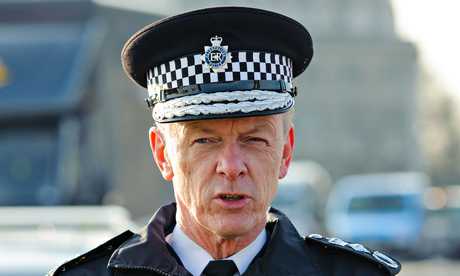
    Hogan-Howe said the publication of the Ellison report marked one of the worst days in his police career. Photograph: Dominic Lipinski/PA
    Hogan-Howe said the publication of the Ellison report marked one of the worst days in his police career. Photograph: Dominic Lipinski/PA

    Anti-terror head moved as black police leader says force has not improved since the 1999 Macpherson inquiry

    According to Guardian the crisis engulfing the Metropolitan police following fresh revelations about the Stephen Lawrence case intensified on Friday night as the leader of its black officers’ association called on the commissioner, SirBernard Hogan-Howe, to admit that the force was still institutionally racist.

    Janet Hills, chair of the Met’s black police association, told the Guardian that the report by Mark Ellison QC into alleged police wrongdoing in the Lawrence case was the latest example of the force failing the communities it serves.

    Her comments came as the repercussions from Ellison’s report, commissioned by the home secretary, led the Met to move its head of counter-terrorism, Commander Richard Walton, out of his post after he was caught up in allegations that a police “spy” was placed close to the Lawrence family.

    The first public inquiry into the Lawrence case by Sir William Macpherson in 1999 resulted in the force being branded “institutionally racist” for its failings that led the teenager’s killers to escape justice.

    Years later the Met said the label no longer applied because it had improved so much, but the leader of the Met’s own ethnic minority officers disagreed.

    Hills said: “We believe the Met is still institutionally racist.” She said this was shown by issues such as higher rates of stop and search against black people, and “the representation of ethnic minorities within the organisation, where ethnic minorities are still stuck in the junior ranks”. She added: “For me, it lies in the fact there has been no change, no progression.”

    In his first public comments, Hogan-Howe accepted that the Ellison report was “devastating” and the London mayor Boris Johnson, who has responsibility for policing in the capital, described as “sickening” Ellison’s conclusion that a detective in the Lawrence murder investigation may have been corrupt.


    Hills said: “The Ellison report’s revelations came because of continuing pressure from the Lawrence family. It’s only because the Lawrence family are fighting for justice that all this is coming out, and there will be more to come.”

    Hills said Hogan-Howe should publicly accept that, 15 years on from Macpherson, Britain’s biggest police force – serving a city where 40% and rising are from ethnic minorities – was still “institutionally racist”. She said: “It would be good to hear him acknowledge that … For community trust and confidence he needs to take ownership.”

    Johnson defended the Met’s record on race and said confidence was rising in the force Hogan-Howe leads: “He is right to continue and accelerate the work of recruiting a police force that resembles the community it serves.

    There has been good progress in recent years in recruiting from ethnic minorities, but there is still some way to go. I know Sir Bernard is determined to get there, and I am sure that we can.”

    Ellison’s revelations that the Met had a “spy in the Lawrence camp” during the Macpherson inquiry led the force to announce it would “temporarily” move Walton from his post as head of counter-terrorism, one of the most sensitive jobs in British policing. He has also been referred to the Independent Police Complaints Commission.

    In August 1998, Walton, then an acting detective inspector, was helping to prepare the Met’s submission to the Macpherson inquiry. He secretly met an undercover officer – described by Ellison as being “positioned close to the Lawrence family campaign” to exchange “fascinating and valuable” information about the grieving family. Some of that information passed from the undercover officer included details on Doreen and Neville Lawrence’s marriage.

    Neville Lawrence last night called the revelations “disgusting”, telling the Daily Mail: “It’s unbelievable. They have mocked everything we have done, telling us to our faces that they are listening and things will change, and all the time laughing behind our backs.

    “I think they are actually worse than criminals because these officers get paid with taxpayers’ money for what they do.”

    Ellison found Walton’s conflicting accounts of the meeting “unconvincing, and somewhat troubling”.

    He offered a different version of the purpose of this meeting last month after Ellison told him that he was facing criticism in the report.

    Walton was moved to a non-operational role. It comes as the Met faces withering criticism from the home secretary down over the new revelations about its behaviour during the Lawrence case.

    Hogan-Howe said the publication of the Ellison report marked one of the worst days of his police career.

    He vowed to reform the force, and told London’s Evening Standard: “I cannot rewrite history and the events of the past but I do have a responsibility to ensure the trust and the confidence of the people of London in the Met now and in the future.”

    Theresa May branded the Lawrence revelations, some 21 years after the murder, as “profoundly shocking and disturbing”, adding that “policing stands damaged today”. She said the full truth had yet to emerge.

    Lord Condon, Met commissioner at the time of the “spy” in the Lawrence camp, denied any knowledge of the deployment, telling the House of Lords: “At no stage did I ever authorise, or encourage, or know about any action by any undercover officer in relation to Mr and Mrs Lawrence or their friends or supporters or the Macpherson inquiry hearings. Had I known I would have stopped this action immediately as inappropriate.”The fallout after the Ellison report is also reaching the courts. Two campaigners are to appeal against their convictions, alleging that an undercover police officer took part in their protest and set fire to a branch of Debenhams, causing damage totalling more than £300,000.The officer, a leading member of the covert unit at the heart of the undercover controversy, was revealed this week to have also been a key figure in thesecret operation to spy on the family of Stephen Lawrence.

    The announcement of the appeal comes as scores of convictions involving undercover officers over the past decades are to be re-examined to see if campaigners in a range of political groups have been wrongly convicted.

    Ellison, the QC who produced Thursday’s report into the undercover infiltration of the Lawrence campaign, also found that the unit, the special demonstration squad (SDS), had concealed crucial evidence from courts.

    Now he has been asked by the home secretary, Theresa May, to identify specific cases in which unjust convictions have been caused by the SDS, which infiltrated political groups between 1968 and 2008.

  • “10,000,000 dollars is not enough”

    “10,000,000 dollars is not enough”

    10,000,000 dollars is not enough

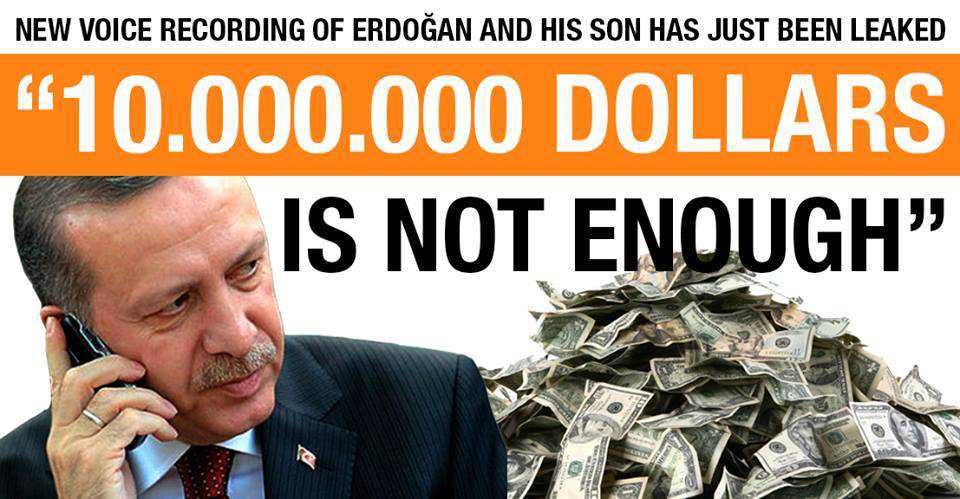
    A new recording of a phone call between Prime Minister Tayyip Erdoğan and his son Bilal has been leaked last night.

    In the alleged recording, Erdoğan and his son are discussing the amount of the bribe to be taken from a businessman named Sıtkı Ayan. Erdoğan finds the offered 10 million dollars insufficient, and instructs his son not to accept unless Ayan provides the amount he promised.

    Sıtkı Ayan is the owner of SOM Petrol, a London-based corporation that owns oil and gas wells in various countries and turns over billions of dollars every year. Turang Transit Transportation, also owned by Mr. Ayan, was awarded the government contract to build a $11.5 billion pipeline to transport natural gas from Iran and Turkmenistan to Europe. The investment was subsidised by the government, and the corporation was held exempt from VAT and various other taxes and duties.

    According to the whistleblowers who leaked the call, Mr. Ayan pays regular bribes to Prime Minister Erdoğan, just like the “other businessmen”.

    Transcript:

    Bilal Erdoğan: Mr. Sıtkı came yesterday, saying he couldn’t do the transfer properly, that he currently has about 10 or so (million dollars), that he can give it whenever we want…
    Tayyip Erdoğan: No no, don’t you take it.
    Bilal Erdoğan: No I won’t, but I don’t know what we’ll do now.
    Tayyip Erdoğan: No, don’t take it. If he’s going to bring what he promised, then let him bring it. If not, then no need. Others can bring it, so why can’t he, huh? What do they think is? But they are falling now, they’ll fall on our laps, don’t you worry.
    Bilal Erdoğan: OK, daddy.

    Click here to listen to the recording (in Turkish):

    Alternative link: watch?v=4GZBw369nEM

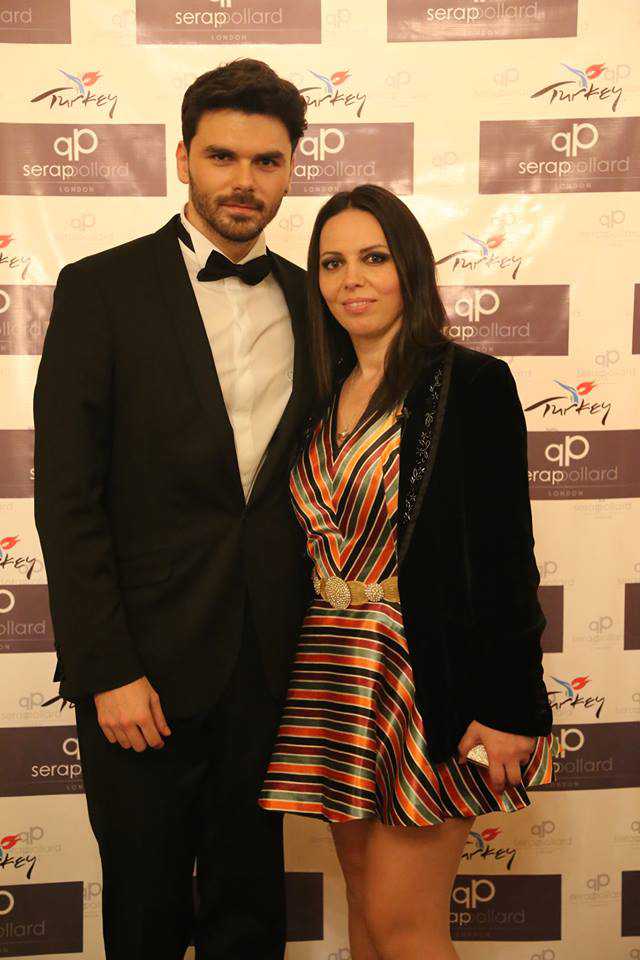
  • London Fashion Week  And Serap Pollard Collection AW14

    London Fashion Week And Serap Pollard Collection AW14

    serap pollarda This year Serap’s collection was shown London Fashion Week Season AW14.  The show was sponsored by the Turkish Ministry of Culture & Tourism. Her latest collection at the London Fashion Season AW14 Show will utilize Turkish fabrics and traditional techniques,  Serap Pollard believes that Turkey is very rich in traditional values as a result of a deep and rich history, therefore, she is very attentive to use the traditional values of Turkey in her designs.  In similarity to her previous projects,  Serap Pollard will be using  fabrics which originate from the depths of Turkey’s history as it appeals to have rich traditional values within the culture.  Although sustainable or organic clothes lack of colour and model, the designs of Serap Pollard are very successful at combining traditional lines with the world trends. Use of ecological products in her designs has received great attention in Europe.   Serap Pollard works towards promoting sustainability and helping people in the world’s most marginalized communities escape poverty by actively supporting Fair Trade producer groups in Turkey.   She is one of the few designers who produces sustainable fashion.   Sustainable fashion is a way of producing clothing in an Eco-friendly way.  The goal being to reduce the negative impact it has on the environment and maximize the garments lifespan, avoiding the typical short term garment trend of just wearing a piece of clothing for one season.  Serap Pollard’s show is sponsored by the Turkish Ministry of Culture & Tourism. The distinguished designer commented: “I’m thrilled to be working with the Turkish Ministry as official sponsors on my forthcoming London Fashion Week Season AW14 Collection Show.”

    serap pollard bhttps://www.facebook.com/SerapPollardLondon

    www.serappollard.com

    https://www.facebook.com/GoToTurkeyUK

    Serap Pollard was born in Turkey.  After graduating from Faculty of Fine Art of Marmara University in 2000,  Serap Pollard moved to London and has been living there ever since.  In 2000, she studied at London College of Fashion, University of the Arts, and Central Saint Martin’s College, adding to her already impressive resume.  In 2012 she completed her Masters degree at University of the Arts London after working for 10+ years in London with well-established companies (Laura Ashley etc.) and designer brands in which she continuously attended International and National Fashion Fairs and then she launched her brand under the name of SERAP POLLARD LONDON in 2011.  One key indication that a brand has become a lifestyle is when it successfully extends beyond its original product category.   Serap’s style evolves into a refined pureness of female elegance, but is still very comfortable and wearable.  Every detail, high quality of standard, tradition, and craftsmanship is being cared for.  Serap Pollard thinks that Turkey is very rich in traditional values, as a result of her deep and rich history,  she is very attentive to use the traditional values of Turkey in her designs.  Serap Pollard London works towards promoting sustainability and helping people in the world’s most marginalized communities escape poverty by actively supporting Fair Trade producer groups in Turkey.  The brand provides training to artisans and their organisations so they can improve their skills, and strengthen their businesses and social impact.  Serap Pollard London also allows time for production by hand and often invests in local community projects too. Although sustainable or organic clothes lack of colour and style, the designs of Serap Pollard are very successful at combining traditional lines with the world trends. Use of ecological products in her designs has received attention in Europe. Serap Pollard is one of the few designers who produces sustainable fashion. Sustainable fashion is a way of producing clothing in an Eco-friendly way. The goal being to reduce the negative impacts it has on the environment and maximise the garments lifespan, avoiding the typical short term garment trend of just wearing a piece of clothing for one season. Pollard is not only a nature lover, but also aims to contribute to the country economy. Another way of making eco-friendly clothes is “zero waste”.  15% of the fabric is wasted while producing a shirt. Pollard has leveled down this percentage by using appropriate patterns.  Thus, from an agriculture labourer to factory owner, from customer to the nature, every aspect in the life cycle of shirt reap the benefit of this approach.

    AW15 Collection/ 15th February 2014 (KUTNU) Acculturation

    We live in a multi-cultural world. Transportation, communication, globalisation, improving international relations, and movements of manpower increasingly bring people of different cultures closer together.  Cultures influence each other thanks to this. I have prepared this collection with the conscious of we live in a global village where acculturation is inevitable.  The starting point for this were the photos of two little girls. Two photos which were taken in different times and different places. The only common point of two girls, who look with different emotions, is the innocence. One of the photos were taken in Gaziantep, a kid with black big eyes and wearing clothes of traditional kutnu fabric; which I call “ diamond”.  The other one is a Princess Louise (1848-1939) portrait.  The second “diamond” gives me inspiration with her innocent appearance and yellow ringlet hairs.  Likewise in my previous projects, I  used a traditional and historical value of Turkey in my new project: Kutnu fabric.  Kutnu Fabric which is a hand woven fabric of Gaziantep in Turkey, and silk chiffon have been used as major materials in my designs. It is very suitable to the Serap Pollard London brand and style, as it is sustainable and ethical. I lived in Turkey until 2000 and have been living in London for the last 14 years. I like travelling. I like searching and learning about new cultures as well as following the interaction between cultures. I too am a part of Global Village.

    PROJECTS • “Under The Baobab” 2012 Londra Olimpics

    Pollard has made great impression by the project titled “Under the Baobab” which was materialized with an inspiration from Turkish history. Pollard collaborated with various fashion designers from the world in this project. It was the giant Olympic Tree, made of traditional Turkish fabrics, aroused great interest. Pollard, for this project, says “..a project with the objects of wood and fabric made me very excited. When we looked back to Turkish history, the foundation symbol of Ottoman Empire was a tree. This project with traditional Turkish fabrics has brought the Turkish history to today`s modern-day.”

    Mr Turkey and Serap Pollard
    Mr Turkey and Serap Pollard

    • SELALMAZ / KASTAMONU

    Serap Pollard says that she began this project with the aim of “adding value to the value” and set out on a fashion journey from London to Kastamonu. She adds that she preferred clothes which are more longer lasted, recyclable and away from fashion for this project. She weaved the Selalmaz Fabric of Kastamonu with the Eco-friendly Bamboo yarn and adapted this fabric to silk fabrics by using digital printing technique. The traditional weavings has been showcased in Europe.

    The Turkish designer aimed to make the Selalmaz fabric, a traditional value of Turkey, gain its well-deserved place. Providing a business opportunity to Kastamonu tradesmen and avoiding the extinction of Selalmaz fabric were among her aims too.  Pollard has completed her MA in Sustainable Fashion in London University with this project.

    • TOP MODEL UK Designs of the Turkish Designer Serap Pollard were used in Top Model UK.  Pollard signed her name to Top Model UK 2013 by using the garments made of ecological fabrics as well as ecological products

    • TOP MODEL WORLDWIDE

    Pollard made an indelible impression in local, national and international media organs by dressing models from 46 different countries in Top Model Worldwide 2013. Fashion authorities are already in agreement for her upward moving success graphic. This accomplishment has a broad repercussion in Turkey as well. Pollard has been officially appreciated by various Turkish Ministries for her contributions to the recognition of Turkey`s traditional values.

    • IZNIK CINISI

    The patterns of Iznik Tile, main theme of 2014 Spring/Summer collection, attracted great attention in the UK as well as the US where the editorial photo-shoots were performed.

    The Turkish designer says that she made a 3-months-research in Turkey, patterns designs were made in Turkey and the prepared fabrics were became clothes in London.  The promotion shooting of the collection was realized during London Fashion Week.

    American Modelling Agency and its staff were used for editorial shootings in Hollywood and Beverly hills.

    The American models, one more beautiful than the other, wore the garments which carry the blue colour and patterns of Iznik tile.  The name of Pollard`s collection is “Tiled-UP” and used the traditional blue tonnes of the word-famous Bursa Iznik Tile, Turkish blue, dodger blue and midnight blue were widely used in the collection. Serap Pollard states that it is very exciting to introduce Turkey in American Fashion word and adds “it is very extraordinary experience to tell the subjects, patterns and colours which you know best to the people you listen”.