Category: Non-EU Countries

  • The great mediator

    The great mediator

    Sometimes Turkey really is a bridge between west and east

    Turkish foreign policy

    How can Mr Davutoglu help you?

    IN JUNE 2006, days after a young Israeli private was captured by Hamas, Israel’s ambassador to Turkey paid a midnight visit to Recep Tayyip Erdogan, the prime minister. Gilad Shalit was feared to be gravely ill, perhaps even dead. Could Turkey help? Phone calls were made and favours called in. Mr Shalit turned out to be alive, and his captors promised the Turks they would treat him respectfully.

    Turkey’s relations with Israel, once an ally, have worsened of late, and hit a fresh low in May, when Israeli commandos raided a Turkish ship carrying humanitarian supplies to Gaza, killing nine Turkish citizens. Yet Turkey continues to lobby Hamas for Mr Shalit’s release.

    Turkey’s falling out with Israel has sparked a flurry of anguished commentary in the West about its supposed eastward drift under the mildly Islamist Justice and Development party, which has governed the country since 2002. Concern over its cosy relations with Iran, despite that country’s refusal to suspend suspect nuclear work, has run particularly high. Yet nobody complained in April 2007 when Turkey brokered the release of 15 British Royal Navy sailors who had been seized by Iran. Similarly, France was delighted in mid-May when a personal intervention by Turkey’s foreign minister, Ahmet Davutoglu, secured the release of Clotilde Reiss, a French teacher being held in Iran on spying charges.

    Turkey is the first stop for thousands of political refugees from Iran, Iraq, Afghanistan and Central Asia. These include Mohammed Mostafei, an Iranian lawyer who took up the case of Sakineh Ashtiani, a woman facing death by stoning in Iran for alleged adultery. Mr Mostafei fled to Turkey earlier this month after receiving death threats (he has since gone to Norway). Now Turkey has discreetly taken up his client’s case (although Iran has turned down a Brazilian offer of asylum for Ms Ashtiani). It is also pressing Iran for the release of three American hikers who were arrested, on suspicion of “spying”, near the Iraq border a year ago and who have been rotting in Tehran’s notorious Evin prison ever since.

    Turkey’s mediating skills have even aroused excitement in Africa. Mr Davutoglu recently revealed that Botswana had sought his help in fixing a territorial dispute with Namibia. Flattered though he was, however, Mr Davutoglu confessed that, for once, he was stumped.

    http://www.economist.com/node/16847136?story_id=16847136&fsrc=rss, Aug 19th 2010

  • Council website hit by Turkish hackers

    Council website hit by Turkish hackers

    Red-faced IT bosses at Stafford Borough Council are hacked off after the authority’s website was broken into by a Turkish protest group.

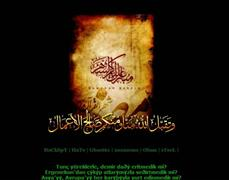
    The hackers forced the council to close its site after a member of staff noticed the problem when they tried to log on and saw a black screen proclaiming the Turkish Cyber Army.

    The group broke into the server which provides the site, run by Mid Counties Co-op, redirecting surfers to their own site. Their home screen displayed a picture of an ancient scroll. with the words “world protest”.

    It also said: “We are the king of the world/Turkish Cyber Army!” It is the first time the site, which has been running for 15 years, has been compromised and IT chiefs said no data was at risk.

    The site was taken down last Wednesday, August 11, afternoon until Thursday morning.

    Council spokesman Will Conaghan said the public web site is a copy that doesn’t contain any sensitive details or data.

    The master site containing key information was kept safe behind firewalls, he added.

    Peter Kenrick, the council’s head of technology, said: “There was no risk to data at any time. We took the site down to make sure we had the full picture. The company that services the website needs to look at security there.” The site attracts more than a thousand hits every day.

    , 19/08/2010

  • Turkey is an ancient trade hub with a bright future

    Turkey is an ancient trade hub with a bright future

    Turkey has traditionally been known as the gateway to the East and is typically coupled with the Middle East and Africa in the geographic divisions of many large companies. Yet its economy – the 15th largest in the world – sends half of all its exports to Europe.

    By Andrew Cave

    Turkey is increasingly attractive to small and medium-sized businesses looking to explore growth opportunities Photo: AP

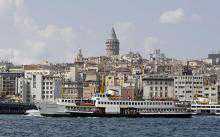
    This is a situation that Turkey, and Istanbul in particular, has been used to for centuries, given the nation’s place on the ancient trade routes.

    With Turkey opening up more to Western investment in recent years, however, the nation is increasingly attractive to small and medium-sized businesses looking to explore growth opportunities as part of the next stage of their strategy.

    This is why Turkey has been selected as the second destination in the series of trade visits being organised by HSBC Bank as part of its Business Thinking initiative.

    The programme, run in partnership with Telegraph Media Group, aimed at finding and rewarding innovative and different ways of approaching business, is offering 18 winning companies up to £90m of loans, which come with a financial reward of up to £200,000.

    In addition, dozens of people from shortlisted companies are to be flown to networking events in the Americas, Europe and Asia.

    They will meet some of the foremost management thinkers in their business fields. The Turkey visit will take place in mid-September.

    Turkey is a founding member of the Organisation for Economic Co-operation and Development (OECD) and the G20 group of major economies.

    It had a growth rate averaging an annual 6.8pc from 2002 to 2007, making the nation one of the fastest growing economies in the world.

    The country also has an unusually young demographic profile, with more than half of its 72m people aged below 30 and a median age of 27.

    Murat Ulgen, HSBC’s chief economist for Central and Eastern Europe and Sub-Saharan Africa, is predicting gross domestic product (GDP) growth of 6pc this year and around 4.5pc in 2011, following a sharp contraction of 4.7pc in 2009.

    The bank is also forecasting Turkish exports of about $115bn (£74bn) this year, a stable central bank interest rate of 7pc and a range of between 7.5pc and 8pc for the annual rate of inflation by the end of 2010.

    The unemployment rate is running at 12pc, while Turkey’s budget deficit is between 4pc and 4.5pc of GDP and its total external debt stock works out at about 40pc of GDP.

    By the end of this year, Mr Ulgen is forecasting, the size of the Turkish economy will be $720bn, representing per capita income of about $10,000. The current exchange rate is 2.38 Turkish lira to the pound.

    In past decades, Turkey has been a byword for high inflation and an unstable economy but reforms were enacted following the economic crisis of 2001 and a new currency, the Turkish new lira (later renamed once again as the Turkish lira) was launched in 2005.

    Inflation was driven down to single digits, while the unemployment rate also fell and investor confidence grew.

    A series of large privatisations, the stability fostered by the start of Turkey’s EU accession negotiations, strong and stable growth, and structural changes in the banking, retail, and telecommunications sectors have all contributed to a rise in foreign investment.

    Turkish tourism has also experienced rapid growth in the past 20 years, and constitutes an important part of the economy. In 2008, there were nearly 31m visitors to the country, contributing $22bn to Turkey’s revenues.

    Mr Ulgen believes that such developments meant that Turkey suffered less than many other nations in the recent global financial crisis.

    “During the global recession, we were lucky,” he says, “because we had a very strong banking industry.

    “Unlike a lot of Europe and the US, the Turkish banking system was very strong, with high capital adequacy ratios, which was a big advantage. Turkey’s recovery has been very impressive.”

    Turkey has a large and growing automotive industry, which produced 1.1m cars in 2008, ranking as the sixth largest producer in Europe, one place behind Britain, and the 15th largest producer in the world.

    It produces more cars than Italy and is also one of the world’s leading ship-building nations, ranking fourth behind China, South Korea and Japan in the numbers of ships ordered and also fourth behind Italy, the US and Canada in the number of ordered super-yachts.

    Turkish brands such as BEKO and Vestel are among the largest producers of consumer electronics and home appliances in Europe.

    Mr Ulgen says the best sectors for British companies to target for exports are durable and white goods manufacturers, the automotive industry, the energy sector and infrastructure projects.

    At present, he says, Turkey’s domestic economy is much stronger than its export economy so UK companies may be better advised to seek sales in Turkey itself, rather than look to use the country as a hub for exporting elsewhere.

    Virma Sokmen, HSBC’s head of corporate banking in Turkey, adds that because of its young population, Turkey is dynamic and enterprising.

    However, she warns that the most successful Western companies in the country have been those, such as Unilever, Cadbury and Reckitt Benckiser, that have adapted their offerings and business practices to take account of Turkey’s very strong and individual culture.

    “Turkey has a very collective and common culture,” she says. “Turkish people value global brands but they also want to see respect for Turkish culture.

    “They will want to spend time with you and perhaps your shareholders before committing to business. They are warm and hospitable people and will want to meet over lunch or dinner and get to know who they are dealing with.”

    Turkey is also quite a highly-regulated environment and Ms Sokmen says that some foreign firms coming into Turkey like to do so through a partner or advisers.

    “You do need to build relationships,” she says, “but there are lots of business opportunities in Turkey for companies that take the time and make the effort to adapt.”

    http://www.telegraph.co.uk/finance/economics/7945717/Turkey-is-an-ancient-trade-hub-with-a-bright-future.html, 14 Aug 2010
  • Arab takes hostages at Turkish Embassy in Israel

    Arab takes hostages at Turkish Embassy in Israel

    By AMI BENTOV and MARK LAVIE, Associated Press Writers

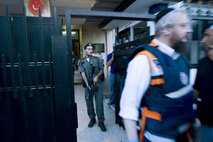
    AP – An Israel border police officer holds his weapon as a paramedic rushes put of the Turkish Embassy in …

    TEL AVIV, Israel – A Palestinian demanding asylum abroad took hostages in the Turkish Embassy in Tel Aviv Tuesday after shots were fired outside, and Israeli officials said the man was recently released from prison after he attacked another embassy four years ago.

    An Israeli rescue official said at least one person inside was lightly injured. The Turkish Anatolia news agency reported that security guards at the embassy captured the attacker, and the situation was under control. Israeli officials could not confirm the report.

    Israeli Foreign Ministry spokesman Yigal Palmor identified the attacker as Nadim Injaz, a Palestinian from the West Bank town of Ramallah. Israeli police said Injaz was recently released from prison after serving time for an attack on the British Embassy four years ago to seek asylum.

    “This is a hostage situation,” Palmor told The Associated Press before the Turkish news agency report.

    Channel 2 TV played a recording of a phone call it said came from the attacker.

    “I have two hostages,” he said in Hebrew. “I will blow up the embassy. … If they don’t let me leave this country now I will burn down the whole building. I will burn everything. I will burn the cars, the doors I will break down the doors. I will break everything.”

    A lawyer who said he spoke to Injaz by phone told Israel Radio that the hostages, the consul and his wife, had escaped.

    Injaz said he admired Recep Tayyip Erodgan.

    “I love him and I respect him,” he said. The Turkish leader “should give me political asylum against these murderers the Zionists, the murdering Jews,” he added, linking the incident indirectly to recent tensions between Israel and Turkey.

    He also condemned Palestinian leaders, saying President Mahmoud Abbas “should die” for stealing funds.

    Israel-Turkey relations have been strained over the May 31 Israeli attack on an international flotilla that was trying to bust Israel’s blockade of the Gaza Strip. The raid killed nine Turkish citizens who were among hundreds of pro-Palestinian activists on board boats carrying aid and many Palestinians have expressed support for Turkey in the aftermath.

    Turkey withdrew its ambassador from Tel Aviv after the flotilla attack.

    Israel Radio reported from the scene that rescue workers with stretchers tried to enter the seaside embassy compound but left without bringing out any wounded. It said Turkish officials were not allowing Israeli police or rescue workers to enter the embassy.

    “We know of one lightly injured person,” Eli Binn of the Israeli rescue service told Channel 10 TV.

    The Israeli Maariv newspaper said the man called the paper, identifying himself as Injaz, the Palestinian who sought asylum at the British Embassy in Tel Aviv in 2006. He said he had a flammable liquid and threatened, “I will kill any Jew that enters.”

    In London, the British Foreign Office confirmed in a statement that the attacker was the same one involved in the 2006 British Embassy incident.

    Around the time of the first attack, police said Injaz was an informer and a criminal with a record of property and drug offenses who had run into financial and legal troubles.

    He told an Israeli TV station in 2006 that he feared he would be killed by Palestinian militants if he returned to the West Bank.

    Lawyer Shafik Abuani told Israel Radio that he talked to the man three times by telephone, trying to calm him down. The lawyer said Injaz threatened to burn the embassy down if he is not granted asylum.

    It was unclear what his relation to the hostage-taker was.

    Abuani said Injaz demanded to be flown to Turkey and said he was being persecuted by the Israeli Shin-Bet security force.

    The lawyer said only the Turkish consul and his wife were in the building at the time, and they escaped. “I am in touch with the consul all the time by cell phone, and nothing happened to them, they’re OK,” he said.

    ____

    Lavie reported from Jerusalem. Associated Press Writer Ceren Kumova in Ankara contributed to this report.

  • RELEASE MORDECHAI VANUNU

    RELEASE MORDECHAI VANUNU

    Targeting: Barack Obama (President, USA), Rt Hon David Cameron (Prime Minister, UK) and Binyamin Netanyahu (Prime Minister, Israel)
    Started by: Gail Vaughn

    The following letter has been sent by Mairead Maguire, Nobel Peace Laureate, and Gerry Grehan, Chair of the Peace People, Northern Ireland, to President Barak Obama, UK Prime Minister David Cameron, Israeli Prime Minister Binyamin Netanyahu, other world leaders and prominent personalities, to ask for their help in obtaining the lifting of all restrictions on Mordechai Vanunu and for him to be granted freedom to leave Israel.

    Please express your support for this letter by signing this petition.

    28 July 2010

    We are writing to you on behalf of a good man, a man of peace and conscience, who was returned to prison for three months on 23 May 2010.

    He was released from prison on Sunday 8 August 2010.  We need your support to help gain his freedom from Israel.

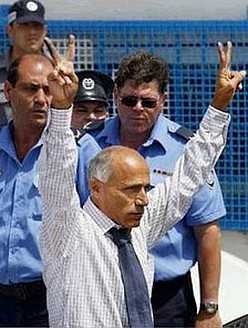
    He is Mordechai Vanunu the Israeli nuclear whistle blower.  In October l986, Vanunu told the world that Israel had a Nuclear Weapons Programme.  He was kidnapped and given 18 years imprisonment for espionage and treason.  Twenty four years later he continues to be punished.  In the Jewish Scriptures there is great emphasis on justice and freedom.   He served the full 18 years of his sentence (twelve years in solitary confinement, described by Amnesty International as “cruel, inhuman and degrading”).  Upon his release, the Israeli Government put severe restrictions upon him, including forbidding him to leave Israel and speak to the foreign media.  It was the breaking of these restrictions, in summer 2004, by speaking to the foreign media, (mainly a long interview to the BBC), which resulted in his being returned to solitary confinement again this May.

    Last month Amnesty International declared him a prisoner of conscience and called on the Israeli authorities to lift the restrictions immediately.  “The restrictions on Mordechai Vanunu arbitrarily limit his rights to freedom of movement, expression and association and are therefore in breach of international law.  They should be lifted and he should be allowed to start his life again as a free man.   Mordechai Vanunu should not be in prison at all, let alone be held in solitary confinement in a unit intended for violent criminals.   He suffered immensely when he was held in solitary confinement for 11 years after his imprisonment in 1986 and to return him to such conditions now is nothing less than cruel, inhuman or degrading.”  18 June 2010 Amnesty International

    Yet, when he is released from prison he will still have to remain in Israel and the restrictions will be reviewed and probably renewed yet again, as they have been renewed each year for the past 6 years.

    Vanunu is seen as a traitor by some, a hero by others.   One thing is clear, he has been punished and served the full sentence and it is time after 24 years to do the human thing and let him live as a free man.

    The Israeli Supreme Court continues to accept the Secret Services’ claims that he still has secrets, but a report by Reuters, 20 December 2009, shows that he does not :

    ” … Yet Uzi Eilam, a retired army brigadier-general who ran the Israeli Atomic Energy Commission between 1976 and 1986, said anything that Vanunu — a cause célèbre among disarmament campaigners — might still disclose about Dimona is of little relevance. “I’ve always believed he should be let go,” said Eilam.

    “I don’t think he has significant things to reveal (about Dimona) now.”

    However, we believe that he will be free and our hope is that you will in some way facilitate his early release which would be welcomed by a world waiting and watching for a peaceful and secure future for Israel and its people.    We would greatly appreciate your advising us of any action you take – [email protected].

    Shalom,
    Mairead Maguire, Nobel Peace Laureate
    Gerry Grehan, Chair of the Peace People

    Vanunu has been nominated year after year for the Nobel Peace Prize.

    The many prominent names who have called for his release and respect of his human rights over the last 24 years include:

    The late Nobel Laureates Joseph Rotblat and Harold Pinter; Nobel Laureates Former President Jimmy Carter; Archbishop Desmond Tutu; Mary Ellen McNish (on behalf of AFSC); Betty Williams; Adolfo Perez Esquival; Rigoberta Menchu; Shirin Ebadi; Wangari Maathai; Mairead Maguire; John Hume

    Kidnap victims Brian Keenan; Anthony Gray

    Politicians and human rights activists: the late Robin Cook, former UK Foreign Secretary; former Israeli Minister Shulamit Aloni; Helen Bamber; Simon Hughes; Daniel Elsberg; Bruce Kent; Noam Chomsky; Rabbi Philip Bentley (USA); Michael Mansfield QC; Dr Paul Oestreicher; Baroness Helena Kennedy QC; Tariq Ali; Jeremy Corbyn; Ken Livingstone; Ben Birnberg; David Goldberg QC; Alex Salmund

    Actors, writers, musicians and artists:  Emma Thompson; Julie Christie; Susannah York; Vanessa Redgrave; the late Corin Redgrave; Yoko Ono; Bono; Peter Gabriel; the late Graham Greene; the late Yehudi Menuhin; Janet Suzman; Gilad Atzmon; Richard Hamilton; Michael Rosen; David Gilmore; Benjamin Zephaniah, Alexie Sayle; Maggie Hambling; Tom Conti; Simon Callow; Jeremy Hardy; Miriam Margolyes; Prunella Scales; Arnold Wesker; John Williams; Roger Lloyd-Pack; Christopher Logue; the late Adrian Mitchell

    Journalists:  Andrew Neil; Jon Snow; John Pilger; Robert Fisk; Duncan Campbell; Victoria Brittain; Richard Norton-Taylor

  • Experts demand an inquiry into death of Dr Kelly

    Experts demand an inquiry into death of Dr Kelly

    DAVID KELLY: Weapons inspector died sedated with his wrists cut.

    ALISON CAMPSIE

    A group of prominent medical experts has demanded a full inquest into the death of government weapons inspector David Kelly.

    They described the official cause of death, bleeding from a self-inflicted wound, as “extremely unlikely” in the light of evidence since made public.

    The call came in a letter to a national newspaper signed by eight senior figures, including Michael Powers, a former coroner; Margaret Bloom, a former deputy coroner; and Julian Bion, a professor of intensive care medicine.

    Coalition ministers are currently exploring how best to address concerns over the official version of Dr Kelly’s death.

    The scientist was found dead in woods near his Oxfordshire home in 2003 after he was exposed as the source of a BBC story suggesting that a dossier on the presence of weapons of mass destruction in Iraq had been “sexed up” by the Government.

    An inquest was suspended to make way for the Hutton Inquiry, which examined the full circumstances surrounding his death.

    The inquest was never resumed, with the inquiry finding his death was self-inflicted. But in their letter, the experts claim this conclusion is unsafe.

    They write: “We would like to express our concerns about the conclusion as to the cause of death in the light of the information now in the public domain.

    “It is extremely unlikely, from a medical perspective, that the primary cause of death would or could have been haemorrhage from a severed ulnar artery in one wrist without any evidence of a blood-clotting deficiency.

    “Insufficient blood would have been lost to threaten life.

    “The inquiry by Lord Hutton was unsatisfactory with regard to the causation of death. A detailed investigation of all the medical circumstances is now required and we support the call for a proper inquest into the cause of Dr Kelly’s death.”

    Other concerns have been raised about the inquiry’s finding that Dr Kelly cut his own wrist after consuming a number of high-strength pain-killing muscle relaxants.

    Mai Pederson, a colleague who served with him in Iraq, says a hand and arm injury had left him “too weak” to cut his own wrist.

    Retired detective Graham Coe, the officer who stood guard over Dr Kelly’s body after it was first discovered, said there was very little blood at the scene.

    No fingerprints were found on the knife Dr Kelly is alleged to have used, it later emerged, and he was not wearing gloves when his body was discovered.

    In January, it emerged Lord Hutton secretly classified all medical and scientific records relating to Dr Kelly for 70 years, including the post-mortem examination report and photo of his body.

    Justice Secretary Kenneth Clark would have to overturn the order to allow a coroner’s inquest to take place.

    There is ongoing legal action by a separate group of doctors to secure an inquest, while Attorney General Dominic Grieve can apply to the High Court for an inquest if he believes there is considerable doubt in the public’s mind that Dr Kelly killed himself.

    , 14 Aug 2010