Category: Eastern Europe

  • Sochi 2014: Turkish Special Forces seize man suspected of making bomb threat on plane

    Sochi 2014: Turkish Special Forces seize man suspected of making bomb threat on plane

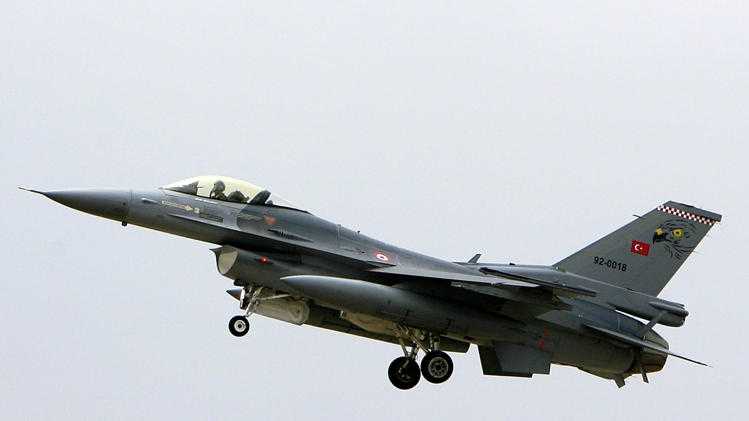
    Turkish F16
    Turkish F16

    Officials: ‘Air pirate’ claims bomb on board, tries to have plane go to Sochi

    According to CNN, a passenger announced Friday “that there was a bomb on board” his plane and wanted it diverted to Sochi — the Russian city hosting the Winter Olympics amid terrorism fears — Turkish officials said.

    Rather than abide by the request, the Pegasus Airlines’ crew sent a hijacking alert that Turkey’s Air Force Control Center received at 5:20 p.m. (10:20 a.m. ET), Turkey’s semiofficial Anadolu news agency reported.

    About 20 minutes later, the same report claimed two F-16 fighter jets scrambled to intercept the Boeing 737-800 and escort it over the Black Sea.

    Eventually, the airliner landed safely at Istanbul’s Sabiha Gokcen airport, where video shot soon thereafter showed police and security officials converging on it.

    Istanbul’s governor tweeted around 10 p.m. that “the air pirate has been neutralized” and all other passengers “disembarked from the plane without any problems.” Special forces who boarded the plane took him into custody “in a swift operation” without finding a “bomb on him,” Gov. Huseyin Avni Mutlu later told reporters.

    “The operation is complete,” the governor said.

    Mutlu said that the suspect — who never made it into the cockpit and at one point apparently thought the aircraft was destined for Sochi — “didn’t seem to have consumed alcohol, (but) he may have used some other substances.” He’d brought a carry-on bag with personal electronics and other items onto the Pegasus plane, according to the governor.

    The incident came at a tense time given the various threats surrounding the Winter Games, which kicked off in earnest Friday night with its opening ceremony.

    Russian security forces have cracked down in recent weeks on suspected militants in the restive North Caucasus republic of Dagestan — which is located on the other side of the Caucasus Mountains from Sochi — and elsewhere in recent weeks after twin suicide bombings in the city of Volgograd in December.

    There have also been concerns specifically about explosives-laden airlines. U.S. Rep. Michael McCaul said Wednesday night that the his nation’s Department of Homeland Security issued a bulletin to airlines flying into Russia warning that explosive materials could be concealed in toothpaste or cosmetic tubes.

    Airlines warned of possible toothpaste tube bombs

    Official: Suspect is Ukrainian

    The flight started in Kharkov in Ukraine, and was headed to Istanbul, according to the Transportation Ministry.

    While it was in air, “one of the passengers said that there was a bomb on board and asked the plane to not land in Sabiha Gokcen but rather to land in Sochi,” Transportation Ministry official Habip Soluk said on CNNTurk.

    The man said the bomb was in the baggage hold, a Transportation Ministry official said.

    The aircraft ended up touching down at the Turkish airport at at 6:04 p.m., according to Anadolu, at which point it was moved to a safe zone on the tarmac.

    Cihan News Agency of Turkey published a photograph it claimed came from inside the plane showing a man standing in a number 11 sports jersey with empty seats around him and two people in uniform.

    Turkish officials have not confirmed that this photograph is from inside the Pegasus airliner or that the man at the center of it is the alleged hijacker.

    The Ukrainian foreign ministry issued a statement identifying the suspect as one of its citizens, something that Soluk also said was the case. The Ukrainian ministry said no explosives or guns were found aboard the plane and that the suspect “voluntarily turned himself into police.”

    Mutlu, Istanbul’s governor, offered a different take on how the alleged hijacker was detained.

    “We had to use force because we were trying to persuade him and he wasn’t persuaded,” said Mutlu, adding Turkish authorities did not use guns and that the suspect suffered “a light injury.”

    The suspect never said anything about Circassians — the residents in the volatile region around the North Caucasus mountains — or having lived in the region, according to the governor.

    CNN’s Gul Tuysuz reported from Turkey, and Greg Botelho reported and wrote from Atlanta. Journalist Victoria Butenko contributed from Kiev, Ukraine, while CNN’s Michael Martinez contributed from Los Angeles.

    Contributed By Tolga Cakir
     

  • Russia bans Australia beef products

    Russia bans Australia beef products

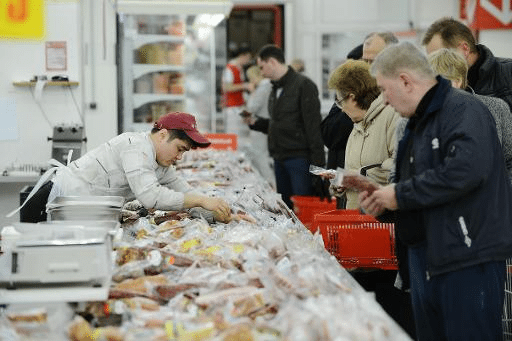
    According to AFP,  Russia on Monday imposed a ban on Australian beef byproducts such as offal over the use of a growth stimulant allowed in some nations but that Moscow considers unsafe.

    The temporary restrictions also affect Belarus and Kazakhstan — two ex-Soviet nations that are part of a Moscow-led Customs Union.

    Australia Beef
    Australia Beef

    Australia is the world’s third-largest exporter of beef after the United States and Brazil. It reported shipping 30,000 tonnes of beef to Russia in 2013.

    The Interfax news agency said Australia had sent 13,000 tonnes of beef byproducts to ex-Soviet countries in the first 10 months of last year — most of them to Russia — worth $21.3 million.

    Russia’s agriculture watchdog Rosselkhoznadzor said the ban was imposed after the discovery of the growth stimulant trenbolone “in several shipments” of Australian beef byproducts.

    Rosselkhoznadzor chief Sergei Dankvert told Interfax that the ban applied to beef byproducts because they accumulate the steroid in greater quantities than regular meat.

    Russia has frequently imposed temporary bans on meat products over the use of hormones that are allowed in nations such as the United States but restricted by Moscow’s more stringent regulations.

  • Turkey Fears Russia Too Much to Intervene in Syria

    Turkey Fears Russia Too Much to Intervene in Syria

    Turkey Fears Russia Too Much to Intervene in Syria

    Ankara won’t step into the conflict because it’s terrified Moscow will retaliate — again.

    SONER CAGAPTAYMAY 6 2013, 10:16 AM ET

    Tk Rus banner

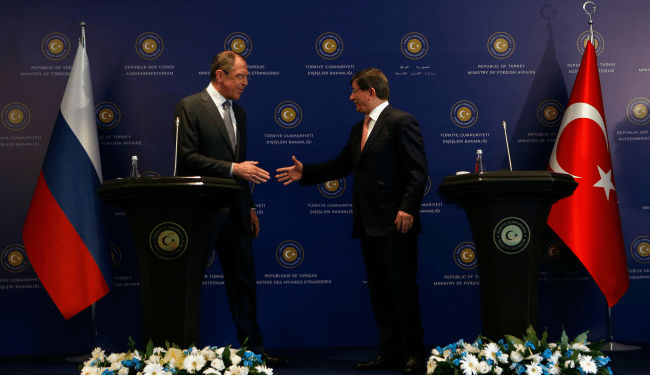
    Russia’s Foreign Minister Sergei Lavrov and his Turkish counterpart Ahmet Davutoglu (R) reach out to shake hands following a joint news conference at Ciragan Palace in Istanbul on April 17, 2013. (Murad Sezer/Reuters)

    Russian foreign minister Sergei Lavrov visited Ankara on April 17th, but the event went almost unnoticed. Despite deep differences between Ankara and Moscow over Syria, Turkey has refrained from rebuking Moscow. That’s because Turkey fears no country more than it fears Russia.

    Ankara has nearly a dozen neighbors if you include its maritime neighbors across the Black Sea and the Mediterranean. Emboldened by its phenomenal economic growth in the past decade and rising political power, Turkey appears willing to square-off against any of them; Turkish Prime Minister Recep Tayyip Erdogan has publicly chided the leaders of Syria, Iran, and Iraq. In fact, none of the country’s neighbors can feel safe from Ankara’s wrath — with the exception of Russia, that is.

    “The Russians can make life miserable for us, they are good at this.”

    The Turks suffer from a deep-rooted, historic reluctance to confront the Russians. The humming Turkish economy is woefully dependent on Russian energy exports: More than half of Turkey’s natural gas consumption comes from Russia. Consequently, Turkey is unlikely to confront Moscow even when Russia undermines Turkey’s interests, such as in Syria where Russia is supporting the Assad regime, even as Ankara tries to depose it.

    Historically, the Turks have always feared the Russians. Between 1568, when the Ottomans and Russians first clashed, to the end of the Russian Empire in 1917, the Turks and Russians fought 17 wars. In each encounter, Russia was the instigator and the victor. In these defeats, the Ottomans lost vast, and often solidly Turkish and Muslim, territories spanning from the Crimea to Circassia to the Russians. The Russians killed many inhabitants of these Ottoman lands and expelled the rest to Turkey. So many Turks descend from refugees from Russia that the adage in Turkey is: “If you scratch a Turk, you find a Circassian persecuted by Russians underneath.”

    Having suffered at the hands of the Russians for centuries, the Turks now have a deeply engrained fear of the Russians. This explains why Turkey dived for the safety of NATO and the United States when Stalin demanded territory from Turkey and a base on the Bosporus in 1945. Fear of the Russians made Turkey one of the most committed Cold-War allies to the United States.

    Recently, Turkish-Russian ties have improved measurably. Russia is Turkey’s number-one trading partner, and nearly four million Russians vacation in Turkey annually. At the same time, Turkey’s construction, retail, and manufacturing businesses are thriving in Russia. Turkish Airlines, the country’s flag carrier, offers daily flights from Istanbul to eight Russian cities.

    Still, none of this has erased the Turks’ subconscious Russophobia. In 2012, I asked a policymaker in Ankara whether Turkey would take unilateral military action to depose the Assad regime in Damascus. “Not against the wishes of Moscow” my interlocutor said. Adding: “The Russians can make life miserable for us, they are good at this.”

    At least some of the Turkish fear of Russia appears grounded in reality. Turkey is dependent on Russia more than any other country for its energy needs. Despite being a large economy, Turkey has neither significant natural gas and oil deposits, nor nuclear power stations of its own. Ankara is therefore bound to Moscow, which has often used natural gas supplies as a means to punish countries, such as Ukraine, that cross its foreign policy goals.

    There is also a security component: Russia helped set up the Kurdistan Workers Party (PKK), a group that led a terror campaign against Turkey for decades, causing over 30,000 casualties. The PKK emerged under Russian tutelage in Lebanon’s then-Syrian occupied Bekaa Valley during the 1980s, and it has enjoyed intermittent Russian support even after the collapse of Communism.

    Turkey recently entered peace talks with the PKK, and many in the group are likely to heed the advice of PKK leader Abdullah Ocalan and lay down their weapons. Yet, a pervasive fear in Ankara is that some rogue elements and hardliners could emerge from the PKK, denouncing the talks and continuing to fight Turkey.

    Meanwhile, Ankara has been confronting the Assad regime in Damascus since late 2011 by supporting the Syrian opposition. This had led to a spike in PKK attacks against Turkey, most coming from Iran, which apparently has allowed the PKK freedom of movement in its territory to punish Ankara for its stance against Assad.

    The fear in Ankara is that Russia might just do the same if Turkey were to invade Syria, propping up rogue PKK elements inside that country to lead an insurgency against Turkish troops. Together with other concerns, such as the risk of the conflict in Syria spilling over into Turkey, the Turkish fear of Russia has led Ankara to avoid direct intervention in Syria.

    Such fears have also led Turkey to pivot further toward the United States, once again seeking protection under the NATO umbrella against the looming Russian giant. Taking into consideration Turkey’s fear of Russia, any Turkish military action against the Assad regime will have to be predicated on full NATO support and involvement.

    For the Turks, history repeats itself every day when it comes to Moscow: don’t stand in Russia’s way lest it torment you, again.

    via Turkey Fears Russia Too Much to Intervene in Syria – Soner Cagaptay – The Atlantic.

  • Turkey becomes partner of China, Russia-led security bloc

    Turkey becomes partner of China, Russia-led security bloc

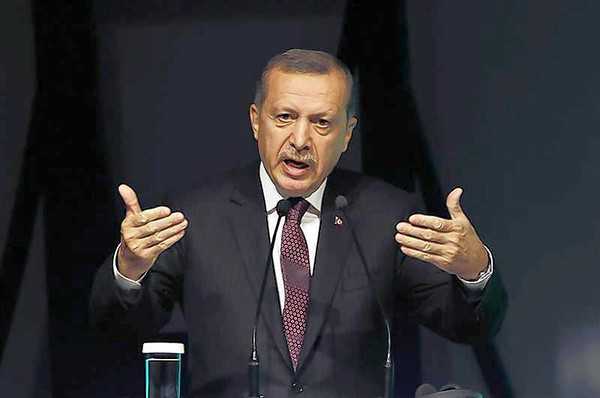
    Turkey's PM Tayyip Erdogan makes a speech during the Global Alcohol Policy Symposium in Istanbul

    Turkey’s PM Tayyip Erdogan makes a speech during the Global Alcohol Policy Symposium in Istanbul (MURAD SEZER, REUTERS / April 26, 2013)

    ALMATY (Reuters) – NATO member Turkey signed up on Friday to became a “dialogue partner” of a security bloc dominated by China and Russia, and declared that its destiny is in Asia.

    “This is really a historic day for us,” Turkish Foreign Minister Ahmet Davutoglu said in Kazakhstan’s commercial capital Almaty after signing a memorandum of understanding with Shanghai Cooperation Organisation Secretary General Dmitry Mezentsev.

    “Now, with this choice, Turkey is declaring that our destiny is the same as the destiny of the Shanghai Cooperation Organisation (SCO) countries.”

    China, Russia and four Central Asian nations – Kazakhstan, Kyrgyzstan, Tajikistan and Uzbekistan – formed the SCO in 2001 as a regional security bloc to fight threats posed by radical Islam and drug trafficking from neighboring Afghanistan.

  • Sarah Palin Calls for Invasion of Czech Republic

    Sarah Palin Calls for Invasion of Czech Republic

    Sarah Palin called for the invasion of the Czech Republic today in response to the recent terrorist attacks in Boston.

    In an interview with Fox News, the former governor of Alaska said that although federal investigators have yet to complete their work, the time for action is now.

    “We don’t know everything about these suspects yet,” Palin told Fox and Friends this morning, referring to Tamerlan and Dzhokhar Tsarnaev, who allegedly carried out the Boston Marathon attacks. “But we know they were Muslims from the Czech Republic.

    “I betcha I speak for a lot of Americans when I say I want to go over there right now and start teaching those folks a lesson. And let’s not stop at the Czech Republic, let’s go after all Arab countries.

    “The Arabians need to learn that they can’t keep comin’ over here and blowing stuff up. Let’s set off a couple of nukes in Islamabad, burn down Prague, then bomb the heck out of Tehran. We need to show them that we mean business.”

    Can’t See Russia…

    Although hosts Steve Doocy and Gretchen Carlson applauded Palin’s jingoism, they immediately attempted to rectify her multiple geographic errors.

    “Well Islamabad is the capital of Pakistan, which isn’t Arab,” Carlson corrected, “and Tehran is the capital of Iran, which is predominantly Persian. But I do see your point.”

    “Also Czech Republic isn’t really an Arab or even Muslim country, I don’t think,” Doocy added, “but otherwise what you’re saying makes a lot of sense. I think most Americans wish Obama would step up and lead on this one.”

    Palin, however, didn’t take kindly to being corrected and defended her analysis.

    “Steve, that’s probably one of the most ignorant things I’ve ever heard. How is Czech Republic not a Muslim country? You saw those brothers, they were Islamic and they were Chechen!”

    “Yes there were Muslim and they were ethnic Chechens,” Doocy started, “but they grew up mostly in Kyrgyzstan and the United States. And more importantly, Chechens don’t come from the Czech Republic, they come from Chechnya, which is part of Russia. ”

    “What’s the difference?” Palin responded. “Isn’t Russia part of the Czech Republic?”

    “No, the Czech Republic is a separate country. It’s part of the European Union and a strong NATO ally,” Doocy noted. “But heck, why not? Let’s invade. What could go wrong?”

    “Yeah and while we’re at it,” Carlson added, “let’s call the Queen of England and see if the U.K. will join us.”

    In a statement released after the interview, Palin attacked Fox News and its “pro-Islamic” and “pro-geography” bias.

    “This is just another case of the politically correct liberal media refusing to tell the truth about radical Islam,” she said.

  • Russia, Turkey Seek to Boost Trade to $100 Bln

    Russia, Turkey Seek to Boost Trade to $100 Bln

    Tags: Alexander Novak, Taner Yildiz, Turkey, Russia

    174004727

    ANTALYA, April 20 (RIA Novosti) – Russia and Turkey are committed to expanding mutual investment and cooperation, aiming to bring bilateral trade to $100 billion, the Russian and Turkish energy ministers said on Saturday.

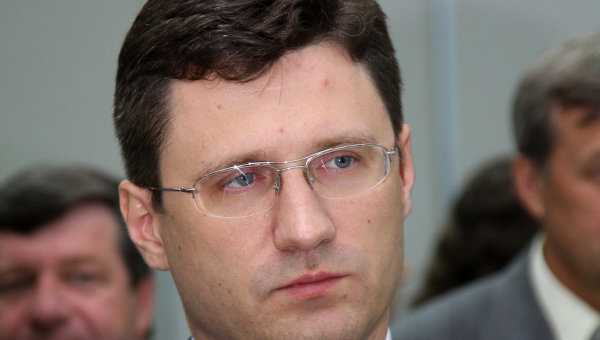
    The Turkish-Russian Joint Economic Committee (JEC) held its 12th Meeting in the southern province of Antalya with the participation of Turkish Energy and Natural Sources Minister Taner Yildiz and Russian Energy Minister Alexander Novak.

    Yildiz said there is good potential to increase the volume of trade from the current $34 billion to $100 billion.

    Around 1,500 Russian companies currently operate in Turkey while Turkish contractors are involved in projects in Russia worth a total of $50 billion, he said, according to the Hurriyet daily.

    He also said Turkish-Russian cooperation could continue in third countries.

    Yildiz and Novak signed a JEC protocol prioritizing the diversification and expansion of bilateral trade and the creation of an investor-friendly environment in order to achieve the $100 billion target.