Category: Eastern Europe

  • Boxing: Gassiev defeats Dorticos in semi-final showdown

    Murat Gassiev defeats Yunier Dorticos by vicious 12th round KO which could be a candidate for KO of the year. The fight was a part of the world boxing super series tournament, the second leg of the semi-final round (the first of which was won by Usyk). Murat Gassiev will take on Oleksandr Usyk in the final, which will take place in May in Jeddah, Saudi Arabia.

    The final of this tournament is promised to be a spectacular event with many fans from all over the world looking to book their tickets as soon as they become available. This featured bout is anticipated to live up to expectations as both fighters have proven their worth by defeating their previous adversaries in impressive fashion. Usyk is known as a boxer puncher who will be looking to use agility and quick footwork to outbox his opponent. Gassiev on the other hand is a KO artist who has knocked out 70% of the opponents he has faced. He will be looking to press the action, come forward and apply measured aggression.

    Whatever the outcome, this night should be one to remember and one not to be missed.

  • Russia’s Syria Congress is over: what’s next?

    Russia’s Syria Congress is over: what’s next?

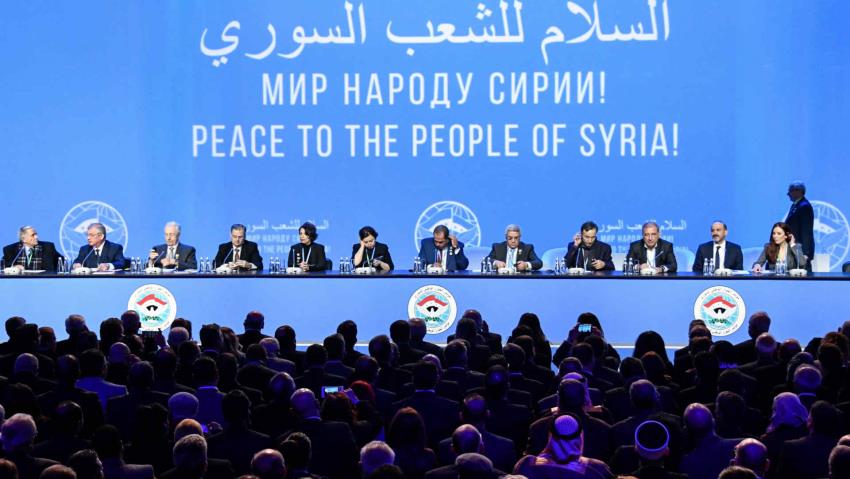
    The Syrian National Dialogue Congress held in Russia’s Sochi on January 28-29 was aimed to boost the process for building a peaceful future for Syrian people in a war-devastated country and to define the country’s political compass for the next years. The Congress, sponsored by Russia, Iran and Turkey, gathered over 1,500 participants from various groups of Syrian society, including representatives from political parties, opposition groups and ethnic and confessional communities.

    While the Congress itself did not aim to achieve the immediate political reconciliation over Syria, its main focus was to revive Geneva talks. According to Russia’s Foreign Minister Sergey Lavrov, the forum was expected to “create conditions for staging fruitful Geneva process”.

    Besides, the Congress was some kind of alert to boycotting countries and their procrastination to reinforce the 2254 UN Security Council Resolution for Peace Process in Syria, adopted in 2015. According to the resolution, the future of Syria should be determined by its people. However, the country has experienced forced intervention and external interference that prevented it from paving ways for a peaceful future ever since.

    Ironically it may seem, the so-called peace process for Syria that has been joined by many countries pursuing different strategies including diametrically opposite approaches of Russia and the United States, became a fruitful soil for radically oriented groups that eroded the country’s sovereignty. The delay in reinforcing the 2254 UN Security Resolution by international community can lead to further monetization of Syria’s natural resources by terrorist organizations and cause major security threats for the entire international community.

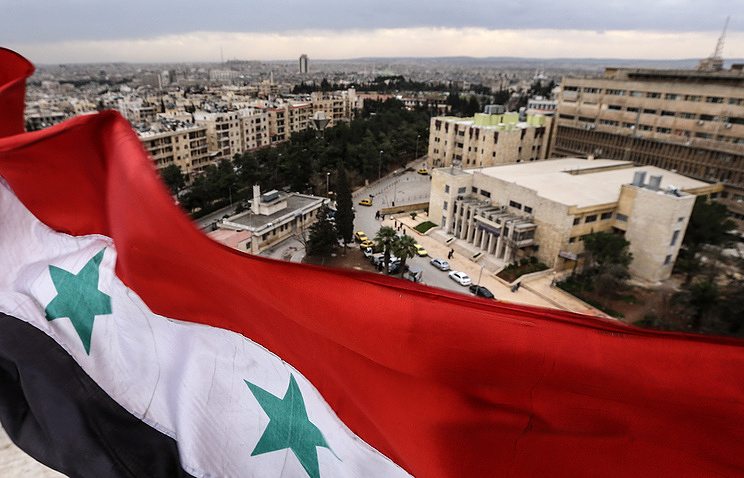
    Perhaps, the most important result of the Sochi Congress has been an agreement of all participants to consolidate their efforts in stabilizing the Syria’s future and to secure the territorial integrity of the Syrian Arab Republic. The concerns of the Syrian opposition claiming the Sochi Congress would, on the contrary, hazard the international peace process could not be more baseless since the Congress was supported by the UN, the main sponsor of the Geneva talks.

  • Russia-Turkey: a new era of strategic partnership?

    Russia-Turkey: a new era of strategic partnership?

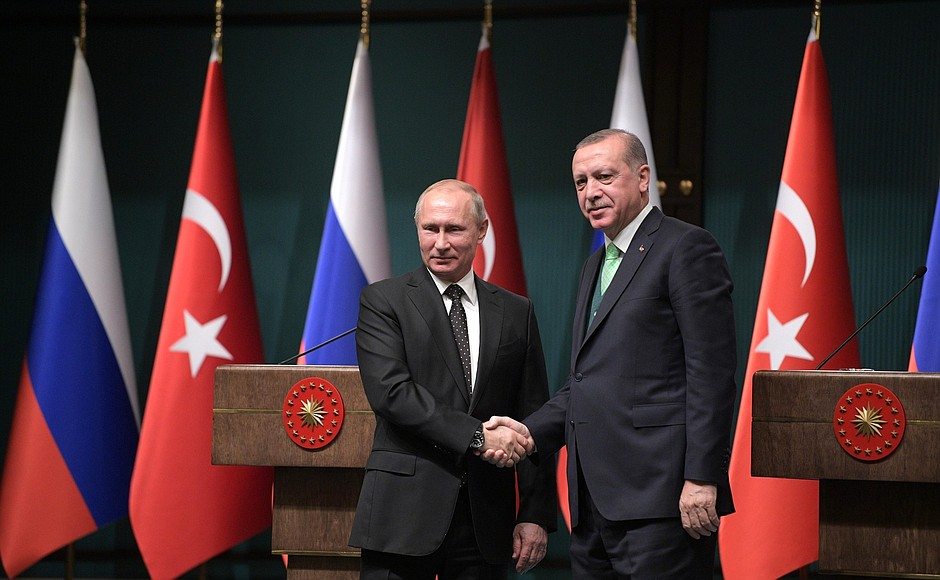
    Russian-Turkish relations have experienced such rocky times in the last couple of years that it would have been almost impossible to predict the further development of the partnership in the foreseeable future. Yet, since the beginning of 2017 the relationship between the two countries have started to warm up as both leaders, Putin and Erdogan have managed to find some important touch points to strengthen the sustainable economic ties with strategic political cooperation.

    The recovery of the diplomatic relations has been gained much due to the Turkey’s collaboration with Russia and Iran over Syria and their further fight against terrorism and the ISIS in the region. The successful development of the Astana process led by Russia, Turkey and Iran and the perspectives of hosting the National Dialogue Congress in Russia’s Sochi have raised a wave of anxiety in Washington as the United States were counting much on Ankara’s support in pursuing its military plans in Syria. Provided that Turkey’s decision to join Russia and Iran and its engagement in the Astana process met some serious controversies and tensions with the United States and the European Union one cannot help but ask the question if Turkey is shifting away from NATO toward the East.

    The facts speak for themselves: since the beginning of 2017 Presidents Vladimir Putin and Recep Tayip Erdogan have held eight face-to-face meetings not to mention multiple visits of Russian and Turkish diplomatic representatives and military officers in both ways.

    Apart from the cooperation over Syria and the joint fight against terrorism, the renewal of business, trade and economic relations as well as the prospective cooperation in the energy sector might launch a new era of partnership for both Russia and Turkey not only at the international or at federal levels but also at the regional levels as well.

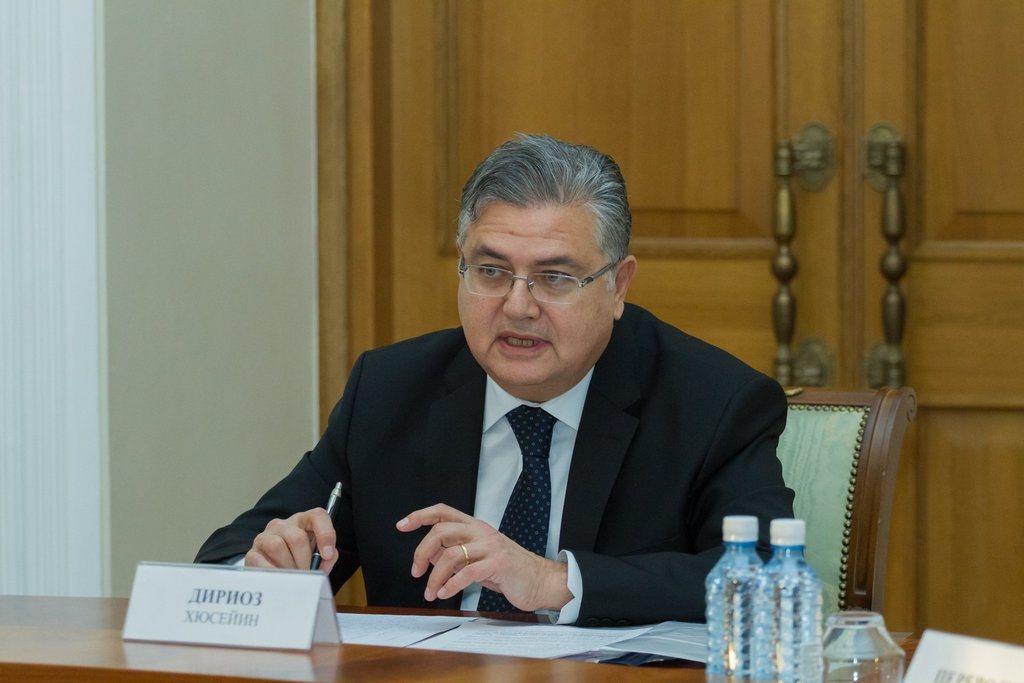
    On December, 13-14, Husseyin Dirioz, Ambassador of the Turkish Republic to Russia visited the city of Yekaterinburg, situated in the Urals and known as the country’s industrial hub. During his meeting with the local government authorities Mr. Dirioz expressed the intention to strengthen the mutual collaboration in such industries as machine building, oil and gas, construction and development, pharmacy and chemical sector as well as in the spheres of tourism, science and education.


    However, a closer partnership with Russia is pulling Ankara in quite a confusing situation in which Turkey will have to make bigger efforts to keep the balance with the U.S. and the EU. While the European Union continues to remain the major region for Turkish exports Ankara still benefits from holding the NATO membership on some political and military matters. Given that, the United States will likely to start manipulating Turkey’s vulnerable position and take the target the Turkey’s most sensitive issues. For instance, Washington has reportedly been encouraging Syrian Kurds for military interventions to the territories on the East bank and further overtaking the key Syrian natural resources fields. The move, explained by the United States as an effort to create a Syrian Kurdish autonomy, has been highly criticized by Ankara as a driving force for the U.S. that will enable Washington to take control over Ankara and Damask.

    But despite both leaders Recep Tayip Erdogan and Vladimir Putin look at the mutual partnership through the prism of their domestic interests which sometimes causes some structural controversies in such questions as pursuing policies towards the U.S. and the E.U, the possibility of a fast development of Turkey-Russia cooperation into a strategic partnership is very high.  What’s bringing together Turkey and Russia today is perhaps the common mistrust of the Western policies. The emotional statements by U.S President Donald Trump such as announcement of Jerusalem as an Israel’s capital, the U.S. support of Syrian Kurds (that directly crosses the Ankara policy towards the Kurds) consolidate the strategic collaboration between Moscow and Ankara against “moody” President Trump and unfold incredible opportunities for expansion of economic and trade relations between Turkey and Russia. Moreover, with Turkey’s recognition of the Crimea as a Russian territory Moscow will open the “green corridor” for Turkish companies that will also let Turkey pursue its policy towards the Crimean-Tatar community in the peninsula.

    As the historical experience proves, the strong partnerships are created by those countries who have manage to resolve the most controversial and unwanted situations between each other. The common historical background, strong cultural and ethnic ties and the geographic proximity can become a solid ground for Russia and Turkey to build a strong alliance.

  • St. Petersburg IPU Assembly to beat several records

    St. Petersburg IPU Assembly to beat several records

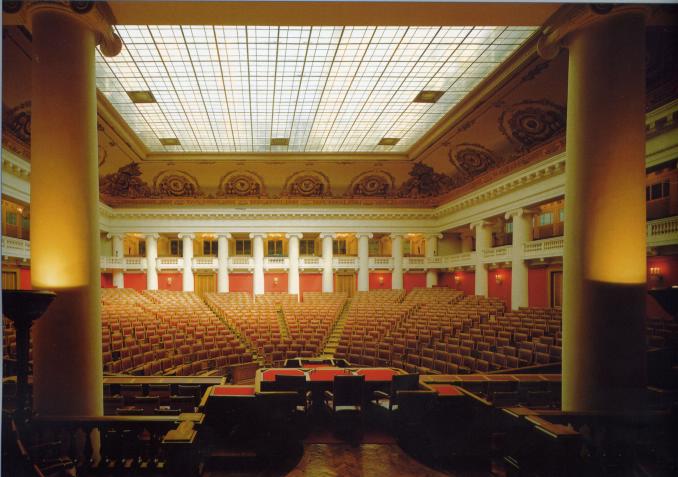
    Conference Hall. Tauride Palace, St. Petersburg

    The 137th IPU Assembly that will be held in Russia’s Saint Petersburg from October 14 to 18, raises high expectations among the world’s leaders as it hits the record high number of its participants and the wide range of issues to be discussed.

    The chairman of the Foreign Affairs Committee of the Russian parliament’s upper chamber, the IPU Vice-President Konstantin Kosachev, said “that 152 national delegations out of 173 plan to take part in the assembly, which is a record high”. He also added that “the maximum number of speakers who personally participated in the work of IPU Assemblies is 51. As of today, 99 speakers have expressed a desire to participate in the 137th Assembly, including participants from France, Germany and other European countries”.

    The Assembly members will also carry a remarkable vote for adoption of the signing of the resolution “Sharing our diversity: The 20th anniversary of the Universal Declaration on Democracy” suggested at the 136th IPU in Dhakka.

    While the IPU Assembly’s major issues of the discussion will be the ongoing conflict in Syria, the possible paths to dealing with North Korea and the Ukraine crisis, it will also highlight the plight of the Muslim Rohyngia as followed by the request from Marzouq Ali Al-Ghanim, the IPU speaker representing Kuwait.

    The IPU could also become a platform for a dialogue between North Korea and South Korea should their MPs come to St. Petersburg.

    According to political analysts, the current dynamics of international issues demonstrates the trends of spreading democracy and its values around the globe regardless national identities which by no means causes more local and regional conflicts. The recent events in Tunisia, Libya and Syria are the best examples of this trend. In this regard, the international community should see the forthcoming IPU Assembly as a tool for following the fundamental principle of the international law – the principle of non-interference in the internal affairs of a country, especially when such an important issue is going to be discussed by the record number of the democratic parliamentary representatives from around the globe.

  • Russian military reveals new details of ISIS funding

    Russian military reveals new details of ISIS funding

    The Russian Defense Ministry is giving a major media briefing to outline measures to combat international terrorism. The military operation in Syria is expected to dominate the event.

    • 02 December 2015 16:37 GMT Mufti Ravil Gainutdin, the head of the Spiritual Administration of Muslims of Russia and the Russian Council of Muftis, has called for calm in the assessment of Russian-Turkish relations, and said he has instructed the employees of both organizations to refrain from sharp comments on the relationship between the two countries. “We are religious figures who are of no relation to politics,” the mufti said. “We believe that today we all need to calm down, be rational and think of people’s well-being. But we think that we have not passed the point of no return as of yet. A compromise can still be found – negotiations and diplomacy can help settle any conflict,” he added.
    • 16:00 GMT Watch the full video of the Defense Ministry briefing:  
    • 15:18 GMT Responding to the Russian allegations, Turkish President Recep Tayyip Erdogan has said that nobody had a right to “slander” Turkey by accusing it of buying oil from Islamic State. Speaking at a university in the Qatar’s capital of Doha on Wednesday, Erdogan once again claimed that he would resign if such accusations were proven to be true and stressed he did not want Turkey’s relations with Russia to deteriorate further.
    • 12:59 GMT The photos and footage used in the media briefing have been published on the Defense Ministry’s website.
    • 12:56 GMT Russia is to provide evidence of Turkey’s role in training, arming and smuggling foreign fighters into Syria next week.
    • 12:42 GMT Footage of a Russian airstrike on an oil storage facility controlled by IS has been provided by the Defense Ministry.  
    • 12:35 GMT Russia doesn’t expect Turkish President Erdogan to resign in the face of the new evidence, even though he had promised to do so. His resignation is not Russia’s goal and is a matter for the Turkish people.
    • 12:31 GMT Russia cannot comprehend that such a large-scale business as oil smuggling could not have been noticed by the Turkish authorities. Russia concludes that the Turkish leadership is directly involved in the smuggling.
    • 12:26 GMT The US-led coalition has failed to intensify strikes on oil tankers and other IS oil infrastructure. Russia will send intelligence on potential targets to coalition members, assuming that a lack of intelligence may be the reason for their hesitance. Russia, for its part, will continue attacking the oil business of the terrorists and expects the US-led coalition to do the same.
  • Putin: Turkey Will Regret Downing Plane

    Putin: Turkey Will Regret Downing Plane

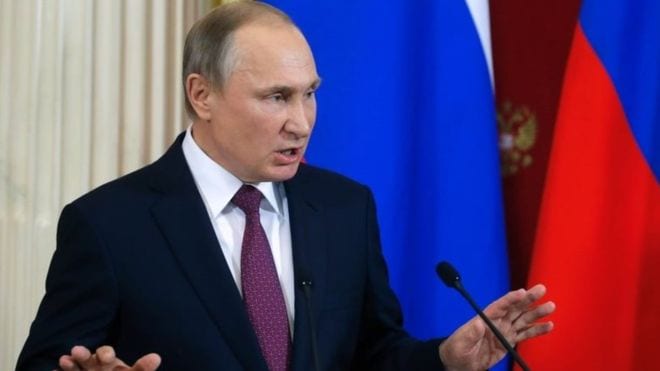
    Russian President Vladimir Putin on Thursday vowed Turkey’s leadership would be made to regret the downing of one of Moscow’s warplanes as the top diplomats from both countries held their first high-level meeting since the incident.

    Moscow announced a halt to talks on a major gas pipeline with NATO member Ankara as Putin fired another salvo in their war of words, while Turkish leader Recep Tayyip Erdogan shot back by claiming he had “proof” Russia was involved in illegal oil trading with the Islamic State group.

    Turkey has become Moscow’s prime international sparring partner after it shot down a Russian jet on its border with Syria on November 24 — sparking fury and economic sanctions from the Kremlin.

    Erdogan’s claims of Russian complicity with IS mirror allegations made by Moscow against Turkey and its leader in recent days.

    “We will not forget this complicity with terrorists. We always considered and will always consider treachery to be the ultimate and lowest act. Let those in Turkey who shot our pilots in the back know this,” Putin told lawmakers in his annual state of the nation speech, which also focused on Russia’s air strikes in Syria.

    Russia has accused Erdogan and his family of personally profiting from the oil trade with IS, which controls a large chunk of Syrian territory including many oil fields.

    “We know for example who in Turkey fills their pockets and allows terrorists to make money from the stolen oil in Syria,” Putin said.

    “It is precisely with this money that the bandits recruit mercenaries, buy arms and organise inhuman terrorist acts aimed against our citizens, the citizens of France, Lebanon, Mali and other countries.”

    Erdogan has furiously denied the accusations against him and his family and said Turkey had proof that Russia was, in fact, involved in trading oil with IS.

    “We have the proof in our hands. We will reveal it to the world,” the Turkish leader said in a televised speech in Ankara.

    Putin, whose administration has already announced sanctions against Ankara including a ban on the import of some Turkish foods, and reintroduced visas for visitors from the country, insisted Turkey would be made to regret its actions.

    “We will not rattle our sabres. But if someone thinks that after committing heinous war crimes, the murder of our people, it will end with (an embargo on) tomatoes and limitations in construction and other fields then they are deeply mistaken,” Putin said.”We will not stop reminding them of what they did and they will not stop regretting their actions.”

    Immediately after the speech Russia’s energy minister Alexander Novak announced the suspension of talks between Ankara and Moscow over the major TurkStream pipeline project.

    Negotiations over the project to pipe Russian gas to Turkey under the Black Sea have been floundering since Moscow launched air strikes in Syria in late September in support of the regime of President Bashar al-Assad, which Ankara fiercely opposes.

    But the official announcement of the break-off in the talks dealt another blow to floundering Russian-Turkish ties, as Putin lamented the damage to a relationship that he has spent years nurturing.

    “Only Allah, most likely, knows why they did this. And evidently Allah decided to punish the ruling clique in Turkey by depriving them of their intelligence and reason,” he said.

    The latest furious exchange comes as the two countries’ top diplomats met for the first face-to-face meeting between the two sides since the plane incident.

    Russian Foreign Minister Sergei Lavrov agreed to talks with his Turkish counterpart Mevlut Cavusoglu on the sidelines of a conference in Belgrade after Putin on Monday snubbed Erdogan at the UN climate summit in Paris.

    There appears, however, little chance that the two sides will lower the tone as the two strongmen insist the other should apologise over the incident.

    Turkish Prime Minister Ahmet Davutoglu on Thursday accused Moscow of running a “Soviet propaganda machine”.

    “There was a Soviet propaganda machine in the Cold War era,” Davutoglu told reporters in Ankara.

    “They were called Pravda lies,” he said, referring to the daily newspaper that was the mouthpiece of the Communist Party.

    © AFP 2015